

Cardiac Surgery in India for Nigerian Patients: Choosing the Surgeon, the Hospital and the Operation
Best Cardiac Surgeons and Hospitals in India for Nigerian Patients
Heart surgery is the one journey where the wrong decision is not merely expensive. This guide takes the four decisions in the order a cardiologist would take them, and shows what each is worth in naira and in years.
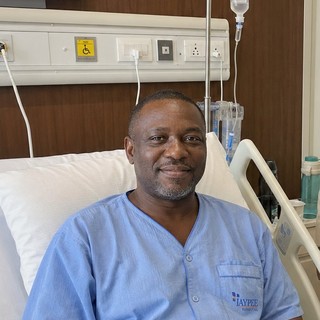
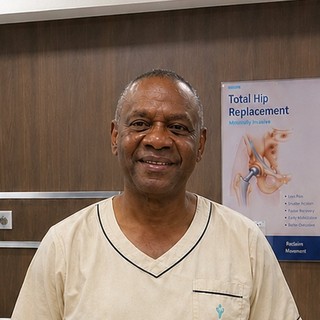
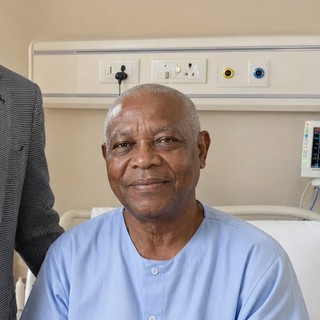
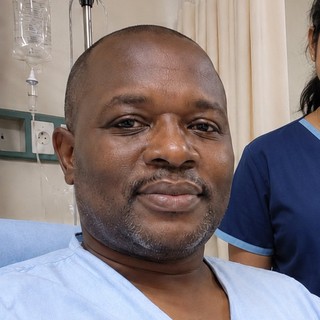
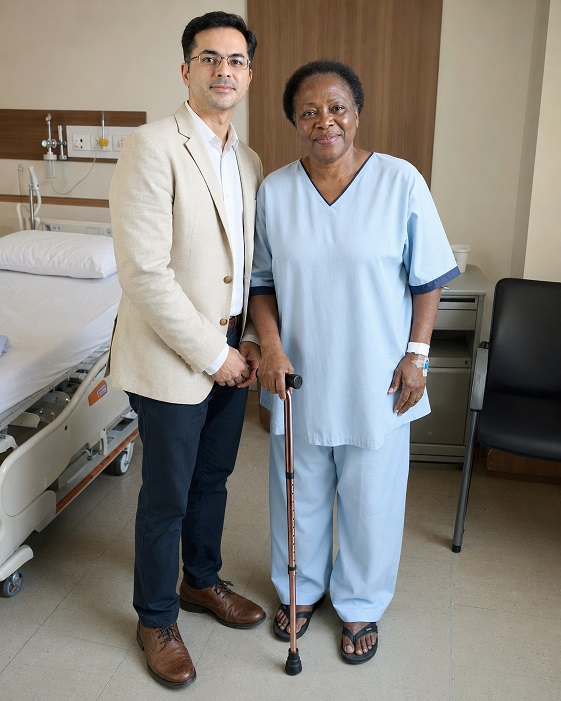
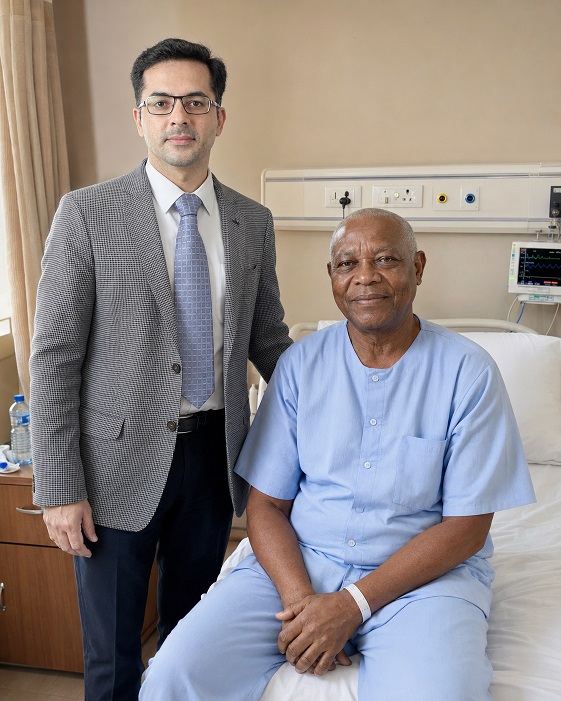
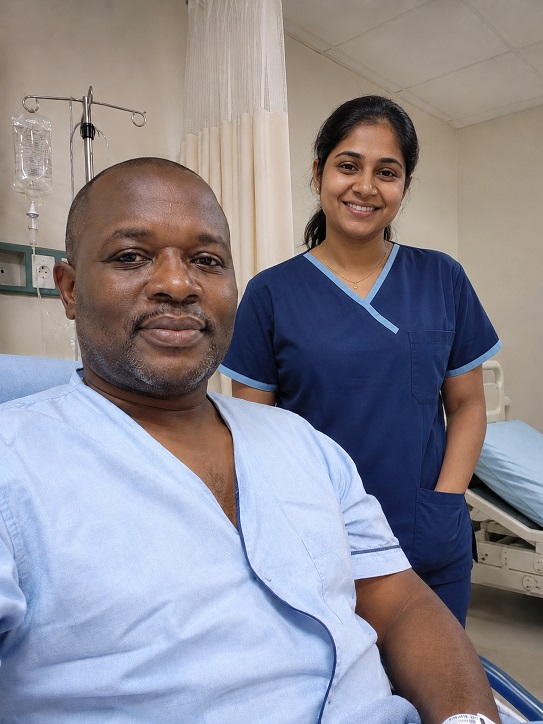
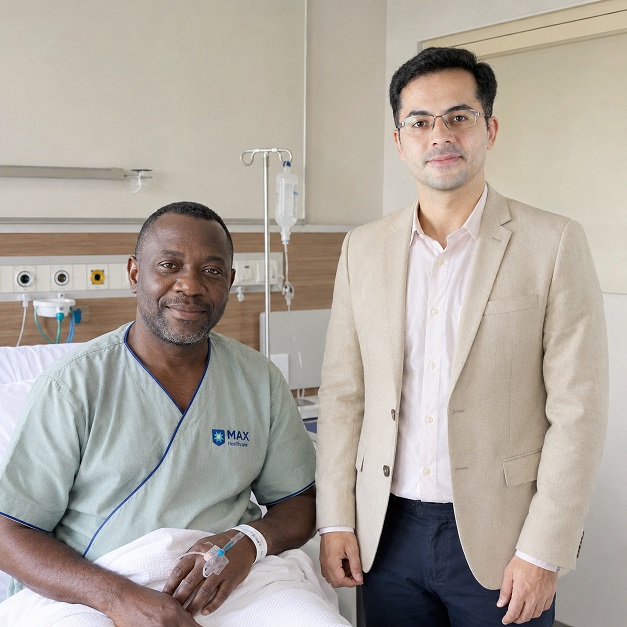
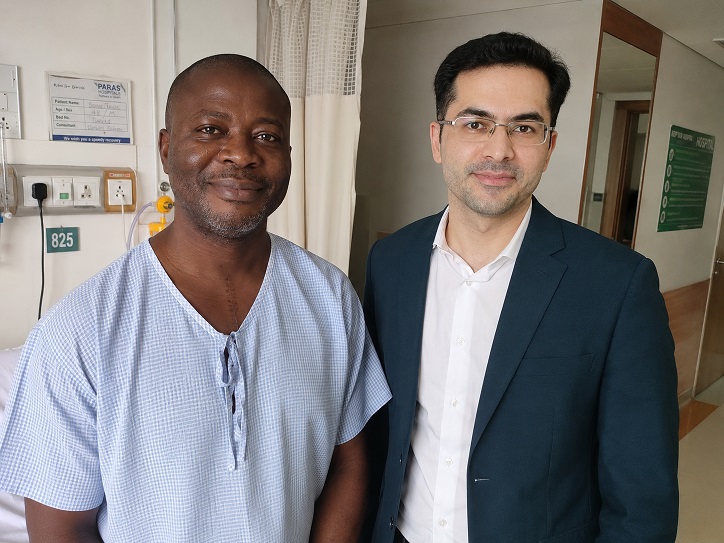
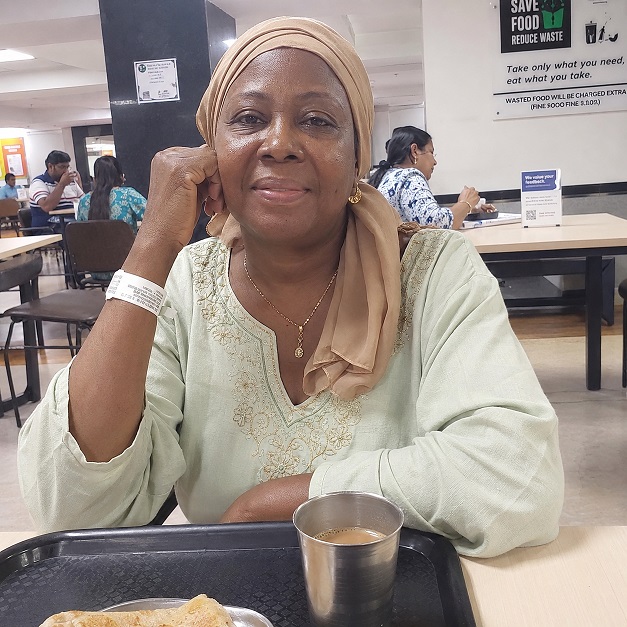
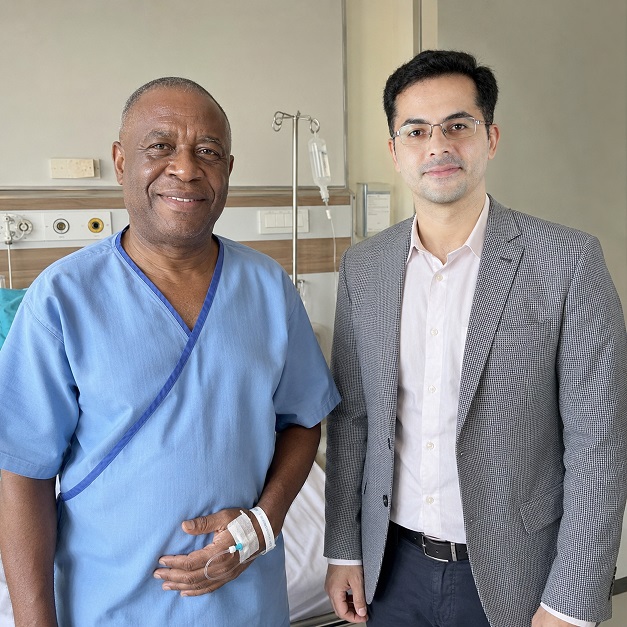
Healing Journeys of Nigerian Patients




Key Takeaways
- Nigerian patients considering cardiac surgery in India should first establish how urgent their heart condition is. Chest pain at rest, worsening breathlessness, fainting, recent heart attack or severe symptoms with minimal activity require stabilisation in Nigeria before travel.
- The main clinical decision for coronary artery disease is whether angioplasty with stenting or coronary artery bypass grafting (CABG) offers the better long-term result.
- CABG may be more appropriate for patients with diabetes, left main coronary disease, three-vessel disease or significantly reduced heart function.
- Patients with heart valve disease should ask whether the valve can be repaired before replacement is recommended.
- When valve replacement is necessary, the choice between a mechanical and tissue valve should consider age, pregnancy plans, access to reliable INR testing and the ability to maintain lifelong anticoagulation.
- Typical Indian hospital packages are approximately USD 5,000–8,000 for CABG, USD 6,500–10,000 for single-valve replacement and USD 4,000–6,500 for angioplasty with one stent.
- Nigerian patients should plan for approximately three weeks in India after cardiac surgery, including evaluation, surgery, cardiac intensive care, ward recovery, anticoagulation stabilisation and fitness-to-fly review.
- A realistic all-inclusive CABG journey may cost around ₦18 million–₦22 million after flights, accommodation, additional hospital days and other travel expenses are included.
- The surgeon’s annual volume, unit-specific outcomes, dedicated cardiac ICU, perfusion services and ability to manage complications are more important than hospital advertising alone.
- Long-term success depends on follow-up in Nigeria, including INR monitoring where required, echocardiograms, medication management, dental precautions and cardiac rehabilitation.
Quick Facts
- Conditions Covered
- Coronary Artery Disease, Left Main Coronary Disease, Three-Vessel Disease, Heart Valve Disease, Rheumatic Heart Disease, Heart Failure, Congenital Heart Defects and Cardiac Rhythm Disorders
- Procedures Mentioned
- Coronary Angioplasty, Coronary Stenting, Coronary Artery Bypass Grafting, Mitral Valve Repair, Heart Valve Replacement, Mechanical Valve Replacement, Tissue Valve Replacement, Congenital Heart Surgery and Pacemaker Implantation
- Target Audience
- Nigerian patients considering cardiac surgery or advanced heart treatment in India
- Coronary Bypass Surgery
- USD 5,000–8,000
- Single-Valve Replacement
- USD 6,500–10,000
- Double-Valve Replacement
- USD 9,000–13,000
- Angioplasty with One Stent
- USD 4,000–6,500
- Permanent Pacemaker
- USD 5,000–8,000
- Congenital Heart Defect Closure
- USD 5,000–8,000
- Typical Stay in India
- Approximately 3 weeks
- Important Pre-Travel Records
- Echocardiogram images, angiogram recording, ECGs, medication list, previous cardiac reports, blood investigations and details of symptoms and functional ability
- Medical Travel Requirements
- Hospital invitation letter, Indian Medical Visa, Medical Attendant Visa, valid yellow fever certificate and a changeable return ticket
- Author/Advisor
- Dr. Dheeraj Bojwani
- Experience
- 24+ Years in Medical Travel
In Brief
India is a major destination for Nigerian patients seeking cardiac surgery because high-volume cardiac centres provide CABG, angioplasty, heart valve repair and replacement, congenital heart surgery and dedicated intensive care within one coordinated system. The correct treatment depends on the individual disease pattern rather than cost alone. Nigerian patients should obtain a heart-team opinion, review the angiogram and echocardiogram images, understand whether valve repair is possible, and choose between mechanical and tissue valves according to their long-term ability to manage anticoagulation. A written, itemised quotation and a follow-up plan in Nigeria should be arranged before travelling.
Start here. How urgent is your heart?
Before any comparison of hospitals, settle where you sit. Almost every mistake I see in cardiac travel comes from patients in the first column behaving as though they were in the third.
| DO NOT TRAVEL YET | WEEKS, NOT MONTHS | TIME TO CHOOSE WELL |
|---|---|---|
| Chest pain at rest or getting worse, breathlessness lying flat, fainting, a heart attack in the last weeks, or severe | Severe valve disease with symptoms, tight left main or three-vessel coronary disease, a child turning blue or failing to | Stable angina, moderate valve disease under surveillance, a small hole in the heart found incidentally. You have months. |
| symptoms at the slightest activity. This is a Nigerian emergency room tonight, not a visa application. Stabilise first; travel is a decision for afterwards, if it is still needed. | grow. Move deliberately but quickly: records out this week, plan agreed next week, travel within a month. | Use them to compare properly, get a second opinion, and travel with everything arranged. |
Cardiac decisions are made from data, not from photographs of hospitals: the echo report, the angiogram film, the ECG and the drug list. Assemble those first and the rest of this guide becomes straightforward.
The Nigerian starting point
Be fair to home. Nigeria does cardiac work, and the people doing it are serious. The National Cardiothoracic Centre of Excellence at UNTH Enugu, LASUTH in Lagos, Babcock University Teaching Hospital and the Tristate Heart Foundation have all delivered open-heart surgery, and cath labs at First Cardiology Consultants, Reddington, Lagoon and Cedarcrest in Abuja carry out angioplasty and device work. Nigerian cardiologists are frequently the ones who make the diagnosis correctly and hand the patient a sound plan before anyone thinks about a flight.
The constraint is capacity, not competence. A country of more than two hundred million people supports only a handful of functioning open-heart programmes, which means waiting lists for the operations that exist and absence of the ones that do not. India’s large cardiac centres run several thousand open procedures a year each, with surgeons who do one family of operations continuously, dedicated cardiac intensive care, on-site perfusion teams, paediatric cardiac units for congenital cases, and valves and devices held in stock in every size. That is what Nigerian patients are buying — volume and immediacy, not superior intelligence.
One further Nigerian reality shapes everything below: rheumatic heart disease. Untreated childhood throat infection continues to damage mitral and aortic valves here on a scale rarely seen in Europe, which means many of the patients I deal with are young — in their twenties and thirties — facing a valve decision that will govern the next forty years of their lives. That decision, not the choice of hospital, is the heart of this guide.
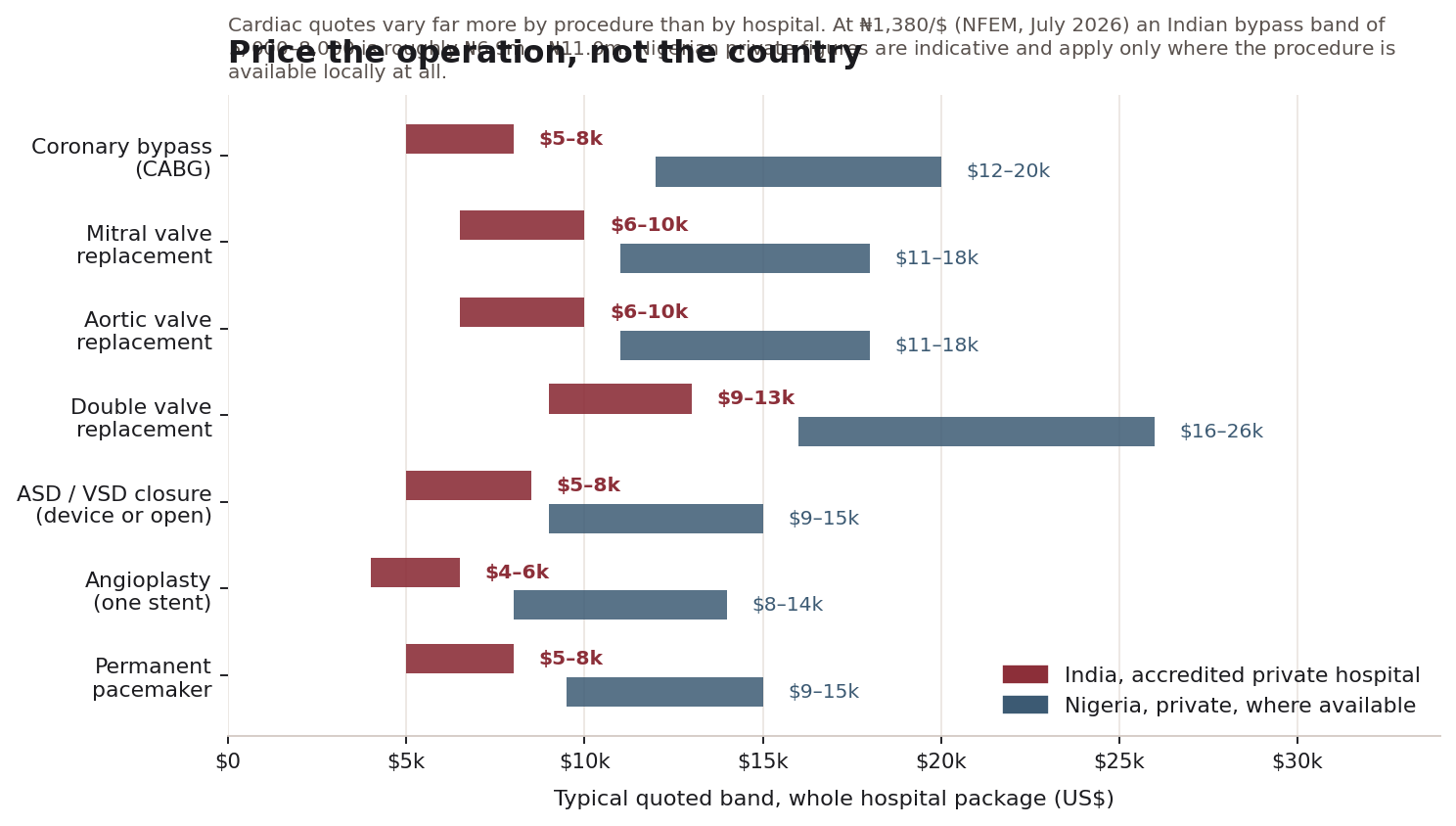
Notice how much the procedure matters and how little the country label does. Before comparing two hospitals, be certain they are quoting the same operation.
Decision One
Stent or surgery?
For coronary disease this is the first fork, and it is not a matter of taste. Angioplasty with stents is quicker, cheaper, needs no chest incision and gets you home in days. Bypass surgery is a bigger undertaking with a longer recovery, and in certain patterns of disease it lasts better and lives longer — particularly with diabetes, with severely reduced pumping function, with disease of the left main artery or all three vessels. Since diabetes is common among the Nigerian patients I see, this fork comes up constantly.
The right way to settle it is a heart team: an interventional cardiologist and a cardiac surgeon looking at the same angiogram and agreeing a recommendation. If the only opinion you have was given by the person who would perform the procedure, you have one opinion, not a decision. Ask for the angiogram film itself to be reviewed, not merely the report, and ask what each option would mean for you over ten years rather than over ten days.
| Ask for This Do not Accept This | |
| A heart team recommendation naming the vessels, the disease pattern and why one approach was chosen over the other. | A stent quote issued from an angiogram report without a surgeon having looked at the film. |
| A clear statement of how many stents are anticipated, of what type, and what happens if more are needed on the table. | “Angioplasty, 2 days admission” with no number of stents and no ceiling on the count. |
Decision Two
Repair or replace — and if replace, which valve?
Where a valve is the problem, ask first whether it can be repaired rather than replaced. A successfully repaired mitral valve avoids an artificial valve altogether, which means no lifelong anticoagulation and no future replacement. Repair is not always possible — rheumatic valves are often too scarred and calcified — but it is more often possible in experienced hands than in inexperienced ones, and a unit that repairs a high proportion of the mitral valves it operates on is telling you something about its skill. Ask for that proportion.
If replacement is necessary, the choice between a mechanical valve and a tissue valve is the most consequential decision in this entire guide, and for a Nigerian patient it is not decided the way it would be in London. A mechanical valve is built to last decades but commits you to warfarin for life, which means regular INR blood tests, a clinic that can adjust the dose, and an interruption plan for every future operation, dental procedure and pregnancy. A tissue valve needs no long-term warfarin but wears out, and the younger you are the sooner that happens — which means planning for a second operation, possibly a third.
So the honest question is not which valve is better. It is: can you reliably get an INR test where you live, and can you afford it every few weeks for the rest of your life? A woman of twenty-eight who plans to have children, or a man in a town three hours from a functioning laboratory, may be far better served by a tissue valve than by the mechanical one that looks superior on paper. In 24 years of this work I have watched more harm come from a mechanical valve in a patient who could not maintain the monitoring than from any surgical complication.
| Ask for This Do not Accept This | |
| The unit’s mitral repair rate, and a specific answer on whether your valve is repairable. | Replacement proposed without repair having been considered on the echo. |
| A valve choice discussed against your age, your plans for children, and the laboratory you can actually reach. | “We will decide in theatre.” The valve type is your decision, taken beforehand. |
| A written anticoagulation plan: target INR, testing interval, who adjusts the dose in Nigeria. | A mechanical valve and a warfarin prescription with no monitoring arrangement at home. |
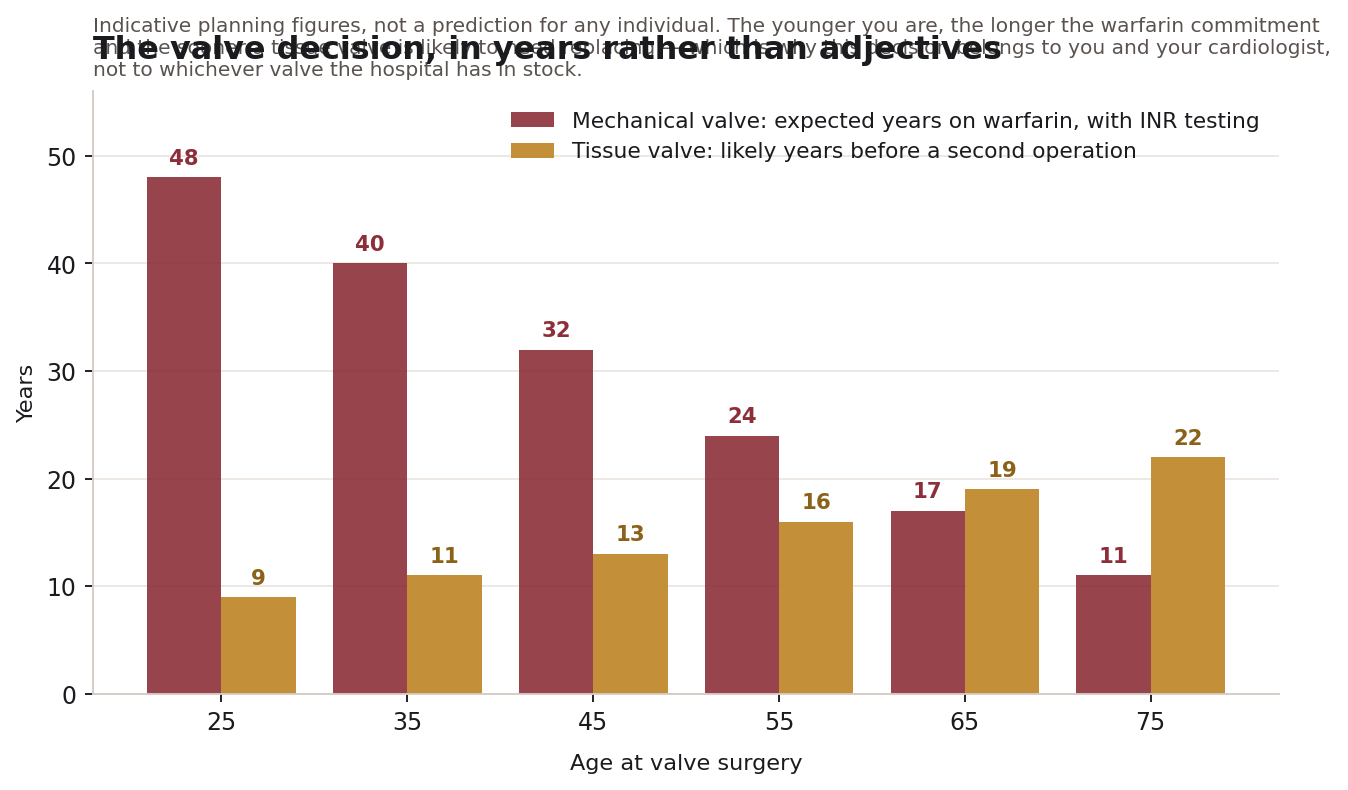
The same decision, expressed in years. Neither bar is a prediction for any individual, but the shape of the trade-off is what should be discussed with you before an implant is chosen.
Decision Three
Which surgeon, and which unit?
Only now does the hospital comparison begin, and cardiac surgery makes it easier than most specialties because the outcomes are countable. Ask the surgeon’s name, his annual volume in your specific operation, and his unit’s mortality for that operation with an explanation of how it is calculated. A department that audits itself replies within a day with numbers and a caveat about case mix. One that does not sends a paragraph of reassurance.
Then ask what surrounds him: a dedicated cardiac intensive care unit rather than a general one, in-house perfusion, twenty-four hour echocardiography, and the ability to manage a return to theatre for bleeding without transferring you anywhere. For a child, ask specifically whether the unit has a paediatric cardiac programme with its own surgeons, anaesthetists and intensive care — adult cardiac excellence does not transfer automatically to a six-kilogram infant. For a redo operation, ask how many redos the unit does a year, because a second sternotomy is a different undertaking from a first.
| Ask for This Do not Accept This | |
| “Dr X performs about 300 open cases a year, roughly 120 of them valve procedures; unit mortality for isolated valve replacement around 2%.” | “Our surgeons are internationally trained with a 99% success rate.” Unmeasured perfection is marketing. |
| The name of the surgeon who will actually operate, and who takes over if he is unavailable. | A hospital brand with no individual named anywhere in the correspondence. |
| For children: a named paediatric cardiac team and its own intensive care unit. | A congenital case accepted onto an adult list because the hospital is famous. |
Decision Four
Who looks after you once you are home?
Cardiac surgery is the beginning of a long relationship with medicine, and the trip only succeeds if that relationship can be maintained in Nigeria. Before you fly, secure the far end of it. If you will be on warfarin, you need a named Nigerian doctor or clinic to run the INR, an agreed testing interval, a target range in writing, and clear instructions on what to do when a reading is out of range. You need an echocardiogram schedule and someone to perform it. You need to know which of your discharge medicines are available here and what they cost each month, and you need a plan for antibiotic cover before dental work, because a replaced valve makes that a lifelong requirement.
Ask also about cardiac rehabilitation. Structured, supervised exercise after heart surgery measurably improves recovery, and where a formal programme is not available near you, ask the Indian team to write a graded walking and activity plan you can follow at home with your own doctor checking on you.
| Ask for This Do not Accept This | |
| A discharge pack: operation note, valve or stent identity card, drug list with doses, INR target, follow-up schedule. | A verbal summary and an invitation to “call us any time”. |
| A named Nigerian doctor copied into the plan before you leave India. | Discharge with no identified local clinician at all. |
Before You FLY: the Cardiac Checklist
- See a dentist first. Infected teeth are a genuine source of valve infection, and reputable units want dental clearance completed before valve surgery. Doing it in Nigeria is cheaper and avoids delaying your operation after arrival.
- Get the films, not the reports. Send the echocardiogram images and the angiogram recording, not only the typed conclusions. Indian teams will re-read them, and re-reading changes plans.
- Control what can be controlled. Blood sugar, blood pressure and anaemia should be addressed before you travel; each of them alters your risk on the table.
- List every drug, including the herbal ones. Blood thinners, traditional preparations and supplements all matter to an anaesthetist, and several must be stopped at set intervals before surgery.
- Ask about fitness to fly. Severe valve disease, uncontrolled heart failure and recent heart attack all affect whether flying is safe now — and if it is not, that is information worth having before you buy a ticket.
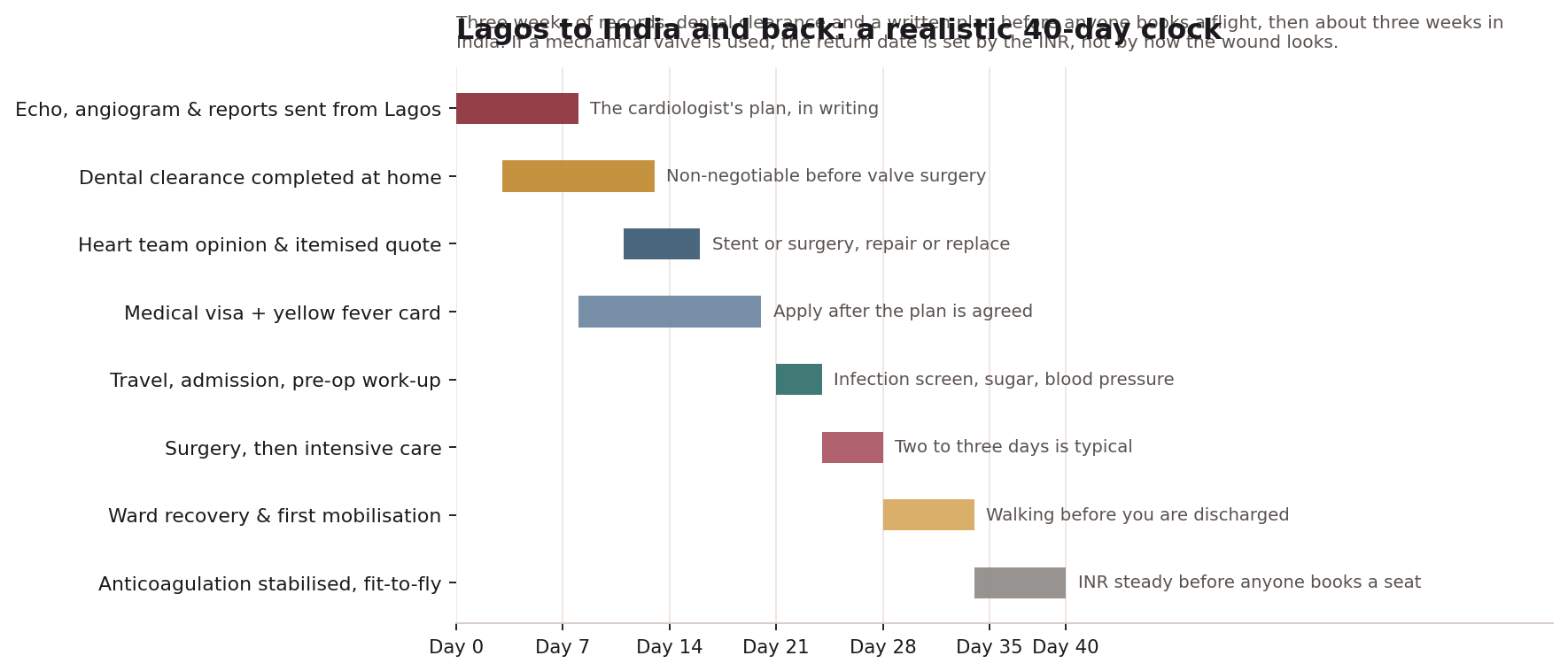
Three weeks of preparation at home, then roughly three weeks in India. With a mechanical valve the final week belongs to the INR, which is why return tickets should be changeable.
The money, in naira and in plain terms
Two facts frame everything. The naira has held a relatively stable band through mid-2026, near ₦1,380 to the dollar on the official NFEM window and roughly ₦1,410–1,425 in the parallel market. And this is out-of-pocket money: cover under the NHIA framework is built around care delivered inside Nigeria, and standard HMO plans do not fund elective surgery abroad. A small number of corporate and international policies carry overseas benefits — ask yours in writing, and ask specifically about intensive care days and about the drugs you will need afterwards.
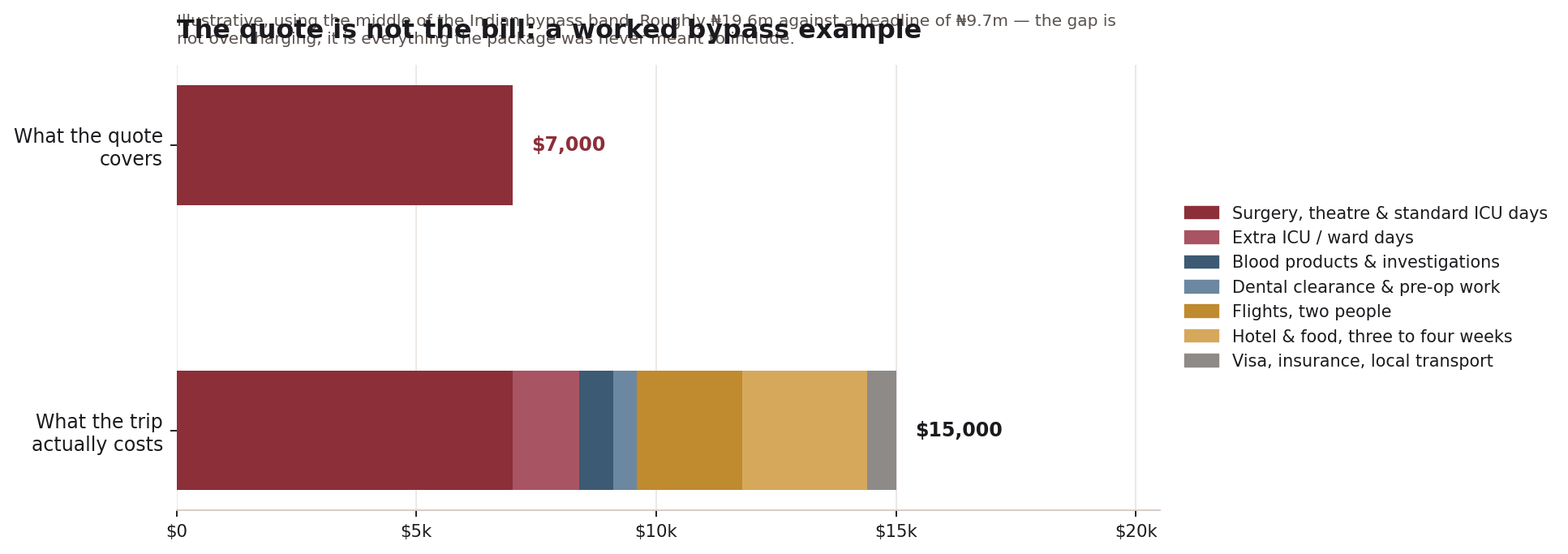
The gap is not overcharging. It is everything the surgical package was never meant to include — and it is where families run short, usually in week three.
- Practical money rules. Transfer to the hospital’s own account against an invoice and keep the SWIFT confirmation. Take the estimate in dollars and never let an intermediary set your exchange rate. Ask how many intensive care days the package assumes and the per-day rate beyond that, because in cardiac surgery that single line moves bills more than any other. Budget 20% contingency, and remember the year that follows: warfarin, INR tests, echocardiograms and medicines are a recurring cost, not a one-off.
Five Things that Should Stop You Booking Today
- Nobody has seen the angiogram film or the echo images. A quote built on typed reports alone is a price, not a plan.
- The valve type has not been discussed with you. If you cannot say why a mechanical or tissue valve is being proposed for you specifically, the conversation is not finished.
- You cannot name the surgeon. Hospitals do not operate; people do.
- The quote does not state how many intensive care days it assumes. That is the number most likely to change your final bill.
- There is no arrangement for INR monitoring at home. A mechanical valve without reliable monitoring is a risk you carry for decades.
Practicalities for the Nigerian traveller
Yellow fever is not optional. Travelling from Nigeria you need a valid yellow fever certificate to enter India, presented on arrival. Sort it early; it derails more departures than anything else on this list.
Apply for the visa after the plan, not before. The Indian High Commission in Abuja and the Consulate General in Lagos handle Nigerian applications, and the medical visa is issued against the hospital’s invitation letter. Put the attendant visa in the same batch — after heart surgery nobody should be travelling or recovering alone, and for a child both parents should be able to travel.
Routing, and a changeable ticket. With no practical non-stop from Lagos or Abuja, most patients connect through Addis Ababa, Dubai, Doha or Istanbul, fifteen to twenty hours door to door. Book a changeable return: recovery from cardiac surgery does not run to a schedule, and the last thing a family needs is a fixed ticket pulling against medical advice.
Take the whole story with you. Old ECGs, previous echocardiograms, records of any rheumatic fever in childhood, immunisation history for a child, and a written account of what you can and cannot do — how many stairs, how far you walk before stopping. In 24 years of this work, that last detail has changed more surgical plans than any brochure ever has.
Straight Answers for Nigerian Patients about Cardiac Surgery in India
How much does heart surgery cost in India for a Nigerian patient?
Typical Indian hospital packages run about US$5,000 to US$8,000 for coronary bypass, US$6,500 to US$10,000 for a single valve replacement, and US$4,000 to US$6,500 for angioplasty with one stent — roughly ₦6.9m to ₦13.8m at mid-2026 rates. Allow a realistic all-in trip cost of around ₦18m to ₦22m for bypass surgery once flights, three to four weeks of accommodation and extra hospital days are included.
Should I choose a mechanical or a tissue heart valve?
It depends on your age and, critically, on whether you can maintain warfarin monitoring where you live. A mechanical valve lasts decades but requires lifelong anticoagulation with regular INR testing; a tissue valve avoids that but wears out, sooner in younger patients. For Nigerian patients far from a reliable laboratory, or for women planning pregnancy, a tissue valve is often the more realistic choice. Decide it with your cardiologist before surgery, not in theatre.
How long must a Nigerian patient stay in India for cardiac surgery?
Plan on about three weeks in India: work-up and admission, surgery with two to three days in cardiac intensive care, ward recovery, then stabilisation of anticoagulation and a fit-to-fly review. Add roughly three weeks at home beforehand for records, dental clearance, the heart team opinion and the visa.
Can my child have congenital heart surgery in India?
Yes, and paediatric cardiac work is one of the strongest reasons Nigerian families travel, since congenital programmes are scarce at home. Insist on a unit with a dedicated paediatric cardiac team and its own paediatric intensive care rather than an adult service taking a child onto its list, and arrange visas for both parents.
Will NHIA or my Nigerian HMO pay for heart surgery in India?
Almost certainly not. Cover under the NHIA framework is built around accredited providers inside Nigeria, and standard HMO plans do not fund elective surgery abroad. A few corporate and international policies carry overseas benefits, so ask your HMO in writing first, including what happens if intensive care is prolonged.
A closing word
Work through the four decisions in order. Urgency first, because it determines whether you should be travelling at all this month. Then the operation, then the valve, then the surgeon, and only then the price — because a cheap quote for the wrong procedure is the most expensive document in this entire process.
If you would like the echo, the angiogram and the quotes looked over before you commit, send them. Sometimes the useful answer is that the operation being proposed is right and the price is fair. Sometimes it is that the valve being planned does not suit the life you actually live, and that conversation is far better had in Lagos than in a ward in Delhi.
Cost figures are indicative bands from quotations issued to West African patients, not offers, and Nigerian figures apply only where a procedure is available locally. Conversions use an official NFEM rate of about ₦1,380 to US$1 at mid-July 2026 and will move. The valve chart shows general planning figures, not individual predictions. Visa and vaccination rules change: verify with the Indian High Commission Abuja or Consulate General Lagos before travelling. The illustration is an original artwork and
Frequently Asked Questions by Nigerians about Cardiac Surgery in India
Why do Nigerian patients choose India for cardiac surgery?
Nigerian patients often choose India because high-volume cardiac centres offer experienced surgeons, dedicated cardiac intensive care units, in-house perfusion teams, advanced imaging review, paediatric cardiac programmes, and shorter access times for complex procedures.
How much does cardiac surgery in India cost for Nigerian patients?
Indicative hospital package costs are approximately USD 5,000–8,000 for CABG, USD 6,500–10,000 for single-valve replacement, USD 9,000–13,000 for double-valve replacement, and USD 4,000–6,500 for angioplasty with one stent.
Should a Nigerian patient choose angioplasty or bypass surgery?
The decision depends on the angiogram, number and location of blocked arteries, diabetes, pumping function, left main disease, and whether all three major vessels are affected. A heart-team review by both an interventional cardiologist and cardiac surgeon is recommended.
Can a damaged heart valve be repaired instead of replaced?
Sometimes. Mitral valve repair may avoid an artificial valve and lifelong anticoagulation, but severely scarred or calcified rheumatic valves may need replacement. Patients should ask the hospital whether repair is possible in their specific case.
Should Nigerian patients choose a mechanical or tissue heart valve?
A mechanical valve can last for decades but requires lifelong warfarin and regular INR testing. A tissue valve usually avoids long-term warfarin but may wear out and require another procedure. The choice should consider age, pregnancy plans, access to INR testing, and long-term follow-up in Nigeria.
How long should Nigerian patients stay in India after heart surgery?
Patients should usually plan for about three weeks in India, including pre-operative assessment, surgery, two to three days in cardiac intensive care, ward recovery, anticoagulation stabilisation, and fitness-to-fly clearance.
Can Nigerian children receive congenital heart surgery in India?
Yes. Nigerian families should select a hospital with a dedicated paediatric cardiac surgeon, paediatric cardiac anaesthetist, and separate paediatric cardiac intensive care unit rather than relying only on a strong adult cardiac programme.
What records should Nigerian patients send before travelling?
Patients should send the echocardiogram images, angiogram recording, ECGs, blood test results, current medication list, previous cardiac reports, and a clear description of symptoms and daily activity limitations. Typed reports alone may not be sufficient for treatment planning.
What should be included in a cardiac surgery quotation?
The quotation should clearly state surgeon and anaesthesia fees, procedure type, valve or stent details, ICU and ward days included, extra ICU charges, investigations, medicines, implants, and the cost of any additional procedure that becomes necessary.
What follow-up care is needed after returning to Nigeria?
Follow-up may include INR monitoring for mechanical valves, regular echocardiograms, medication review, cardiac rehabilitation, dental infection prevention, and ongoing care from a named Nigerian cardiologist or clinic.
Page Summary
This guide explains how Nigerian patients can choose cardiac surgery and heart treatment in India. It covers the urgency of travel, angioplasty versus bypass surgery, valve repair versus replacement, mechanical versus tissue valve selection, surgeon and hospital assessment, treatment costs, medical visa requirements, expected stay, pre-travel preparation and long-term follow-up after returning to Nigeria. It is designed to help patients compare treatment options based on clinical suitability, long-term safety and the full cost of care rather than hospital marketing or package price alone.
Citation Block
| Topic | Information |
|---|---|
| Topic Information | Details |
| Procedure | Cardiac Surgery and Advanced Heart Treatment |
| Country | India |
| Intended Audience | Nigerian Patients |
| Conditions Covered | Coronary Artery Disease, Heart Valve Disease, Rheumatic Heart Disease, Heart Failure and Congenital Heart Defects |
| Procedures | Angioplasty, Stenting, CABG, Valve Repair, Valve Replacement, Congenital Heart Surgery and Pacemaker Implantation |
| Typical Stay | Approximately 3 Weeks |
| Cardiac ICU Stay | Approximately 2–3 Days |
| Hospital Stay | Approximately 7–10 Days |
| Recovery | Several Weeks, Depending on the Procedure, Heart Function and Overall Health |
| Average CABG Cost | USD 5,000–8,000 |
| Estimated All-In CABG Budget | Approximately ₦18 Million–₦22 Million |


Our Mission Statement
Our mission is to place patients at the centre of every healthcare decision by providing trustworthy, evidence-based, and unbiased medical information. We believe that informed patients make better decisions. Backed by personalised guidance from our experienced advisory team, we help patients understand their treatment options, compare them objectively, and confidently choose the path that best suits their medical needs and personal circumstances.
Patient Testimonials from Nigeria


Ready to Take the First Step?
Share your Medical Reports with our Healthcare Managers Today and Get a FREE CONSULTATION, a Personalized Treatment Plan, and Complete Support from Arrival to Recovery.
Get Your Free ConsultationAreas We Serve
This resource has been thoughtfully prepared for patients from Nigeria who are considering medical treatment in India. We also welcome patients from the wider region in the countries mentioned below-
We assist patients from:
- Benin
- Niger
- Chad
- Cameroon
- Algeria
- Egypt
- Libya
- Morocco
- Sudan
- Tunisia
- Gambia
- Ghana
- Burkina Faso
- Cabo Verde
- Côte d'Ivoire
- Equatorial Guinea
- São Tomé and Príncipe
Many of the insights, treatment pathways, hospital recommendations, travel guidance, and patient support services described here are equally relevant and may be used as a reference when planning treatment in India.
From Nigeria to India: Your Complete Patient Support Guide
- Artificial Disc Replacement in India for Nigerian Patients
- Weight Loss and Bariatric Surgery in India for Nigerian Patients
- Bone Marrow Transplant in India for Nigerian Patients
- Brain Tumour Surgery in India for Nigerian Patients
- Breast Cancer Treatment and Surgery in India for Nigerian Patients
- Cancer Treatment and Surgery in India for Nigerian Patients
- Cardiac Arrhythmia and Heart Pacemaker Treatment in India for Nigerian Patients
- Cardiac Surgery in India for Nigerian Patients
- Colorectal Cancer Treatment and Surgery in India for Nigerian Patients
- Complex Orthopaedic and Joint Revision Surgery in India for Nigerian Patients
- Cornea Transplant and Advanced Eye Surgery in India for Nigerian Patients
- CyberKnife Treatment in India for Nigerian Patients
- Gamma Knife Treatment in India for Nigerian Patients
- Heart Failure Treatment and Surgery in India for Nigerian Patients
- Hip Surgery in India for Nigerian Patients
- HIPEC Cancer Surgery in India for Nigerian Patients
- IVF and Fertility Treatment in India for Nigerian Patients
- Joint Arthroscopy and Sports Medicine in India for Nigerian Patients