

Selecting the Best Breast Cancer Surgeons and Hospitals in India for Nigerian Patients
The tumour's biology, not just its size, determines the right treatment. Getting that biology right, before surgery, is where this decision actually starts.
Breast cancer is not a single, uniform disease, and the version most common in West Africa is, statistically, a harder one. Published 2025 research places triple-negative breast cancer, the subtype lacking the hormone and HER2 receptors that many modern therapies target, at up to 46 percent of cases in West Africa and Nigeria specifically, against roughly 12 to 15 percent in Western populations. Five-year survival in Nigeria has been reported below 40 percent, against over 70 percent in high-income countries. Some of this gap reflects late presentation and treatment access; a meaningful part of it reflects the biology of the tumours themselves, and that biology can only be known through proper testing before any treatment plan is set. This changes what "choosing a good surgeon" actually means for a Nigerian patient. A surgeon and hospital genuinely excellent at treating hormone-receptor-positive breast cancer, the more common pattern in Western textbooks and training programmes, are not automatically equally prepared for the more aggressive, harder-to-treat pattern seen more often here. Confirming that fit specifically is the real starting point of this decision.
Should you even be reading this guide? If breast cancer has been diagnosed by biopsy and treatment planning is underway, this guide will help you evaluate the surgeon and hospital combination best suited to your specific tumour type. If a biopsy has not yet confirmed diagnosis, that is the necessary first step before this guide's questions become relevant.
Healing Journeys of Nigerian Patients







Key Takeaways
- Nigerian patients considering breast cancer treatment in India should begin with the tumour's biology rather than simply its size or the surgeon's reputation. The guide emphasises that breast cancer is not one uniform disease and that treatment should be built around the tumour's receptor and molecular profile.
- Triple-negative breast cancer receives particular attention because published 2025 research cited in the guide places its prevalence at up to 46% among West African and Nigerian breast-cancer cases, compared with roughly 12–15% in Western populations.
- The page 2 chart also contrasts reported five-year survival of approximately 38% in Nigeria with around 70% in high-income countries. The guide attributes this gap to a combination of later presentation, treatment-access barriers and tumour biology rather than to one single factor.
- Triple-negative breast cancer lacks the hormone and HER2 receptors that many targeted treatments depend on. This makes complete receptor testing particularly important before a treatment plan is finalised.
- The guide specifically warns against moving directly from biopsy to a surgery date without completing the required receptor and, where indicated, genetic or molecular testing first.
- The correct sequence should begin with a confirmed biopsy diagnosis, followed by receptor and relevant genetic testing, multidisciplinary review, treatment sequencing and then surgery when surgery belongs at that point in the pathway.
- For triple-negative disease, neoadjuvant chemotherapy before surgery is frequently discussed as an appropriate sequence because it may shrink the tumour and also show how well the cancer responds to systemic treatment.
Quick Facts
- Treatment
- Breast Cancer Treatment and Surgery
- Country
- India
- Intended Audience
- Nigerian Patients and Families
- Primary Condition
- Breast Cancer
- Important Nigeria/West Africa-Specific Subtype
- Triple-Negative Breast Cancer
- Triple-Negative Breast Cancer Share Mentioned
- Up to 46% in West Africa/Nigeria
- Western Triple-Negative Share Mentioned
- Approximately 12–15%
- Nigeria Five-Year Survival Figure Mentioned
- Approximately 38% in the Page 2 Chart
- High-Income-Country Five-Year Survival Figure Mentioned
- Approximately 70%
- First Requirement
- Biopsy-Confirmed Diagnosis
- Treatment Planning Basis
- Tumour Biology, Receptor Status, Stage and Imaging
- Testing Before Surgery
- Full Receptor Testing and Genetic/Molecular Testing Where Indicated
- Important Treatment Principle
- The Treatment Plan Should Follow the Biology
In Brief
Nigerian patients choosing a breast cancer surgeon and hospital in India should have a biopsy-confirmed diagnosis followed by complete receptor testing and relevant genetic or molecular testing before a surgical plan is finalised. This matters particularly because the guide cites triple-negative breast cancer rates of up to 46% in West African and Nigerian populations, much higher than the roughly 12–15% reported in Western populations. Treatment should be reviewed by a multidisciplinary tumour board and may involve chemotherapy before surgery, breast-conserving surgery with radiation, mastectomy or reconstruction depending on tumour biology and stage. The guide gives hospital-level systems slightly more weight than surgeon technique because pathology, molecular testing, systemic therapy, radiation and reconstruction all influence the treatment sequence.
START HERE
Why this is not simply "breast cancer treatment abroad"
Triple-negative breast cancer is more aggressive, more likely to be diagnosed at a younger age, and less responsive to standard hormone or HER2-targeted therapy than other subtypes. Its outsized presence in West African and Nigerian patients specifically is not a minor statistical footnote; it is central to how a treatment plan should be built. Research increasingly points to a combination of genetic ancestry and socioeconomic factors behind this pattern, meaning it is unlikely to be explained away by any single cause, and is worth taking seriously as a genuine, distinct clinical reality rather than a passing statistical curiosity.
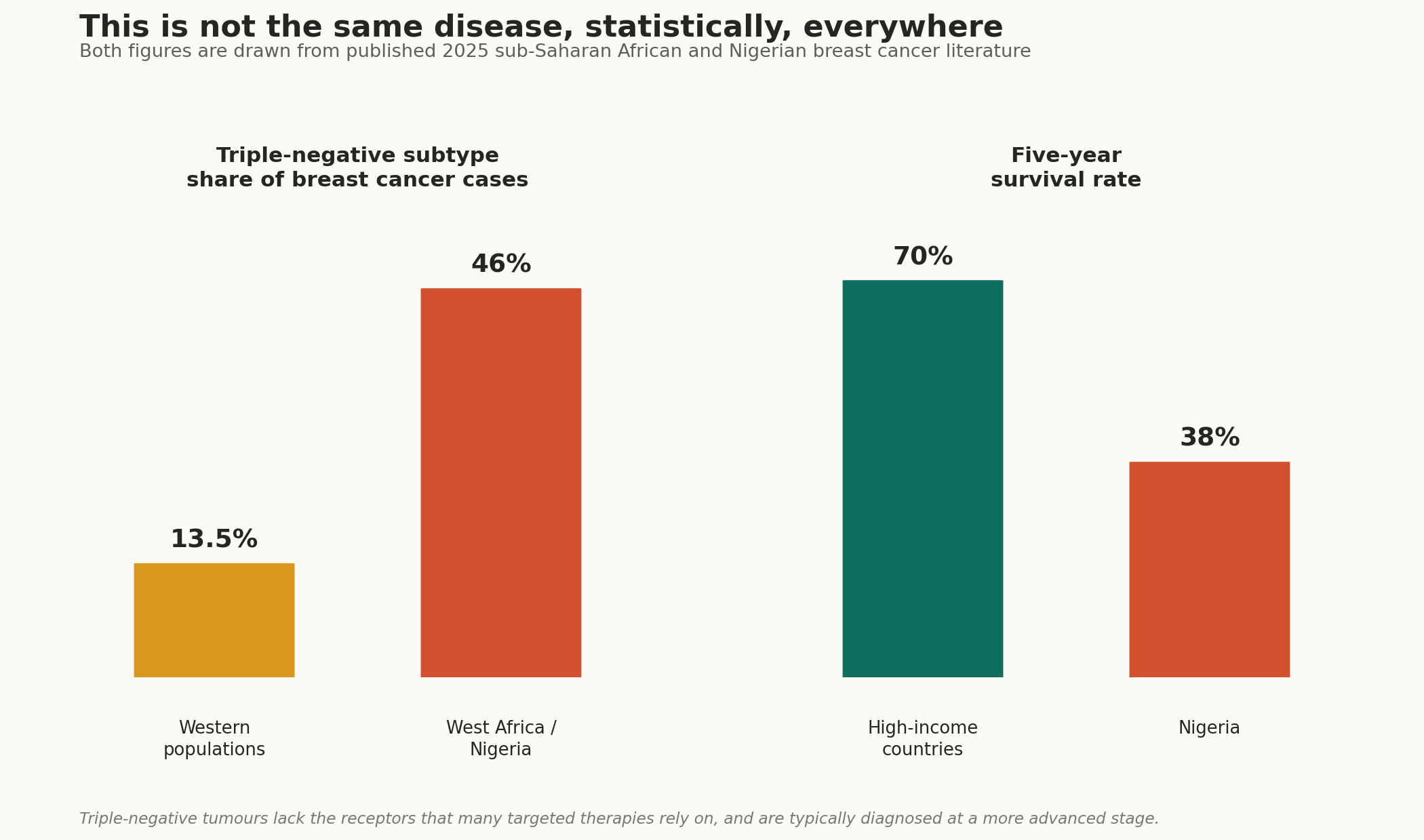
Triple-negative tumours lack the receptors that many targeted therapies rely on, and are typically diagnosed at a more advanced stage.
This is precisely why a generic search for "the best breast cancer hospital" misses the more important question. What matters is whether a specific programme has genuine, demonstrated experience treating this specific, more aggressive subtype pattern, not breast cancer treatment in the abstract. Asking a programme directly what share of their breast cancer caseload is triple-negative, and how their treatment protocols adapt for it, is a genuinely useful, specific question that a general reputation cannot answer for you.
BEFORE SURGERY
The sequence that determines everything after it
Because tumour biology so strongly shapes the right treatment, the order in which things happen matters as much as any single decision within that order.
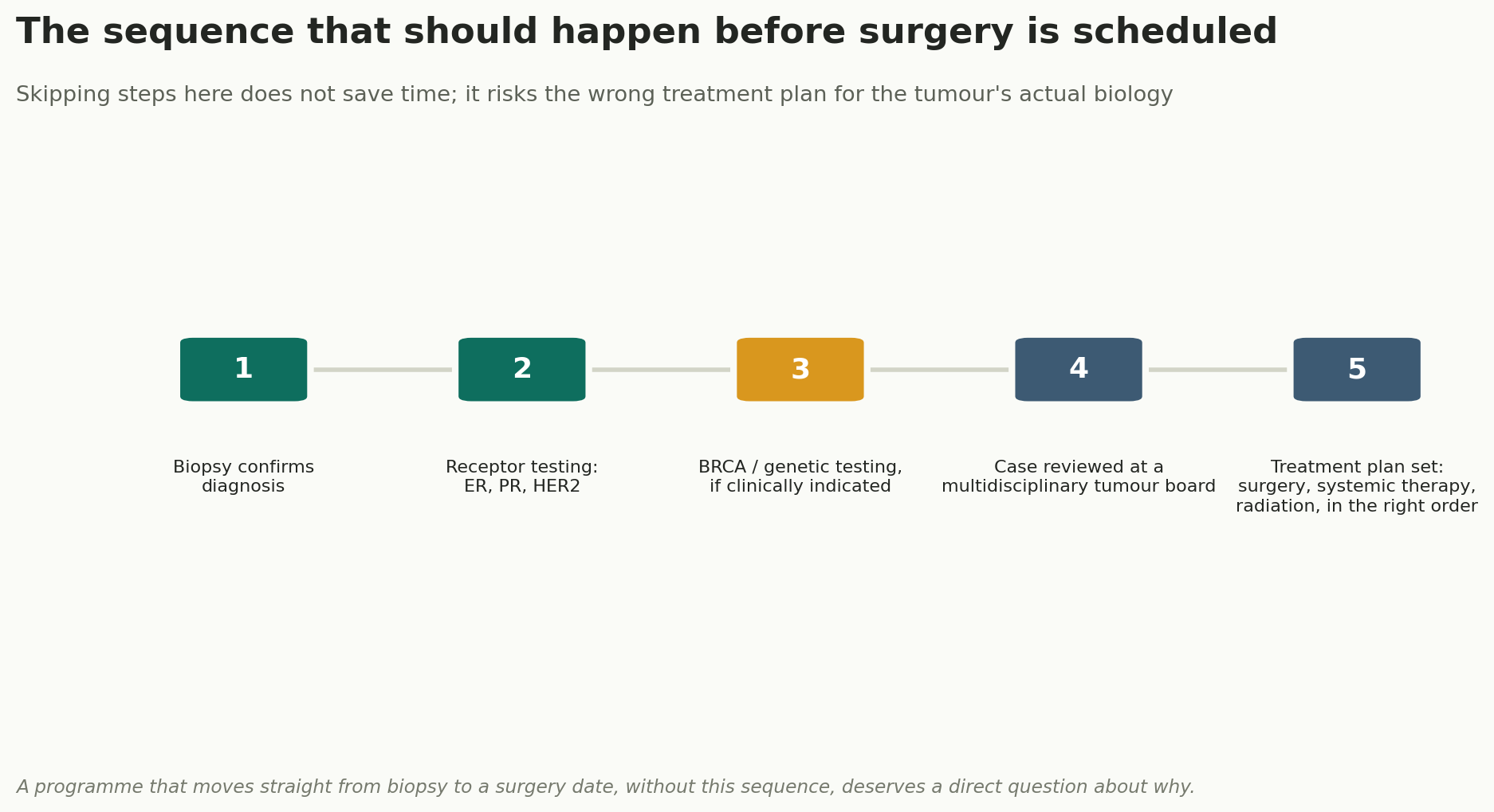
A programme that moves straight from biopsy to a surgery date, without this sequence, deserves a direct question about why.
Skipping straight to surgery before this sequence completes risks a mismatch between the treatment given and what the tumour's actual biology calls for, whether that means chemotherapy should have come first, whether a specific targeted therapy applies, or whether radiation needs to be planned alongside a breast- conserving approach from the outset. For triple-negative disease specifically, neoadjuvant chemotherapy, given before surgery, is frequently the appropriate sequence, since it can shrink the tumour and provides an early signal of how well it is responding to treatment.
A note on reconstruction, since it is often under-discussed. Breast reconstruction, whether immediate or delayed, is a genuine, valid part of treatment planning, not a cosmetic afterthought. A programme that does not raise this as an option, where clinically appropriate, is leaving out a meaningful part of what a full treatment plan should cover, and this omission is itself informative about how completely that programme is thinking through a patient's actual, whole recovery.
THE BALANCE
The system carries slightly more weight here
Given how much of this decision depends on accurate testing and coordinated multidisciplinary planning, the hospital's systems carry marginally more weight than in some other procedures covered in this series.
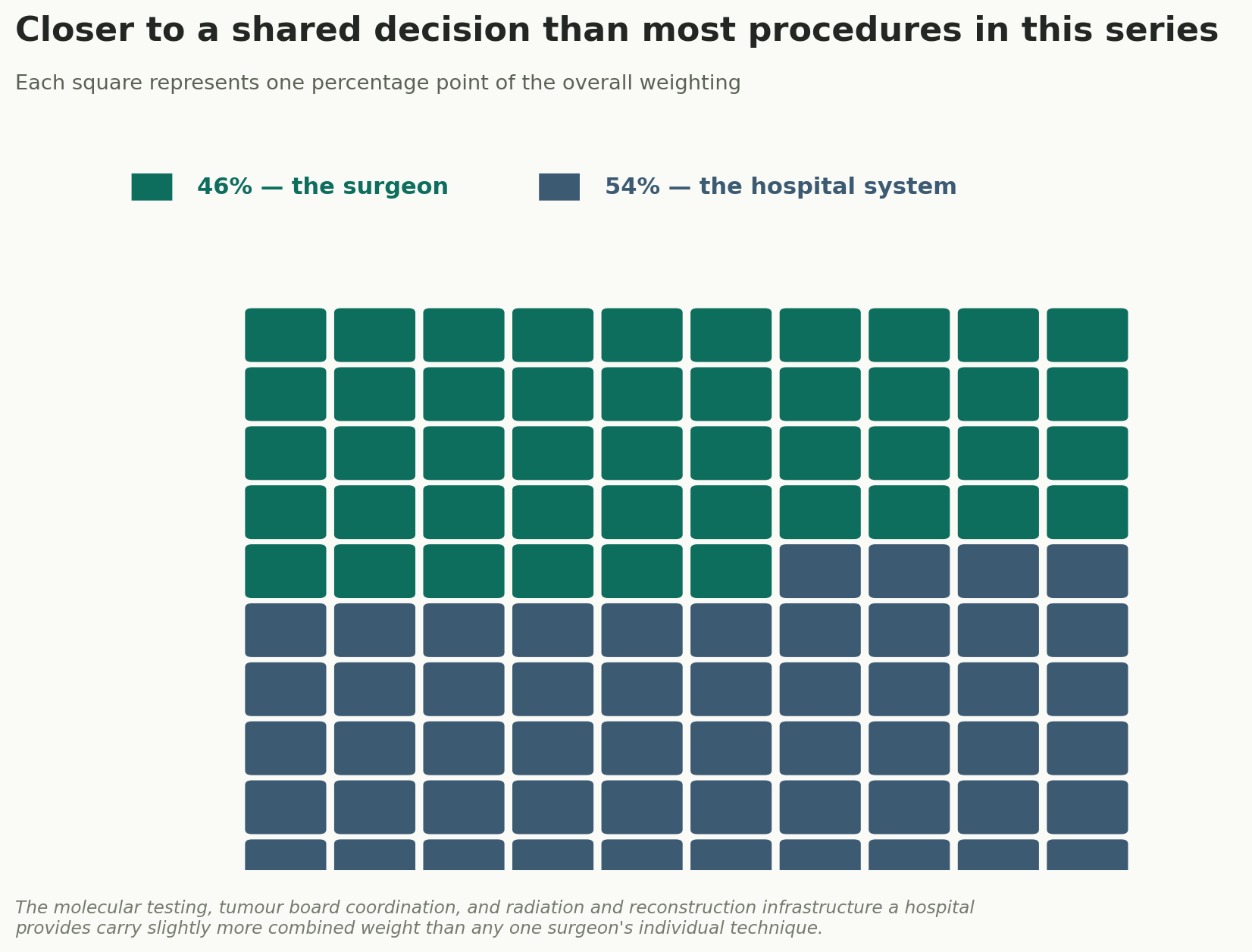
The molecular testing, tumour board coordination, and radiation and reconstruction infrastructure a hospital provides carry slightly more combined weight than any one surgeon's individual technique.
This does not diminish the surgeon's importance, particularly for the technical and cosmetic outcome of the operation itself. It reflects that survival, specifically, is shaped earlier and more broadly than the operating theatre alone, by whether the tumour was correctly characterised and whether the full team around the surgeon acted on that information properly. A technically flawless operation built on an incomplete or inaccurate understanding of the tumour's biology is still, in a real sense, the wrong operation.
THE VETTING CONVERSATION
What to actually ask
Questions for the surgeon
- What surgical approach do you recommend, and how does it match my specific receptor and stage results? A specific, imaging- and biology-based answer suggests real case-specific thinking.
- Is breast-conserving surgery an option, and if not, why? This should be a clear, reasoned answer, not a default toward mastectomy.
- What reconstruction options are available, and when would they happen? This should be discussed proactively, not only if you ask.
- What is your experience with cases involving triple-negative or other aggressive subtypes specifically? General breast surgery volume does not automatically confirm this.
Questions for the hospital
- Is full receptor and genetic testing completed and reviewed before a treatment plan is finalised? This should never be an afterthought to a surgery date already set.
- Is my case discussed at a genuine multidisciplinary tumour board? More than one specialist's input on sequencing and treatment choice matters here.
- Is radiation therapy available on-site or through a coordinated partner, if breast-conserving surgery is planned? This affects whether that approach is genuinely appropriate for your case.
- What is the plan for starting systemic therapy, and how quickly after surgery, if needed? Delay here can affect outcomes.
NIGERIA-SPECIFIC CONSIDERATIONS
Two honest numbers worth sitting with
A clinical study at University College Hospital, Ibadan, found approximately 85 percent of Nigerian breast cancer patients presented at an advanced stage, largely attributed to limited awareness of symptoms and delayed access to diagnosis. A separate tertiary hospital study found that almost 45 percent of patients discontinued chemotherapy partway through treatment because of financial instability, a genuinely sobering figure that speaks to why realistic, complete budgeting for a full treatment course, not just an initial surgery, matters enormously. Neither figure reflects a lack of medical knowledge or willingness to treat; both reflect the practical, structural barriers that shape when and how completely Nigerian patients are able to access care.
Both figures point toward the same practical conclusion: earlier diagnosis and a genuinely complete, sustained treatment plan, whether pursued domestically or abroad, matter more to outcome than almost any other single factor, including where the surgery itself takes place. A family planning treatment abroad should budget realistically for the full course, surgery, systemic therapy, and any follow-up radiation, rather than the initial procedure alone, precisely because incomplete treatment is a well-documented, genuine risk here.
Four warning signs worth taking seriously
- Surgery scheduled before receptor and genetic testing results are available. The treatment plan should follow the biology, not precede it.
- No clear description of a multidisciplinary tumour board process. This coordination is a marker of genuinely comprehensive care.
- Reconstruction never raised as an option, where clinically appropriate. This should be part of the conversation, not something you have to ask for.
- A default recommendation toward mastectomy without a clear, case-specific reason. This deserves a direct, honest explanation either way.
A practical order of operations
- Get a confirmed diagnosis by biopsy, with full receptor and, where indicated, genetic testing.
- Confirm the case has been, or will be, reviewed by a genuine multidisciplinary tumour board.
- Ask the surgeon-side and hospital-side questions above before agreeing to a surgery date.
- Get the full treatment plan in writing: surgery, systemic therapy, and radiation, in sequence.
- Travel, surgery, and a supervised recovery period appropriate to the specific procedure chosen.
- Hand full pathology and treatment documentation to a Nigerian oncologist for coordinated, sustained follow-up care.
Straight Answers for Nigerian Patients about Breast Cancer Surgery in India
Why is triple-negative breast cancer such an important factor here?
Published 2025 research places its prevalence at up to 46 percent among West African and Nigerian patients, against roughly 12 to 15 percent in Western populations. This subtype lacks the receptors many targeted therapies depend on, making accurate early testing especially important.
Should surgery happen before or after molecular testing?
Testing should happen before the treatment plan, including the surgical approach, is finalised. This sequence determines whether chemotherapy should come before surgery and what follow-up treatment is needed.
Why does the hospital carry slightly more weight than the surgeon here?
Treatment depends on accurate pathology and molecular testing, multidisciplinary coordination, and access to radiation and reconstruction, all hospital-level capabilities that shape the plan as much as any individual surgeon's technique.
Is breast-conserving surgery always possible?
No. It depends on tumour size relative to breast size, location, and whether radiation therapy is available for follow-up, since breast-conserving surgery is usually paired with radiation. This should be discussed explicitly.
What is a realistic red flag when choosing a programme?
Surgery scheduled before testing results are available, an inability to describe the multidisciplinary tumour board process, or no discussion of reconstruction options, are all genuine warning signs.
A closing word
Breast cancer treatment done well is a sequence, not a single operation: accurate testing, coordinated multidisciplinary planning, and then a surgical approach matched precisely to what that testing revealed. For Nigerian patients specifically, given how differently this disease tends to present, getting that sequence right carries even more weight than it might elsewhere. In twenty-four years of this work, the families who navigate this best insist on full testing before any surgery date is set, ask directly about multidisciplinary coordination and reconstruction options, and treat a sustained, fully budgeted treatment course as the real goal, not just a single successful operation. The biology of the tumour sets the plan. Everything after that, the surgery, the systemic therapy, the radiation, the reconstruction, should follow from it, in that order, rather than the plan being built backward from a surgery date decided too early.
Sources
- 🌐 Triple Negative Breast Cancer: A Comprehensive Review of Epidemiology, Biology, and Management
- 🌐 Panoptic Overview of Triple-Negative Breast Cancer in Nigeria: Current Challenges and Promising Global Initiatives. JCO Global Oncology
- 🌐 Profile of Triple Negative Breast Cancer: A Retrospective Review. Nigerian Medical Journal, 2025
- 🌐 American Cancer Society — Breast cancer treatment, patient information
- 🌐 High Commission of India, Abuja — Medical and Medical Attendant Visa requirements
Frequently Asked Questions by Nigerians about Breast Cancer Surgery in India
Why is triple-negative breast cancer particularly important for Nigerian patients?
The guide cites published 2025 research placing triple-negative disease at up to 46% of breast-cancer cases in West Africa and Nigeria, compared with roughly 12–15% in Western populations. Because this subtype lacks hormone and HER2 receptors, treatment planning depends heavily on accurate early testing.
Should breast cancer surgery be scheduled before receptor testing is complete?
No. The guide says receptor and relevant genetic or molecular testing should be completed before the final treatment plan, including the surgical approach, is confirmed.
Does chemotherapy sometimes need to come before breast cancer surgery?
Yes. For triple-negative disease especially, neoadjuvant chemotherapy may be appropriate before surgery to shrink the tumour and assess how well it responds to systemic treatment.
Is breast-conserving surgery always possible?
No. It depends on tumour size relative to breast size, location and whether postoperative radiotherapy is available. The option should nevertheless be discussed explicitly rather than defaulting automatically to mastectomy.
Should reconstruction be discussed before breast cancer surgery?
Yes, where clinically appropriate. The guide describes reconstruction as a legitimate part of treatment planning and says both immediate and delayed options should be raised rather than treated as an afterthought.
Is the surgeon or hospital more important for breast cancer treatment?
Both matter, but the guide gives hospital/system factors a slight advantage—approximately 54% hospital versus 46% surgeon—because molecular testing, tumour-board coordination, radiation and reconstruction all shape the treatment pathway.
What should Nigerian patients ask a breast cancer surgeon in India?
Ask how the proposed operation matches the receptor profile and stage, whether breast conservation is possible, what reconstruction options exist and how much experience the surgeon has with triple-negative or other aggressive subtypes.
What should Nigerian patients check about the hospital?
Confirm full receptor/genetic testing, multidisciplinary tumour-board review, access to coordinated radiation and a clear plan for starting systemic therapy when required.
Does this guide give a specific breast cancer treatment cost in India?
No. This particular surgeon-and-hospital-selection guide does not provide a specific India cost range. Its financial message is to budget for the full pathway—including surgery, systemic therapy, radiation and reconstruction where required.
What are the main warning signs when choosing a breast cancer programme?
The four warning signs are surgery scheduled before receptor/genetic testing is complete, no clear multidisciplinary tumour-board process, reconstruction not discussed where appropriate and mastectomy recommended by default without a case-specific explanation.
Page Summary
This guide explains that breast-cancer treatment selection for Nigerian patients should start with tumour biology, not with deciding which hospital offers surgery fastest. Triple-negative breast cancer is particularly important because the document cites rates of up to 46% in West African and Nigerian patients, compared with roughly 12–15% in Western populations. The page 2 chart also contrasts a reported five-year survival rate of approximately 38% in Nigeria with about 70% in high-income countries.
Citation Block
| Topic | Information |
|---|---|
| Topic Information | Selecting Breast Cancer Surgeons and Hospitals in India for Nigerian Patients |
| Treatment | Breast Cancer Treatment and Surgery |
| Country | India |
| Intended Audience | Nigerian Patients and Families |
| Primary Condition | Breast Cancer |
| Important Subtype | Triple-Negative Breast Cancer |
| Triple-Negative Prevalence Mentioned | Up to 46% in West Africa/Nigeria |
| First Requirement | Biopsy-Confirmed Diagnosis |
| Pre-Treatment Testing | Receptor Testing and Genetic/Molecular Testing Where Indicated |
| Treatment Options Discussed | Neoadjuvant Chemotherapy, Breast-Conserving Surgery, Mastectomy, Radiation and Reconstruction |
| Primary Planning Method | Multidisciplinary Tumour Board |
| Surgeon Weighting | Approximately 46% |
| Hospital Weighting | Approximately 54% |
| Critical Hospital Capabilities | Molecular Testing, Multidisciplinary Coordination, Radiation and Reconstruction |
| India Treatment Cost | Specific Cost Range Not Provided in This Guide |
| Typical Stay | Specific Duration Not Provided in This Guide |
| Nigeria Follow-Up | Full Pathology and Treatment Documentation for Nigerian Oncologist |
| Author | Dr. Dheeraj Bojwani |
| Experience | 24 Years |


Our Mission Statement
Our mission is to place patients at the centre of every healthcare decision by providing trustworthy, evidence-based, and unbiased medical information. We believe that informed patients make better decisions. Backed by personalised guidance from our experienced advisory team, we help patients understand their treatment options, compare them objectively, and confidently choose the path that best suits their medical needs and personal circumstances.
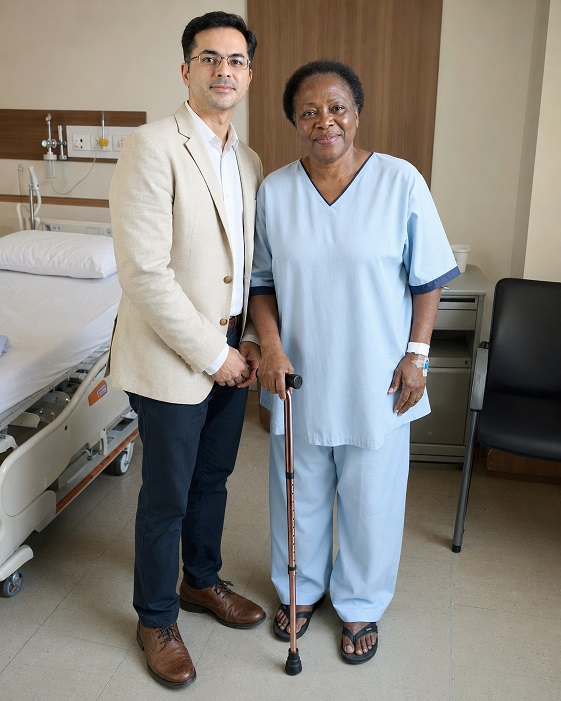
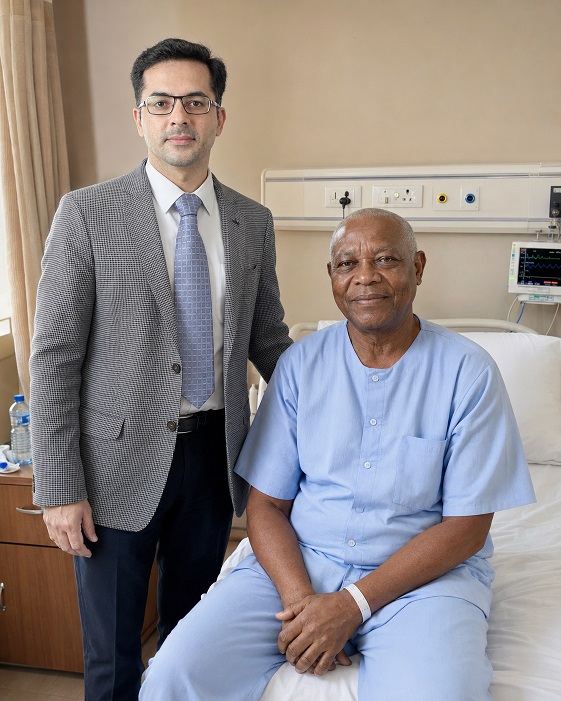
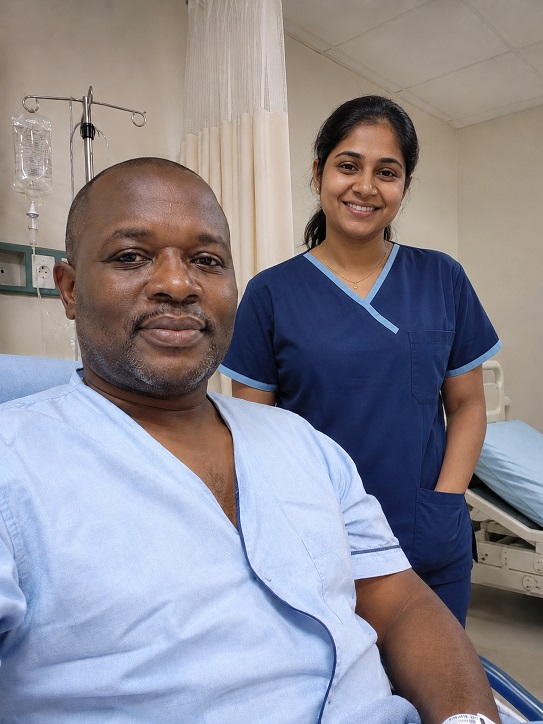
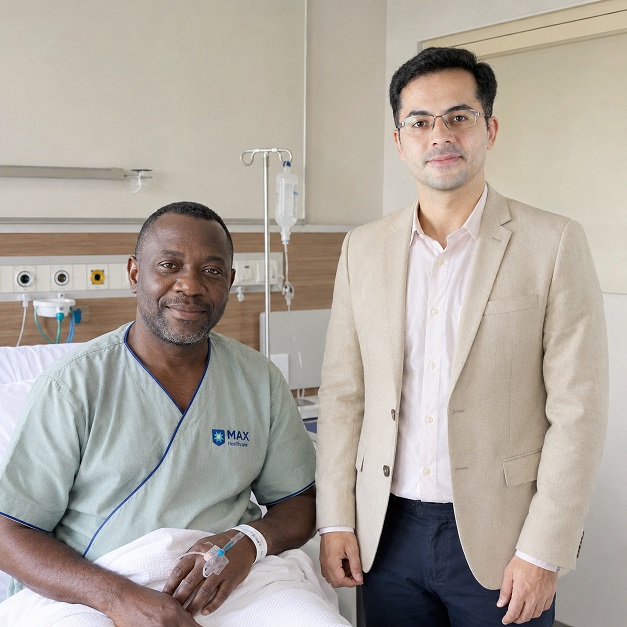
Patient Testimonials from Nigeria


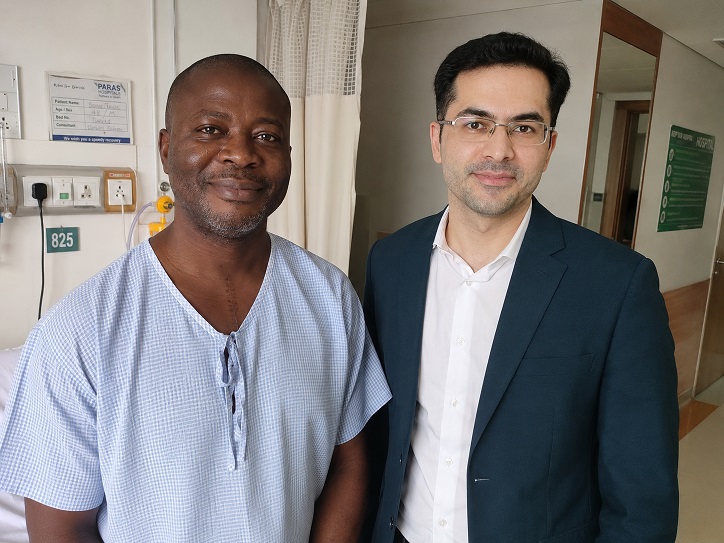
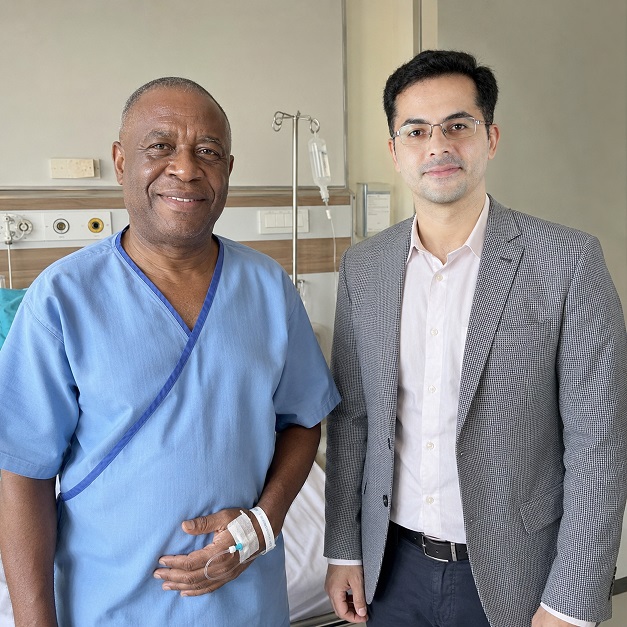
Ready to Take the First Step?
Share your Medical Reports with our Healthcare Managers Today and Get a FREE CONSULTATION, a Personalized Treatment Plan, and Complete Support from Arrival to Recovery.
Get Your Free ConsultationAreas We Serve
This resource has been thoughtfully prepared for patients from Nigeria who are considering medical treatment in India. We also welcome patients from the wider region in the countries mentioned below-
We assist patients from:
- Benin
- Niger
- Chad
- Cameroon
- Algeria
- Egypt
- Libya
- Morocco
- Sudan
- Tunisia
- Gambia
- Ghana
- Burkina Faso
- Cabo Verde
- Côte d'Ivoire
- Equatorial Guinea
- São Tomé and Príncipe
Many of the insights, treatment pathways, hospital recommendations, travel guidance, and patient support services described here are equally relevant and may be used as a reference when planning treatment in India.
From Nigeria to India: Your Complete Patient Support Guide
- Artificial Disc Replacement in India for Nigerian Patients
- Weight Loss and Bariatric Surgery in India for Nigerian Patients
- Bone Marrow Transplant in India for Nigerian Patients
- Brain Tumour Surgery in India for Nigerian Patients
- Breast Cancer Treatment and Surgery in India for Nigerian Patients
- Cancer Treatment and Surgery in India for Nigerian Patients
- Cardiac Arrhythmia and Heart Pacemaker Treatment in India for Nigerian Patients
- Cardiac Surgery in India for Nigerian Patients
- Colorectal Cancer Treatment and Surgery in India for Nigerian Patients
- Complex Orthopaedic and Joint Revision Surgery in India for Nigerian Patients
- Cornea Transplant and Advanced Eye Surgery in India for Nigerian Patients
- CyberKnife Treatment in India for Nigerian Patients
- Gamma Knife Treatment in India for Nigerian Patients
- Heart Failure Treatment and Surgery in India for Nigerian Patients
- Hip Surgery in India for Nigerian Patients
- HIPEC Cancer Surgery in India for Nigerian Patients
- IVF and Fertility Treatment in India for Nigerian Patients
- Joint Arthroscopy and Sports Medicine in India for Nigerian Patients