

Selecting the Best Bariatric Surgeons and Hospitals in India for Nigerian Patients
The operation lasts a few hours. The relationship with your own nutrition that follows lasts the rest of your life.
Most patients researching bariatric surgery focus, understandably, on the procedure itself: which operation, how much weight it removes, how long recovery takes. What deserves equal attention is what happens afterward. Bariatric surgery permanently changes how the body absorbs nutrients, and this creates a genuine, lifelong need for monitoring and supplementation that does not end when the incisions heal. Choosing a programme means choosing both a surgeon and a long-term system of care, and this guide treats both as equally important. This guide sets out the real tradeoff between the two main surgical approaches, the lifelong monitoring commitment that follows either one, and why this particular evaluation is weighted more evenly than most others in this series.
Should you even be reading this guide? If bariatric surgery has genuinely been discussed and confirmed as appropriate for your specific situation, this guide will help you evaluate the surgeon and programme. A full medical work-up assessing whether surgery is the right approach remains the appropriate starting point if this has not yet happened.
Healing Journeys of Nigerian Patients









Key Takeaways
- The guide emphasises that choosing bariatric treatment means choosing both a surgeon and a long-term care programme, because nutritional monitoring and supplementation continue for life after surgery.
- The page 2 comparison shows approximately 43.5% median excess weight loss with sleeve gastrectomy and 50.7% with gastric bypass. Bypass offers greater median weight loss but is more complex and higher risk.
- Neither procedure is presented as universally better. The choice should consider the patient's health profile, obesity-related conditions such as diabetes and hypertension, and the tradeoff between weight loss and procedure complexity.
- Bariatric surgery can improve or resolve obesity-related conditions such as type 2 diabetes and hypertension, making its benefits broader than weight reduction alone.
- The guide identifies vitamin B12, iron, calcium and vitamin D deficiencies as important long-term risks, particularly after gastric bypass.
- The page 3 monitoring timeline shows frequent blood tests during months 1–3, continued supplementation and monitoring during months 3–12, annual blood work during years 1–5 and lifelong monitoring thereafter.
- The evaluation deliberately gives 50% weight to the surgeon's procedure choice and technical execution and 50% to the programme's lifelong nutritional monitoring and follow-up system.
- The guide cites a 2023 review reporting only 214 bariatric procedures performed domestically in Nigeria, with 62.6% being non-surgical gastric balloon procedures, indicating limited domestic access to definitive bariatric surgery.
- Nigerian patients are advised to establish a Nigerian physician who can order and interpret ongoing blood tests and coordinate this care with the Indian programme before travelling.
- Four major warning signs are highlighted: no individualised sleeve-versus-bypass discussion, no written lifelong monitoring plan, no Nigerian follow-up coordination and pressure toward one procedure without considering the patient's health profile.
Quick Facts
- Treatment
- Bariatric / Metabolic Surgery
- Country
- India
- Patients
- Patients from Nigeria
- Key Specialist
- Bariatric Surgeon / Metabolic Surgery Team
- Main Procedures
- Sleeve Gastrectomy and Gastric Bypass
- Median Excess Weight Loss
- 43.5% Sleeve; 50.7% Bypass
- Main Benefit
- Weight Loss and Improvement of Obesity-Related Conditions
- Important Nutrients
- Vitamin B12, Iron, Calcium and Vitamin D
- Monitoring
- Lifelong
- Evaluation Weight
- 50% Surgeon; 50% Long-Term Programme
- Important Check
- Individualised Procedure Recommendation
- Programme Check
- Written Lifelong Nutritional Monitoring Plan
- Nigeria Follow-Up
- Establish a Local Physician Before Travel
- Domestic Capacity
- 214 Bariatric Procedures Reported in Nigeria in 2023
- Warning Sign
- No Clear Sleeve vs Bypass Discussion
- Pre-Travel Records
- Medical Work-Up and Relevant Health Records
- Visa
- Indian Medical Visa and Medical Attendant Visa
- Follow-Up
- Lifelong Blood Tests, Supplements and Nutritional Monitoring
- Author
- Dr. Dheeraj Bojwani
- Experience
- 24+ Years
In Brief
For Nigerian patients considering bariatric surgery in India, the guide recommends evaluating the surgeon and the long-term care programme equally, rather than focusing only on the operation or immediate weight loss. Patients should receive an individualised discussion of sleeve gastrectomy versus gastric bypass, understand the lifelong need for vitamin and mineral monitoring, and obtain a written follow-up schedule before travelling. Establishing a Nigerian physician for ongoing blood tests and coordinating care with the Indian programme are also important parts of the treatment plan.
START HERE
More weight loss usually means more complexity
Understanding this tradeoff is the necessary first step before evaluating any specific surgeon or programme.
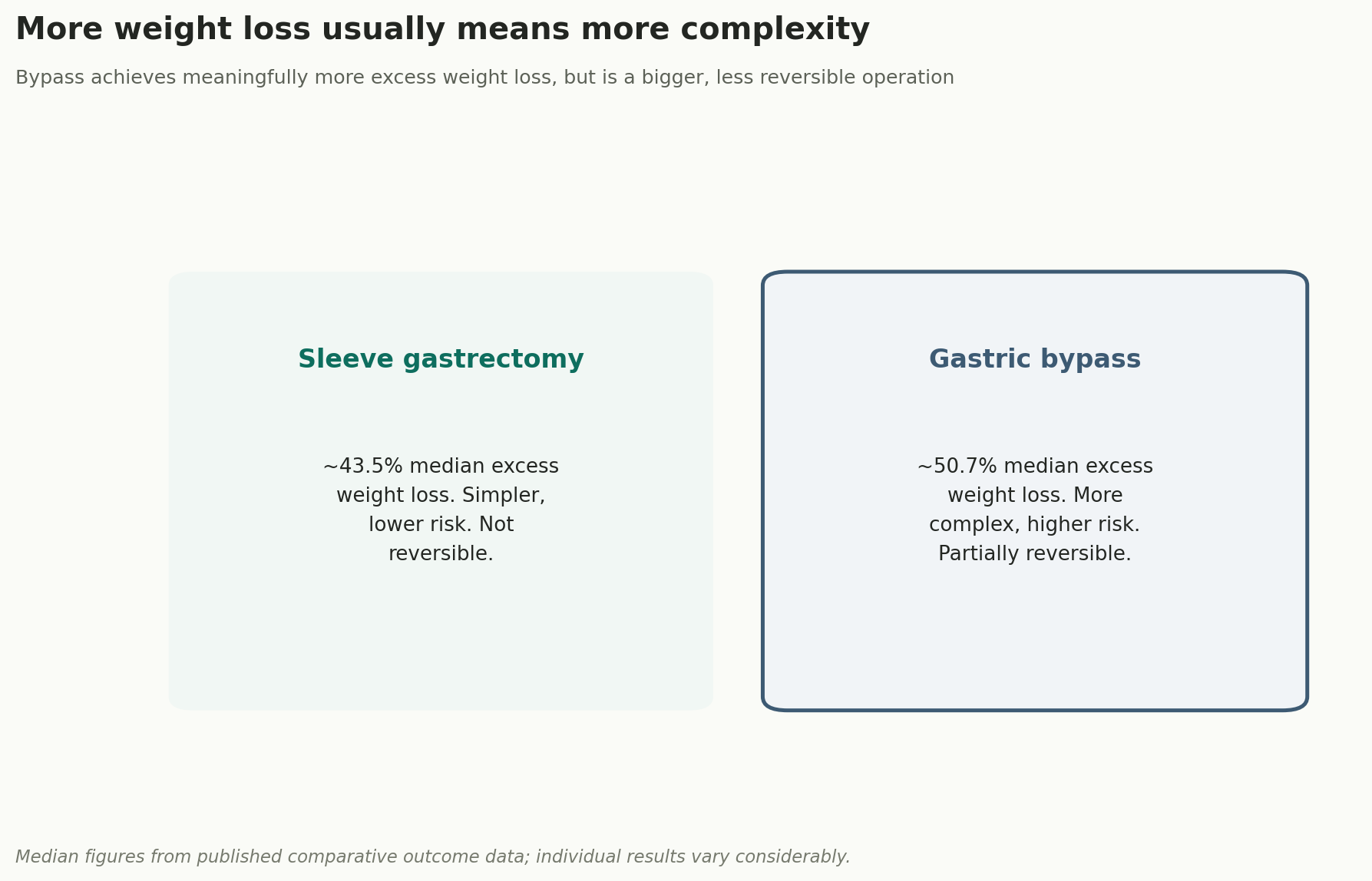
Median figures from published comparative outcome data; individual results vary considerably.
Neither procedure is universally correct; the right choice depends on your specific health profile, the severity of any obesity-related conditions such as diabetes, and your own preference regarding the tradeoff between weight loss magnitude and procedure complexity. A surgeon should walk through this decision with you specifically, rather than defaulting to whichever procedure their programme performs most often.
It is worth noting that both procedures genuinely improve, and often resolve, obesity-related conditions like type 2 diabetes and hypertension, not just body weight itself. This broader metabolic benefit is part of why bariatric surgery is increasingly described in clinical literature as metabolic surgery, reflecting its effect well beyond the number on a scale.
The Part Most Patients Overlook
The surgery ends in hours; the monitoring does not
This is the part of bariatric surgery least discussed upfront, and arguably the most important for long-term success.
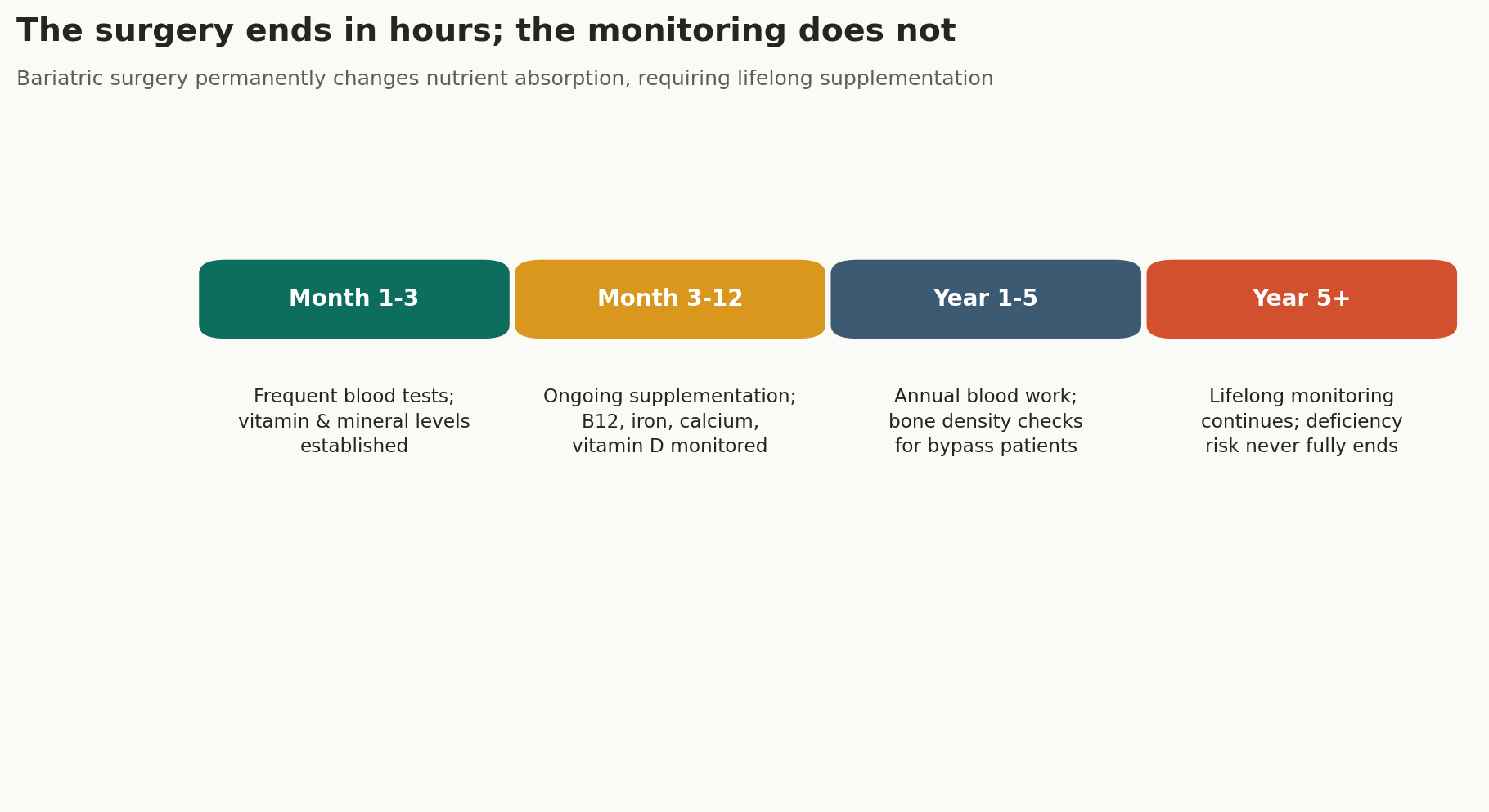
Bariatric surgery permanently changes nutrient absorption, requiring lifelong supplementation.
Vitamin B12, iron, calcium, and vitamin D deficiencies are genuine, well-documented risks after bariatric surgery, particularly following gastric bypass, and untreated deficiencies can cause serious, sometimes irreversible complications over time. A programme that offers only a brief post-operative check-up, without a structured plan for lifelong monitoring, is not offering complete care.
This is a genuinely different kind of ongoing commitment than most other procedures in this series ask of a patient. A hip replacement, once healed, requires little continuing intervention; bariatric surgery asks for active, sustained participation in your own care, indefinitely, and a programme should prepare you honestly for that reality rather than presenting the surgery as a single, complete event.
A note on arranging monitoring back in Nigeria, since this needs planning before you travel.
Establishing a relationship with a Nigerian physician who can order and interpret the relevant blood tests, and coordinating this with the treating programme before you leave, is a genuinely important part of this decision, not an afterthought to handle once home.
THE BALANCE
An exactly even split, and deliberately so
Given how much long-term success depends on sustained aftercare, not just the operation, this evaluation weights precisely evenly.
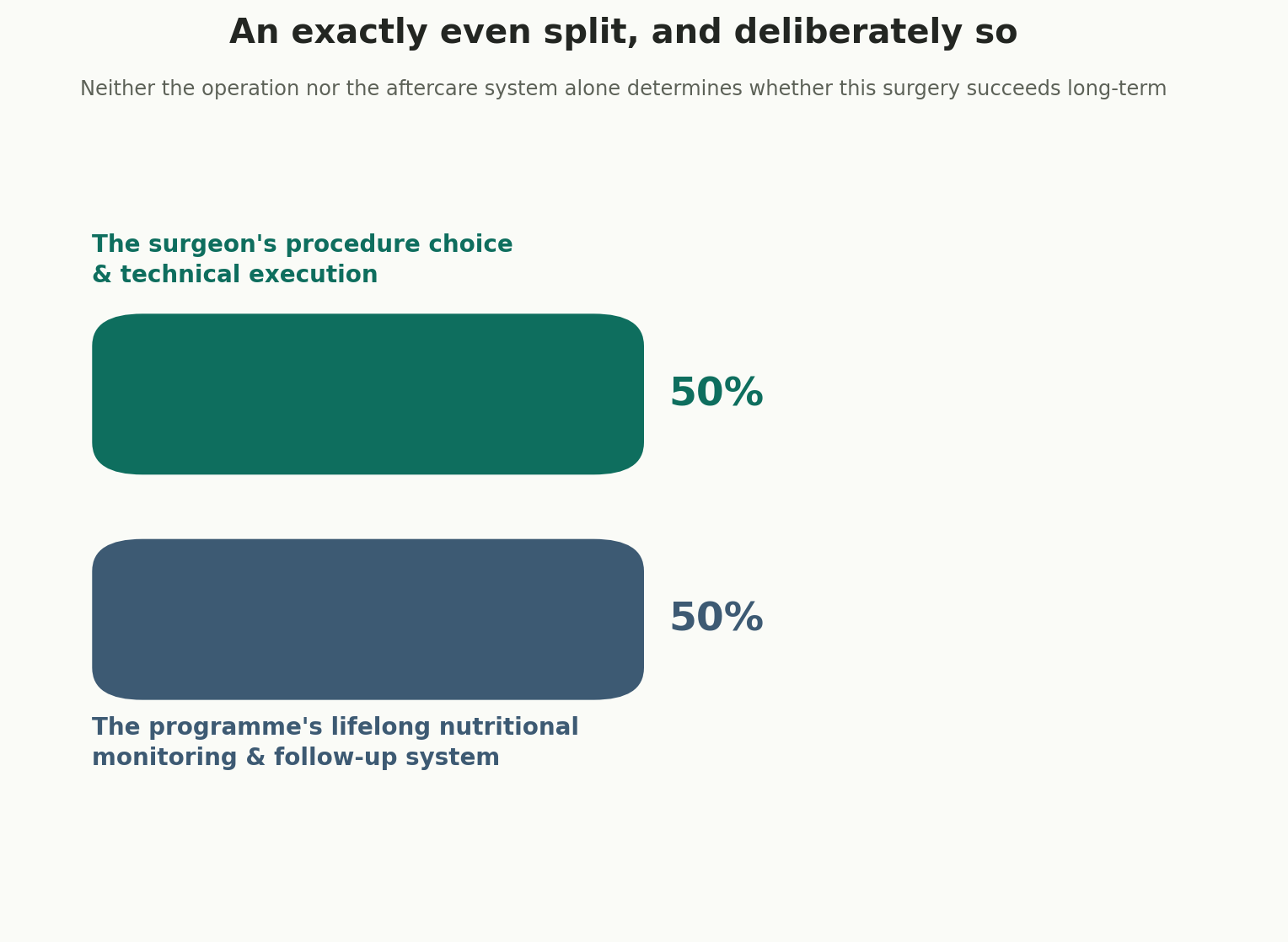
Neither the operation nor the aftercare system alone determines whether this surgery succeeds long-term.
This is a genuinely different balance than most other procedures in this series, where the operation itself typically carries the larger share. Bariatric surgery's long-term success depends so heavily on sustained, structured follow-up that a technically excellent operation, without genuine ongoing monitoring afterward, is only half of what this decision actually requires. A programme that treats aftercare as an afterthought, however skilled its surgeons, is only delivering half of what this treatment genuinely demands.
THE VETTING CONVERSATION
What to actually ask
Questions for the surgeon
- Which procedure do you recommend for my specific situation, and why? A thoughtful answer engages with your particular health profile.
- What is your specific experience and complication rate with this procedure? A confident, specific answer suggests genuine, tracked experience.
- What happens if complications arise during or after surgery? This should be a clear, rehearsed protocol.
- How do you approach patients with obesity-related conditions like diabetes? This should reflect a coordinated, informed approach.
Questions for the programme
- What is the structured plan for lifelong nutritional monitoring after surgery? This should be specific, not a vague general reassurance.
- What blood tests and supplements will be required, and how often? This should be a clear, written schedule.
- How will you coordinate follow-up care with a Nigerian physician? This should be planned before you travel.
- What is the programme's own long-term outcome data? Specific, tracked figures matter more than general reputation.
Nigeria-specific Considerations
Why domestic capacity remains genuinely limited
Nigeria's obesity prevalence is estimated at around 15 percent of adults, roughly 30 million people, with a striking regional pattern: central obesity affects an estimated 48 percent of people in southern regions compared to 18 percent in northern regions. Despite this scale, a 2023 national review found only 214 bariatric procedures performed domestically that year, and the majority, 62.6 percent, were non-surgical gastric balloon insertions rather than definitive weight-loss surgery. This gap between need and domestic surgical capacity is precisely why international treatment remains a genuinely relevant option for many Nigerian patients, though a growing base of domestic bariatric expertise, including a documented ten-year surgical practice in Lagos, is a positive, ongoing development worth watching.
Four warning signs worth taking seriously
- No clear explanation of sleeve versus bypass tradeoffs for your specific case. This should be a genuine, individualised conversation.
- No structured, written plan for lifelong nutritional monitoring. This should be specific, not vague reassurance.
- No coordination plan for ongoing care once you return to Nigeria. This should be arranged before you travel.
- Pressure toward a specific procedure without discussing your individual health profile. The choice should be genuinely case-specific.
A practical order of operations
- Complete a full medical work-up confirming surgery is genuinely appropriate for your situation.
- Discuss sleeve versus bypass honestly, understanding the real tradeoffs for your specific case.
- Ask the surgeon-side and programme-side questions above before committing to treatment.
- Arrange a written, structured plan for lifelong nutritional monitoring before you travel.
- Establish a Nigerian physician who can order and interpret ongoing blood work.
- Travel, surgery, and a recovery period appropriate to the specific procedure performed.
Straight Answers for Nigerian Patients about Bariatric Surgery in India
Is gastric bypass always better than sleeve gastrectomy?
Not necessarily. Bypass achieves more median excess weight loss, around 50.7 percent versus 43.5 percent, but is more complex and higher risk. Sleeve is simpler but not reversible.
Does bariatric surgery require lifelong follow-up?
Yes. It permanently changes nutrient absorption, requiring ongoing vitamin and mineral monitoring, including B12, iron, calcium, and vitamin D, for the rest of a patient's life.
Is bariatric surgery available in Nigeria?
Access remains limited. A 2023 review found only 214 procedures performed domestically, with most being non- surgical gastric balloon insertions rather than definitive surgery.
Why is this weighted exactly evenly between surgeon and programme?
Long-term success depends as much on sustained, lifelong nutritional monitoring as on the surgery itself, so neither factor alone can be considered dominant.
What is a realistic red flag when choosing a provider?
No clear explanation of procedure tradeoffs, no structured lifelong monitoring plan, or no coordination for ongoing care at home, are genuine warning signs.
A closing word
Bariatric surgery is sometimes framed as a single decisive event, the operation that changes everything. The more accurate framing is that the operation begins a lifelong relationship with monitoring and supplementation, and a programme's genuine commitment to that relationship matters as much as its surgical skill. In twenty-four years of this work, the patients who navigate this best choose a procedure based on their own specific health profile rather than a programme's default, insist on a written, structured monitoring plan, and arrange Nigerian follow-up care before they travel, not after. The weight loss happens over months. The care that protects it happens for decades.
Sources
- 🌐 Obesity and the Need for Bariatric Surgery in Nigeria: A Review. Nigerian Postgraduate Medical Journal, 2024
- 🌐 Okaro A. Metabolic/bariatric clinical practice in Lagos, Nigeria: a retrospective review of the cases and outcomes of our 10-year experience
- 🌐 Awareness of Metabolic Bariatric Surgery Among Medical Students and House Officers in Lagos, Nigeria. Cureus, 2025
- 🌐 American Society for Metabolic and Bariatric Surgery — Choosing a bariatric surgeon, patient resources
- 🌐 High Commission of India, Abuja — Medical and Medical Attendant Visa requirements
Frequently Asked Questions by Nigerians about Bariatric Surgery in India
How should Nigerian patients choose a bariatric surgeon in India?
The guide recommends asking about the surgeon's specific experience with the proposed procedure, complication rate, procedure selection and management of obesity-related conditions rather than relying only on general reputation.
How should Nigerian patients evaluate a bariatric hospital or programme?
They should look for a structured lifelong nutritional monitoring plan, clear blood-test and supplement schedules, long-term outcome data and coordination with a Nigerian physician.
Which is better, sleeve gastrectomy or gastric bypass?
Neither is universally better. The guide cites approximately 43.5% median excess weight loss with sleeve and 50.7% with bypass, but bypass is more complex and higher risk.
Does bariatric surgery require lifelong follow-up?
Yes. The guide states that bariatric surgery permanently changes nutrient absorption, making lifelong vitamin, mineral and blood-test monitoring necessary.
Which nutritional deficiencies should Nigerian patients monitor?
The guide specifically identifies vitamin B12, iron, calcium and vitamin D as important nutrients requiring ongoing monitoring and supplementation.
How should follow-up be arranged after returning to Nigeria?
Patients should establish a Nigerian physician before travelling who can order and interpret blood tests and coordinate the ongoing care plan with the Indian bariatric programme.
How much weight loss can patients expect after bariatric surgery?
The guide's comparison cites median excess weight loss of approximately 43.5% after sleeve gastrectomy and 50.7% after gastric bypass. Individual results vary considerably.
Is bariatric surgery widely available in Nigeria?
Access remains limited. The guide cites a 2023 review reporting 214 bariatric procedures, with 62.6% being non-surgical gastric balloon procedures rather than definitive weight-loss surgery.
What are the warning signs when selecting a bariatric programme?
Major warning signs include no clear sleeve-versus-bypass discussion, no written lifelong monitoring plan, no Nigerian follow-up coordination and pressure toward a particular procedure without individual assessment.
What should Nigerian patients do before travelling to India for bariatric surgery?
They should complete a full medical work-up, understand the procedure options, evaluate the surgeon and programme, obtain a written lifelong monitoring plan and establish Nigerian follow-up care before travelling.
Page Summary
This guide explains how Nigerian patients should evaluate bariatric surgeons and hospitals in India, focusing equally on surgical expertise and the long-term aftercare programme. It compares sleeve gastrectomy and gastric bypass, noting median excess weight loss of approximately 43.5% and 50.7% respectively, while emphasising that the appropriate procedure depends on the patient's individual health profile. The guide highlights lifelong monitoring of vitamin B12, iron, calcium and vitamin D, recommends arranging Nigerian follow-up before travel, and identifies four warning signs when selecting a programme. It also discusses Nigeria's limited domestic bariatric capacity and the importance of structured long-term care after returning home.
Citation Block
| Topic | Information |
|---|---|
| Topic Information | Selecting the Best Bariatric Surgeons and Hospitals in India for Nigerian Patients for Patients from Nigeria |
| Treatment | Bariatric / Metabolic Surgery |
| Intended Audience | Patients from Nigeria |
| Key Specialist | Bariatric Surgeon / Metabolic Surgery Team |
| Main Procedures | Sleeve Gastrectomy and Gastric Bypass |
| Sleeve Excess Weight Loss | Approximately 43.5% Median Excess Weight Loss |
| Bypass Excess Weight Loss | Approximately 50.7% Median Excess Weight Loss |
| Procedure Choice | Based on Individual Health Profile and Procedure Tradeoffs |
| Main Long-Term Concern | Nutritional Deficiencies and Lifelong Monitoring |
| Important Nutrients | Vitamin B12, Iron, Calcium and Vitamin D |
| Evaluation Weighting | 50% Surgeon and Technical Execution; 50% Programme and Lifelong Follow-Up |
| Surgeon Check | Ask About Specific Experience and Complication Rate |
| Programme Check | Request a Written Lifelong Nutritional Monitoring Plan |
| Follow-Up Check | Confirm Coordination With a Nigerian Physician |
| Outcome Check | Ask for Specific, Tracked Long-Term Programme Data |
| Nigeria Capacity | 214 Bariatric Procedures Reported Domestically in 2023 |
| Important Warning | Avoid Programmes That Push One Procedure Without Individual Assessment |
| Pre-Travel Requirement | Complete Medical Work-Up Confirming Surgery Is Appropriate |
| Patient Journey | Medical work-up → procedure selection → surgeon/programme evaluation → monitoring plan → travel/surgery → lifelong follow-up |
| Follow-Up | Lifelong Nutritional Monitoring and Nigerian Physician Coordination |


Our Mission Statement
Our mission is to place patients at the centre of every healthcare decision by providing trustworthy, evidence-based, and unbiased medical information. We believe that informed patients make better decisions. Backed by personalised guidance from our experienced advisory team, we help patients understand their treatment options, compare them objectively, and confidently choose the path that best suits their medical needs and personal circumstances.
Patient Testimonials from Nigeria















Ready to Take the First Step?
Share your Medical Reports with our Healthcare Managers Today and Get a FREE CONSULTATION, a Personalized Treatment Plan, and Complete Support from Arrival to Recovery.
Get Your Free ConsultationAreas We Serve
This resource has been thoughtfully prepared for patients from Nigeria who are considering medical treatment in India. We also welcome patients from the wider region in the countries mentioned below-
We assist patients from:
- Benin
- Niger
- Chad
- Cameroon
- Algeria
- Egypt
- Libya
- Morocco
- Sudan
- Tunisia
- Gambia
- Ghana
- Burkina Faso
- Cabo Verde
- Côte d'Ivoire
- Equatorial Guinea
- São Tomé and Príncipe
Many of the insights, treatment pathways, hospital recommendations, travel guidance, and patient support services described here are equally relevant and may be used as a reference when planning treatment in India.
From Nigeria to India: Your Complete Patient Support Guide
- Artificial Disc Replacement in India for Nigerian Patients
- Weight Loss and Bariatric Surgery in India for Nigerian Patients
- Bone Marrow Transplant in India for Nigerian Patients
- Brain Tumour Surgery in India for Nigerian Patients
- Breast Cancer Treatment and Surgery in India for Nigerian Patients
- Cancer Treatment and Surgery in India for Nigerian Patients
- Cardiac Arrhythmia and Heart Pacemaker Treatment in India for Nigerian Patients
- Cardiac Surgery in India for Nigerian Patients
- Colorectal Cancer Treatment and Surgery in India for Nigerian Patients
- Complex Orthopaedic and Joint Revision Surgery in India for Nigerian Patients
- Cornea Transplant and Advanced Eye Surgery in India for Nigerian Patients
- CyberKnife Treatment in India for Nigerian Patients
- Gamma Knife Treatment in India for Nigerian Patients
- Heart Failure Treatment and Surgery in India for Nigerian Patients
- Hip Surgery in India for Nigerian Patients
- HIPEC Cancer Surgery in India for Nigerian Patients
- IVF and Fertility Treatment in India for Nigerian Patients
- Joint Arthroscopy and Sports Medicine in India for Nigerian Patients