

Selecting the Best Bone Marrow Transplant Teams and Hospitals in India: What Kenyan Patients Should Actually Look For
Families are still told that without a sibling match there is nothing to be done. There almost always is — which is why the donor question comes first.
A bone marrow transplant asks more of a patient and a family than almost any other procedure in this series — weeks of isolation, a rebuilt immune system, and a donor question that, for many Kenyan families, turns out to have a more hopeful answer than they expected. Across 24 years of guiding international patients through Indian hospitals, the bone marrow transplant cases I remember most clearly are the ones where a family had been told, incorrectly, that without a sibling match there was nothing more to be done. There almost always is. This is the framework I use when a Kenyan patient is weighing a bone marrow transplant in India. Like the kidney and liver transplant guides in this series, the donor question comes first, but here the answer is more encouraging than many families realise going in.
Key Takeaways
- Kenyan patients considering a bone marrow or stem cell transplant in India should begin by establishing their donor situation. The guide recommends HLA testing for the patient and close family members—including parents, siblings and children—because donor availability determines much of the transplant pathway.
- Bone marrow transplantation may use the patient's own stem cells through an autologous transplant or cells from another person through an allogeneic transplant. For patients requiring donor transplantation, a fully matched sibling is preferred when available, but the guide states that only around one-quarter of patients have one.
- Finding a matched unrelated donor can be particularly challenging for African patients because global stem-cell registries substantially under-represent African HLA types. The guide places the realistic likelihood of finding such a donor at approximately 15–20% or less.
- Haploidentical transplantation provides an important alternative. A parent, child or sibling who is approximately a half match may potentially serve as the donor. The chart on page 2 illustrates the difference in donor availability, showing approximately 25% for a matched sibling, around 16% for a matched unrelated donor and approximately 90% for a haploidentical family donor.
- Sickle cell disease receives particular attention because of its burden in Kenya. The guide identifies bone marrow transplantation as the only established cure for sickle cell disease, while emphasising that transplantation carries significant risks and is not automatically appropriate for every patient.
- The transplant team should include more than a single doctor. The guide recommends a genuine haemato-oncology transplant team involving a transplant haematologist, infectious-disease specialist, transplant coordinator and nurses trained specifically in transplantation and isolation care.
- The team's experience with the patient's specific donor type is particularly important. Patients considering haploidentical transplantation should ask about the
Quick Facts
- Conditions Covered
- Sickle cell disease, blood cancers and blood disorders requiring bone marrow or stem cell transplantation
- Transplant Types Mentioned
- Autologous transplant, allogeneic transplant, matched-sibling transplant, matched-unrelated-donor transplant and haploidentical transplant
- Target Audience
- Kenyan patients and families considering bone marrow or stem cell transplantation in India
- Author/Advisor
- Dr. Dheeraj Bojwani, Independent Medical Travel Advisor, 24 years' experience
- First Step
- HLA typing of the patient and close family members before serious hospital selection begins
- Matched Sibling Donor
- The guide states that approximately one-quarter of patients have a fully matched sibling donor
- Matched Unrelated Donor
- African HLA types are substantially under-represented in global registries, making matched unrelated donors more difficult to identify
- Haploidentical Donor
- A half-matched parent, child or sibling may potentially serve as a donor
- Donor Availability
- The page 2 chart shows approximately 25% matched-sibling availability, around 16% matched-unrelated availability and approximately 90% haploidentical-family-donor availability
- Kenya-Specific Condition
- Sickle cell disease receives particular attention because of its significant burden in Kenya
- Sickle Cell Treatment
- Bone marrow transplantation is described as the only established cure for sickle cell disease
- Transplant Team
- The guide recommends a transplant haematologist, infectious-disease specialist, transplant coordinator and dedicated transplant nursing team
- Team Experience
- Patients should ask for the team's annual volume specifically for the donor type being considered
- Important Transplant Risk
- Graft-versus-host disease (GVHD), particularly following allogeneic and haploidentical transplantation
In Brief
Kenyan patients considering bone marrow transplant in India should begin with HLA typing of the patient and close family members because donor type determines much of the transplant pathway. Where a fully matched sibling is unavailable, haploidentical transplantation using a half-matched parent, child or sibling may provide an important alternative, particularly because African HLA types are under-represented in international donor registries. The guide recommends selecting an experienced haemato-oncology transplant team and a hospital with transplant-specific accreditation, HEPA-filtered isolation facilities and strong infection-control systems. Indicative allogeneic bone marrow transplant costs in India are approximately USD 22,000–45,000, while autologous transplantation is generally around USD 15,000–20,000.
Before anything else: what is your donor situation?
A bone marrow, or stem cell, transplant can use the patient's own cells, collected and stored before intensive treatment (autologous), or cells from a donor (allogeneic). For most cancers and blood disorders needing a donor transplant, your treating haematologist should first test you and your close family — parents, siblings, children — for HLA compatibility. This single step determines almost everything that follows.
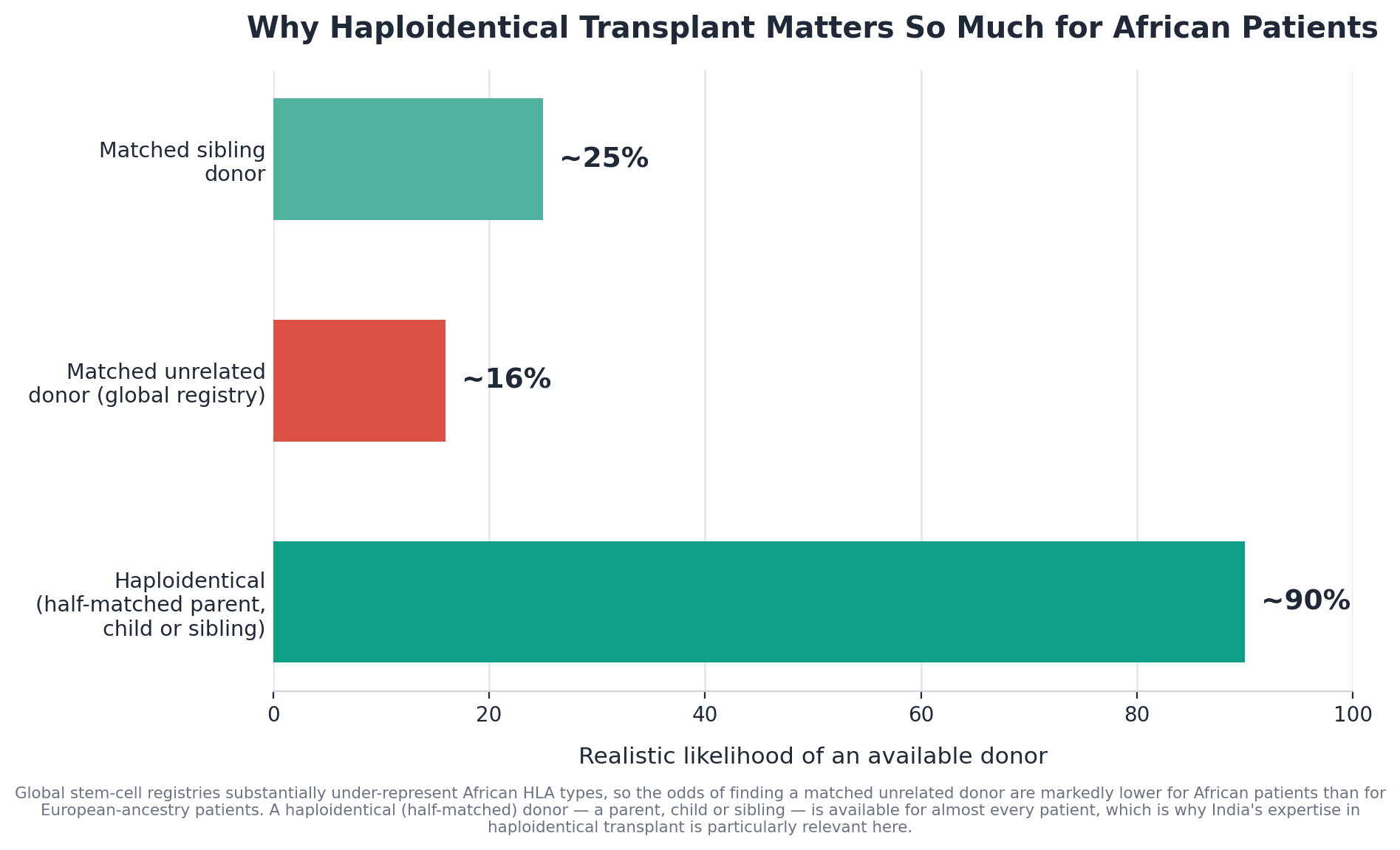
A fully matched sibling donor, when available, remains the gold standard, but only around a quarter of patients have one. Historically, patients without a sibling match were sent to international stem-cell registries to search for a matched unrelated donor — and this is where the situation is genuinely harder for African patients specifically. Global registries substantially under-represent African HLA types, so the realistic odds of finding a matched unrelated donor are markedly lower than for patients of European ancestry, often in the range of fifteen to twenty percent or less.
This is precisely where India's particular expertise becomes relevant. A haploidentical, or half- matched, transplant uses a parent, child, or sibling who is only a fifty percent genetic match — and modern conditioning protocols, particularly those using post-transplant cyclophosphamide, have made haploidentical outcomes comparable to fully matched transplants in many conditions. A half-matched donor is available to almost every patient with living close family, which transforms a situation that once felt hopeless into a genuinely treatable one.
Why this matters so much in Kenya specifically: sickle cell disease
Sickle cell disease is a major and significantly under-recognised health burden in Kenya. An estimated 14,000 infants are born with the condition every year nationally, and in parts of western Kenya, particularly the lake and coastal regions where malaria has historically been endemic, prevalence at birth reaches around 4.5 percent — among the highest rates reported anywhere. Without a national newborn screening programme, the true burden is likely underestimated, and a large proportion of affected children in Kenya still die before their fifth birthday from preventable complications.
Bone marrow transplant is the only established cure for sickle cell disease. It is not a decision to take lightly — the procedure carries real risks and is not automatically right for every patient, particularly those with significant existing organ damage from the disease. But for families who have only ever been offered ongoing symptom management, understanding that a genuine, evidence-based cure exists, and that a half-matched parent or sibling donor is very often available, is an important starting point for a conversation with a haematologist that many families in Kenya have simply never had the opportunity to have.
Should you travel at all?
Kenya does not currently have a routine, established bone marrow transplant programme comparable to its capacity for other major procedures in this series. This places bone marrow transplant alongside liver transplant as one of the clearer cases in this series where travelling abroad is close to a necessity rather than a preference, once a transplant has genuinely been indicated.
On funding: this makes bone marrow transplant a genuine candidate for Kenya's Social Health Authority overseas treatment benefit, in the same position as liver transplant — funding specific procedures unavailable domestically, rather than the routine joint, spine and kidney procedures elsewhere in this series that Kenya performs and which are excluded from overseas funding. Check directly and currently with SHA whether bone marrow transplant appears among the 36 gazetted procedures at the time you need it.
Part one: judging the transplant team
1. A genuine haemato-oncology transplant team, not a solo doctor
I weight this above every other single factor, and the chart below reflects that. A bone marrow transplant properly involves a transplant haematologist, an infectious disease specialist, a transplant coordinator, and dedicated nursing trained specifically in transplant and isolation care — not one doctor managing the process alone. Ask directly who is on your team and what each person's specific role is.
2. Personal annual volume in your specific donor type
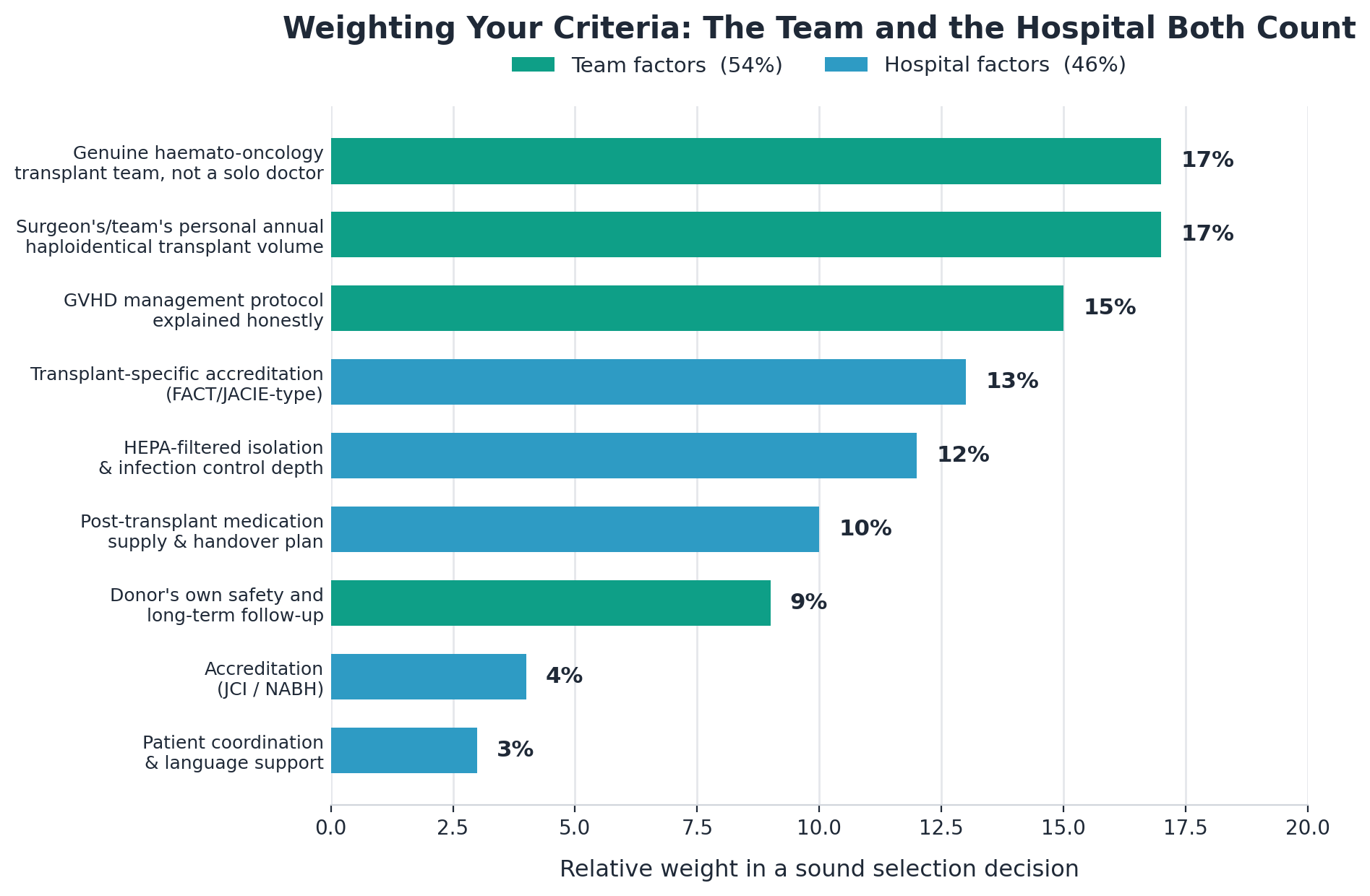
Ask for the team's personal annual volume specifically in the type of transplant you need — haploidentical transplant technique and outcomes differ meaningfully from matched-sibling or matched-unrelated-donor transplant. India has particular strength in haploidentical transplant specifically, reflecting genuine accumulated experience given the country's own domestic donor- matching challenges; ask for the team's actual numbers rather than assuming this strength applies uniformly.
3. GVHD management protocol, explained honestly
Graft-versus-host disease, where the donor's new immune cells react against the patient's body, is one of the most significant risks of allogeneic transplant, particularly with a haploidentical donor. Ask what specific prevention protocol is used, what the team's own GVHD rate is, and how it is managed if it develops. A team that explains this plainly, including the genuine seriousness of significant GVHD, is one being honest with you about risk.
4. Your donor's safety, if a family member is donating
If your donor is a living family member, ask what the donation process actually involves for them — bone marrow harvest under anaesthesia or peripheral blood stem cell collection after growth-factor injections are different processes with different experiences — and what follow-up they receive. This is a smaller undertaking than kidney or liver donation, but it deserves the same honest attention.
Part two: judging the hospital
Bone marrow transplant depends on institutional infection-control infrastructure more heavily than almost any other procedure in this series, reflected in the substantial hospital-side weighting below.
5. Transplant-specific accreditation, not just general hospital accreditation
Beyond general JCI or NABH accreditation, ask whether the transplant unit itself holds transplant- specific accreditation of the kind associated internationally with FACT-JACIE standards, and whether outcomes are reported to an international transplant registry. This distinct, transplant-focused accreditation is linked in published registry studies to better survival, and it is a meaningfully higher bar than general hospital accreditation.
6. HEPA-filtered isolation and infection control depth
During the weeks after transplant, before the new immune system engrafts, a patient is profoundly vulnerable to infection. Ask whether the unit has dedicated HEPA-filtered positive-pressure isolation rooms specifically for transplant patients, how many such rooms exist, and what the unit's own serious infection rate has been.
7. Post-transplant medication supply and handover plan
Ask whether the hospital will provide a detailed written protocol — immunosuppression tapering, infection prophylaxis, monitoring schedule — that a Kenyan haematologist can follow, and confirm that the specific medications prescribed are actually available in Kenya. A gap in immunosuppressive or antimicrobial medication in the months after transplant is a genuinely dangerous situation.
8. Accreditation, read properly
General accreditation is a meaningful baseline filter, but says little about the depth of transplant- specific expertise. Use it to exclude candidates, not to choose between the remaining ones.
9. The cost you will actually pay
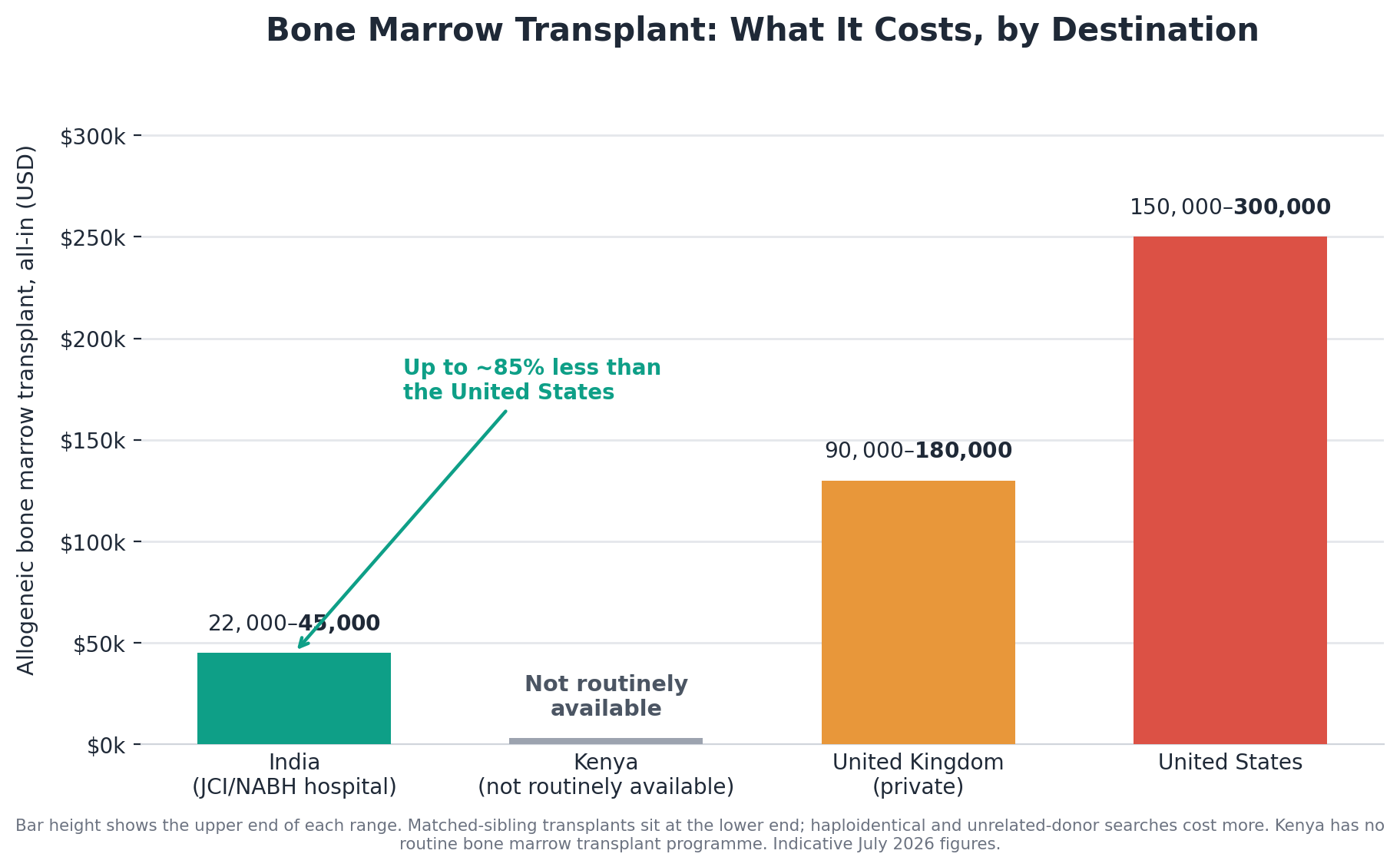
Let me be emphatic about this, because 24 years of handling these cases has taught me nothing more consistently: disputes almost never concern the quoted price. They concern what the quote silently omitted. For a bone marrow transplant specifically, insist the written estimate states which donor type the price assumes, since a haploidentical or unrelated-donor-search transplant costs meaningfully more than a matched-sibling transplant, and clarify what happens to the cost if the isolation period or hospital stay extends due to complications, which is a genuine possibility with this procedure more than most others.
Budget beyond the surgery. Direct Nairobi–Delhi and Nairobi–Mumbai flights run roughly 550 to 850 dollars return, and six to eight weeks of accommodation for you and an attendant, plus separately for a donor if they are travelling too, is a considerable sum needing early planning.
Four signals that should make you pause
Certain patterns reliably precede a difficult outcome. A quote that does not specify which donor type is assumed. Vagueness about the unit's actual GVHD rate or serious infection rate. No clear answer about transplant-specific accreditation beyond general hospital certification. And reluctance to confirm that post-transplant medications will be available in Kenya.
None alone proves a bad hospital. Together they warrant a second, more transparent opinion before you commit.
The Kenya-specific practicalities
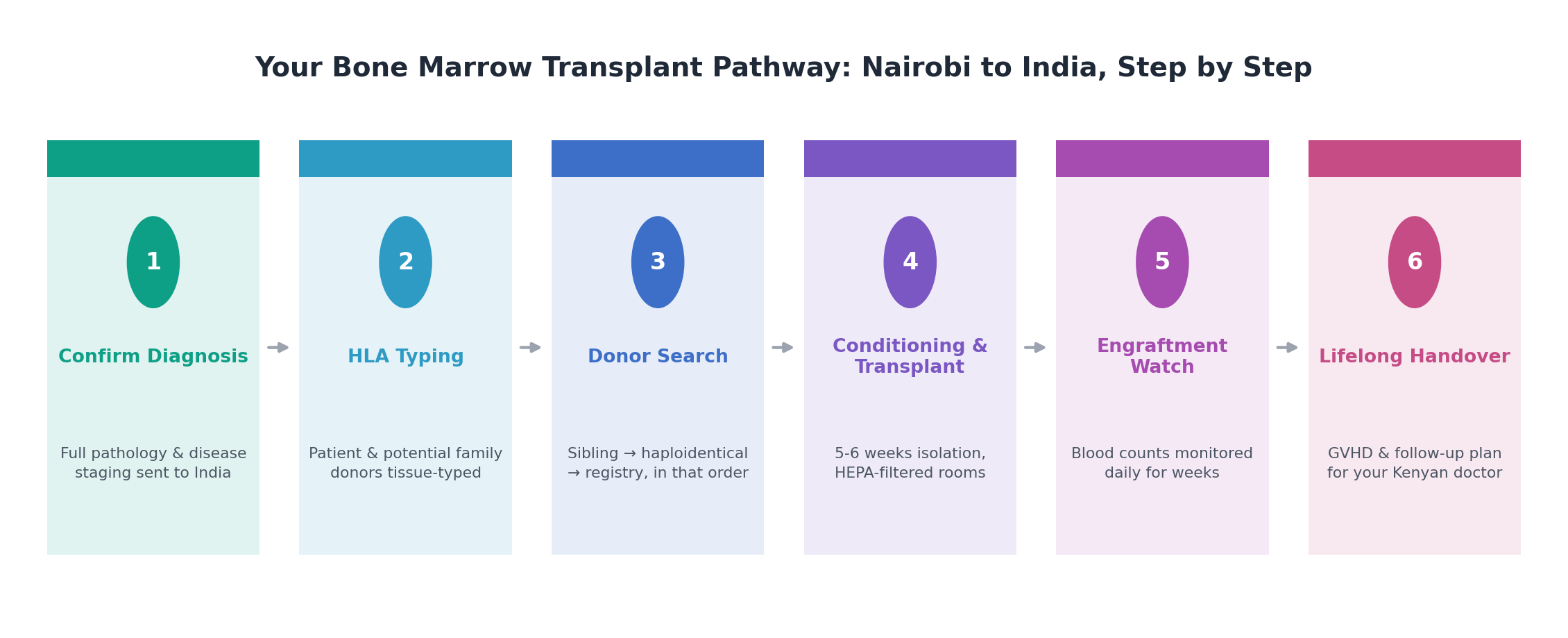
Get HLA typing for yourself and close family members done as early as possible, ideally through your treating haematologist in Kenya, since this single step determines your entire pathway and can often be arranged locally before any travel. Direct Nairobi–Delhi and Nairobi–Mumbai flights make the journey roughly six hours. The Indian medical e-visa is issued to Kenyan passport holders within three to five working days against a hospital letter; a donor travelling with you will need a separate visa arranged alongside yours.
Because the isolation and recovery period is genuinely long, plan realistically for an extended absence from work and family responsibilities, and discuss this openly with employers and support networks well in advance. Confirm before you fly which specific post-transplant medications will be prescribed and check their availability in Kenya, since this single check can prevent a dangerous gap in care during the vulnerable months after you return.
The questions I would ask before paying a deposit
Of the transplant team:
- What is my donor situation, and if no full match exists, is haploidentical transplant a genuine option?
- What is your personal annual volume in this specific donor type?
- What is your GVHD prevention protocol, and what is your own team's GVHD rate?
- If a family member is donating, what does the donation process actually involve for them?
Of the hospital:
- Does the transplant unit hold transplant-specific accreditation, not just general hospital accreditation?
- How many HEPA-filtered isolation rooms do you have, and what is your serious infection rate?
- Will you confirm my post-transplant medications are available in Kenya before I travel?
- What donor type does your quote assume, and what if the isolation period extends?
- What exactly is excluded from the quoted price?
- May I speak to a previous patient from East Africa?
A team that answers all ten without irritation is very likely the right team. One that becomes vague at the first or the sixth has told you what you needed to know at no cost at all.
Straight Answers
How do I choose the best bone marrow transplant team and hospital in India?
Start with donor identification — have yourself and close family HLA-typed before serious hospital research begins, since donor type shapes almost every decision that follows. Then ask about the team's personal volume in that specific donor type, particularly haploidentical transplant, and about transplant-specific accreditation and registry-reported outcomes.
How much does a bone marrow transplant cost in India for a Kenyan patient?
Typically 22,000 to 45,000 US dollars all in for an allogeneic (donor) transplant, with matched- sibling at the lower end and haploidentical or unrelated-donor-search transplants higher. Autologous transplants are generally 15,000 to 20,000. The same transplant is roughly 90,000 to 180,000 in the UK and 150,000 to 300,000 in the United States.
What if no family member is a full match for a bone marrow transplant?
This is common, and harder for African patients specifically since global registries under-represent African HLA types. The practical answer for most patients is a haploidentical, or half-matched, transplant using a parent, child or sibling. Modern conditioning protocols have made haploidentical outcomes comparable to fully matched transplants, and a half-match is available to almost every patient with living close family.
Why does sickle cell disease matter so much for bone marrow transplant in Kenya?
Sickle cell disease is a major, under-recognised burden in Kenya — an estimated 14,000 infants born with it annually, with prevalence reaching around 4.5 percent in parts of western Kenya. Bone marrow transplant is the only established cure. For families offered only symptom management, understanding that curative transplant is a genuine option, often with a half-matched family donor, is an important starting conversation with a haematologist.
Will SHA pay for my bone marrow transplant in India?
It is a genuine candidate for SHA's overseas benefit, given that Kenya lacks a routine domestic transplant programme, similarly to liver transplant. Check directly with SHA whether bone marrow transplant currently appears among the 36 gazetted procedures, since the list is reviewed periodically.
How long must I and my donor stay in India for a bone marrow transplant?
Around six to eight weeks for the patient: assessment, conditioning chemotherapy, the transplant, and isolation in a HEPA-filtered room while blood counts recover, followed by close monitoring as the new immune system establishes. A donor's stay is typically much shorter, often one to two weeks.
A closing word
The best bone marrow transplant team in India for you is the one that starts with your actual donor situation rather than assuming a sibling match is required, explains GVHD risk honestly rather than minimising it, and has genuine, specific experience in whichever donor type your case needs — very often haploidentical, given how many Kenyan families find themselves in exactly this position. The best hospital pairs that team with dedicated isolation infrastructure, transplant-specific accreditation, and a written plan for how your care continues once you are home. If you would like me to talk through your or your child's situation, including what HLA typing your family should pursue first, get in touch.
Sources
- 🌐 Building a Comprehensive Sickle Cell Disease Program in Western Kenya: A Decade of Experience and Growth. PMC
- 🌐 Kenya Ministry of Health — Policy on Infant Screening for Sickle Cell Disease, 2023
- 🌐 High acceptability of newborn screening for sickle cell disease among post-natal mothers in western Kenya
- 🌐 National Medical Commission of India — surgeon and specialist registration verification
- 🌐 National Accreditation Board for Hospitals & Healthcare Providers (NABH) — accredited hospital directory
- 🌐 Kenya Social Health Authority (SHA) — overseas treatment benefit and gazetted procedures
Frequently Asked Questions
Why do Kenyan patients consider India for bone marrow transplant?
The guide explains that Kenya does not currently have a routine established bone marrow transplant programme comparable with major transplant centres abroad. India offers established transplant teams, including experience with matched and haploidentical donor transplantation.
What should Kenyan patients do before choosing a BMT hospital in India?
HLA typing of the patient and close family members should be completed as early as possible. The donor situation determines whether the pathway involves a matched sibling, unrelated donor search or haploidentical family donor.
What happens if a Kenyan patient does not have a fully matched sibling donor?
A haploidentical transplant may be considered using a half-matched parent, child or sibling. The guide highlights this option because international donor registries substantially under-represent African HLA types.
How much does a bone marrow transplant in India cost for Kenyan patients?
The guide gives approximately USD 22,000–45,000 for an allogeneic donor transplant. Autologous transplantation is generally around USD 15,000–20,000, while donor type and complications can significantly affect the final cost.
Can bone marrow transplant cure sickle cell disease in Kenyan patients?
The guide identifies bone marrow transplant as the only established cure for sickle cell disease. However, transplantation carries significant risks and must be assessed individually by an experienced transplant haematology team.
How should Kenyan patients choose a bone marrow transplant team in India?
Patients should look for a genuine haemato-oncology transplant team rather than relying on one doctor. The guide recommends checking donor-type-specific transplant volume, GVHD protocols, outcomes and the experience of the entire transplant team.
What hospital facilities are important for BMT patients from Kenya?
Dedicated HEPA-filtered positive-pressure isolation rooms, strong infection-control systems and transplant-specific accreditation are particularly important. Patients should also ask about the unit's serious infection rate and transplant-specific infrastructure.
How long should Kenyan patients stay in India for bone marrow transplant?
The guide recommends planning approximately six to eight weeks for the patient, covering assessment, conditioning, transplantation, isolation and early engraftment monitoring. A family donor usually requires a shorter stay, often around one to two weeks.
What should Kenyan patients check in a bone marrow transplant quotation?
The written estimate should specify which donor type the price assumes and what happens if isolation or hospitalisation is extended because of complications. Flights, accommodation, donor expenses and post-transplant medicines should also be budgeted separately where necessary.
What follow-up is needed in Kenya after bone marrow transplant in India?
The Indian transplant centre should provide a detailed written plan covering immunosuppression, infection prophylaxis and monitoring. The guide also recommends confirming before travel that the prescribed post-transplant medicines will be available in Kenya.
Page Summary
This guide explains how Kenyan patients and families should evaluate bone marrow transplant treatment in India, beginning with the most important question: donor availability. It distinguishes autologous and allogeneic transplantation and explains matched-sibling, matched-unrelated and haploidentical donor pathways. Particular emphasis is placed on the difficulty African patients may face when searching international donor registries and on the potential role of half-matched family donors.
Citation Block
| Topic | Information |
|---|---|
| Topic Information | Bone Marrow Transplant in India for Kenyan Patients |
| Procedure | Bone Marrow / Stem Cell Transplantation |
| Country | India |
| Intended Audience | Kenyan Patients and Families |
| Conditions Covered | Sickle Cell Disease, Blood Cancers and Blood Disorders Requiring Stem Cell Transplantation |
| Procedures | Autologous BMT, Allogeneic BMT, Matched-Sibling Transplant, Matched-Unrelated-Donor Transplant and Haploidentical Transplant |
| Typical Stay | Approximately 6–8 Weeks for the Patient |
| Donor Stay | Often Approximately 1–2 Weeks |
| Recovery | Engraftment and Early Recovery Require Several Weeks; Long-Term Haematology Monitoring Continues After Return to Kenya |
| Allogeneic BMT Cost | Approximately USD 22,000–45,000 |
| Autologous BMT Cost | Approximately USD 15,000–20,000 |
| Important Risk | Graft-Versus-Host Disease (GVHD) and Serious Infection |
| Hospital Requirements | Transplant-Specific Accreditation, HEPA-Filtered Isolation and Strong Infection-Control Infrastructure |
| Author | Dr. Dheeraj Bojwani |
| Experience | 24 Years' Experience |


Our Mission Statement
Our mission is to place patients at the centre of every healthcare decision by providing trustworthy, evidence-based, and unbiased medical information. We believe that informed patients make better decisions. Backed by personalised guidance from our experienced advisory team, we help patients understand their treatment options, compare them objectively, and confidently choose the path that best suits their medical needs and personal circumstances.
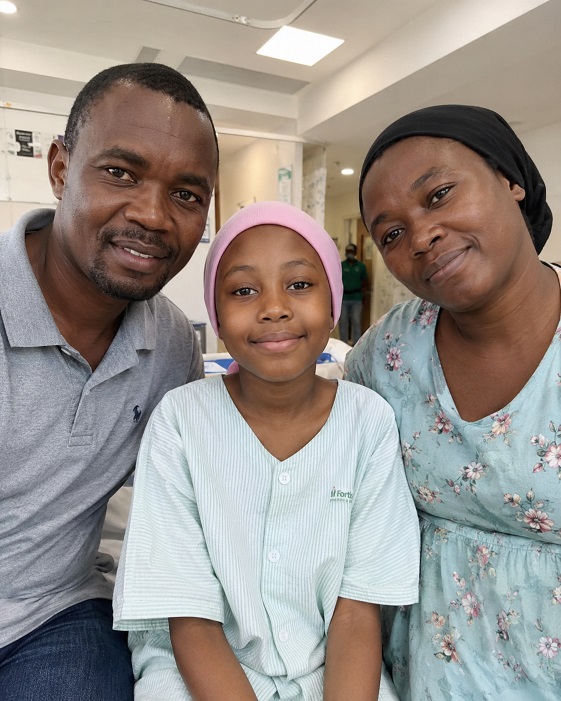
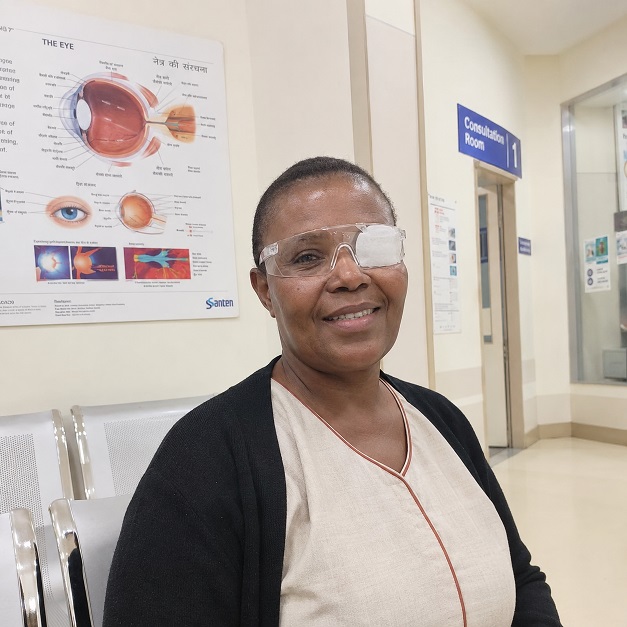
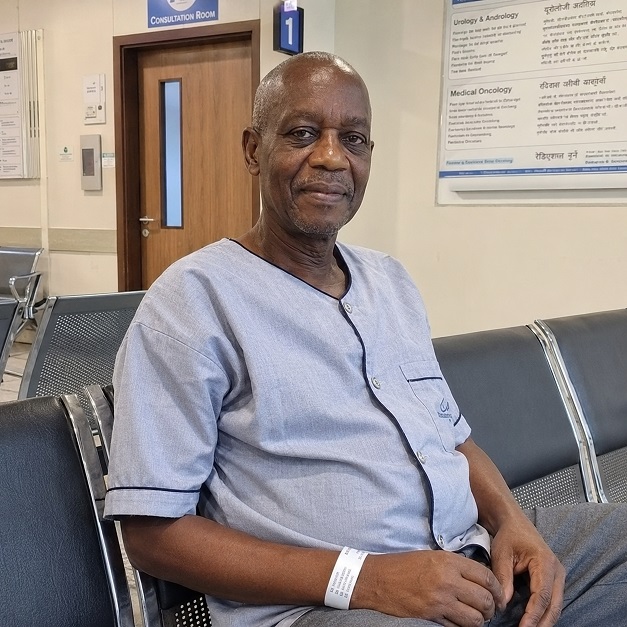
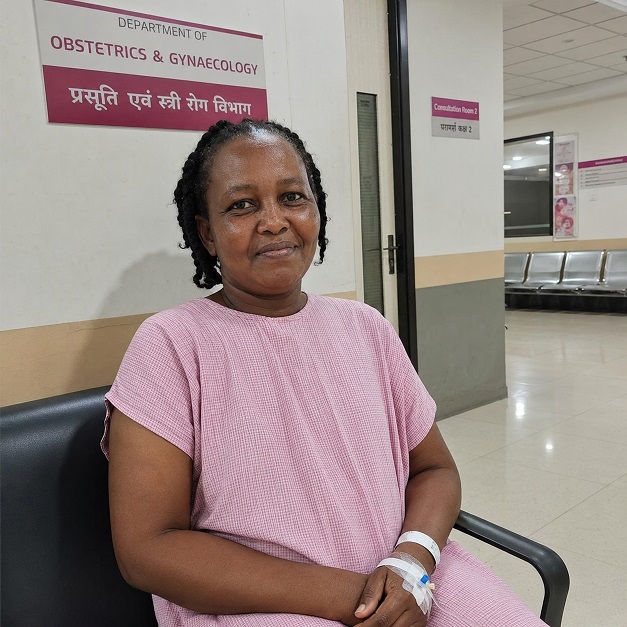
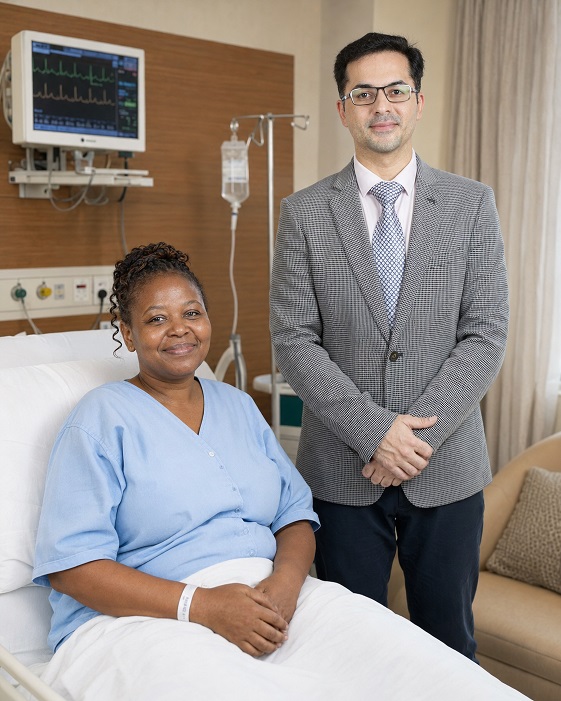
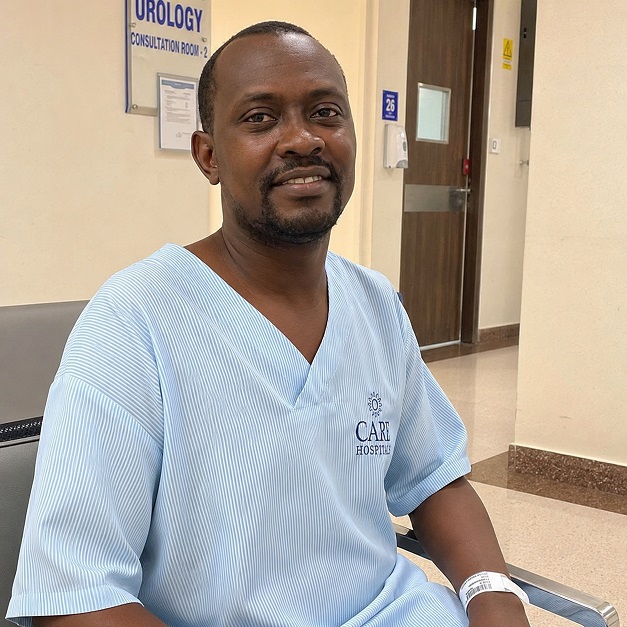
Patient Testimonials from Kenya
Ready to Take the First Step?
Share your Medical Reports with our Healthcare Managers Today and Get a FREE CONSULTATION, a Personalized Treatment Plan, and Complete Support from Arrival to Recovery.
Get Your Free ConsultationAreas We Serve
This resource has been thoughtfully prepared for patients from Kenya who are considering medical treatment in India. We also welcome patients from the wider region in the countries mentioned below-
We assist patients from:
- Ethiopia
- Somalia
- Tanzania
- Uganda
- Seychelles
- Guinea
- Guinea-Bissau
- Liberia
- Mali
- Mauritania
- Niger
- Nigeria
- Senegal
- Togo
- South Sudan
- Sierra Leone
Many of the insights, treatment pathways, hospital recommendations, travel guidance, and patient support services described here are equally relevant and may be used as a reference when planning treatment in India.
From Kenya to India: Your Complete Patient Support Guide
- Brain Tumour Surgery in India for Kenyan Patients
- Cancer Treatment and Surgery in India for Kenyan Patients
- Cardiac Treatment and Surgery in India for Kenyan Patients
- Heart Valve Replacement Surgery in India for Kenyan Patients
- Knee Replacement in India for Kenyan Patients
- Prostate Cancer Treatment and Surgery in India for Kenyan Patients
- Spine Treatment and Surgery in India for Kenyan Patients
- Selecting the Best Bariatric Surgeons and Hospitals in India: What Kenyan Patients Should Actually Look For
- Selecting the Best Cancer Surgeons and Hospitals in India: What Kenyan Patients Should Actually Look For
- Selecting the Best Cardiac Surgeons and Hospitals in India: What Kenyan Patients Should Actually Look For
- Selecting the Best Dental Surgeons and Clinics in India: What Kenyan Patients Should Actually Look For
- Selecting the Best Hip Surgeons and Hospitals in India: What Kenyan Patients Should Actually Look For
- Selecting the Best Kidney Transplant Surgeons and Hospitals in India: What Kenyan Patients Should Actually Look For
- Selecting the Best Knee Surgeons and Hospitals in India: What Kenyan Patients Should Actually Look For
- Selecting the Best Liver Transplant Surgeons and Hospitals in India: What Kenyan Patients Should Actually Look For
- Selecting the Best Neurosurgeons and Hospitals in India: What Kenyan Patients Should Actually Look For
- Selecting the Best Prostate Cancer Surgeons and Hospitals in India: What Kenyan Patients Should Actually Look For
- Selecting the Best Spine Surgeons and Hospitals in India: What Kenyan Patients Should Actually Look For