

Spine Treatment and Surgery in India for Kenyan Patients
When Surgery Is Really Needed, Your Options, and How to Plan the Trip
Back and neck pain rarely arrives with a bang. It creeps. A man in Nairobi will tell me he first felt it years ago, shrugged it off, and only began to worry when the ache running down his leg made him dread the stairs, or when his fingers went numb halfway through a working day. By the time he rings me, a doctor has usually said the word “surgery,” and he is rattled. Here is what I want him to hear first: for most people, back pain never needs an operation. The job is to find out precisely what is causing it, try the mildest thing that actually works, and keep surgery in reserve for the times it is the right call. When that day does come, the whole point is to have it done by someone very good at it.
Healing Journeys of Kenyan Patients




Key Takeaways
- For Kenyan patients considering spine surgery in India, the most important starting point is that most back and neck pain does not require an operation. The guide states that when a herniated disc causes sciatica, roughly four in five people recover without surgery, usually within a few weeks. Physiotherapy, medicines and targeted injections are therefore the first step for the majority of patients.
- A spine specialist should not make a surgical decision from the MRI alone. By middle age, many people have visible spinal wear that causes no symptoms. The important task is to connect the patient's pain, weakness or numbness with the specific spinal level and structure responsible.
- There are exceptions where waiting is inappropriate. The guide identifies loss of bladder or bowel control, numbness around the groin, or rapidly worsening leg weakness as possible signs of cauda equina syndrome requiring same-day attention. Back pain accompanied by fever or unexplained weight loss also warrants prompt assessment.
- Surgery becomes appropriate when pain or nerve compression continues to seriously affect daily life despite proper conservative treatment, when weakness is progressing, or when the spine has significant instability or deformity.
- The treatment table on page 2 distinguishes the main options. Conservative care is appropriate for most back and neck pain. Endoscopic or microdiscectomy can remove a herniated disc fragment pressing on a nerve. Decompression or laminectomy creates more room for compressed nerves. Spinal fusion stabilises an unstable or severely degenerated segment, while artificial disc replacement preserves movement in selected single-level disc disease.
Quick Facts
- Specialty
- Spine Surgery / Orthopaedic & Neurosurgical Spine Care
- Country
- India
- Intended Audience
- Kenyan patients considering spine treatment or surgery in India
- Key Principle
- Most back and neck pain does not require surgery.
- Herniated Disc/Sciatica
- Roughly 4 in 5 patients recover without surgery, according to the guide.
- First-Line Treatment
- Physiotherapy, medicines and targeted injections
- MRI Principle
- Imaging should be matched with symptoms rather than interpreted in isolation.
- Emergency Warning Signs
- Loss of bladder or bowel control, groin numbness and rapidly worsening leg weakness
- Possible Emergency
- Cauda equina syndrome
- Other Warning Signs
- Back pain with fever or unexplained weight loss
- When Surgery May Be Needed
- Persistent disabling pain or nerve compression despite conservative care, progressive weakness, instability or deformity
- Endoscopic/Microdiscectomy
- Used for a herniated disc pressing on a nerve
- Decompression/Laminectomy
- Used for spinal stenosis or compressed nerves
- Spinal Fusion
- Used for instability or severe degeneration
- Artificial Disc Replacement
- Motion-preserving option for selected single-level disc disease
In Brief
Spine surgery in India for Kenyan patients should only be considered after the exact source of pain or nerve compression has been identified and appropriate non-surgical treatment has been tried. The guide states that roughly four in five patients with sciatica caused by a herniated disc recover without surgery. When an operation is genuinely necessary, options range from endoscopic or minimally invasive discectomy and decompression to spinal fusion and artificial disc replacement. The guiding principle is to choose the smallest procedure that adequately solves the problem. Indicative Indian costs range from approximately USD 1,500–3,500 for minimally invasive discectomy to USD 5,000–8,000 for spinal fusion and USD 6,000–9,000 for artificial disc replacement.
Why Kenyan patients look to India for spine care
Kenya is not short of spine talent. Kenyatta National Hospital runs its own spine unit, and Nairobi has respected centres like Spine Clinic Africa, the Nairobi Spine and Orthopaedic Centre and the National Spinal Injury Referral Hospital, several of them led by surgeons who trained in India. For everyday disc and nerve trouble, you can be looked after perfectly well without leaving the country. And it is worth saying plainly: private spine surgery in Nairobi often costs much the same as India, so this is not simply a hunt for the lowest price.
What tips many patients toward India is the sheer volume and range of what its bigger centres do. The leading hospitals hold JCI and NABH accreditation, their surgeons operate on spines every day of the week, and the harder-to-find skills sit within easy reach: endoscopic and minimally invasive surgery done at scale, robot- and navigation-guided implants, scoliosis correction, and revision work on operations that failed elsewhere. Those are the cases where a busy, well-equipped team truly earns its reputation. The practical side helps too: short waiting times, Swahili-speaking coordinators, direct flights to Mumbai and Delhi, Indian spine surgeons who already hold clinics in Nairobi, and a medical e-visa that clears in days.
First, understand what you are dealing with
Start with a figure that should steady your nerves. When a herniated disc lies behind sciatica, roughly four in five people recover without any surgery at all, usually within a few weeks. Most ordinary back pain settles with time, movement and sensible treatment. A specialist worth their salt will not reach for the scalpel first; they will work out what is actually generating your pain, whether that is a slipped disc, a narrowed canal, a shifted vertebra or a worn joint, reading your MRI against your symptoms rather than in isolation.
One caution, because it matters more than anything else on this page. A few symptoms are not the “wait and see” kind. Losing control of your bladder or bowel, numbness around the groin, or leg weakness that worsens by the day can signal a rare emergency called cauda equina syndrome, and that needs same-day attention. Back pain paired with fever or unexplained weight loss also deserves a prompt review. Set those aside, and you usually have time to do things in the right order.
When surgery helps, and what the options are
Surgery becomes the right answer when pain or nerve compression is wrecking your daily life despite proper non-surgical care, or when the spine is unstable or deformed, or the weakness is advancing. Once it is justified, the choices run from the very small to full reconstruction:
| Approach | Best suited to | What it involves |
|---|---|---|
| Conservative care | Most back and neck pain | Physiotherapy, medicines and targeted injections; the first step for the great majority. |
| Endoscopic / microdiscectomy | A herniated disc pressing on a nerve | Keyhole removal of the disc fragment through a tiny incision; fast recovery. |
| Decompression / laminectomy | Spinal stenosis, pinched nerves | Bone or tissue is trimmed to give the nerves room again. |
| Spinal fusion | Instability or severe degeneration | Two or more vertebrae are joined to stop painful movement and restore stability. |
| Artificial disc replacement | Selected single-level disc disease | The worn disc is swapped for an implant that keeps the movement instead of fusing. |
Above that tier, India’s larger units take on scoliosis and deformity correction, spinal tumours and revision surgery for operations that did not hold — the work where a surgeon’s mileage shows most.
One rule of thumb to carry into every consultation: in the spine, the smallest operation that solves the problem is almost always the best one. Ask whether a keyhole or motion-preserving approach fits your case, and be wary of any plan that leaps to a multi-level fusion before the gentler routes have had a fair try.
Why the diagnosis — and the team — matter most
Spine surgery, more than most, succeeds or fails on the diagnosis behind it. MRI scans are almost too honest: by middle age, most of us show wear that is not causing a single symptom, so the real skill lies in tying the pain to the exact level and structure responsible. That is why I ask every patient to get their MRI reviewed and a written plan in hand before boarding a plane, and to favour a centre where a spine surgeon, a pain specialist, a radiologist and a physiotherapist consider the case together rather than in separate rooms. A good Indian team will read your scans from Nairobi and give you a straight answer — sometimes the best news of all, that you do not need an operation.
The cost question: India versus the UK and the US
Money should not steer a spine decision, but pretending it does not matter helps no one. The chart below shows spinal fusion, a common major procedure. Keyhole operations cost a good deal less, and complex deformity work more. Your own figure will turn on the procedure, how many levels are involved and the implants chosen.
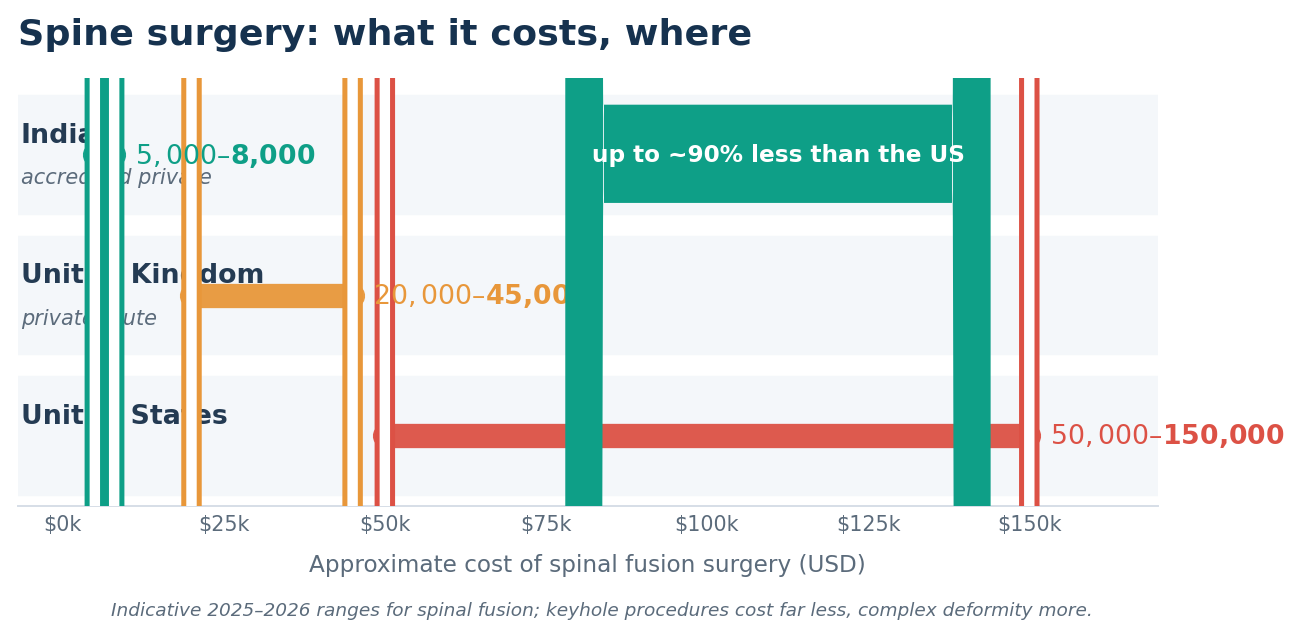
Figure 1 — Typical cost of spinal fusion surgery across three destinations.
| Procedure | Approx. cost in India (USD) | What it means for you |
|---|---|---|
| Endoscopic / minimally invasive discectomy | $1,500–3,500 | Keyhole disc surgery; small incision, quick recovery. |
| Decompression / laminectomy | $3,500–7,000 | Relieves pressure from a pinched nerve. |
| Spinal fusion | $5,000–8,000 | Stabilises the spine; implants affect the total. |
| Artificial disc replacement | $6,000–9,000 | Motion-preserving alternative to fusion. |
| United Kingdom (private route) | $20,000–45,000 | NHS free but waitlisted; private is costly. |
| United States | $50,000–150,000+ | Among the world’s highest prices. |
Ranges are indicative 2025–2026 estimates; always obtain a written, itemised quote based on your own scans before committing.
Even after you fold in flights and a hotel, the difference is large. For most Kenyan patients an accredited Indian centre buys an experienced surgeon, modern minimally invasive theatres and a full team for a fraction of Western private fees — and often for a figure close to, or below, what private surgery costs at home.
Budget for the whole journey, not just the operation
The quoted package usually covers the surgeon, anaesthesia, theatre, implants and your nights in hospital. What it rarely covers is the MRI review, the physiotherapy that genuinely decides how well you heal, a back brace if your surgeon wants one, your travel and accommodation, a companion’s costs, and the follow-up once you are home. Add all of it up in shillings before you commit, so the number you are weighing is the real one.
The pathway and your recovery
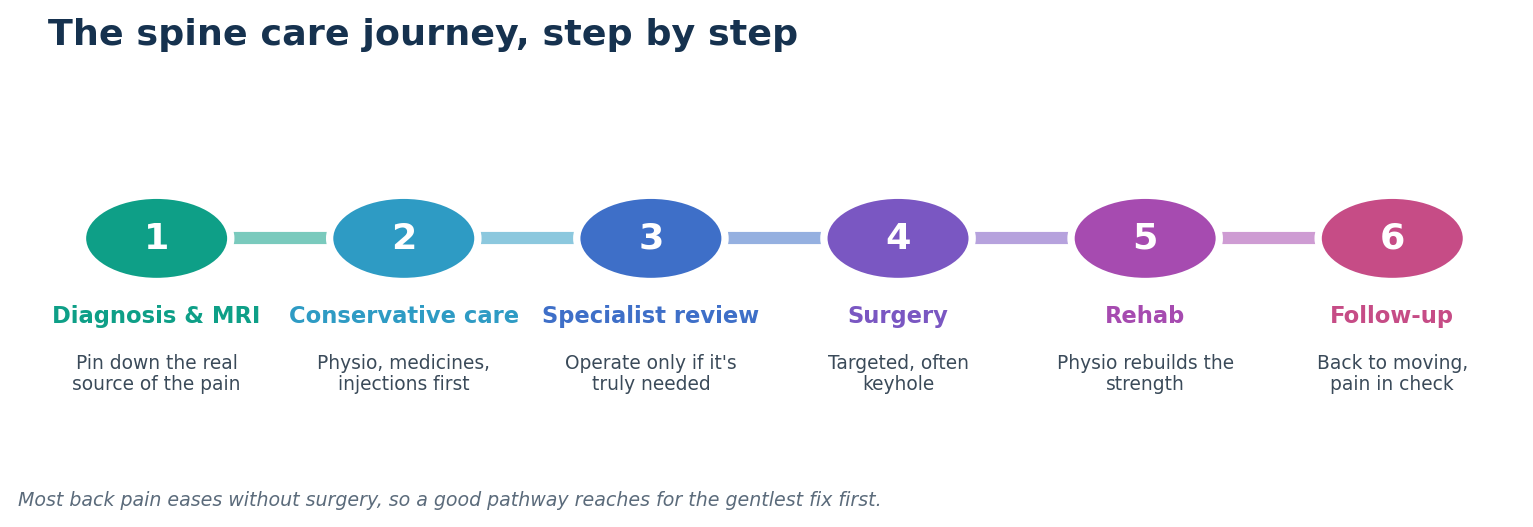
Seeing the shape of the journey makes it less daunting. Here is the route most patients take.
-
1
Diagnosis and imaging in Kenya
An MRI, and sometimes X-rays or CT, establish what is actually generating the pain — a disc, a narrowed canal, a shifted vertebra or a worn joint.
-
2
Conservative care first
Four in five people with a herniated disc recover without surgery. Physiotherapy, medicines and targeted injections are given a fair try before anything else.
-
3
Remote review and a written plan
Send your MRI and reports to India. A spine surgeon, pain specialist, radiologist and physiotherapist review the scans together and put the recommendation in writing.
-
4
Medical e-visa and travel
Apply on the official Government of India portal, usually granted in a few working days, with a relative on a medical-attendant visa.
-
5
The least invasive operation that fits
Endoscopic or microdiscectomy where it suits, decompression, fusion or disc replacement where it does not. Keyhole patients are often home within a day or two.
-
6
Physiotherapy, then follow-up at home
One to two weeks in India for a simple procedure, two to three or more for a fusion. Rehabilitation rebuilds the muscle the spine leans on and continues in Kenya.
Figure 2 — The spine care journey, with the gentlest options tried first.
How long recovery takes depends almost entirely on what was done. After a keyhole discectomy, plenty of patients are home within a day or two and walking easily inside a week. A fusion asks more of you: a few days in hospital, sometimes a brace, and a steady climb back to full activity over several months while the bone knits. Whatever the operation, physiotherapy is not a nicety — it is the part that rebuilds the muscle your spine leans on. As a rough guide, a simple procedure means one to two weeks in India; a fusion or deformity correction, two to three weeks or more.
What to settle before you book
Before committing to anything, run through this short list — the same one I would want a member of my own family to work through:
- A written plan and a second opinion first. Send your MRI and history for review, and get a plan in writing before you pay for a flight. A good centre will also tell you when surgery can be avoided.
- Accreditation and a named spine surgeon. Insist on a JCI- or NABH-accredited hospital, and ask how often your surgeon performs your specific procedure.
- The least invasive option that fits. Ask whether endoscopic, minimally invasive or motion- preserving surgery would suit you before agreeing to a large fusion.
- Your total landed cost, in shillings. Add the MRI review, implants, physiotherapy, a brace if needed, flights, accommodation, a companion and follow-up. Ask outright what a complication would cost.
- The visa, done properly. Apply for the medical e-visa on the official Government of India portal only, and bring a companion on a medical-attendant visa.
- A rehab plan you can continue at home. Ask for a discharge summary, implant details and a physiotherapy programme your therapist in Kenya can follow.
- An advisor who isn’t on a hospital’s payroll. Many facilitators earn commissions from particular hospitals, which quietly colours their advice. Choose someone who compares options for you and is open about how they are paid.
A closing word
Living with a bad back grinds you down, but it almost never rewards a rushed decision. If you are a Kenyan patient who truly needs spine surgery — or who simply wants an honest second opinion on whether you do — India offers a rare mix of experience, technology and value, so long as it rests on an accurate diagnosis, a written plan, checked credentials and a budget with no surprises. Send your scans ahead. Ask for the smallest fix that will work. Speak to the surgeon who will actually hold the instruments. And keep an advisor beside you whose only interest is seeing you leave steadier than you arrived. Handled that way, a daunting trip becomes an ordinary, manageable one, and you get back to a life that bends, lifts and moves without a second thought.
Sources
- 🌐 Low Back Pain — OrthoInfo, American Academy of Orthopaedic Surgeons. orthoinfo.aaos.org — low back pain
- 🌐 Sciatica: Causes & Treatment — OrthoInfo, American Academy of Orthopaedic Surgeons. orthoinfo.aaos.org — sciatica
- 🌐 Spinal Fusion — OrthoInfo, American Academy of Orthopaedic Surgeons. orthoinfo.aaos.org — spinal fusion
- 🌐 Herniated Disc — American Association of Neurological Surgeons. aans.org — herniated disc
- 🌐 Medical e-Visa — official Government of India portal
- 🌐 FRRO registration for medical-visa holders — Government of India
Frequently Asked Questions by Kenyans about Spine Treatment and Surgery in India
Do most Kenyan patients with back pain need spine surgery?
No. The guide emphasises that most back and neck pain does not require an operation. For sciatica caused by a herniated disc, it states that roughly four in five people recover without surgery, usually within a few weeks. Physiotherapy, medicines and targeted injections are generally tried before surgery unless there is a neurological emergency or another clear surgical indication.
When is spine surgery actually needed?
According to the guide, surgery becomes appropriate when pain or nerve compression continues to seriously affect daily life despite proper non-surgical treatment, when weakness is progressively worsening, or when the spine is unstable or significantly deformed. The decision should be based on the patient's symptoms, examination and imaging together rather than the MRI report alone.
What spine surgery options are available in India for Kenyan patients?
The table on page 2 describes several options. Endoscopic or microdiscectomy may be used for a herniated disc pressing on a nerve; decompression or laminectomy can relieve spinal stenosis and nerve compression; spinal fusion can stabilise an unstable or severely degenerated spine; and artificial disc replacement may preserve movement in selected single-level disc disease. Larger Indian centres also manage scoliosis, spinal deformities, tumours and revision surgery.
How much does minimally invasive spine surgery cost in India?
According to the cost table on page 4, endoscopic or minimally invasive discectomy costs approximately USD 1,500–3,500 in India. Decompression or laminectomy is approximately USD 3,500–7,000. These are indicative 2025–2026 estimates, and the guide recommends obtaining an itemised quotation based on the patient's own scans.
How much does spinal fusion surgery cost in India for Kenyan patients?
The guide gives an indicative cost of approximately USD 5,000–8,000 for spinal fusion in India. The chart on page 3 compares this with approximately USD 20,000–45,000 through the UK private route and USD 50,000–150,000+ in the United States. The actual cost depends on the number of spinal levels involved, implants and complexity of surgery.
Is artificial disc replacement available in India?
Yes. The guide describes artificial disc replacement as a motion-preserving alternative to fusion for selected single-level disc disease. Instead of permanently joining the vertebrae, the worn disc is replaced with an implant intended to maintain movement. The indicative Indian cost given on page 4 is approximately USD 6,000–9,000.
How long should a Kenyan patient stay in India after spine surgery?
The required stay depends heavily on the procedure. According to the guide, a simple spine procedure generally requires around 1–2 weeks in India, while spinal fusion or deformity correction may require 2–3 weeks or more. After keyhole discectomy, many patients are home within one or two days and walking comfortably within approximately a week.
What warning signs require urgent medical attention instead of waiting for a planned trip to India?
The guide highlights loss of bladder or bowel control, numbness around the groin and leg weakness that is worsening rapidly as possible signs of cauda equina syndrome. These symptoms require same-day medical attention. Back pain associated with fever or unexplained weight loss also deserves prompt medical assessment rather than waiting for routine overseas treatment planning.
What should Kenyan patients check before booking spine surgery in India?
The checklist on page 5 recommends obtaining a written treatment plan and second opinion before paying for travel, choosing a JCI- or NABH-accredited hospital and named spine surgeon, asking whether a less invasive or motion-preserving procedure is suitable, calculating the complete treatment and travel cost in Kenyan shillings, using the official medical e-visa route, and arranging rehabilitation that can continue after returning home.
What is the recommended treatment pathway for a Kenyan patient with a spine problem?
The six-step diagram on page 5 gives the pathway clearly: Diagnosis & MRI → Conservative Care → Specialist Review → Surgery → Rehabilitation → Follow-Up. The important point is that surgery appears only after the diagnosis has been established and appropriate conservative treatment has been considered. After treatment in India, patients should return to Kenya with their discharge summary, implant information where applicable and a written physiotherapy programme.
Page Summary
This guide approaches spine treatment in India for Kenyan patients with one central principle: surgery should be reserved for patients who genuinely need it, and when it is required, the smallest effective operation should be preferred. Page 2 explains that roughly four in five people with sciatica caused by a herniated disc recover without surgery. Its treatment table progresses from conservative care to endoscopic/microdiscectomy, decompression, fusion and artificial disc replacement according to the underlying condition. The same page highlights emergency symptoms such as bladder or bowel dysfunction, groin numbness and rapidly worsening weakness.
Citation Block
| Topic | Information |
|---|---|
| Topic Information | Spine Treatment and Surgery in India for Kenyan Patients |
| Procedure | Spine Treatment / Spine Surgery |
| Country | India |
| Intended Audience | Kenyan Patients |
| Conditions Covered | Herniated Disc, Sciatica, Spinal Stenosis, Nerve Compression, Spinal Instability, Degeneration and Deformity |
| Procedures | Conservative Care, Endoscopic/Microdiscectomy, Decompression/Laminectomy, Spinal Fusion and Artificial Disc Replacement |
| Typical Stay – Simple Procedure | Approximately 1–2 Weeks in India |
| Typical Stay – Fusion/Deformity | Approximately 2–3 Weeks or More |
| Hospital Stay | Procedure-Dependent; Keyhole Discectomy Patients May Be Home Within 1–2 Days |
| Recovery | Around a Week for Easy Walking After Some Keyhole Procedures; Several Months After Fusion |
| Discectomy Cost | Approximately USD 1,500–3,500 |
| Decompression Cost | Approximately USD 3,500–7,000 |
| Spinal Fusion Cost | Approximately USD 5,000–8,000 |
| Artificial Disc Replacement Cost | Approximately USD 6,000–9,000 |
| Key Treatment Principle | Use the Smallest Operation That Adequately Solves the Problem |
| Care Pathway | Diagnosis → Conservative Care → Specialist Review → Surgery → Rehabilitation → Follow-Up |
| Follow-Up | Written Rehabilitation Programme and Physiotherapy in Kenya |
| Author | Dr. Dheeraj Bojwani |
| Experience | 24 Years Guiding International Patients to India |


Our Mission Statement
Our mission is to place patients at the centre of every healthcare decision by providing trustworthy, evidence-based, and unbiased medical information. We believe that informed patients make better decisions. Backed by personalised guidance from our experienced advisory team, we help patients understand their treatment options, compare them objectively, and confidently choose the path that best suits their medical needs and personal circumstances.
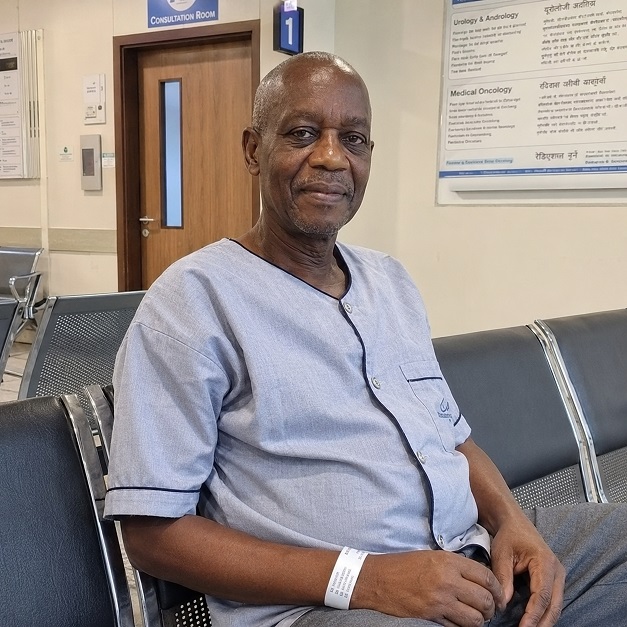
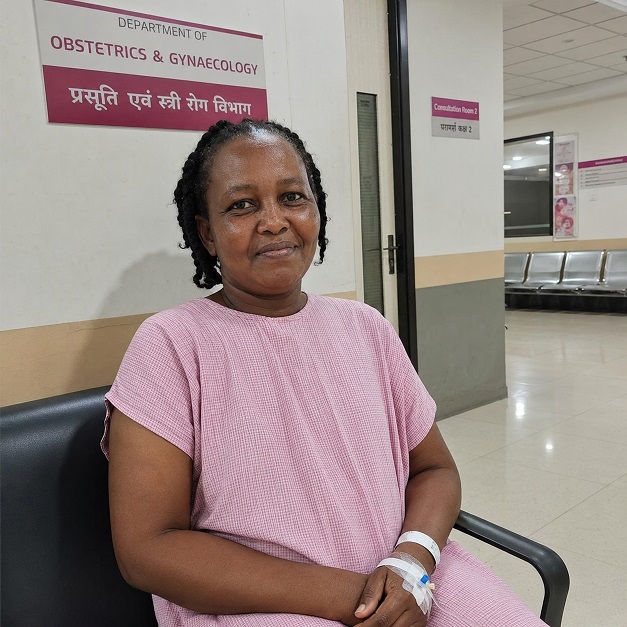
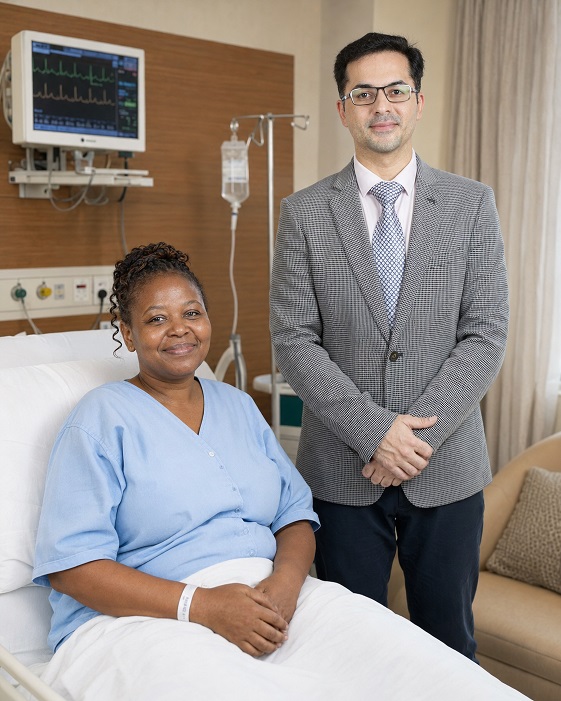
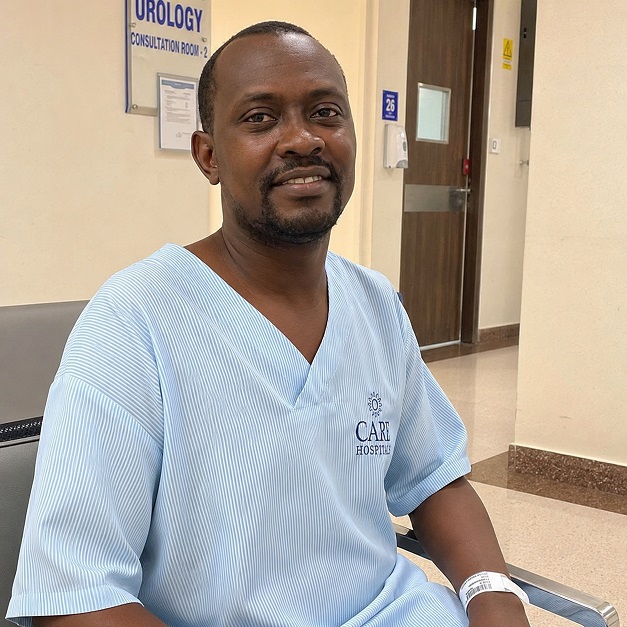
Patient Testimonials from Kenya

Ready to Take the First Step?
Share your Medical Reports with our Healthcare Managers Today and Get a FREE CONSULTATION, a Personalized Treatment Plan, and Complete Support from Arrival to Recovery.
Get Your Free ConsultationAreas We Serve
This resource has been thoughtfully prepared for patients from Kenya who are considering medical treatment in India. We also welcome patients from the wider region in the countries mentioned below-
We assist patients from:
- Ethiopia
- Somalia
- Tanzania
- Uganda
- Seychelles
- Guinea
- Guinea-Bissau
- Liberia
- Mali
- Mauritania
- Niger
- Nigeria
- Senegal
- Togo
- South Sudan
- Sierra Leone
Many of the insights, treatment pathways, hospital recommendations, travel guidance, and patient support services described here are equally relevant and may be used as a reference when planning treatment in India.
From Kenya to India: Your Complete Patient Support Guide
- Brain Tumour Surgery in India for Kenyan Patients
- Cancer Treatment and Surgery in India for Kenyan Patients
- Cardiac Treatment and Surgery in India for Kenyan Patients
- Heart Valve Replacement Surgery in India for Kenyan Patients
- Knee Replacement in India for Kenyan Patients
- Prostate Cancer Treatment and Surgery in India for Kenyan Patients
- Spine Treatment and Surgery in India for Kenyan Patients
- Selecting the Best Bariatric Surgeons and Hospitals in India: What Kenyan Patients Should Actually Look For
- Selecting the Best Cancer Surgeons and Hospitals in India: What Kenyan Patients Should Actually Look For
- Selecting the Best Cardiac Surgeons and Hospitals in India: What Kenyan Patients Should Actually Look For
- Selecting the Best Dental Surgeons and Clinics in India: What Kenyan Patients Should Actually Look For
- Selecting the Best Hip Surgeons and Hospitals in India: What Kenyan Patients Should Actually Look For
- Selecting the Best Kidney Transplant Surgeons and Hospitals in India: What Kenyan Patients Should Actually Look For
- Selecting the Best Knee Surgeons and Hospitals in India: What Kenyan Patients Should Actually Look For
- Selecting the Best Liver Transplant Surgeons and Hospitals in India: What Kenyan Patients Should Actually Look For
- Selecting the Best Neurosurgeons and Hospitals in India: What Kenyan Patients Should Actually Look For
- Selecting the Best Prostate Cancer Surgeons and Hospitals in India: What Kenyan Patients Should Actually Look For
- Selecting the Best Spine Surgeons and Hospitals in India: What Kenyan Patients Should Actually Look For