

Selecting the Best Cancer Surgeons and Hospitals in India: What Kenyan Patients Should Actually Look For
In cancer the decision that shapes your outcome is usually made before anyone picks up a scalpel — so the diagnosis is scrutinised first.
Cancer surgery is different from every other operation in this series, and the difference matters for how you choose. A hip or a knee is a mechanical problem with a mechanical answer: pick the surgeon, pick the implant, done. Cancer is rarely that simple. The operation is usually one part of a sequence — surgery, and often chemotherapy, radiotherapy, or both — and the decision that determines your outcome is frequently made before anyone picks up a scalpel: what exactly is this, how far has it spread, and what combination of treatment gives the best chance. Across 24 years of guiding international patients through Indian hospitals, the cancer cases are the ones where I have seen the most benefit from slowing down at the start. This is the framework I use when a Kenyan patient is weighing cancer surgery in India. It follows the same two-part structure as the rest of this series — surgeon, then hospital — but for cancer, the diagnosis itself deserves scrutiny before either.
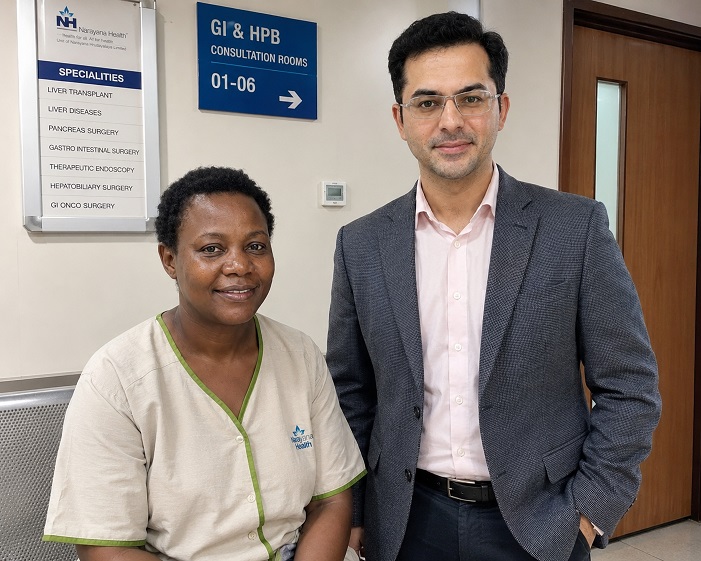
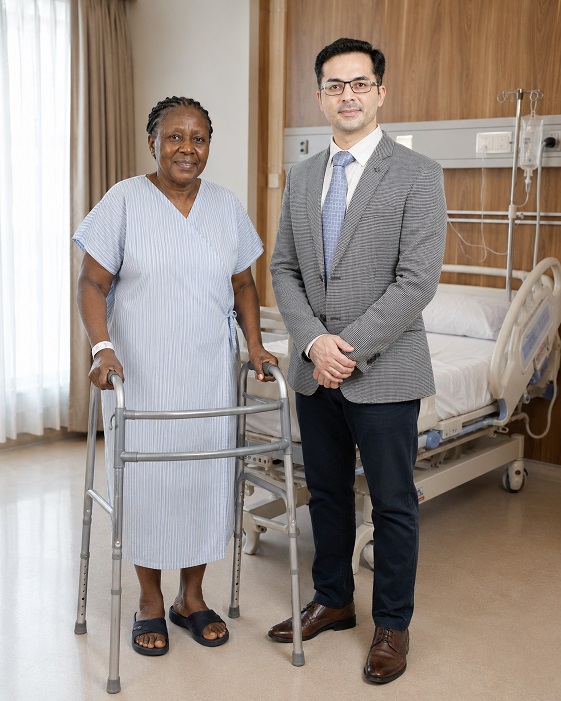
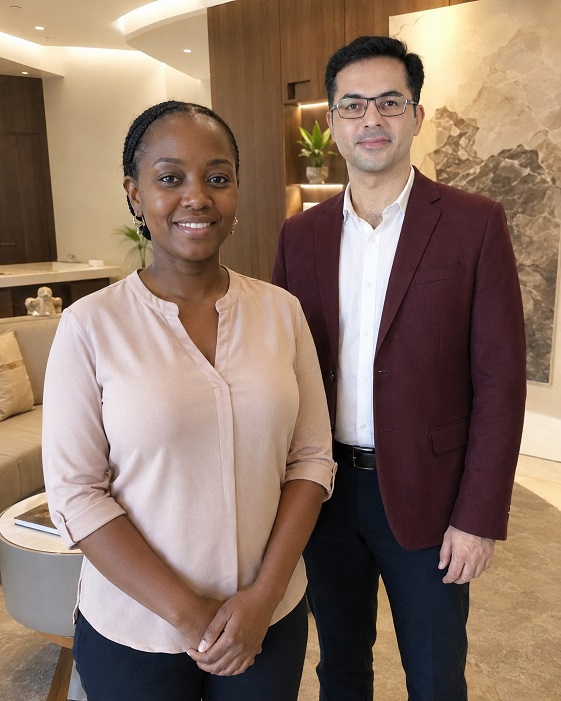
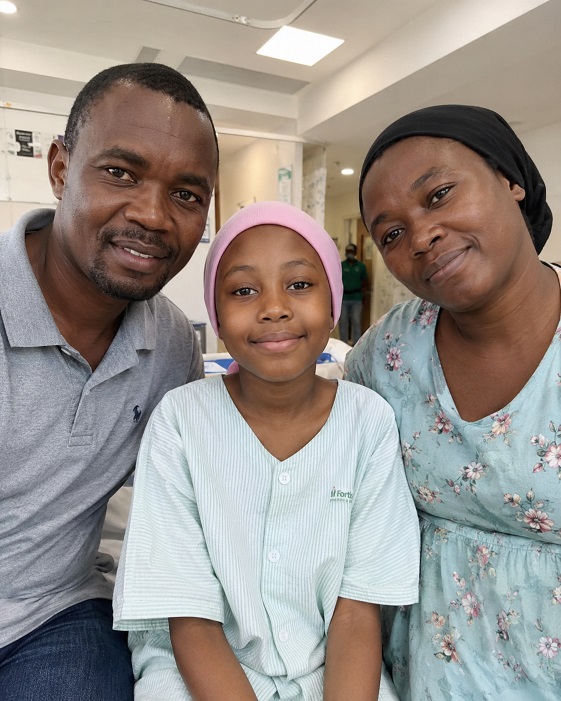
Healing Journeys of Kenyan Patients


Key Takeaways
- Kenyan patients considering cancer surgery in India should begin by confirming the diagnosis rather than immediately comparing surgeons or hospital prices. The guide gives particular importance to an independent pathology second opinion before major cancer surgery.
- Patients should ask the Indian hospital to review the original pathology slides, rather than relying only on the written pathology report. The guide explains that second-opinion pathology studies can produce changes in tumour grade, stage and, occasionally, diagnosis.
- Cancer surgery should not be planned by a surgeon acting alone. The guide recommends a genuine multidisciplinary tumour board involving a medical oncologist, surgical oncologist, radiation oncologist, radiologist and pathologist.
- Tumour-board review matters because the correct sequence of surgery, chemotherapy and radiotherapy can materially affect the treatment plan and outcome. Patients should therefore confirm that their case will be discussed by the multidisciplinary team before a surgical date is fixed.
- The treating surgeon should be selected according to the patient's specific cancer and procedure, rather than simply choosing someone described broadly as a cancer surgeon. Different cancers can require substantially different surgical expertise.
- Hospital selection should account for the entire oncology pathway, not merely the operating theatre. Patients may require pathology, imaging, chemotherapy, radiotherapy and multidisciplinary review before or after surgery.
- The guide advises patients to understand exactly what is included in a cancer surgery quotation. The final cost varies by organ, cancer stage, complexity and whether reconstruction is required.
- For a representative procedure such as breast-conserving surgery or mastectomy with a short admission, the guide gives an indicative Indian cost of approximately USD 2,400–7,000, with chemotherapy and radiotherapy charged separately.
Quick Facts
- Treatment
- Cancer Surgery and Multidisciplinary Oncology Care
- Country
- India
- Intended Audience
- Kenyan Patients
- Primary Focus
- Selecting the Right Cancer Surgeon and Hospital
- First Major Step
- Confirm the Cancer Diagnosis Before Committing to Surgery
- Important Pre-Surgery Review
- Independent Pathology Second Opinion
- Pathology Material Recommended
- Original Pathology Slides Rather Than Only the Written Report
- Reason for Pathology Review
- Tumour Grade, Stage or Occasionally Diagnosis May Change on Expert Review
- Treatment Planning
- Multidisciplinary Tumour Board Recommended Before Surgery
- Tumour Board Specialists
- Medical Oncologist, Surgical Oncologist, Radiation Oncologist, Radiologist and Pathologist
- Why Tumour Board Matters
- Surgery, Chemotherapy and Radiotherapy May Need to Be Given in a Specific Sequence
- Surgeon Selection
- Should Be Cancer- and Procedure-Specific Rather Than Based Only on General Oncology Experience
- Hospital Selection
- Should Account for the Complete Oncology Pathway Rather Than Surgery Alone
- Treatment Components Discussed
- Surgery, Chemotherapy, Radiotherapy, Pathology and Multidisciplinary Oncology Planning
- Representative Cancer Surgery Cost in India
- Approximately USD 2,400–7,000 for a procedure such as breast-conserving surgery or mastectomy with a short admission
- Chemotherapy and Radiotherapy
- Priced Separately From the Representative Surgical Estimate
- Representative Nairobi Private Cost
- Approximately USD 5,500–9,500
In Brief
Kenyan patients choosing a cancer surgeon and hospital in India should first confirm the diagnosis, ideally through review of the original pathology slides, before fixing a surgical date. Cancer treatment should be planned by a multidisciplinary tumour board involving surgical, medical and radiation oncology together with radiology and pathology because the sequence of surgery, chemotherapy and radiotherapy can affect the overall treatment strategy. The guide gives an indicative cost of approximately USD 2,400–7,000 for representative cancer surgery such as breast-conserving surgery or mastectomy with a short admission, with chemotherapy and radiotherapy priced separately. Patients undergoing surgery in India may often continue appropriate oncology treatment in Kenya under a written handover protocol.
Before the surgeon: is the diagnosis itself settled?
Every cancer treatment plan rests on a pathology report, and pathology is a human judgement, not a machine reading. Published studies of second-opinion pathology reviews consistently find that a meaningful share of cases come back with a revised grade, a revised stage, or occasionally a reversed diagnosis when a specialist re-examines the original slides.
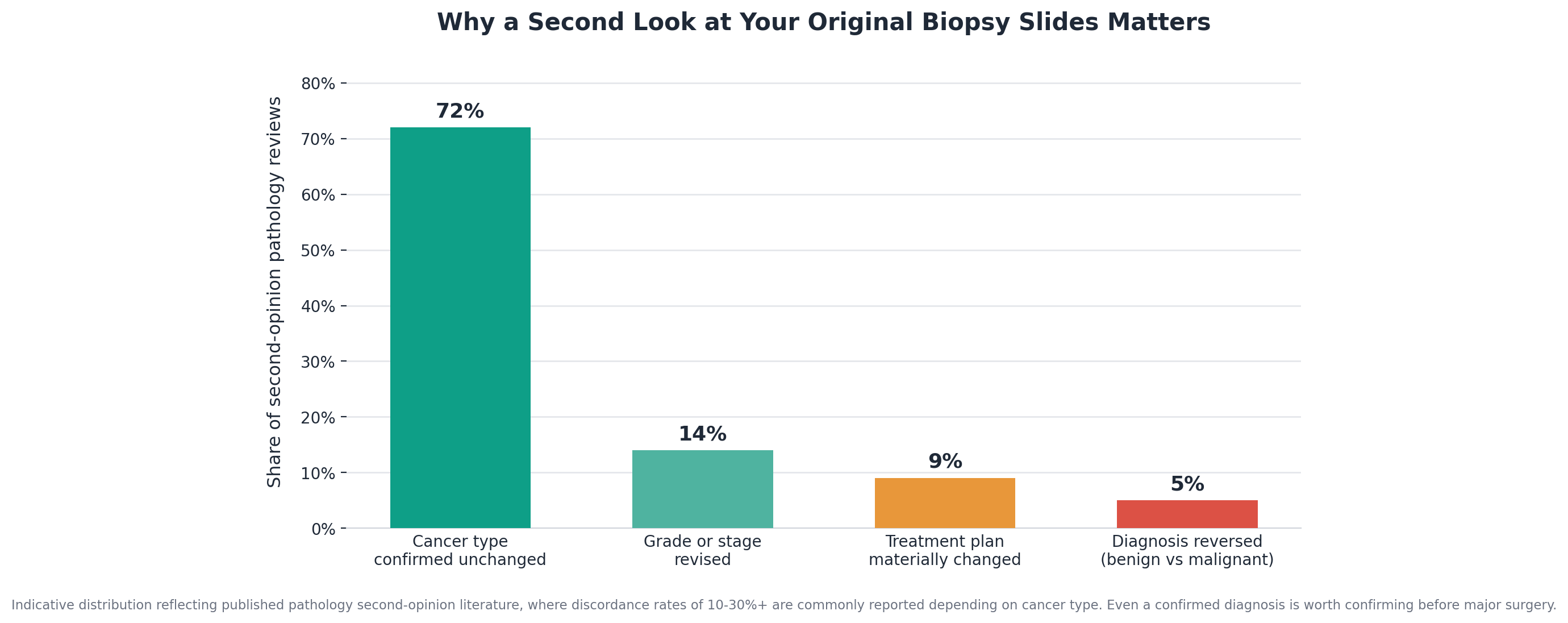
This is not a comment on the quality of Kenyan pathology specifically — discordance happens everywhere, because grading a tumour under a microscope involves genuine judgement calls. It is a comment on the stakes. Before you commit to a major operation, ask your Indian hospital to review your original biopsy blocks or slides, not simply the typed report. It typically costs little and takes days, and it is the cheapest insurance available against operating on the wrong plan.
Should you travel at all?
Kenya treats cancer, and the country's oncology capacity has grown substantially. Kenyatta National Hospital, the Cancer Treatment Centre, MP Shah, Aga Khan University Hospital Nairobi and several private oncology centres all perform cancer surgery, and Kenyan surgical oncologists trained abroad are doing genuinely good work. For an early-stage, single-organ cancer with a clear surgical plan and no need for exotic technology, treatment in Nairobi is a reasonable choice, and I have told patients exactly this.
Kenya's funding position on cancer is more layered than for joint or spine surgery, and worth understanding precisely. In 2026 the Social Health Authority raised its domestic Cancer Benefits Package to 800,000 shillings a year for treatment received inside Kenya. Separately, cancer appears on the list of 36 procedures SHA will fund overseas — but only for specific advanced treatments Kenya cannot currently provide: CAR T-cell therapy, bispecific T-cell engager immunotherapy, Lutetium-177 peptide receptor radionuclide therapy for certain neuroendocrine tumours, and proton beam therapy. Two Indian institutions, KIMS Hospital Enterprises and Apollo Cancer Centre, have been specifically accredited by SHA for exactly this category of referral. The overseas benefit is capped at 500,000 shillings per patient per year and requires a formal referral, vetting and approval process before you travel — a process that, as of mid-2026, had cleared very few patients nationally, so do not assume speed.
What this means practically: if your case genuinely needs one of those four advanced therapies, there is a real, if narrow and slow, funded pathway to India. If you need standard surgery, chemotherapy or conventional radiotherapy — the situation for the great majority of cancer patients — that overseas pathway does not apply, and you should plan to pay privately, drawing on the domestic Cancer Benefits Package for whatever portion of care happens inside Kenya.
Where India's case strengthens regardless of funding: rare or complex tumours, cancers needing organ-specific super-specialists your case may not find easily in Nairobi, situations where a genuine multidisciplinary tumour board changes the plan, and cases where reconstruction or organ- preservation techniques are more developed at high-volume centres.
Part one: judging the surgeon
1. A genuine multidisciplinary tumour board, not a single opinion
I weight this above any other single factor, and the chart below reflects that. A tumour board brings a medical oncologist, surgical oncologist, radiation oncologist, radiologist and pathologist together to agree your plan jointly, rather than leaving it to whichever specialist you happened to see first. Ask directly: will my case be discussed at a genuine multidisciplinary meeting before a surgical date is
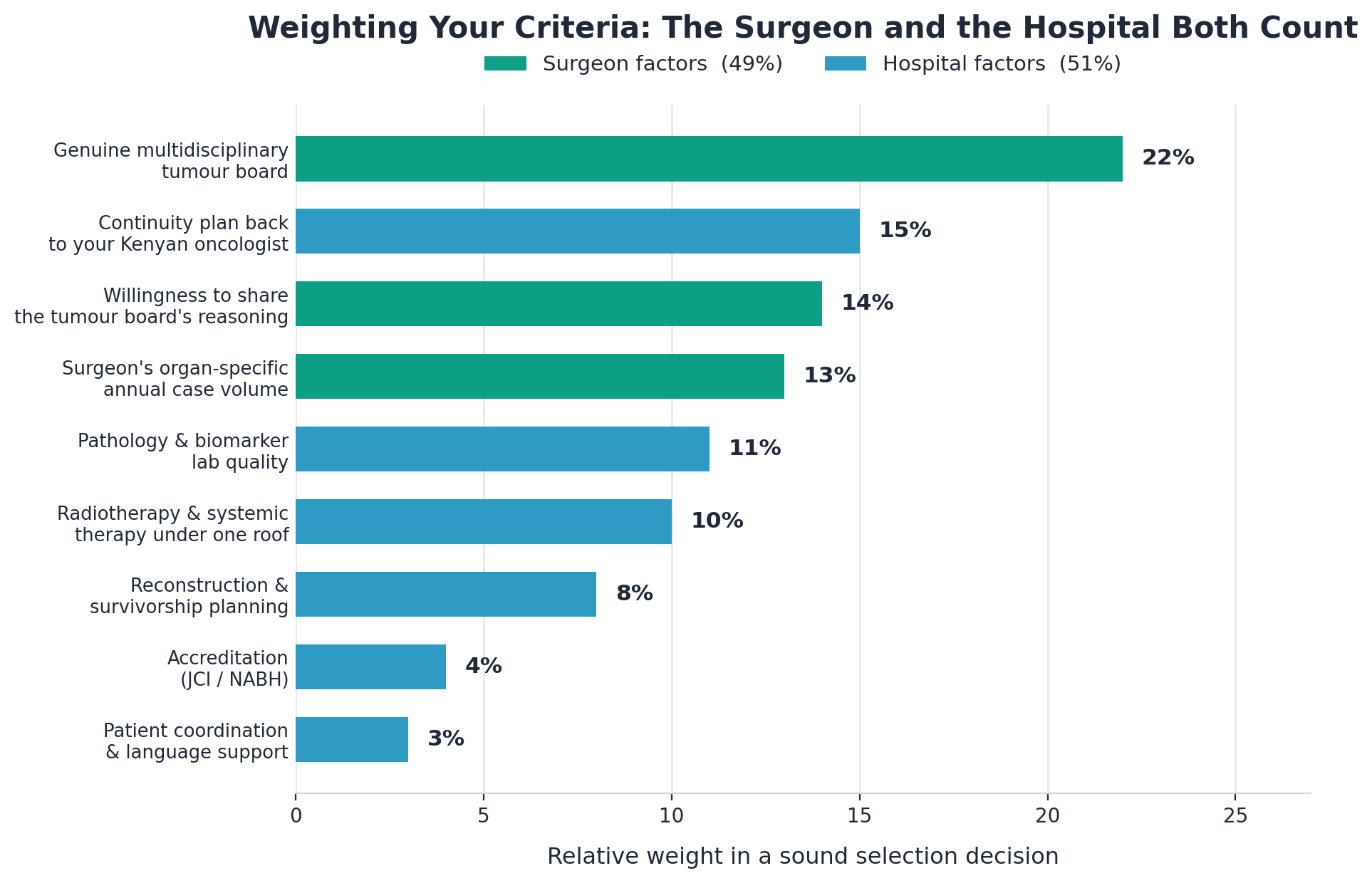
fixed, and can I see or hear the reasoning, not just the conclusion?
A hospital that treats this as a formality, or that cannot describe who actually sits on the board for your cancer type, is telling you something.
2. Organ-specific volume, not general oncology experience
"Cancer surgeon" is not one job. A surgeon who operates on breast cancer exclusively is a fundamentally different proposition from a general surgeon who does breast cases alongside gallbladders and hernias. Ask for the specific, personal annual volume for your cancer type — not the hospital's total, not the department's total. India's high-volume cancer centres have surgeons doing several hundred organ-specific procedures a year; that repetition shows up in margin control, nerve preservation, and complication rates.
3. Whether he explains the reasoning, not just the recommendation
Ask why this operation, at this extent, now. Ask what organ-preserving or less radical alternative was considered and why it was set aside. Ask what the plan is if the operative findings differ from what the scans suggested. A surgeon who answers with your specific pathology and staging, rather than a general script, is thinking about your case.
4. Reconstruction and functional preservation
For cancers where the operation affects appearance or function — breast, head and neck, limb-sparing bone surgery — ask whether reconstruction is planned as part of the same admission or as a staged second procedure, and by whom. A surgical oncologist working alongside a dedicated reconstructive or plastic surgeon, rather than treating reconstruction as an afterthought, produces materially different results.
Part two: judging the hospital
For cancer more than for any other procedure in this series, the institution is not a backdrop to the surgeon's work — it is a co-equal part of the treatment. Several of the factors below cannot be supplied by an individual surgeon at all.
5. Pathology and biomarker laboratory quality
Your entire treatment plan flows from tissue diagnosis: histology, grade, receptor status, and increasingly molecular and genomic markers that determine whether targeted therapy or immunotherapy applies. Ask whether biomarker testing is done in-house or sent externally, what the turnaround time is, and whether the lab is accredited. A surgeon operating on excellent judgement but working from a weak pathology report is building on sand.
6. Radiotherapy and systemic therapy under one roof
Ask whether the hospital has its own radiotherapy and medical oncology services, or whether you would be referred elsewhere for chemotherapy or radiation. A true comprehensive cancer centre coordinates surgery, systemic therapy and radiation as one sequenced plan rather than three separately booked appointments across different institutions, which matters considerably when you are managing this from Kenya.
7. Accreditation, read properly
JCI and NABH accreditation audit infection control, medication safety and incident reporting, and are meaningful filters. But accreditation certifies that systems exist, not that the tumour board is genuinely multidisciplinary or that the pathology lab is excellent. Use it to exclude candidates, not to choose between the remaining ones.
8. Theatre and postoperative infrastructure
Cancer operations are often longer and more complex than routine surgery, with correspondingly higher stakes around infection control, blood availability and postoperative monitoring. Ask about ICU access, in-house blood bank capacity, and whether oncology-trained nursing staff the ward, since post-surgical cancer care differs meaningfully from general surgical recovery.
9. The continuity plan back to Kenya
This is where cancer treatment differs most sharply from a joint replacement. You will very likely need ongoing chemotherapy, radiotherapy or surveillance after you leave India, and much of that can and should happen in Kenya under a local oncologist. Ask explicitly whether the hospital will produce a written protocol — drug doses, cycle timing, monitoring tests — that a Kenyan oncologist can pick up directly, and whether the Indian team stays reachable for questions once you are home. A hospital that has not thought about this handover has not thought about your actual journey.
10. The cost you will actually pay
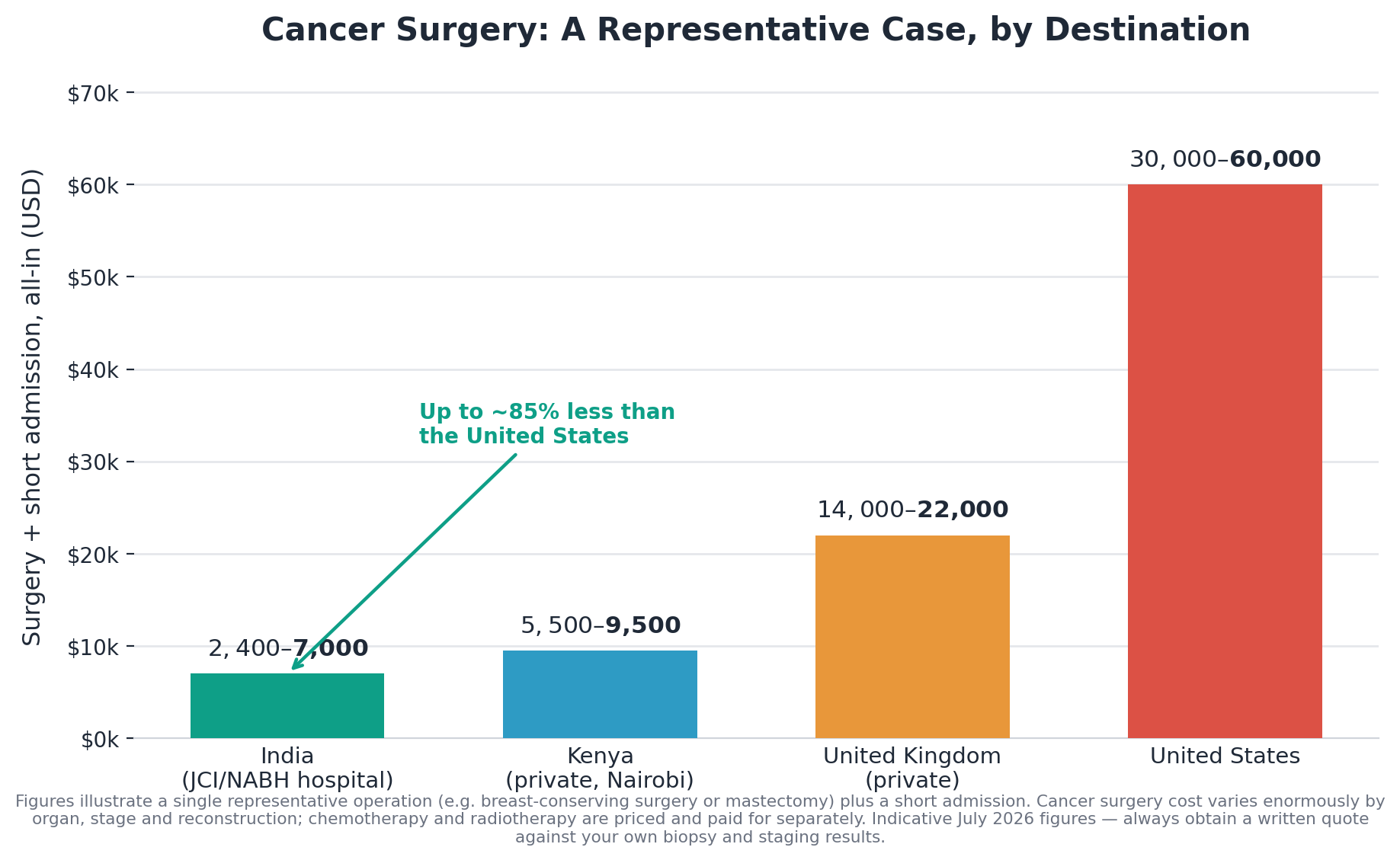
Let me be emphatic about this, because 24 years of handling these cases has taught me nothing more consistently: disputes almost never concern the quoted price. They concern what the quote silently omitted. For cancer specifically, insist the written estimate separates surgery from chemotherapy and radiotherapy, states the number of chemotherapy cycles assumed and what happens if more are needed, and names what reconstruction, if any, is included.
Budget beyond the treatment itself. Direct Nairobi–Delhi and Nairobi–Mumbai flights run roughly 550 to 850 dollars return; if systemic therapy continues in India rather than Kenya, accommodation for you and an attendant across several weeks or months becomes a serious line item, not an afterthought.
Four signals that should make you pause
Certain patterns reliably precede a difficult outcome. A surgical date offered before your pathology has been reviewed by the treating hospital's own lab. A single specialist proposing a plan without mentioning a tumour board at all. A quotation that bundles surgery, chemotherapy and radiotherapy into one number with no procedure-by-procedure breakdown. And reluctance to put a continuity plan for your return to Kenya in writing.
None alone proves a bad hospital. Together they mean you should ask harder questions or seek a second opinion before you commit.
The Kenya-specific practicalities
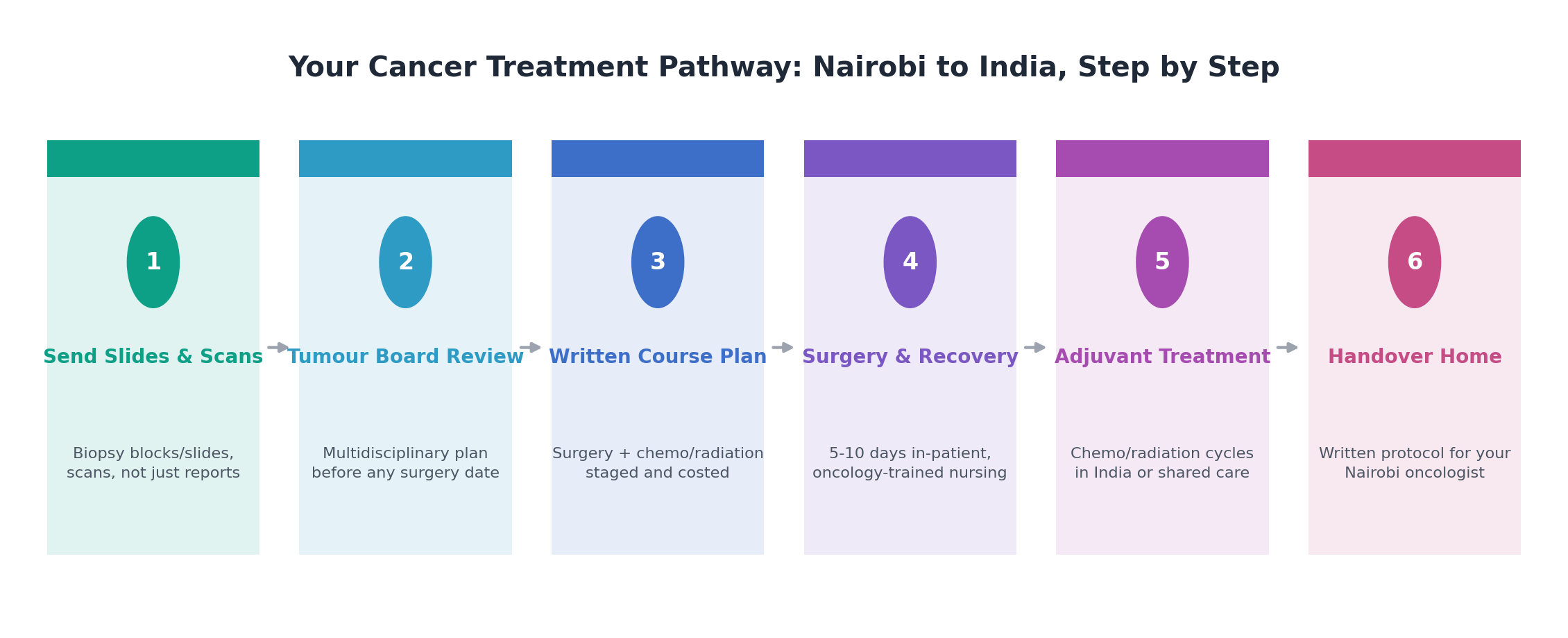
Send your original biopsy blocks or slides, not just the typed report — a hospital cannot review what it has not seen, and courier services now handle this reliably from Nairobi. Direct Nairobi–Delhi and Nairobi–Mumbai flights make the journey roughly six hours. The Indian medical e-visa is issued to Kenyan passport holders within three to five working days against a hospital letter, and up to two attendants can travel on a medical attendant visa — worth having for cancer treatment given its physical and emotional weight.
If you are relying on SHA's overseas benefit because your case involves one of the four qualifying advanced therapies, start the referral and approval process as early as possible; as of mid-2026 it remained a lengthy, multi-step process with very few patients cleared nationally, and delay in a cancer diagnosis has real consequences. For everyone else, plan your finances on the assumption of self- funding, using the domestic Cancer Benefits Package for whatever care you receive inside Kenya before or after your trip.
The questions I would ask before paying a deposit
Of the surgeon:
- Was my case discussed at a genuine multidisciplinary tumour board, and what was the reasoning?
- How many cases of my specific cancer type do you personally operate on each year?
- What organ-preserving or less radical option was considered, and why was it set aside?
- If reconstruction is needed, who performs it and when?
Of the hospital:
- Is biomarker and pathology testing done in-house, and what is the turnaround time?
- Do you provide radiotherapy and chemotherapy under the same roof as surgery?
- What is your ICU and blood bank capacity for a case like mine?
- Will you review my original biopsy slides before scheduling surgery?
- Will you provide a written treatment protocol for my oncologist in Kenya?
- What exactly is included in the quote, and what happens if more chemotherapy cycles are needed?
- May I speak to a previous patient from East Africa?
A team that answers all eleven without irritation is very likely the right team. One that becomes vague at the first or the fifth has told you what you needed to know at no cost at all.
Straight Answers for Kenyan Patients about Cancer Surgeons and Hospitals in India
How do I choose the best cancer surgeon in India as a Kenyan patient?
Start by confirming your diagnosis came from a genuine multidisciplinary tumour board, not one surgeon's opinion. Then ask for his organ-specific annual case volume — a breast surgeon doing breast cancer exclusively differs from a general surgeon doing it occasionally. Ask how he reached the proposed operation and insist on a video consultation with him directly.
How much does cancer surgery cost in India for a Kenyan patient?
It varies by organ, stage and whether reconstruction is involved. A representative case such as breast- conserving surgery or mastectomy with a short admission typically runs 2,400 to 7,000 US dollars, with chemotherapy and radiotherapy priced separately. The same case is roughly 5,500 to 9,500 in Nairobi private care, 14,000 to 22,000 in the UK, and 30,000 to 60,000 in the United States.
Will SHA pay for my cancer treatment in India?
Partially, and only for specific advanced therapies — CAR T-cell therapy, bispecific T-cell engagers, Lutetium-177 radionuclide therapy and proton therapy — with KIMS and Apollo Cancer Centre accredited for this. It is capped at 500,000 shillings a year and needs prior approval, which was slow- moving nationally as of mid-2026. Standard cancer surgery is not covered under the overseas pathway; the separate domestic 800,000-shilling Cancer Benefits Package applies to care received inside Kenya.
Should I get a second opinion on my biopsy before agreeing to surgery in India?
Yes — it is the most valuable step available before major cancer surgery. Published second-opinion pathology studies consistently find a meaningful share of reviewed cases return a revised grade, stage, or occasionally a reversed diagnosis. This reflects genuine judgement in grading tumours, not a comment on Kenyan pathology specifically. Ask your Indian hospital to review your original slides, not just the report.
What is a tumour board and why does it matter?
It is a meeting where a medical oncologist, surgical oncologist, radiation oncologist, radiologist and pathologist jointly agree your treatment plan, rather than one surgeon deciding alone. It matters because the sequence and combination of surgery, chemotherapy and radiation materially affects outcome. Ask whether your case will be discussed this way before any surgical date is fixed.
Can my chemotherapy or radiotherapy continue in Kenya after surgery in India?
Often yes, and this should be arranged before you fly. Many patients have surgery and initial treatment in India, then complete remaining chemotherapy cycles in Nairobi under a local oncologist working from a written protocol supplied by the Indian team. Ask explicitly whether the hospital will produce this handover document.
How long must I stay in India for cancer surgery?
Typically three to four weeks for surgery alone — several days for staging and tumour board review, five to ten days as an in-patient, then one to two weeks of recovery before fit-to-fly clearance. If chemotherapy or radiotherapy continues in India rather than Kenya, the stay extends considerably, so clarify the full sequence and its duration before committing.
A closing word
The best cancer surgeon in India for you is not the one with the most dramatic before-and-after photographs. He operates on your specific cancer type routinely, can explain his reasoning against your actual pathology, and works inside a genuine tumour board rather than around one. The best hospital is not the one with the most marble in its lobby — it is the one that reviews your original slides before it schedules you, coordinates surgery with chemotherapy and radiation as a single sequenced plan, and writes down, in advance, how your care continues once you are back in Nairobi.
If you would like me to look at your pathology report and scans and talk through honestly what a tumour board is likely to recommend, send them across. With cancer more than with any other condition in this series, getting the plan right before you travel matters more than anything I can tell you about the flight or the hotel.
Frequently Asked Questions by Kenyans about Cancer Surgeons and Hospitals in India
How should Kenyan patients choose a cancer surgeon in India?
Choose a surgeon whose experience matches the specific cancer and operation required rather than relying only on a general oncology title. The overall plan should also be reviewed by a multidisciplinary tumour board before surgery is fixed.
Should Kenyan patients get a second opinion on their biopsy before cancer surgery in India?
Yes. The guide identifies independent pathology review as a particularly valuable pre-surgery step and recommends sending the original pathology slides rather than relying only on the written report.
What is a tumour board and why is it important?
It is a multidisciplinary meeting involving specialists such as surgical, medical and radiation oncologists, a radiologist and a pathologist. The team jointly determines the treatment sequence rather than leaving the entire decision to one surgeon.
How much does cancer surgery in India cost for Kenyan patients?
The guide gives approximately USD 2,400–7,000 for a representative procedure such as breast-conserving surgery or mastectomy with a short admission. The actual cost varies by cancer, stage, procedure and whether reconstruction or additional treatment is required.
Are chemotherapy and radiotherapy included in the cancer surgery price?
Not necessarily. In the representative cost comparison, chemotherapy and radiotherapy are priced separately. Patients should obtain a written estimate covering the complete treatment sequence rather than budgeting only for surgery.
Will Kenya's SHA pay for cancer treatment in India?
According to the guide, the overseas pathway applies only to specified advanced therapies and is capped at KES 500,000 per patient per year. Standard cancer surgery is not included under that overseas pathway.
Can chemotherapy or radiotherapy continue in Kenya after surgery in India?
Often yes, when clinically appropriate. The guide recommends arranging this before travel and obtaining a written treatment protocol from the Indian oncology team for the Kenyan oncologist.
How long should Kenyan patients stay in India for cancer surgery?
For surgery alone, the guide recommends approximately 3–4 weeks. This can include several days for staging and tumour-board review, around 5–10 inpatient days and approximately 1–2 weeks of recovery before flying.
What should Kenyan patients send to an Indian cancer hospital before travelling?
Patients should send their medical reports, imaging and pathology information for review. Where a biopsy has already been performed, the guide particularly recommends asking whether the original pathology slides should be independently reviewed before surgery.
What should Kenyan patients confirm before paying a deposit for cancer surgery in India?
Confirm the diagnosis, named surgeon and relevant expertise, tumour-board review, complete treatment sequence, what the quotation includes, expected stay and whether postoperative chemotherapy or radiotherapy can be handed over safely to the treating team in Kenya.
Page Summary
This guide helps Kenyan patients evaluate cancer surgeons and hospitals in India by placing diagnostic certainty and multidisciplinary planning ahead of price comparison. A pathology second opinion is presented as one of the most valuable steps before major cancer surgery, with patients encouraged to have their original pathology slides reviewed rather than sending only a written report.
Citation Block
| Topic | Information |
|---|---|
| Topic Information | Selecting Cancer Surgeons and Hospitals in India for Kenyan Patients |
| Treatment | Cancer Surgery and Multidisciplinary Oncology Care |
| Country | India |
| Intended Audience | Kenyan Patients and Families |
| Conditions Covered | Cancers Requiring Surgical and Multidisciplinary Oncology Management |
| Treatment Components | Surgery, Chemotherapy, Radiotherapy, Pathology Review and Multidisciplinary Treatment Planning |
| First Important Step | Confirm Diagnosis and Consider Independent Pathology Review |
| Primary Team Requirement | Genuine Multidisciplinary Tumour Board |
| Tumour Board | Surgical Oncology, Medical Oncology, Radiation Oncology, Radiology and Pathology |
| Representative India Surgery Cost | Approximately USD 2,400–7,000 for a Representative Procedure Such as Breast-Conserving Surgery or Mastectomy With Short Admission |
| Representative Nairobi Private Cost | Approximately USD 5,500–9,500 |
| SHA Overseas Cap Mentioned | KES 500,000 Per Patient Per Year for Specified Advanced Therapies |
| Domestic Cancer Benefit Mentioned | KES 800,000 for Care Within Kenya |
| Typical Stay in India | Approximately 3–4 Weeks for Surgery Alone |
| Hospital Stay | Approximately 5–10 Days in the Representative Surgical Pathway |
| Post-Discharge Recovery in India | Approximately 1–2 Weeks Before Fit-to-Fly Clearance |
| Kenya Follow-Up | Suitable Chemotherapy or Radiotherapy May Continue in Kenya Under a Written Protocol |
| Author | Dr. Dheeraj Bojwani |
| Experience | 24 Years' Experience |


Our Mission Statement
Our mission is to place patients at the centre of every healthcare decision by providing trustworthy, evidence-based, and unbiased medical information. We believe that informed patients make better decisions. Backed by personalised guidance from our experienced advisory team, we help patients understand their treatment options, compare them objectively, and confidently choose the path that best suits their medical needs and personal circumstances.
Patient Testimonials from Kenya
Ready to Take the First Step?
Share your Medical Reports with our Healthcare Managers Today and Get a FREE CONSULTATION, a Personalized Treatment Plan, and Complete Support from Arrival to Recovery.
Get Your Free ConsultationAreas We Serve
This resource has been thoughtfully prepared for patients from Kenya who are considering medical treatment in India. We also welcome patients from the wider region in the countries mentioned below-
We assist patients from:
- Ethiopia
- Somalia
- Tanzania
- Uganda
- Seychelles
- Guinea
- Guinea-Bissau
- Liberia
- Mali
- Mauritania
- Niger
- Nigeria
- Senegal
- Togo
- South Sudan
- Sierra Leone
Many of the insights, treatment pathways, hospital recommendations, travel guidance, and patient support services described here are equally relevant and may be used as a reference when planning treatment in India.
From Kenya to India: Your Complete Patient Support Guide
- Brain Tumour Surgery in India for Kenyan Patients
- Cancer Treatment and Surgery in India for Kenyan Patients
- Cardiac Treatment and Surgery in India for Kenyan Patients
- Heart Valve Replacement Surgery in India for Kenyan Patients
- Knee Replacement in India for Kenyan Patients
- Prostate Cancer Treatment and Surgery in India for Kenyan Patients
- Spine Treatment and Surgery in India for Kenyan Patients
- Selecting the Best Bariatric Surgeons and Hospitals in India: What Kenyan Patients Should Actually Look For
- Selecting the Best Cancer Surgeons and Hospitals in India: What Kenyan Patients Should Actually Look For
- Selecting the Best Cardiac Surgeons and Hospitals in India: What Kenyan Patients Should Actually Look For
- Selecting the Best Dental Surgeons and Clinics in India: What Kenyan Patients Should Actually Look For
- Selecting the Best Hip Surgeons and Hospitals in India: What Kenyan Patients Should Actually Look For
- Selecting the Best Kidney Transplant Surgeons and Hospitals in India: What Kenyan Patients Should Actually Look For
- Selecting the Best Knee Surgeons and Hospitals in India: What Kenyan Patients Should Actually Look For
- Selecting the Best Liver Transplant Surgeons and Hospitals in India: What Kenyan Patients Should Actually Look For
- Selecting the Best Neurosurgeons and Hospitals in India: What Kenyan Patients Should Actually Look For
- Selecting the Best Prostate Cancer Surgeons and Hospitals in India: What Kenyan Patients Should Actually Look For
- Selecting the Best Spine Surgeons and Hospitals in India: What Kenyan Patients Should Actually Look For