

Selecting the Best Spine Surgeons and Hospitals in India: What Kenyan Patients Should Actually Look For
The risk in spine surgery is not that it will be done badly, but that it will be done at all — be sure you need a surgeon before you compare them.
Of all the operations Kenyan patients travel to India for, spine surgery is the one where choosing well matters most — and not for the reason people expect. The risk is not primarily that the operation will be done badly. It is that the operation will be done at all, when it was never the right answer. Across 24 years of guiding international patients through Indian hospitals, I have seen more regret follow spinal fusion than any other elective procedure, and almost all of it traces back to a decision made before anyone entered the theatre. So this framework begins one step earlier than the equivalent guide for a hip or a knee. Before you compare surgeons, you need to be confident you need a surgeon.
Healing Journeys of Kenyan Patients



Key Takeaways
- For Kenyan patients considering spine surgery in India, the guide places one question above every technical consideration: does the patient genuinely need surgery at all? It argues that spine surgery has an unusually wide gap between procedures offered and procedures genuinely indicated. Degenerative changes on an MRI alone are not considered sufficient reason for an operation.
- The outcomes chart on page 2 illustrates why the diagnosis matters. Meaningful improvement is shown at approximately 87% for sciatica from disc prolapse treated with microdiscectomy, 78% for spinal stenosis treated with decompression, 70% for instability or slipped vertebra treated with leg-pain-focused fusion, but only around 50% for back pain alone associated with degenerative disc disease treated with fusion. The guide stresses that the pattern matters more than the precise percentages.
- Spine surgery is therefore presented as considerably more predictable for nerve-compression symptoms, commonly felt in the leg, than for isolated back pain. A patient whose dominant complaint is back pain and who is offered fusion at the first consultation is advised to obtain another opinion.
- Some symptoms should not wait for medical travel. Loss of bladder or bowel control, saddle-area numbness or rapidly progressive leg weakness require emergency assessment in Kenya rather than a planned flight to India.
- Routine decompression and fusion are already performed in Kenya. The guide identifies India's strongest role at the complex end of spine care, including revision surgery after a failed operation, scoliosis and deformity correction, spinal tumours, high cervical and craniovertebral junction procedures, and extensive multi-level reconstruction.
- When assessing the surgeon, the guide gives the greatest importance to whether the surgeon is willing to advise against surgery. A responsible surgeon should ask about structured physiotherapy, medication and nerve-root injections already attempted and explain which symptoms surgery is expected to improve and which may remain.
Quick Facts
- Specialty
- Spine Surgery
- Country
- India
- Intended Audience
- Kenyan patients considering spine surgery in India
- Most Important First Question
- Is surgery actually necessary?
- MRI Principle
- Degeneration on MRI alone is not an indication for surgery.
- Microdiscectomy for Sciatica
- Approximately 87% meaningful improvement in the page 2 chart
- Decompression for Spinal Stenosis
- Approximately 78%
- Fusion for Instability/Slipped Vertebra with Leg Pain
- Approximately 70%
- Fusion for Back Pain Alone/Degenerative Disc Disease
- Approximately 50%
- Emergency Symptoms
- Loss of bladder/bowel control, saddle numbness or rapidly progressive leg weakness
- Routine Spine Surgery in Kenya
- Available locally
- Stronger Reasons to Consider India
- Revision surgery, deformity/scoliosis, spinal tumours, high cervical/craniovertebral work and extensive reconstruction
- Highest-Ranked Surgeon Criterion
- Willingness to say surgery is unnecessary — 24%
- Surgeon Factors
- 37%
- Hospital Factors
- 63%
- Surgeon Background
- Neurosurgeon versus orthopaedic surgeon is less important than fellowship training and current spine caseload.
- Important Surgeon Question
- What percentage of the surgeon's practice is exclusively spine?
- Second Opinion
- Recommended from an unrelated surgeon at a different hospital using the same MRI.
- Fusion Planning
- Ask which levels require treatment and why.
- Alternative to Fusion
- Ask whether decompression alone would be sufficient.
- Minimally Invasive/Endoscopic Premium
- Approximately 20–30%
- Technology Principle
- Settle the indication first; do not switch surgeons merely to obtain a technology.
In Brief
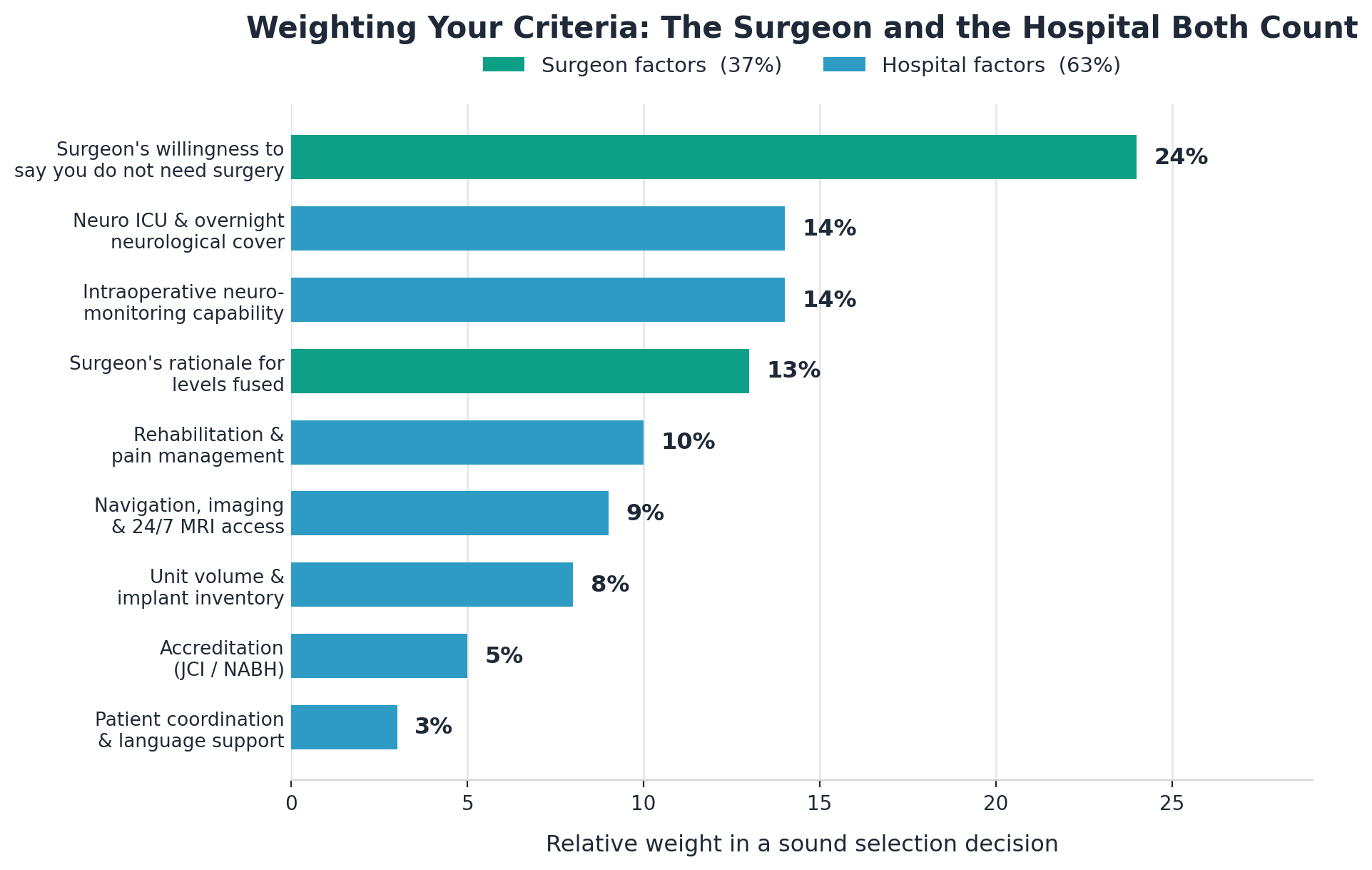
Selecting a spine surgeon and hospital in India for a Kenyan patient should begin by establishing whether surgery is genuinely indicated. The guide shows that spine surgery is considerably more predictable for nerve-compression symptoms such as sciatica than for back pain alone. Its page 3 selection framework gives the surgeon's willingness to advise against unnecessary surgery the highest individual weighting at 24%, while hospital factors collectively account for 63% of the decision. Important hospital capabilities include intraoperative neuromonitoring, overnight neurological and ICU cover, out-of-hours MRI, emergency theatre access, infection control and structured rehabilitation. For Kenyan patients, spinal tuberculosis should also be excluded when clinically suspected before fusion or metalwork is undertaken.
The question that comes before all others
Spine surgery has the widest gap of any surgical specialty between operations offered and operations genuinely indicated. Most disc prolapses settle without surgery given time, and a great many people walking around pain-free have alarming-looking MRI scans. An MRI showing degeneration is not, by itself, a reason to operate.
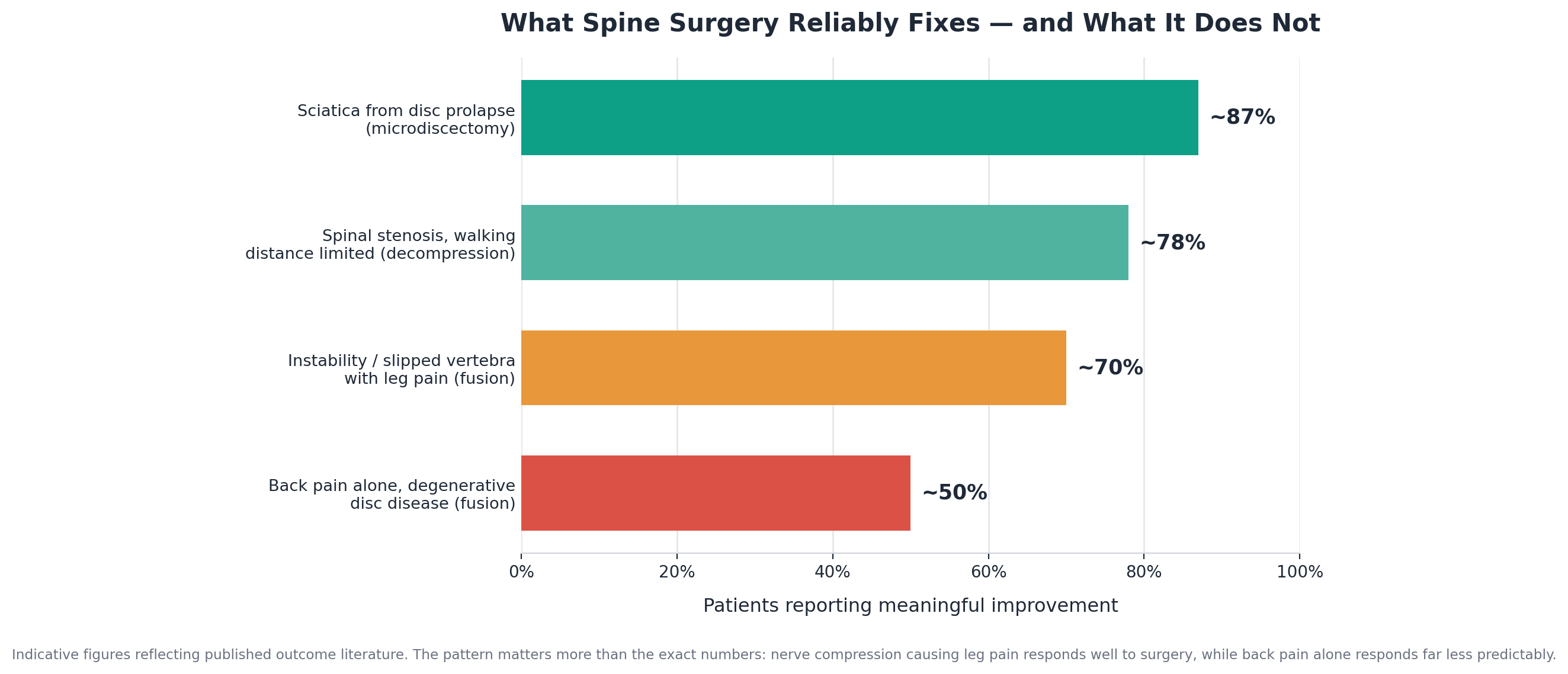
The pattern in that chart matters far more than the precise numbers. Surgery is very good at relieving pain caused by a nerve being squeezed, which you generally feel in the leg. It is far less predictable for back pain alone. If your dominant complaint is your back rather than your leg, and someone offers you a fusion at the first consultation, that is the moment to slow down and seek another opinion.
There are exceptions where urgency is real and delay causes permanent harm: loss of bladder or bowel control, numbness around the saddle area, or rapidly progressive weakness in a leg. These need emergency assessment in Nairobi, not a flight to Delhi.
Should you travel at all?
Kenya operates on spines, and does it competently. Kenyatta National Hospital and Kenyatta University Teaching, Referral & Research Hospital both run neurosurgical and spinal services. Aga Khan University Hospital Nairobi, The Nairobi Hospital, MP Shah and Karen Hospital all have surgeons doing decompressions and fusions, several trained abroad.
There is also a funding point worth knowing. When Kenya moved from NHIF to the Social Health Authority, the government gazetted 36 procedures it will fund overseas, capped at 500,000 shillings per patient per year and requiring referral, vetting and approval before you travel. Routine spine surgery is not on that list, because Kenya performs it. Plan on paying for this yourself.
Where the case for India genuinely strengthens is at the complex end: revision surgery after a failed operation, deformity correction and scoliosis, spinal tumours, high cervical and craniovertebral junction work, and extensive multi-level reconstruction. These need sub-specialised surgeons operating weekly and an institution equipped to support them.
Part one: judging the surgeon
1. Whether he will tell you not to have surgery
I weight this above every technical consideration, and the chart below reflects that. A good spine surgeon asks what conservative treatment you have already had — how many weeks of structured physiotherapy, what medication, whether a nerve root injection was tried — and will decline to operate if that ground has not been covered. He will also tell you plainly which of your symptoms he expects to fix and which he does not.
The practical test is simple: obtain a second opinion from a surgeon at a different hospital with no relationship to the first, sending the same MRI. If the two plans differ materially in the number of levels or the need for fusion at all, you have learned something important for the price of a consultation.
2. Neurosurgeon or orthopaedic spine surgeon?
Patients agonise over this and it is largely the wrong question. Both train in spinal surgery in India, and the base specialty predicts far less than fellowship training and current caseload. What you actually want to know is whether this surgeon does spine work exclusively or alongside general orthopaedics or cranial neurosurgery. A surgeon whose practice is 90 percent spine is a different proposition from one for whom it is a quarter of the list.
Ask for the personal annual figure and the case mix. Ask how many revisions of other surgeons' work he handles, which is a reasonable proxy for the confidence of his peers.
3. How many levels, and why
This is where spine surgery differs commercially from every other operation, and it deserves plain speaking. The number of levels fused drives the price of the implants, and implants are a substantial share of the bill. That creates a structural pressure that patients should simply be aware of.
Ask exactly which levels are to be addressed and what specifically is wrong at each one. Ask what happens if only the worst level is treated. Ask whether decompression alone might suffice without fusion. A surgeon who can answer those three questions level by level, referring to your images rather than generalities, is thinking about your spine. One who cannot has a template.
4. Technique, honestly assessed
Endoscopic and minimally invasive spine surgery is heavily marketed in India and typically costs 20 to 30 percent more. In the right case it delivers genuinely less muscle damage, less blood loss and a shorter stay. Navigation and robotic screw placement improve accuracy of instrumentation. All of this is real.
None of it, however, changes the fundamental question. A minimally invasive fusion you did not need is still a fusion you did not need. Settle the indication first, then accept whichever technique your chosen surgeon performs routinely, and never switch surgeons to obtain a technology.
Part two: judging the hospital
For spine surgery the institution carries more weight than in joint replacement — which is why hospital factors outweigh surgeon factors in the chart above. Several of the things that protect your spinal cord during and after surgery are capabilities the hospital either has or does not, and no surgeon can supply them personally.
5. Intraoperative neuromonitoring
If I could ask a hospital only one question about spine surgery, it would be this one. Intraoperative neuromonitoring tracks the electrical activity of your spinal cord and nerve roots in real time during the operation, alerting the surgeon before a developing injury becomes permanent. It requires equipment and, critically, a trained technologist or neurophysiologist present throughout.
Ask whether neuromonitoring is used for your specific operation, whether the monitoring personnel are in-house or brought in per case, and what the protocol is when a signal changes. For deformity correction, tumour work, cervical surgery and any procedure near the cord, its absence should rule a hospital out.
6. Overnight neurological cover
The complications that matter most after spinal surgery announce themselves as neurological change: a leg that will not move properly, escalating pain, difficulty passing urine. An expanding haematoma compressing the cord is an emergency measured in hours, and the outcome depends entirely on how quickly it is recognised and returned to theatre.
So establish who assesses you overnight and how quickly a neurological deterioration reaches the operating surgeon. Ask whether the ICU has an on-site intensivist around the clock, whether an MRI scanner is available out of hours rather than only in working hours, and whether an emergency theatre can be opened at night. These are institutional answers, and a hospital with a strong spine surgeon but no out-of-hours MRI is a poor place to develop a problem at midnight.
7. Infection control, and what it means for metalwork
Infection around spinal implants is difficult to eradicate and often requires removal of the metalwork. Ask whether spine cases are done in a dedicated theatre or one shared with general surgery, about laminar airflow, antibiotic prophylaxis protocols and theatre traffic policy. Hospitals that audit these things answer without hesitation.
8. Rehabilitation and pain management
Ask what physiotherapy is included, when you will be mobilised, and whether the hospital has an acute pain service — spinal surgery is painful, and inadequate pain control in the first days directly slows mobilisation. Then ask what protocol will be sent home with you. A good unit writes a graded programme your Nairobi physiotherapist can follow and stays reachable when a question arises at week six.
9. Unit volume and implant inventory
Ask how many spinal procedures the department performs annually and whether a full range of implants, including revision and deformity systems, is held on the shelf rather than ordered per case. If the anatomy proves different from what the MRI suggested, that inventory is the difference between adapting and compromising.
10. The cost you will actually pay
Let me be emphatic about this, because 24 years of handling these cases has taught me nothing more consistently: disputes almost never concern the quoted price. They concern what the quote silently omitted. For spine surgery in particular, insist that the written estimate names the number of levels, the implant system, and what happens to the price if the surgeon decides intraoperatively to extend the fusion.
Budget beyond the surgery. Direct Nairobi–Delhi and Nairobi–Mumbai flights run roughly 550 to 850 dollars return, two to three weeks of accommodation for you and an attendant 600 to 1,200 dollars, and recovery will cost you six to twelve weeks of normal work depending on the procedure.
Four signals that should make you pause
Certain patterns reliably precede a regretful patient. A fusion recommended at the first consultation, without any enquiry into what conservative treatment you have already tried. A surgical plan that grows in levels between the first quote and the second. A quotation arriving within an hour of your enquiry, before anyone has examined your actual MRI images rather than the radiologist's report. And refusal to arrange a video consultation with the operating surgeon rather than a coordinator.
None alone proves a bad hospital. Together they mean you should get an independent second opinion before you pay anything.
The Kenya-specific practicalities
One clinical point matters more for Kenyan patients than for European ones. Kenya remains a high tuberculosis burden country, and tuberculosis of the spine can closely mimic degenerative disease on imaging while requiring entirely different treatment. If you have night pain, fever, unexplained weight loss, or raised inflammatory markers, insist that infection is formally excluded before anyone puts metalwork into your spine. Operating on undiagnosed spinal TB as though it were wear and tear is a serious and avoidable error, and Indian units — which see a great deal of spinal TB — will generally think of it if you give them the history.
On logistics: direct Nairobi–Delhi and Nairobi–Mumbai flights make this a six-hour journey. The Indian medical e-visa is issued to Kenyan passport holders within three to five working days against a hospital letter, and up to two attendants can travel on a medical attendant visa. Send your actual MRI images on disc or by file transfer, not just the typed report — surgeons cannot plan from a report. And arrange your Nairobi physiotherapy before you fly, because the gap between discharge and your first session at home is where recovery stalls.
The questions I would ask before paying a deposit
Of the surgeon:
- Do I need this operation now, and what happens if I wait six months?
- Which of my symptoms do you expect to fix, and which will remain?
- Exactly which levels, what is wrong at each, and would decompression alone suffice?
- How many spinal procedures do you personally perform each year, and what share of your practice is spine?
Of the hospital:
- Will intraoperative neuromonitoring be used, and are the personnel in-house?
- Is there an on-site intensivist overnight, and is MRI available out of hours?
- Can an emergency theatre be opened at night if I deteriorate neurologically?
- Are spine cases done in a dedicated theatre with laminar airflow?
- What physiotherapy is included, and is there an acute pain service?
- What exactly is excluded, and what happens to the price if the fusion is extended during surgery?
- May I speak to a previous patient from East Africa?
A team that answers all eleven without irritation is very likely the right team. One that becomes uncomfortable at the first or the eleventh has told you what you needed to know at no cost at all.
Straight Answers for Kenyan Patients about Spine Surgeons and Hospitals in India
How do I choose the best spine surgeon in India as a Kenyan patient?
Judge him first on his willingness to tell you that you do not need surgery. Spine has the widest gap of any specialty between operations offered and operations indicated, so a fusion recommended at the first consultation without any enquiry into conservative treatment is a warning. Then ask his annual volume, what share of his practice is spine, and insist on a video consultation with the operating surgeon.
How much does spine surgery cost in India for a Kenyan patient?
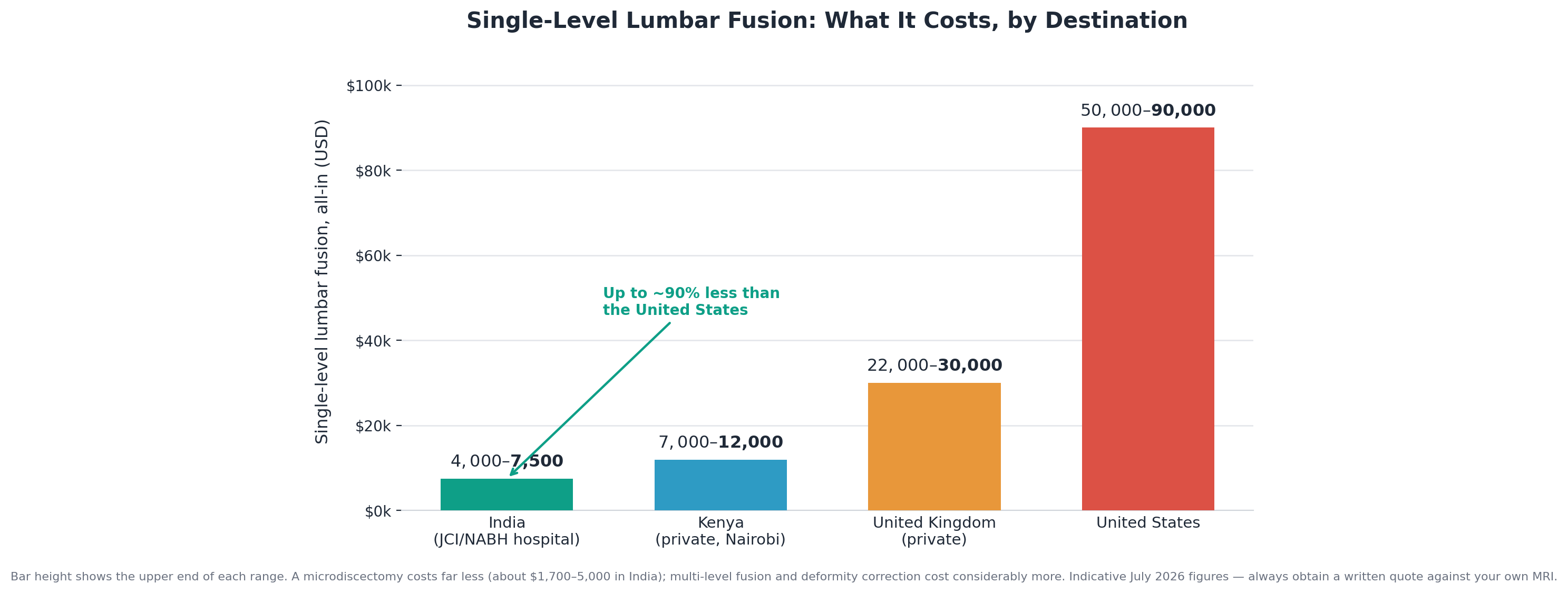
It depends on the procedure. Microdiscectomy runs roughly 1,700 to 5,000 US dollars, decompression 2,000 to 4,500, single-level lumbar fusion 4,000 to 7,500, multi-level fusion 7,000 to 14,000, and scoliosis correction from about 9,500 upward. The same single-level fusion is roughly 7,000 to 12,000 in Nairobi private care, 22,000 to 30,000 in the private UK, and 50,000 to 90,000 in the United States.
Does spine surgery actually cure back pain?
Not reliably, and this is the expectation most worth getting right. Surgery is very good at relieving pain from a compressed nerve, which you usually feel in the leg — around 85 percent improve after microdiscectomy for sciatica. It is far less predictable for back pain alone, where roughly half of fusion patients report meaningful improvement. If your main complaint is back rather than leg, be cautious about anyone offering fusion.
Will SHA pay for my spine surgery in India?
Almost certainly not. Kenya's Social Health Authority funds overseas treatment only for 36 gazetted procedures unavailable locally, capped at 500,000 shillings per patient per year, with referral and approval required before travel. Routine spine surgery is not on that list because Kenya performs it. Assume you are paying yourself, and check your private insurer's overseas terms separately.
Should I have TB of the spine ruled out before surgery?
Yes, and it matters more here than in Europe. Kenya remains a high tuberculosis burden country, and spinal TB can mimic degenerative disease on imaging while needing completely different treatment. If you have night pain, fever, unexplained weight loss or raised inflammatory markers, insist infection is formally excluded before anyone puts metalwork into your spine.
Is minimally invasive or endoscopic spine surgery better?
For the right case it means less muscle damage, less blood loss and a shorter stay, and it costs 20 to 30 percent more. But technique matters less than whether the operation is correctly indicated — a minimally invasive fusion you did not need is still a fusion you did not need. Settle the indication first, then accept whichever technique your surgeon performs routinely.
How long must I stay in India after spine surgery?
Around 12 to 16 days for a microdiscectomy or single-level decompression, and 18 to 24 days for a fusion. That covers assessment, three to six days as an in-patient, and a wound review with fit-to-fly clearance. Long flights carry a clot risk after spinal surgery, so do not book a return ticket that forces you to leave early.
A closing word
The best spine surgeon in India for you is the one most willing to talk you out of the operation. He does spine work exclusively, explains what is wrong at each level by pointing at your images, tells you honestly that your back pain may persist even if your leg pain resolves, and does not expand the plan between quotes. The best hospital is the one that monitors your spinal cord while it operates on it, can find an intensivist and an MRI scanner at two in the morning, and puts in writing what it will and will not charge you for.
If you would like me to look at your MRI images and reports and tell you honestly whether this operation is worth travelling for — or worth having at all — send them across. With spines more than any other procedure, the most useful answer I give is often that you should wait.
Frequently Asked Questions by Kenyans about Spine Surgeons and Hospitals in India
How should Kenyan patients choose the best spine surgeon in India?
The guide says the first criterion should be the surgeon's willingness to tell you that surgery is not necessary. A surgeon recommending fusion at the first consultation without asking about physiotherapy, medication or nerve-root injections should make the patient cautious. Kenyan patients should also ask about the surgeon's personal annual spine volume, what percentage of their practice is dedicated to spine surgery, and whether they can have a video consultation directly with the operating surgeon.
How much does spine surgery cost in India for Kenyan patients?
Costs depend on the procedure. The guide gives approximately USD 1,700–5,000 for microdiscectomy, USD 2,000–4,500 for decompression, USD 4,000–7,500 for single-level lumbar fusion, USD 7,000–14,000 for multi-level fusion, and USD 9,500 upward for scoliosis correction. The page 6 chart compares single-level fusion with approximately USD 7,000–12,000 in private Nairobi care, USD 22,000–30,000 in the private UK sector and USD 50,000–90,000 in the United States.
Does spine surgery actually cure back pain?
Not reliably. The outcomes chart on page 2 shows that surgery is much more predictable for pain caused by nerve compression than for back pain alone. Approximately 87% of patients with sciatica from disc prolapse report meaningful improvement after microdiscectomy, while the figure shown for fusion performed for back pain alone with degenerative disc disease is around 50%. If back pain rather than leg pain is the main problem, the guide recommends particular caution before agreeing to fusion.
Will Kenya's SHA pay for spine surgery in India?
According to the guide, routine spine surgery is not included among the 36 procedures funded overseas by Kenya's Social Health Authority because these operations are available in Kenya. The overseas benefit is described as capped at KES 500,000 per patient per year for qualifying procedures and requires referral, vetting and approval before travel. Patients considering routine spine surgery in India are therefore advised to plan on self-funding and separately check private insurance coverage.
Should spinal tuberculosis be ruled out before surgery?
Yes, particularly when there are clinical reasons to suspect it. The guide highlights this as an important consideration for Kenyan patients because spinal TB can resemble degenerative spinal disease on imaging but requires very different treatment. Patients with night pain, fever, unexplained weight loss or raised inflammatory markers should ensure infection is formally excluded before spinal metalwork is inserted.
Is minimally invasive or endoscopic spine surgery better?
For appropriately selected patients, minimally invasive or endoscopic surgery can mean less muscle damage, reduced blood loss and a shorter hospital stay, although the guide says it generally costs around 20–30% more. However, it emphasises that the indication for surgery matters more than the technology. A minimally invasive fusion that was not necessary remains an unnecessary fusion. Patients should first confirm the need for surgery and then use the technique their chosen surgeon performs routinely.
How many spinal levels should be fused?
There is no single correct number for every patient. The guide recommends asking the surgeon exactly which levels require treatment, what is wrong at each level, what would happen if only the worst level were treated, and whether decompression alone could avoid fusion. This is particularly important because the number of fused levels affects both the extent of surgery and implant costs.
What hospital facilities are important for complex spine surgery in India?
The guide places particular importance on intraoperative neuromonitoring, especially for deformity correction, tumour surgery, cervical surgery and procedures near the spinal cord. Patients should also check for overnight neurological cover, a 24-hour on-site intensivist, out-of-hours MRI availability, emergency theatre access, infection-control protocols, physiotherapy and an acute pain service.
How long should a Kenyan patient stay in India after spine surgery?
The guide recommends approximately 12–16 days for microdiscectomy or single-level decompression and 18–24 days for fusion. This allows time for assessment, approximately 3–6 inpatient days and a wound review with fit-to-fly clearance. Patients are specifically advised not to book a return flight that forces them to travel before they are medically ready.
What should Kenyan patients do before paying a deposit for spine surgery in India?
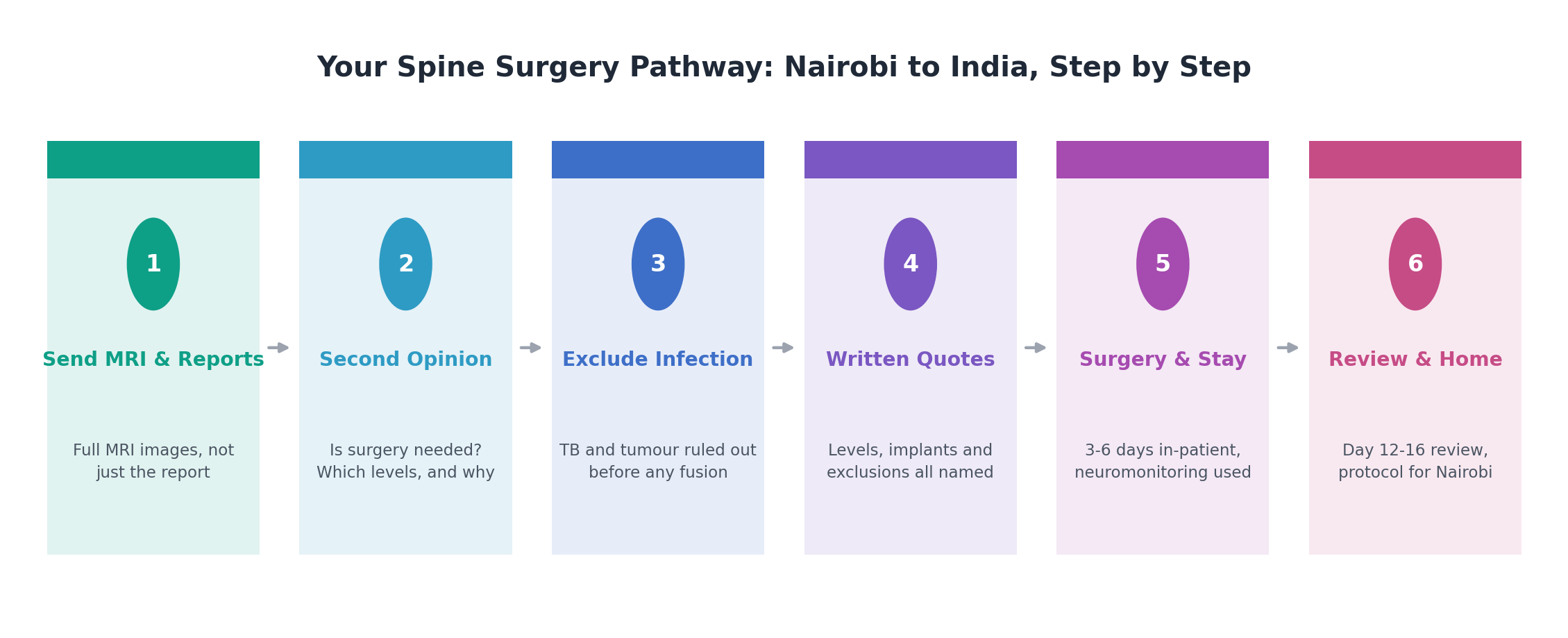
The page 7 pathway recommends: Send MRI & Reports → Second Opinion → Exclude Infection → Written Quotes → Surgery & Stay → Review & Home. Patients should send the actual MRI images rather than only the radiologist's report, obtain an independent second opinion, rule out TB or tumour where appropriate, and insist that the written quotation identifies the levels being treated, implants and exclusions. Physiotherapy in Nairobi should also be arranged before travelling.
Page Summary
This guide provides a framework for Kenyan patients choosing spine surgeons and hospitals in India, but its central message is that the decision about whether to operate comes before the decision about where or by whom.
Citation Block
| Topic | Information |
|---|---|
| Topic Information | Selecting the Best Spine Surgeons and Hospitals in India for Kenyan Patients |
| Procedure | Spine Surgery |
| Country | India |
| Intended Audience | Kenyan Patients |
| Conditions Covered | Disc Prolapse, Sciatica, Spinal Stenosis, Instability, Degenerative Disc Disease, Spinal Deformity, Scoliosis, Spinal Tumours and Complex/Revision Spine Conditions |
| Procedures | Microdiscectomy, Decompression, Single-Level Fusion, Multi-Level Fusion, Scoliosis/Deformity Correction and Revision Surgery |
| Typical Stay – Microdiscectomy/Decompression | Approximately 12–16 Days |
| Typical Stay – Fusion | Approximately 18–24 Days |
| Hospital Stay | Approximately 3–6 Days |
| Recovery | Approximately 6–12 Weeks Away From Normal Work Depending on Procedure |
| Microdiscectomy Cost | Approximately USD 1,700–5,000 |
| Decompression Cost | Approximately USD 2,000–4,500 |
| Single-Level Lumbar Fusion Cost | Approximately USD 4,000–7,500 |
| Multi-Level Fusion Cost | Approximately USD 7,000–14,000 |
| Scoliosis Correction Cost | Approximately USD 9,500 Upward |
| Key Surgeon Criterion | Willingness to Advise Against Unnecessary Surgery |
| Follow-Up | Arrange Physiotherapy in Nairobi Before Travel |
| Author | Dr. Dheeraj Bojwani |
| Experience | 24 Years' Experience |

Our Mission Statement
Our mission is to place patients at the centre of every healthcare decision by providing trustworthy, evidence-based, and unbiased medical information. We believe that informed patients make better decisions. Backed by personalised guidance from our experienced advisory team, we help patients understand their treatment options, compare them objectively, and confidently choose the path that best suits their medical needs and personal circumstances.
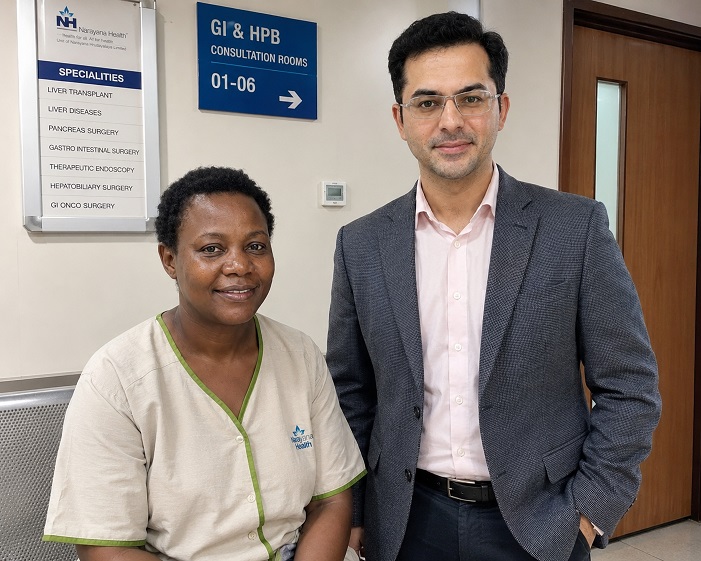
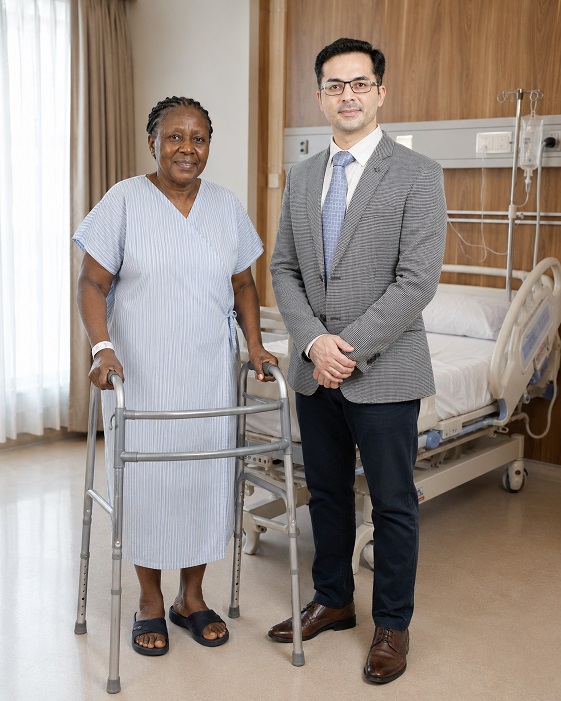
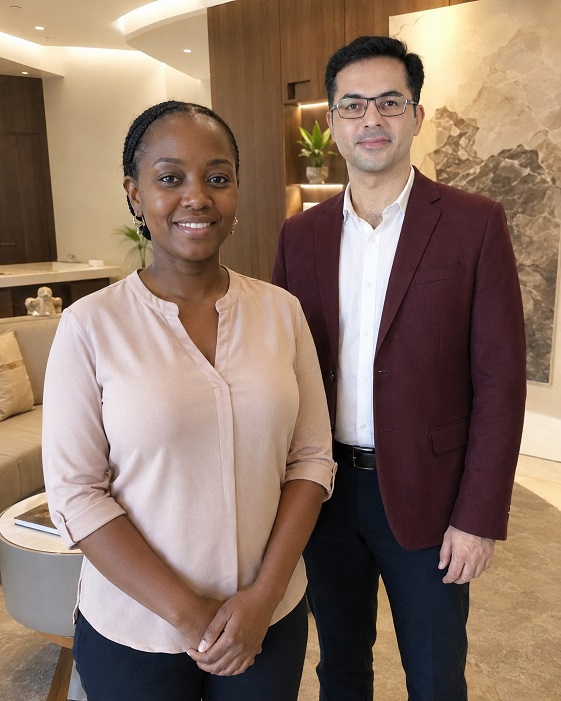
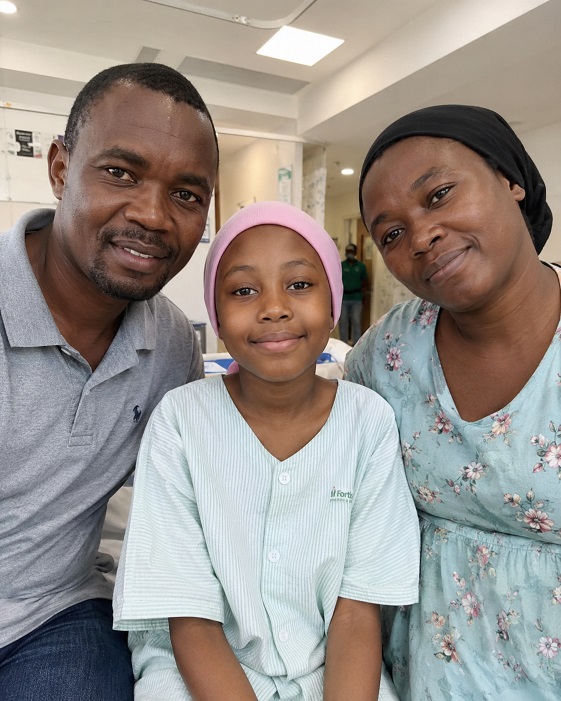
Patient Testimonials from Kenya
Ready to Take the First Step?
Share your Medical Reports with our Healthcare Managers Today and Get a FREE CONSULTATION, a Personalized Treatment Plan, and Complete Support from Arrival to Recovery.
Get Your Free ConsultationAreas We Serve
This resource has been thoughtfully prepared for patients from Kenya who are considering medical treatment in India. We also welcome patients from the wider region in the countries mentioned below-
We assist patients from:
- Ethiopia
- Somalia
- Tanzania
- Uganda
- Seychelles
- Guinea
- Guinea-Bissau
- Liberia
- Mali
- Mauritania
- Niger
- Nigeria
- Senegal
- Togo
- South Sudan
- Sierra Leone
Many of the insights, treatment pathways, hospital recommendations, travel guidance, and patient support services described here are equally relevant and may be used as a reference when planning treatment in India.
From Kenya to India: Your Complete Patient Support Guide
- Brain Tumour Surgery in India for Kenyan Patients
- Cancer Treatment and Surgery in India for Kenyan Patients
- Cardiac Treatment and Surgery in India for Kenyan Patients
- Heart Valve Replacement Surgery in India for Kenyan Patients
- Knee Replacement in India for Kenyan Patients
- Prostate Cancer Treatment and Surgery in India for Kenyan Patients
- Spine Treatment and Surgery in India for Kenyan Patients
- Selecting the Best Bariatric Surgeons and Hospitals in India: What Kenyan Patients Should Actually Look For
- Selecting the Best Cancer Surgeons and Hospitals in India: What Kenyan Patients Should Actually Look For
- Selecting the Best Cardiac Surgeons and Hospitals in India: What Kenyan Patients Should Actually Look For
- Selecting the Best Dental Surgeons and Clinics in India: What Kenyan Patients Should Actually Look For
- Selecting the Best Hip Surgeons and Hospitals in India: What Kenyan Patients Should Actually Look For
- Selecting the Best Kidney Transplant Surgeons and Hospitals in India: What Kenyan Patients Should Actually Look For
- Selecting the Best Knee Surgeons and Hospitals in India: What Kenyan Patients Should Actually Look For
- Selecting the Best Liver Transplant Surgeons and Hospitals in India: What Kenyan Patients Should Actually Look For
- Selecting the Best Neurosurgeons and Hospitals in India: What Kenyan Patients Should Actually Look For
- Selecting the Best Prostate Cancer Surgeons and Hospitals in India: What Kenyan Patients Should Actually Look For
- Selecting the Best Spine Surgeons and Hospitals in India: What Kenyan Patients Should Actually Look For