

Selecting the Best Neurosurgeons and Hospitals in India: What Kenyan Patients Should Actually Look For
Neurosurgery is not one specialty wearing one face — how to check that a surgeon's actual sub-specialty matches your actual condition.
Neurosurgery is not one specialty wearing one face. The surgeon who removes a pituitary tumour through the nose, the one who clips a brain aneurysm, and the one who operates on a child's hydrocephalus are three different careers built on three different skill sets, even though all three carry the same job title. Across 24 years of guiding international patients through Indian hospitals, the mistake I see most often from Kenyan families is treating "neurosurgeon" as a single category and choosing on reputation alone, rather than asking whether this particular surgeon's actual sub-specialty matches this particular patient's actual condition. This is the framework I use when a Kenyan patient is weighing neurosurgery in India. It follows the surgeon-then-hospital structure of this series, but opens with a distinction that matters more here than almost anywhere else in medicine: whether your situation is an emergency or something you have time to plan properly.
Healing Journeys of Kenyan Patients

Key Takeaways
- Kenyan patients considering neurosurgery in India should first determine whether the condition is an emergency or a planned case. The guide states that true neurosurgical emergencies should be treated immediately at the nearest capable Kenyan hospital rather than delayed for international travel.
- Emergency examples discussed include sudden severe headache with loss of consciousness, rapidly worsening weakness or numbness, signs of dangerously raised intracranial pressure and acute spinal cord compression causing bladder or bowel dysfunction.
- Planned conditions are treated differently. Stable slow-growing tumours, chronic disc-related nerve pain, trigeminal neuralgia, medication-resistant epilepsy and certain elective vascular conditions may allow time for second opinions and deliberate surgeon selection.
- Access to neurosurgery in Kenya is described as constrained by workforce depth. The guide cites approximately 39 practising neurosurgeons for a population of roughly 53 million, or close to one neurosurgeon per 1.36 million people.
- The page 2 chart compares this with a WHO recommended minimum of roughly one neurosurgeon per 200,000 people, while North America is shown at approximately one per 80,000–100,000.
- The guide does not present Kenyan neurosurgeons as lacking skill. Instead, it identifies capacity and sub-specialisation as the key limitations, particularly when a case requires a dedicated skull-base, vascular, functional, paediatric or neuro-oncology specialist.
- Treatment in Kenya may remain reasonable for straightforward conditions when suitable local expertise and capacity are available. India becomes more relevant for rare tumour types, complex vascular neurosurgery, functional neurosurgery, paediatric neurosurgery and cases requiring deeper subspecialty experience.
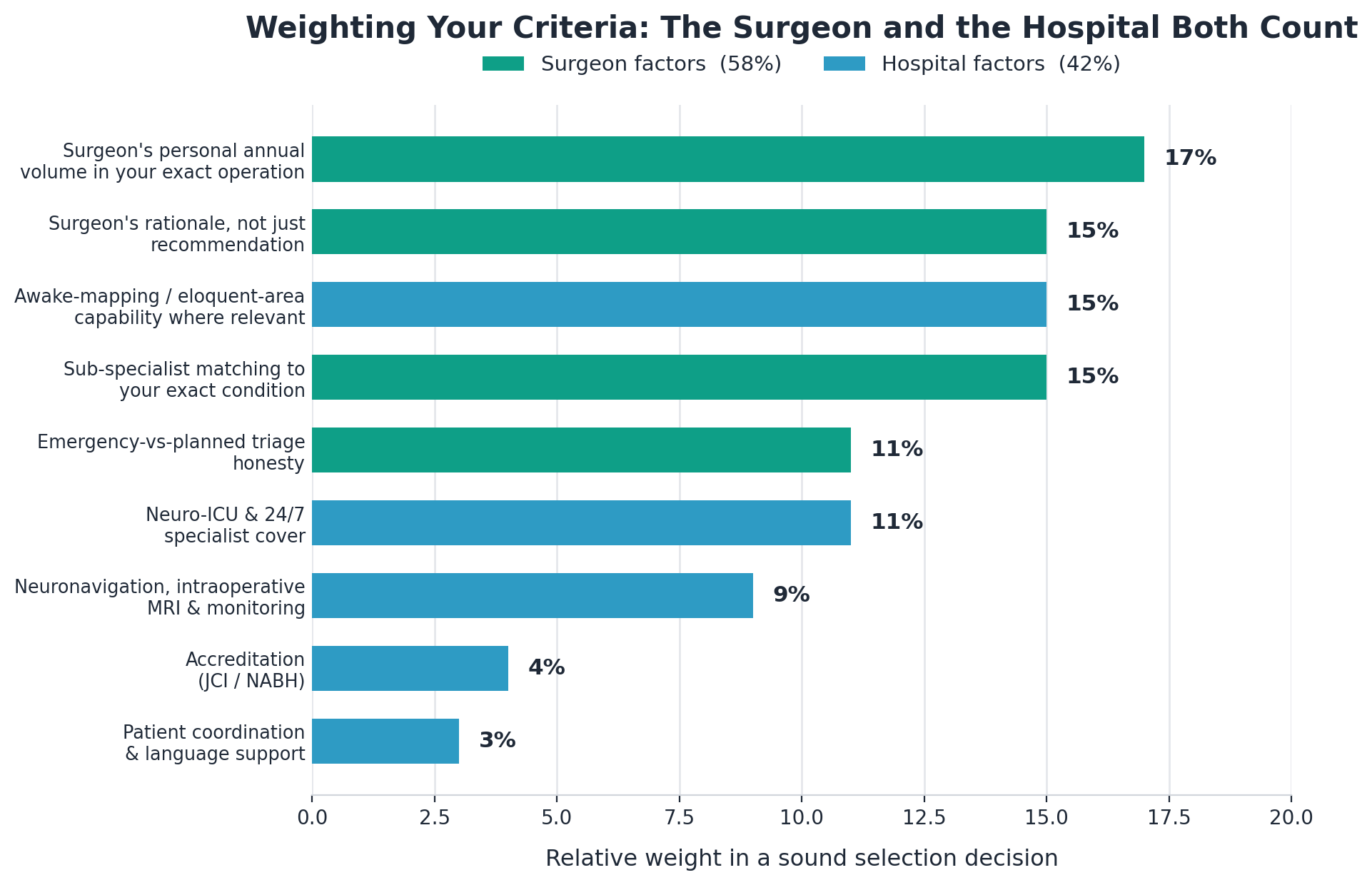
- The most important surgeon-selection factor is the surgeon's personal annual volume in the exact operation required. The guide specifically advises against relying only on broad general-neurosurgery volume.
Quick Facts
- Treatment
- Neurosurgery and Advanced Neurological Surgery
- Country
- India
- Intended Audience
- Kenyan Patients and Families
- Primary Focus
- Selecting the Right Neurosurgeon and Hospital
- First Decision
- Emergency or Planned Neurosurgical Condition
- Emergency Principle
- Genuine Neurosurgical Emergencies Should Be Treated at the Nearest Capable Kenyan Hospital Without Delaying for Travel
- Emergency Examples
- Sudden Severe Headache With Loss of Consciousness, Rapidly Worsening Weakness, Raised Intracranial Pressure and Acute Spinal Cord Compression
- Planned Conditions Mentioned
- Stable Tumours, Herniated Disc With Persistent Nerve Pain, Trigeminal Neuralgia, Medication-Resistant Epilepsy and Selected Vascular Conditions
- Kenya Neurosurgeon Number Mentioned
- Approximately 39 Practising Neurosurgeons
- Kenya Population Mentioned
- Roughly 53 Million
- Kenya Neurosurgeon Ratio
- Approximately 1 Per 1.36 Million People
- WHO Recommended Minimum
- Approximately 1 Neurosurgeon Per 200,000 People
- Main Kenya Limitation Discussed
- Capacity and Access to Deep Sub-Specialisation
- When India Becomes More Relevant
- Rare Tumours, Complex Vascular Cases, Functional Neurosurgery, Paediatric Neurosurgery and Cases Needing Highly Specific Expertise
- Highest-Weighted Selection Factor
- Surgeon's Personal Annual Volume in the Exact Operation
- Highest Individual Weight
- 17%
- Surgeon vs Hospital Weighting
- Surgeon Factors 58%; Hospital Factors 42%
- Surgeon's Rationale Weight
- 15%
- Awake-Mapping / Eloquent-Area Capability Weight
- 15%
In Brief
Kenyan patients choosing a neurosurgeon and hospital in India should first determine whether the condition is an emergency or an elective case suitable for planned medical travel. For non-emergency cases, the guide gives the greatest importance to the surgeon's personal annual volume in the exact operation and to matching the surgeon's subspecialty with the patient's condition. Surgeon factors account for 58% of the overall selection weighting, while hospital factors account for 42%. Important institutional capabilities include a dedicated neuro-ICU with 24/7 specialist cover, neuronavigation, intraoperative imaging and neurological monitoring. Patients should send their actual MRI, CT or angiogram files for review and confirm all ICU and technology inclusions in writing before paying a deposit.
Before anything else: emergency, or planned?
This is not a rhetorical question. A genuine neurosurgical emergency — sudden severe headache with loss of consciousness, rapidly worsening weakness or numbness, signs of dangerously raised pressure inside the skull, acute spinal cord compression with loss of bladder or bowel control — needs treatment in the nearest capable Kenyan hospital immediately. No flight, however good the destination, is faster than the clock that matters in these situations.
Planned conditions are a different matter entirely. A stable, slow-growing tumour discovered incidentally. Chronic pain from a herniated disc that has not responded to conservative treatment. A functional condition such as trigeminal neuralgia or medication-resistant epilepsy. Elective vascular conditions caught on imaging before rupture. These generally leave real time to research properly, obtain opinions, and choose deliberately — which is exactly what the rest of this guide is for.
Why access to neurosurgery in Kenya is genuinely difficult
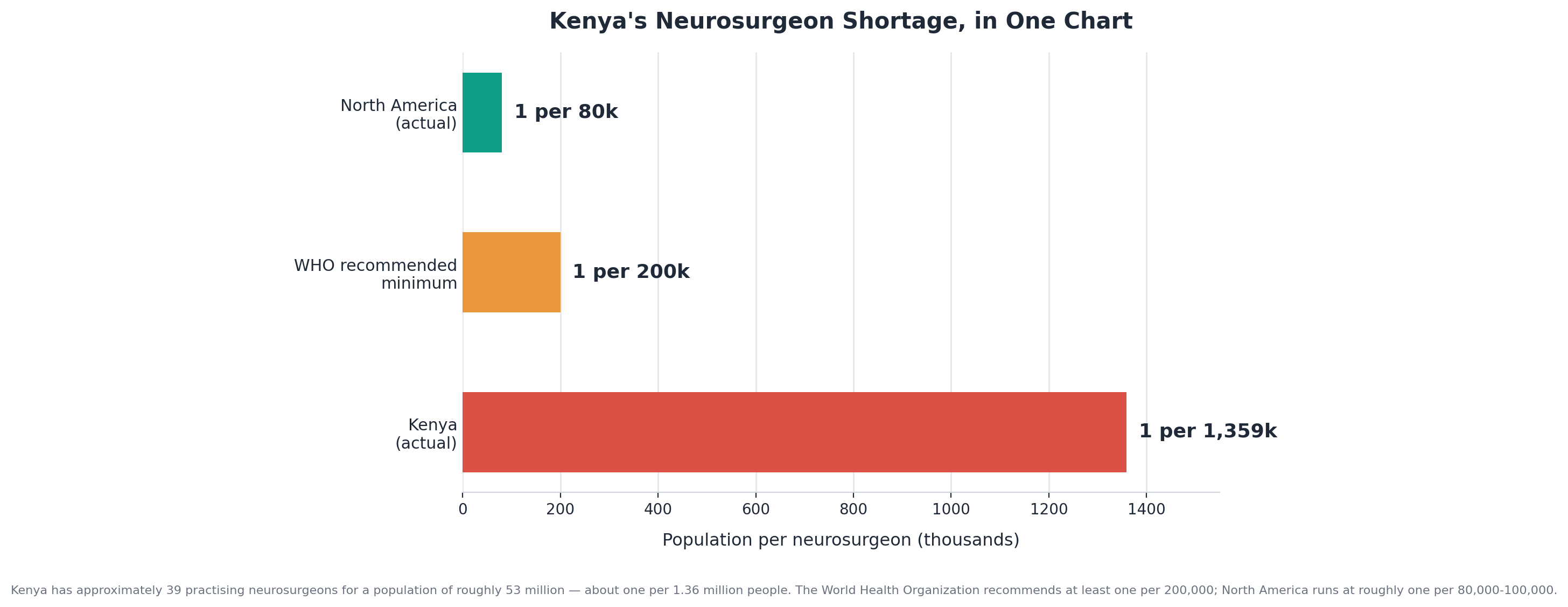
This is worth understanding candidly, because it shapes the honest answer to whether you should travel. Kenya has an estimated 39 practising neurosurgeons for a population of roughly 53 million — close to one neurosurgeon for every 1.36 million people. The World Health Organization recommends at least one per 200,000. North America operates at roughly one per 80,000 to 100,000. Kenya's premier referral facility reportedly sees 10 to 15 cases of penetrating head injury every week alone, and the small number of practising neurosurgeons must cover public and private practice simultaneously, often working continuously.
The practical consequence is not that Kenyan neurosurgeons are inadequate — several are genuinely excellent, trained internationally, and Kenyatta National Hospital and Moi Teaching and Referral Hospital can manage complex cases. The consequence is capacity: limited elective operating time, long waits for non-emergency conditions, and a workforce stretched thin enough that sub- specialisation — the difference between a general neurosurgeon and one who does only skull-base tumours, or only paediatric neurosurgery — is harder to access domestically than in a country with a far deeper bench.
Should you travel at all?
For straightforward, common conditions where Kenyan capacity exists and a trusted surgeon has time on his list, treatment in Nairobi is reasonable, and I have told patients exactly this. The case for India strengthens considerably for rare tumour types, complex vascular work, functional neurosurgery, paediatric neurosurgery, and any situation where the right sub-specialist is simply not readily available in Kenya, or where the wait for elective capacity is long enough to be clinically meaningful.
On funding: Kenya's Social Health Authority funds overseas treatment only for 36 gazetted procedures unavailable locally, capped at 500,000 shillings per patient per year. Routine brain tumour and spine surgery are not on that list, since Kenya can perform them even if capacity is constrained. Plan to pay for neurosurgery in India yourself, and check your private insurance separately, since some Kenyan policies carry an international benefit worth confirming before you assume you must self-fund entirely.
Part one: judging the surgeon
1. Personal annual volume in your exact operation
This is the single most predictive factor, and I weight it above every other item — hence its position in the chart below. Ask specifically: how many operations matching mine, not general neurosurgery cases, do you personally perform each year? A surgeon's overall neurosurgical volume tells you little about his skill in, say, endoscopic pituitary surgery specifically, if that is not where most of his
caseload sits.
2. Sub-specialist matching, not a generalist's confidence
Neurosurgery divides into genuinely distinct sub-specialties: neuro-oncology, spine, vascular, functional and movement disorders, skull-base, endoscopic and paediatric neurosurgery. Ask directly which sub-specialty this surgeon trained in and practises predominantly, and whether that matches your specific condition. A confident general neurosurgeon willing to take on a complex vascular case is not automatically the same choice as a fellowship-trained vascular neurosurgeon who does that operation routinely.
3. His reasoning, not just his recommendation
Ask why this approach, why now, and what alternative was considered and set aside. For a tumour, ask what the surgical goal is: complete removal, or maximum safe removal while preserving function, and how that decision was reached. A surgeon who answers against your specific imaging, rather than in generalities, is engaging with your case rather than running a script.
4. Awake-mapping and eloquent-area capability, where relevant
For tumours or lesions near areas controlling speech, movement or other critical functions, ask whether awake craniotomy with intraoperative mapping is available and whether this surgeon performs it routinely. This technique allows the surgical team to test function in real time during the operation, materially reducing the risk of permanent deficit. It is not relevant to every case, but where it is, its absence should influence your decision.
Part two: judging the hospital
Neurosurgery depends on institutional infrastructure as heavily as almost any procedure in this series — a fact reflected in the meaningful hospital-side weighting below, even as surgeon-side factors still carry the majority.
5. Neuro-ICU and 24/7 specialist cover
The hours and days immediately after major neurosurgery are where serious complications — bleeding, swelling, seizures — most often declare themselves. Ask whether the hospital has a dedicated neuro-ICU, whether a neurosurgeon or neuro-intensivist is physically present overnight, and how quickly a deteriorating patient can return to theatre if needed. This is institutional capability that no individual surgeon, however skilled, can supply alone.
6. Neuronavigation, intraoperative imaging and monitoring
Ask whether neuronavigation — real-time image guidance during surgery — is standard for procedures like yours, whether intraoperative MRI or CT is available for tumours near critical structures, and whether intraoperative neurophysiological monitoring is used for spine and certain brain operations. These technologies exist specifically to keep the surgeon oriented and to detect a developing problem before it becomes permanent injury.
7. Genuine multidisciplinary tumour board, for oncology cases
If your condition is a tumour, ask whether your case will be reviewed by a genuine multidisciplinary team — neurosurgeon, neuro-oncologist, radiation oncologist, neuropathologist — before a surgical date is fixed, rather than decided by one surgeon's opinion. This mirrors the standard for cancer surgery generally and matters just as much here.
8. Accreditation, read properly
JCI and NABH accreditation audit infection control, medication safety and incident reporting, and are meaningful filters given the stakes around any neurosurgical wound infection. But accreditation says nothing about the depth of sub-specialty expertise or the quality of neuro-critical care. Use it to exclude candidates, not to choose between the remaining ones.
9. The cost you will actually pay
Let me be emphatic about this, because 24 years of handling these cases has taught me nothing more consistently: disputes almost never concern the quoted price. They concern what the quote silently omitted. For neurosurgery specifically, insist the written estimate states how many ICU days are included, what happens if intraoperative findings mean the operation needs to extend, and whether awake mapping, neuronavigation or monitoring are already included or billed as extras.
Budget beyond the surgery. Direct Nairobi–Delhi and Nairobi–Mumbai flights run roughly 550 to 850 dollars return, and three to four weeks of accommodation for you and an attendant adds a genuine sum that should be planned for rather than treated as an afterthought.
Four signals that should make you pause
Certain patterns reliably precede a difficult outcome. A surgeon confident to operate outside his stated sub-specialty without explaining why he is the right choice for your specific condition. No mention of a tumour board for an oncology case. A quotation that does not state ICU days or extras like neuronavigation and monitoring. And reluctance to arrange a video consultation with the operating surgeon rather than a coordinator.
None alone proves a bad hospital. Together they warrant a second opinion before you commit to an operation on your brain or spine.
The Kenya-specific practicalities
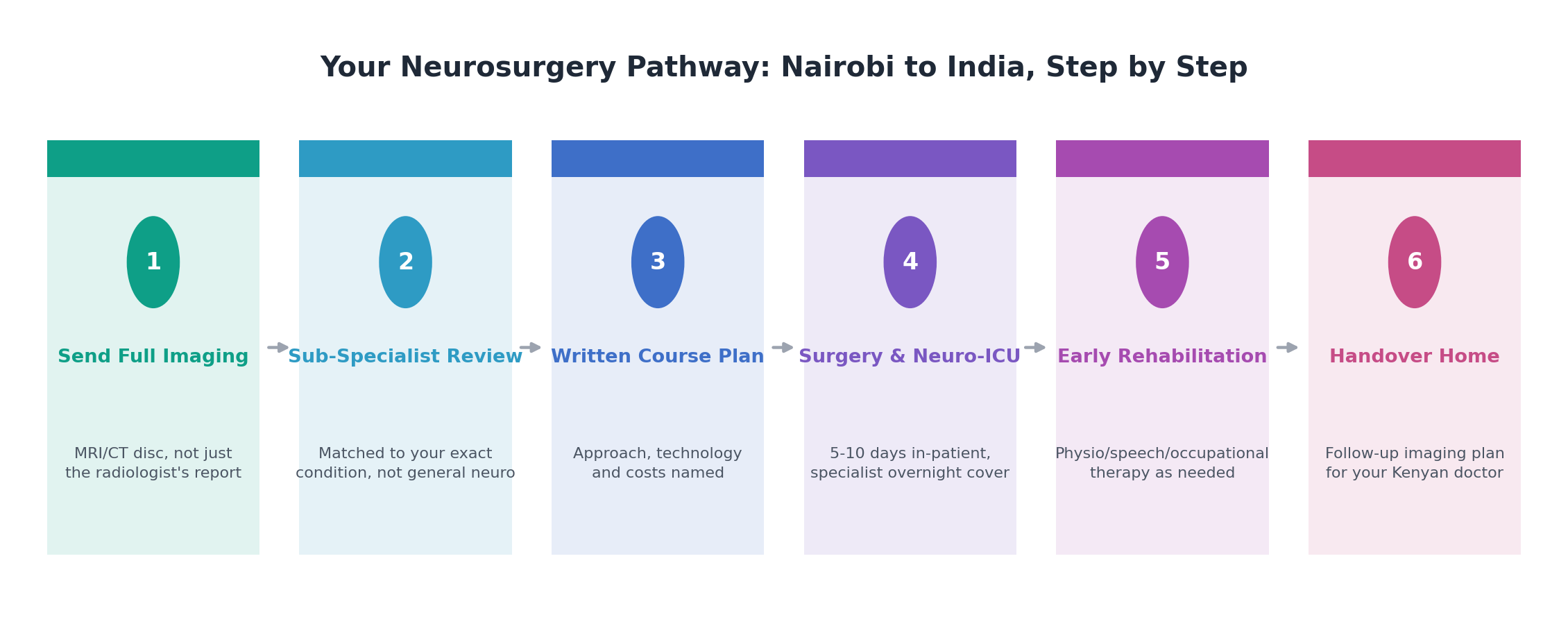
Send the full imaging disc or files — MRI, CT, angiogram as relevant — not just the radiologist's typed report. A sub-specialist cannot properly assess a case from a summary letter alone. Direct Nairobi–Delhi and Nairobi–Mumbai flights make this roughly a six-hour journey. The Indian medical e-visa is issued to Kenyan passport holders within three to five working days against a hospital letter, and up to two attendants can travel on a medical attendant visa, genuinely necessary given the physical dependency of early recovery from major neurosurgery.
If your case is a tumour or another condition needing follow-up imaging, agree the schedule and who will read the scans — Kenya or India — before you leave, so surveillance does not quietly lapse once you are home and feeling well.
The questions I would ask before paying a deposit
Of the surgeon:
- How many operations matching mine specifically do you personally perform each year?
- Which sub-specialty did you train in, and does it match my condition?
- What is the surgical goal for my case, and what alternative approach was considered?
- If relevant, is awake mapping available and do you perform it routinely?
Of the hospital:
- Is my case reviewed by a genuine multidisciplinary tumour board, if applicable?
- Is there a dedicated neuro-ICU with overnight specialist cover?
- Is neuronavigation, intraoperative imaging or monitoring standard for a case like mine?
- How many ICU days are included, and what if I need more?
- Will you provide a written follow-up imaging plan for my doctor in Kenya?
- What exactly is excluded from the quoted price?
- May I speak to a previous patient from East Africa?
A team that answers all eleven without irritation is very likely the right team. One that becomes vague at the first or the fourth has told you what you needed to know at no cost at all.
Straight Answers for Kenyan Patients about Neurosurgeons and Hospitals in India
How do I choose the best neurosurgeon in India as a Kenyan patient?
Match the sub-specialty to your exact condition — a spine neurosurgeon, a neuro-oncologist and a vascular neurosurgeon are different specialists. Ask his personal annual volume in your specific operation, not general neurosurgery experience, and have him explain his reasoning against your actual scans before you travel.
How much does neurosurgery cost in India for a Kenyan patient?
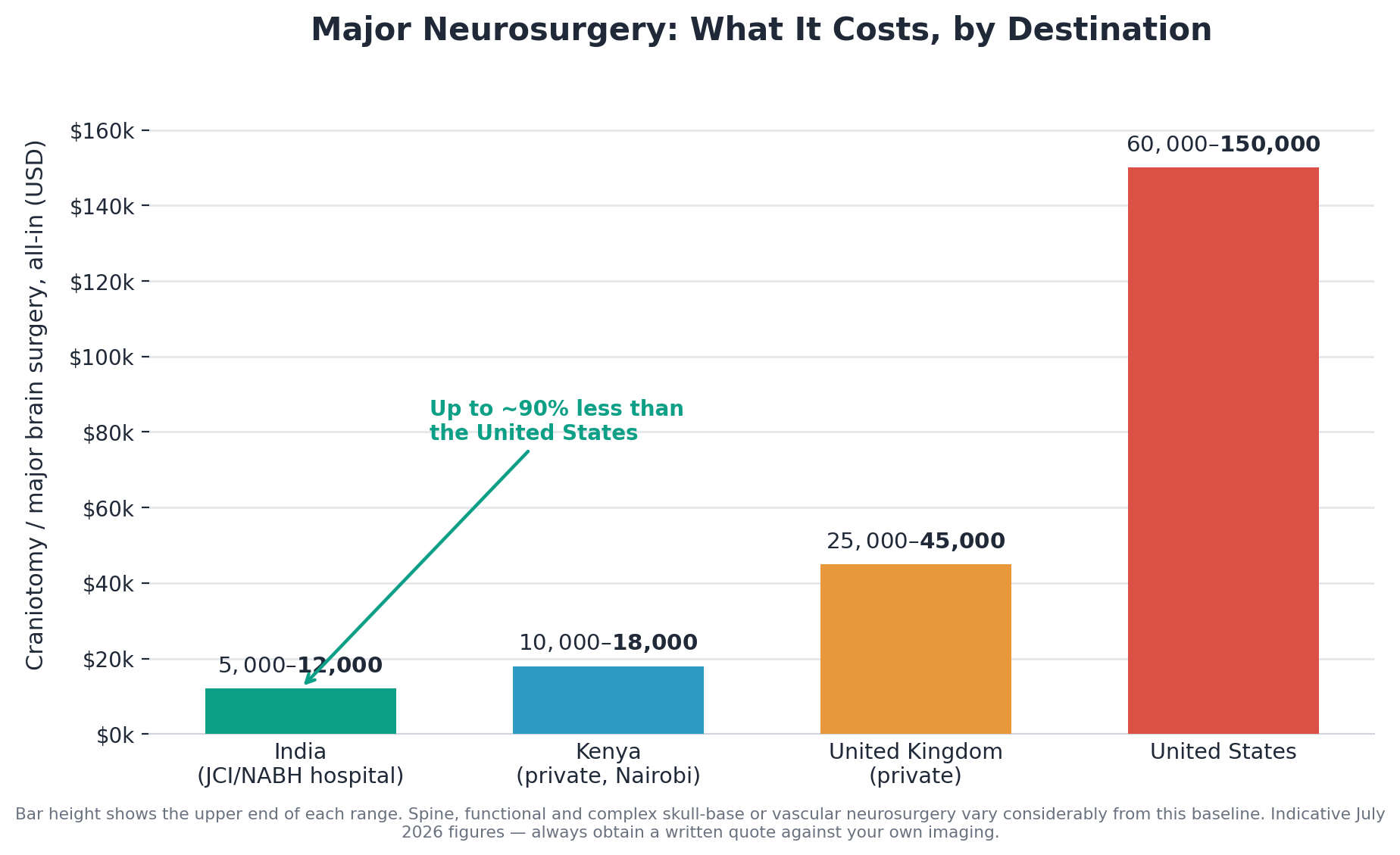
Major neurosurgery such as a craniotomy typically costs 5,000 to 12,000 US dollars all in. The same surgery is roughly 10,000 to 18,000 in Nairobi private care, 25,000 to 45,000 in the UK, and 60,000 to 150,000 in the United States. Complex skull-base, vascular or paediatric cases cost more than this baseline.
Why is neurosurgery in Kenya so hard to access quickly?
Kenya has an estimated 39 practising neurosurgeons for roughly 53 million people, close to one per 1.36 million — against a WHO-recommended minimum of one per 200,000. This genuine capacity shortage, common across East Africa, means limited elective operating time and, for many conditions, long waits even after diagnosis.
Is my condition an emergency or can I plan a trip to India?
This is the first question, and it should never be answered alone. Sudden severe headache with loss of consciousness, rapidly worsening weakness, signs of raised pressure in the skull, or acute spinal cord compression need immediate Kenyan treatment, not travel. Stable tumours, chronic disc pain, or functional conditions generally leave real time to plan properly.
Will SHA pay for my neurosurgery in India?
Not for standard procedures. SHA's overseas benefit covers only 36 gazetted procedures unavailable in Kenya, capped at 500,000 shillings a year, and routine brain tumour or spine surgery is not among them since Kenya can perform these operations. Plan to self-fund, though check your private insurance separately.
How long must I stay in India for neurosurgery?
Around three to four weeks: several days for assessment and imaging review, five to ten days as an in-patient including neuro-ICU time where needed, then one to two weeks of early rehabilitation before fit-to-fly clearance. Complex cases involving awake mapping or skull-base approaches may need longer, so clarify the expected timeline beforehand.
A closing word
The best neurosurgeon in India for you is not the most famous name attached to the specialty broadly — it is the one whose actual sub-specialty and personal case volume match your specific condition, and who explains his reasoning against your scans rather than a general script. The best hospital pairs him with a neuro-ICU staffed for the critical first days, the imaging and monitoring technology your operation genuinely needs, and a written plan for how your follow-up continues once you are home. If you would like me to look at your scans and reports and talk through honestly what kind of specialist your case actually needs, send them across.
Sources
- 🌐 Kenya's neurosurgeon shortage and workforce data. Standard Media , and Health Business Kenya reporting on neurosurgical capacity
- 🌐 Pediatric Neurosurgery in East Africa: An Education and Needs-Based Survey
- 🌐 The availability, access, challenges and advancements in neurosurgical care in Africa. Annals of Medicine and Surgery , 2024
- 🌐 National Medical Commission of India — surgeon and specialist registration verification
- 🌐 National Accreditation Board for Hospitals & Healthcare Providers (NABH) — accredited hospital directory
- 🌐 Kenya Social Health Authority (SHA) — benefits packages and overseas treatment guidance
Frequently Asked Questions by Kenyans about Neurosurgeons and Hospitals in India
How should Kenyan patients choose a neurosurgeon in India?
Choose a surgeon whose primary subspecialty matches the exact condition and ask how many operations of that specific type they personally perform each year. General neurosurgery volume is not enough.
Should a Kenyan patient travel to India during a neurosurgical emergency?
No. The guide says genuine emergencies such as rapid neurological deterioration, severe intracranial pressure or acute spinal cord compression should be treated immediately at the nearest capable Kenyan hospital.
Why does neurosurgical subspecialisation matter?
A surgeon specialising in vascular neurosurgery, skull-base surgery, paediatric neurosurgery or functional neurosurgery may have substantially different expertise from a general neurosurgeon. The specific condition should match the surgeon's routine practice.
Is the surgeon or hospital more important for neurosurgery?
Both matter, but this guide gives the surgeon side greater overall weight: 58% surgeon factors and 42% hospital factors. The surgeon's exact-procedure experience receives the highest individual score.
What is the most important hospital facility for neurosurgery?
A dedicated neuro-ICU with 24/7 specialist cover is particularly important because bleeding, swelling, seizures and other complications can develop soon after major neurosurgery.
What technology should Kenyan patients ask about before neurosurgery in India?
Depending on the case, ask about neuronavigation, intraoperative MRI or CT, intraoperative neurophysiological monitoring and awake mapping for lesions near critical functional areas.
Should Kenyan patients send only the radiology report to an Indian neurosurgeon?
No. The guide recommends sending the actual MRI, CT or angiogram images or files. A neurosurgical subspecialist cannot properly plan treatment from a typed report alone.
What should a neurosurgery quotation include?
Patients should confirm how many ICU days are included and whether advanced technologies such as neuronavigation, intraoperative monitoring or awake mapping are included or billed separately.
When does treatment in India become more relevant for Kenyan patients?
The guide says India's case strengthens for rare tumours, complex vascular work, functional neurosurgery, paediatric neurosurgery and cases where the appropriate subspecialist or timely elective capacity is difficult to access locally.
What are the main red flags when choosing a neurosurgery programme in India?
Important warning signs include a surgeon working outside the stated subspecialty without clear justification, no tumour-board review for an oncology case, vague ICU and technology charges and unwillingness to arrange direct consultation with the operating surgeon.
Page Summary
This guide explains that choosing a neurosurgeon in India begins with a distinction that matters more than hospital reputation: is the patient's condition an emergency or something that can safely be planned? Genuine neurosurgical emergencies should be treated immediately in Kenya, while stable elective cases allow time for specialist comparison and second opinions.
Citation Block
| Topic | Information |
|---|---|
| Topic Information | Selecting Neurosurgeons and Hospitals in India for Kenyan Patients |
| Procedure | Neurosurgery |
| Country | India |
| Intended Audience | Kenyan Patients and Families |
| Conditions Covered | Brain Tumours, Spine Conditions, Vascular Neurosurgical Conditions, Functional Disorders, Paediatric Neurosurgical Conditions and Other Planned Neurosurgical Cases |
| First Decision | Emergency vs Planned Treatment |
| Primary Selection Factor | Personal Annual Volume in the Exact Operation |
| Surgeon Factors | 58% Overall Weighting |
| Hospital Factors | 42% Overall Weighting |
| Sub-Specialties | Neuro-Oncology, Spine, Vascular, Functional, Skull-Base, Endoscopic and Paediatric Neurosurgery |
| Critical Hospital Facility | Dedicated Neuro-ICU With 24/7 Specialist Cover |
| Advanced Technologies | Neuronavigation, Intraoperative MRI/CT, Awake Mapping and Neurophysiological Monitoring |
| Accreditation Mentioned | JCI and NABH |
| Pre-Travel Records | Actual MRI, CT or Angiogram Files |
| Indicative Return Airfare | Approximately USD 550–850 |
| Typical Stay Planning | Approximately 3–4 Weeks for Major Elective Neurosurgery |
| Kenya Follow-Up | Ongoing Neurological or Neurosurgical Review |
| Author | Dr. Dheeraj Bojwani |
| Experience | 24 Years' Experience |

Our Mission Statement
Our mission is to place patients at the centre of every healthcare decision by providing trustworthy, evidence-based, and unbiased medical information. We believe that informed patients make better decisions. Backed by personalised guidance from our experienced advisory team, we help patients understand their treatment options, compare them objectively, and confidently choose the path that best suits their medical needs and personal circumstances.
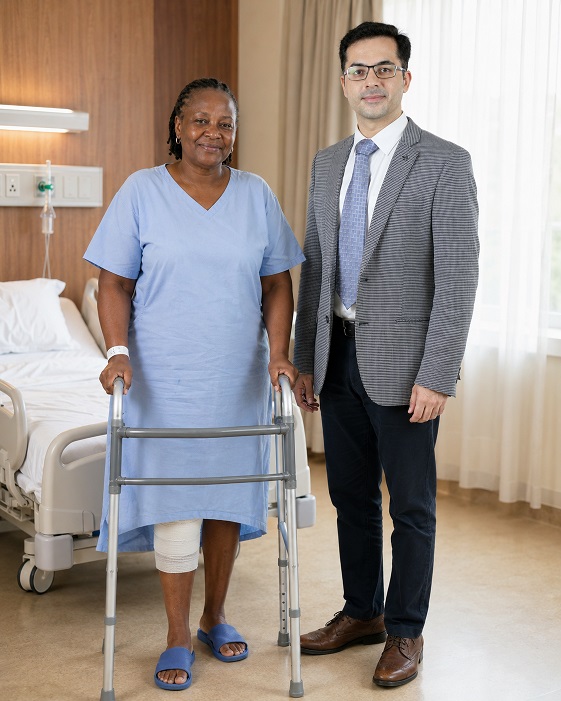
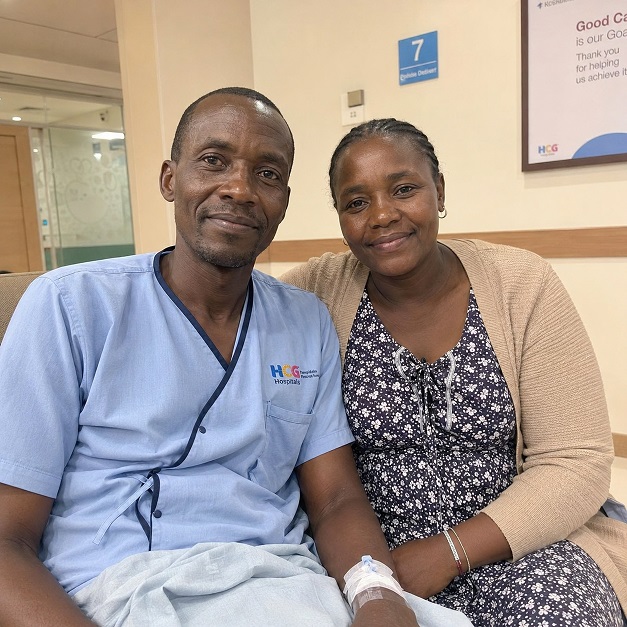
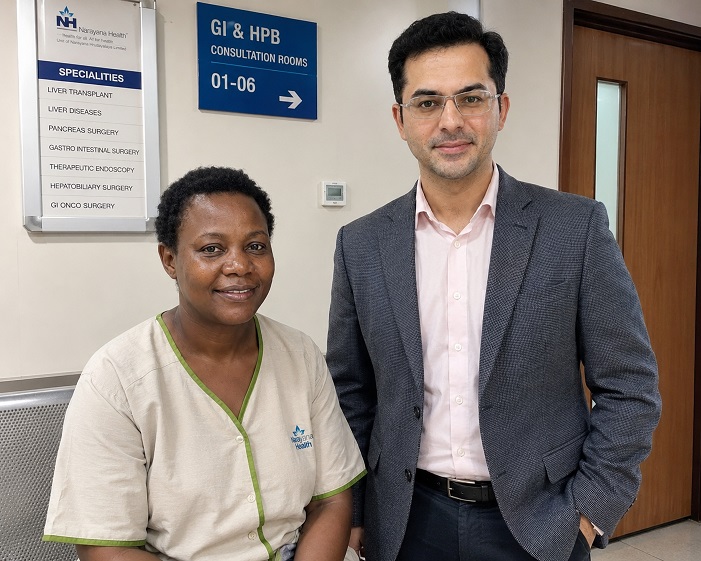
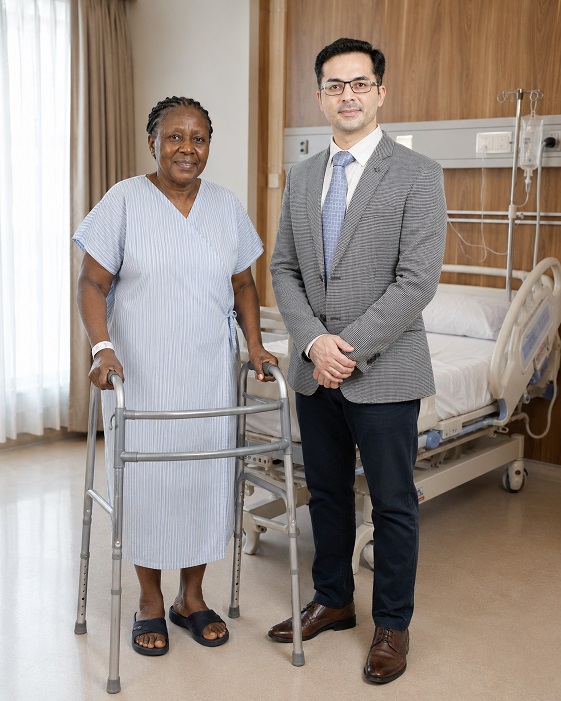
Patient Testimonials from Kenya
Ready to Take the First Step?
Share your Medical Reports with our Healthcare Managers Today and Get a FREE CONSULTATION, a Personalized Treatment Plan, and Complete Support from Arrival to Recovery.
Get Your Free ConsultationAreas We Serve
This resource has been thoughtfully prepared for patients from Kenya who are considering medical treatment in India. We also welcome patients from the wider region in the countries mentioned below-
We assist patients from:
- Ethiopia
- Somalia
- Tanzania
- Uganda
- Seychelles
- Guinea
- Guinea-Bissau
- Liberia
- Mali
- Mauritania
- Niger
- Nigeria
- Senegal
- Togo
- South Sudan
- Sierra Leone
Many of the insights, treatment pathways, hospital recommendations, travel guidance, and patient support services described here are equally relevant and may be used as a reference when planning treatment in India.
From Kenya to India: Your Complete Patient Support Guide
- Brain Tumour Surgery in India for Kenyan Patients
- Cancer Treatment and Surgery in India for Kenyan Patients
- Cardiac Treatment and Surgery in India for Kenyan Patients
- Heart Valve Replacement Surgery in India for Kenyan Patients
- Knee Replacement in India for Kenyan Patients
- Prostate Cancer Treatment and Surgery in India for Kenyan Patients
- Spine Treatment and Surgery in India for Kenyan Patients
- Selecting the Best Bariatric Surgeons and Hospitals in India: What Kenyan Patients Should Actually Look For
- Selecting the Best Cancer Surgeons and Hospitals in India: What Kenyan Patients Should Actually Look For
- Selecting the Best Cardiac Surgeons and Hospitals in India: What Kenyan Patients Should Actually Look For
- Selecting the Best Dental Surgeons and Clinics in India: What Kenyan Patients Should Actually Look For
- Selecting the Best Hip Surgeons and Hospitals in India: What Kenyan Patients Should Actually Look For
- Selecting the Best Kidney Transplant Surgeons and Hospitals in India: What Kenyan Patients Should Actually Look For
- Selecting the Best Knee Surgeons and Hospitals in India: What Kenyan Patients Should Actually Look For
- Selecting the Best Liver Transplant Surgeons and Hospitals in India: What Kenyan Patients Should Actually Look For
- Selecting the Best Neurosurgeons and Hospitals in India: What Kenyan Patients Should Actually Look For
- Selecting the Best Prostate Cancer Surgeons and Hospitals in India: What Kenyan Patients Should Actually Look For
- Selecting the Best Spine Surgeons and Hospitals in India: What Kenyan Patients Should Actually Look For