

Cardiac Pacemaker Treatments in India for Zambian Patients
A pacemaker is unusual among the devices in this guide series in one important way: once it is properly implanted, most of the care it needs for the rest of your life can realistically happen back home in Zambia.
A pacemaker is a small device, implanted just under the skin below the collarbone, that corrects a heart rhythm that has become too slow or unreliable. It is one of the most established and successful treatments in modern medicine. But a pacemaker is not a single event — it is the beginning of a relationship with your heart's electrical system that continues for the rest of your life, through routine checks and, eventually, one or more battery replacements. In 24 years of guiding patients through cardiac treatment abroad, I have found that understanding this lifelong dimension, and who in Africa actually needs a pacemaker and why, makes the whole journey far less daunting.
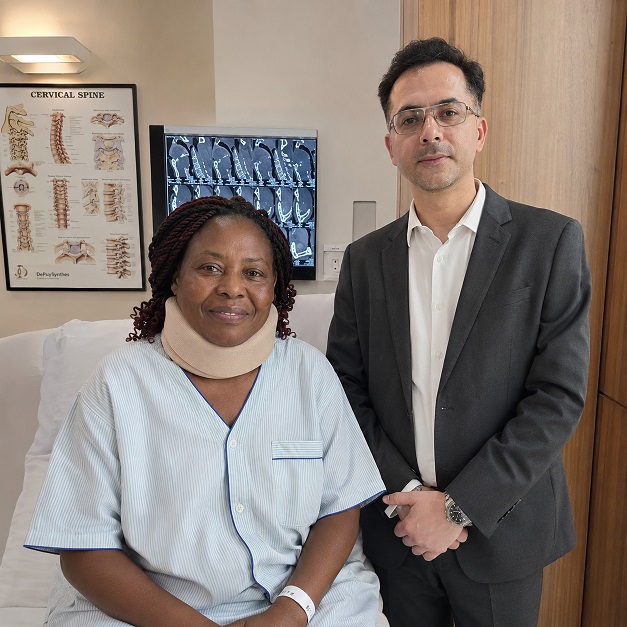
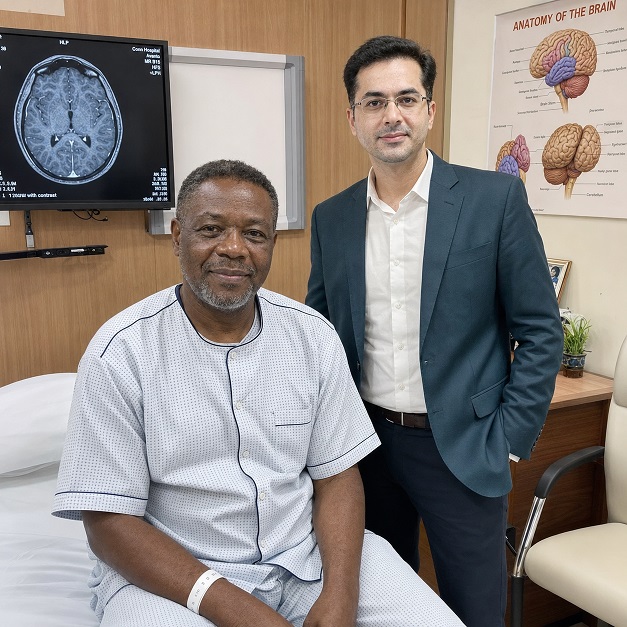
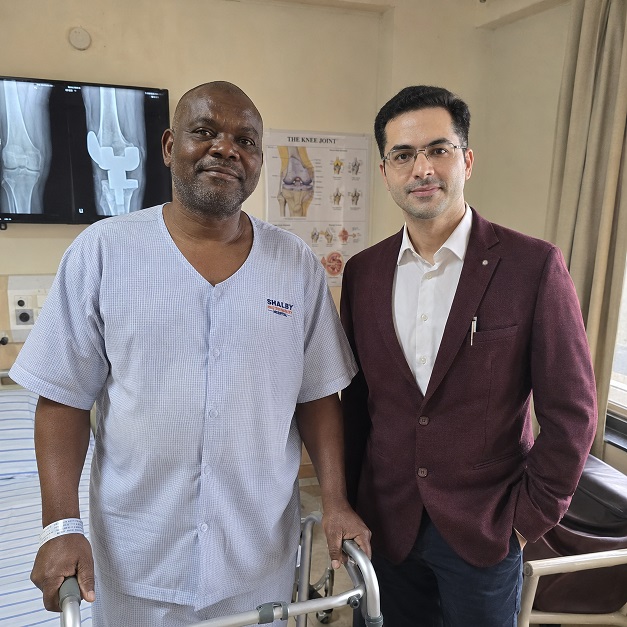
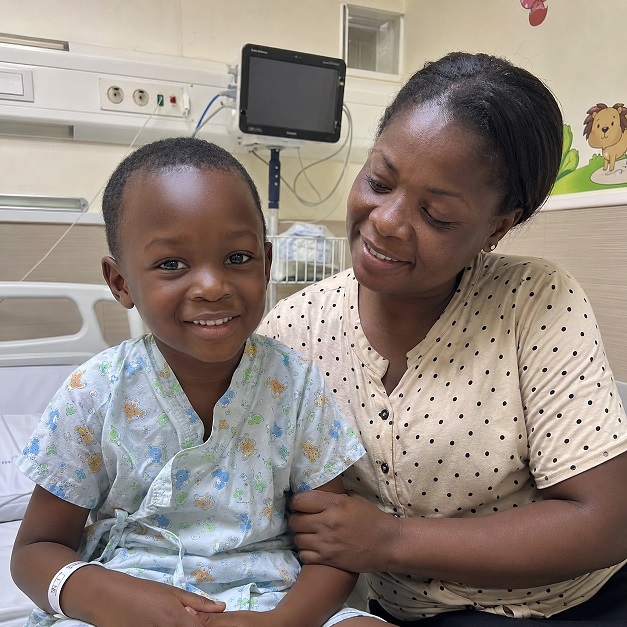
Healing Journeys of Zambian Patients

Key Takeaways
- The guide explains that a pacemaker is not simply a one-time procedure but the beginning of lifelong cardiac care, involving routine device checks and eventual generator replacements. It emphasises that much of this long-term care can realistically take place in Zambia after the initial implantation in India.
- Age should not be used to dismiss serious rhythm problems. The guide cites a South African study in which 30.8% of pacemaker patients aged 18–60 who were 55 or younger had an identifiable cause for their heart block, including autoimmune disease, previous infection or other conditions. A proper diagnostic work-up is therefore particularly important in younger patients.
- The page 2 graphic highlights the long-term replacement issue: a pacemaker battery typically lasts 8–15 years, depending on the device and usage. A person implanted at a young age may therefore require several generator replacements over their lifetime, making local follow-up and future replacement capability in Zambia an important part of the initial treatment decision.
- The guide distinguishes between the first implantation and later generator replacement. The initial procedure requires new leads to be positioned in the heart and is technically more demanding, whereas a later generator change can usually leave the existing leads in place and may be performed locally in Zambia once the cardiologist knows the exact device.
- When choosing an Indian centre, patients should ask about the cardiologist's and hospital's annual pacemaker implantation volume and complication rates, as well as the exact device brand and model. The guide also recommends asking whether the device supports remote monitoring and MRI compatibility, and obtaining complete written documentation before leaving India.
- The page 4 cost chart gives an indicative pacemaker implantation cost of approximately US$5,000 in India, compared with about US$25,000 in the UK and US$60,000 in the US. The guide stresses that the quotation should clearly itemise the device, implantation procedure and hospital stay.
Quick Facts
- Author
- Dr. Dheeraj Bojwani
- Experience
- 24+ Years of Experience
- Treatment
- Cardiac Pacemaker Treatment
- Patients
- Zambian Cardiac Patients
- Key Specialist
- Cardiologist / Electrophysiology Specialist
- Main Assessment
- Heart rhythm, heart block and underlying cause
- Key Priority
- Proper cardiac diagnosis before implantation
- Common Indications
- Heart block and symptomatic sick sinus syndrome
- Key Selection Factor
- Pacemaker implantation experience
- Device Check
- Brand, model, MRI compatibility and remote monitoring
- India Cost
- Approximately US$5,000
- UK Cost
- Approximately US$25,000
- US Cost
- Approximately US$60,000
- Battery Life
- Approximately 8–15 years
- Pre-Travel Records
- ECG and previous cardiac test results
- Follow-Up
- Long-term care with a Zambian cardiologist
- Key Warning Signs
- Unexplained fainting, unusually slow heart rate or return of previous symptoms
- Decision Principle
- Choose experienced first-implantation care with a clear lifelong follow-up plan
In Brief
For Zambian patients considering pacemaker implantation in India, the guide recommends choosing an experienced cardiac centre for the first implantation while planning the patient's lifelong care in Zambia. Device brand, model, serial number, programmed settings, MRI compatibility and remote-monitoring capability should be documented before leaving India. The guide gives an indicative implantation cost of US$5,000 in India.
Why age matters differently here than in the West
In many Western textbooks, a pacemaker is described as treatment for an older person's heart — the natural, gradual wearing out of the heart's electrical conduction system with age. That pattern exists here too, but it is not the whole picture. A South African study of pacemaker patients aged 18 to 60 found that nearly a third of those aged 55 or younger had a specific, identifiable cause for their heart block — autoimmune disease, prior infection, or other conditions — rather than simple age-related wear. This matters because a younger patient with a slow or irregular heartbeat should not assume it is unlikely to be serious, and deserves a proper cardiac work-up to understand why, not just a device to treat the symptom.
Some of these underlying causes are treatable in their own right or carry implications beyond the heart itself. Congenital complete heart block, for instance, sometimes appears in infants born to mothers with certain autoimmune conditions, and its presence can be the first clue to a maternal diagnosis that had not previously been recognised. This is one of several reasons a proper diagnostic work-up matters as much as the device itself — understanding why the heart's rhythm has failed can matter for the whole family, not only the person who needs the pacemaker.
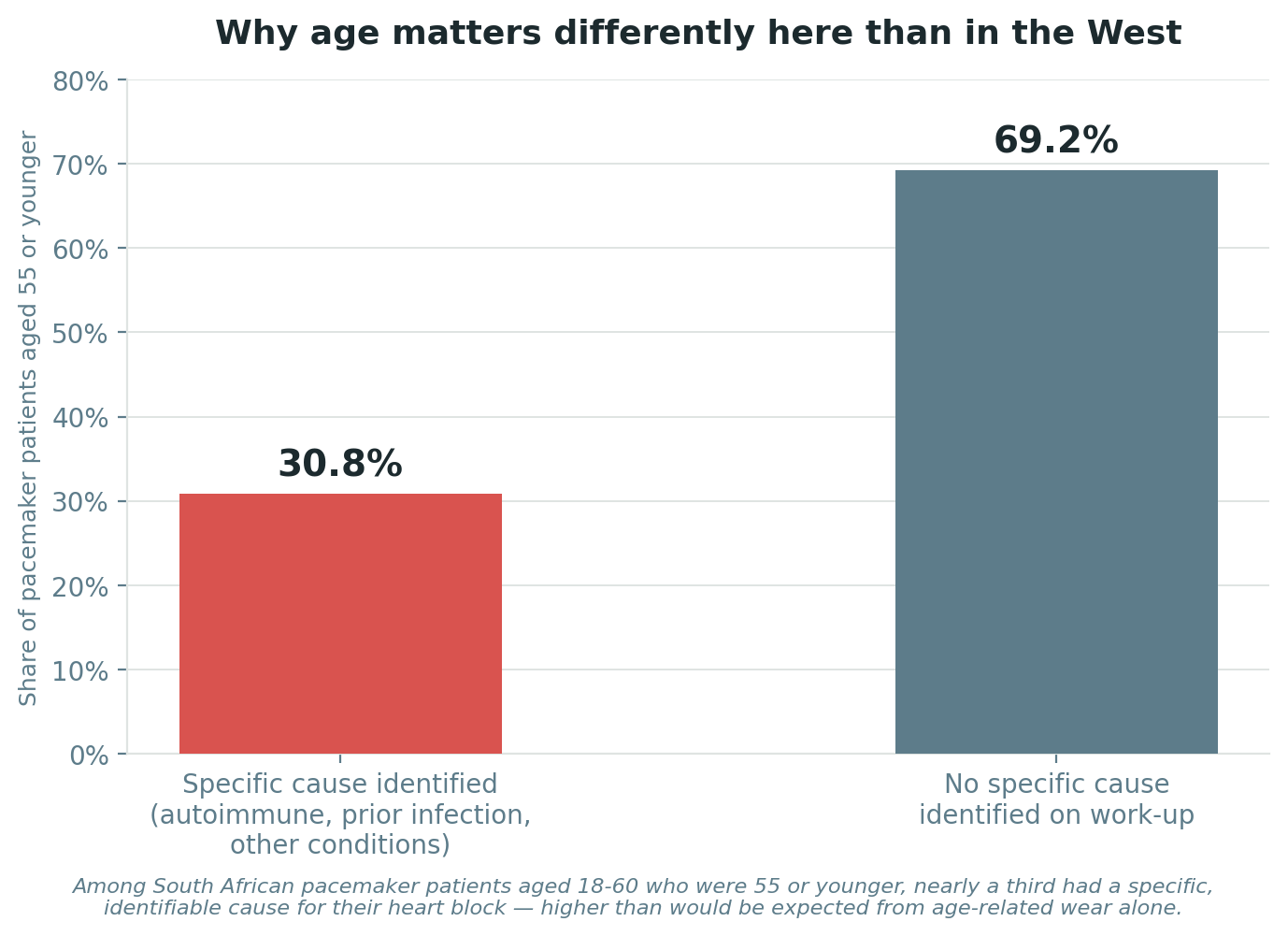
Among younger pacemaker patients here, nearly a third have a specific, identifiable cause worth understanding.
| Your situation | Typical approach | What it involves |
|---|---|---|
| Slow or irregular heartbeat causing symptoms (fainting, severe fatigue, breathlessness) | Full cardiac assessment before assuming a pacemaker is simply needed | ECG, and often further tests to identify whether there is a specific underlying cause, particularly in younger patients |
| Confirmed heart block or sick sinus syndrome, symptomatic | Permanent pacemaker implantation | A device implanted under the skin below the collarbone, with leads placed in the heart through a vein |
| Existing pacemaker, battery approaching depletion | Generator replacement, often locally | A simpler procedure than the first implant, since existing leads can usually stay in place |
| Young patient facing a first pacemaker | Plan for a lifetime of care, not a single operation | Discuss realistic expectations for future replacements and how follow-up will be managed as you get older |
Why the youngest patients face the most replacements
A pacemaker's battery typically lasts somewhere between 8 and 15 years, depending on the device and how much work it does. This means the age at which someone first needs a pacemaker has a direct, compounding effect on how many times they will need it replaced over a lifetime. A patient who receives their first pacemaker in their 20s or 30s, which is not unusual here given the region's distinct pattern of younger-onset heart block, may need it replaced five, six, or more times over the decades ahead — each one a genuine, if usually simpler, surgical procedure.
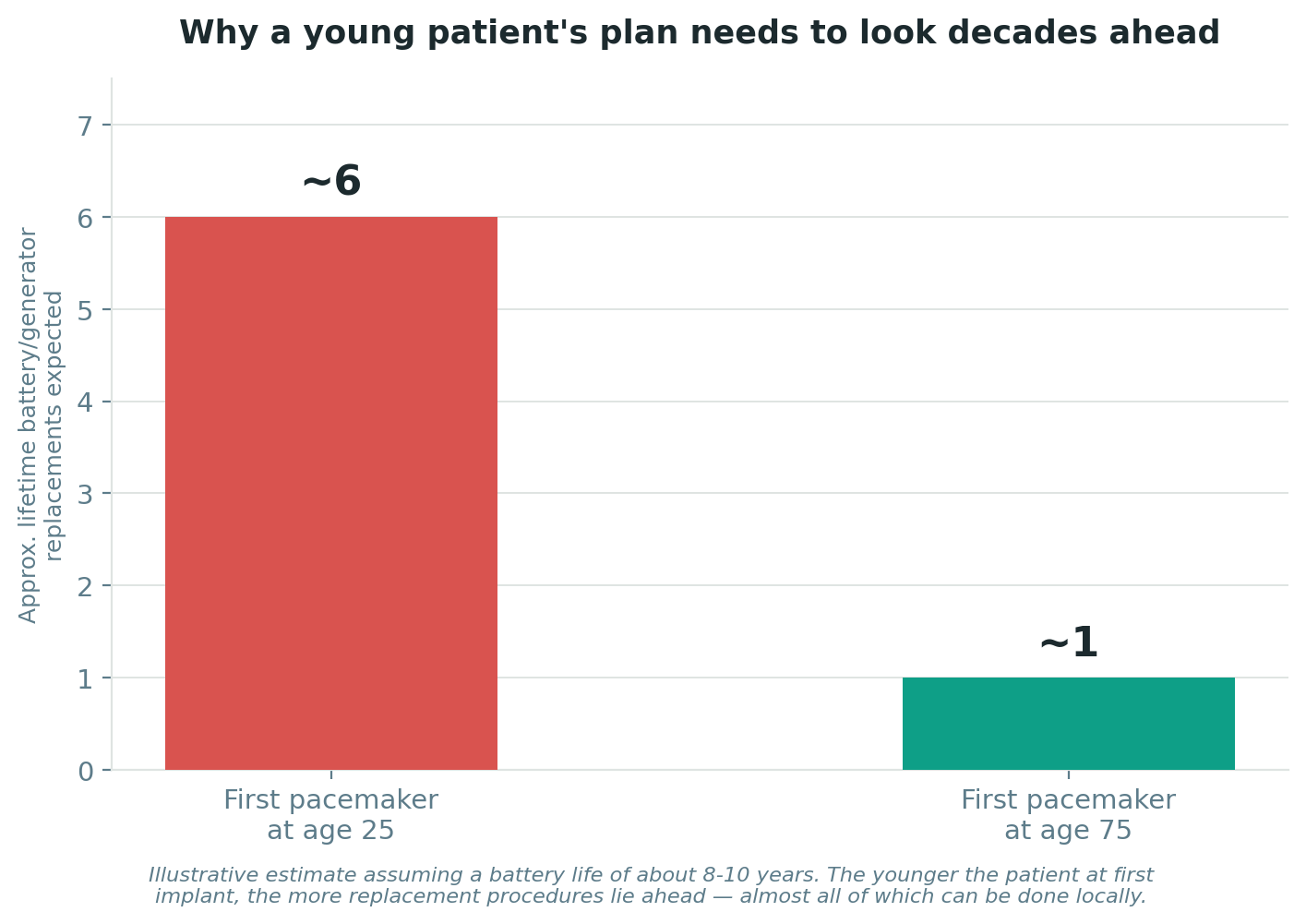
This is exactly why planning for lifelong, realistic local follow-up matters as much as the first operation.
The good news: most of this can happen at home
Unlike some of the implanted devices covered elsewhere in this guide series, a pacemaker does not require you to return to India for the rest of your life. The first implantation is the most technically demanding step, and this is where the experience of the surgical team and centre matters most. Battery and generator replacements afterward are generally more straightforward procedures — the existing leads inside the heart usually stay exactly where they are, and only the pulse generator itself is swapped out — and many Zambian cardiologists and cardiac centres are equipped to perform this once they know the specific make and model of your device.
This distinction between the first implantation and later generator changes is worth understanding clearly, because it shapes how you should think about the whole journey. The first procedure carries a small risk of complications related to placing new leads inside the heart and threading them through a vein into position — this is genuinely delicate work. A generator change, by contrast, is usually a shorter, lower-risk procedure, since the challenging part of the original surgery does not need to be repeated. This is precisely why it is realistic for future replacements to happen locally, even when the original implantation took place in India.
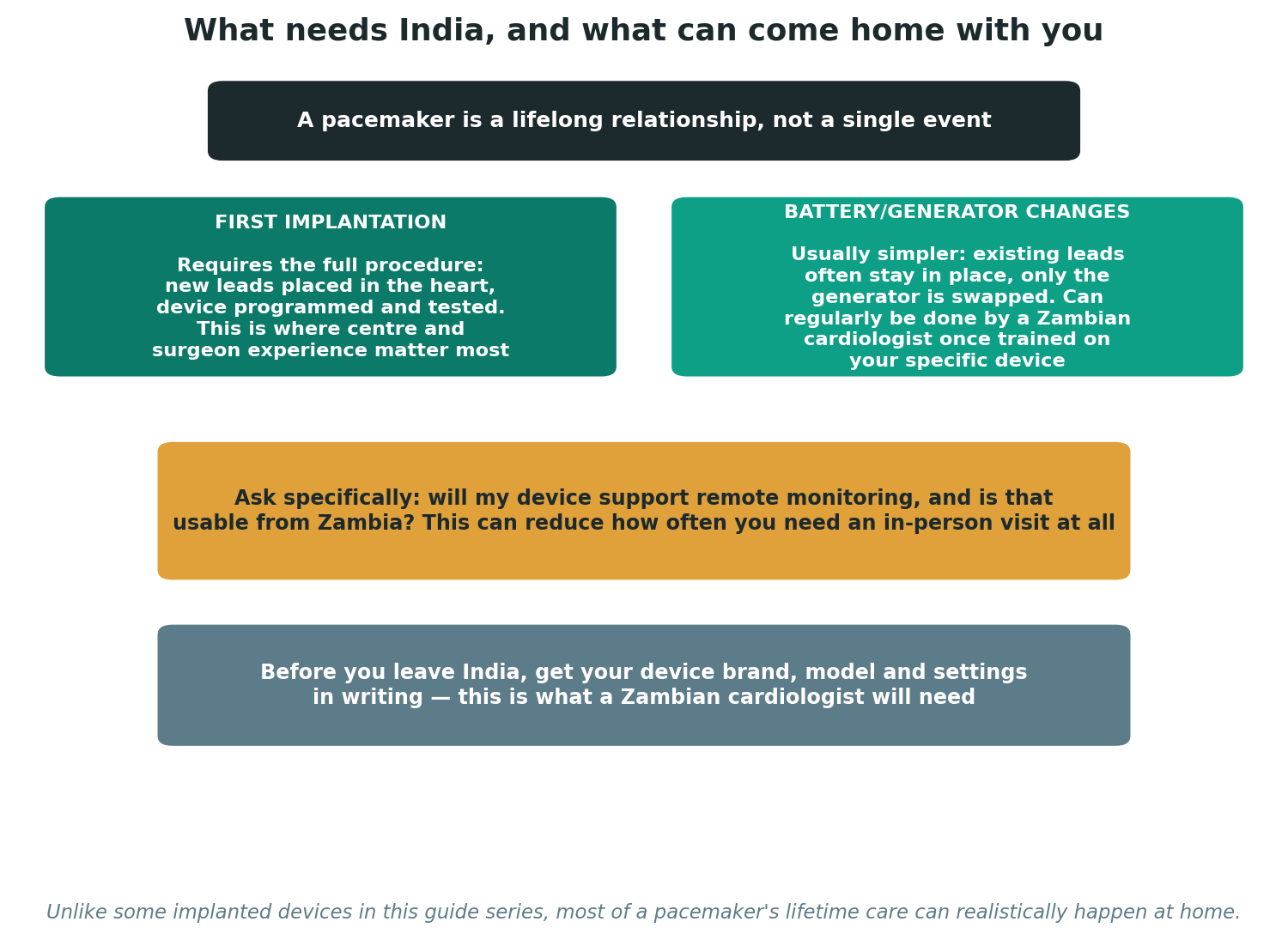
Getting your exact device details in writing before you leave India is the single most useful thing you can do for your future care.
Choosing the centre for your first implantation
Ask directly how many pacemaker implantations the centre and your specific cardiologist perform each year, and what their complication rates are, since this is a common procedure but still benefits from genuine, regular experience. Ask about the specific device brand and model they recommend, and why — including whether it supports remote monitoring, since modern devices can transmit information about your heart rhythm and battery status over a mobile connection, potentially reducing how often an in-person visit is genuinely necessary.
Check accreditation (NABH, ideally JCI), and before you leave, insist on a complete written record of your device's brand, model, serial number, and programmed settings — this is precisely the information a Zambian cardiologist will need for any future check or battery replacement, and it is far easier to obtain before you leave than to track down later.
It is also worth asking whether the recommended device is MRI-compatible, since this affects what imaging you can safely undergo in future if it becomes medically necessary. Not every pacemaker allows this, and it is a reasonable, specific question to raise before your device is chosen rather than something to discover only if the need for an MRI scan arises later.
Cost and value: how to weigh the money honestly
Pacemaker implantation in a good Indian hospital costs a small fraction of the equivalent procedure in the West, and India has extensive experience with the full range of modern pacemaker technology. The saving is real, but the true value of your choice of centre and device also depends on how well it sets you up for decades of care afterward, not just the initial procedure.
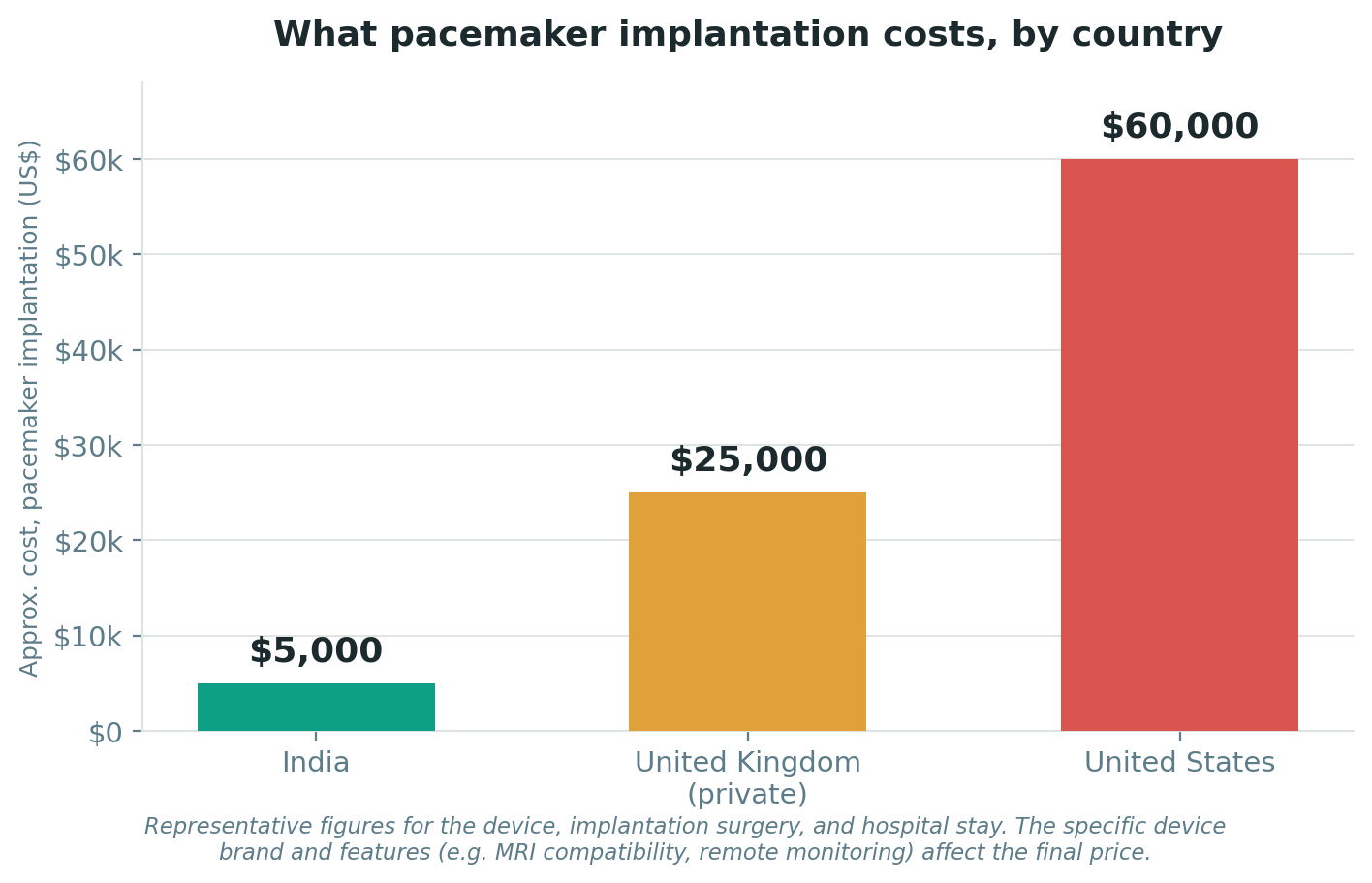
India's affordability is genuine — and choosing a device that supports remote monitoring adds real long-term value.
In 24 years of arranging these journeys, I have found that patients who leave with complete, clear documentation of their device tend to have far smoother decades of follow-up care than those who do not. Ask for a written, itemised quote covering the device, the implantation procedure, and hospital stay, and request your complete device documentation as a standard part of your discharge, not an afterthought.
What a Zambian patient should weigh in particular
Beyond the procedure itself, several practical matters deserve attention. First, payment: NHIMA funds care at accredited facilities inside Zambia, not treatment abroad, so the initial implantation in India comes from your own resources — another reason to plan realistically for the lifetime of care that follows it. Second, before you travel, identify a Zambian cardiologist or cardiac centre able to take over your routine follow-up and, eventually, battery replacement, so this relationship is already in place when you return. Third, if remote monitoring is part of your device's capability, confirm what connectivity it needs and whether that is realistic from where you live in Zambia.
Fourth, carry your device identification card with you at all times once you are home, and keep a photograph or copy of it somewhere easily accessible, such as with a family member. This small piece of paper can matter enormously in an emergency, since it tells any doctor treating you exactly what device you have and what precautions, if any, are needed around it.
The practical journey from Zambia
India requires a yellow fever vaccination certificate from travellers arriving from Zambia, valid only from ten days after the injection. Your medical visa is issued by the High Commission of India on Pandit Nehru Road in Lusaka against the hospital's invitation letter. There is no direct flight from Zambia to India; you will connect through Addis Ababa on Ethiopian Airlines, or through Dubai, Doha or Nairobi. Send your ECG and any prior cardiac test results, not only a summary, for remote review before you travel, since these help the Indian team understand your specific rhythm problem and plan the right device for you.
Signals that need prompt cardiac assessment
1. Fainting, or episodes of feeling about to faint, especially if sudden and unexplained.
2. A resting heart rate that feels persistently, unusually slow, particularly with associated fatigue or breathlessness.
3. A young person with any of the above — do not assume age makes a serious cause unlikely.
4. An existing pacemaker patient noticing dizziness, fatigue, or a return of earlier symptoms, which can signal a device or battery issue needing prompt evaluation.
Straight answers for Zambian Patients about Cardiac Pacemaker Treatments in India
Will I need to travel back to India every time my pacemaker battery needs replacing?
Not necessarily. Generator replacement is generally a more straightforward procedure than the first implant, and many Zambian cardiac centres can perform it once they have your complete device documentation. Confirm this specifically with a Zambian cardiologist before you travel for your first implant.
I'm in my 30s. Why would I need a pacemaker at my age?
Heart block and other rhythm problems requiring a pacemaker are not exclusively diseases of old age here, and a specific underlying cause is found in a meaningful proportion of younger patients in the region. This deserves proper investigation, not just a device.
What is remote monitoring, and is it worth asking about?
It allows your pacemaker to transmit information about your heart rhythm and battery status to your medical team without an in-person visit, using a mobile or home connection. It is worth asking whether your device supports this and whether it would realistically work from where you live.
What's the single most important thing to do before leaving India after my implant?
Get a complete written record of your device's exact brand, model, serial number and settings. This is the essential information any doctor, in Zambia or elsewhere, will need for your future care.
Sources
- 🌐 Medical visa, Lusaka — High Commission of India, requirements & process: hcizambia.gov.in/page/medical-visa
- 🌐 Hospital accreditation (India) — Verify a hospital's NABH accreditation: nabh.co
- 🌐 National Health Insurance (Zambia) — NHIMA cover, treatment abroad is not covered: nhima.co.zm
- 🌐 Ministry of Health Zambia — National health services & guidance: moh.gov.zm
- 🌐 National Medical Commission (verify a doctor) — Confirm a doctor's registration in India: nmc.org.in
- 🌐 WHO yellow fever — Vaccination requirements before travel: who.int/health-topics/yellow-fever
A Closing Word
Of everything I help patients plan for, a pacemaker is one of the more reassuring journeys, because so much of its lifetime care can genuinely come home with you. If you send me your ECG and cardiac test results, I will help you understand honestly why a pacemaker is being recommended, which centres in India have the genuine experience for your first implantation, and how to set up your long-term follow-up in Zambia so this becomes a manageable part of life, not a recurring trip abroad.
Frequently Asked Questions by Zambian Patients about Cardiac Pacemaker Treatments in India
Why might a younger person need a pacemaker?
Pacemaker-requiring heart block is not limited to older adults. The guide notes that younger patients may have identifiable causes such as autoimmune disease, previous infection or other conditions requiring proper investigation.
What conditions can require a pacemaker?
The guide specifically mentions confirmed heart block and symptomatic sick sinus syndrome among situations where permanent pacemaker implantation may be appropriate after cardiac assessment.
How long does a pacemaker battery last?
The guide gives a typical battery life of approximately 8–15 years, depending on the device and how much work it performs.
Will I need to return to India when the battery needs replacement?
Not necessarily. Generator replacement is generally simpler because the existing leads can usually remain in place. Many Zambian cardiac centres may be able to perform it once they know the exact device.
What should I ask about the pacemaker device?
Ask about the brand, model, MRI compatibility and remote-monitoring capability before agreeing to the device.
Why is remote monitoring useful?
It can allow information about the heart rhythm and battery status to be transmitted to the medical team without requiring an in-person visit every time. The guide recommends confirming whether the system will work reliably from the patient's location in Zambia.
How much does pacemaker implantation cost in India?
The guide gives an indicative cost of approximately US$5,000 in India. The actual price depends on the device, hospital and treatment requirements.
What should be included in the quotation?
Ask for a written, itemised quotation covering the pacemaker device, implantation procedure and hospital stay.
What documents should I take back to Zambia?
Before leaving India, obtain the device's brand, model, serial number and programmed settings in writing. This information is important for future checks and generator replacement.
What symptoms require prompt cardiac assessment?
The guide identifies fainting, unexplained near-fainting, an unusually slow resting heart rate with fatigue or breathlessness, and the return of previous symptoms in an existing pacemaker patient as reasons for prompt assessment.
Page Summary
This five-page Zambia-to-India medical travel guide explains cardiac pacemaker treatment and lifelong follow-up, with particular emphasis on proper diagnosis, younger patients with potentially identifiable causes of heart block, device selection and future generator replacement. The page 1 chart shows that 30.8% of the cited younger South African pacemaker patients had an identifiable cause, while the page 2 graphic illustrates the potential for multiple lifetime replacements when implantation occurs at a young age. The page 3 diagram distinguishes the technically demanding first implantation from simpler generator changes that may be performed in Zambia, while the page 4 cost chart gives an indicative cost of US$5,000 in India, compared with US$25,000 in the UK and US$60,000 in the US.
Citation Block
| Topic | Information |
|---|---|
| Topic | Cardiac Pacemaker Treatment in India for Zambian Patients |
| Treatment | Pacemaker Implantation |
| Patients | Zambian Cardiac Patients |
| Specialist | Cardiologist / Electrophysiology Specialist |
| Main Assessment | Heart rhythm and underlying cause |
| Key Priority | Proper diagnosis before implantation |
| Common Indications | Heart block and symptomatic sick sinus syndrome |
| Surgeon Check | Annual pacemaker implantation volume |
| Safety Check | Centre and cardiologist complication rates |
| Device Check | Brand, model, serial number and settings |
| Technology Check | MRI compatibility and remote monitoring |
| India Cost | Approximately US$5,000 |
| UK Cost | Approximately US$25,000 |
| US Cost | Approximately US$60,000 |
| Battery Life | Approximately 8–15 years |
| Pre-Travel Records | ECG and previous cardiac tests |
| Follow-Up | Zambian cardiologist/cardiac centre |
| Documentation | Complete device information before leaving India |
| Quality Check | NABH, ideally JCI |
| Warning Signs | Fainting, unusually slow heart rate or returning symptoms |
| Key Statistic | 30.8% of cited younger patients had an identifiable cause |
| Replacement Planning | Future generator changes may often be handled locally |
| Patient Pathway | Cardiac assessment → device selection → first implantation → documentation → Zambia follow-up |
| Decision Principle | Plan for lifelong local care, not only the initial implantation |


Our Mission Statement
Our mission is to place patients at the centre of every healthcare decision by providing trustworthy, evidence-based, and unbiased medical information. We believe that informed patients make better decisions. Backed by personalised guidance from our experienced advisory team, we help patients understand their treatment options, compare them objectively, and confidently choose the path that best suits their medical needs and personal circumstances.
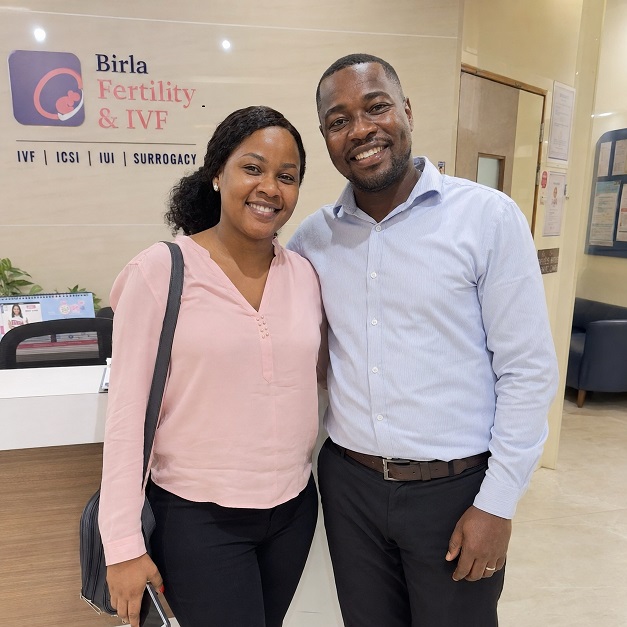
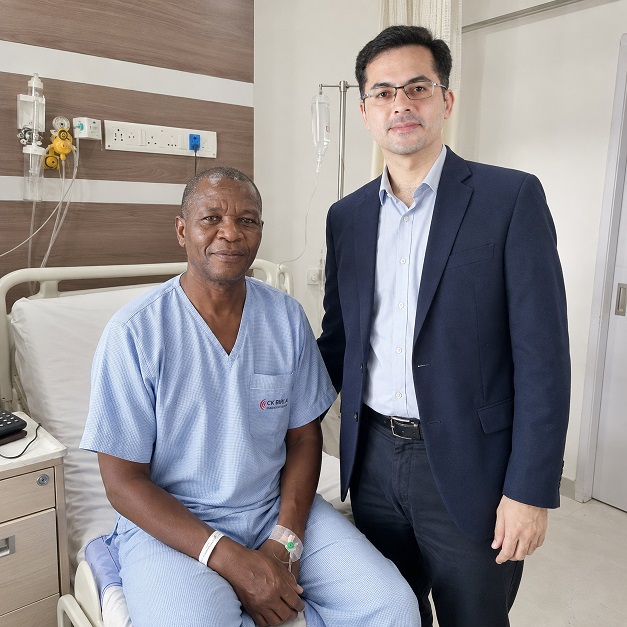
Patient Testimonials from Zambia

Ready to Take the First Step?
Share your Medical Reports with our Healthcare Managers Today and Get a FREE CONSULTATION, a Personalized Treatment Plan, and Complete Support from Arrival to Recovery.
Get Your Free ConsultationAreas We Serve
This resource has been thoughtfully prepared for patients from Zambia who are considering medical treatment in India. We also welcome patients from the wider region in the countries mentioned below-
We assist patients from:
- Zambia
- Angola
- Malawi
- Zimbabwe
- Botswana
- Namibia
- South Africa
- Eswatini
- Lesotho
- Gabon
- Chad
- Equatorial Guinea
- São Tomé and Príncipe
- Republic of the Congo
- Democratic Republic of the Congo
Many of the insights, treatment pathways, hospital recommendations, travel guidance, and patient support services described here are equally relevant and may be used as a reference when planning treatment in India.
From Zambia to India: Your Complete Patient Support Guide
- Best Weight-Loss (Bariatric) Surgeons & Hospitals in India for Zambian Patients
- Best Brain-Tumour Surgeons & Hospitals in India for Zambian Patients
- Best Cancer Doctors & Hospitals in India for Zambian Patients
- Best Cardiac Surgeons & Hospitals in India for Zambian Patients
- Best Cosmetic Surgeons & Facilities in India for Zambian Patients
- Best CyberKnife Treatment Teams & Centres in India for Zambian Patients
- Best Dentists & Dental Clinics in India for Zambian Patients
- Best Heart Valve Replacement Surgeons & Hospitals in India for Zambian Patients
- Best Hip Surgeons & Hospitals in India for Zambian Patients
- Best Knee Surgeons & Hospitals in India for Zambian Patients
- Best Neurosurgeons & Hospitals in India for Zambian Patients
- Best Paediatric Cardiac Surgeons & Hospitals in India for Zambian Patients
- Best Paediatric Neurosurgeons & Hospitals in India for Zambian Patients
- Best Prostate Surgeons & Hospitals in India for Zambian Patients
- Best Scoliosis Surgeons & Hospitals in India for Zambian Patients
- Best Spine Surgeons & Hospitals in India for Zambian Patients
- Best Bone Marrow Transplant Teams & Hospitals in India for Zambian Patients
- Best Kidney Transplant Surgeons & Hospitals in India for Zambian Patients