

Urosurgery and Reconstructive Urology in India for Kenyan Patients
Urethral stricture needs a definitive repair, not repeated temporary relief — what a Kenyan patient should verify about urethroplasty in India, and what it costs.
At Kenyatta National Hospital alone, urologists perform roughly 150 urethroplasties every year, a genuinely substantial surgical workload that international reconstructive urology specialists have specifically travelled to Nairobi to help address. Urethral stricture disease, a narrowing of the urethra that obstructs urine flow, along with hypospadias, a congenital condition affecting the urethral opening, have both been described by visiting specialists as a major, recognised burden across East Africa. Across 24 years of guiding Kenyan patients through treatment in India, urosurgery and reconstructive urology is a category where the volume of genuine need in Kenya, and the specific surgical expertise required to treat it well, deserves far more attention than it typically receives in general health conversation. This article explains what urosurgery and reconstructive urology involve, why this specific surgical need is so substantial in Kenya, what treatment costs in India compared with Kenya and Western countries, and the practical factors to weigh before deciding where to be treated.
Healing Journeys of Kenyan Patients




Key Takeaways
- The guide explains that urethral stricture disease is a significant and recognised reconstructive-urology problem in Kenya. Kenyatta National Hospital alone performs approximately 150 urethroplasties each year, and the scale of this workload has been significant enough for international reconstructive urology specialists to travel to Nairobi to support local surgical capacity.
- The condition occurs when scar tissue narrows the urethra and obstructs urine flow, with causes including infection, particularly untreated sexually transmitted infections, trauma, catheterisation, previous urological procedures and congenital conditions. Regional research cited in the guide has documented treatment delays of three years or more in comparable resource-limited settings, which can allow symptoms and complications to progress.
- The guide identifies urethroplasty as the gold-standard reconstructive treatment, with reported success rates of approximately 90–95% when performed by experienced reconstructive urologists. The technique depends on the stricture's length and location: shorter strictures may be repaired directly, while longer strictures may require graft tissue, commonly taken from inside the cheek.
- India has developed dedicated reconstructive-urology programmes with surgeons who specifically focus on urethroplasty and related reconstruction. The guide stresses that Kenyan patients should look beyond general urology qualifications and verify the surgeon's personal urethroplasty volume, because selecting the appropriate technique—anastomotic repair, graft or flap—depends heavily on accumulated procedure-specific experience.
- The guide also highlights the problem of repeated temporary procedures. Patients who have undergone multiple dilations or incision procedures without lasting improvement should discuss definitive reconstruction with a reconstructive urologist rather than automatically repeating the same treatment. Long-standing obstruction can progress to complete urinary retention and, in chronic cases, may affect kidney function.
- The cost comparison places urethroplasty in India at approximately US$2,500–6,500, compared with US$3,000–8,000 for private reconstructive urology treatment in Kenya, US$10,000–20,000 in the UK and US$15,000–30,000 in the US. The guide estimates approximately 1–2 weeks in India, including surgery, initial catheter care and early follow-up.
- Before booking, Kenyan patients should verify JCI or NABH accreditation, the surgeon's annual urethroplasty volume and whether the proposed technique matches the stricture's length and location. The page 4 six-point graphic also highlights an all-inclusive written quotation, visa and travel planning, and a long-term uroflow-monitoring plan with a doctor in Kenya.
Quick Facts
- Author
- Dr. Dheeraj Bojwani
- Experience
- 24+ Years
- Treatment
- Urosurgery & Reconstructive Urology
- Patients
- Kenyan Patients
- First Assessment
- Stricture length, location and severity
- Key Specialist
- Reconstructive Urologist
- Main Procedure
- Urethroplasty
- Other Conditions
- Hypospadias and complex failed repairs
- Urethroplasty Success
- Approximately 90–95% with experienced specialists
- Kenya Workload
- Approximately 150 urethroplasties annually at KNH
- Hospital Check
- JCI / NABH accreditation
- Case Volume
- Personal annual urethroplasty volume
- Technique Check
- Graft, flap or anastomotic repair based on stricture characteristics
- Cost Check
- Written estimate including surgery, catheter care and follow-up
- India Cost
- US$2,500–6,500
- Kenya Cost
- US$3,000–8,000 private
- Medical Records
- Urology reports and previous procedure records
- Visa
- Indian medical e-visa with hospital invitation
- Travel
- Nairobi–Delhi or Mumbai flights
- Stay
- Approximately 1–2 weeks
- Follow-Up
- Uroflow monitoring in Kenya
- Key Warning
- Repeated temporary procedures without definitive reconstructive assessment
- Decision Principle
- Prioritise procedure-specific reconstructive expertise and appropriate technique selection.
In Brief
For Kenyan patients with urethral stricture, the key priorities are definitive reconstructive expertise, accurate assessment of stricture length and location, and a sustainable follow-up plan. Patients should verify the surgeon's personal urethroplasty experience, understand why a graft, flap or anastomotic repair is recommended, obtain a complete quotation and arrange follow-up in Kenya before travelling.
What urosurgery and reconstructive urology actually involve
Reconstructive urology addresses structural problems within the urinary tract, most commonly urethral stricture disease, where scar tissue narrows the urethra and obstructs normal urine flow, causing symptoms ranging from a weak stream to complete urinary retention if left untreated. Causes vary widely: infection, particularly sexually transmitted infections left untreated, remains a leading cause across the region, alongside trauma from accidents, complications following catheterisation or previous urological procedures, and, less commonly, congenital conditions.
Urethroplasty, surgical reconstruction of the narrowed urethra, is considered the gold standard treatment, offering meaningfully better long-term success than repeated dilation or minimally invasive incision procedures, which often provide only temporary relief for anything beyond short, simple strictures. The specific surgical technique depends heavily on the stricture's length and location: short strictures may be treated by removing the narrowed segment and rejoining the healthy urethra directly, while longer strictures typically require a tissue graft, often using tissue from inside the cheek, to widen the repaired section. Reported success rates for urethroplasty performed by genuinely experienced reconstructive urologists run 90 to 95%, a meaningful improvement over less durable alternatives.
Beyond urethral stricture disease, reconstructive urology also addresses hypospadias, a congenital condition where the urethral opening doesn't form in its typical location, usually corrected surgically in early childhood, and more complex cases involving urinary tract trauma or previous failed repairs requiring specialised revision surgery. What connects all of these conditions is the same underlying principle: genuine reconstructive expertise, not just general urological competence, determines whether the repair holds long-term or requires repeated intervention.
Why this specific surgical need is so substantial in Kenya
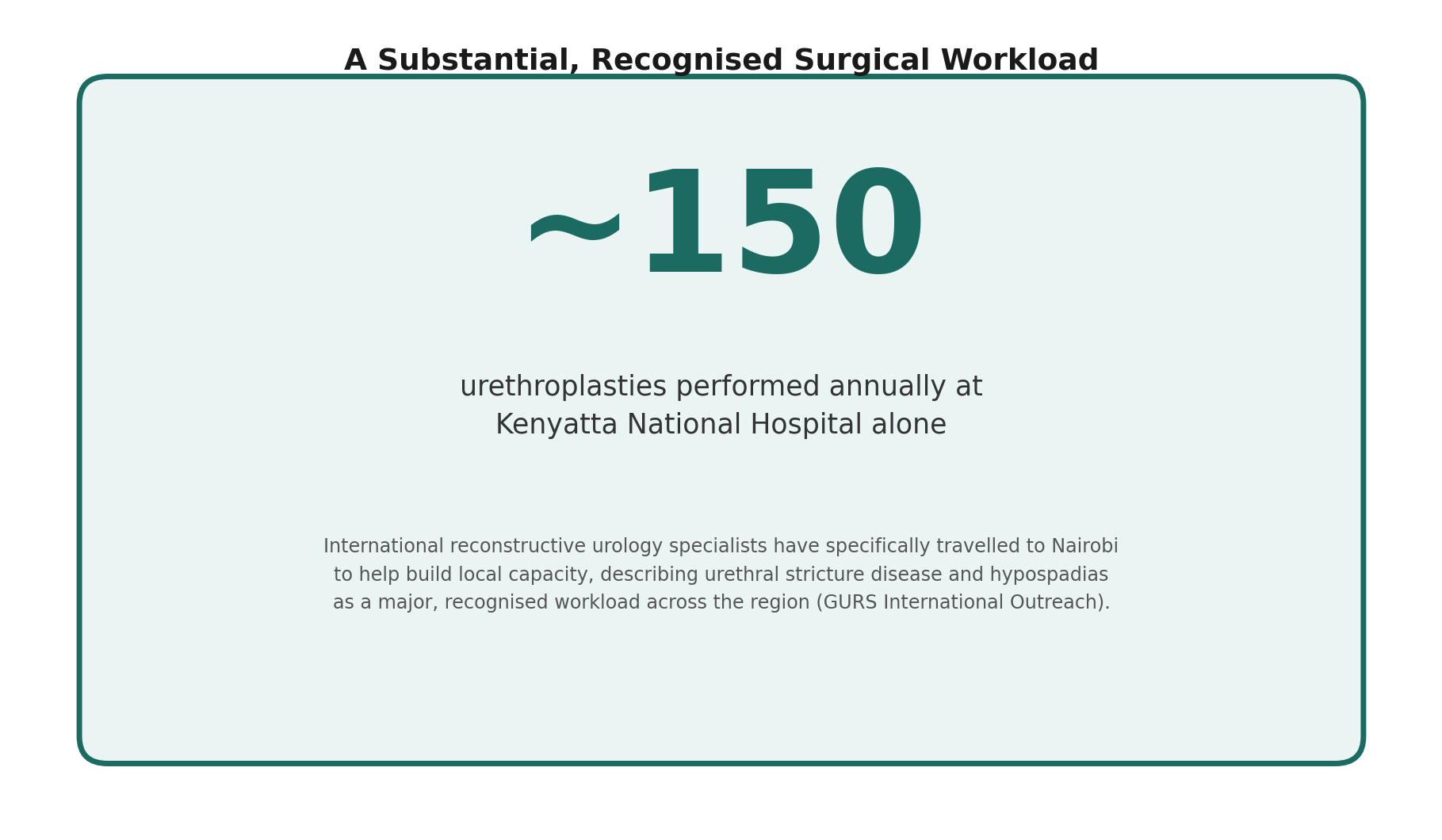
This is the fact every Kenyan patient dealing with urinary symptoms should understand clearly, because urethral stricture disease is both more common and more treatable than many patients realise. The roughly 150 urethroplasties performed annually at Kenyatta National Hospital alone reflect a genuinely substantial domestic surgical workload, one significant enough that the Genitourinary Reconstructive Surgeons society specifically organised an international outreach workshop in Nairobi, working directly with the Kenya Association of Urological Surgeons to expand local surgical capacity and skill.
Regional research across East and West Africa has consistently found infection-related causes, frequently linked to untreated sexually transmitted infections, account for the majority of urethral stricture cases, and studies from comparable resource-limited settings have documented mean delays of three years or more between symptom onset and actual treatment, with a meaningful share of patients receiving no treatment at all due to cost. This combination, a genuinely common, well-understood condition, alongside significant delay and access barriers before treatment is sought, describes exactly the kind of situation where getting to genuinely experienced surgical care matters enormously, and where waiting longer generally means a more complex, more difficult repair.
The men affected by this condition span a wide age range, but the practical impact often falls hardest on men of working age, since untreated urethral stricture can progress to complete urinary retention, a genuine medical emergency, and chronic cases can eventually affect kidney function if the resulting back-pressure on the urinary system isn't addressed. This is part of why prompt, definitive treatment matters more than many patients initially realise when symptoms first appear as a relatively minor inconvenience.
Why India has become a genuine hub for urosurgery and reconstructive urology
India has developed extensive, dedicated reconstructive urology capacity, with urologists who specifically subspecialise in urethroplasty and related reconstructive techniques, performing the procedure at a volume and frequency that builds the kind of technique-specific judgement this surgery genuinely requires. This matters because choosing the right surgical approach, anastomotic repair versus graft substitution, and executing it well, depends heavily on accumulated, procedure-specific experience.
India's leading reconstructive urology centres combine this expertise with JCI and NABH accredited safety standards and reported urethroplasty success rates in the 90 to 95% range, comparable to outcomes reported by leading centres globally. In 24 years of guiding patients through this decision, the clearest advice I offer is this: urethral stricture disease tends to worsen the longer it goes untreated, and given how substantial and well- recognised this surgical need already is across Kenya, seeking genuinely experienced reconstructive care promptly, rather than accepting repeated temporary procedures, is what actually resolves the underlying problem.
This distinction matters practically for many patients who have already undergone one or more prior dilations or incision procedures without lasting success. Repeated temporary procedures without addressing the underlying stricture through genuine reconstruction often mean recurring symptoms and repeated interventions over years, when a single, well-performed urethroplasty could resolve the condition definitively. If you've had previous procedures that haven't held, that history is worth discussing directly with a reconstructive specialist rather than simply repeating the same approach again.
What it costs: India versus Kenya, the UK, and the US
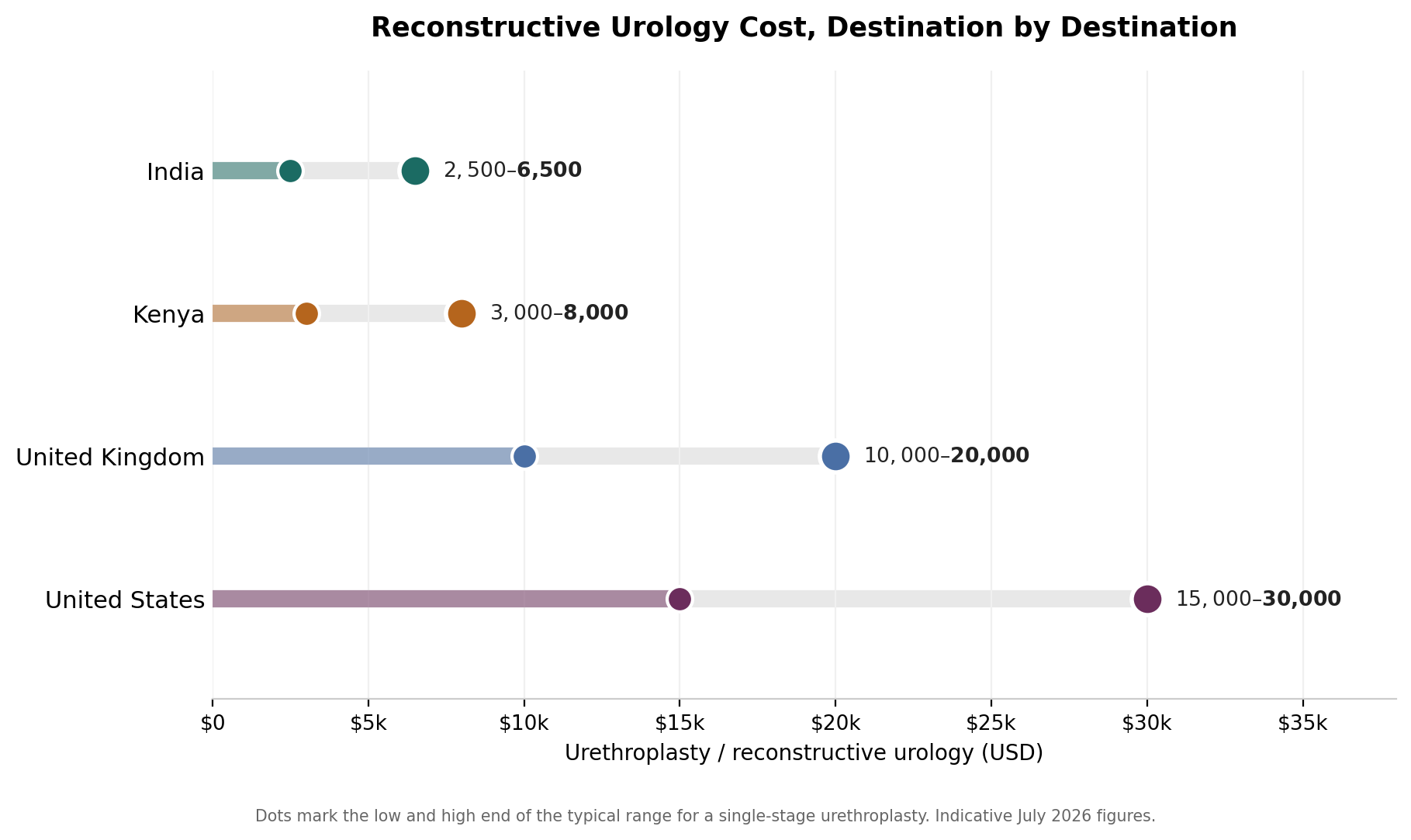
In India, urethroplasty typically costs between 2,500 and 6,500 US dollars. In Kenya, private reconstructive urology costs run roughly 3,000 to 8,000 dollars. In the UK, urethroplasty typically costs 10,000 to 20,000 dollars, and in the US, 15,000 to 30,000 dollars.
Beyond the procedure itself, budget for your stay. Direct flights between Nairobi and Delhi or Mumbai run roughly 550 to 850 dollars return, and urethroplasty typically requires one to two weeks in India, covering the surgery, initial catheter care, and follow-up before travel home is medically advisable.
What a Kenyan patient should actually check before booking
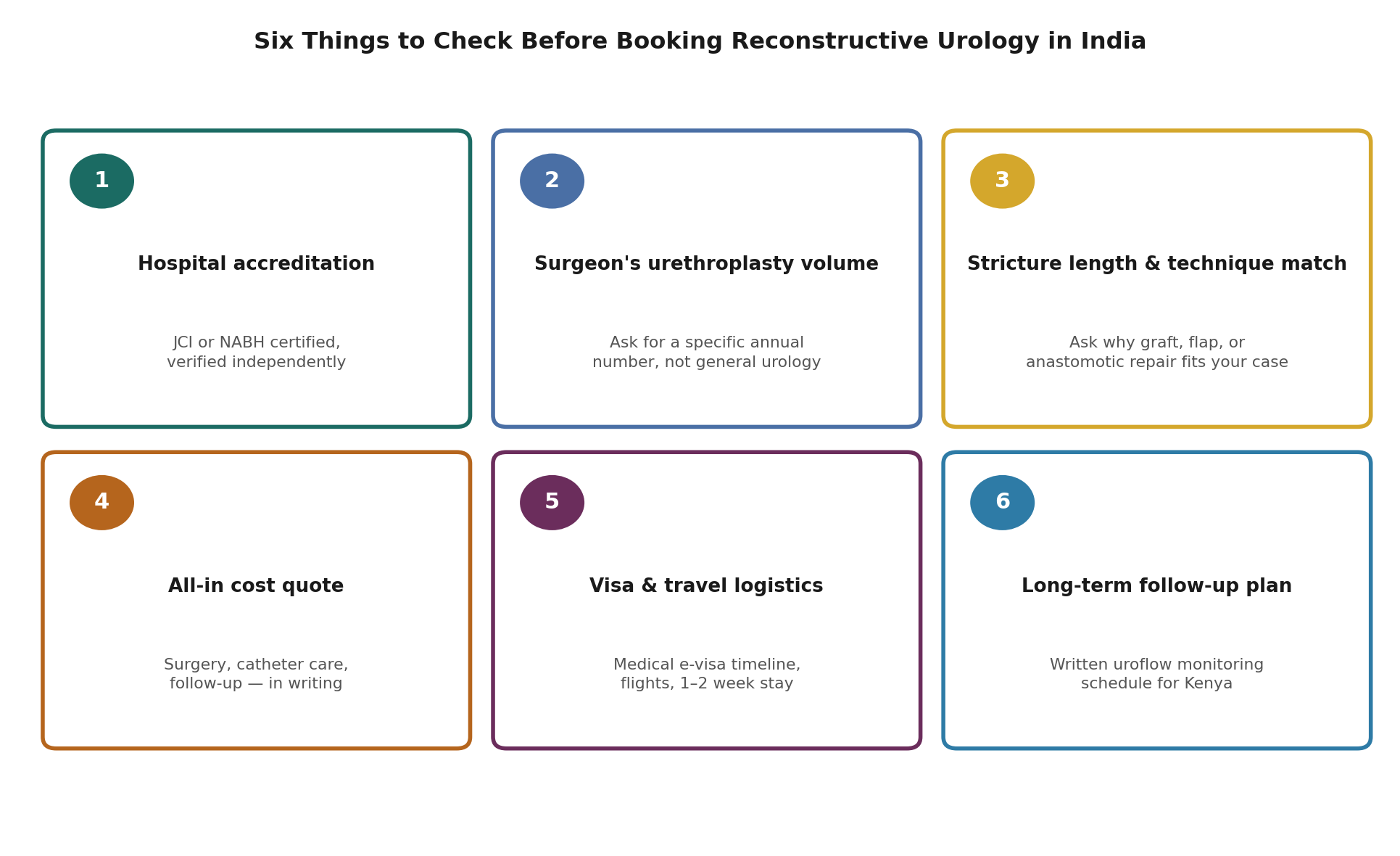
Given how much technique-specific expertise matters here, work through these questions directly.
Confirm genuine accreditation. Ask whether the hospital holds JCI or NABH certification, and verify it independently.
Ask about the surgeon's urethroplasty volume specifically. A specific number, how many urethroplasty procedures the surgeon personally performs each year, tells you far more than general urology reputation.
Confirm the technique matches your specific stricture. Ask your surgeon to explain, based on your stricture's length and location, why graft, flap, or anastomotic repair is being recommended.
Get the full cost breakdown in writing. Confirm what's included, surgery, catheter care, and follow-up consultations.
Plan your visa and travel logistics. The Indian medical e-visa is typically issued within three to five working days once you have a formal hospital invitation letter.
Arrange your long-term follow-up plan before you leave. Agree on a written uroflow monitoring schedule and identify a doctor in Kenya who can continue that follow-up.
Straight Answers for Kenyan Patients about Urosurgery and Reconstructive Urology in India
How common is urethral stricture disease in Kenya?
Substantial enough that Kenyatta National Hospital alone performs roughly 150 urethroplasties annually, a workload significant enough that international reconstructive urology specialists have specifically travelled to Nairobi to help expand local surgical capacity.
How much does urethroplasty cost in India compared to the US?
India typically costs 2,500 to 6,500 US dollars, against 15,000 to 30,000 dollars in the US.
What causes urethral stricture disease?
Infection, particularly untreated sexually transmitted infections, is a leading cause across the region, alongside trauma, complications from catheterisation or previous urological procedures, and congenital conditions.
Why is urethroplasty considered better than repeated dilation?
Urethroplasty offers meaningfully better long-term success than dilation or incision procedures, which often provide only temporary relief for anything beyond short, simple strictures, with reported success rates of 90 to 95% when performed by experienced reconstructive urologists.
Does delaying treatment for urethral stricture make it worse?
Yes, generally. The condition tends to worsen over time if untreated, and regional research has documented mean delays of three years or more between symptom onset and treatment, often resulting in a more complex eventual repair.
How do I get a medical visa to India from Kenya?
The Indian medical e-visa is typically issued within three to five working days once you have a formal invitation letter from the treating hospital.
A Closing Word
Urethral stricture disease is a genuinely common, well-understood, and highly treatable condition, but the roughly 150 urethroplasties performed annually at Kenyatta National Hospital alone reflect just how substantial this surgical need is across Kenya. India's combination of dedicated, high-volume reconstructive urology expertise, accredited safety standards, and accessible cost makes it, for the great majority of Kenyan patients facing this diagnosis, a genuinely strong option, particularly given how much a delayed diagnosis can complicate eventual treatment.
Sources
- 🌐 GURS International Outreach Mission — Nairobi, Kenya
- 🌐 A Retrospective Evaluation of Challenges in Urethral Stricture Management in a Tertiary Care Centre of a Poor Resource Community. PMC
- 🌐 Urethral Strictures in Males Treatment & Management. Medscape
- 🌐 National Medical Commission of India — specialist registration verification
- 🌐 National Accreditation Board for Hospitals & Healthcare Providers (NABH) — accredited hospital directory
Frequently Asked Questions by Kenyans about Urosurgery and Reconstructive Urology in India
How common is urethral stricture surgery in Kenya?
Kenyatta National Hospital alone performs approximately 150 urethroplasties annually, reflecting a substantial reconstructive-urology workload. International reconstructive specialists have also travelled to Nairobi to support local surgical training and capacity.
Why do some Kenyan patients experience long delays before urethral stricture treatment?
The guide cites research from comparable resource-limited settings showing mean delays of three years or more between symptom onset and treatment. Cost and limited access to definitive reconstructive care can contribute to patients remaining untreated.
What are the common causes of urethral stricture among Kenyan and East African patients?
The guide identifies infection, particularly untreated sexually transmitted infections, trauma, catheterisation, previous urological procedures and congenital conditions as important causes.
Why might a Kenyan patient consider urethroplasty instead of repeated dilation?
Urethroplasty provides better long-term results than repeated dilation or incision for many strictures, particularly when the narrowing is more complex. Experienced reconstructive urologists report success rates of approximately 90–95%.
How should a Kenyan patient choose a reconstructive urologist in India?
Ask for the surgeon's personal annual urethroplasty volume, not simply the hospital's total urology workload. The guide considers procedure-specific experience particularly important for choosing and performing the correct reconstruction.
How does stricture length affect the surgery recommended for Kenyan patients?
The guide explains that shorter strictures may be treated through direct anastomotic repair, while longer strictures often require graft reconstruction. The exact approach depends on the stricture's length and location.
How much does urethroplasty cost in India for Kenyan patients?
The guide estimates approximately US$2,500–6,500 in India, compared with US$3,000–8,000 for private reconstructive urology treatment in Kenya.
How long should a Kenyan patient stay in India for urethroplasty?
The guide recommends approximately 1–2 weeks in India, covering surgery, initial catheter care and early follow-up before travelling home.
What should a Kenyan patient check before booking urethroplasty in India?
The page 4 checklist recommends verifying JCI/NABH accreditation, the surgeon's urethroplasty volume, technique suitability, a complete cost quotation, travel arrangements and long-term follow-up.
What follow-up should a Kenyan patient arrange after urethroplasty in India?
The guide recommends a written uroflow-monitoring schedule and identifying a doctor in Kenya who can continue follow-up. This helps monitor urinary flow and identify recurrent narrowing after returning home.
Page Summary
This six-page guide focuses on Kenya's substantial urethral reconstruction workload and India's dedicated reconstructive-urology expertise. Page 2 highlights approximately 150 urethroplasties performed annually at Kenyatta National Hospital and the international outreach undertaken to strengthen local reconstructive capacity. Page 3 compares urethroplasty costs, with India at US$2,500–6,500 versus US$15,000–30,000 in the US. The page 4 six-point graphic focuses on accreditation, surgeon-specific urethroplasty volume, stricture length and technique matching, complete costing, travel logistics and long-term follow-up.
Citation Block
| Topic | Information |
|---|---|
| Topic | Urosurgery & Reconstructive Urology in India for Kenyan Patients |
| Treatment | Urethroplasty / Reconstructive Urology |
| Patients | Kenyan Patients |
| First Assessment | Stricture length, location and severity |
| Key Specialist | Reconstructive Urologist |
| Main Procedure | Urethroplasty |
| Other Conditions | Hypospadias and failed previous repairs |
| Success Rate | Approximately 90–95% with experienced specialists |
| Kenya Workload | Approximately 150 urethroplasties annually at KNH |
| Hospital Check | JCI / NABH accreditation |
| Case Volume | Personal urethroplasty experience |
| Technique Check | Graft, flap or anastomotic repair |
| Cost Check | Surgery, catheter care and follow-up in writing |
| India Cost | US$2,500–6,500 |
| Kenya Cost | US$3,000–8,000 private |
| Medical Records | Urology and previous procedure reports |
| Travel | Nairobi–Delhi or Mumbai flights |
| Stay | Approximately 1–2 weeks |
| Follow-Up | Written uroflow monitoring plan in Kenya |
| Specialist Question | How many urethroplasties do you personally perform each year? |
| Technique Question | Why is graft, flap or anastomotic repair appropriate for my stricture? |
| History Question | Will my previous dilations or procedures change the reconstruction plan? |
| Cost Question | Does the quotation include surgery, catheter care and follow-up? |
| Follow-Up Question | Who will monitor my urinary flow after I return to Kenya? |
| Warning Signs | Repeated temporary procedures without definitive assessment |
| Payment Warning | Incomplete quotation excluding catheter care or follow-up |
| Key Decision | Verify reconstructive expertise, technique selection and long-term follow-up |

Our Mission Statement
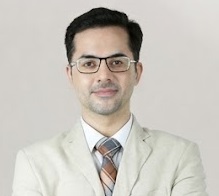
Our mission is to place patients at the centre of every healthcare decision by providing trustworthy, evidence-based, and unbiased medical information. We believe that informed patients make better decisions. Backed by personalised guidance from our experienced advisory team, we help patients understand their treatment options, compare them objectively, and confidently choose the path that best suits their medical needs and personal circumstances.
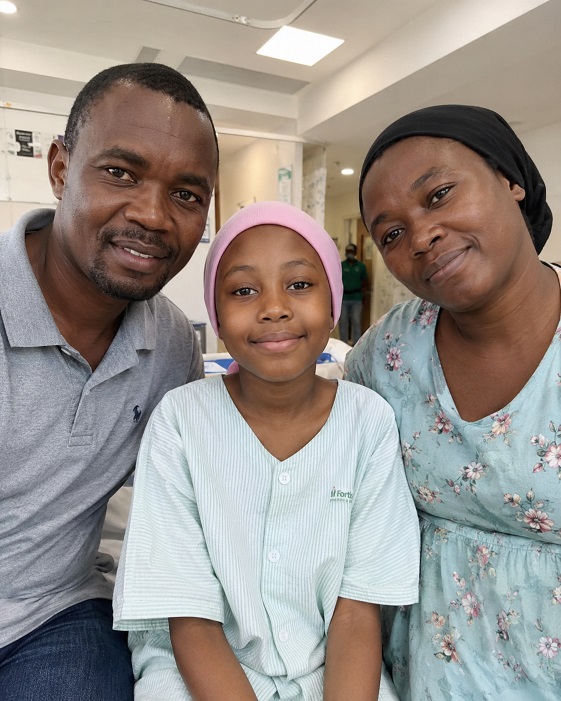
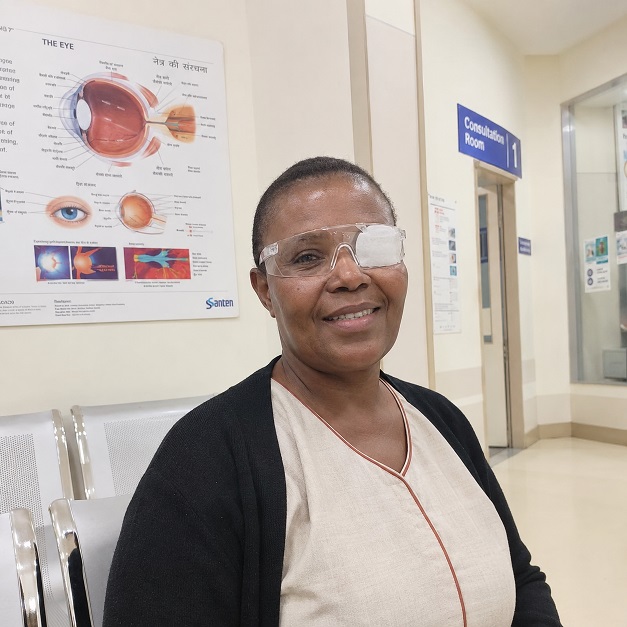
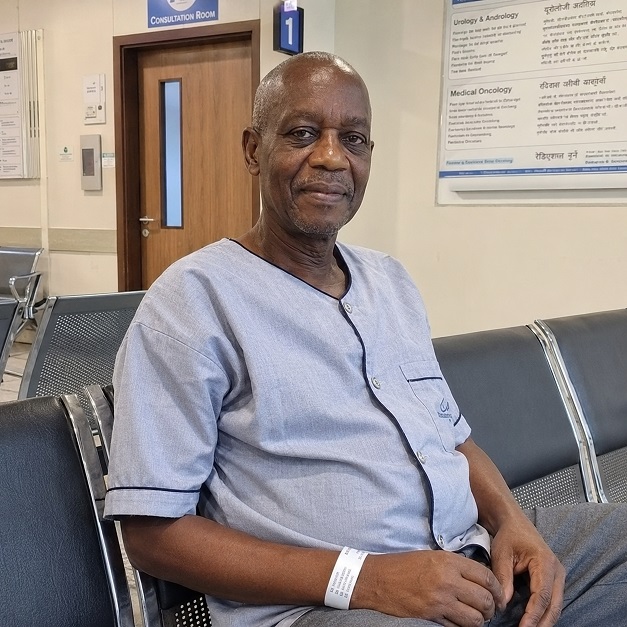
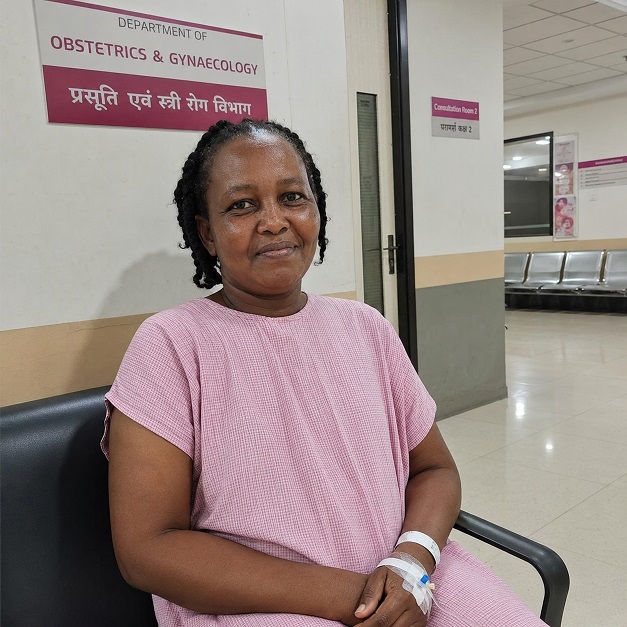
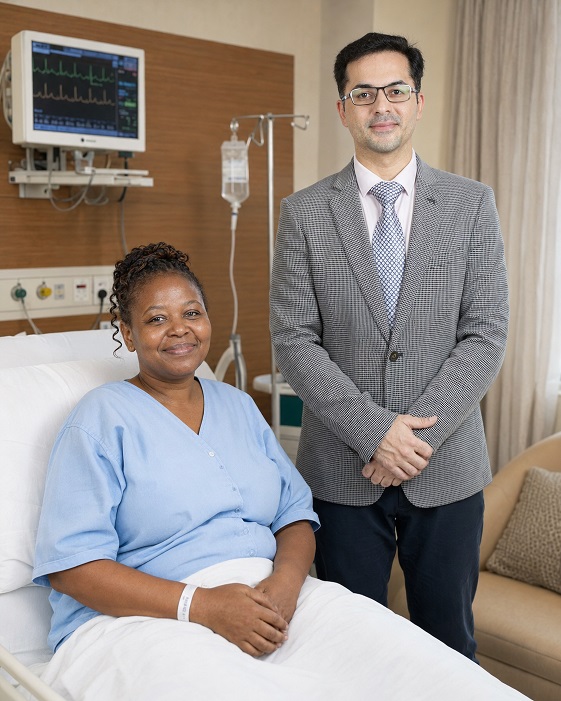
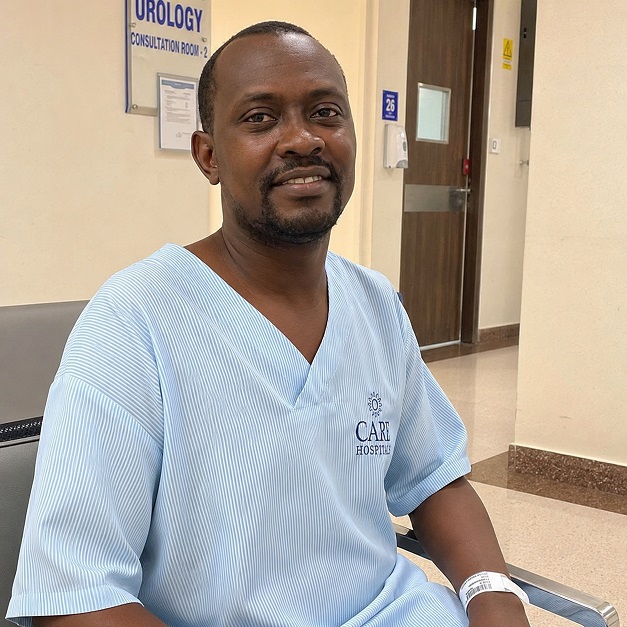
Patient Testimonials from Kenya

Ready to Take the First Step?
Share your Medical Reports with our Healthcare Managers Today and Get a FREE CONSULTATION, a Personalized Treatment Plan, and Complete Support from Arrival to Recovery.
Get Your Free ConsultationAreas We Serve
This resource has been thoughtfully prepared for patients from Kenya who are considering medical treatment in India. We also welcome patients from the wider region in the countries mentioned below-
We assist patients from:
- Ethiopia
- Somalia
- Tanzania
- Uganda
- Seychelles
- Guinea
- Guinea-Bissau
- Liberia
- Mali
- Mauritania
- Niger
- Nigeria
- Senegal
- Togo
- South Sudan
- Sierra Leone
Many of the insights, treatment pathways, hospital recommendations, travel guidance, and patient support services described here are equally relevant and may be used as a reference when planning treatment in India.
From Kenya to India: Your Complete Patient Support Guide
- Brain Tumour Surgery in India for Kenyan Patients
- Cancer Treatment and Surgery in India for Kenyan Patients
- Cardiac Treatment and Surgery in India for Kenyan Patients
- Heart Valve Replacement Surgery in India for Kenyan Patients
- Knee Replacement in India for Kenyan Patients
- Prostate Cancer Treatment and Surgery in India for Kenyan Patients
- Spine Treatment and Surgery in India for Kenyan Patients
- Selecting the Best Bariatric Surgeons and Hospitals in India: What Kenyan Patients Should Actually Look For
- Selecting the Best Cancer Surgeons and Hospitals in India: What Kenyan Patients Should Actually Look For
- Selecting the Best Cardiac Surgeons and Hospitals in India: What Kenyan Patients Should Actually Look For
- Selecting the Best Dental Surgeons and Clinics in India: What Kenyan Patients Should Actually Look For
- Selecting the Best Hip Surgeons and Hospitals in India: What Kenyan Patients Should Actually Look For
- Selecting the Best Kidney Transplant Surgeons and Hospitals in India: What Kenyan Patients Should Actually Look For
- Selecting the Best Knee Surgeons and Hospitals in India: What Kenyan Patients Should Actually Look For
- Selecting the Best Liver Transplant Surgeons and Hospitals in India: What Kenyan Patients Should Actually Look For
- Selecting the Best Neurosurgeons and Hospitals in India: What Kenyan Patients Should Actually Look For
- Selecting the Best Prostate Cancer Surgeons and Hospitals in India: What Kenyan Patients Should Actually Look For
- Selecting the Best Spine Surgeons and Hospitals in India: What Kenyan Patients Should Actually Look For