

Selecting the Best Scoliosis and Spine Deformity Correction Surgeons and Hospitals in India: What Kenyan Patients Should Actually Look For
A sideways curve and a tubercular collapse are not the same condition — settle which one you are treating before you compare surgeons at all.
"Spine deformity" sounds like one thing, and in the consulting rooms I work with, it almost never is. Across 24 years of guiding international patients through Indian hospitals, I have seen two genuinely different conditions arrive under the same worried phone call from a Kenyan parent or patient: an ordinary sideways curve that develops quietly through adolescence, and a forward, angular collapse caused by tuberculosis eating into the bone of the spine. They look different on an X-ray, they come from different causes, and treating one as though it were the other is a mistake with real consequences. This is the framework I use when a Kenyan patient or family is weighing spine deformity correction in India. It follows the surgeon-then-hospital structure of this series, but it opens with a distinction that has to be settled before either of those questions can be answered properly.
Healing Journeys of Kenyan Patients

Key Takeaways
- Kenyan patients considering spine deformity correction in India should first establish what type of deformity they actually have. The guide distinguishes idiopathic scoliosis, which is usually a developmental sideways curve, from Pott's kyphosis, a forward angular deformity caused by spinal tuberculosis.
- This distinction is particularly important for Kenyan patients because Kenya has a significant tuberculosis burden and spinal tuberculosis is seen in tertiary hospitals. Back pain accompanied by fever, night sweats, unexplained weight loss, weakness or numbness should prompt active investigation for spinal TB.
- Pott's kyphosis requires anti-tuberculosis medication first, generally for six to twelve months, whether or not surgery is eventually required. Surgery may become necessary when there is neurological involvement, instability, abscess formation or progressive severe deformity.
- For scoliosis or post-tubercular kyphosis requiring surgery, Kenyan patients should prioritize a surgeon's personal annual deformity-correction volume, rather than general spine-surgery experience. The guide also emphasizes active infection exclusion, realistic correction goals and growth-friendly approaches for young children.
- The hospital should provide intraoperative neuromonitoring, infectious-disease co-management when TB is involved, deformity-specific implant inventory, post-operative bracing and rehabilitation, and appropriate medication handover for continued treatment in Kenya.
- NABH or JCI accreditation can help assess hospital standards, but the guide cautions that accreditation alone does not establish deformity-specific surgical expertise or infectious-disease integration.
- The guide gives an indicative all-in spine deformity correction cost in India of US$6,500–US$14,500, depending on severity, number of levels, infection-related procedures and other factors. Kenyan patients should obtain a written quote specifying what is included.
Quick Facts
- Treatment
- Scoliosis and Spine Deformity Correction
- Country
- India
- Patients
- Kenyan Patients
- Main Conditions
- Idiopathic Scoliosis and Pott's Kyphosis
- Critical First Step
- Establish the Type and Cause of Deformity
- Spinal TB Evaluation
- Blood Tests, MRI and Clinical Assessment Where Appropriate
- Pott's Kyphosis Treatment
- Anti-Tuberculosis Medication First
- Anti-TB Treatment Duration
- Six to Twelve Months
- Surgeon Selection
- Personal Annual Deformity-Correction Volume
- Surgical Planning
- Review Standing X-Rays or MRI Against the Proposed Correction
- Paediatric Consideration
- Growth-Friendly Non-Fusion Options Where Appropriate
- Neuromonitoring
- Required Throughout Deformity Correction
- Hospital Support
- Infectious Disease Co-Management for Spinal TB
- Implant Availability
- Deformity-Specific and Paediatric Sizes Where Relevant
- Post-Operative Care
- Bracing and Rehabilitation
- Accreditation
- NABH or JCI
- Indicative India Cost
- US$6,500–US$14,500
- Additional Travel Cost
- Direct Nairobi–Delhi or Nairobi–Mumbai flights approximately US$550–US$850 return
- Expected Stay
- Approximately Three to Four Weeks for the Surgical Portion
- Medical Visa
- Indian Medical E-Visa Against Hospital Letter
- Attendants
- Up to Two Medical Attendants
- Kenya Follow-Up
- Local Doctor for Continued Monitoring and TB Medication
In Brief
For Kenyan patients considering spine deformity correction in India, the first question should be whether the condition is idiopathic scoliosis or tuberculosis-related Pott's kyphosis. These conditions have different causes and treatment pathways. Once the diagnosis is established, patients should assess the surgeon's specific deformity-correction experience, infection-management capability, neuromonitoring, hospital resources, rehabilitation plan and long-term follow-up arrangements in Kenya.
Before anything else: which deformity is this?
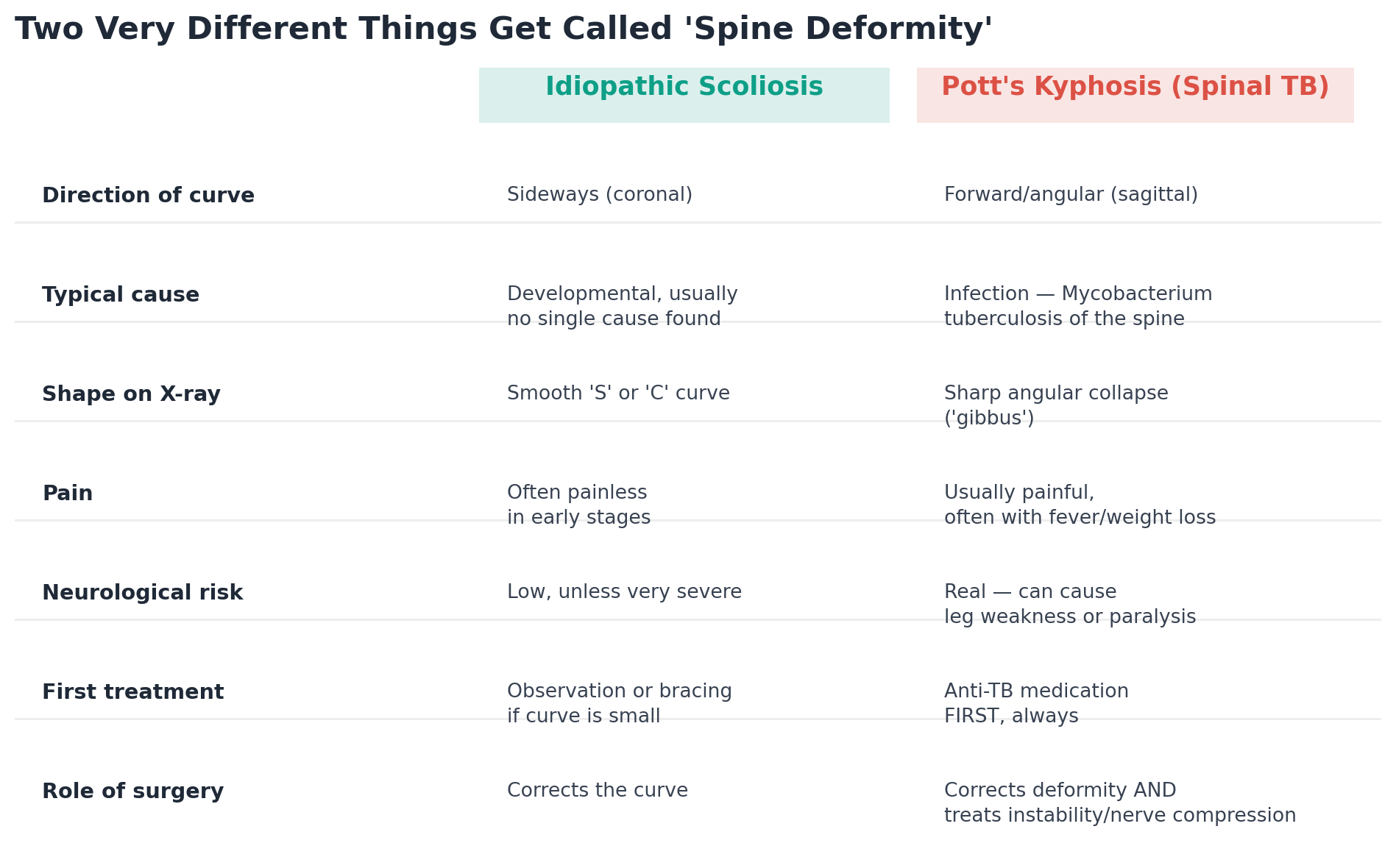
Idiopathic scoliosis is a sideways curve of the spine. It is usually developmental, with no single cause identified, frequently painless in its early stages, and generally carries low risk to the spinal cord unless the curve becomes very severe. This is the more familiar condition, and it is the one covered in depth, including the case for early school-age detection, in a separate guide in this series on scoliosis specifically.
Pott's kyphosis is a different condition entirely. It is a forward, angular collapse of the spine caused by tuberculosis infection destroying vertebral bone, and it is usually painful, often accompanied by fever, night sweats or weight loss, and carries a genuine risk of leg weakness or paralysis if the spinal cord becomes compressed. Spinal tuberculosis accounts for up to half of all musculoskeletal tuberculosis cases, and roughly 3 to 5 percent of affected patients go on to develop severe deformity, greater than 60 degrees, if the disease is not caught and treated early. Neurological complications, sometimes called Pott's paraplegia, have been reported in a substantial proportion of patients with thoracic or cervical involvement in published series.
This matters enormously for how treatment proceeds. Scoliosis may reasonably be observed or braced if the curve is mild. Pott's kyphosis always requires anti-tuberculosis medication first, typically a combination regimen for six to twelve months, regardless of whether surgery is eventually needed. Operating on a spine before tuberculosis has been excluded, or treating an infective deformity as though it were simple idiopathic scoliosis, is a genuinely serious error, and it is the single most important thing to get right before any surgical plan is made.
Why this matters particularly in Kenya
Kenya carries a significant tuberculosis burden, and spinal involvement is a recognised presentation. Published research, including case series from Kenyan tertiary referral hospitals, confirms that spinal tuberculosis is seen regularly in East African clinical practice, frequently in patients who initially present with non-specific back pain not immediately linked to infection. Because early Pott's symptoms can resemble ordinary mechanical back pain, diagnosis is sometimes delayed until deformity or neurological symptoms are already advanced.
The practical takeaway: if you or a family member has back pain accompanied by fever, night sweats, unexplained weight loss, or any weakness or numbness in the legs, alongside a visible or measured spinal deformity, raise the possibility of spinal tuberculosis explicitly with your doctor, and insist that it is actively investigated rather than assumed away. This is not a diagnosis to arrive at by exclusion after everything else has been tried.
Should you travel at all?
Kenya can treat both conditions. Kenyatta National Hospital and Kenyatta University Teaching, Referral & Research Hospital both manage spinal tuberculosis, which is a genuinely common presentation given the country's tuberculosis burden, and Kenya's tuberculosis treatment programme is well established for the medical side of Pott's disease. Access to surgeons with deep, specific experience in complex deformity correction, whether for idiopathic scoliosis or post-tubercular kyphosis, remains more limited, concentrated in a small number of centres.
For straightforward cases — a mild curve suitable for bracing, or Pott's disease responding well to medication alone — treatment and monitoring in Kenya is reasonable and often right, since anti- tuberculosis therapy should generally be managed close to home over the many months of treatment. The case for India strengthens for severe curves, complex or progressive post-tubercular kyphosis needing surgery, neurological involvement, and cases where combined deformity and infection expertise is not confidently available locally.
On funding: Kenya's Social Health Authority funds overseas treatment only for 36 gazetted procedures unavailable locally, capped at 500,000 shillings per patient per year, and standard spine deformity surgery, whether for scoliosis or Pott's disease, is not on that list, since Kenya can perform it. Plan to pay for surgery in India yourself, and check your private insurance separately.
Part one: judging the surgeon
1. Personal annual volume in deformity correction specifically
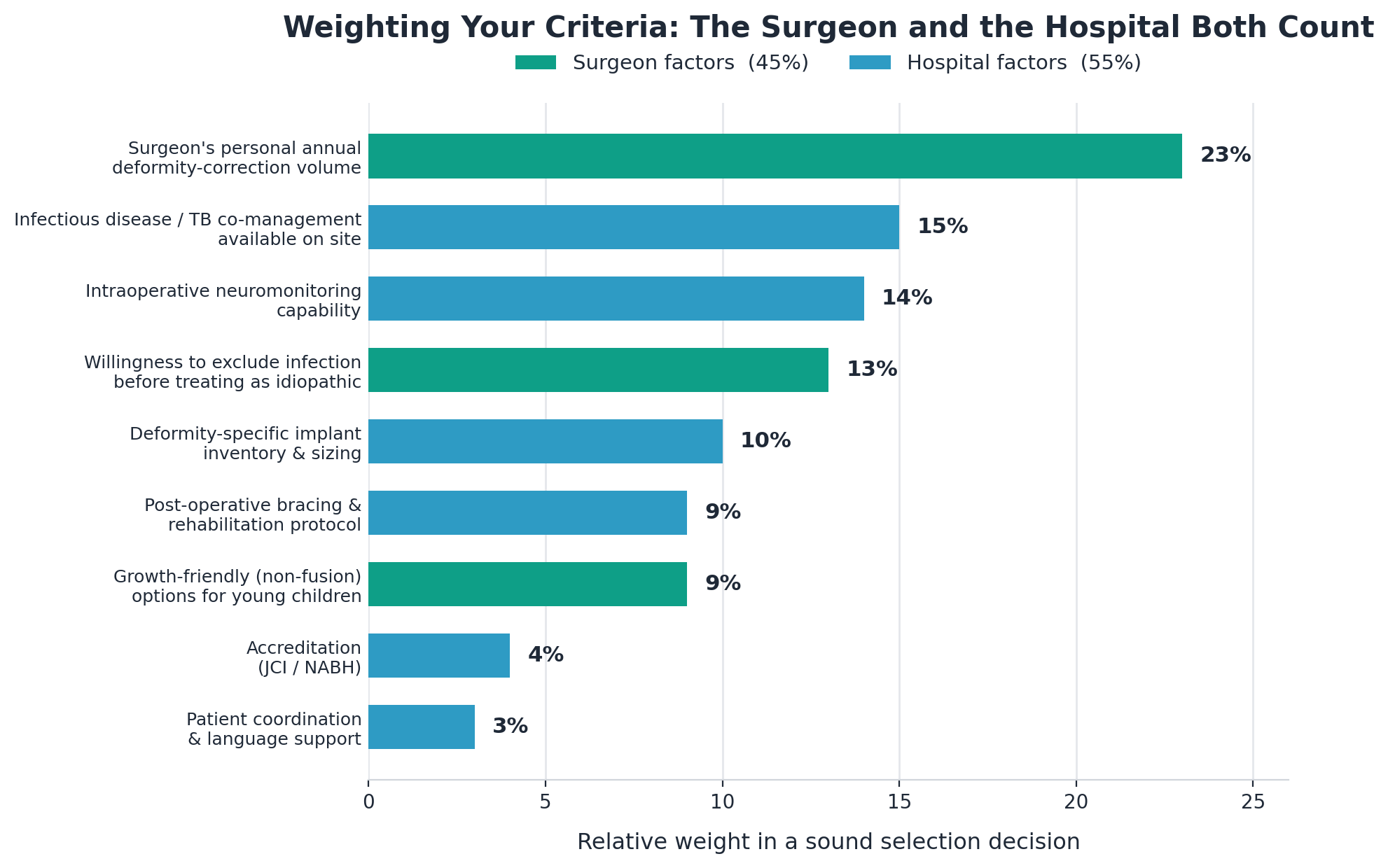
I weight this above every other factor, and the chart below reflects that. Deformity correction, whether for a scoliotic curve or a tubercular kyphosis, is a genuinely different skill from routine spine surgery, demanding specific, concentrated experience in three-dimensional correction while protecting neurological function. Ask directly how many deformity corrections the surgeon personally performs each year, separate from general spine surgery volume.
2. Willingness to actively exclude infection before treating as idiopathic
Ask directly whether tuberculosis and other infective causes have been actively investigated, not merely assumed absent, before any surgical plan is finalised. A surgeon who orders the appropriate blood tests and imaging to rule out infection as routine, rather than only when a patient raises it, is practising the standard of care this condition genuinely requires here.
3. The surgical goal, explained against your actual imaging
Ask what degree of correction is realistically achievable, referencing your standing X-rays or, for suspected Pott's disease, your MRI directly, and how many vertebral levels will be involved. A surgeon who explains the plan level by level against your own films is engaging with your case; a general percentage improvement offered without reference to your imaging is not.
4. Growth-friendly options for young children
If the patient is a young child with substantial growth remaining, ask explicitly whether a growth- friendly, non-fusion technique is appropriate rather than immediate definitive fusion, since fusing a young spine too early can restrict future growth and chest development. This applies to both idiopathic and post-tubercular paediatric deformity.
Part two: judging the hospital
Spine deformity correction depends on institutional capability as heavily as any procedure in this series, reflected in the majority hospital-side weighting in the chart above.
5. Infectious disease co-management, available on site
For confirmed or suspected spinal tuberculosis, ask whether infectious disease or pulmonology specialists are genuinely integrated into the treatment plan, not simply available elsewhere in the city. Coordinating anti-tuberculosis medication timing with surgical planning is a specific expertise, and a hospital confident explaining exactly how this works is one that has done it before.
6. Intraoperative neuromonitoring, without exception
This is not optional for deformity correction of any cause. Intraoperative neuromonitoring tracks spinal cord electrical activity throughout the operation, alerting the team before a developing neurological injury becomes permanent. Ask explicitly whether monitoring will be used for the entire procedure and whether trained personnel are in-house.
7. Deformity-specific implant inventory and sizing
Ask whether the hospital holds a full range of deformity-specific implant sizes, including paediatric sizing where relevant, on the shelf rather than ordering per case. Both idiopathic and post-tubercular deformities can present with genuinely unusual anatomy, and available inventory is the difference between adapting and compromising during surgery.
8. Post-operative bracing, rehabilitation and medication continuity
Ask what the mobilisation plan looks like, whether a brace is needed and who fits it, and — for Pott's disease specifically — how the remaining months of anti-tuberculosis medication will be handed over to a doctor in Kenya, with a clear written protocol including drug regimen, duration and monitoring tests.
9. Accreditation, read properly
JCI and NABH accreditation audit infection control, medication safety and incident reporting, meaningful given the scale of instrumentation involved and, for tuberculosis cases, the infection control considerations specifically. But accreditation says nothing about deformity-specific surgical depth or infectious disease integration. Use it to exclude candidates, not to choose between the remaining ones.
10. The cost you will actually pay
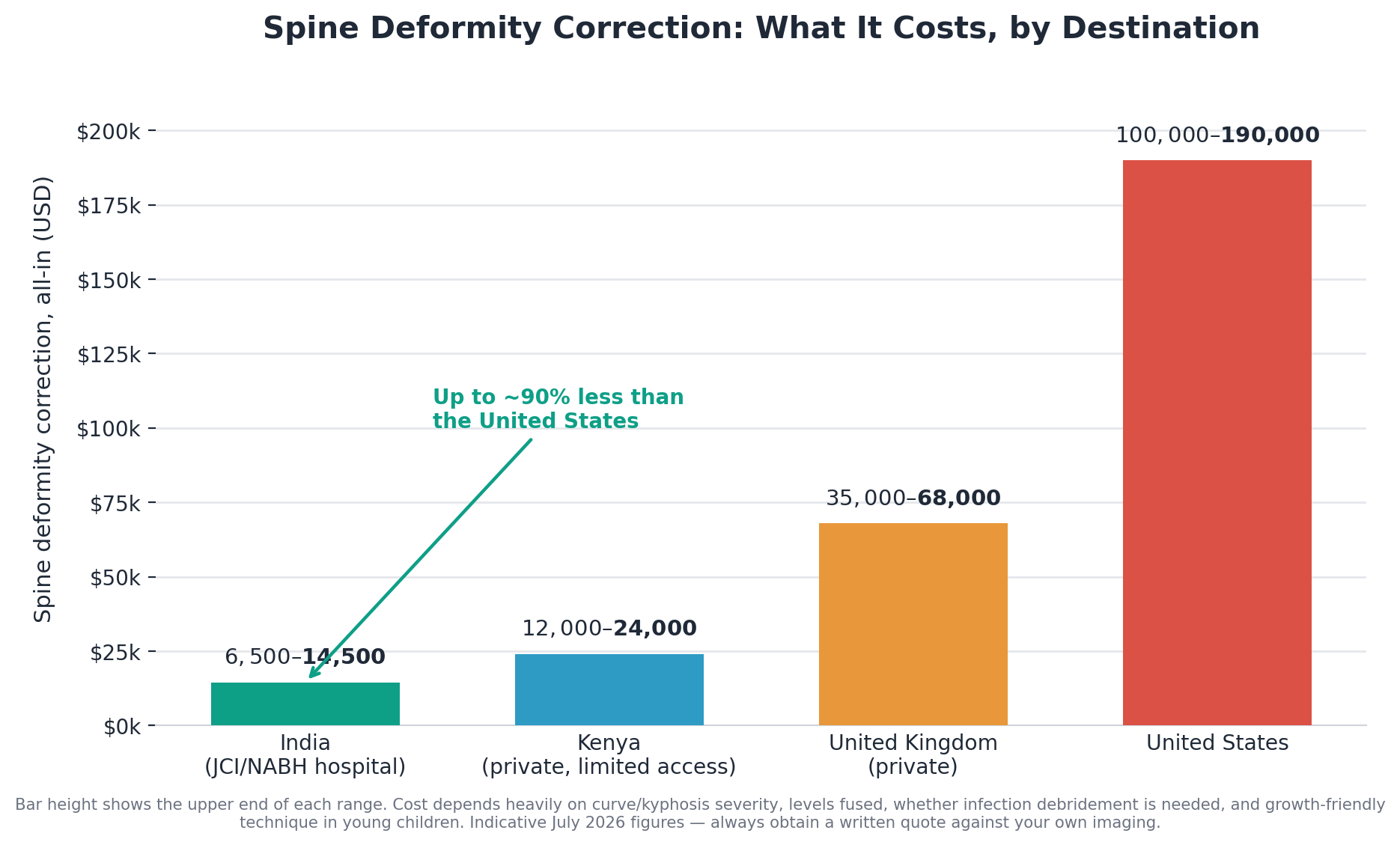
Let me be emphatic about this, because 24 years of handling these cases has taught me nothing more consistently: disputes almost never concern the quoted price. They concern what the quote silently omitted. For spine deformity correction specifically, insist the written estimate states how many vertebral levels the price assumes, whether infection-related procedures such as abscess drainage or debridement are included if relevant, and what happens to the cost if intraoperative findings mean more levels need correction than initially planned.
Budget beyond the surgery. Direct Nairobi–Delhi and Nairobi–Mumbai flights run roughly 550 to 850 dollars return, and three to four weeks of accommodation for the patient and an attendant is a genuine sum that should be planned for from the outset — longer still if extensive pre-operative medical treatment for tuberculosis needs to be established before surgery can safely proceed.
Four signals that should make you pause
Certain patterns reliably precede a difficult outcome. A surgical plan for deformity correction with no mention of actively excluding infection first. A surgeon who cannot state his personal annual deformity-correction volume separately from general spine surgery. No discussion of intraoperative neuromonitoring as standard. And, for confirmed Pott's disease, a plan to operate immediately without a clear explanation of how anti-tuberculosis medication fits into the timeline.
None alone proves a bad hospital. Together they warrant a second opinion before committing to major spinal surgery.
The Kenya-specific practicalities
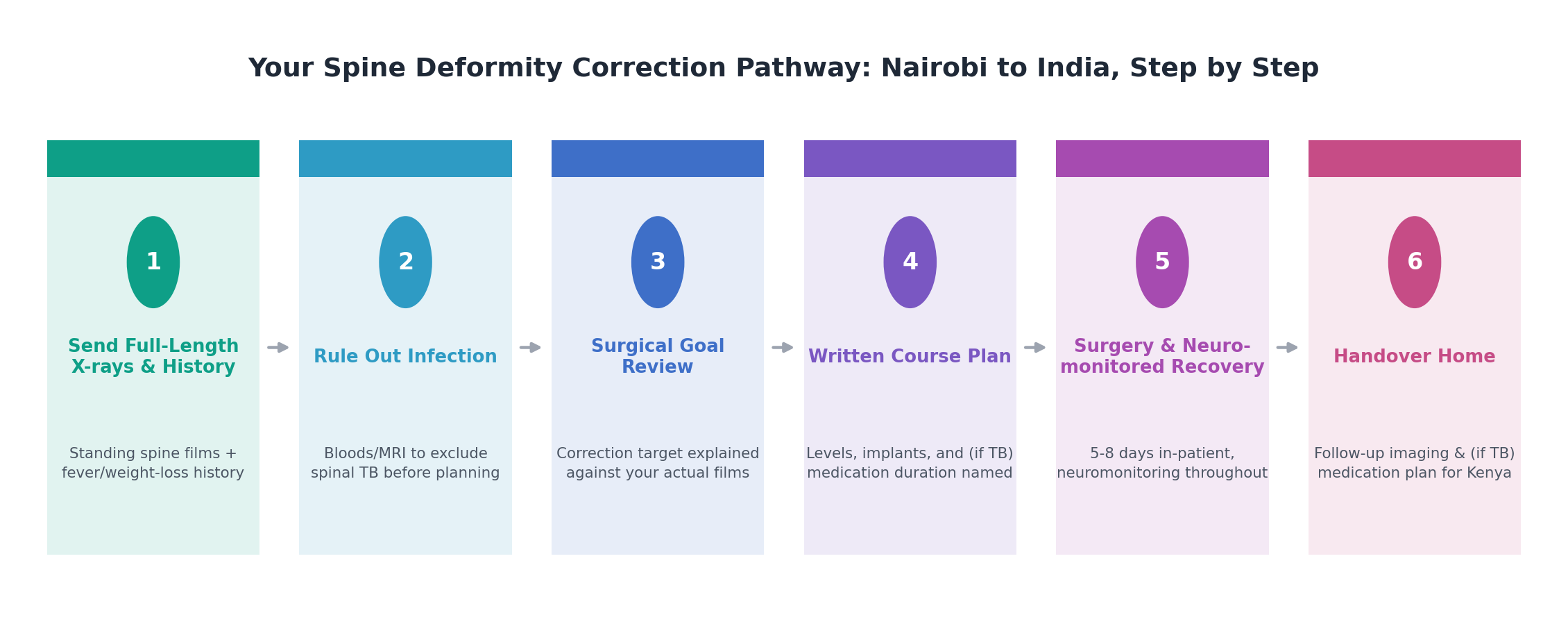
Send full-length, standing spine X-rays and, where tuberculosis is suspected, an MRI, along with a clear account of any fever, weight loss, night sweats or neurological symptoms — this history is genuinely diagnostic. Direct Nairobi–Delhi and Nairobi–Mumbai flights make the journey roughly six hours. The Indian medical e-visa is issued within three to five working days against a hospital letter, and up to two attendants can travel on a medical attendant visa.
If Pott's disease is confirmed, understand from the outset that surgery in India, if needed at all, is only one part of a much longer treatment course — the anti-tuberculosis medication continues for months after you return, under a Kenyan doctor's supervision. Arrange this follow-up relationship before you travel, not after, so there is no gap in a treatment course that must not be interrupted.
The questions I would ask before paying a deposit
Of the surgeon:
- Has tuberculosis or another infective cause been actively investigated, not just assumed absent?
- How many deformity corrections do you personally perform each year, separate from general spine surgery?
- What degree of correction is realistic here, and how many levels are involved?
- Will intraoperative neuromonitoring be used throughout, and is the team in-house?
Of the hospital:
- Is infectious disease expertise genuinely integrated into the treatment plan, if tuberculosis is confirmed?
- Do you hold deformity-specific and, if relevant, paediatric implant sizes in stock?
- What is the post-operative bracing and rehabilitation plan, in writing?
- If Pott's disease is confirmed, what is the written medication handover plan for my doctor in Kenya?
- What exactly is excluded from the quoted price?
A team that answers all nine without irritation is very likely the right team. One that becomes vague at the first or the sixth has told you what you needed to know at no cost at all.
Straight Answers for Kenyan Patients about Scoliosis and Spine Deformity Correction Surgeons and Hospitals in India
How do I choose the best spine deformity surgeon and hospital in India?
Start by making sure infection has genuinely been excluded, since scoliosis and tuberculous kyphosis need completely different treatment. Once the deformity type is confirmed, ask the surgeon's personal annual deformity-correction volume, insist on neuromonitoring throughout, and confirm infectious disease co-management if tuberculosis is involved.
How much does spine deformity correction cost in India for a Kenyan patient?
Typically 6,500 to 14,500 US dollars all in, depending on severity, levels involved, and whether infection debridement is needed. The same surgery is roughly 12,000 to 24,000 in Kenyan private care where available, 35,000 to 68,000 in the UK, and 100,000 to 190,000 in the United States.
What is the difference between scoliosis and Pott's kyphosis?
Scoliosis is a sideways curve, usually developmental and often painless early on, with generally low neurological risk. Pott's kyphosis is a forward, angular deformity from tuberculosis destroying vertebral bone, usually painful, often with fever or weight loss, and carrying a real risk of paralysis. Scoliosis may just be observed or braced; Pott's disease always needs anti-tuberculosis medication first.
Why does tuberculosis of the spine matter so much for Kenyan patients?
Kenya carries a significant tuberculosis burden, and spinal TB accounts for a substantial share of musculoskeletal tuberculosis cases, including documented cases in Kenyan tertiary hospitals. Because early symptoms can resemble ordinary back pain, spinal TB is sometimes not considered early enough, delaying the medication that should begin before any surgical planning.
Can spinal tuberculosis be cured without surgery?
Often yes. Combination anti-tuberculosis medication for six to twelve months is the foundation of treatment, and many patients recover without an operation, particularly if diagnosed early. Surgery becomes necessary for neurological deficit, spinal instability, abscess drainage, or progressive severe deformity — around 3 to 5 percent of cases develop severe deformity requiring surgical correction.
Will SHA pay for spine deformity correction in India?
Not for standard cases. SHA's overseas benefit covers only 36 gazetted procedures unavailable in Kenya, capped at 500,000 shillings a year, and routine scoliosis or spinal TB surgery is not among them since Kenya can perform these operations, even though deformity-specific surgical experience remains limited outside a few centres. Plan to self-fund and check your private insurance separately.
How long must I stay in India for spine deformity surgery?
Around three to four weeks for the surgical portion: assessment and, if needed, TB investigation, five to eight days as an in-patient, then one to two weeks of early mobilisation before fit-to-fly clearance. If active spinal TB is confirmed, medication continues for six to twelve months after you return, monitored by a doctor in Kenya.
A closing word
The best spine deformity surgeon in India for you is the one who asks the right question before any other: is this scoliosis, or is this tuberculosis wearing a deformity's shape. From there, the best team has genuine, concentrated experience in deformity correction specifically, uses neuromonitoring without exception, and, where infection is involved, coordinates surgery with a properly managed course of medication rather than treating the operation as the whole story. If you would like me to look at your or your family member's X-rays and history and talk through what kind of deformity this actually is, send them across.
Sources
- 🌐 Talbot JC, Bismil Q, Saralaya D, et al. Spinal tuberculosis among human immunodeficiency virus-negative patients in a Kenyan tertiary hospital: a 5-year synopsis
- 🌐 Garg RK, Somvanshi DS. Spinal tuberculosis: A review. The Journal of Spinal Cord Medicine
- 🌐 Toluse A, Adeyemi T, Samuel S, et al. Posterior-Only Approach for the Correction of Severe Post- tubercular Kyphosis. Cureus , 2023
- 🌐 National Medical Commission of India — surgeon and specialist registration verification
- 🌐 National Accreditation Board for Hospitals & Healthcare Providers (NABH) — accredited hospital directory
- 🌐 Kenya Social Health Authority (SHA) — benefits packages and overseas treatment guidance
Frequently Asked Questions by Kenyans about Scoliosis and Spine Deformity Correction Surgeons and Hospitals in India
How should Kenyan patients choose the best spine deformity surgeon in India?
Patients should first confirm the exact type and cause of the deformity. They should then ask about the surgeon's personal annual deformity-correction volume, infection-exclusion approach, realistic correction plan and experience with complex cases.
What is the difference between scoliosis and Pott's kyphosis?
Scoliosis is generally a sideways spinal curve, while Pott's kyphosis is a forward angular deformity caused by tuberculosis destroying vertebral bone. Their treatment approaches are therefore very different.
Why is spinal tuberculosis particularly important for Kenyan patients?
Kenya has a significant tuberculosis burden, and spinal TB is recognized in Kenyan tertiary hospitals. Symptoms such as back pain, fever, night sweats, weight loss or neurological symptoms should prompt investigation rather than being assumed to be ordinary mechanical back pain.
Can spinal tuberculosis be treated without surgery?
Often yes. Anti-tuberculosis medication for six to twelve months is the foundation of treatment, and many patients may recover without surgery when the condition is identified early. Surgery may be required for neurological deficits, instability, abscesses or progressive severe deformity.
Is intraoperative neuromonitoring important during spine deformity surgery?
Yes. The guide considers intraoperative neuromonitoring essential for deformity correction because it tracks spinal cord function during surgery and can alert the team to developing neurological problems.
What should Kenyan patients check about the hospital?
Patients should ask about infectious-disease co-management, intraoperative neuromonitoring, deformity-specific implant inventory, post-operative bracing and rehabilitation. NABH or JCI accreditation can also be checked as part of hospital evaluation.
How much does spine deformity correction cost in India for Kenyan patients?
The guide gives an indicative all-in range of US$6,500–US$14,500, depending on severity, levels involved and whether infection-related procedures are required. Patients should obtain a written quote based on their own imaging.
How long should Kenyan patients stay in India for spine deformity surgery?
The guide estimates approximately three to four weeks for the surgical portion, including assessment, possible TB investigation, hospitalization and early mobilisation. The duration can be longer when extensive pre-operative TB treatment is required.
What medical records should Kenyan patients send before travelling?
Patients should send full-length standing spine X-rays and, when tuberculosis is suspected, an MRI. They should also provide a clear history of fever, weight loss, night sweats and neurological symptoms.
What happens after a Kenyan patient with Pott's disease returns home?
Surgery in India, when required, is only one part of treatment. Anti-tuberculosis medication continues for months after returning to Kenya, so patients should arrange supervision with a Kenyan doctor before travelling.
Page Summary
This guide helps Kenyan patients choose scoliosis and spine deformity surgeons and hospitals in India. It first emphasizes distinguishing idiopathic scoliosis from Pott's kyphosis caused by spinal tuberculosis. Patients should assess deformity-specific surgical experience, infection evaluation and intraoperative neuromonitoring. Hospital selection should include TB co-management, appropriate implants, rehabilitation and accreditation. The guide also covers indicative costs, travel arrangements and medical visas. For Pott's disease, continued anti-tuberculosis treatment and follow-up in Kenya remain essential after returning home.
Citation Block
| Topic | Information |
|---|---|
| Topic | Selecting the Best Scoliosis and Spine Deformity Correction Surgeons and Hospitals in India for Kenyan Patients |
| Treatment | Scoliosis and Spine Deformity Correction |
| Country | India |
| Intended Audience | Kenyan Patients |
| Main Conditions | Idiopathic Scoliosis and Pott's Kyphosis |
| Critical Assessment | Establish Deformity Type and Exclude Infection |
| Surgeon Selection | Personal Annual Deformity-Correction Volume |
| Surgical Assessment | Imaging-Based Correction Plan |
| Paediatric Consideration | Growth-Friendly Non-Fusion Options Where Appropriate |
| Neuromonitoring | Throughout the Procedure |
| Hospital Selection | Deformity-Capable Centre With Multidisciplinary Support |
| TB Management | Infectious Disease Co-Management |
| Implant Support | Deformity-Specific and Paediatric Inventory |
| Post-Operative Care | Bracing and Rehabilitation |
| Accreditation | JCI and/or NABH |
| Indicative Cost in India | US$6,500–US$14,500 |
| Travel Cost | Approximately US$550–US$850 Return Flight |
| Medical Visa | Indian Medical E-Visa Against Hospital Letter |
| Travel Route | Nairobi–Delhi or Nairobi–Mumbai |
| Expected Stay | Approximately Three to Four Weeks for Surgical Portion |
| TB Follow-Up | Six to Twelve Months of Medication Under Kenyan Supervision |
| Author | Dr. Dheeraj Bojwani |
| Experience | 24 Years' Experience |
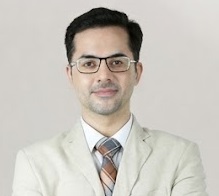

Our Mission Statement
Our mission is to place patients at the centre of every healthcare decision by providing trustworthy, evidence-based, and unbiased medical information. We believe that informed patients make better decisions. Backed by personalised guidance from our experienced advisory team, we help patients understand their treatment options, compare them objectively, and confidently choose the path that best suits their medical needs and personal circumstances.
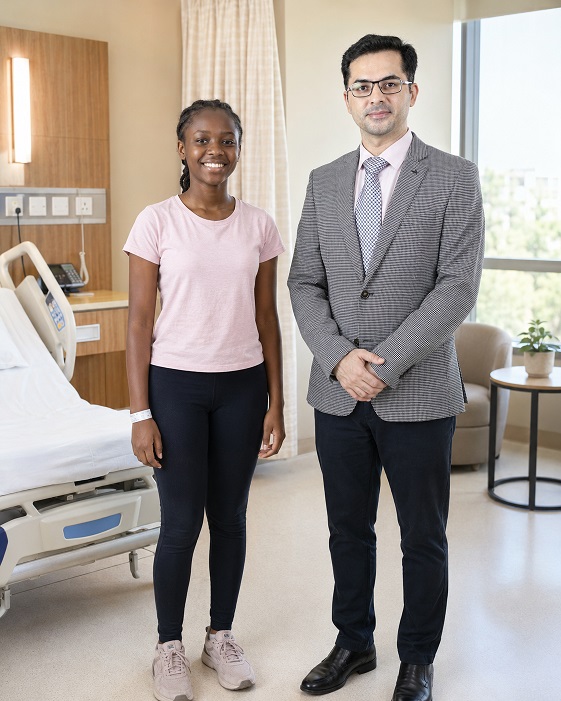
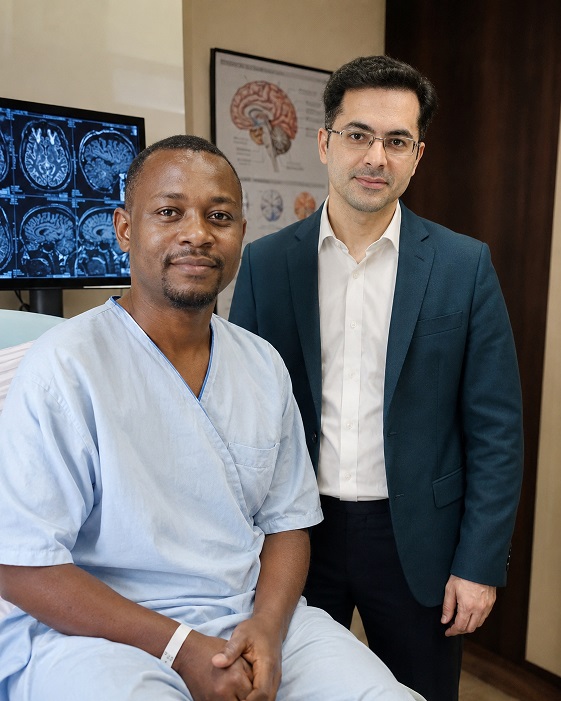
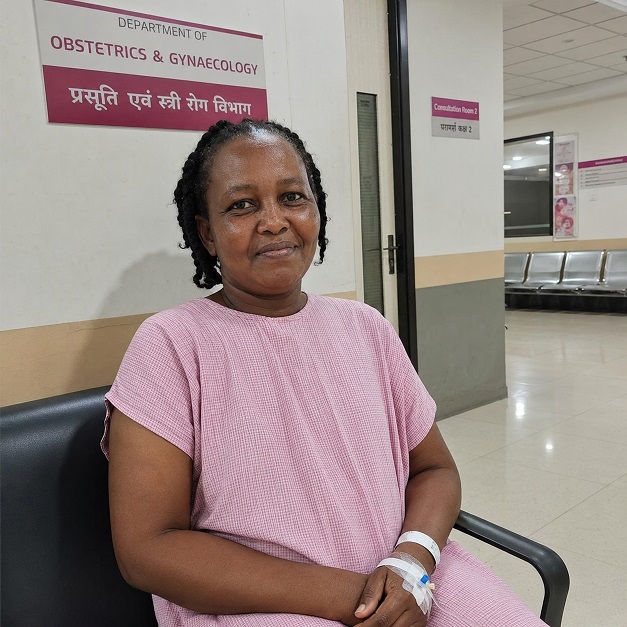
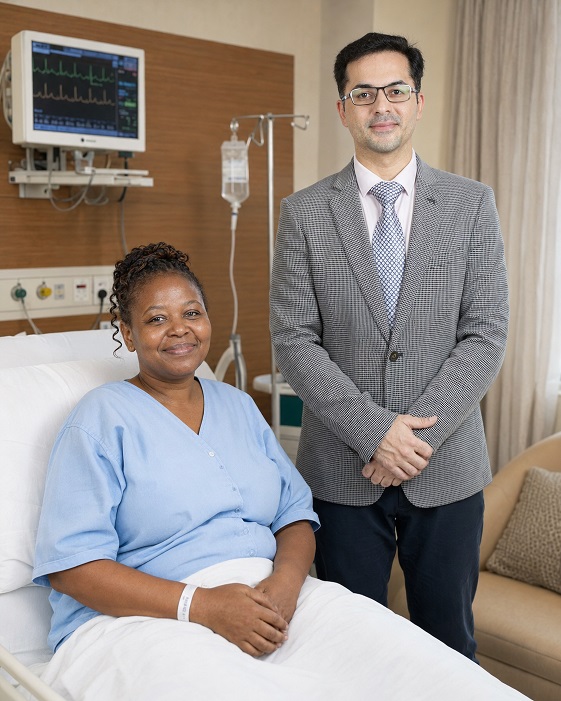
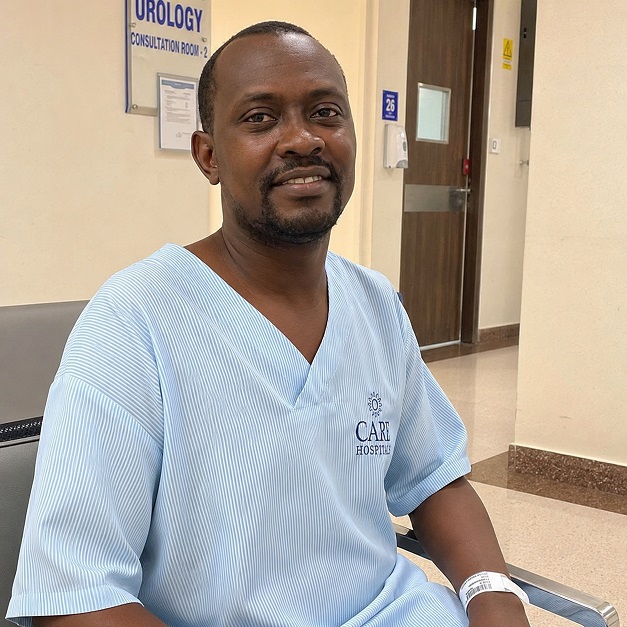
Patient Testimonials from Kenya
Ready to Take the First Step?
Share your Medical Reports with our Healthcare Managers Today and Get a FREE CONSULTATION, a Personalized Treatment Plan, and Complete Support from Arrival to Recovery.
Get Your Free ConsultationAreas We Serve
This resource has been thoughtfully prepared for patients from Kenya who are considering medical treatment in India. We also welcome patients from the wider region in the countries mentioned below-
We assist patients from:
- Ethiopia
- Somalia
- Tanzania
- Uganda
- Seychelles
- Guinea
- Guinea-Bissau
- Liberia
- Mali
- Mauritania
- Niger
- Nigeria
- Senegal
- Togo
- South Sudan
- Sierra Leone
Many of the insights, treatment pathways, hospital recommendations, travel guidance, and patient support services described here are equally relevant and may be used as a reference when planning treatment in India.
From Kenya to India: Your Complete Patient Support Guide
- Brain Tumour Surgery in India for Kenyan Patients
- Cancer Treatment and Surgery in India for Kenyan Patients
- Cardiac Treatment and Surgery in India for Kenyan Patients
- Heart Valve Replacement Surgery in India for Kenyan Patients
- Knee Replacement in India for Kenyan Patients
- Prostate Cancer Treatment and Surgery in India for Kenyan Patients
- Spine Treatment and Surgery in India for Kenyan Patients
- Selecting the Best Bariatric Surgeons and Hospitals in India: What Kenyan Patients Should Actually Look For
- Selecting the Best Cancer Surgeons and Hospitals in India: What Kenyan Patients Should Actually Look For
- Selecting the Best Cardiac Surgeons and Hospitals in India: What Kenyan Patients Should Actually Look For
- Selecting the Best Dental Surgeons and Clinics in India: What Kenyan Patients Should Actually Look For
- Selecting the Best Hip Surgeons and Hospitals in India: What Kenyan Patients Should Actually Look For
- Selecting the Best Kidney Transplant Surgeons and Hospitals in India: What Kenyan Patients Should Actually Look For
- Selecting the Best Knee Surgeons and Hospitals in India: What Kenyan Patients Should Actually Look For
- Selecting the Best Liver Transplant Surgeons and Hospitals in India: What Kenyan Patients Should Actually Look For
- Selecting the Best Neurosurgeons and Hospitals in India: What Kenyan Patients Should Actually Look For
- Selecting the Best Prostate Cancer Surgeons and Hospitals in India: What Kenyan Patients Should Actually Look For
- Selecting the Best Spine Surgeons and Hospitals in India: What Kenyan Patients Should Actually Look For