

Scoliosis Correction Surgery in India for Kenyan Patients
Whether the curve genuinely needs surgery, who should correct it, and what scoliosis correction in India costs a Kenyan patient — including the recovery.
If your child, or you, has been diagnosed with scoliosis, one detail matters more than almost anything else in deciding what happens next: how advanced the curve already is. Scoliosis is unusual among spinal conditions because early detection genuinely changes the treatment path, a mild curve caught early can sometimes be managed with bracing alone, while the same curve left to progress can eventually require major reconstructive surgery. Across 24 years of guiding Kenyan patients through treatment in India, scoliosis is one of the clearest examples I see of how much a health system's approach to early detection shapes the treatment a patient eventually needs. This article explains what scoliosis correction surgery involves, why Kenyan patients often present later than ideal, what the surgery costs in India compared with Kenya and Western countries, and the practical factors to weigh before booking treatment abroad.
Healing Journeys of Kenyan Patients

Key Takeaways
- The guide explains that scoliosis treatment depends heavily on how advanced the spinal curve is when it is diagnosed. Mild curves may be monitored or managed with bracing during growth, while surgery is generally considered when the curve reaches approximately 45–50 degrees at skeletal maturity, or earlier when it is progressing rapidly, causing significant pain or affecting breathing.
- A major concern for Kenyan families is late detection. Kenya does not have a systematic school-based scoliosis screening programme, meaning some curves may only be noticed after visible changes in posture or clothing fit. The page 2 graphic specifically highlights the absence of routine school screening and notes that similar detection gaps have been documented elsewhere in East Africa.
- For patients who require surgery, the guide stresses that deformity-specific experience matters more than general spine-surgery experience. Surgeons should be assessed according to the number of scoliosis and spinal-deformity corrections they personally perform each year, particularly for complex curves that require multiple vertebral levels to be fused.
- The standard operation is usually spinal fusion using rods, screws and sometimes bone grafts to correct and stabilise the curved section of the spine. The procedure generally takes four to eight hours, followed by approximately five to seven days in hospital. Curve rigidity and the number of vertebral levels requiring fusion can significantly affect surgical complexity.
- India offers a substantial volume of scoliosis and spinal deformity correction, including management of more advanced curves. Leading hospitals combine deformity-specific surgical teams with JCI or NABH accreditation and modern spinal implants, giving Kenyan patients an opportunity to compare specialist experience and hospital safety standards before travelling.
- The guide estimates scoliosis correction surgery at approximately US$6,500–14,000 in India, compared with US$10,000–25,000 privately in Kenya, US$30,000–60,000 in the UK and US$60,000–150,000 in the US. The page 3 cost graphic shows India as the lowest-cost option among the four destinations and indicates savings of up to roughly 90% compared with the US.
- Before booking, Kenyan patients should obtain a current full-spine X-ray and Cobb-angle measurement, verify the surgeon's scoliosis-specific case volume, confirm that implants, surgery, ICU and physiotherapy are included in the written quotation, and establish follow-up imaging in Kenya. The page 4 six-point graphic also highlights accreditation, curve assessment, visa/travel planning and long-term follow-up.
Quick Facts
- Author
- Dr. Dheeraj Bojwani
- Experience
- 24+ Years
- Treatment
- Scoliosis Correction Surgery
- Patients
- Kenyan Patients
- First Assessment
- Full-spine X-ray and Cobb angle
- Key Specialist
- Spinal Deformity / Scoliosis Surgeon
- Mild Curves
- Monitoring or bracing may be appropriate
- Surgical Threshold
- Approximately 45–50° at skeletal maturity
- Main Surgery
- Spinal fusion
- Surgery Time
- Approximately 4–8 hours
- Hospital Stay
- Approximately 5–7 days
- India Cost
- US$6,500–14,000
- Kenya Cost
- US$10,000–25,000 private
- Hospital Check
- JCI / NABH accreditation
- Case Volume
- Scoliosis and spinal deformity corrections
- Cost Check
- Written estimate covering implants, surgery, ICU and physiotherapy
- Medical Records
- Current full-spine X-ray and previous reports
- Visa
- Indian medical e-visa with hospital invitation
- Travel
- Nairobi–Delhi or Mumbai flights
- Stay
- Approximately 2–3 weeks
- Follow-Up
- Long-term imaging and monitoring in Kenya
- Key Warning
- Surgery recommended without current Cobb-angle assessment
- Decision Principle
- Prioritise curve-specific expertise, accurate assessment and long-term follow-up.
In Brief
For Kenyan patients considering scoliosis surgery in India, the most important factors are accurate Cobb-angle assessment, deformity-specific surgeon experience and a clear understanding of whether surgery is actually required. Patients should obtain a complete full-spine X-ray, ask about the surgeon's annual scoliosis volume, receive an itemised quotation and arrange long-term follow-up imaging in Kenya before travelling.
What scoliosis correction surgery actually involves
Scoliosis is an abnormal sideways curvature of the spine, most commonly diagnosed during the adolescent growth spurt, though it can also appear in younger children or develop later in life from degenerative changes. Doctors measure its severity using the Cobb angle, the degree of curvature seen on an X-ray. Mild curves are often monitored or treated with a brace to prevent further progression during growth. Surgery generally becomes the recommended option once a curve exceeds roughly 45 to 50 degrees at skeletal maturity, or earlier if the curve is progressing quickly, causing pain, or beginning to affect breathing by compressing the chest cavity.
The standard surgical approach is spinal fusion: the surgeon attaches rods, screws, and sometimes bone grafts along the curved section of the spine, gradually straightening it and then fusing the vertebrae together so the correction holds permanently. It's a major operation, typically taking four to eight hours depending on the number of vertebral levels involved, and patients are usually in hospital for five to seven days afterward.
The number of vertebral levels included in the fusion, and how flexible or rigid the curve is before surgery, both influence how complex the operation will be. A curve caught and treated relatively early generally involves fewer levels and a more straightforward correction. A curve that has progressed for years before treatment often requires a longer fusion, sometimes more surgical time, and can carry a somewhat higher risk profile, one of the clearest practical reasons early detection matters so much in this specific condition.
Why Kenyan patients often present later than ideal
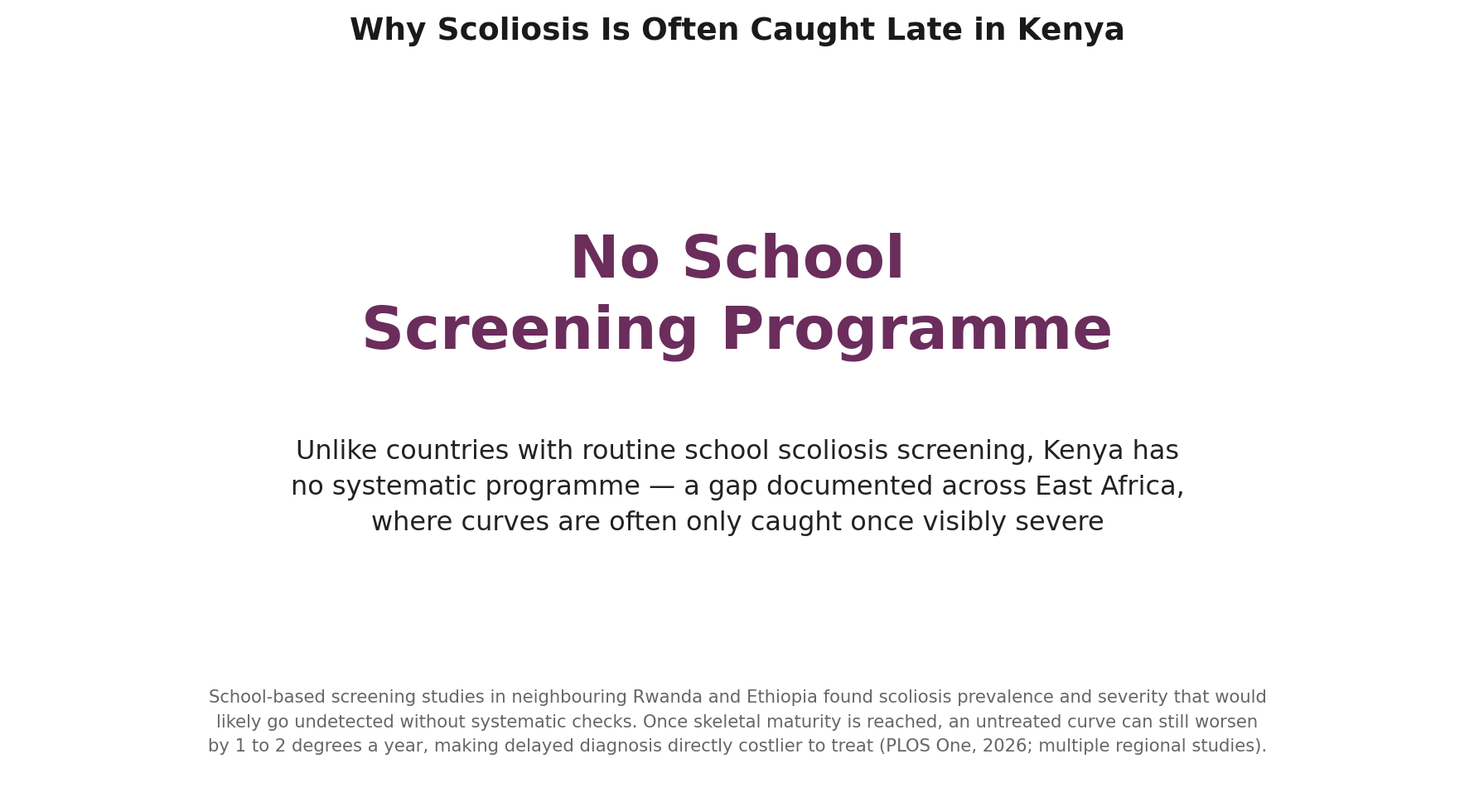
This is the pattern every Kenyan family should understand before assuming a scoliosis diagnosis means immediate surgery is the only option. Kenya has no systematic school-based scoliosis screening programme, unlike countries where routine checks at school catch curves early, while they're still mild enough to manage with a brace rather than an operation. This gap isn't unique to Kenya; school-based screening studies in neighbouring Rwanda and Ethiopia have documented similar patterns, curves detected through active screening that would likely have gone unnoticed otherwise, until they became visibly severe.
Because scoliosis in growing children can worsen meaningfully within a single school year, and can continue progressing by one to two degrees annually even after skeletal maturity if left untreated, the absence of routine screening in Kenya means many families first learn about a curve only once it's visible in posture or clothing fit, often well past the point where bracing alone would have worked. This makes two things important. First, if you notice any asymmetry in a growing child's shoulders, waist, or rib cage, get it checked with an X-ray promptly rather than waiting. Second, if surgery is now the recommended path, understand that the surgical team's experience with deformity correction specifically, not spine surgery generally, becomes the single most important factor in the outcome.
Why India has become the destination of choice for scoliosis surgery
India performs a genuinely high volume of scoliosis and spinal deformity correction surgery, and surgeons at its leading centres routinely handle the more complex, higher-degree curves that come from exactly the kind of delayed presentation common in Kenya. That volume and case complexity experience matters enormously for scoliosis surgery specifically, where outcomes depend heavily on the surgeon's familiarity with your curve's particular pattern and how many vertebral levels need correcting.
India's top hospitals combine this surgical experience with JCI and NABH accreditation, the same international safety standards recognised in the UK and US, modern implant systems, and dedicated spinal deformity teams rather than general orthopaedic surgeons handling scoliosis as one case among many unrelated procedures. This combination of deformity-specific volume, accreditation, and modern technique, at a fraction of what the same standard of surgery costs in the West, is genuinely difficult to match elsewhere, particularly for the more advanced curves that later presentation in Kenya often produces.
What it costs: India versus Kenya, the UK, and the US
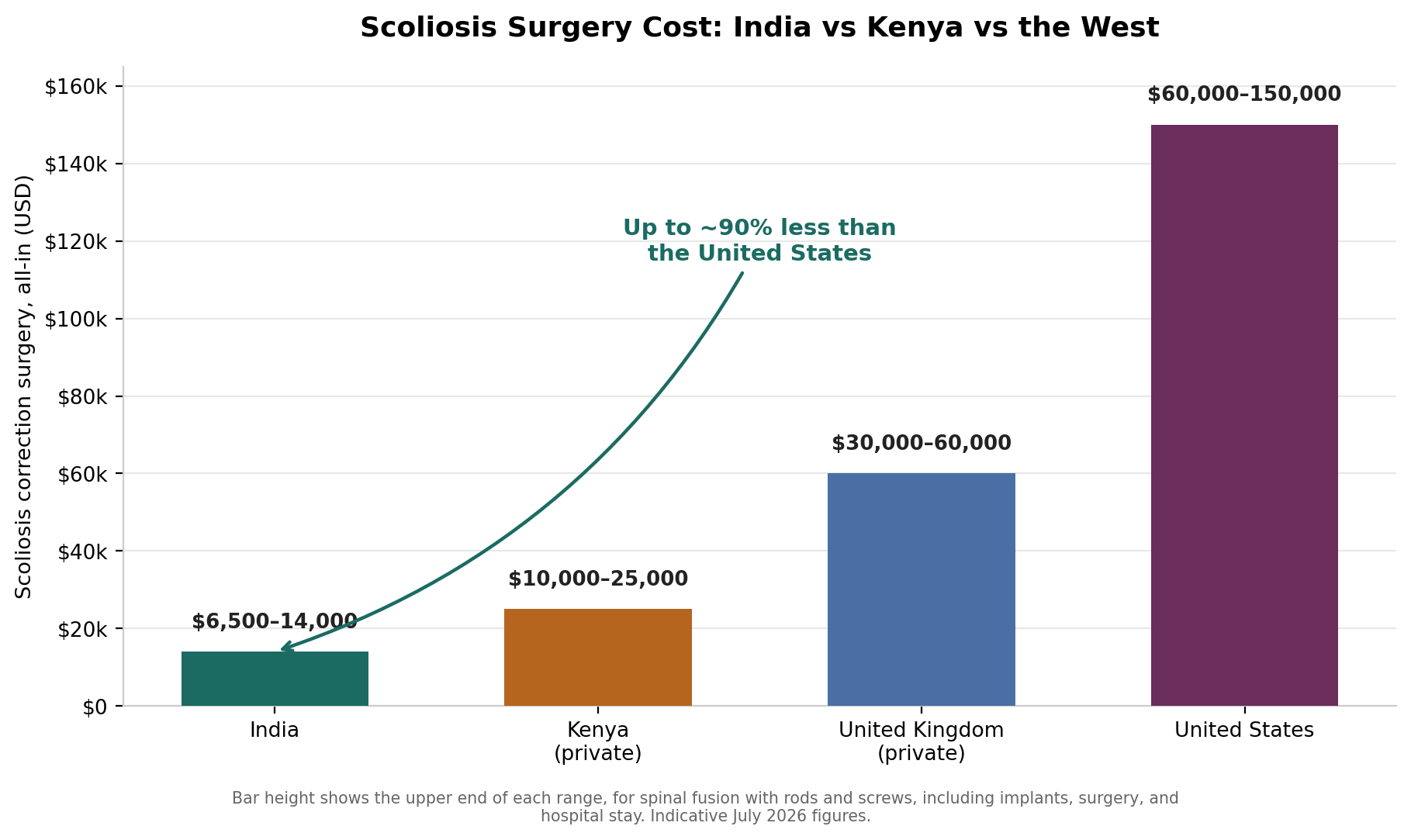
Cost varies meaningfully with curve severity and the number of vertebral levels involved. In India, scoliosis correction surgery typically costs between 6,500 and 14,000 US dollars, including implants, surgery, and hospital stay, reflecting India's high surgical volume and competitive pricing. The same surgery privately in Kenya, where deformity-specific expertise is limited, often runs 10,000 to 25,000 dollars. In the UK, private scoliosis surgery typically costs 30,000 to 60,000 dollars, and in the US it can run 60,000 to 150,000 dollars, up to roughly 90% more than the equivalent surgery in India.
Beyond the surgery itself, budget for travel. Direct flights between Nairobi and Delhi or Mumbai run roughly 550 to 850 dollars return, and most scoliosis surgery patients should plan for two to three weeks in India, covering pre- operative imaging, the surgery, and the early recovery period before travel home is medically advisable.
What a Kenyan patient should actually check before booking
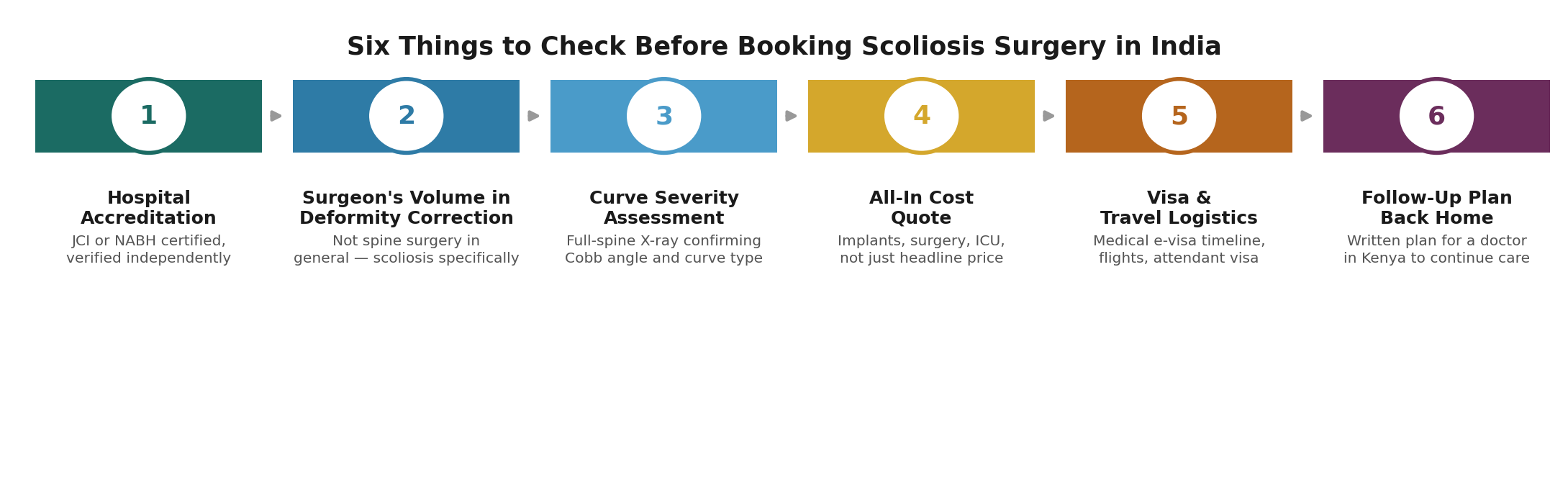
Given how much curve-specific experience matters in scoliosis surgery, price alone shouldn't drive the decision. Work through these questions directly before committing.
Confirm genuine accreditation. Ask whether the hospital holds JCI or NABH certification, and verify it independently rather than relying on marketing material.
Ask about the surgeon's volume in deformity correction specifically. A general spine surgery reputation says far less than a specific number, how many scoliosis or spinal deformity corrections the surgeon personally performs each year. In 24 years of watching families make this decision, the ones who insist on this specific answer consistently end up better informed about what to expect.
Get a full curve severity assessment. Insist on a complete, current full-spine X-ray and Cobb angle measurement before any surgical plan is finalised, rather than relying on an older or partial image.
Get the full cost breakdown in writing. Confirm what's included, implants, surgery, ICU days, physiotherapy, and what would happen, and cost, if recovery requires an extended stay.
Plan your visa and travel timeline. The Indian medical e-visa is typically issued within three to five working days once you have a formal hospital invitation letter, and an attendant can usually travel on a linked medical attendant visa.
Arrange your follow-up plan before you leave. Scoliosis surgery recovery includes follow-up imaging over months and years to confirm the fusion has held. Agree on a written schedule and identify a doctor in Kenya who can continue that monitoring.
Straight Answers for Kenyan Patients about Scoliosis Correction Surgery in India
How much cheaper is scoliosis surgery in India compared to the US?
India typically costs 6,500 to 14,000 US dollars, against 60,000 to 150,000 dollars in the US, a saving of up to roughly 90%, at hospitals holding the same JCI and NABH accreditation standards.
Why is scoliosis often diagnosed late in Kenya?
Kenya has no systematic school-based scoliosis screening programme, a gap documented across East Africa, meaning curves are often only detected once visibly severe rather than caught early while bracing alone could still help.
At what curve severity is surgery recommended for scoliosis?
Surgery is generally recommended once a curve exceeds roughly 45 to 50 degrees at skeletal maturity, or earlier if the curve is progressing rapidly, causing significant pain, or affecting breathing.
How long is the hospital stay for scoliosis surgery?
Typically five to seven days in hospital, with most patients needing two to three weeks in India overall to cover pre- operative imaging, surgery, and early recovery before flying home.
Can scoliosis be treated without surgery?
Yes, for milder curves, especially when caught early through screening. Bracing during the growth years can prevent a mild curve from progressing to the point where surgery becomes necessary, which is why early detection matters so much.
How do I get a medical visa to India from Kenya?
The Indian medical e-visa is typically issued within three to five working days once you have a formal invitation letter from the treating hospital, and an accompanying attendant can usually apply for a linked medical attendant visa.
A Closing Word
Scoliosis is one of the few spinal conditions where the treatment path genuinely depends on timing, and Kenya's lack of routine school screening means many families arrive at this decision later than would be ideal elsewhere. Once surgery is the right option, India offers the deformity-specific surgical volume, accredited safety standards, and cost that makes it, for the great majority of Kenyan patients I've guided through this decision, the clearest starting point to investigate. Ask the right questions, get everything in writing, and arrange your follow-up care before you travel.
Sources
- 🌐 Prevalence and characteristics of scoliosis among Ethiopian schoolchildren aged 6-15 years: A school-based cross-sectional study
- 🌐 Epidemiology of spinal deformities among secondary school children in Rwanda. African Journal of Physical Activity and Health Sciences
- 🌐 The Prevalence of Scoliosis among Adolescent Chest Radiographs Obtained at Tikur Anbessa Specialized Hospital. PMC. n
- 🌐 National Medical Commission of India — surgeon and specialist registration verification
- 🌐 National Accreditation Board for Hospitals & Healthcare Providers (NABH) — accredited hospital directory
Frequently Asked Questions by Kenyans about Scoliosis Correction Surgery in India
Why are Kenyan children sometimes diagnosed with scoliosis later than ideal?
Kenya has no systematic school-based scoliosis screening programme, so some spinal curves may only become apparent after visible changes in posture or clothing. The guide notes similar screening gaps elsewhere in East Africa.
Can a Kenyan child with scoliosis avoid surgery?
Yes. Milder curves may be monitored or treated with bracing, particularly while the child is still growing. Early detection is important because treatment can become more invasive if the curve progresses.
At what Cobb angle might a Kenyan patient be advised to consider surgery?
The guide states that surgery is generally recommended when the curve exceeds approximately 45–50 degrees at skeletal maturity, although surgery may be considered earlier when the curve progresses rapidly, causes significant pain or affects breathing.
Why should Kenyan patients choose a scoliosis-specific surgeon rather than a general spine surgeon?
Scoliosis correction involves complex spinal deformity planning, including determining which vertebral levels require fusion and how the curve should be corrected. The guide therefore recommends asking for the surgeon's personal annual scoliosis and deformity-correction volume.
What should a Kenyan patient send to an Indian scoliosis surgeon before travelling?
Patients should provide a current full-spine X-ray with Cobb-angle assessment, together with previous imaging and treatment records. The guide recommends completing this assessment before finalising a surgical plan.
How much does scoliosis correction surgery cost in India for Kenyan patients?
The guide estimates approximately US$6,500–14,000 in India, compared with US$10,000–25,000 for private treatment in Kenya. The final cost depends on curve severity, the number of vertebral levels and the complexity of correction.
What should Kenyan families check in the Indian scoliosis surgery quotation?
The written quotation should clearly identify implants, surgery, ICU days and physiotherapy, as well as the costs that may arise if recovery requires a longer hospital stay.
How long should a Kenyan scoliosis patient stay in India?
The guide recommends approximately 2–3 weeks overall, including pre-operative imaging, surgery and early recovery. Hospitalisation itself is typically around five to seven days.
Why is follow-up especially important after scoliosis surgery?
Spinal fusion requires follow-up imaging over months and years to confirm that the correction and fusion remain stable. Kenyan patients should identify a doctor at home who can continue this monitoring after returning from India.
How can Kenyan families arrange an Indian medical visa for scoliosis surgery?
The guide states that an Indian medical e-visa is typically issued within three to five working days after a formal hospital invitation letter. An accompanying family member can generally apply for a linked medical attendant visa.
Page Summary
This five-page guide focuses on late scoliosis detection in Kenya, the importance of curve severity and India's established spinal deformity expertise. Page 2 highlights Kenya's lack of systematic school screening. Page 3 compares scoliosis surgery costs, with India at US$6,500–14,000 versus US$60,000–150,000 in the US. The page 4 six-point graphic highlights accreditation, surgeon-specific deformity volume, Cobb-angle assessment, complete costing, visa/travel planning and follow-up care in Kenya.
Citation Block
| Topic | Information |
|---|---|
| Topic | Scoliosis Correction Surgery in India for Kenyan Patients |
| Treatment | Scoliosis Correction / Spinal Fusion |
| Patients | Kenyan Patients |
| First Assessment | Full-spine X-ray and Cobb angle |
| Key Specialist | Spinal Deformity / Scoliosis Surgeon |
| Treatment Choice | Bracing for selected mild curves; surgery for advanced/progressive curves |
| Surgical Threshold | Approximately 45–50° at skeletal maturity |
| Main Surgery | Spinal fusion with rods and screws |
| Surgery Time | 4–8 hours |
| Hospital Stay | 5–7 days |
| Hospital Check | JCI / NABH accreditation |
| Case Volume | Scoliosis and spinal deformity-specific experience |
| Cost Check | Written estimate including implants, surgery, ICU and physiotherapy |
| India Cost | US$6,500–14,000 |
| Kenya Cost | US$10,000–25,000 private |
| Medical Records | Current X-ray and previous treatment reports |
| Travel | Nairobi–Delhi or Mumbai flights |
| Stay | Approximately 2–3 weeks |
| Follow-Up | Long-term imaging in Kenya |
| Specialist Question | How many scoliosis corrections do you personally perform each year? |
| Assessment Question | What is my current Cobb angle and why is surgery appropriate? |
| Cost Question | Does the quotation include implants, ICU and physiotherapy? |
| Follow-Up Question | Who will monitor my spinal fusion in Kenya? |
| Warning Signs | Surgery recommended without current curve assessment |
| Payment Warning | Incomplete quotation excluding implants or recovery costs |
| Key Decision | Verify scoliosis-specific expertise, curve severity and follow-up |

Our Mission Statement
Our mission is to place patients at the centre of every healthcare decision by providing trustworthy, evidence-based, and unbiased medical information. We believe that informed patients make better decisions. Backed by personalised guidance from our experienced advisory team, we help patients understand their treatment options, compare them objectively, and confidently choose the path that best suits their medical needs and personal circumstances.
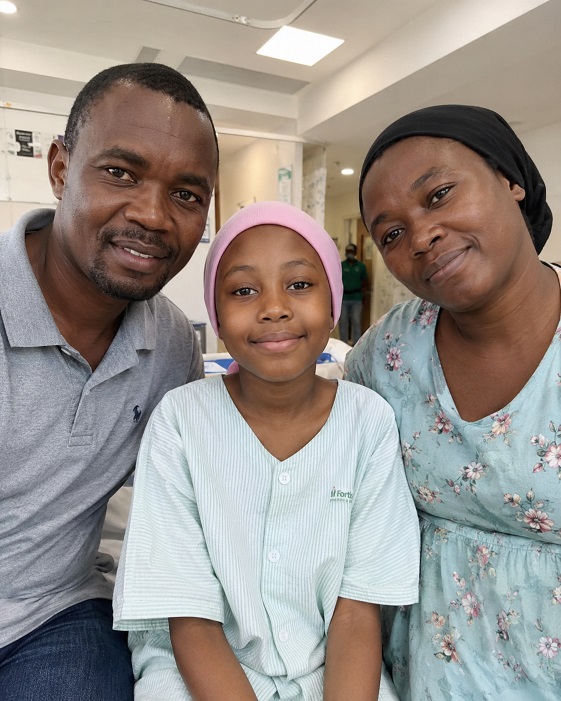
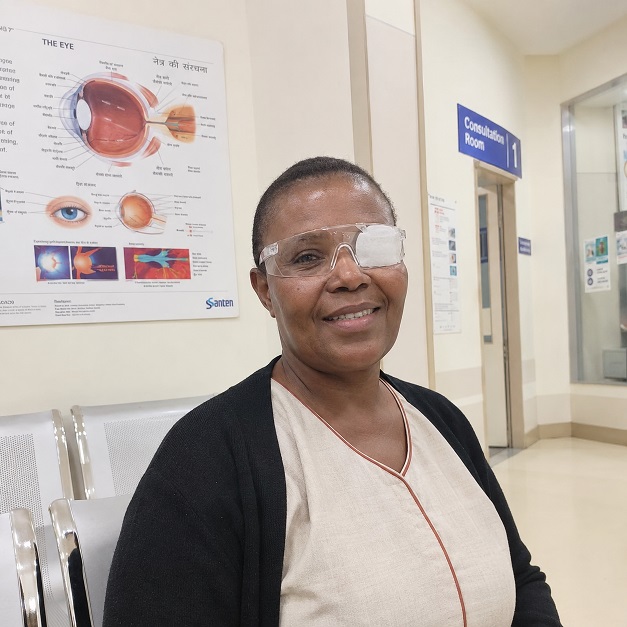
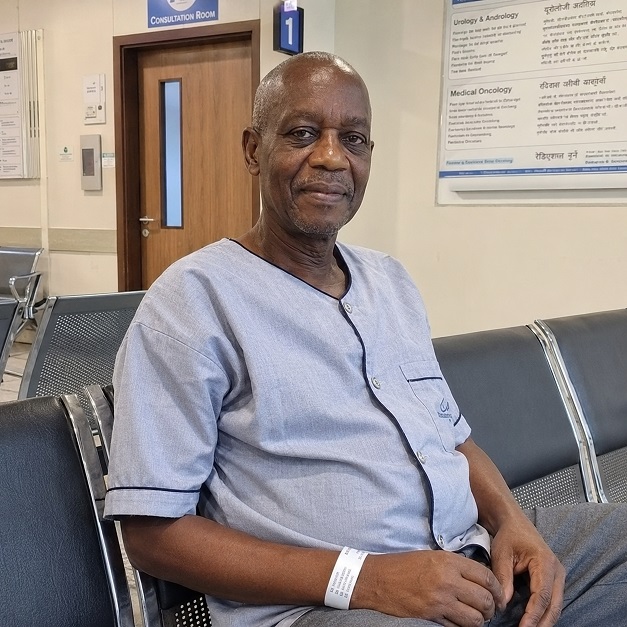
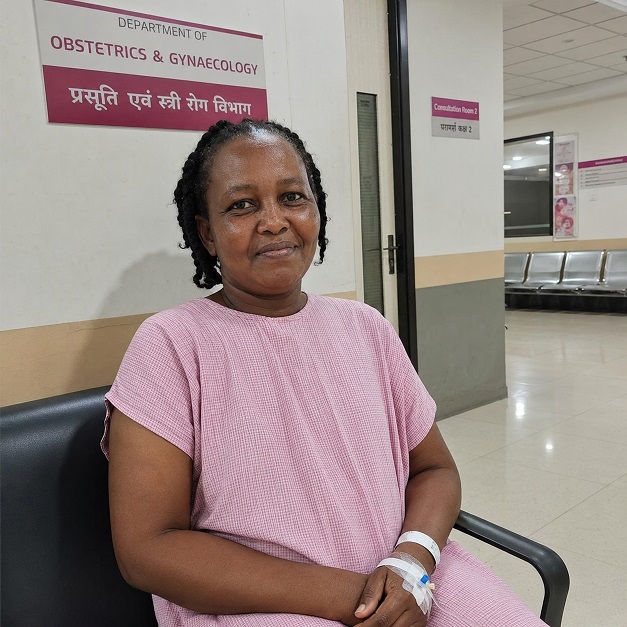
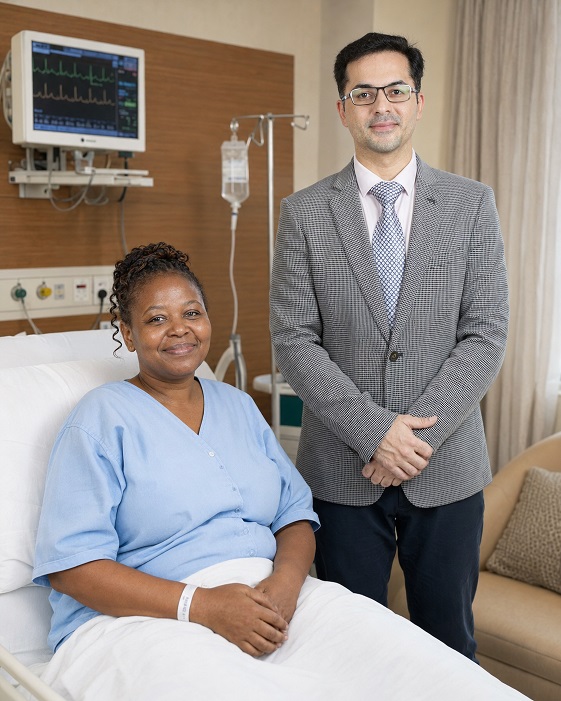
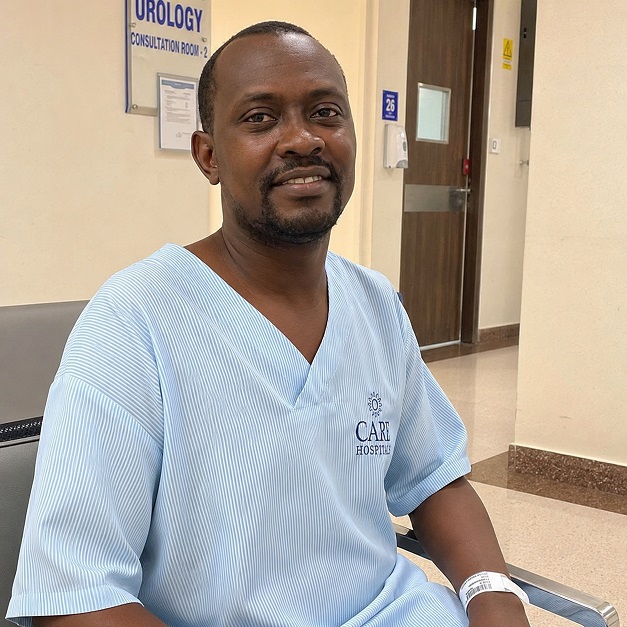
Patient Testimonials from Kenya
Ready to Take the First Step?
Share your Medical Reports with our Healthcare Managers Today and Get a FREE CONSULTATION, a Personalized Treatment Plan, and Complete Support from Arrival to Recovery.
Get Your Free ConsultationAreas We Serve
This resource has been thoughtfully prepared for patients from Kenya who are considering medical treatment in India. We also welcome patients from the wider region in the countries mentioned below-
We assist patients from:
- Ethiopia
- Somalia
- Tanzania
- Uganda
- Seychelles
- Guinea
- Guinea-Bissau
- Liberia
- Mali
- Mauritania
- Niger
- Nigeria
- Senegal
- Togo
- South Sudan
- Sierra Leone
Many of the insights, treatment pathways, hospital recommendations, travel guidance, and patient support services described here are equally relevant and may be used as a reference when planning treatment in India.
From Kenya to India: Your Complete Patient Support Guide
- Brain Tumour Surgery in India for Kenyan Patients
- Cancer Treatment and Surgery in India for Kenyan Patients
- Cardiac Treatment and Surgery in India for Kenyan Patients
- Heart Valve Replacement Surgery in India for Kenyan Patients
- Knee Replacement in India for Kenyan Patients
- Prostate Cancer Treatment and Surgery in India for Kenyan Patients
- Spine Treatment and Surgery in India for Kenyan Patients
- Selecting the Best Bariatric Surgeons and Hospitals in India: What Kenyan Patients Should Actually Look For
- Selecting the Best Cancer Surgeons and Hospitals in India: What Kenyan Patients Should Actually Look For
- Selecting the Best Cardiac Surgeons and Hospitals in India: What Kenyan Patients Should Actually Look For
- Selecting the Best Dental Surgeons and Clinics in India: What Kenyan Patients Should Actually Look For
- Selecting the Best Hip Surgeons and Hospitals in India: What Kenyan Patients Should Actually Look For
- Selecting the Best Kidney Transplant Surgeons and Hospitals in India: What Kenyan Patients Should Actually Look For
- Selecting the Best Knee Surgeons and Hospitals in India: What Kenyan Patients Should Actually Look For
- Selecting the Best Liver Transplant Surgeons and Hospitals in India: What Kenyan Patients Should Actually Look For
- Selecting the Best Neurosurgeons and Hospitals in India: What Kenyan Patients Should Actually Look For
- Selecting the Best Prostate Cancer Surgeons and Hospitals in India: What Kenyan Patients Should Actually Look For
- Selecting the Best Spine Surgeons and Hospitals in India: What Kenyan Patients Should Actually Look For