

Pancreatic Cancer Surgery in India for Kenyan Patients
Pancreatic surgery is one of the most volume-dependent operations there is — what a Kenyan patient should verify about the surgeon and hospital in India, and what it costs.
A study at a tertiary referral hospital in Kenya examined the outcomes of pancreatic cancer patients and found something genuinely important: patients who underwent surgical resection had an 80% lower risk of death compared with those who didn't. Yet only 7% of patients in the study actually received surgery. Even more striking, among patients diagnosed at the earliest, most treatable stages, when surgery offers the greatest chance of meaningful benefit, only 44% actually underwent the procedure. Across 24 years of guiding Kenyan patients through treatment in India, pancreatic cancer is a condition where this specific gap, between what surgery can achieve and how rarely it's actually performed, deserves direct, honest attention. This article explains what pancreatic cancer surgery involves, why the gap between surgical benefit and surgical access matters so much in Kenya specifically, what treatment costs in India compared with Kenya and Western countries, and the practical factors to weigh before deciding where to be treated.
Healing Journeys of Kenyan Patients







Key Takeaways
- The guide explains that surgery offers the only realistic chance of long-term survival for pancreatic cancer when the tumour is genuinely resectable. The operation depends on tumour location: the Whipple procedure is generally used for tumours in the pancreatic head, while distal pancreatectomy is typically used for tumours in the body or tail. A Whipple is technically demanding because it involves major blood vessels and reconstruction of the digestive tract.
- The Kenyan data highlighted in the guide show a substantial gap between potential surgical benefit and access. A tertiary-hospital study found that patients who underwent surgical resection had an 80% lower risk of death, yet only 7% of patients received surgery. Even among patients diagnosed at the earliest, most treatable stages, only 44% underwent surgery. The page 2 graphic presents this contrast as “Just 7%” receiving surgery despite the markedly lower mortality associated with resection.
- The guide notes that 54% of patients in the Kenyan study presented with metastatic disease, while only 14% were diagnosed at the earliest stages. It therefore recommends that patients whose surgery has been ruled out—or has not been clearly discussed—seek an expert resectability assessment, particularly from a centre with genuine high-volume Whipple experience.
- India has developed substantial pancreatic and hepatobiliary surgical capacity, with specialist teams regularly performing Whipple procedures and distal pancreatectomies. Leading centres also provide multidisciplinary tumour-board review, JCI or NABH accreditation and coordinated oncology care, including chemotherapy when indicated. The guide emphasises that surgical volume matters because outcomes for complex pancreatic surgery are generally better at centres performing the procedure regularly.
- The guide estimates a Whipple procedure at approximately US$5,000–11,000 in India, compared with US$10,000–25,000 in Kenya, US$35,000–55,000 in the UK and US$45,000–100,000 in the US. Kenyan patients should plan for approximately 3–4 weeks in India, including pre-operative assessment, surgery and the demanding initial recovery period.
- The page 4 “Six Things to Check” graphic highlights hospital accreditation, the surgeon's Whipple-specific volume, an honest resectability assessment, a complete cost quotation, urgent visa and travel planning, and a long-term oncology follow-up plan in Kenya. The guide also states that the Indian medical e-visa is typically issued within 3–5 working days after a formal hospital invitation letter.
Quick Facts
- Author
- Dr. Dheeraj Bojwani
- Experience
- 24+ Years
- Treatment
- Pancreatic Cancer Surgery
- Patients
- Kenyan Patients
- First Assessment
- Tumour location, stage and resectability
- Key Specialist
- Pancreatic / Hepatobiliary Surgical Oncologist
- Main Procedure
- Whipple procedure
- Alternative Procedure
- Distal pancreatectomy for selected body/tail tumours
- Surgical Benefit
- 80% lower risk of death in cited Kenyan study
- Kenya Surgery Rate
- 7% of patients in cited study
- Early-Stage Surgery
- 44% underwent surgery
- Hospital Check
- JCI / NABH accreditation
- Case Volume
- Whipple-specific annual experience
- Cost Check
- Written estimate including surgery, ICU and follow-up chemotherapy where required
- India Cost
- US$5,000–11,000
- Kenya Cost
- US$10,000–25,000
- Medical Records
- CT/MRI, pathology and previous treatment reports
- Visa
- Indian medical e-visa with hospital invitation
- Travel
- Nairobi–Delhi or Mumbai flights
- Stay
- Approximately 3–4 weeks
- Follow-Up
- Long-term oncology surveillance in Kenya
- Key Warning
- Surgery ruled out without a clear expert resectability assessment
- Decision Principle
- Prioritise Whipple-specific expertise, accurate resectability assessment and timely treatment.
In Brief
For Kenyan patients with potentially operable pancreatic cancer, the key priorities are an expert resectability assessment, genuine Whipple-specific surgical experience and timely access to treatment. Patients should verify the surgeon's annual Whipple volume, obtain a complete written quotation and arrange long-term oncology follow-up in Kenya before travelling.
What pancreatic cancer surgery actually involves
Surgery offers the only realistic chance of long-term survival for pancreatic cancer, but it's only an option when the tumour is confined to the pancreas or immediately surrounding tissue, without invading major blood vessels or spreading to distant organs. The specific procedure depends on tumour location: the Whipple procedure, or pancreaticoduodenectomy, treats tumours in the head of the pancreas by removing the pancreatic head, the first part of the small intestine, the gallbladder, and part of the bile duct, then reconstructing the digestive tract. Tumours in the body or tail of the pancreas are typically treated with a distal pancreatectomy, often including removal of the spleen.
The Whipple procedure specifically is among the most technically demanding operations in abdominal surgery, given the number of blood vessels surrounding the pancreas and the complexity of reconstructing digestive continuity afterward. Surgical volume matters enormously for this specific operation; published research consistently shows better outcomes, including lower complication rates and improved long-term survival, at high- volume centres where surgeons and their teams perform the procedure regularly, compared with centres where it's performed only occasionally.
Recovery from a Whipple procedure is genuinely demanding; most patients spend one to two weeks in hospital afterward, with full recovery, including a gradual return to normal eating and activity, typically taking six to twelve weeks. Many patients also require pancreatic enzyme supplements afterward to support digestion, since removing part of the pancreas can affect how the body processes food. None of this diminishes how significant the procedure's survival benefit can be for a well-selected patient; it simply means the decision, and the recovery period that follows, deserves realistic preparation.
Why the gap between surgical benefit and surgical access matters so much in Kenya specifically
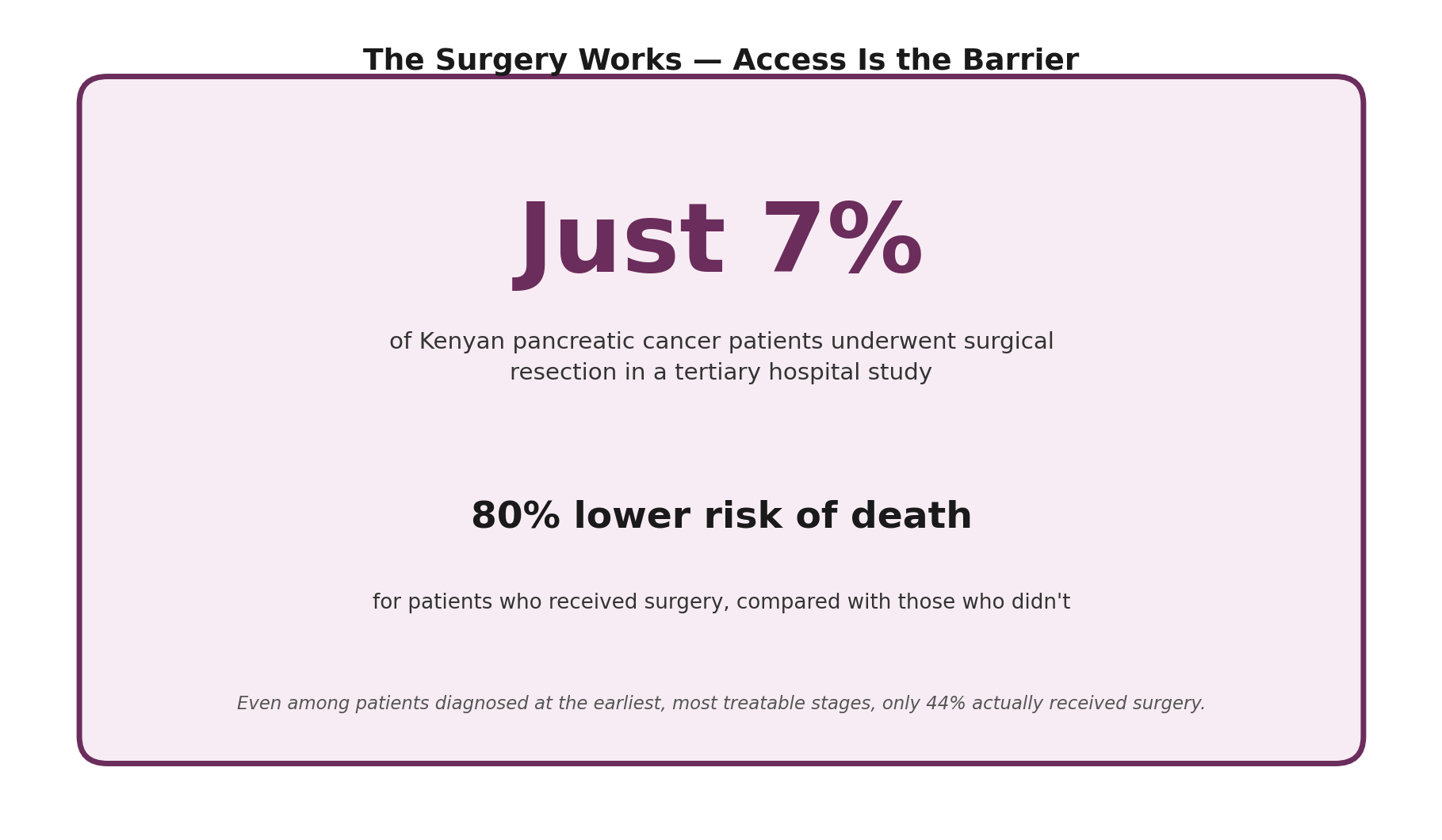
This is the fact every Kenyan patient or family facing a pancreatic cancer diagnosis needs to understand clearly, because it directly shapes the conversation to have with any treating doctor. The Kenyan tertiary hospital study found that 54% of patients presented with metastatic disease already, and only 14% were diagnosed at the earliest, most treatable stages, a pattern consistent with pancreatic cancer's notoriously subtle early symptoms worldwide. But the surgical resection gap goes beyond stage at diagnosis alone: even among the 14% of patients diagnosed at stage I or II, when surgery offers the clearest survival benefit, fewer than half actually underwent the procedure.
This matters because it suggests the gap isn't only about disease biology or how early a diagnosis is made; it also reflects genuine limitations in surgical capacity, referral pathways, and access to the kind of experienced pancreatic surgery this operation specifically requires. For a patient or family navigating this diagnosis, the practical takeaway is direct: if surgery is mentioned as a possibility, or if your treating team hasn't explicitly ruled it out, it's worth actively pursuing a second opinion at a centre with genuine, high-volume Whipple experience before accepting that surgery isn't an option.
Why India has become a genuine hub for pancreatic cancer surgery
India has developed substantial, high-volume pancreatic and hepatobiliary surgery capacity, with dedicated surgical oncology teams that perform the Whipple procedure and distal pancreatectomy regularly enough to build the kind of technical judgement this complex surgery genuinely requires. This matters enormously given how strongly surgical volume correlates with outcomes for this specific operation.
India's leading centres combine this surgical volume with JCI and NABH accredited safety standards, multidisciplinary tumour boards that properly assess resectability before recommending surgery, and coordinated post-operative oncology care including chemotherapy when indicated. In 24 years of guiding patients through this decision, the clearest advice I offer is direct: given how dramatically surgery improves outcomes when genuinely available, and how significant the access gap remains across Kenya, a Kenyan patient with a pancreatic cancer diagnosis deserves a proper, expert assessment of resectability, ideally from a centre that performs this specific operation often, before accepting that surgery isn't possible.
This point deserves real emphasis. Pancreatic cancer's reputation as an especially difficult diagnosis is well earned, but that reputation shouldn't translate into assuming surgery isn't worth pursuing without a genuine, expert evaluation first. The difference between a resectability assessment made by a team that performs Whipple procedures occasionally versus one that performs them routinely can meaningfully affect whether a genuinely operable tumour gets correctly identified as such.
What it costs: India versus Kenya, the UK, and the US
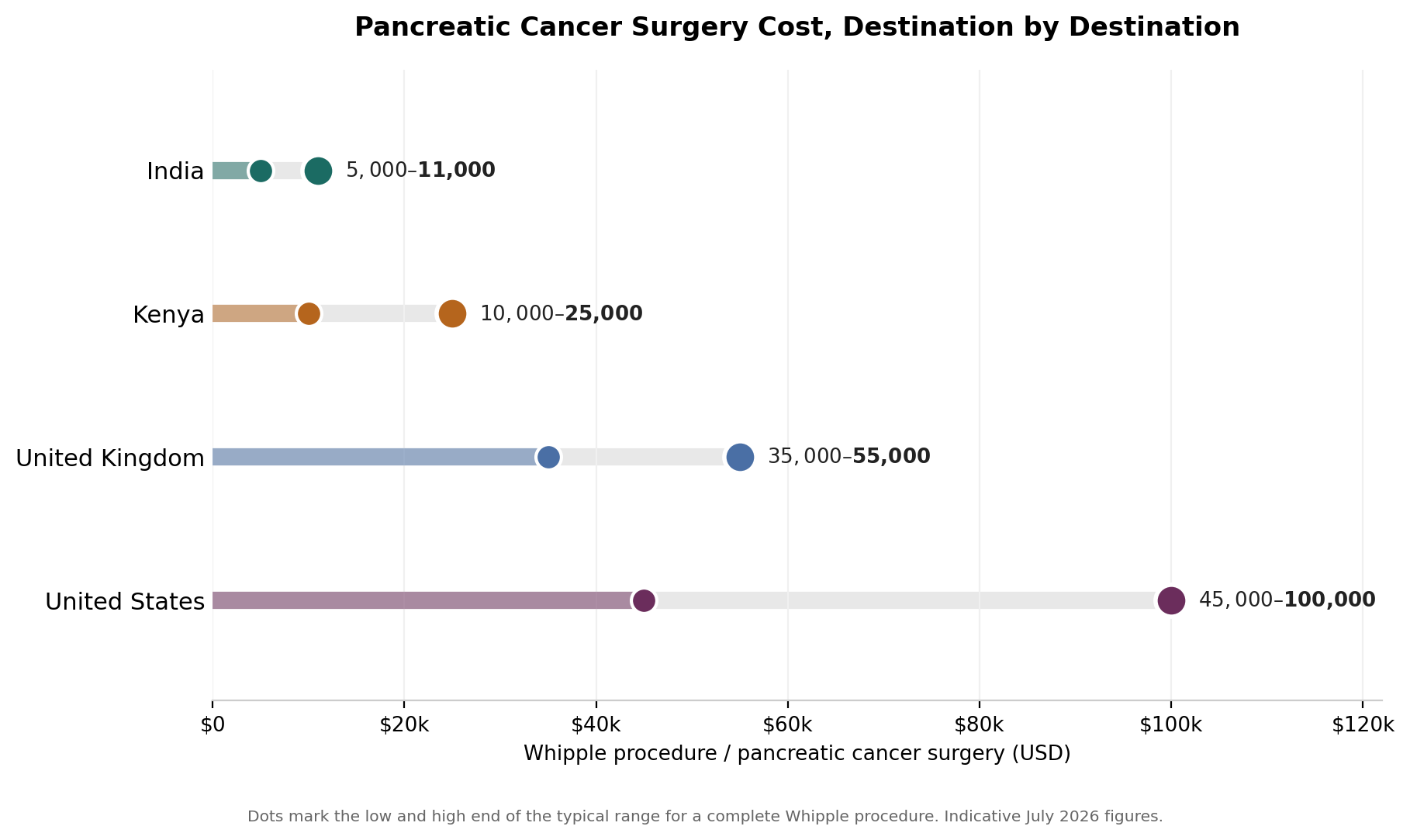
In India, the Whipple procedure typically costs between 5,000 and 11,000 US dollars. In Kenya, where this level of complex pancreatic surgery is available in only a limited number of centres, private costs run roughly 10,000 to 25,000 dollars. In the UK, the Whipple procedure typically costs 35,000 to 55,000 dollars, and in the US, 45,000 to 100,000 dollars.
Beyond the procedure itself, budget for an extended stay. Direct flights between Nairobi and Delhi or Mumbai run roughly 550 to 850 dollars return, and the Whipple procedure typically requires three to four weeks in India, covering pre-operative assessment, the surgery itself, and the demanding initial recovery period.
What a Kenyan patient should actually check before booking
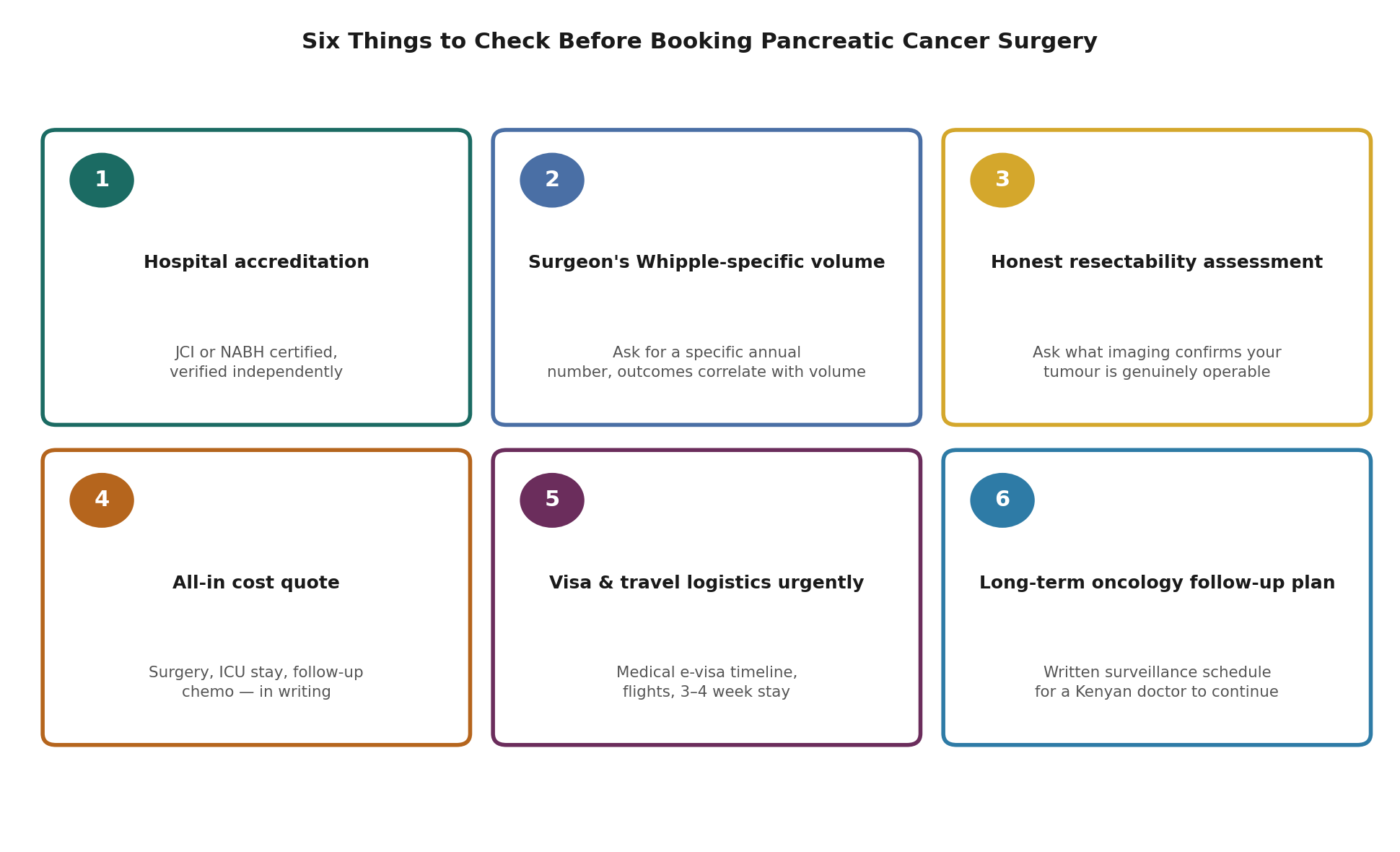
Given how much surgical volume and honest assessment matter here, work through these questions directly.
Confirm genuine accreditation. Ask whether the hospital holds JCI or NABH certification, and verify it independently.
Ask about the surgeon's Whipple-specific volume. A specific number, how many Whipple procedures the surgeon personally performs each year, matters enormously since outcomes correlate closely with volume for this operation.
Get an honest resectability assessment. Ask specifically what imaging confirms your tumour is genuinely operable, and request a second opinion if surgery has been ruled out without a clear explanation.
Get the full cost breakdown in writing. Confirm what's included, surgery, ICU stay, and follow-up chemotherapy if needed.
Plan your visa and travel logistics urgently. The Indian medical e-visa is typically issued within three to five working days once you have a formal hospital invitation letter.
Arrange your long-term oncology follow-up plan before you leave. Agree on a written surveillance schedule and identify a doctor in Kenya who can continue that monitoring.
Straight Answers for Kenyan Patients about Pancreatic Cancer Surgery in India
How much does surgery actually improve pancreatic cancer survival in Kenya?
A tertiary hospital study found patients who underwent surgical resection had an 80% lower risk of death compared with those who didn't, yet only 7% of patients overall received surgery.
How much does Whipple surgery cost in India compared to the US?
India typically costs 5,000 to 11,000 US dollars, against 45,000 to 100,000 dollars in the US.
Why do so few eligible pancreatic cancer patients in Kenya receive surgery?
Even among patients diagnosed at the earliest, most treatable stages, only 44% underwent surgery in the study, suggesting genuine limitations in surgical capacity and access, not just disease severity.
What is the Whipple procedure?
Surgical removal of the head of the pancreas, the first part of the small intestine, the gallbladder, and part of the bile duct, followed by reconstruction of the digestive tract, used for tumours in the pancreatic head.
Why does surgical volume matter so much for pancreatic cancer surgery?
Published research consistently shows better outcomes, including lower complications and improved survival, at high-volume centres where surgeons perform the procedure regularly.
How do I get a medical visa to India from Kenya?
The Indian medical e-visa is typically issued within three to five working days once you have a formal invitation letter from the treating hospital.
A Closing Word
Surgery genuinely transforms outcomes for pancreatic cancer patients when it's available, an 80% lower risk of death in the Kenyan study data alone makes that clear. But only 7% of patients in that same study received it, and even among those diagnosed early enough for surgery to offer real benefit, fewer than half actually underwent the procedure. India's combination of high-volume pancreatic surgical expertise, accredited safety standards, and accessible cost offers a genuine path to closing that specific gap, for patients and families willing to pursue a proper resectability assessment rather than accepting an early "no" without one.
Sources
- 🌐 Clinicopathologic characteristics and treatment outcomes of pancreatic cancer patients at a tertiary referral hospital in Kenya. PMC
- 🌐 Pancreaticoduodenectomy (Whipple Procedure). StatPearls, NCBI Bookshelf
- 🌐 Pancreatic Cancer Surgery in India for International Patients. SPARSH Global Care, 2026
- 🌐 National Medical Commission of India — specialist registration verification
- 🌐 National Accreditation Board for Hospitals & Healthcare Providers (NABH) — accredited hospital directory
Frequently Asked Questions by Kenyans about Pancreatic Cancer Surgery in India
Why should a Kenyan pancreatic cancer patient seek a second surgical opinion?
The Kenyan study cited in the guide found that surgical resection was associated with an 80% lower risk of death, yet only 7% of patients underwent surgery. If surgery has not been clearly ruled out, an expert resectability opinion can be important.
How many Kenyan pancreatic cancer patients actually received surgery in the cited study?
Only 7% of patients underwent surgical resection, while even among patients diagnosed at stage I or II, only 44% received surgery. The guide links this gap to limitations in surgical capacity and referral access as well as disease stage.
Why is Whipple-specific surgeon experience important for Kenyan patients?
The Whipple procedure is one of the most technically demanding abdominal operations. Kenyan patients should ask for the specific number of Whipple procedures the surgeon personally performs each year, rather than relying on general surgical or oncology experience.
What should an Indian surgeon assess before telling a Kenyan patient that surgery is possible?
The surgeon should review the patient's actual imaging and determine whether the tumour can be safely resected, particularly whether major blood vessels are involved and whether there is distant spread. A second expert opinion is reasonable when operability is unclear.
How does pancreatic cancer surgery cost in India compare with Kenya?
The guide estimates a Whipple procedure at approximately US$5,000–11,000 in India, compared with US$10,000–25,000 in Kenya. Final costs depend on the operation, hospital stay and additional oncology treatment.
What should be included in a Kenyan patient's Whipple surgery quotation?
The quotation should clearly state what is included for surgery, ICU care and follow-up chemotherapy if required. Patients should request the complete estimate in writing before paying a deposit.
How long should a Kenyan patient remain in India after Whipple surgery?
The guide recommends planning for approximately 3–4 weeks in India, covering pre-operative assessment, surgery and the demanding initial recovery period before returning to Kenya.
What should Kenyan patients send to an Indian pancreatic surgeon before travelling?
Send CT/MRI scans, pathology reports and previous treatment records so the specialist can assess resectability and develop an appropriate treatment plan before international travel.
What hospital quality checks are important for Kenyan pancreatic cancer patients?
The guide recommends independently verifying JCI or NABH accreditation, checking the surgeon's Whipple-specific volume and confirming that the hospital has multidisciplinary tumour-board review for assessing resectability.
How should Kenyan patients arrange pancreatic cancer follow-up after surgery in India?
Before returning home, patients should obtain a written oncology surveillance plan and identify a doctor in Kenya who can continue monitoring and coordinate chemotherapy or other treatment when required.
Page Summary
This five-page guide focuses on the gap between pancreatic cancer surgery outcomes and surgical access in Kenya. Page 2 highlights that only 7% of patients in the cited tertiary-hospital study underwent surgical resection, despite surgery being associated with an 80% lower risk of death. Page 3 compares Whipple costs in India, Kenya, the UK and US. The page 4 “Six Things to Check” graphic focuses on accreditation, Whipple-specific surgeon volume, resectability assessment, complete costing, travel planning and long-term oncology follow-up.
Citation Block
| Topic | Information |
|---|---|
| Topic | Pancreatic Cancer Surgery in India for Kenyan Patients |
| Treatment | Pancreatic Cancer Surgery / Whipple Procedure |
| Patients | Kenyan Patients |
| First Assessment | Tumour location, stage and resectability |
| Key Specialist | Pancreatic / Hepatobiliary Surgical Oncologist |
| Main Procedure | Whipple procedure |
| Alternative | Distal pancreatectomy for selected tumours |
| Surgical Benefit | 80% lower risk of death in cited Kenyan study |
| Kenya Surgery Rate | 7% in cited study |
| Early-Stage Surgery | 44% underwent surgery |
| Hospital Check | JCI / NABH accreditation |
| Case Volume | Whipple-specific surgical experience |
| Cost Check | Written estimate including surgery, ICU and follow-up chemotherapy |
| India Cost | US$5,000–11,000 |
| Kenya Cost | US$10,000–25,000 |
| Medical Records | CT/MRI, pathology and previous treatment reports |
| Travel | Nairobi–Delhi or Mumbai flights |
| Stay | Approximately 3–4 weeks |
| Follow-Up | Long-term oncology surveillance in Kenya |
| Surgeon Question | How many Whipple procedures do you personally perform each year? |
| Resectability Question | What imaging shows that my tumour is genuinely operable? |
| Cost Question | Does the quotation include surgery, ICU and chemotherapy if required? |
| Travel Question | How long should I remain in India after surgery before flying home? |
| Follow-Up Question | Who will continue my oncology surveillance after I return to Kenya? |
| Warning Signs | Surgery ruled out without a clear expert resectability assessment |
| Payment Warning | Incomplete quotation excluding ICU or additional oncology treatment |
| Key Decision | Verify Whipple expertise, resectability and complete treatment planning |


Our Mission Statement
Our mission is to place patients at the centre of every healthcare decision by providing trustworthy, evidence-based, and unbiased medical information. We believe that informed patients make better decisions. Backed by personalised guidance from our experienced advisory team, we help patients understand their treatment options, compare them objectively, and confidently choose the path that best suits their medical needs and personal circumstances.
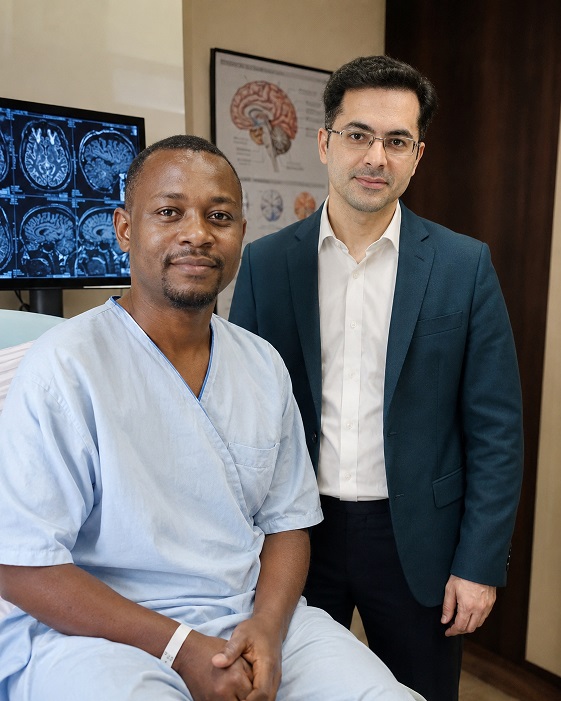
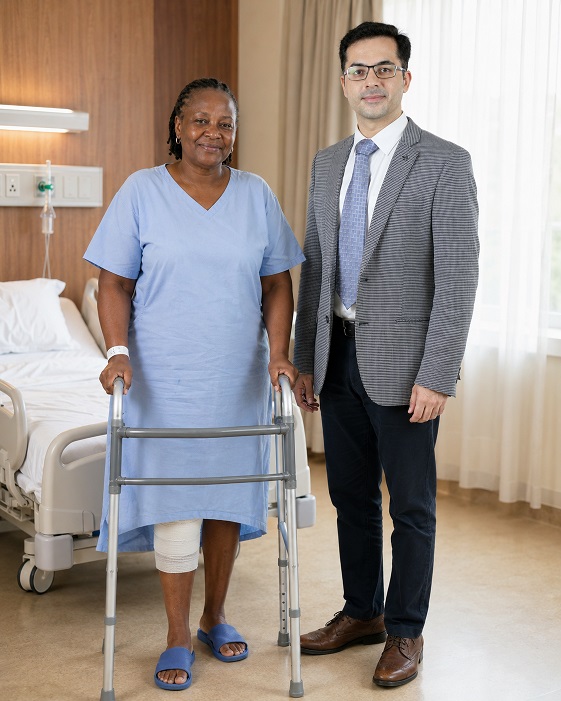
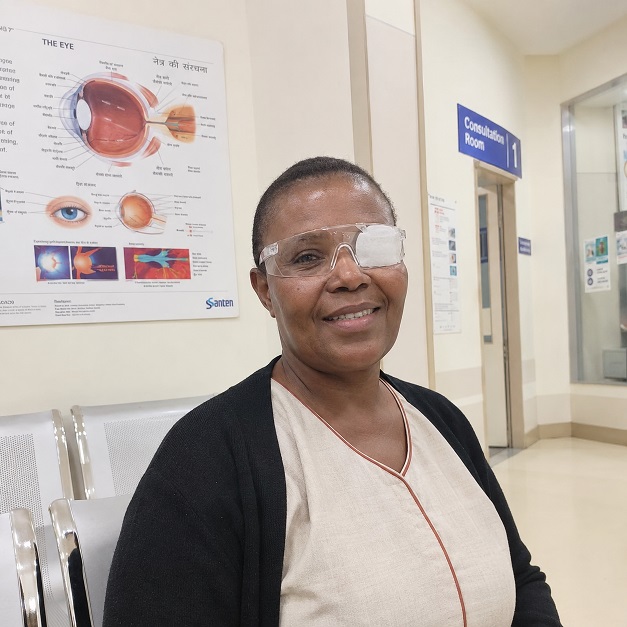
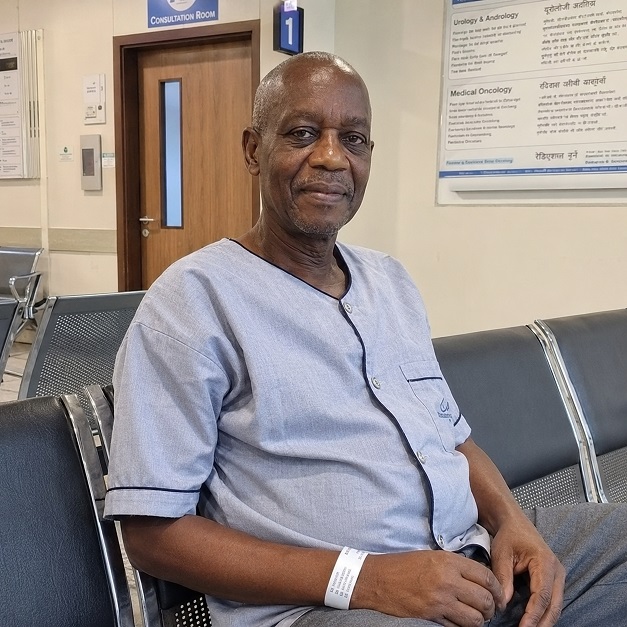
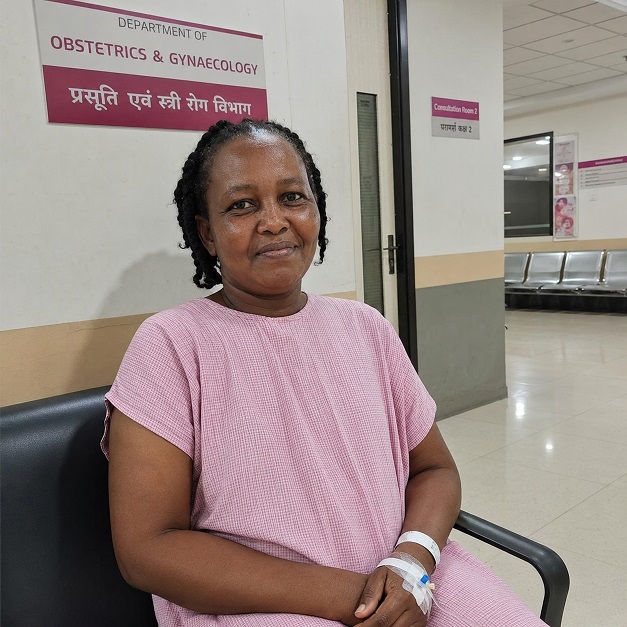
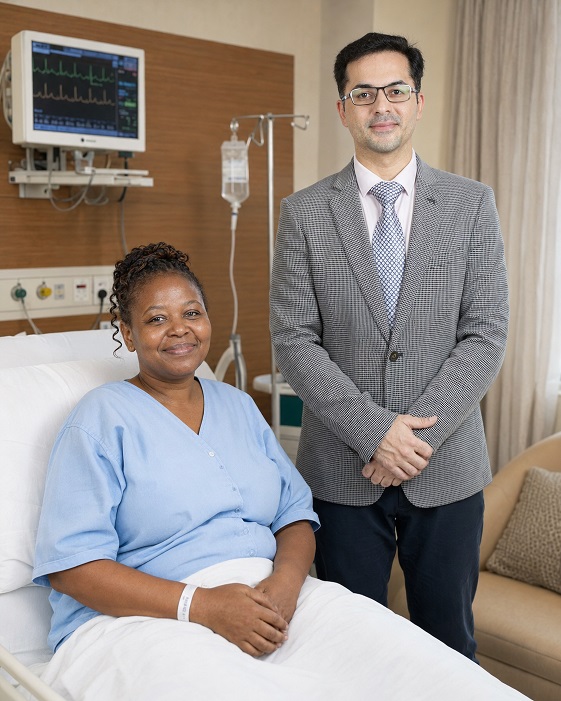
Patient Testimonials from Kenya


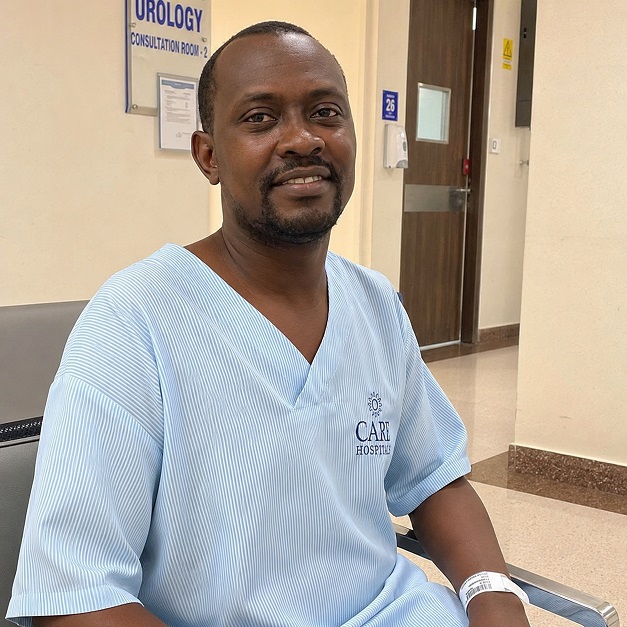
Ready to Take the First Step?
Share your Medical Reports with our Healthcare Managers Today and Get a FREE CONSULTATION, a Personalized Treatment Plan, and Complete Support from Arrival to Recovery.
Get Your Free ConsultationAreas We Serve
This resource has been thoughtfully prepared for patients from Kenya who are considering medical treatment in India. We also welcome patients from the wider region in the countries mentioned below-
We assist patients from:
- Ethiopia
- Somalia
- Tanzania
- Uganda
- Seychelles
- Guinea
- Guinea-Bissau
- Liberia
- Mali
- Mauritania
- Niger
- Nigeria
- Senegal
- Togo
- South Sudan
- Sierra Leone
Many of the insights, treatment pathways, hospital recommendations, travel guidance, and patient support services described here are equally relevant and may be used as a reference when planning treatment in India.
From Kenya to India: Your Complete Patient Support Guide
- Brain Tumour Surgery in India for Kenyan Patients
- Cancer Treatment and Surgery in India for Kenyan Patients
- Cardiac Treatment and Surgery in India for Kenyan Patients
- Heart Valve Replacement Surgery in India for Kenyan Patients
- Knee Replacement in India for Kenyan Patients
- Prostate Cancer Treatment and Surgery in India for Kenyan Patients
- Spine Treatment and Surgery in India for Kenyan Patients
- Selecting the Best Bariatric Surgeons and Hospitals in India: What Kenyan Patients Should Actually Look For
- Selecting the Best Cancer Surgeons and Hospitals in India: What Kenyan Patients Should Actually Look For
- Selecting the Best Cardiac Surgeons and Hospitals in India: What Kenyan Patients Should Actually Look For
- Selecting the Best Dental Surgeons and Clinics in India: What Kenyan Patients Should Actually Look For
- Selecting the Best Hip Surgeons and Hospitals in India: What Kenyan Patients Should Actually Look For
- Selecting the Best Kidney Transplant Surgeons and Hospitals in India: What Kenyan Patients Should Actually Look For
- Selecting the Best Knee Surgeons and Hospitals in India: What Kenyan Patients Should Actually Look For
- Selecting the Best Liver Transplant Surgeons and Hospitals in India: What Kenyan Patients Should Actually Look For
- Selecting the Best Neurosurgeons and Hospitals in India: What Kenyan Patients Should Actually Look For
- Selecting the Best Prostate Cancer Surgeons and Hospitals in India: What Kenyan Patients Should Actually Look For
- Selecting the Best Spine Surgeons and Hospitals in India: What Kenyan Patients Should Actually Look For