

Paediatric Orthopaedic Surgery in India for Kenyan Patients
Clubfoot, deformity and growth problems in children: when correction without surgery is still possible, what India offers, and how follow-up works back in Kenya.
Clubfoot is one of the more encouraging stories in paediatric medicine when caught and managed properly: a baby born with one or both feet turned inward can, in the great majority of cases, be corrected entirely through casting and bracing, without any surgery at all. But research into how clubfoot is actually managed across East Africa, including Kenya, points to a specific, preventable failure point: roughly half of relapses trace back to gaps in follow-up and inconsistent bracing, not the treatment itself failing. When that follow-up breaks down, a condition that was genuinely fixable without surgery becomes what orthopaedic surgeons call "neglected clubfoot," a rigid, walking-age deformity that then requires far more invasive corrective surgery than would ever have been necessary with consistent early care. Across 24 years of guiding Kenyan families through treatment in India, this is a pattern I see play out in paediatric orthopaedics more broadly, not just clubfoot: the gap between what's treatable early and what a family eventually faces is often a story about follow-up, not diagnosis. This article explains what paediatric orthopaedic surgery involves, why follow-up gaps specifically shape outcomes for Kenyan children, what treatment costs in India compared with Kenya and Western countries, and the practical factors to weigh before deciding where to be treated.
Healing Journeys of Kenyan Patients
Key Takeaways
- The guide explains that many paediatric orthopaedic conditions can be treated less invasively when identified early, with clubfoot being the clearest example. The Ponseti method uses gentle weekly casting followed by bracing and can correct most clubfoot cases without major surgery. Surgery may become necessary when the deformity is severe, associated with another condition or has become neglected and rigid.
- For Kenyan families, follow-up and brace compliance are particularly important. Clubfoot affects roughly 1 in 1,000 births worldwide, with around 80% of affected children born in developing countries. Research across East Africa indicates that approximately half of relapse cases are associated with missed follow-up and inconsistent bracing, rather than failure of the Ponseti method itself.
- India has dedicated paediatric orthopaedic expertise covering both non-surgical Ponseti treatment and complex corrective surgery. This allows families to obtain an honest assessment of whether a child's condition can still be managed through casting and bracing or whether surgical correction is genuinely required. Leading centres also provide JCI or NABH accreditation and structured follow-up protocols.
- The guide estimates paediatric orthopaedic treatment in India at approximately US$1,500–6,000, compared with US$2,500–8,000 for private care in Kenya, US$8,000–15,000 in the UK and US$12,000–25,000 in the US. Initial treatment generally requires 1–3 weeks in India, although clubfoot programmes may require a longer initial stay or a planned return for tendon release and brace fitting.
- The page 4 “Six Things to Check” graphic highlights independent hospital accreditation, the surgeon's paediatric-specific experience, an honest explanation of casting versus surgery, a complete quotation, visa and travel planning, and a sustainable long-term bracing and follow-up plan in Kenya.
Quick Facts
- Author
- Dr. Dheeraj Bojwani
- Experience
- 24+ Years
- Treatment
- Paediatric Orthopaedic Surgery
- Patients
- Kenyan Children
- First Assessment
- Condition, severity and imaging
- Key Specialist
- Paediatric Orthopaedic Surgeon
- Common Condition
- Clubfoot
- Main Treatment
- Ponseti casting and bracing
- Surgery
- Reserved for severe, neglected or unsuitable cases
- Relapse Issue
- Around half linked to missed follow-up and inconsistent bracing
- Hospital Check
- JCI / NABH accreditation
- Case Volume
- Paediatric cases matching the child's condition
- Cost Check
- Written estimate covering casting, bracing, surgery if needed and follow-up
- India Cost
- US$1,500–6,000
- Kenya Cost
- US$2,500–8,000 private
- Medical Records
- Imaging and previous treatment records
- Visa
- Indian medical e-visa with hospital invitation
- Travel
- Nairobi–Delhi or Mumbai flights
- Stay
- Approximately 1–3 weeks
- Follow-Up
- Long-term bracing and monitoring in Kenya
- Key Warning
- Surgery recommended without assessing whether non-surgical correction remains possible
- Decision Principle
- Prioritise paediatric-specific expertise, appropriate treatment selection and sustainable follow-up.
In Brief
For Kenyan children with clubfoot or other orthopaedic conditions, the priority is not simply finding a surgeon but determining whether non-surgical correction remains possible and how follow-up will be maintained after returning to Kenya. Families should verify paediatric-specific experience, obtain a complete treatment estimate and establish a realistic long-term follow-up and bracing plan.
What paediatric orthopaedic surgery actually involves
Paediatric orthopaedics treats the full range of bone, joint, and muscle conditions specific to growing children, from congenital deformities like clubfoot and developmental hip dysplasia, present from birth, to conditions like Perthes disease and slipped capital femoral epiphysis that emerge later in childhood, alongside trauma and limb length discrepancies. What distinguishes this from adult orthopaedics is the growing skeleton itself; treatment decisions have to account for how a child's bones will continue developing for years afterward, not just correct the immediate problem.
For clubfoot specifically, the Ponseti method has become the internationally recognised gold standard: a series of gentle, weekly plaster casts gradually reposition the foot over several weeks, often followed by a minor procedure to release the Achilles tendon, and then a bracing programme worn for years to maintain the correction as the child grows. When started shortly after birth and followed consistently, this approach avoids major surgery in the vast majority of cases. Surgery becomes necessary specifically when the deformity is severe, associated with an underlying neurological or genetic condition, or, critically, when the case has been neglected and the foot has become rigid.
Beyond clubfoot, paediatric orthopaedic surgery covers a genuinely wide range of conditions. Developmental hip dysplasia, where the hip joint doesn't form properly, is typically detected through newborn screening and treated with a harness in infancy, progressing to surgery only if caught late. Limb length discrepancies, sometimes present at birth and sometimes the result of trauma or infection, may require growth-modulating procedures during childhood, timed carefully around the child's remaining growth. Across all these conditions, the same principle applies: the earlier a condition is caught and the more consistently it's followed, the less invasive the eventual treatment tends to be.
Why follow-up gaps specifically shape outcomes for Kenyan children
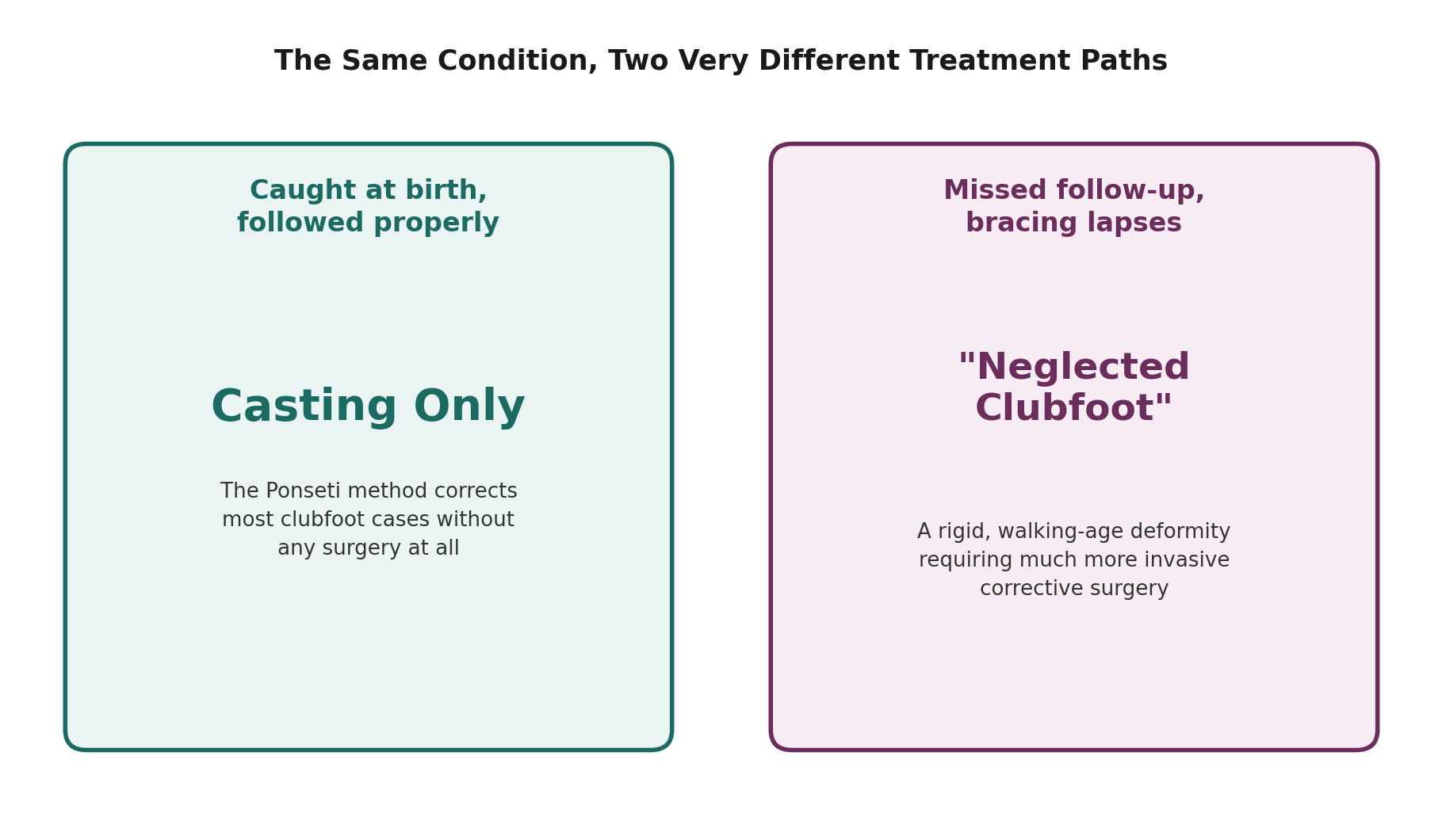
This is the pattern every Kenyan family navigating a paediatric orthopaedic diagnosis should understand clearly, because it changes what "successful treatment" actually requires. Clubfoot affects roughly one in every 1,000 births worldwide, and an estimated 80% of affected children are born in the developing world, where access to consistent, ongoing care is often the harder part of treatment, not the initial diagnosis or casting itself. Research examining Ponseti programmes across East Africa has found that roughly half of relapse cases can be traced to missed follow- up appointments and inconsistent bracing compliance, not a failure of the underlying treatment method.
This matters because it reframes the real challenge for many Kenyan families: the casting and bracing itself works extremely well when followed properly, but sustaining that follow-up over months and years, particularly for families travelling long distances to specialist clinics, is where the process most often breaks down. A child whose clubfoot could have been fully corrected through casting alone can, through no fault of the treatment itself, end up needing complex corrective surgery years later simply because consistent follow-up wasn't sustained.
Why India has become a genuine hub for paediatric orthopaedic surgery
India has developed substantial, dedicated paediatric orthopaedic capacity, with surgeons specifically trained in both the full non-surgical Ponseti pathway and the more complex corrective surgery neglected or severe cases require, meaning a family isn't limited to whichever approach happens to be available. This matters because getting an honest, accurate assessment of whether a child's specific case still responds to non-surgical correction, or genuinely requires surgery, depends on real paediatric-specific expertise.
India's leading paediatric orthopaedic centres combine this expertise with JCI and NABH accredited safety standards and structured, clearly explained follow-up protocols. In 24 years of guiding families through this decision, the clearest advice I offer is this: whether your child's case is still early enough for casting alone, or has progressed to needing surgical correction, get a genuinely honest assessment of where things stand, and just as importantly, a realistic, sustainable follow-up plan you can actually maintain once you're back home, since that follow-up is what determines whether the correction holds long-term.
This last point deserves particular emphasis. A successful initial treatment, whether casting or surgery, is only half the story; the bracing and monitoring that follows is what actually determines whether a child's correction holds as they grow. Before travelling for treatment, it's worth thinking through, concretely, how that follow-up will work once you're home again, rather than treating it as a detail to figure out later.
What it costs: India versus Kenya, the UK, and the US
In India, paediatric orthopaedic correction, including clubfoot casting and surgery where needed, typically costs
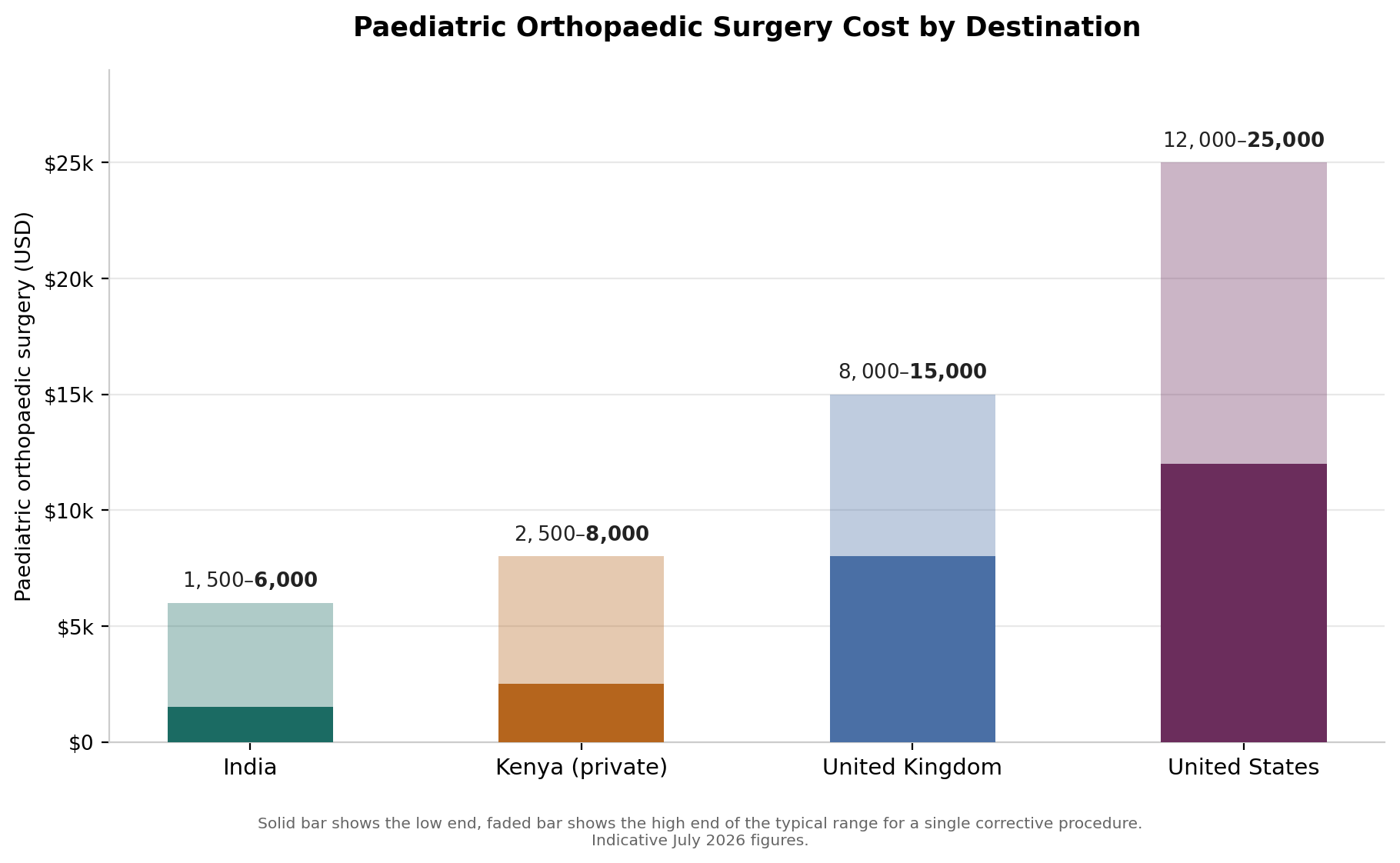
between 1,500 and 6,000 US dollars. In Kenya, private paediatric orthopaedic care costs run roughly 2,500 to 8,000 dollars. In the UK, comparable treatment typically costs 8,000 to 15,000 dollars, and in the US, 12,000 to 25,000 dollars.
Beyond treatment itself, budget for your stay. Direct flights between Nairobi and Delhi or Mumbai run roughly 550 to 850 dollars return, and initial treatment typically requires one to three weeks in India, though clubfoot casting programmes specifically may require a longer initial stay or a planned follow-up visit for tendon release and brace fitting.
What a Kenyan family should actually check before booking
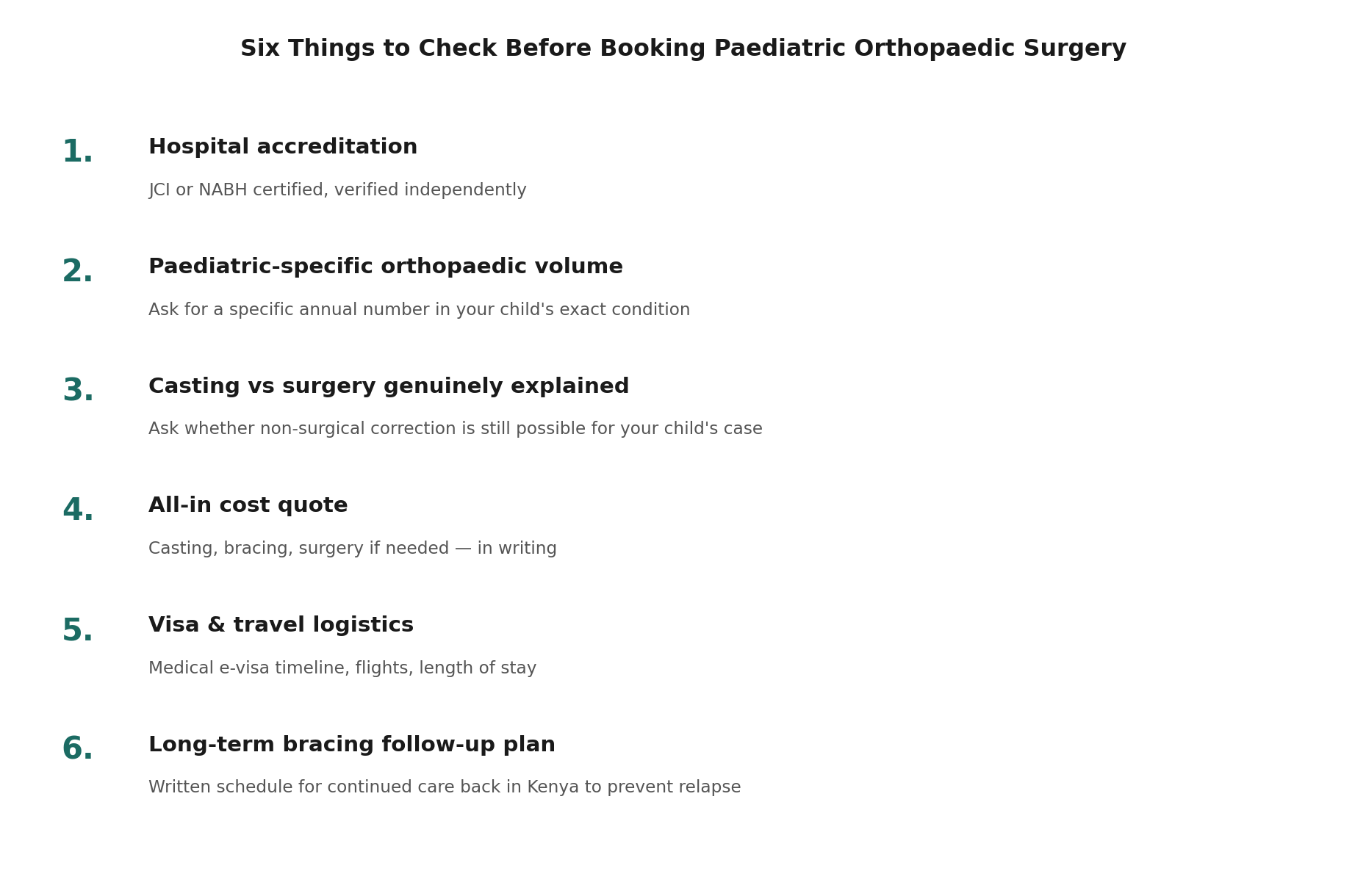
Given how much genuine assessment and follow-up matter here, work through these questions directly.
Confirm genuine accreditation. Ask whether the hospital holds JCI or NABH certification, and verify it independently.
Ask about the surgeon's paediatric-specific volume. A specific number, how many cases matching your child's exact condition the surgeon personally treats each year, tells you far more than general orthopaedic reputation.
Confirm whether non-surgical correction is genuinely still possible. Ask your surgeon to explain, honestly, whether casting and bracing alone remain an option for your child's specific case.
Get the full cost breakdown in writing. Confirm what's included, casting, bracing, surgery if needed, and follow- up consultations.
Plan your visa and travel logistics. The Indian medical e-visa is typically issued within three to five working days once you have a formal hospital invitation letter.
Arrange a realistic, sustainable long-term follow-up plan before you leave. Agree on a written bracing and monitoring schedule you can genuinely maintain, and identify a doctor in Kenya who can support that ongoing care.
Straight Answers for Kenyan Patients about Paediatric Orthopaedic Surgery in India
Can clubfoot really be corrected without surgery?
Yes, in the great majority of cases. The Ponseti method, using weekly casting followed by a long-term bracing programme, avoids major surgery entirely when started early and followed consistently.
How much does paediatric orthopaedic surgery cost in India compared to the US?
India typically costs 1,500 to 6,000 US dollars, against 12,000 to 25,000 dollars in the US.
Why do some clubfoot cases end up needing surgery in Kenya?
Research across East Africa found roughly half of relapse cases trace back to missed follow-up appointments and inconsistent bracing, not a failure of the initial casting treatment, turning an otherwise correctable case into neglected clubfoot.
How common is clubfoot globally?
It affects roughly one in every 1,000 births worldwide, with an estimated 80% of affected children born in the developing world.
What is neglected clubfoot?
A rigid, walking-age deformity that develops when early casting treatment isn't followed by consistent, sustained bracing, requiring more invasive corrective surgery than would have been needed with consistent early care.
How do I get a medical visa to India from Kenya?
The Indian medical e-visa is typically issued within three to five working days once you have a formal invitation letter from the treating hospital.
A Closing Word
Clubfoot, and many other paediatric orthopaedic conditions, are often far more treatable without major surgery than families realise, provided consistent follow-up is genuinely maintained. The gap between a straightforward casting correction and a complex, invasive surgical procedure years later is frequently a story about follow-up, not about the underlying condition itself. India offers the paediatric-specific expertise, accredited safety standards, and clearly explained follow-up planning that makes it, for many Kenyan families navigating this decision, worth pursuing, whether that means catching a condition early or getting an honest assessment of what's still achievable.
Sources
- 🌐 Perceptions Regarding Medical Management of Clubfoot in Kenya. Int J Phys Med Rehabil
- 🌐 A survey on idiopathic congenital talipes equinovarus (ICTEV) managed by the Ponseti technique at Mulago Hospital, Uganda. PMC
- 🌐 Clubfoot. OrthoInfo, American Academy of Orthopaedic Surgeons
- 🌐 National Medical Commission of India — specialist registration verification
- 🌐 National Accreditation Board for Hospitals & Healthcare Providers (NABH) — accredited hospital directory
Frequently Asked Questions by Kenyans about Paediatric Orthopaedic Surgery in India
Can a Kenyan child with clubfoot avoid surgery?
Yes. The Ponseti method can correct most clubfoot cases without major surgery when treatment starts early and the casting and long-term bracing programme are followed consistently.
Why do some Kenyan children with clubfoot eventually require more complex surgery?
Research across East Africa found that roughly half of relapse cases are associated with missed follow-up and inconsistent bracing. A deformity that could initially have been corrected through casting can become rigid and neglected when follow-up breaks down.
What should a Kenyan parent ask an Indian surgeon before agreeing to clubfoot surgery?
Ask whether casting and bracing are still genuinely possible for the child's specific condition. The guide recommends obtaining an honest assessment before accepting surgery as the only option.
How should Kenyan families choose a paediatric orthopaedic surgeon in India?
Ask for the number of children with the same condition the surgeon personally treats each year. Procedure- and condition-specific paediatric experience is more useful than relying only on a general orthopaedic reputation.
How much does paediatric orthopaedic treatment cost in India for Kenyan patients?
The guide estimates approximately US$1,500–6,000 in India, compared with US$2,500–8,000 for private paediatric orthopaedic care in Kenya. The final cost depends on whether casting alone, tendon release or corrective surgery is required.
Will a Kenyan child with clubfoot need to stay in India for several weeks?
Initial paediatric orthopaedic treatment generally requires 1–3 weeks in India, although clubfoot treatment may require a longer initial stay or a planned return for tendon release and brace fitting.
What should Kenyan parents include when sending their child's case to an Indian orthopaedic centre?
Parents should provide available imaging, diagnosis and previous treatment records, particularly details of previous casting, bracing or surgery, so the specialist can assess what treatment remains appropriate.
Why is long-term follow-up especially important after returning to Kenya?
Clubfoot correction does not end when casting finishes. Long-term bracing and monitoring help maintain the correction as the child grows, and families should have a practical follow-up plan they can maintain in Kenya.
What should be included in an Indian treatment quotation for a Kenyan child?
The written estimate should clearly cover casting, bracing, surgery if required and follow-up consultations. Parents should clarify whether additional procedures or return visits would create separate charges.
How can Kenyan families arrange an Indian medical visa for paediatric orthopaedic treatment?
The guide states that the Indian medical e-visa is typically issued within three to five working days once a formal hospital invitation letter is available. Families should organise the invitation and travel timeline after the child's treatment plan is confirmed.
Page Summary
This five-page guide focuses on paediatric orthopaedic treatment for Kenyan children, particularly clubfoot and the importance of consistent follow-up. Page 2's visual compares two treatment paths: early treatment with proper follow-up can often require casting only, while missed follow-up and bracing lapses can lead to neglected clubfoot requiring more invasive surgery. Page 3 compares treatment costs in India, Kenya, the UK and US. The page 4 six-point graphic focuses on accreditation, paediatric-specific surgeon volume, casting versus surgery, complete costing, travel logistics and long-term bracing follow-up.
Citation Block
| Topic | Information |
|---|---|
| Topic | Paediatric Orthopaedic Surgery in India for Kenyan Patients |
| Treatment | Paediatric Orthopaedic Treatment / Clubfoot Care |
| Patients | Kenyan Children |
| First Assessment | Condition, severity and imaging |
| Key Specialist | Paediatric Orthopaedic Surgeon |
| Common Condition | Clubfoot |
| Main Treatment | Ponseti casting and bracing |
| Surgery | Severe, neglected or unsuitable cases |
| Relapse Factor | Missed follow-up and inconsistent bracing |
| Hospital Check | JCI / NABH accreditation |
| Case Volume | Exact paediatric condition experience |
| Cost Check | Written estimate covering casting, bracing, surgery and follow-up |
| India Cost | US$1,500–6,000 |
| Kenya Cost | US$2,500–8,000 private |
| Medical Records | Imaging and previous treatment reports |
| Travel | Nairobi–Delhi or Mumbai flights |
| Stay | Approximately 1–3 weeks |
| Follow-Up | Long-term bracing and monitoring in Kenya |
| Specialist Question | How many children with my child's exact condition do you treat each year? |
| Treatment Question | Can my child's condition still be corrected without surgery? |
| Cost Question | Does the quotation include casting, bracing, surgery if needed and follow-up? |
| Travel Question | Will my child need to return to India for tendon release or brace fitting? |
| Follow-Up Question | What bracing and monitoring schedule should we continue in Kenya? |
| Warning Signs | Surgery recommended without assessing non-surgical options |
| Payment Warning | Incomplete quotation excluding bracing or follow-up |
| Key Decision | Verify paediatric expertise, treatment choice and long-term follow-up |
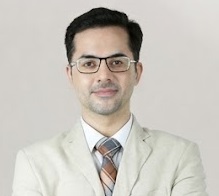

Our Mission Statement
Our mission is to place patients at the centre of every healthcare decision by providing trustworthy, evidence-based, and unbiased medical information. We believe that informed patients make better decisions. Backed by personalised guidance from our experienced advisory team, we help patients understand their treatment options, compare them objectively, and confidently choose the path that best suits their medical needs and personal circumstances.
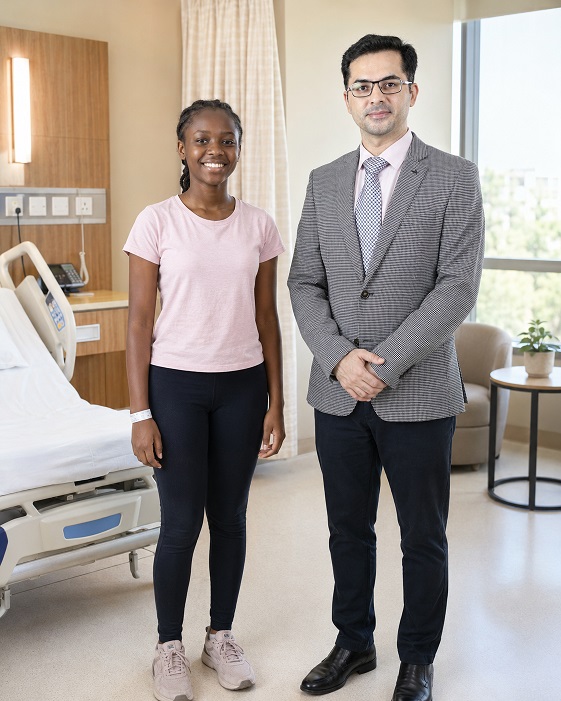
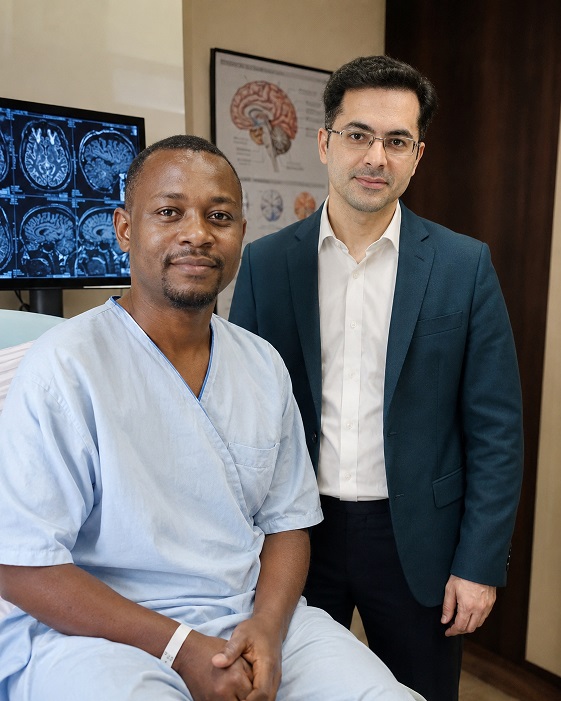
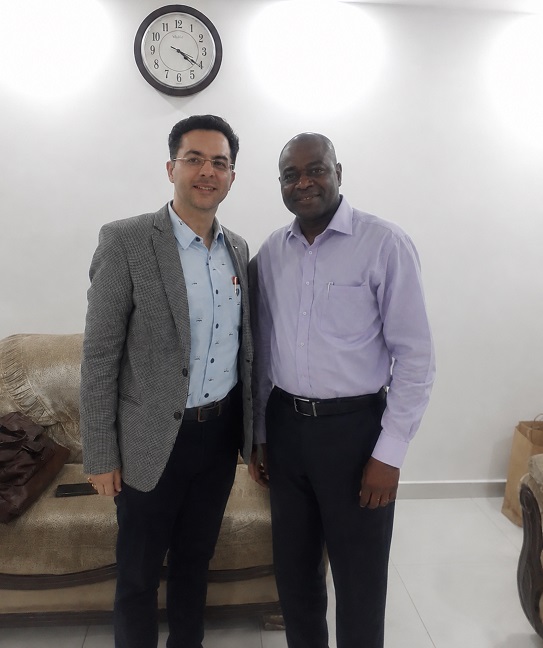
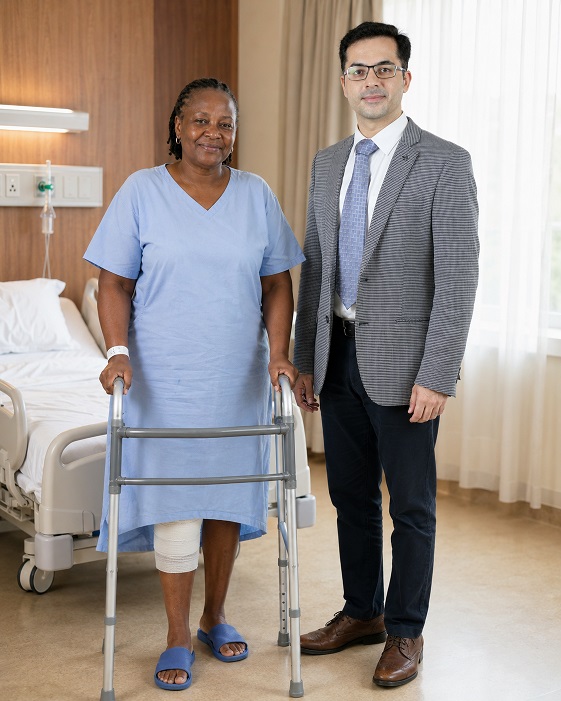
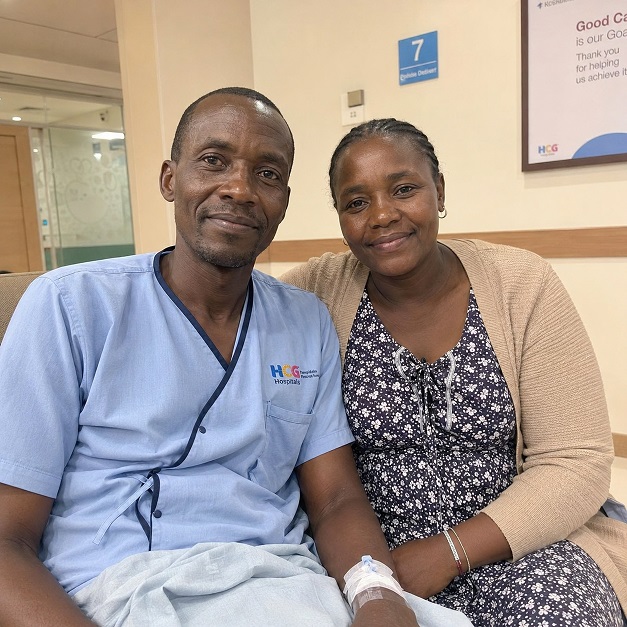
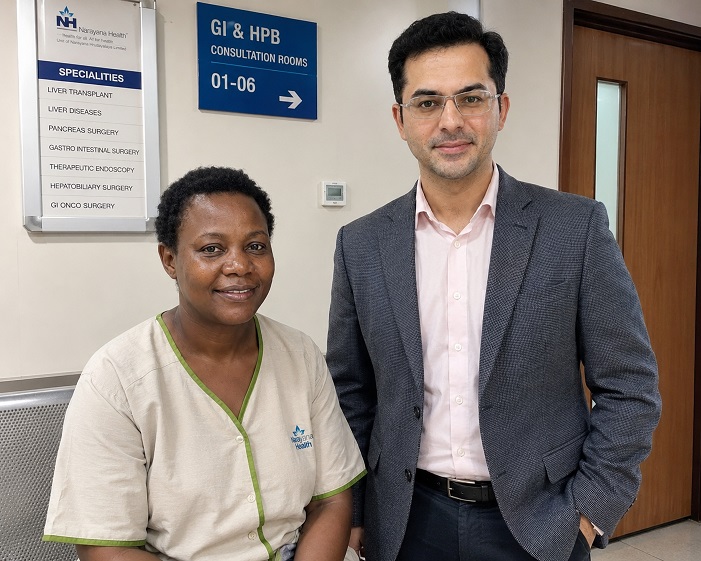
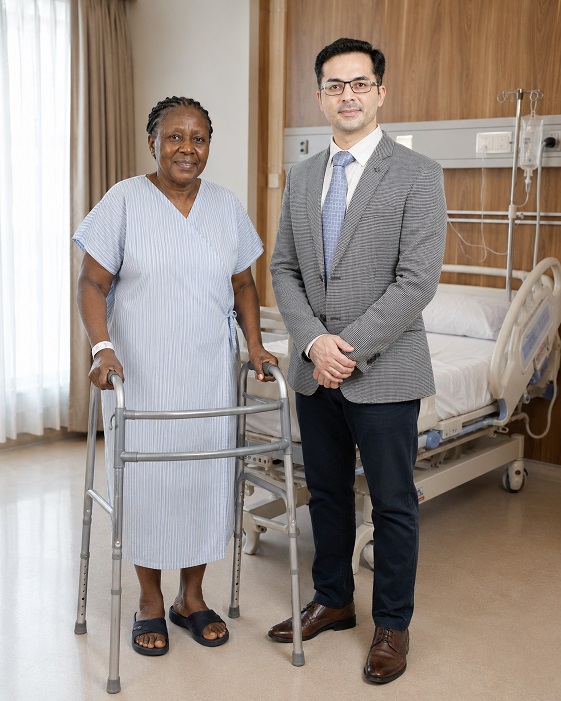
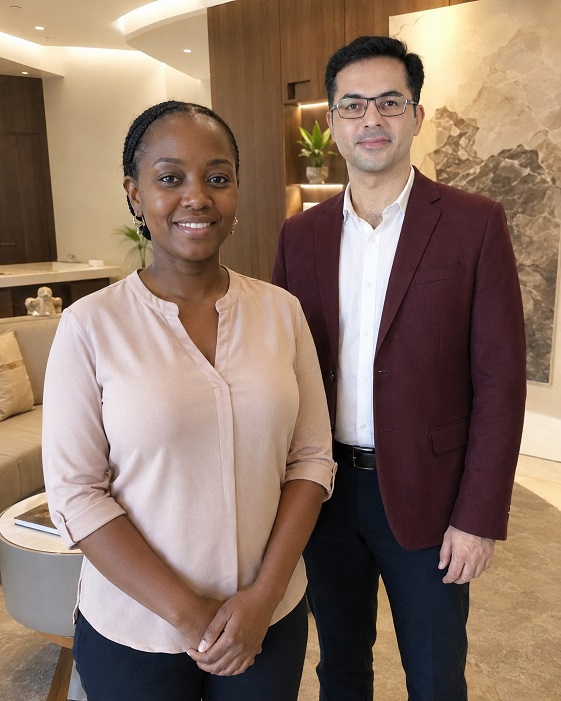
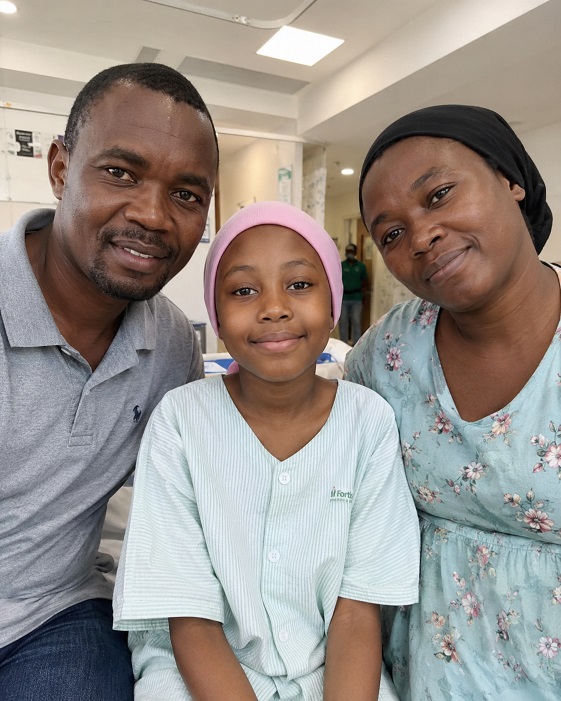
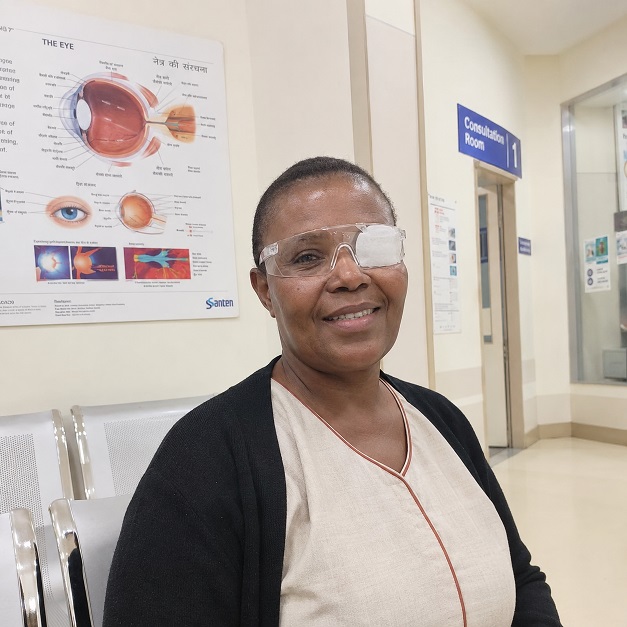
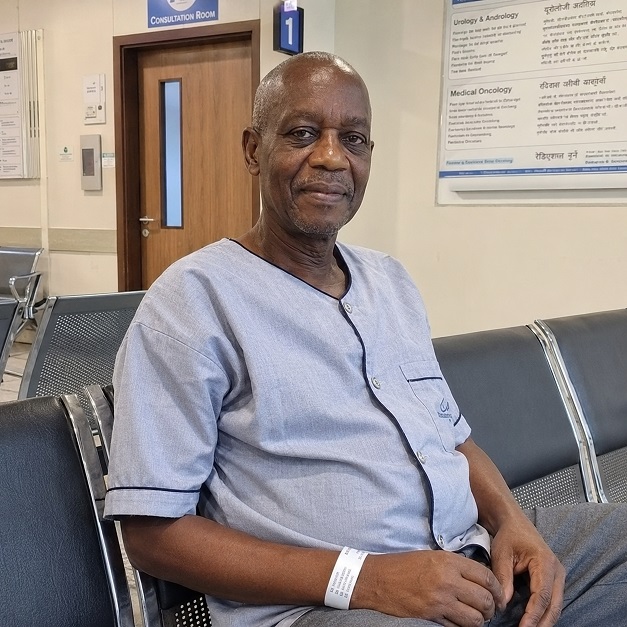
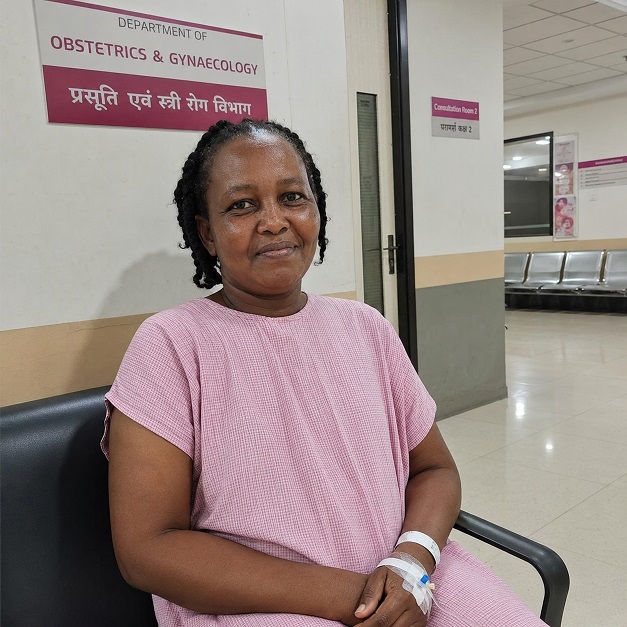
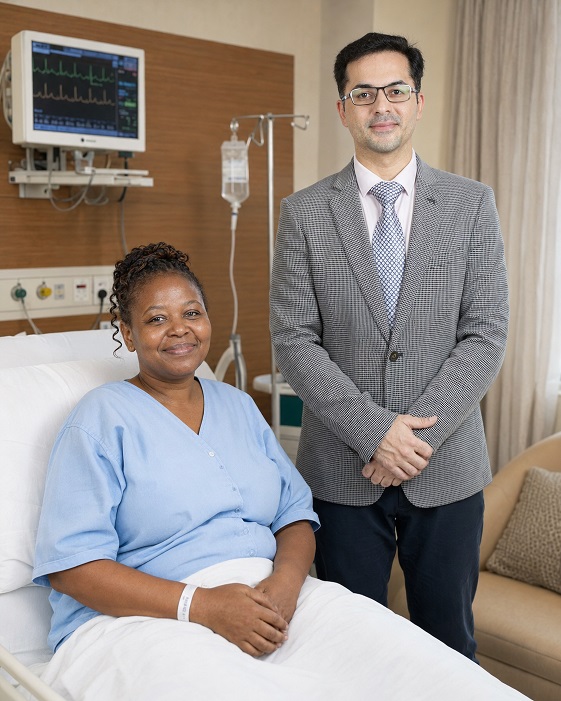
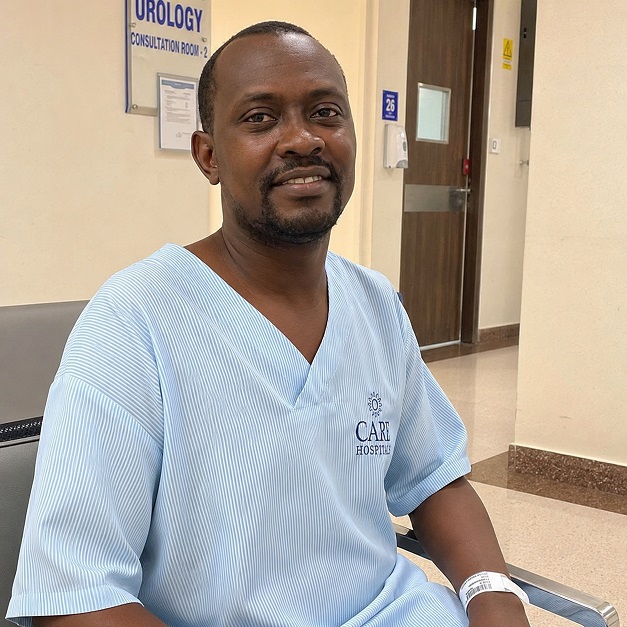
Patient Testimonials from Kenya
Ready to Take the First Step?
Share your Medical Reports with our Healthcare Managers Today and Get a FREE CONSULTATION, a Personalized Treatment Plan, and Complete Support from Arrival to Recovery.
Get Your Free ConsultationAreas We Serve
This resource has been thoughtfully prepared for patients from Kenya who are considering medical treatment in India. We also welcome patients from the wider region in the countries mentioned below-
We assist patients from:
- Ethiopia
- Somalia
- Tanzania
- Uganda
- Seychelles
- Guinea
- Guinea-Bissau
- Liberia
- Mali
- Mauritania
- Niger
- Nigeria
- Senegal
- Togo
- South Sudan
- Sierra Leone
Many of the insights, treatment pathways, hospital recommendations, travel guidance, and patient support services described here are equally relevant and may be used as a reference when planning treatment in India.
From Kenya to India: Your Complete Patient Support Guide
- Brain Tumour Surgery in India for Kenyan Patients
- Cancer Treatment and Surgery in India for Kenyan Patients
- Cardiac Treatment and Surgery in India for Kenyan Patients
- Heart Valve Replacement Surgery in India for Kenyan Patients
- Knee Replacement in India for Kenyan Patients
- Prostate Cancer Treatment and Surgery in India for Kenyan Patients
- Spine Treatment and Surgery in India for Kenyan Patients
- Selecting the Best Bariatric Surgeons and Hospitals in India: What Kenyan Patients Should Actually Look For
- Selecting the Best Cancer Surgeons and Hospitals in India: What Kenyan Patients Should Actually Look For
- Selecting the Best Cardiac Surgeons and Hospitals in India: What Kenyan Patients Should Actually Look For
- Selecting the Best Dental Surgeons and Clinics in India: What Kenyan Patients Should Actually Look For
- Selecting the Best Hip Surgeons and Hospitals in India: What Kenyan Patients Should Actually Look For
- Selecting the Best Kidney Transplant Surgeons and Hospitals in India: What Kenyan Patients Should Actually Look For
- Selecting the Best Knee Surgeons and Hospitals in India: What Kenyan Patients Should Actually Look For
- Selecting the Best Liver Transplant Surgeons and Hospitals in India: What Kenyan Patients Should Actually Look For
- Selecting the Best Neurosurgeons and Hospitals in India: What Kenyan Patients Should Actually Look For
- Selecting the Best Prostate Cancer Surgeons and Hospitals in India: What Kenyan Patients Should Actually Look For
- Selecting the Best Spine Surgeons and Hospitals in India: What Kenyan Patients Should Actually Look For