

Paediatric Neurosurgery in India for Kenyan Patients
When a child needs brain or spine surgery, timing decides a great deal — what paediatric neurosurgery in India offers a Kenyan family, and what it costs.
If your child has been diagnosed with hydrocephalus or another neurosurgical condition, two facts deserve your attention before anything else. The first is that Africa, home to a substantial share of the world's paediatric neurosurgical need, has access to fewer than 1% of the world's neurosurgeons. The second, more hopeful fact, is that the single most common cause of paediatric hydrocephalus across the continent is largely preventable. Across 24 years of guiding Kenyan families through treatment in India, paediatric neurosurgery is one of the areas where understanding both facts together genuinely changes how urgently and how carefully a family should approach this decision. This article explains what paediatric neurosurgery involves, why the gap between need and capacity is so severe across the region, what treatment costs in India compared with Kenya and Western countries, and the practical factors to weigh before deciding where to seek care.
Healing Journeys of Kenyan Patients

Key Takeaways
- The guide explains that paediatric neurosurgery requires specialist expertise because a child's developing brain and nervous system have different surgical considerations from those of adults. Common conditions include hydrocephalus, spina bifida, paediatric brain tumours and traumatic injuries. For hydrocephalus, the main options are shunt placement and endoscopic third ventriculostomy (ETV), with the appropriate choice depending on the child's cause and anatomy.
- Kenyan families face a substantial capacity gap. Africa has only 488 neurosurgeons, less than 1% of approximately 49,940 worldwide, despite carrying a disproportionate neurosurgical disease burden. Within Kenya, complex neurosurgical interventions are currently available at only two hospitals nationally—Kenyatta National Hospital and Moi Teaching and Referral Hospital.
- The guide also highlights that postinfectious hydrocephalus accounts for roughly 28% of paediatric hydrocephalus cases across 18 African countries. This is particularly relevant because the condition is associated with infections that can damage normal cerebrospinal-fluid drainage, meaning prevention and timely treatment of neonatal infections may reduce part of the disease burden.
- India has developed dedicated paediatric neurosurgical programmes, with specialists experienced in conditions affecting children rather than simply adapting adult neurosurgical practice. Leading centres combine this expertise with JCI or NABH accreditation and dedicated paediatric neuro-ICU facilities. For Kenyan families, the guide emphasises that prompt access can be particularly important in hydrocephalus because prolonged pressure on developing brain tissue can result in lasting developmental damage.
- The guide estimates hydrocephalus surgery in India at approximately US$3,780–10,000, compared with US$6,000–20,000 at the two Kenyan hospitals capable of complex neurosurgical care. Private paediatric neurosurgery is estimated at US$20,000–40,000 in the UK and US$30,000–60,000 in the US. Most cases require approximately 2–3 weeks in India, including evaluation, surgery and initial recovery.
- The page 4 “Six Things to Check” graphic focuses on hospital accreditation, the surgeon's paediatric-specific experience, the reason for choosing shunt or ETV, a complete quotation including device and ICU costs, visa and travel planning, and a long-term follow-up plan. For children receiving a shunt, the guide specifically stresses lifelong monitoring for possible malfunction.
Quick Facts
- Author
- Dr. Dheeraj Bojwani
- Experience
- 24+ Years
- Treatment
- Paediatric Neurosurgery
- Patients
- Kenyan Children
- First Assessment
- Diagnosis, imaging, cause and severity
- Key Specialist
- Paediatric Neurosurgeon
- Main Conditions
- Hydrocephalus, spina bifida, brain tumours and traumatic injuries
- Hydrocephalus Options
- Shunt placement or ETV
- Treatment Choice
- Depends on cause and anatomy
- Africa Neurosurgeons
- 488
- Global Neurosurgeons
- Approximately 49,940
- Kenya Capacity
- Two hospitals perform complex neurosurgical interventions
- Common African Cause
- Postinfectious hydrocephalus, approximately 28%
- Hospital Check
- JCI / NABH accreditation
- ICU Check
- Dedicated paediatric neuro-ICU
- Case Volume
- Paediatric cases matching the child's condition
- Cost Check
- Written estimate including surgery, device, ICU and follow-up
- India Cost
- US$3,780–10,000
- Kenya Cost
- US$6,000–20,000
- Medical Records
- Brain imaging and previous treatment reports
- Visa
- Indian medical e-visa with hospital invitation
- Travel
- Nairobi–Delhi or Mumbai flights
- Stay
- Approximately 2–3 weeks
- Follow-Up
- Written paediatric neurosurgical follow-up plan
- Key Warning
- Adult neurosurgical experience presented as paediatric expertise
- Decision Principle
- Prioritise timely treatment, paediatric-specific expertise and appropriate shunt/ETV assessment.
In Brief
For Kenyan children requiring neurosurgery, particularly hydrocephalus treatment, the key priorities are timely access, paediatric-specific surgical expertise and an individual assessment of shunt versus ETV. Families should verify hospital accreditation, ask about experience with the child's exact condition, obtain a complete written quotation and arrange follow-up with a paediatrician or neurosurgical team in Kenya.
What paediatric neurosurgery actually involves
Paediatric neurosurgery treats conditions affecting a child's brain, spinal cord, and nervous system, distinct from adult neurosurgery both in the specific conditions involved and in the surgical approach a growing body requires. The most common conditions include hydrocephalus, a build-up of cerebrospinal fluid around the brain that increases pressure and can cause lasting brain damage if untreated; spina bifida, a congenital defect where the spinal column doesn't close properly during development; and, less commonly, paediatric brain tumours and traumatic injuries.
The two main surgical approaches to hydrocephalus are shunt placement and endoscopic third ventriculostomy, known as ETV. A shunt is a thin tube, fitted with a valve, that diverts excess fluid from the brain to another part of the body, typically the abdomen, where it's safely absorbed. ETV creates a new pathway for fluid to drain within the brain itself, avoiding the need for a permanent implanted device, though it isn't suitable for every case. The right choice depends on the specific cause and anatomy of a child's hydrocephalus, a judgement that requires genuine paediatric neurosurgical expertise to make well.
Timing matters enormously with hydrocephalus specifically. The pressure that builds up as fluid accumulates can damage developing brain tissue, and the longer treatment is delayed, the greater the risk that any resulting developmental impact becomes permanent rather than reversible. This is part of why the gap between diagnosis and treatment, not just the treatment itself, deserves as much attention as choosing the right surgeon.
Why the gap between need and capacity is so severe across the region
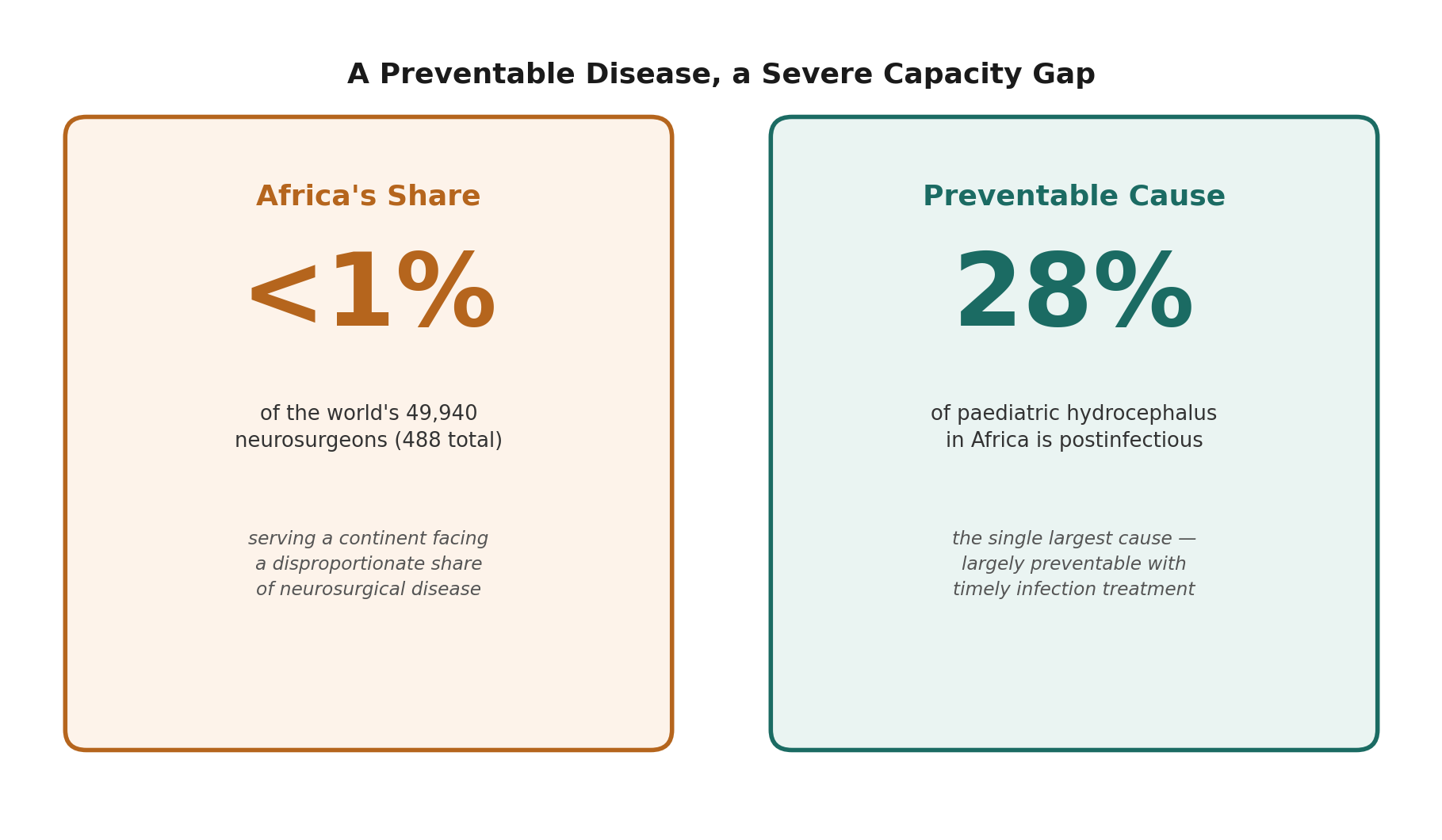
This is the fact every Kenyan family facing a paediatric neurosurgical diagnosis needs to understand clearly. Africa has access to only 488 neurosurgeons, less than 1% of the roughly 49,940 neurosurgeons worldwide, despite carrying a disproportionate share of global neurosurgical disease burden. Within Kenya specifically, complex neurosurgical interventions can currently be performed at only two hospitals nationally, Kenyatta National Hospital and Moi Teaching and Referral Hospital, meaning families across the country, and particularly outside Nairobi, often face significant delays simply reaching a facility capable of treating their child.
The second fact matters just as much, and offers a genuinely different kind of insight. A systematic review across 18 African countries found that postinfectious hydrocephalus, caused by an infection that damages the brain's normal fluid drainage system, is the single most common cause of paediatric hydrocephalus on the continent, accounting for roughly 28% of cases. Unlike the primarily congenital causes that dominate in higher-income countries, this pattern reflects gaps in preventing and promptly treating neonatal infections, meaning a meaningful share of this disease burden is, in principle, preventable, even as the surgical capacity to treat cases that do occur remains severely limited.
Why India has become a genuine hub for paediatric neurosurgery
India has developed substantial, dedicated paediatric neurosurgical capacity, with specialists who focus specifically on the unique surgical and developmental considerations a child's growing nervous system requires, rather than treating paediatric cases as a variation on adult neurosurgical practice. This depth of experience translates directly into more consistent judgement between shunt placement and ETV, and better management of the complications, like shunt infection or malfunction, that can arise afterward.
India's leading paediatric neurosurgery centres combine this specialist experience with JCI and NABH accredited safety standards and dedicated paediatric neuro-ICU capacity. In 24 years of guiding Kenyan families through decisions like this one, the clearest advice I can offer is this: given how limited domestic capacity remains, and how much timing matters for a condition like hydrocephalus that can cause lasting damage if treatment is delayed, seeking care promptly, rather than waiting for a domestic appointment that may be months away, is often the decision that protects a child's long-term development most.
This isn't a criticism of the dedicated paediatric neurosurgeons working in Kenya today, who operate under genuinely difficult resource constraints. It's a practical recognition that a country with only two hospitals capable of complex neurosurgical care, serving a population of over 55 million, cannot currently offer every family the timely access their child's condition demands, and that gap is a resource and infrastructure problem, not a reflection of the skill of the specialists who are there.
What it costs: India versus Kenya, the UK, and the US
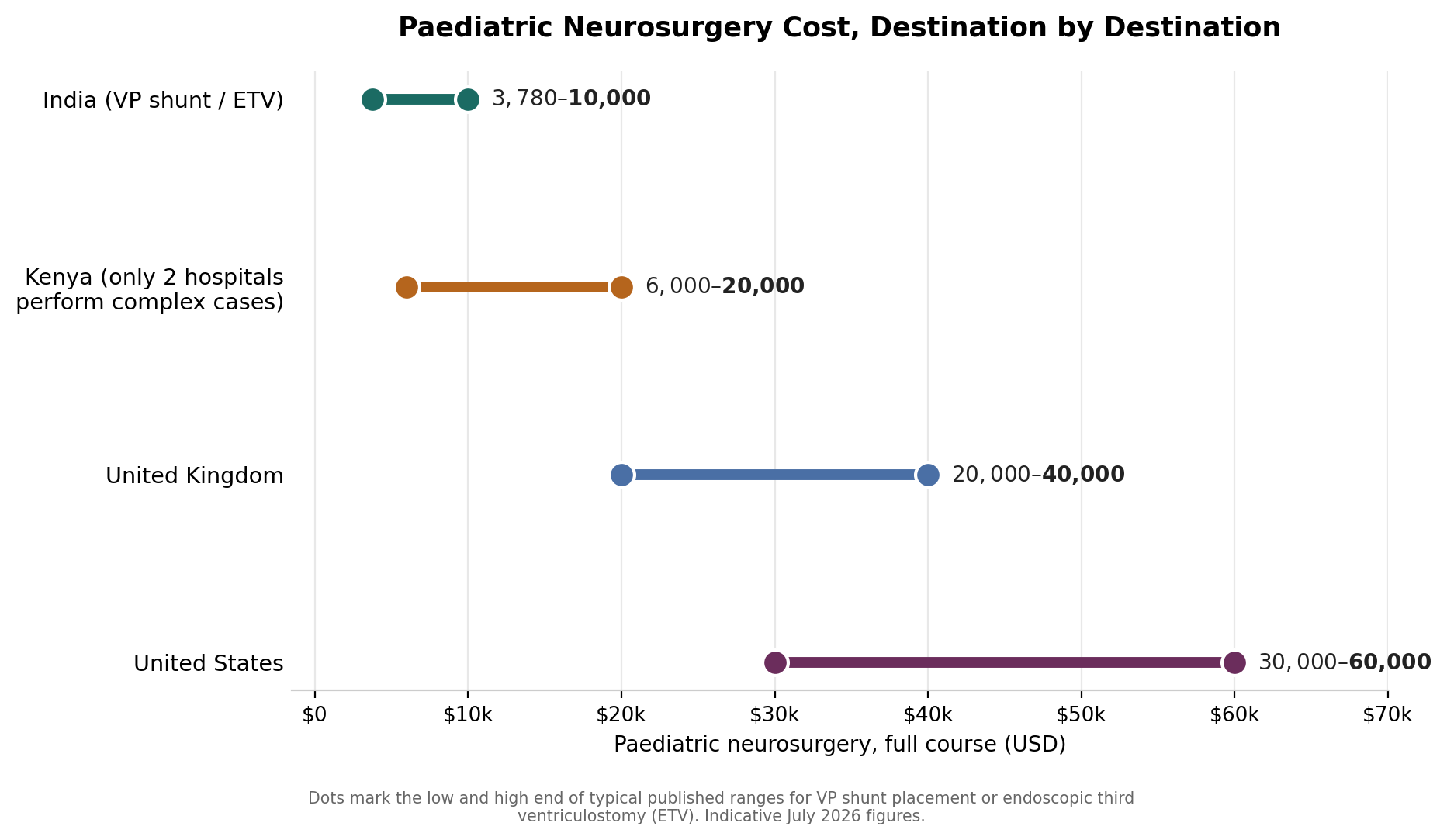
In India, paediatric neurosurgery for hydrocephalus, whether shunt placement or ETV, typically costs between 3,780 and 10,000 US dollars, covering surgery, the device where applicable, and hospital stay. In Kenya, costs at the two hospitals capable of complex neurosurgical care run roughly 6,000 to 20,000 dollars, though access to a timely surgical slot, not cost alone, remains the greater practical constraint. In the UK, private paediatric neurosurgery typically costs 20,000 to 40,000 dollars, and in the US, 30,000 to 60,000 dollars.
Beyond the procedure itself, budget for travel. Direct flights between Nairobi and Delhi or Mumbai run roughly 550 to 850 dollars return, and most paediatric neurosurgery cases require two to three weeks in India, covering evaluation, surgery, and initial recovery before travel home is medically advisable.
What a Kenyan family should actually check before booking
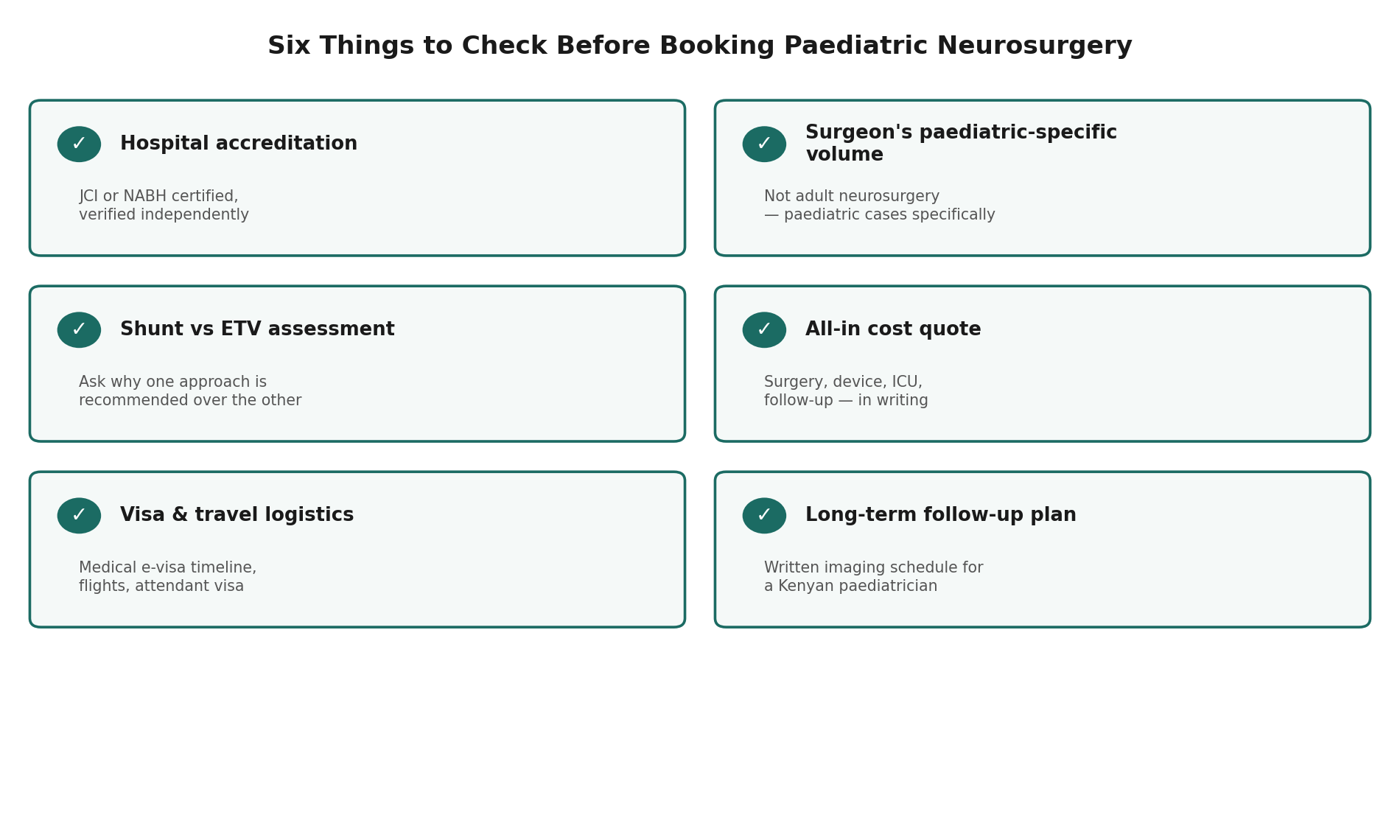
Given how much timing and specific expertise matter here, work through these questions directly.
Confirm genuine accreditation. Ask whether the hospital holds JCI or NABH certification, and verify it independently.
Ask about the surgeon's paediatric-specific volume. A specific number, how many paediatric cases matching your child's exact condition the surgeon personally treats each year, tells you far more than general neurosurgical reputation.
Ask why shunt placement or ETV is being recommended for your child specifically. A good surgeon should explain this choice based on your child's specific anatomy and cause of hydrocephalus, not a default preference.
Get the full cost breakdown in writing. Confirm what's included, surgery, device costs where relevant, ICU days, and follow-up consultations.
Plan your visa and travel timeline urgently. The Indian medical e-visa is typically issued within three to five working days once you have a formal hospital invitation letter.
Arrange a long-term follow-up plan before you leave. Shunt-dependent children need lifelong monitoring for malfunction. Agree on a written follow-up imaging schedule and identify a doctor in Kenya who can act quickly if warning signs appear.
Straight Answers for Kenyan Patients about Paediatric Neurosurgery in India
How severe is the neurosurgeon shortage across Africa?
Africa has access to only 488 neurosurgeons, less than 1% of the roughly 49,940 neurosurgeons worldwide, despite carrying a disproportionate share of global neurosurgical disease burden, including paediatric conditions.
What is the most common cause of paediatric hydrocephalus in Africa?
Postinfectious hydrocephalus, caused by an infection that damages the brain's normal fluid drainage, accounting for roughly 28% of cases across 18 African countries studied, a pattern distinct from the primarily congenital causes seen in higher-income countries.
How much does paediatric neurosurgery cost in India compared to the US?
India typically costs 3,780 to 10,000 US dollars for hydrocephalus surgery, against 30,000 to 60,000 dollars in the US.
What's the difference between a shunt and ETV for hydrocephalus?
A shunt is a permanent implanted device that diverts excess brain fluid to another part of the body. ETV creates a new internal drainage pathway without an implant, though it isn't suitable for every child; the right choice depends on the specific cause of hydrocephalus.
Where can complex paediatric neurosurgery be performed in Kenya?
Currently only at two hospitals nationally, Kenyatta National Hospital and Moi Teaching and Referral Hospital, meaning many families face significant delays reaching a facility capable of treating their child.
How urgently should hydrocephalus be treated?
Very urgently. Untreated hydrocephalus can cause lasting brain damage from increased pressure, making prompt treatment, wherever it's genuinely accessible, more important than waiting for a potentially distant domestic appointment.
A Closing Word
Paediatric neurosurgery sits at the intersection of two hard truths: a severe, well-documented capacity gap across the region, and a leading cause of the disease itself that's genuinely preventable. Neither changes the urgency of a child who needs treatment now. India offers the paediatric-specific surgical experience, accredited safety standards, and speed of access that makes it, for the great majority of Kenyan families I've guided through this decision, the clearest option to investigate without delay.
Sources
- 🌐 Aetiology and diagnostics of paediatric hydrocephalus across Africa: a systematic review and meta-analysis. The Lancet Global Health, 2022
- 🌐 Shortage of neurosurgeons hinder timely interventions and care delivery. Health Business Kenya
- 🌐 Kenya. NeuroKids — paediatric neurosurgery capacity overview
- 🌐 National Medical Commission of India — specialist registration verification
- 🌐 National Accreditation Board for Hospitals & Healthcare Providers (NABH) — accredited hospital directory
Frequently Asked Questions by Kenyans about Paediatric Neurosurgery in India
Why are Kenyan families sometimes considering India for paediatric neurosurgery?
Kenya currently has only two hospitals nationally capable of complex neurosurgical interventions, Kenyatta National Hospital and Moi Teaching and Referral Hospital. Families outside these centres may therefore face delays reaching appropriate specialist care.
How serious is the paediatric neurosurgeon shortage affecting African children?
Africa has only 488 neurosurgeons out of approximately 49,940 worldwide—less than 1%. The guide highlights this capacity gap against the continent's disproportionate share of neurosurgical disease.
Why is postinfectious hydrocephalus particularly relevant to Kenyan families?
The guide cites a systematic review across 18 African countries showing that postinfectious hydrocephalus accounts for roughly 28% of cases. This reflects the role of neonatal infections in the regional disease burden and the importance of timely infection prevention and treatment.
How should Kenyan parents decide between shunt surgery and ETV in India?
Parents should ask the paediatric neurosurgeon why one approach is being recommended for their child's specific anatomy and cause of hydrocephalus. The guide specifically warns against choosing shunt or ETV simply because it is the surgeon's preferred procedure.
Why should Kenyan parents check paediatric-specific surgical experience?
Children's developing nervous systems require different surgical considerations from adults. Parents should ask how many children with the same condition the surgeon personally treats each year, rather than relying on general neurosurgical experience.
How much does hydrocephalus surgery cost in India for Kenyan children?
The guide estimates approximately US$3,780–10,000 in India, compared with around US$6,000–20,000 at the Kenyan hospitals capable of complex neurosurgical care.
What should Kenyan parents ensure is included in the Indian treatment quotation?
The written quotation should identify surgery, device costs where applicable, ICU days and follow-up consultations. This is particularly important for shunt surgery because the implanted device forms part of the treatment cost.
How urgently should a Kenyan child with hydrocephalus be assessed?
The guide stresses that delay can cause lasting damage to developing brain tissue because increased pressure can affect neurological development. Families should therefore seek timely specialist assessment rather than waiting unnecessarily for a distant appointment.
How long should a Kenyan family plan to remain in India for paediatric neurosurgery?
The guide recommends approximately 2–3 weeks, covering evaluation, surgery and initial recovery. The exact stay may be longer if the child develops complications or requires additional treatment.
What follow-up should Kenyan parents arrange after returning from India?
Families should obtain a written imaging and follow-up schedule before leaving India and identify a doctor in Kenya who can respond quickly if problems arise. This is particularly important for children with shunts, who require lifelong monitoring for malfunction.
Page Summary
This five-page guide focuses on the limited paediatric neurosurgical capacity in Kenya and the treatment options available in India. Page 2 highlights Africa's 488 neurosurgeons—less than 1% of the global total—and the 28% contribution of postinfectious hydrocephalus to paediatric hydrocephalus across 18 African countries. It also identifies only two Kenyan hospitals currently capable of complex neurosurgical interventions. Page 3 compares hydrocephalus surgery costs in India, Kenya, the UK and US. The page 4 six-point graphic focuses on accreditation, paediatric-specific surgeon volume, shunt versus ETV assessment, complete costing, travel and long-term follow-up.
Citation Block
| Topic | Information |
|---|---|
| Topic | Paediatric Neurosurgery in India for Kenyan Patients |
| Treatment | Paediatric Neurosurgery / Hydrocephalus Surgery |
| Patients | Kenyan Children |
| First Assessment | Diagnosis, imaging, cause and severity |
| Key Specialist | Paediatric Neurosurgeon |
| Main Conditions | Hydrocephalus, spina bifida, brain tumours and traumatic injuries |
| Hydrocephalus Options | Shunt placement or ETV |
| Treatment Choice | Based on cause and anatomy |
| Africa Neurosurgeons | 488 |
| Kenya Capacity | Two hospitals for complex neurosurgical interventions |
| African Hydrocephalus Cause | Postinfectious, approximately 28% |
| Hospital Check | JCI / NABH accreditation |
| ICU Check | Dedicated paediatric neuro-ICU |
| Case Volume | Exact paediatric condition experience |
| Cost Check | Written estimate including surgery, device, ICU and follow-up |
| India Cost | US$3,780–10,000 |
| Kenya Cost | US$6,000–20,000 |
| Medical Records | Brain imaging and previous treatment reports |
| Travel | Nairobi–Delhi or Mumbai flights |
| Stay | Approximately 2–3 weeks |
| Follow-Up | Written paediatric neurosurgical plan in Kenya |
| Specialist Question | How many children with my child's exact condition do you personally treat each year? |
| Treatment Question | Why is shunt placement or ETV more appropriate for my child? |
| Cost Question | Does the quotation include the device, ICU stay and follow-up? |
| Travel Question | How long should my child remain in India before returning to Kenya? |
| Follow-Up Question | Who will monitor my child in Kenya after surgery? |
| Warning Signs | Adult neurosurgical experience without paediatric-specific expertise |
| Payment Warning | Quotation excluding device, ICU or follow-up costs |
| Key Decision | Verify paediatric expertise, treatment choice and timely access |

Our Mission Statement
Our mission is to place patients at the centre of every healthcare decision by providing trustworthy, evidence-based, and unbiased medical information. We believe that informed patients make better decisions. Backed by personalised guidance from our experienced advisory team, we help patients understand their treatment options, compare them objectively, and confidently choose the path that best suits their medical needs and personal circumstances.
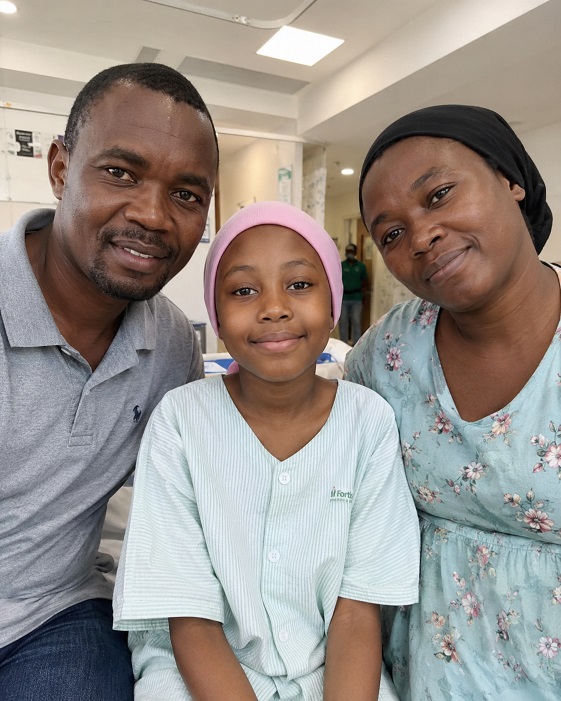
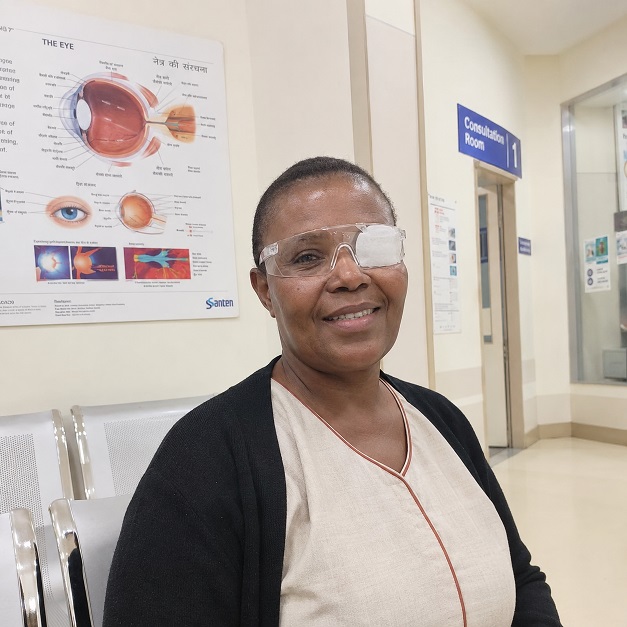
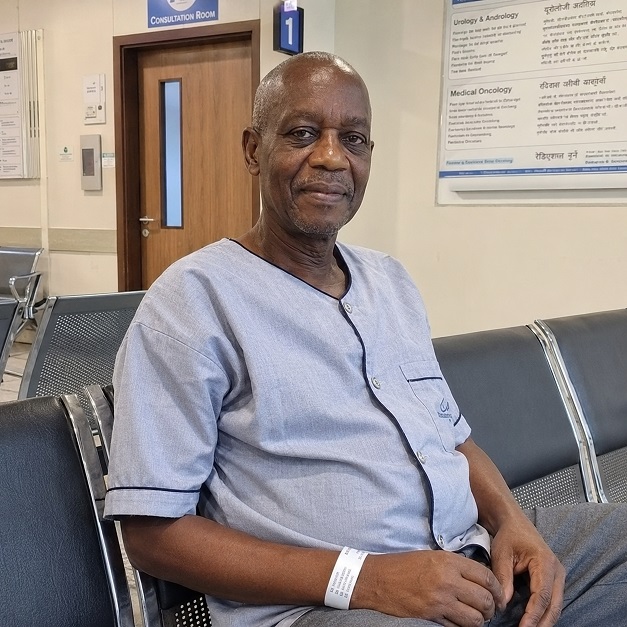
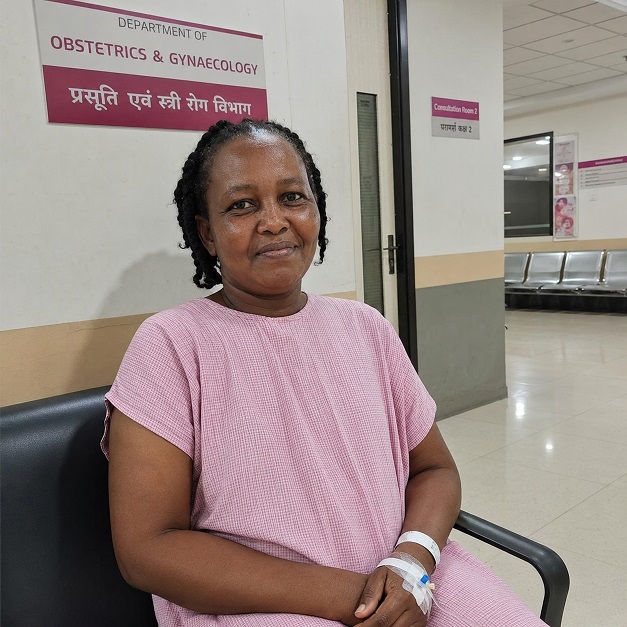
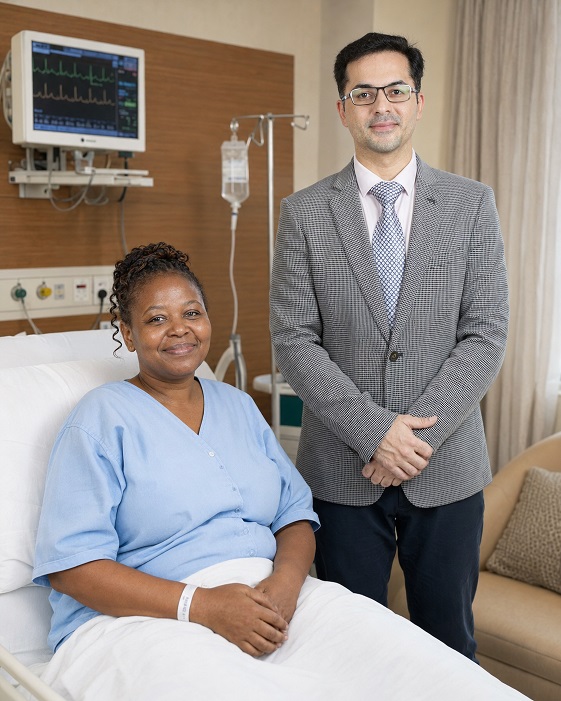
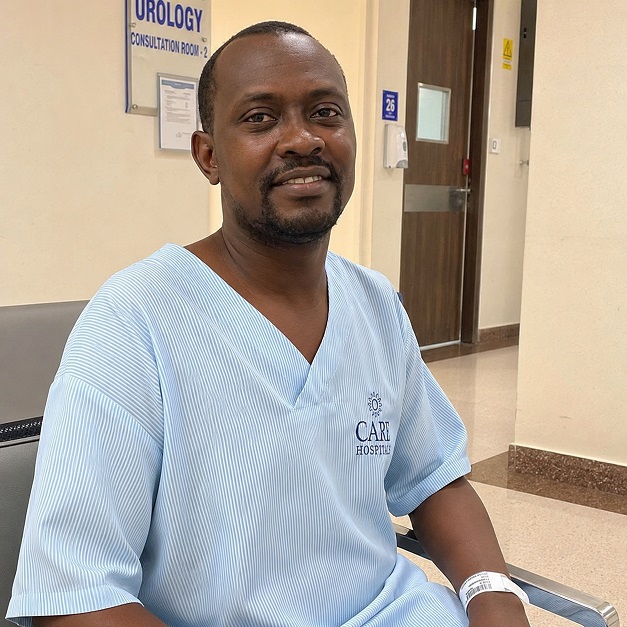
Patient Testimonials from Kenya
Ready to Take the First Step?
Share your Medical Reports with our Healthcare Managers Today and Get a FREE CONSULTATION, a Personalized Treatment Plan, and Complete Support from Arrival to Recovery.
Get Your Free ConsultationAreas We Serve
This resource has been thoughtfully prepared for patients from Kenya who are considering medical treatment in India. We also welcome patients from the wider region in the countries mentioned below-
We assist patients from:
- Ethiopia
- Somalia
- Tanzania
- Uganda
- Seychelles
- Guinea
- Guinea-Bissau
- Liberia
- Mali
- Mauritania
- Niger
- Nigeria
- Senegal
- Togo
- South Sudan
- Sierra Leone
Many of the insights, treatment pathways, hospital recommendations, travel guidance, and patient support services described here are equally relevant and may be used as a reference when planning treatment in India.
From Kenya to India: Your Complete Patient Support Guide
- Brain Tumour Surgery in India for Kenyan Patients
- Cancer Treatment and Surgery in India for Kenyan Patients
- Cardiac Treatment and Surgery in India for Kenyan Patients
- Heart Valve Replacement Surgery in India for Kenyan Patients
- Knee Replacement in India for Kenyan Patients
- Prostate Cancer Treatment and Surgery in India for Kenyan Patients
- Spine Treatment and Surgery in India for Kenyan Patients
- Selecting the Best Bariatric Surgeons and Hospitals in India: What Kenyan Patients Should Actually Look For
- Selecting the Best Cancer Surgeons and Hospitals in India: What Kenyan Patients Should Actually Look For
- Selecting the Best Cardiac Surgeons and Hospitals in India: What Kenyan Patients Should Actually Look For
- Selecting the Best Dental Surgeons and Clinics in India: What Kenyan Patients Should Actually Look For
- Selecting the Best Hip Surgeons and Hospitals in India: What Kenyan Patients Should Actually Look For
- Selecting the Best Kidney Transplant Surgeons and Hospitals in India: What Kenyan Patients Should Actually Look For
- Selecting the Best Knee Surgeons and Hospitals in India: What Kenyan Patients Should Actually Look For
- Selecting the Best Liver Transplant Surgeons and Hospitals in India: What Kenyan Patients Should Actually Look For
- Selecting the Best Neurosurgeons and Hospitals in India: What Kenyan Patients Should Actually Look For
- Selecting the Best Prostate Cancer Surgeons and Hospitals in India: What Kenyan Patients Should Actually Look For
- Selecting the Best Spine Surgeons and Hospitals in India: What Kenyan Patients Should Actually Look For