

Paediatric Heart Surgery in India for Kenyan Patients
Why waiting is the real danger in a child's heart condition, what paediatric heart surgery in India involves, and what a Kenyan family should check and budget for.
If your child has been diagnosed with a congenital heart defect, the single most important thing to understand is that time is not a neutral factor. For most heart defects present at birth, waiting is not a safe default, and in Kenya specifically, the gap between diagnosis and surgery has proven to be dangerous in ways every parent facing this diagnosis should know clearly. Across 24 years of guiding Kenyan families through treatment in India, paediatric heart surgery is one of the areas where a fast, well-informed decision genuinely saves lives. This article explains what paediatric heart surgery involves, why the waiting period is so dangerous in Kenya specifically, what treatment costs in India compared with Kenya and Western countries, and the practical factors a Kenyan family should weigh before booking care abroad.
Healing Journeys of Kenyan Patients


Key Takeaways
- The guide explains that congenital heart disease affects approximately 8–15 babies per 1,000 live births worldwide, but the timing of treatment varies greatly by the specific defect. Some conditions require surgery within the first weeks of life, while others can safely wait longer. Accurate diagnosis and access to an actual surgical slot are therefore critical, particularly for children whose condition may deteriorate while waiting.
- Kenyan families face a serious treatment-access problem. A 2025 study of 1,703 congenital heart disease patients at Kenyatta National Hospital found a 36.1% one-year mortality rate after diagnosis, while only 37% of children recommended for surgery received it within that year. The median waiting time was 59 days, extending to as much as 208 days in some cases. Kenya is estimated to need approximately 5,000 congenital heart surgeries annually, far more than current domestic capacity.
- The guide explains that India has developed large paediatric cardiac surgery capacity, allowing leading centres to schedule many cases within days to a few weeks after completed evaluation. Dedicated paediatric cardiac ICUs, experienced surgeons and high-volume treatment of specific congenital defects are presented as important advantages for Kenyan families considering treatment abroad.
- Cost is another consideration. The guide estimates paediatric heart surgery at approximately US$3,500–15,000 in India, compared with US$2,300–31,000+ privately in Kenya, US$20,000–50,000 in the UK and US$40,000–100,000 in the US. Most cases require approximately 2–4 weeks in India, including evaluation, surgery and closely monitored early recovery.
- The guide strongly recommends checking JCI or NABH accreditation, the surgeon's experience with the child's exact heart defect and the availability of a dedicated paediatric cardiac ICU. Families should also obtain a complete written quotation covering surgery, ICU care, implants where relevant and follow-up consultations.
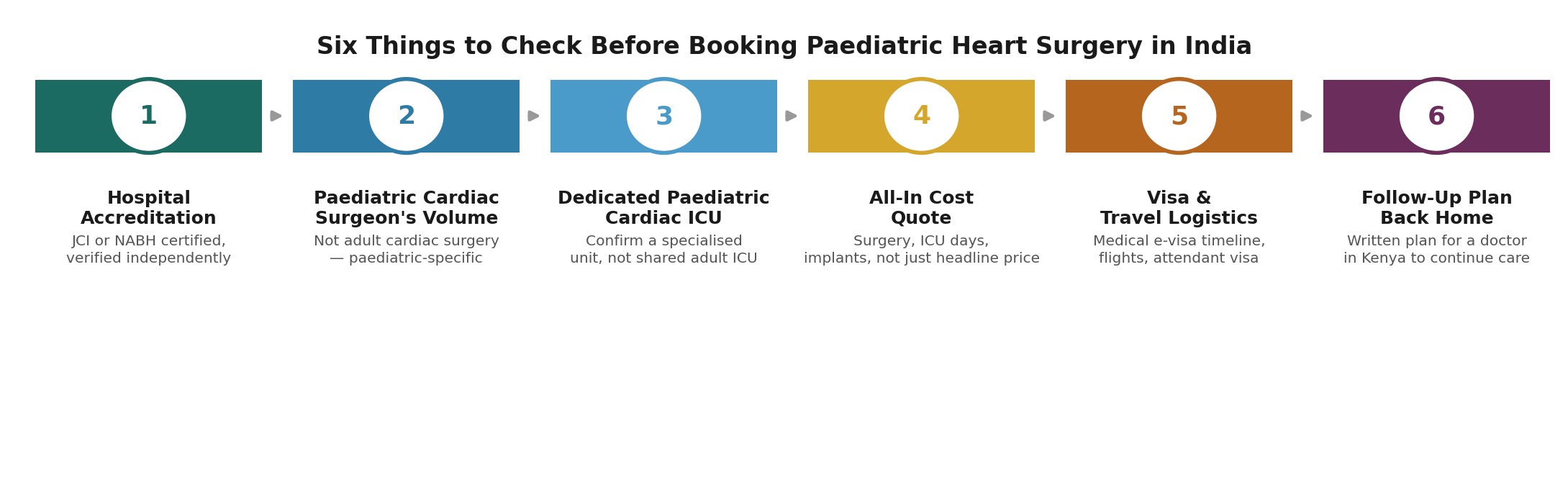
- The page 4 “Six Things to Check” graphic highlights hospital accreditation, exact-defect surgeon volume, dedicated paediatric cardiac ICU facilities, complete costing, visa/travel arrangements and a written follow-up plan in Kenya. The guide also states that an Indian medical e-visa is typically issued within 3–5 working days after the hospital provides a formal invitation letter, with a linked medical attendant visa available for a parent or accompanying adult.
Quick Facts
- Author
- Dr. Dheeraj Bojwani
- Experience
- 24+ Years
- Treatment
- Paediatric Heart Surgery
- Patients
- Kenyan Children
- First Assessment
- Congenital heart defect and severity
- Key Specialist
- Paediatric Cardiac Surgeon
- Common Conditions
- ASD, VSD, Tetralogy of Fallot and complex congenital defects
- Timing
- Depends on the exact heart defect
- Kenya Need
- Approximately 5,000 congenital heart surgeries annually
- Kenya Waiting
- Median 59 days in the cited KNH study
- Kenya Mortality
- 36.1% one-year mortality in the cited 2025 study
- Hospital Check
- JCI / NABH accreditation
- ICU Check
- Dedicated paediatric cardiac ICU
- Case Volume
- Exact heart-defect surgical experience
- Cost Check
- Written estimate including surgery, ICU and relevant implants
- India Cost
- US$3,500–15,000
- Kenya Cost
- US$2,300–31,000+ private
- Medical Records
- Echocardiography, imaging and previous cardiac reports
- Visa
- Indian medical e-visa with hospital invitation
- Travel
- Nairobi–Delhi or Mumbai flights
- Stay
- Approximately 2–4 weeks
- Follow-Up
- Written paediatric cardiac follow-up plan in Kenya
- Key Warning
- Long surgical waiting period without exploring confirmed alternatives
- Decision Principle
- Prioritise timely treatment, exact-defect expertise and paediatric cardiac ICU support.
In Brief
For Kenyan children requiring congenital heart surgery, the key priorities are timely access, exact-defect surgical expertise and dedicated paediatric cardiac infrastructure. Families should compare the actual waiting time in Kenya with a confirmed Indian surgical date, verify the surgeon's experience with the child's specific defect, confirm a dedicated paediatric cardiac ICU and arrange follow-up in Kenya before travelling.
What paediatric heart surgery actually involves
Congenital heart disease refers to structural heart defects present at birth, found in an estimated 8 to 15 babies out of every 1,000 live births worldwide. Defects range widely in severity: some, like a small hole between heart chambers, may need only monitoring or a straightforward closure procedure; others, like complex defects affecting the heart's major vessels, require staged surgeries over months or years, sometimes starting within days of birth.
Common procedures include closing atrial or ventricular septal defects (holes in the heart's walls), correcting tetralogy of Fallot (a combination of four related defects), and repairing more complex conditions requiring reconstruction of the heart's outflow vessels. Timing matters enormously and varies by defect: some conditions need correction within the first weeks of life, others can safely wait months, and getting this timing right depends on an accurate diagnosis and a genuinely available surgical slot, not just a theoretical treatment plan.
Why the waiting period is so dangerous in Kenya specifically
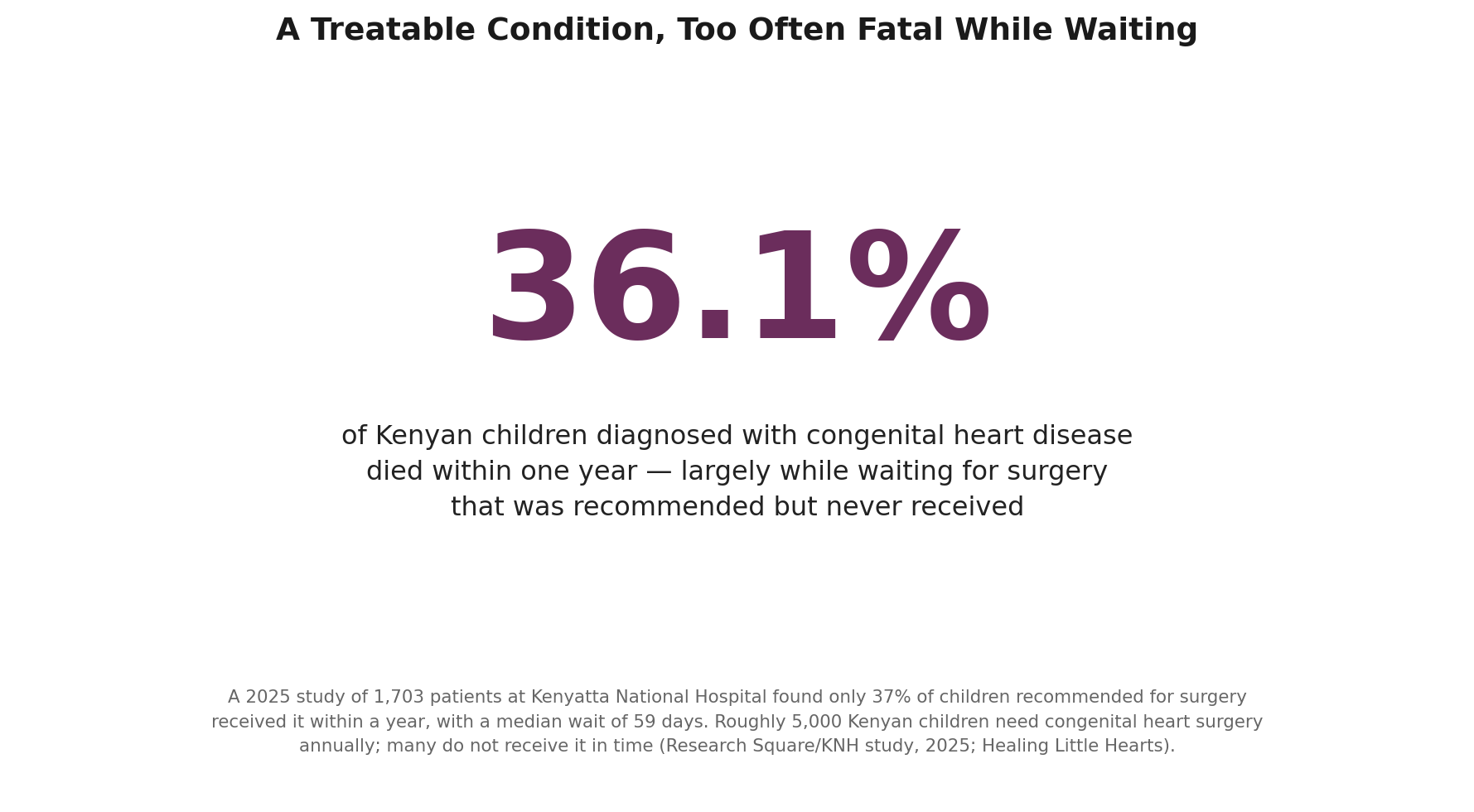
This is the fact every Kenyan family facing this diagnosis needs to understand clearly, because it changes how urgently a decision should be made. A 2025 study reviewing 1,703 congenital heart disease patients at Kenyatta National Hospital, one of Kenya's two national referral centres for this condition, found a one-year post-diagnosis mortality rate of 36.1%. Only 37% of children recommended for surgery actually received it within that year, with a median waiting time from diagnosis to surgery of 59 days, and a range stretching as long as 208 days. Kenya needs an estimated 5,000 congenital heart surgeries every year based on population and World Health Organization estimates, and the gap between that need and what gets delivered domestically remains substantial.
This isn't a story about surgical skill; Kenyan cardiac surgeons perform genuinely skilled operations. It's a story about capacity and timing: too few surgical slots, concentrated in too few centres, for a condition where delay itself is often the thing that kills. For a family navigating a fresh diagnosis, understanding this changes the calculation. A recommended surgery that sits on a waiting list for months isn't a plan, it's a risk, and comparing that reality honestly against what's genuinely and quickly available elsewhere is a reasonable, responsible thing to do.
Why India has become the destination of choice for paediatric heart surgery
India has built one of the largest paediatric cardiac surgery capacities in the world, treating both domestic and international patients at a volume that translates directly into surgical availability, not just surgical skill. Leading Indian paediatric cardiac centres can typically schedule surgery within days to a few weeks of a completed evaluation, a dramatically different timeline than what many Kenyan families currently face, and exactly the kind of speed that matters most for a condition where the wait itself carries risk.
India's top paediatric cardiac units combine this scheduling speed with dedicated paediatric cardiac ICUs, staffed specifically for the unique post-operative needs of small children and infants, and surgeons who perform high volumes of the exact defect types most common in congenital heart disease. Paired with JCI and NABH accredited safety standards and cost that runs a fraction of Western pricing, this combination of speed, dedicated paediatric infrastructure, and accreditation is genuinely difficult to match, and for many of the families I've guided through this decision, once the KNH waiting-time data is understood clearly, the case for looking to India becomes urgent rather than optional.
What it costs: India versus Kenya, the UK, and the US
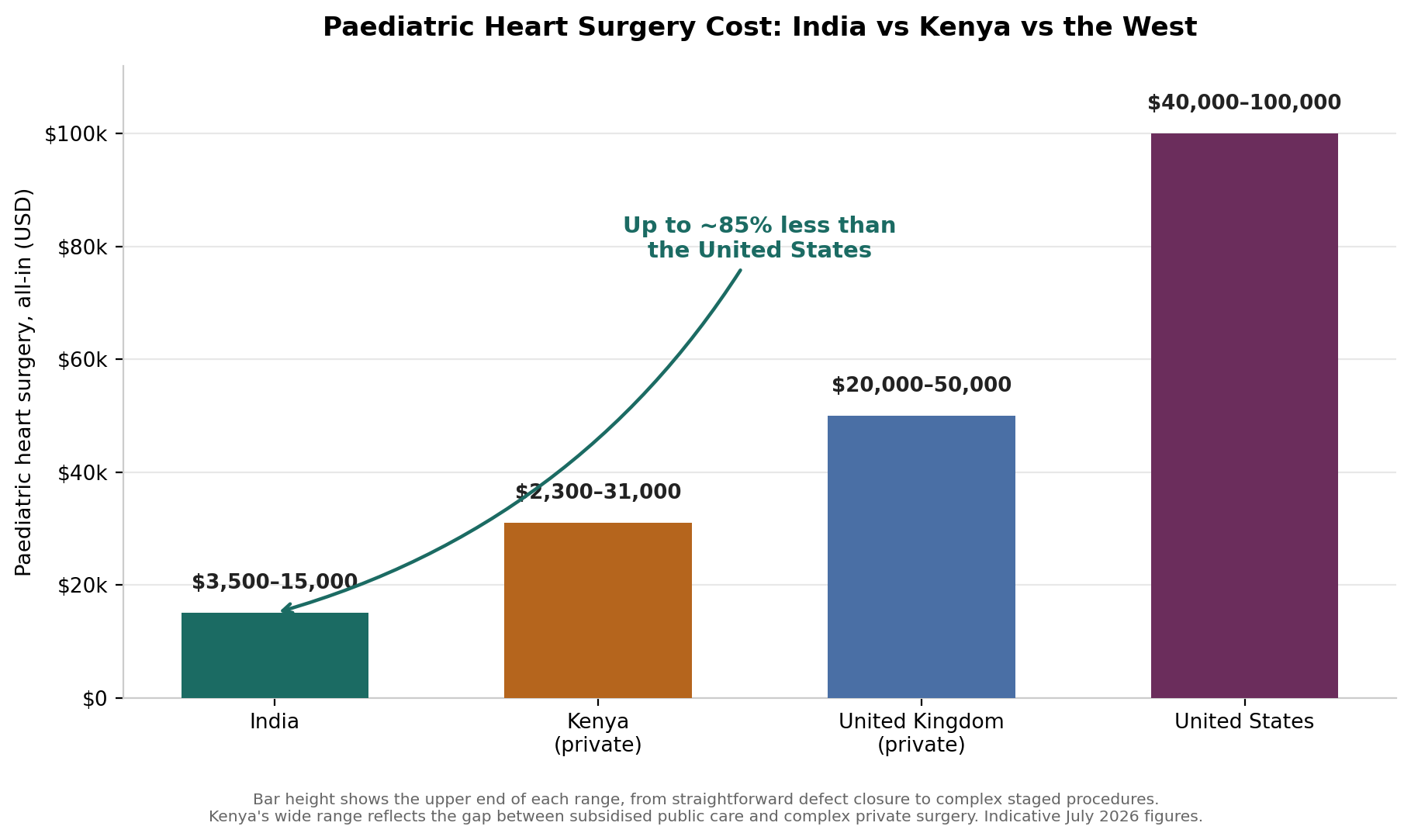
Cost varies substantially by defect complexity. In India, paediatric heart surgery typically costs between 3,500 and 15,000 US dollars, covering straightforward defect closures through more complex staged repairs, including surgery, ICU care, and hospital stay. In Kenya, costs for the same range of procedures run anywhere from 2,300 to over 31,000 dollars privately, reflecting how dramatically complexity and hospital choice affect domestic pricing, and how genuinely expensive complex cases can become even where treatment is technically available. In the UK, private paediatric cardiac surgery typically runs 20,000 to 50,000 dollars, and in the US, 40,000 to 100,000 dollars, up to roughly 85% more than the equivalent surgery in India.
Beyond the procedure itself, budget for travel. Direct flights between Nairobi and Delhi or Mumbai run roughly 550 to 850 dollars return, and most paediatric cardiac surgery cases require two to four weeks in India, covering evaluation, surgery, and the closely monitored early recovery period before travel home is medically advisable.
What a Kenyan family should actually check before booking
Given how much timing matters for this specific condition, moving quickly and moving well-informed both matter. Work through these questions directly.
Confirm genuine accreditation. Ask whether the hospital holds JCI or NABH certification, and verify it independently rather than relying on a website.
Ask about the surgeon's volume in your child's exact defect type. Paediatric cardiac surgery covers dozens of distinct conditions; a specific number, how many cases matching your child's exact defect the surgeon personally treats each year, tells you far more than a general reputation. In 24 years of watching families navigate this decision under real time pressure, the ones who ask this specific question consistently make more confident, better-informed choices.
Confirm a dedicated paediatric cardiac ICU. Ask specifically whether post-operative care happens in a unit staffed and equipped for children, not a general or adult cardiac ICU, since paediatric physiology requires genuinely different monitoring and support.
Get the full cost breakdown in writing. Confirm what's included, surgery, ICU days, implants where relevant, and follow-up consultations, and what would happen, and cost, if recovery is more complicated than expected.
Plan your visa and travel timeline urgently. The Indian medical e-visa is typically issued within three to five working days once you have a formal hospital invitation letter, and a parent or attendant can travel on a linked medical attendant visa, worth starting immediately given how much timing matters here.
Arrange your follow-up plan before you leave. Agree on a written follow-up schedule, including any future staged procedures if your child's condition requires them, and identify a doctor in Kenya who can continue monitoring once you're home.
Straight Answers for Kenyan Patients about Paediatric Heart Surgery in India
How much cheaper is paediatric heart surgery in India compared to the US?
India typically costs 3,500 to 15,000 US dollars, against 40,000 to 100,000 dollars in the US, a saving of up to roughly 85%, at hospitals holding the same JCI and NABH accreditation standards.
Why is the wait for heart surgery so dangerous for Kenyan children?
A 2025 study at Kenyatta National Hospital found 36.1% one-year mortality among diagnosed congenital heart disease patients, with only 37% of children recommended for surgery receiving it within a year and a median wait of 59 days, meaning delay itself is a major driver of death in this condition.
How many Kenyan children need congenital heart surgery each year?
An estimated 5,000, based on population size and World Health Organization prevalence data, against a domestic surgical capacity that current hospital data suggests falls well short of that need.
How quickly can surgery be scheduled in India?
Leading Indian paediatric cardiac centres can typically schedule surgery within days to a few weeks of a completed evaluation, a dramatically faster timeline than the median 59-day wait currently documented in Kenya.
What should I check about the ICU my child will recover in?
Confirm specifically that post-operative recovery happens in a dedicated paediatric cardiac ICU, staffed and equipped for children's unique physiology, rather than a general or adult cardiac unit.
How do I get a medical visa to India from Kenya quickly?
The Indian medical e-visa is typically issued within three to five working days once you have a formal invitation letter from the treating hospital, and a parent or attendant can usually apply for a linked medical attendant visa at the same time.
A Closing Word
Congenital heart disease is, in the great majority of cases, a treatable condition, and the tragedy documented in Kenya's own hospital data isn't a lack of medical knowledge, it's a lack of timely surgical access. Given the genuine urgency this diagnosis carries, India offers the surgical volume, paediatric-specific infrastructure, accredited safety standards, and speed of scheduling that makes it, for the great majority of Kenyan families I've guided through this decision, the clearest and most urgent option to investigate. Move quickly, ask the right questions, and get your child's follow-up care arranged before you travel.
Sources
- 🌐 One-year outcomes and intervention waiting time of patients admitted with congenital heart disease at Kenyatta National Hospital, Kenya
- 🌐 Crippling costs and delays: 36 per cent of Kenyan children die waiting for heart surgery. Daily Nation, 2025. nation.africa/ken ya/health
- 🌐 Kenya. Healing Little Hearts — congenital heart surgery need estimates
- 🌐 High cost of heart surgery leaves Kenyan children at risk. The Standard Health, 2026
- 🌐 National Medical Commission of India — surgeon and specialist registration verification
- 🌐 National Accreditation Board for Hospitals & Healthcare Providers (NABH) — accredited hospital directory
Frequently Asked Questions by Kenyans about Paediatric Heart Surgery in India
Why is waiting for congenital heart surgery particularly dangerous for Kenyan children?
A 2025 KNH study of 1,703 patients found 36.1% one-year mortality after diagnosis, while only 37% of children recommended for surgery received it within a year. The median wait was 59 days, with some children waiting up to 208 days.
How many congenital heart surgeries does Kenya need each year?
The guide estimates that Kenya needs approximately 5,000 congenital heart surgeries every year, while current domestic capacity remains substantially below this requirement.
How quickly can a Kenyan child potentially receive heart surgery in India?
Leading Indian paediatric cardiac centres can typically schedule surgery within days to a few weeks after the child's evaluation is completed. Families should ask for an actual proposed surgical date rather than a general promise of availability.
How should Kenyan parents choose a paediatric heart surgeon in India?
Parents should ask how many children with their child's exact congenital heart defect the surgeon personally operates on each year. The guide considers defect-specific experience more meaningful than general paediatric cardiac reputation.
Why is a dedicated paediatric cardiac ICU important for a Kenyan child?
Children and infants require different postoperative monitoring and support from adults. The guide therefore recommends confirming that recovery takes place in a dedicated paediatric cardiac ICU, rather than a general or adult cardiac ICU.
How much does paediatric heart surgery cost for Kenyan families in India?
The guide estimates approximately US$3,500–15,000 in India, compared with US$2,300–31,000+ privately in Kenya. The final amount depends on the child's specific defect and surgical complexity.
What should a Kenyan family include when sending the child's medical records to India?
Send the child's echocardiography, cardiac imaging, diagnosis, previous treatment records and relevant test results so the Indian paediatric cardiac team can assess the defect and urgency before travel.
How long should a Kenyan family plan to stay in India?
Most paediatric heart surgery cases require approximately 2–4 weeks in India, including evaluation, surgery and closely monitored early recovery. Complex or staged procedures may require longer planning.
How quickly can Kenyan parents obtain an Indian medical visa for their child's surgery?
The guide states that the Indian medical e-visa is typically issued within 3–5 working days after a formal hospital invitation letter, while a parent or attendant can apply for a linked medical attendant visa.
What should Kenyan parents arrange before bringing their child home?
Parents should obtain a written follow-up schedule, including any future staged procedures if required, and identify a paediatric cardiologist or doctor in Kenya who can continue monitoring the child after returning home.
Page Summary
This five-page guide focuses on the urgent access problem facing Kenyan children with congenital heart disease. Page 2 highlights the 2025 KNH study showing 36.1% one-year mortality, only 37% receiving recommended surgery within one year and a median 59-day waiting period. Page 3 compares paediatric heart-surgery costs in India, Kenya, the UK and US. The page 4 “Six Things to Check” graphic focuses on accreditation, exact-defect surgeon experience, dedicated paediatric cardiac ICU care, complete costing, travel arrangements and follow-up in Kenya.
Citation Block
| Topic | Information |
|---|---|
| Topic | Paediatric Heart Surgery in India for Kenyan Patients |
| Treatment | Congenital Heart Surgery |
| Patients | Kenyan Children |
| First Assessment | Congenital heart defect and severity |
| Key Specialist | Paediatric Cardiac Surgeon |
| Common Conditions | ASD, VSD, Tetralogy of Fallot and complex defects |
| Timing | Depends on exact heart defect |
| Kenya Need | Approximately 5,000 surgeries annually |
| Kenya Waiting | Median 59 days in cited KNH study |
| Kenya Mortality | 36.1% one-year mortality in cited 2025 study |
| Hospital Check | JCI / NABH accreditation |
| ICU Check | Dedicated paediatric cardiac ICU |
| Case Volume | Exact-defect surgical experience |
| Cost Check | Written estimate including surgery, ICU and implants |
| India Cost | US$3,500–15,000 |
| Kenya Cost | US$2,300–31,000+ private |
| Medical Records | Echocardiography and previous cardiac reports |
| Travel | Nairobi–Delhi or Mumbai flights |
| Stay | Approximately 2–4 weeks |
| Follow-Up | Written cardiac follow-up plan in Kenya |
| Surgeon Question | How many children with my child's exact heart defect do you operate on each year? |
| Timing Question | How quickly can surgery be scheduled after reviewing my child's reports? |
| ICU Question | Does my child recover in a dedicated paediatric cardiac ICU? |
| Cost Question | Does the quotation include surgery, ICU, implants and follow-up consultations? |
| Travel Question | How long should we remain in India before my child can safely fly home? |
| Follow-Up Question | Who will continue my child's cardiac monitoring in Kenya? |
| Warning Signs | Unclear waiting time or no exact-defect surgical experience |
| Payment Warning | Quotation excluding ICU, implants or follow-up |
| Key Decision | Verify timely access, exact-defect expertise and paediatric cardiac ICU care |


Our Mission Statement
Our mission is to place patients at the centre of every healthcare decision by providing trustworthy, evidence-based, and unbiased medical information. We believe that informed patients make better decisions. Backed by personalised guidance from our experienced advisory team, we help patients understand their treatment options, compare them objectively, and confidently choose the path that best suits their medical needs and personal circumstances.
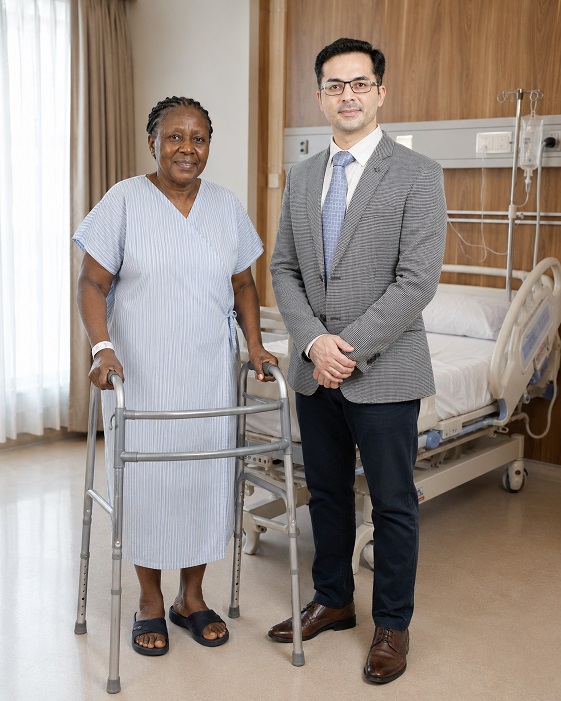
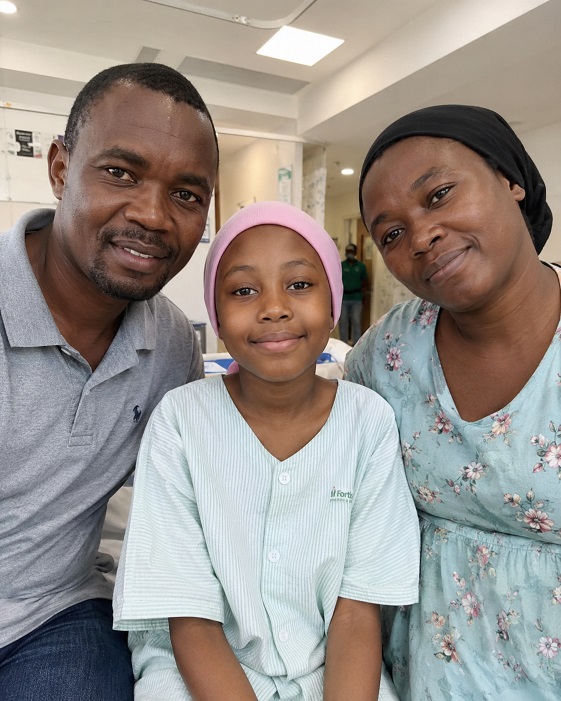
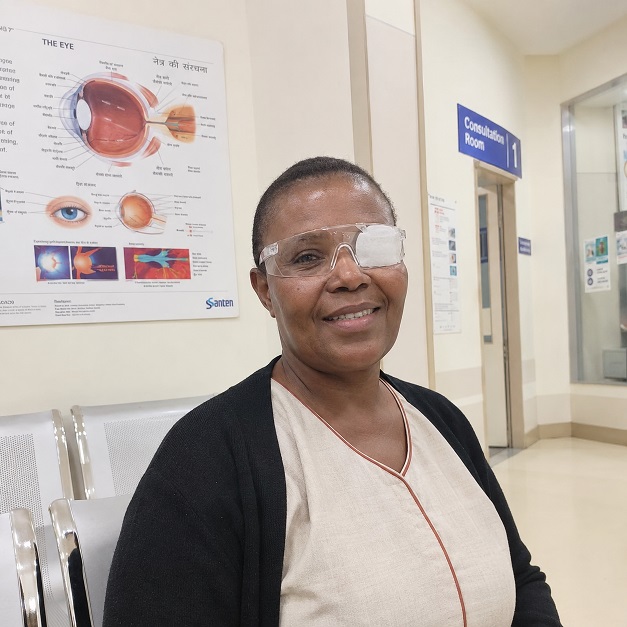
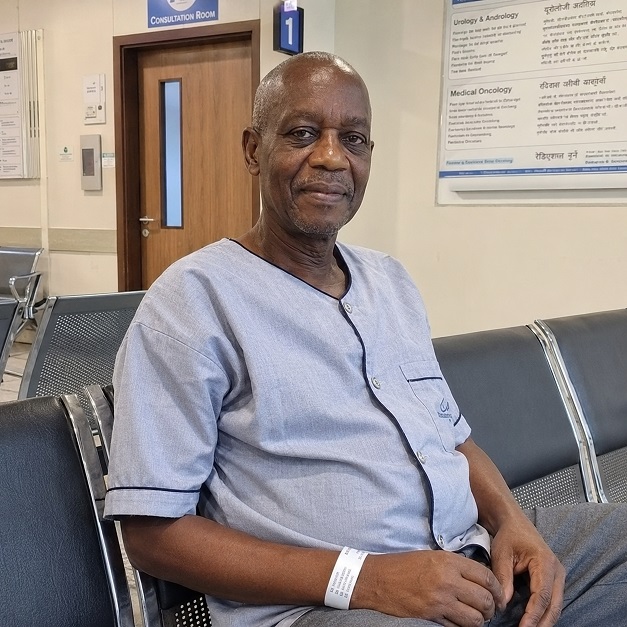
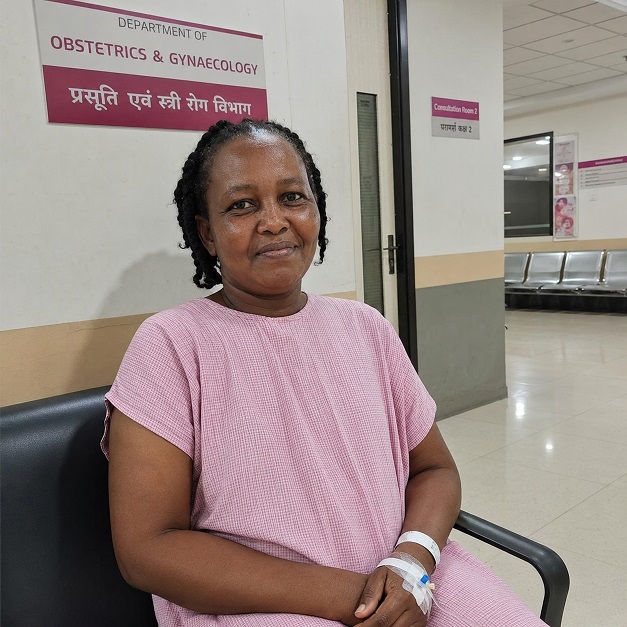
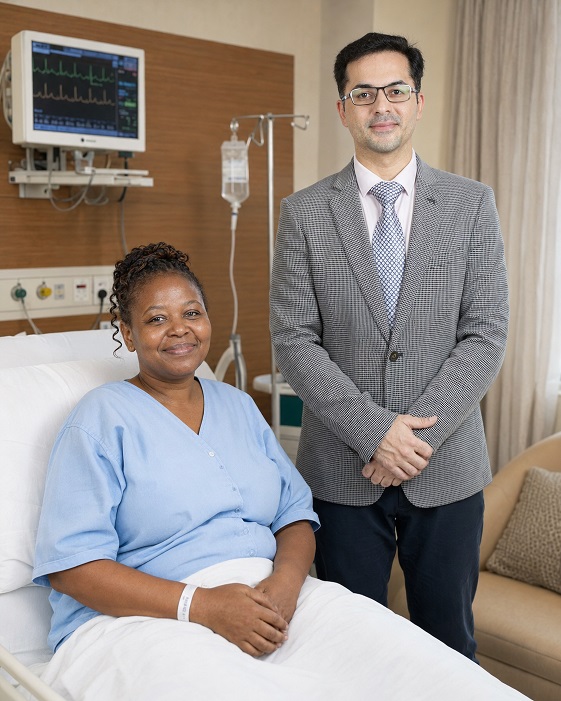
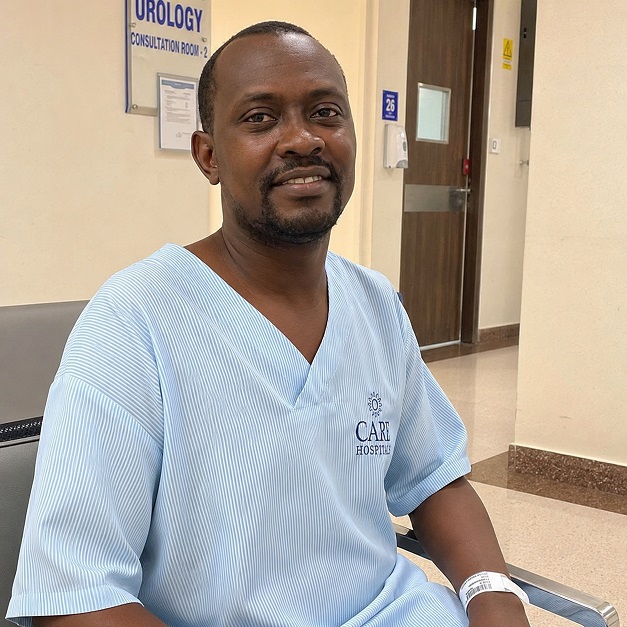
Patient Testimonials from Kenya

Ready to Take the First Step?
Share your Medical Reports with our Healthcare Managers Today and Get a FREE CONSULTATION, a Personalized Treatment Plan, and Complete Support from Arrival to Recovery.
Get Your Free ConsultationAreas We Serve
This resource has been thoughtfully prepared for patients from Kenya who are considering medical treatment in India. We also welcome patients from the wider region in the countries mentioned below-
We assist patients from:
- Ethiopia
- Somalia
- Tanzania
- Uganda
- Seychelles
- Guinea
- Guinea-Bissau
- Liberia
- Mali
- Mauritania
- Niger
- Nigeria
- Senegal
- Togo
- South Sudan
- Sierra Leone
Many of the insights, treatment pathways, hospital recommendations, travel guidance, and patient support services described here are equally relevant and may be used as a reference when planning treatment in India.
From Kenya to India: Your Complete Patient Support Guide
- Brain Tumour Surgery in India for Kenyan Patients
- Cancer Treatment and Surgery in India for Kenyan Patients
- Cardiac Treatment and Surgery in India for Kenyan Patients
- Heart Valve Replacement Surgery in India for Kenyan Patients
- Knee Replacement in India for Kenyan Patients
- Prostate Cancer Treatment and Surgery in India for Kenyan Patients
- Spine Treatment and Surgery in India for Kenyan Patients
- Selecting the Best Bariatric Surgeons and Hospitals in India: What Kenyan Patients Should Actually Look For
- Selecting the Best Cancer Surgeons and Hospitals in India: What Kenyan Patients Should Actually Look For
- Selecting the Best Cardiac Surgeons and Hospitals in India: What Kenyan Patients Should Actually Look For
- Selecting the Best Dental Surgeons and Clinics in India: What Kenyan Patients Should Actually Look For
- Selecting the Best Hip Surgeons and Hospitals in India: What Kenyan Patients Should Actually Look For
- Selecting the Best Kidney Transplant Surgeons and Hospitals in India: What Kenyan Patients Should Actually Look For
- Selecting the Best Knee Surgeons and Hospitals in India: What Kenyan Patients Should Actually Look For
- Selecting the Best Liver Transplant Surgeons and Hospitals in India: What Kenyan Patients Should Actually Look For
- Selecting the Best Neurosurgeons and Hospitals in India: What Kenyan Patients Should Actually Look For
- Selecting the Best Prostate Cancer Surgeons and Hospitals in India: What Kenyan Patients Should Actually Look For
- Selecting the Best Spine Surgeons and Hospitals in India: What Kenyan Patients Should Actually Look For