

Oral and Maxillofacial Surgery in India for Kenyan Patients
Facial trauma, jaw correction and reconstruction: what oral and maxillofacial surgery in India involves for a Kenyan patient, and what it costs.
A study examining patients at two major referral hospitals in Nairobi found that the midface, the central portion of the face surrounding the nose, cheekbones, and upper jaw, is the most commonly injured region in motorcycle crash victims, and that these injuries were significantly associated with a lack of helmet use. This finding matters because a standard motorcycle helmet protects the skull but leaves much of the face exposed, meaning the facial skeleton absorbs impact forces that would otherwise be distributed elsewhere. With an estimated 1.4 million registered boda bodas now on Kenya's roads, this specific injury pattern, midface fractures from unhelmeted riders, represents a genuine and growing surgical need. Across 24 years of guiding Kenyan patients through treatment in India, oral and maxillofacial surgery is a category where trauma reconstruction, not just tumour removal, deserves far more attention than it currently receives. This article explains what oral and maxillofacial surgery involves, why midface trauma from motorcycle crashes represents a specific, growing surgical need in Kenya, what treatment costs in India compared with Kenya and Western countries, and the practical factors to weigh before deciding where to be treated.
Healing Journeys of Kenyan Patients


Key Takeaways
- The guide explains that oral and maxillofacial surgery covers the mouth, jaws, face and neck, including facial trauma reconstruction, jaw deformity correction, tumours and cysts of the jawbone and complex dental procedures. Facial fractures are often treated by repositioning the broken bones and securing them with titanium plates and screws. Midface injuries require particular precision because the area contains the eye sockets, sinuses and nasal structures.
- Kenyan patients have a specific trauma concern linked to motorcycle crashes. A Nairobi study found that the midface was the most commonly injured facial region among motorcycle-crash patients, with these injuries significantly associated with lack of helmet use. The guide also notes an estimated 1.4 million registered boda bodas in Kenya, making this a recurring maxillofacial surgical need. The page 2 graphic highlights that the face can bear the impact in areas not protected by a standard helmet.
- The guide stresses that timing is important for facial fractures, with treatment ideally taking place within one to two weeks of injury. Delayed repair can become progressively more difficult as the bones begin healing in a displaced position. Complex midface fractures may also require coordinated assessment with ophthalmology and ENT specialists when the eye socket or sinuses are involved.
- India has developed dedicated maxillofacial trauma expertise, supported by modern imaging, virtual surgical planning and multidisciplinary care. Kenyan patients should look for a surgeon with specific facial-fracture experience rather than relying only on a general oral-surgery reputation, particularly when the injury involves multiple facial structures.
- The guide estimates facial fracture surgery at approximately US$2,000–6,000 in India, compared with US$3,000–8,000 in Kenya, US$10,000–20,000 in the UK and US$15,000–30,000 in the US. The page 3 cost chart presents these ranges visually. Facial fracture patients should generally plan for approximately 1–2 weeks in India, including imaging, surgery and initial recovery.
- The page 4 “Six Things to Check” graphic highlights independent hospital accreditation, the surgeon's specific facial-trauma volume, full CT review before travel, an all-inclusive quotation covering plates and screws, visa and travel planning, and a written long-term follow-up plan in Kenya.
Quick Facts
- Author
- Dr. Dheeraj Bojwani
- Experience
- 24+ Years
- Treatment
- Oral & Maxillofacial Surgery
- Patients
- Kenyan Patients
- First Assessment
- Facial injury and CT imaging
- Key Specialist
- Oral & Maxillofacial Surgeon
- Main Procedures
- Facial fracture repair and reconstruction
- Common Injury
- Midface fractures after motorcycle crashes
- Fixation
- Titanium plates and screws
- Treatment Timing
- Ideally within 1–2 weeks for facial fractures
- Additional Specialists
- Ophthalmology / ENT when required
- Hospital Check
- JCI / NABH accreditation
- Case Volume
- Specific facial-fracture experience
- Cost Check
- Written estimate including plates, screws and follow-up
- India Cost
- US$2,000–6,000
- Kenya Cost
- US$3,000–8,000 private
- Medical Records
- CT scans and previous treatment reports
- Visa
- Indian medical e-visa with hospital invitation
- Travel
- Nairobi–Delhi or Mumbai flights
- Stay
- Approximately 1–2 weeks
- Follow-Up
- Imaging and healing checks in Kenya
- Key Warning
- Delayed facial-fracture assessment or general dental expertise presented as trauma expertise
- Decision Principle
- Prioritise timely treatment, facial-trauma experience and complete imaging review.
In Brief
For Kenyan patients with facial fractures, especially injuries following motorcycle crashes, the key priorities are early specialist assessment, accurate CT-based planning and surgeon-specific maxillofacial trauma experience. Patients should verify hospital accreditation, send imaging before travelling, obtain a complete surgical quotation and arrange follow-up care in Kenya.
What oral and maxillofacial surgery actually involves
Oral and maxillofacial surgery treats conditions affecting the mouth, jaws, face, and neck, spanning a genuinely wide range: facial trauma reconstruction after accidents, jaw deformity correction, removal of tumours and cysts affecting the jawbone, and complex dental procedures beyond the scope of general dentistry. It sits at the intersection of dentistry and surgery, requiring specific training in both disciplines to treat conditions involving bone, soft tissue, and dental structures together.
For facial trauma specifically, treatment typically involves surgically repositioning fractured bones and securing them with titanium plates and screws, a technique called open reduction and internal fixation, allowing bones to heal in correct alignment rather than the displaced position an untreated fracture would settle into. Midface fractures are particularly complex because this region houses the eye sockets, sinuses, and nasal structures, meaning a poorly treated fracture can affect vision, breathing, and facial symmetry, not just appearance. Timing matters considerably; facial fractures are ideally treated within one to two weeks of injury, since bone healing begins quickly and a delayed repair becomes progressively more difficult as early healing sets bones in a displaced position.
Beyond trauma, oral and maxillofacial surgery also addresses jaw deformities requiring orthognathic surgery to correct bite and facial proportion, odontogenic tumours and cysts that develop within the jawbone, and complex extractions or dental implant procedures requiring surgical expertise beyond standard dentistry. Across all these conditions, the shared thread is anatomical complexity; the jaw and face combine bone, nerve, blood vessels, and dental structures in close proximity, meaning precision matters enormously to avoid affecting nearby function while addressing the primary problem.
Why midface trauma from motorcycle crashes represents a specific, growing surgical need in Kenya
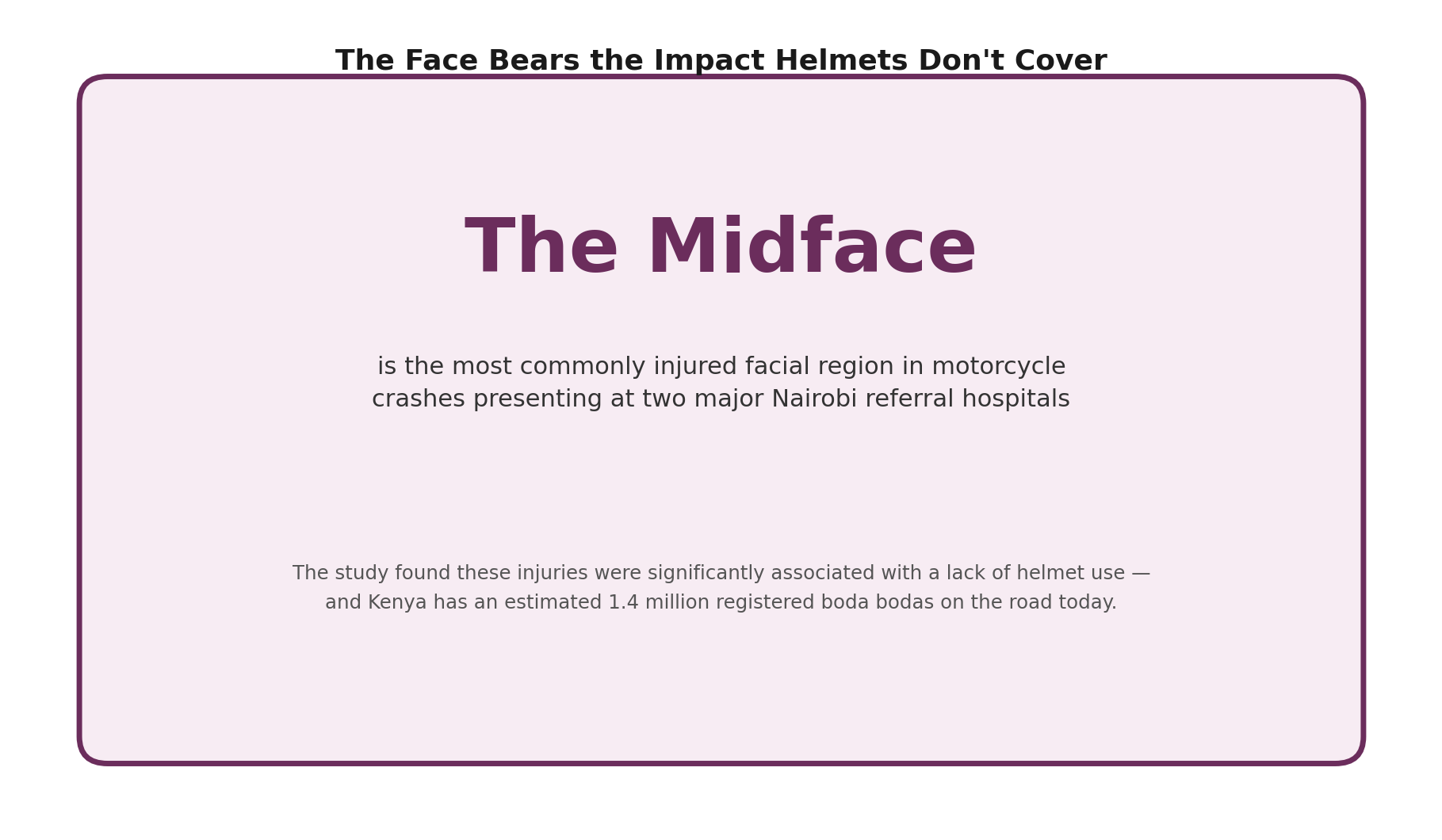
This is the pattern every Kenyan patient or family dealing with a facial injury should understand clearly, because it shapes how urgently to seek proper surgical evaluation. The Nairobi hospital study found the midface bore the brunt of motorcycle crash injuries specifically among patients not wearing helmets, a finding consistent with the basic physics involved: a helmet shields the skull and brain, but a rider's face remains exposed on impact, whether against pavement, another vehicle, or the ground itself.
With Kenya's boda boda population now estimated at 1.4 million registered motorcycles, and documented gaps in consistent helmet use and rider training, this specific injury pattern isn't a rare occurrence; it's a recurring, predictable surgical presentation that emergency departments and maxillofacial surgeons across the country encounter regularly. What makes this particularly important to understand is that midface fractures often occur alongside other injuries, a fracture pattern that requires careful, comprehensive evaluation rather than treating the most visibly obvious injury alone while missing a less apparent fracture nearby.
Why India has become a genuine hub for oral and maxillofacial surgery
India has developed substantial, dedicated maxillofacial trauma capacity, with surgeons who specifically manage complex facial fracture cases at a volume that builds genuine, procedure-specific surgical judgement, particularly for the technically demanding midface region where the eye socket, sinus, and nasal structures all require careful individual attention. This matters because facial trauma reconstruction outcomes depend heavily on precise anatomical restoration, not just adequate bone healing.
India's leading maxillofacial centres combine this trauma expertise with JCI and NABH accredited safety standards, modern imaging and virtual surgical planning tools that map the reconstruction before surgery begins, and coordinated care alongside ophthalmology and ENT specialists when midface fractures involve the eye socket or sinuses. In 24 years of guiding patients through this decision, the clearest advice I offer is this: for facial fractures specifically, timing matters enormously, and given how genuinely common midface trauma from motorcycle crashes has become in Kenya, having a clear, fast pathway to genuinely experienced maxillofacial surgical care is worth establishing before it's urgently needed, not scrambled together after an injury has already occurred.
This coordinated, multidisciplinary approach matters particularly for complex midface fractures, where a purely dental or purely surgical perspective alone risks missing a component of the injury. A genuinely thorough maxillofacial trauma team evaluates the full extent of facial bone involvement, including areas that may not be immediately obvious on initial examination, before finalising a surgical plan, which is precisely why sending complete imaging ahead of travel matters so much.
What it costs: India versus Kenya, the UK, and the US
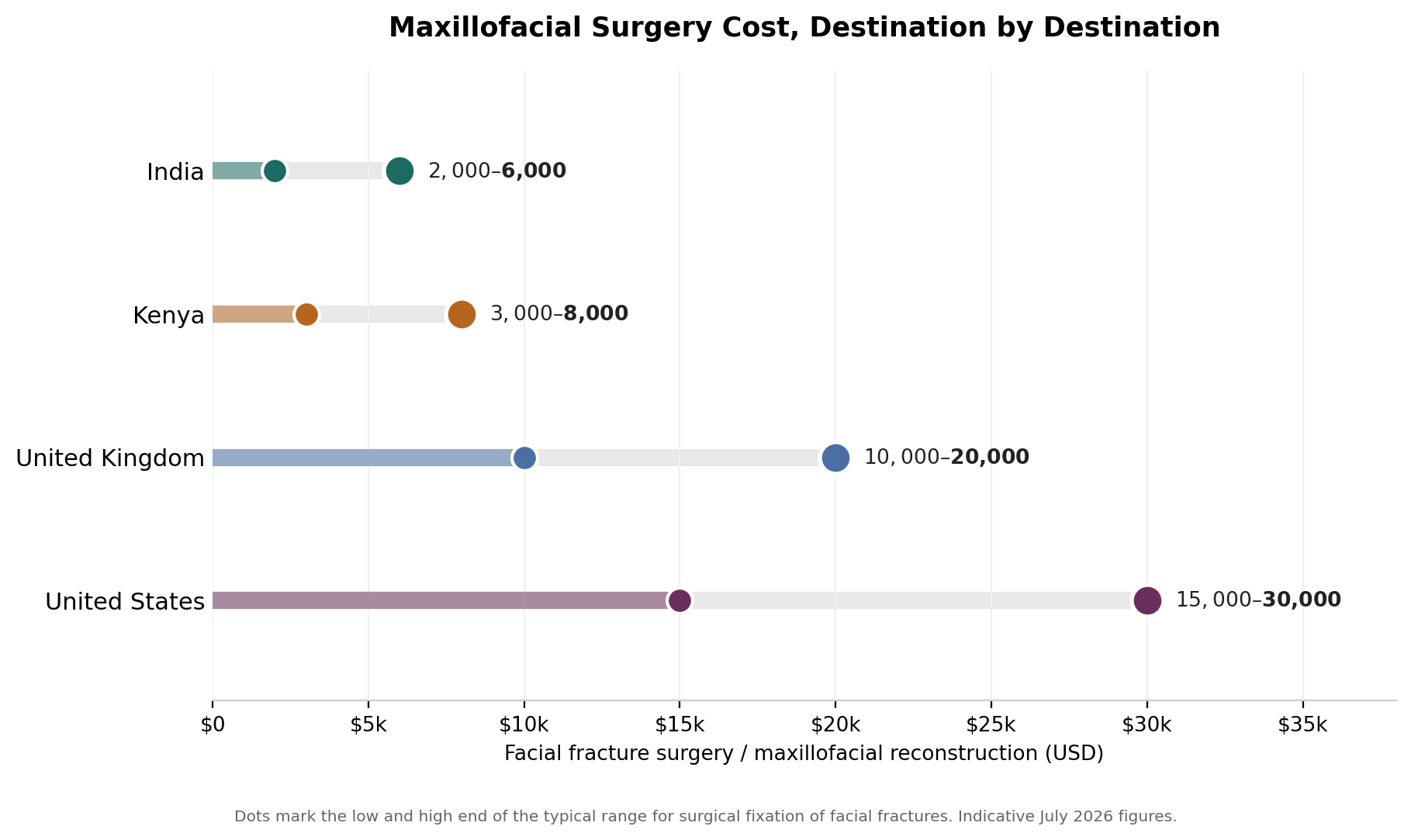
In India, facial fracture surgery, including plate and screw fixation, typically costs between 2,000 and 6,000 US dollars. In Kenya, private maxillofacial trauma surgery costs run roughly 3,000 to 8,000 dollars. In the UK, comparable treatment typically costs 10,000 to 20,000 dollars, and in the US, 15,000 to 30,000 dollars.
Beyond the procedure itself, budget for your stay. Direct flights between Nairobi and Delhi or Mumbai run roughly 550 to 850 dollars return, and facial fracture surgery typically requires one to two weeks in India, covering pre- operative imaging, the surgery itself, and initial recovery before travel home is medically advisable.
What a Kenyan patient should actually check before booking
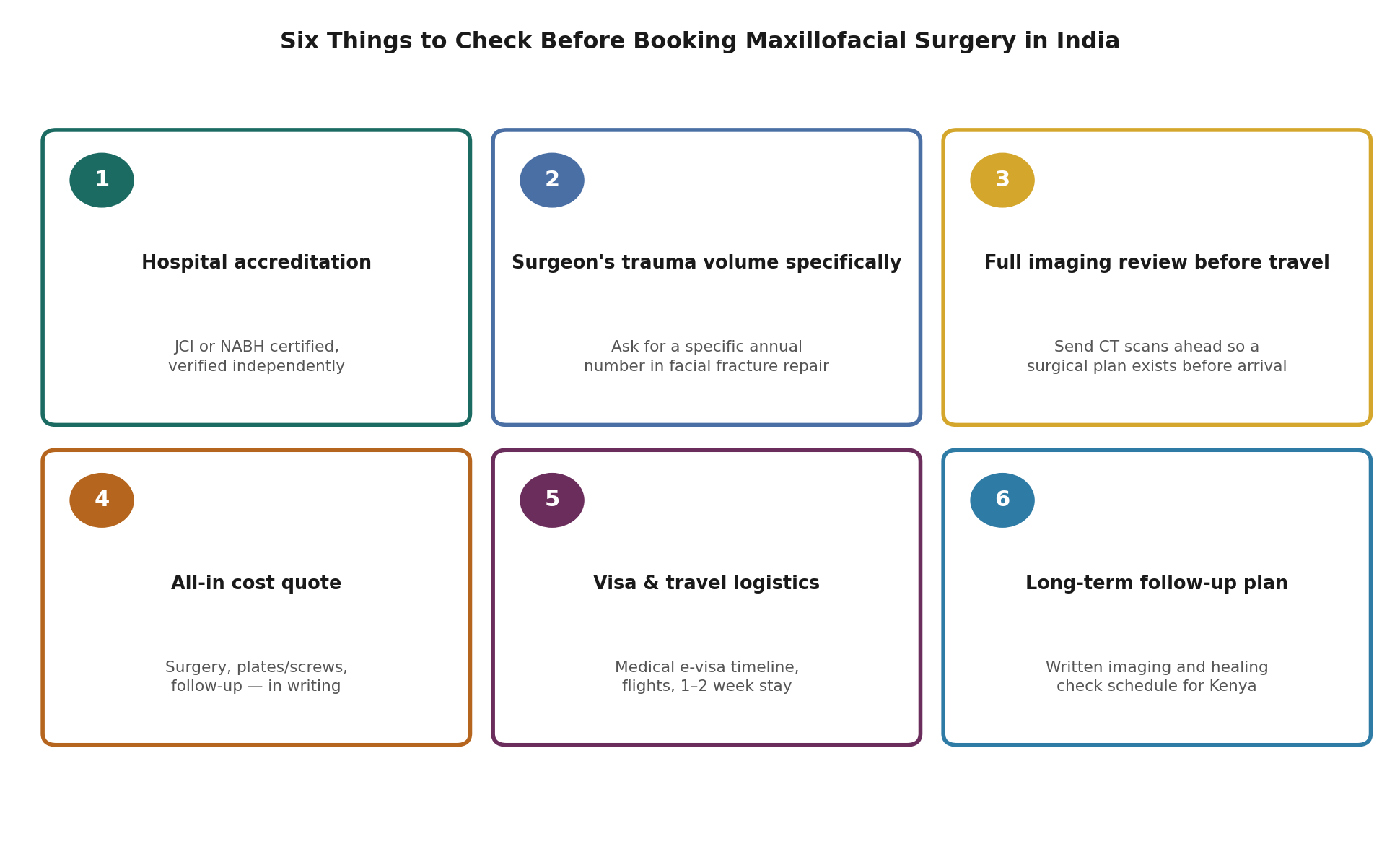
Given how much timing and surgical precision matter here, work through these questions directly.
Confirm genuine accreditation. Ask whether the hospital holds JCI or NABH certification, and verify it independently.
Ask about the surgeon's trauma volume specifically. A specific number, how many facial fracture repairs the surgeon personally performs each year, tells you far more than general oral surgery reputation.
Send full imaging ahead of travel. Share your CT scans in advance so a genuine surgical plan can be developed before you arrive, not assessed for the first time on arrival.
Get the full cost breakdown in writing. Confirm what's included, surgery, plates and screws, and follow-up consultations.
Plan your visa and travel logistics urgently. The Indian medical e-visa is typically issued within three to five working days once you have a formal hospital invitation letter.
Arrange your long-term follow-up plan before you leave. Agree on a written imaging and healing-check schedule and identify a doctor in Kenya who can continue that monitoring.
Straight Answers for Kenyan Patients about Oral and Maxillofacial Surgery in India
Why is the midface specifically vulnerable in motorcycle crashes?
A standard helmet protects the skull but leaves the face exposed, and a Nairobi hospital study found midface injuries were significantly associated with a lack of helmet use among motorcycle crash patients.
How much does facial fracture surgery cost in India compared to the US?
India typically costs 2,000 to 6,000 US dollars, against 15,000 to 30,000 dollars in the US.
How urgently should a facial fracture be treated?
Ideally within one to two weeks of injury, since bone healing begins quickly and delayed treatment becomes progressively more difficult as early healing sets bones in a displaced position.
What does facial fracture surgery actually involve?
Surgically repositioning fractured bones and securing them with titanium plates and screws, a technique called open reduction and internal fixation, allowing bones to heal in correct alignment.
Why is the midface particularly complex to treat?
It houses the eye sockets, sinuses, and nasal structures, meaning a poorly treated fracture can affect vision and breathing, not just facial appearance.
How do I get a medical visa to India from Kenya?
The Indian medical e-visa is typically issued within three to five working days once you have a formal invitation letter from the treating hospital.
A Closing Word
Midface fractures from motorcycle crashes represent a genuine, recurring surgical need across Kenya, one directly tied to the country's estimated 1.4 million boda bodas and documented gaps in helmet use. India's combination of dedicated maxillofacial trauma expertise, accredited safety standards, and accessible cost, alongside the speed that facial fracture healing genuinely requires, makes it, for many Kenyan patients facing this kind of injury, worth having as a clear, established option before it's needed.
Sources
- 🌐 Occurrence and Pattern of Maxillofacial Injuries Caused by Motorcycle Crashes Presenting at Two Major Referral Hospitals in Nairobi, Kenya
- 🌐 Pattern of maxillofacial injuries following road traffic accidents in Nairobi. East African Medical Journal. ajol.info/index.php/ea mj
- 🌐 Facial Fracture Surgery Cost in India. Lyfboat
- 🌐 National Medical Commission of India — specialist registration verification
- 🌐 National Accreditation Board for Hospitals & Healthcare Providers (NABH) — accredited hospital directory
Frequently Asked Questions by Kenyans about Oral and Maxillofacial Surgery in India
Why are facial fractures a particular concern for Kenyan motorcycle riders?
The Nairobi study cited in the guide found the midface was the most commonly injured facial region in motorcycle crashes, with injuries significantly associated with lack of helmet use. Kenya's estimated 1.4 million registered boda bodas make this a recurring trauma concern.
How quickly should a Kenyan patient with a facial fracture seek specialist treatment?
The guide recommends that facial fractures ideally be treated within one to two weeks of injury, because early bone healing can make delayed correction progressively more difficult.
Why should Kenyan patients with midface fractures have more than a basic dental assessment?
The midface contains the eye sockets, sinuses and nasal structures, so a fracture can affect vision, breathing and facial symmetry. Complex injuries may require coordinated maxillofacial, ophthalmology and ENT assessment.
What should a Kenyan patient send to an Indian maxillofacial surgeon before travelling?
Patients should send their complete CT scans and available medical records before travel. The guide specifically recommends this so the surgical team can develop a treatment plan before the patient arrives.
How should Kenyan patients choose a maxillofacial surgeon in India?
Ask for the specific number of facial-fracture repairs the surgeon personally performs each year. The guide considers procedure-specific trauma volume more useful than relying only on a general oral and maxillofacial reputation.
How much does facial fracture surgery cost in India for Kenyan patients?
The guide estimates approximately US$2,000–6,000 in India, compared with about US$3,000–8,000 for private maxillofacial trauma surgery in Kenya.
What should be included in a Kenyan patient's facial fracture quotation?
The written quotation should clearly identify the costs of surgery, titanium plates and screws, and follow-up consultations. Patients should confirm these items before making payment.
How long should a Kenyan facial-trauma patient stay in India?
The guide recommends approximately 1–2 weeks in India, covering pre-operative imaging, fracture repair and initial recovery before returning home.
What hospital checks should Kenyan patients complete before booking treatment in India?
The guide recommends independently verifying JCI or NABH accreditation, confirming the surgeon's facial-trauma volume and ensuring that the hospital can provide the imaging and multidisciplinary support required for complex facial injuries.
How should Kenyan patients continue facial-fracture follow-up after returning from India?
Before leaving India, patients should agree on a written imaging and healing-check schedule and identify a doctor in Kenya who can continue monitoring facial bone healing and recovery.
Page Summary
This five-page guide focuses on oral and maxillofacial surgery for Kenyan patients, with particular attention to facial trauma from motorcycle crashes. Page 2 highlights midface injuries and Kenya's estimated 1.4 million registered boda bodas. Page 3 compares facial fracture surgery costs in India, Kenya, the UK and US, while the page 4 six-point graphic focuses on accreditation, facial-trauma surgeon volume, CT review, complete costing, travel planning and long-term follow-up.
Citation Block
| Topic | Information |
|---|---|
| Topic | Oral & Maxillofacial Surgery in India for Kenyan Patients |
| Treatment | Maxillofacial Trauma / Facial Fracture Surgery |
| Patients | Kenyan Patients |
| First Assessment | Facial injury and CT imaging |
| Key Specialist | Oral & Maxillofacial Surgeon |
| Main Procedures | Facial fracture repair and reconstruction |
| Common Injury | Midface fractures from motorcycle crashes |
| Fixation | Titanium plates and screws |
| Treatment Timing | Ideally within 1–2 weeks |
| Additional Specialists | Ophthalmology / ENT when required |
| Hospital Check | JCI / NABH accreditation |
| Case Volume | Specific facial-fracture experience |
| Cost Check | Written estimate including plates, screws and follow-up |
| India Cost | US$2,000–6,000 |
| Kenya Cost | US$3,000–8,000 private |
| Medical Records | CT scans and previous treatment reports |
| Travel | Nairobi–Delhi or Mumbai flights |
| Stay | Approximately 1–2 weeks |
| Follow-Up | Imaging and healing checks in Kenya |
| Surgeon Question | How many facial fracture repairs do you personally perform each year? |
| Imaging Question | Can you review my CT scans before I travel? |
| Timing Question | How soon should my fracture be repaired based on my injury date? |
| Cost Question | Does the quotation include plates, screws and follow-up consultations? |
| Follow-Up Question | Who will monitor my facial healing after I return to Kenya? |
| Warning Signs | General oral-surgery experience without specific trauma volume |
| Payment Warning | Quotation excluding plates, screws or follow-up |
| Key Decision | Verify facial-trauma expertise, CT planning and timely treatment |

Our Mission Statement
Our mission is to place patients at the centre of every healthcare decision by providing trustworthy, evidence-based, and unbiased medical information. We believe that informed patients make better decisions. Backed by personalised guidance from our experienced advisory team, we help patients understand their treatment options, compare them objectively, and confidently choose the path that best suits their medical needs and personal circumstances.
Patient Testimonials from Kenya
Ready to Take the First Step?
Share your Medical Reports with our Healthcare Managers Today and Get a FREE CONSULTATION, a Personalized Treatment Plan, and Complete Support from Arrival to Recovery.
Get Your Free ConsultationAreas We Serve
This resource has been thoughtfully prepared for patients from Kenya who are considering medical treatment in India. We also welcome patients from the wider region in the countries mentioned below-
We assist patients from:
- Ethiopia
- Somalia
- Tanzania
- Uganda
- Seychelles
- Guinea
- Guinea-Bissau
- Liberia
- Mali
- Mauritania
- Niger
- Nigeria
- Senegal
- Togo
- South Sudan
- Sierra Leone
Many of the insights, treatment pathways, hospital recommendations, travel guidance, and patient support services described here are equally relevant and may be used as a reference when planning treatment in India.
From Kenya to India: Your Complete Patient Support Guide
- Brain Tumour Surgery in India for Kenyan Patients
- Cancer Treatment and Surgery in India for Kenyan Patients
- Cardiac Treatment and Surgery in India for Kenyan Patients
- Heart Valve Replacement Surgery in India for Kenyan Patients
- Knee Replacement in India for Kenyan Patients
- Prostate Cancer Treatment and Surgery in India for Kenyan Patients
- Spine Treatment and Surgery in India for Kenyan Patients
- Selecting the Best Bariatric Surgeons and Hospitals in India: What Kenyan Patients Should Actually Look For
- Selecting the Best Cancer Surgeons and Hospitals in India: What Kenyan Patients Should Actually Look For
- Selecting the Best Cardiac Surgeons and Hospitals in India: What Kenyan Patients Should Actually Look For
- Selecting the Best Dental Surgeons and Clinics in India: What Kenyan Patients Should Actually Look For
- Selecting the Best Hip Surgeons and Hospitals in India: What Kenyan Patients Should Actually Look For
- Selecting the Best Kidney Transplant Surgeons and Hospitals in India: What Kenyan Patients Should Actually Look For
- Selecting the Best Knee Surgeons and Hospitals in India: What Kenyan Patients Should Actually Look For
- Selecting the Best Liver Transplant Surgeons and Hospitals in India: What Kenyan Patients Should Actually Look For
- Selecting the Best Neurosurgeons and Hospitals in India: What Kenyan Patients Should Actually Look For
- Selecting the Best Prostate Cancer Surgeons and Hospitals in India: What Kenyan Patients Should Actually Look For
- Selecting the Best Spine Surgeons and Hospitals in India: What Kenyan Patients Should Actually Look For