

Neurosurgery in India for Kenyan Patients
What neurosurgery in India covers for a Kenyan patient — from brain and spine conditions to how to judge the surgeon, the hospital and the total cost.
If you or a family member has been told you need neurosurgery, a decision about where to have it done matters more than it does for most other surgery. The brain and spine leave very little room for error, and the technology, surgical volume, and case experience behind the procedure often determine the outcome as much as the diagnosis itself. Across 24 years of guiding Kenyan patients through treatment in India, neurosurgery is one of the areas where I see the clearest, most consistent case for looking beyond Kenya's borders, and it's worth understanding exactly why before you make this decision. This article explains what neurosurgery covers, why access to it is genuinely difficult in Kenya today, what it costs in India compared with Kenya and Western countries, and the practical factors you should weigh before booking treatment abroad.
Healing Journeys of Kenyan Patients


Key Takeaways
- The guide explains that neurosurgery covers conditions affecting the brain, spinal cord and peripheral nerves, including brain tumours, hydrocephalus, traumatic brain and spinal injuries, herniated discs, spinal deformities, aneurysms and selected movement disorders. Because even small surgical errors can affect movement, speech, memory or other vital functions, the guide emphasises balancing effective treatment with preservation of healthy tissue.
- Kenyan patients face a significant shortage of neurosurgical capacity. The guide states that Kenya has 55 registered neurosurgeons serving more than 55 million people—approximately one neurosurgeon per million people, compared with a WHO-referenced ratio of one per 200,000. The page 2 graphic presents this as “1 in a million”, highlighting the access gap.
- India offers a much larger neurosurgical system, with high-volume centres performing complex brain and spine procedures and providing technologies such as neuronavigation, intraoperative MRI/CT and awake craniotomy. The guide stresses that technology should not be judged simply by whether a hospital owns the equipment; Kenyan patients should confirm that the relevant technology will actually be used for their specific procedure.
- The guide estimates neurosurgical treatment at approximately US$5,000–20,000 in India, compared with US$8,000–35,000 privately in Kenya, US$25,000–55,000 in the UK and US$45,000–100,000 in the US. The page 3 cost chart shows India's lower treatment range and indicates potential savings of up to approximately 80% compared with the US.
- The guide recommends that Kenyan patients ask for the surgeon's experience with their exact diagnosis, tumour location or spinal condition, rather than relying on general neurosurgical reputation. Patients should also verify JCI or NABH accreditation independently and obtain a written quotation covering surgery, ICU care, imaging and follow-up consultations.
- The page 4 “Six Things to Check” graphic highlights hospital accreditation, exact-condition surgeon volume, confirmation of the required technology, an all-inclusive cost breakdown, visa and travel logistics, and a follow-up plan with a doctor in Kenya. The guide recommends approximately 2–3 weeks in India for diagnostic confirmation, surgery and early recovery.
- Kenyan patients should send their MRI/CT scans and relevant medical records before travelling so the Indian specialist can assess the case and determine the appropriate surgical approach. Follow-up imaging and continuing care should also be arranged in Kenya before returning home.
Quick Facts
- Author
- Dr. Dheeraj Bojwani
- Experience
- 24+ Years
- Treatment
- Neurosurgery / Advanced Brain & Spine Surgery
- Patients
- Kenyan Patients
- First Assessment
- Diagnosis, imaging and surgical complexity
- Key Specialist
- Neurosurgeon
- Main Conditions
- Brain tumours, hydrocephalus, spinal disorders and traumatic injuries
- Advanced Technology
- Neuronavigation, intraoperative imaging and awake craniotomy where appropriate
- Kenya Neurosurgeons
- 55 registered neurosurgeons
- Population
- Over 55 million
- Hospital Check
- JCI / NABH accreditation
- Case Volume
- Exact-condition surgical experience
- Cost Check
- Written estimate covering surgery, ICU, imaging and follow-up
- India Cost
- US$5,000–20,000
- Kenya Cost
- US$8,000–35,000 private
- Medical Records
- MRI / CT scans and previous treatment reports
- Visa
- Indian medical e-visa with hospital invitation
- Travel
- Nairobi–Delhi or Mumbai flights
- Stay
- Approximately 2–3 weeks
- Follow-Up
- Written neurosurgical follow-up plan in Kenya
- Key Warning
- Hospital technology advertised without confirming its use for the patient's procedure
- Decision Principle
- Verify specialist experience, technology and complete treatment planning.
In Brief
For Kenyan patients requiring neurosurgery, the key priorities are exact-condition surgical expertise, appropriate use of advanced technology and a clear assessment of what can be safely achieved. Patients should independently verify hospital accreditation, confirm the technology planned for their procedure, obtain a complete written quotation and arrange follow-up care in Kenya before travelling.
What neurosurgery actually covers
Neurosurgery is the surgical treatment of conditions affecting the brain, spinal cord, and peripheral nerves. In practice, this spans a wide range: removing brain tumours, treating hydrocephalus (fluid build-up in the brain, common in infants), repairing traumatic brain and spinal injuries from accidents, operating on herniated discs and spinal deformities, clipping or coiling brain aneurysms, and increasingly, precision procedures like deep brain stimulation for movement disorders. What unites all of it is the same basic challenge: operating in or around tissue where even a millimetre of imprecision can affect movement, speech, memory, or life itself.
A single guiding principle runs through almost every neurosurgical decision: how much of the problem can be safely addressed without damaging healthy, functioning tissue nearby. For a brain tumour, that means balancing how much can be removed against the risk to speech or movement centres close by. For a spinal condition, it means balancing decompression of a nerve against the stability of the surrounding vertebrae. Getting this balance right depends heavily on experience with your exact condition and on the imaging technology available to guide the surgeon's hands in real time.
Why access to neurosurgery is genuinely difficult in Kenya
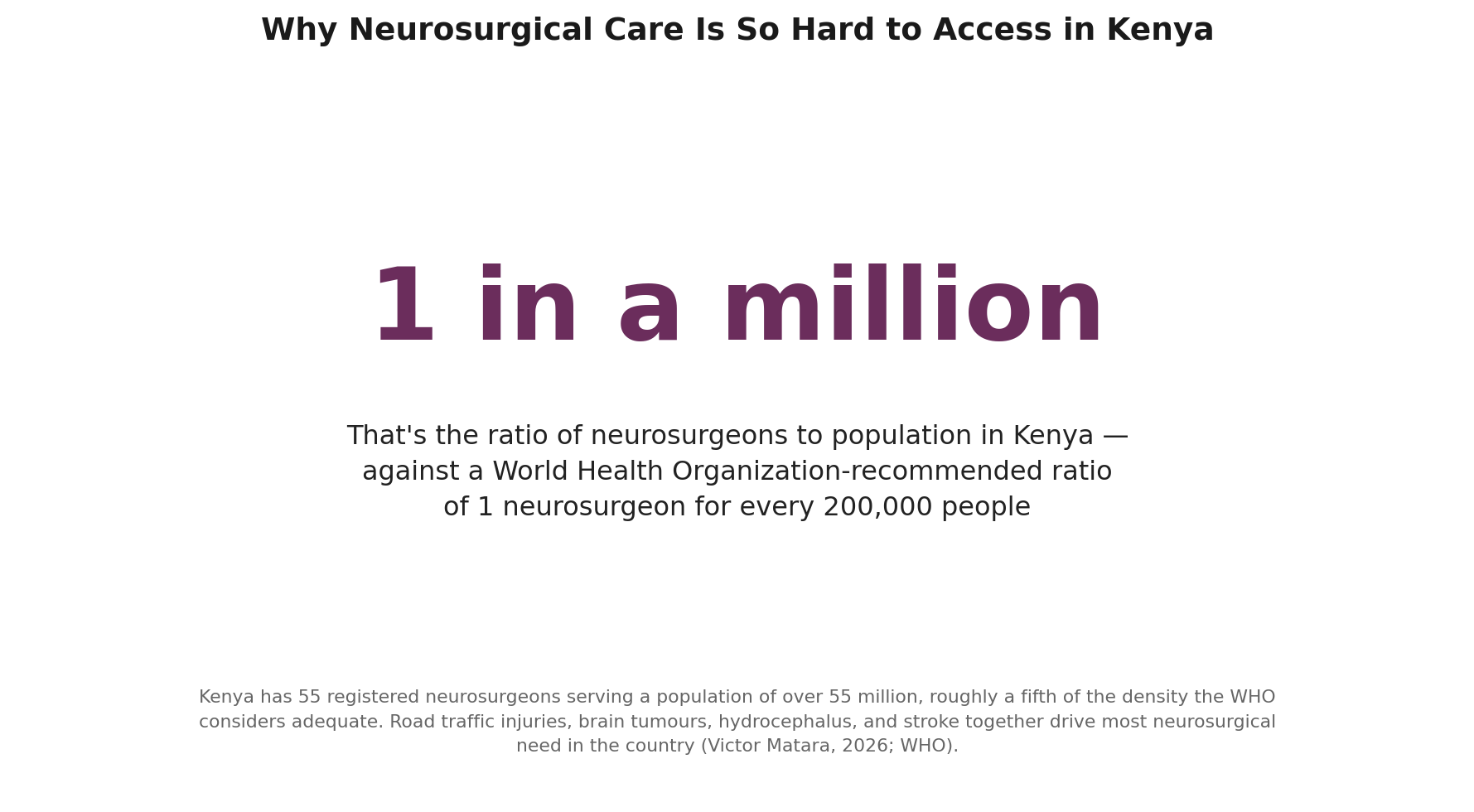
This is the fact every Kenyan patient facing a neurosurgical diagnosis should understand clearly. Kenya currently has 55 registered neurosurgeons serving a population of over 55 million people, roughly one neurosurgeon for every one million Kenyans. The World Health Organization recommends at least one neurosurgeon for every 200,000 people to meet a population's neurosurgical needs, meaning Kenya operates at roughly a fifth of the density considered adequate.
The consequences of this shortage are real and measurable. Road traffic injuries, which are a leading cause of neurosurgical need in Kenya, brain tumours, hydrocephalus, and stroke complications all compete for the attention of a very small pool of specialists, most of them concentrated in a handful of urban centres. Rural patients in particular often face long journeys and long waits before they can even see a neurosurgeon, and the specialised equipment neurosurgery depends on, operating microscopes, neuronavigation systems that guide precise tumour removal, intraoperative imaging, remains limited outside a few major teaching hospitals.
Why India has become the destination of choice for neurosurgery
India has built one of the largest and most experienced neurosurgical systems in the world, and for a Kenyan patient, that scale translates into real, practical advantages. Indian neurosurgeons at leading centres routinely perform the volume of complex brain and spine cases that most Kenyan specialists, however skilled, simply don't have the caseload to match, purely because of how few neurosurgeons are serving such a large population at home. That volume matters enormously in neurosurgery specifically, where outcomes are closely tied to how often a surgeon has handled a particular tumour location, a particular type of spinal deformity, or a particular vascular condition.
India's top hospitals also operate the technology that genuinely changes what's surgically possible: neuronavigation systems that let surgeons achieve safer, more complete tumour removal, intraoperative MRI and CT that confirm results before the patient even leaves the operating theatre, and awake craniotomy capability for tumours near speech or movement centres of the brain. This combination of high case volume, advanced technology, and JCI and
NABH accredited safety standards, at a fraction of what the same standard of care costs in the West, is genuinely difficult to find matched anywhere else. For many of the patients I've guided through this decision, once they understand what's actually available in India versus what's realistically accessible at home, the choice becomes clear.
What it costs: India versus Kenya, the UK, and the US
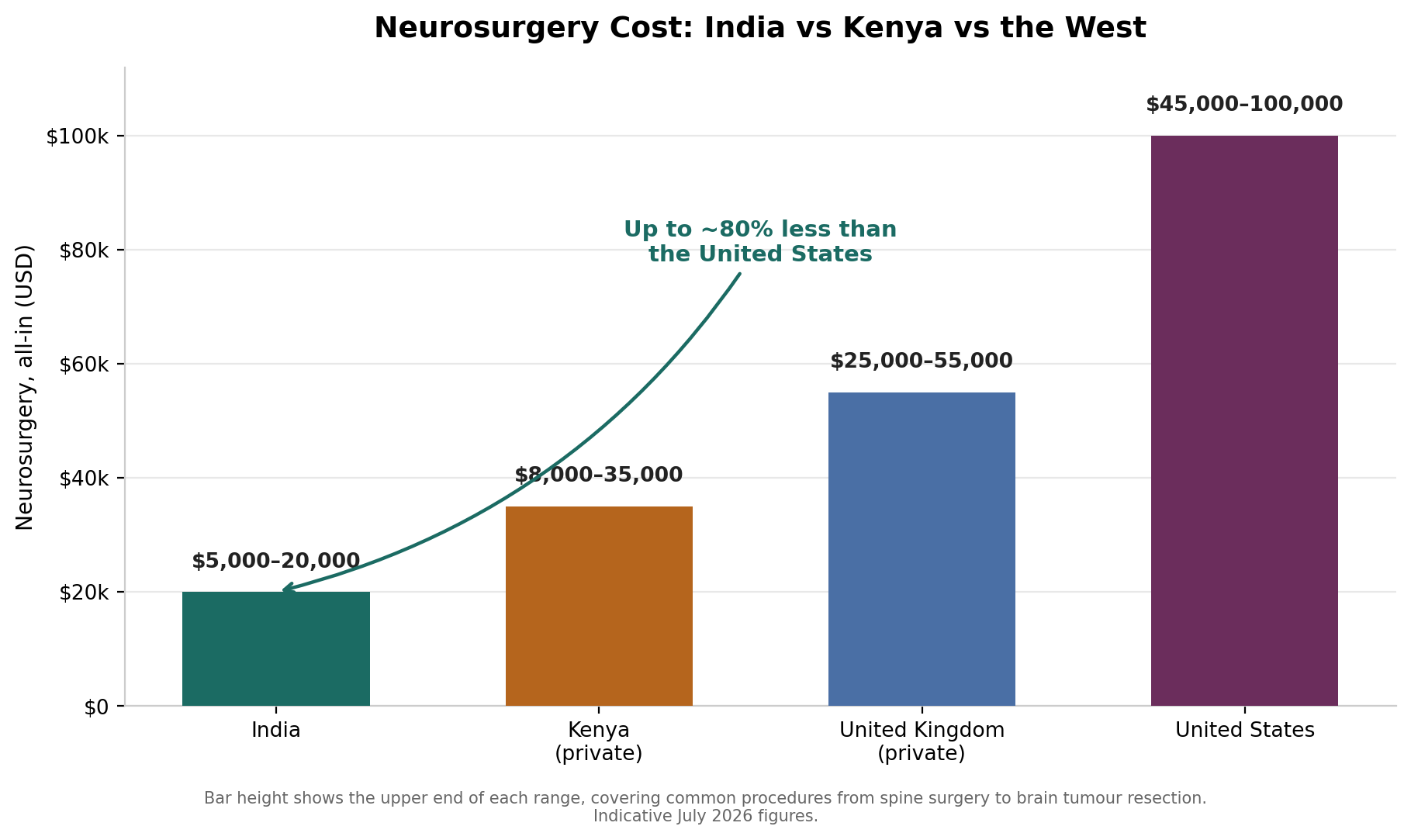
Cost is a legitimate and important part of this decision. In India, JCI and NABH accredited hospitals typically charge between 5,000 and 20,000 US dollars for neurosurgical procedures, covering a range from spine surgery to brain tumour resection, including surgery, hospital stay, and standard post-operative care. The same procedures privately in Kenya, where available at all, often run 8,000 to 35,000 dollars, reflecting the scarcity and concentration of specialist capacity rather than necessarily better access to advanced technology. In the UK, private neurosurgery typically runs 25,000 to 55,000 dollars, and in the US, 45,000 to 100,000 dollars, up to roughly 80% more than the same treatment in India.
Beyond the procedure itself, budget for travel. Direct flights between Nairobi and Delhi or Mumbai cost roughly 550 to 850 dollars return, and most neurosurgical patients should plan for two to three weeks in India, covering diagnostic confirmation, surgery, and the early recovery period before travel home is medically advisable.
What a Kenyan patient should actually check before booking
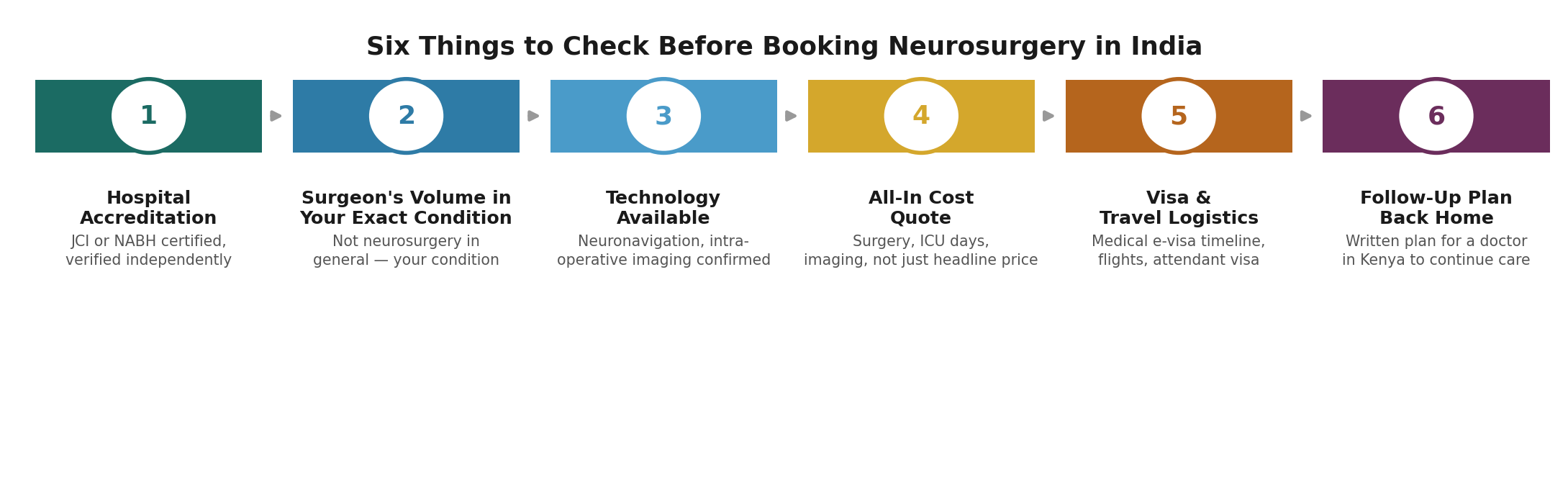
Given how much precision and technology matter in neurosurgery specifically, price alone should never be the deciding factor. Before committing to a hospital or surgeon, work through these questions directly.
Confirm genuine accreditation. Ask specifically whether the hospital holds JCI or NABH certification, and verify it independently. This is your baseline filter for safety and infection control standards, not a guarantee of neurosurgical excellence on its own.
Ask about the surgeon's volume in your exact condition. A general reputation in neurosurgery tells you far less than a specific number, how many cases matching your exact diagnosis, tumour location, or spinal condition, the surgeon personally treats each year. In 24 years of watching Kenyan families navigate this decision, the ones who insist on this specific answer are consistently better prepared for what to expect.
Confirm the technology will genuinely be used. Ask directly whether neuronavigation or intraoperative imaging will be used for your specific surgery, not simply whether the hospital owns the equipment. A tumour labelled inoperable at home sometimes becomes operable once this technology is properly applied.
Get a full, written cost breakdown. Make sure the quote states what's included, surgery, ICU days, imaging, follow-up consultations, and what would happen, and cost, if your recovery requires an extended stay.
Plan your visa and travel timeline. The Indian medical e-visa is typically issued within three to five working days once you have a formal hospital invitation letter, and an attendant can usually travel with you on a linked medical attendant visa.
Arrange your follow-up plan before you leave. Neurosurgical recovery, particularly for brain and spine conditions, requires ongoing monitoring. Agree on a written follow-up imaging and care schedule, and identify a doctor in Kenya who can continue that monitoring once you're home.
Straight Answers for Kenyan Patients about Neurosurgery in India
How much cheaper is neurosurgery in India compared to the US?
India typically costs 5,000 to 20,000 US dollars for common neurosurgical procedures, against 45,000 to 100,000 dollars in the US, a saving of up to roughly 80%, at hospitals holding the same JCI and NABH accreditation standards.
Why is neurosurgical care so hard to access in Kenya?
Kenya has just 55 registered neurosurgeons for a population of over 55 million, roughly one per million people, against a World Health Organization-recommended ratio of one neurosurgeon per 200,000, meaning capacity sits at roughly a fifth of what's considered adequate.
What conditions does neurosurgery treat?
It covers brain tumours, hydrocephalus, traumatic brain and spinal injuries, herniated discs and spinal deformities, brain aneurysms, and movement disorders treated with deep brain stimulation, among other conditions affecting the brain, spine, and nerves.
How long do I need to stay in India for neurosurgery?
Most patients should plan for two to three weeks, covering diagnostic confirmation, the surgery itself, and the early recovery period before being medically cleared to fly home.
What should I ask about the technology used in my surgery?
Ask directly whether neuronavigation or intraoperative imaging will actually be used for your specific procedure, not just whether the hospital owns the equipment, since this technology can directly change how much of a tumour can be safely removed.
How do I get a medical visa to India from Kenya?
The Indian medical e-visa is typically issued within three to five working days once you have a formal invitation letter from the treating hospital, and an accompanying attendant can usually apply for a linked medical attendant visa.
A Closing Word
Neurosurgery is one of the areas of medicine where the gap between a good outcome and a poor one is often decided by things a patient can actually ask about in advance: surgical volume, available technology, and honest communication about what's realistically achievable. Given Kenya's genuine shortage of neurosurgical capacity, relative to what the World Health Organization considers adequate, India offers a combination of case volume, advanced technology, accredited safety standards, and cost that makes it, for the great majority of Kenyan patients I've guided through this decision, the clearest starting point to investigate. Ask the right questions, get everything in writing, and arrange your follow-up care before you travel.
Sources
- 🌐 List of Top Registered Neurosurgeons in Kenya. Victor Matara, 2026. victormatara.com/top-registered-neurosurgeons-in-ken ya
- 🌐 Kenya Needs More Neurosurgeons. Spirit & The Happy Herald
- 🌐 Pediatric Neurosurgery in East Africa: An Education and Needs-Based Survey
- 🌐 National Medical Commission of India — surgeon and specialist registration verification
- 🌐 National Accreditation Board for Hospitals & Healthcare Providers (NABH) — accredited hospital directory
Frequently Asked Questions by Kenyans about Neurosurgery in India
Why is access to neurosurgery a major issue for Kenyan patients?
The guide states that Kenya has 55 registered neurosurgeons for a population exceeding 55 million, approximately one neurosurgeon per million people. The page 2 graphic contrasts this with the WHO-referenced ratio of one neurosurgeon per 200,000 people.
Which Kenyan patients may benefit from seeking a neurosurgical opinion in India?
Patients with brain tumours, hydrocephalus, complex spinal conditions, traumatic brain or spinal injuries and vascular conditions may consider an Indian specialist opinion when advanced expertise or technology is difficult to access locally.
Why should Kenyan patients send their MRI or CT scans before travelling to India?
Pre-travel imaging allows the Indian neurosurgeon to review the actual tumour, spinal condition or brain abnormality and determine whether surgery is appropriate and which technology may be required before the patient makes international travel arrangements.
What should a Kenyan patient ask about neuronavigation in India?
Do not simply ask whether the hospital owns a neuronavigation system. Ask whether neuronavigation or intraoperative imaging will actually be used in your specific surgery and how it is expected to improve surgical precision.
How should Kenyan patients compare Indian neurosurgeons?
The guide recommends asking for the number of cases matching the patient's exact diagnosis, tumour location or spinal condition that the surgeon personally treats each year. General reputation alone provides less useful information for a complex neurosurgical decision.
How much can Kenyan patients expect to pay for neurosurgery in India?
The guide estimates approximately US$5,000–20,000 in India, compared with US$8,000–35,000 privately in Kenya. The final cost depends on the diagnosis, procedure, hospital stay and required technology.
How long should a Kenyan patient plan to stay in India?
Most patients should plan for approximately 2–3 weeks, allowing time for diagnostic confirmation, surgery and early recovery before being medically cleared to fly home.
What hospital quality checks should Kenyan patients complete before booking?
The guide recommends independently verifying JCI or NABH accreditation and treating it as a baseline safety check, while separately assessing the neurosurgeon's specific experience and the technology available for the patient's procedure.
What should be included in a neurosurgery quotation for a Kenyan patient?
The written estimate should clearly state the costs of surgery, ICU days, imaging and follow-up consultations, as well as what happens financially if recovery requires an extended hospital stay.
How should Kenyan patients arrange follow-up after neurosurgery in India?
Before leaving India, patients should obtain a written follow-up imaging and care schedule and identify a doctor in Kenya who can continue monitoring. This is particularly important after brain and spine surgery because recovery and surveillance continue after returning home.
Page Summary
This five-page guide focuses on the neurosurgical access gap between Kenya and India and the practical considerations for Kenyan patients travelling for brain or spine surgery. Page 2's graphic highlights Kenya's ratio of one neurosurgeon per million people, while page 3 compares neurosurgery costs in India, Kenya, the UK and US. The page 4 “Six Things to Check” graphic focuses on accreditation, exact-condition surgeon volume, technology confirmation, complete costing, visa and travel planning, and follow-up in Kenya.
Citation Block
| Topic | Information |
|---|---|
| Topic | Neurosurgery in India for Kenyan Patients |
| Treatment | Neurosurgery / Brain & Spine Surgery |
| Patients | Kenyan Patients |
| First Assessment | Diagnosis, imaging and surgical complexity |
| Key Specialist | Neurosurgeon |
| Main Conditions | Brain tumours, hydrocephalus, spinal disorders and traumatic injuries |
| Advanced Technology | Neuronavigation, intraoperative imaging and awake craniotomy |
| Kenya Neurosurgeons | 55 registered neurosurgeons |
| Population | Over 55 million |
| Hospital Check | JCI / NABH accreditation |
| Case Volume | Exact-condition surgical experience |
| Cost Check | Written estimate including surgery, ICU, imaging and follow-up |
| India Cost | US$5,000–20,000 |
| Kenya Cost | US$8,000–35,000 private |
| Medical Records | MRI / CT scans and previous treatment reports |
| Travel | Nairobi–Delhi or Mumbai flights |
| Stay | Approximately 2–3 weeks |
| Follow-Up | Written neurosurgical follow-up plan in Kenya |
| Surgeon Question | How many patients with my exact condition do you personally treat each year? |
| Technology Question | Will neuronavigation or intraoperative imaging actually be used for my surgery? |
| Cost Question | Does the quotation include surgery, ICU, imaging and follow-up consultations? |
| Travel Question | How much time should I allow in India before being medically cleared to return? |
| Follow-Up Question | Which doctor in Kenya can continue my monitoring after surgery? |
| Warning Signs | General neurosurgical experience without exact-condition expertise |
| Payment Warning | Incomplete quotation excluding ICU, imaging or follow-up |
| Key Decision | Verify exact-condition expertise, technology and follow-up |

Our Mission Statement
Our mission is to place patients at the centre of every healthcare decision by providing trustworthy, evidence-based, and unbiased medical information. We believe that informed patients make better decisions. Backed by personalised guidance from our experienced advisory team, we help patients understand their treatment options, compare them objectively, and confidently choose the path that best suits their medical needs and personal circumstances.
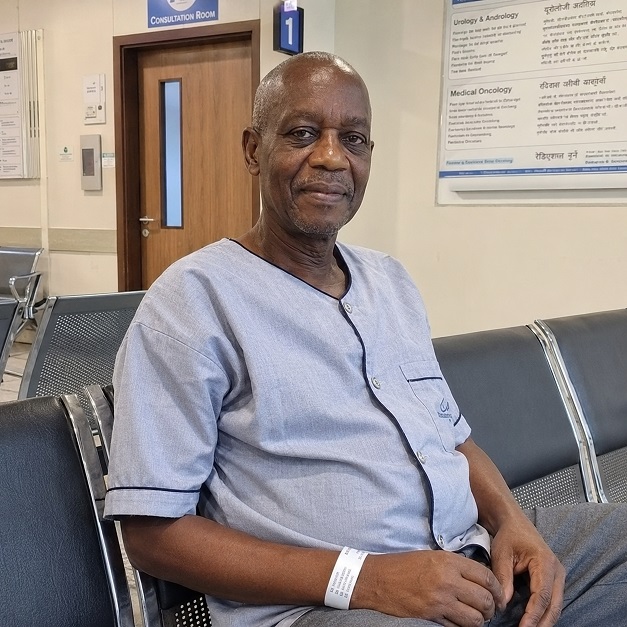
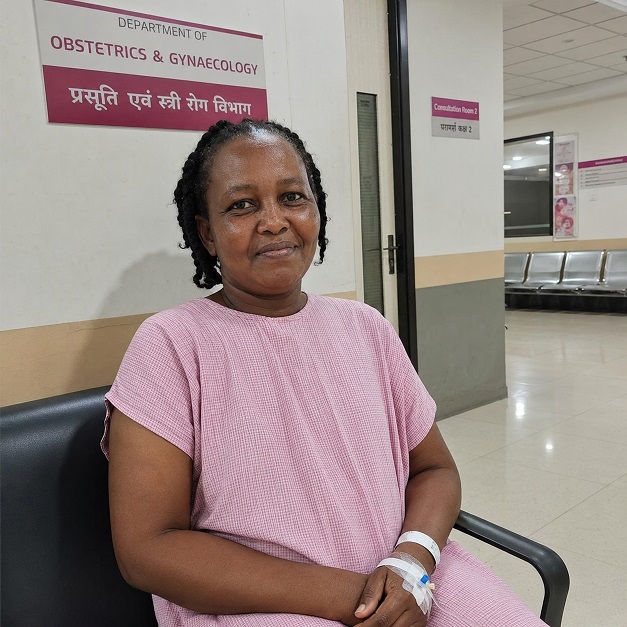
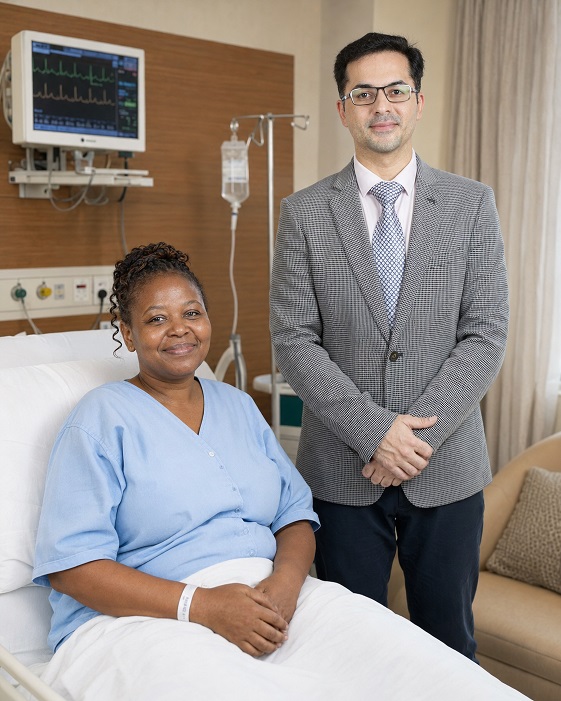
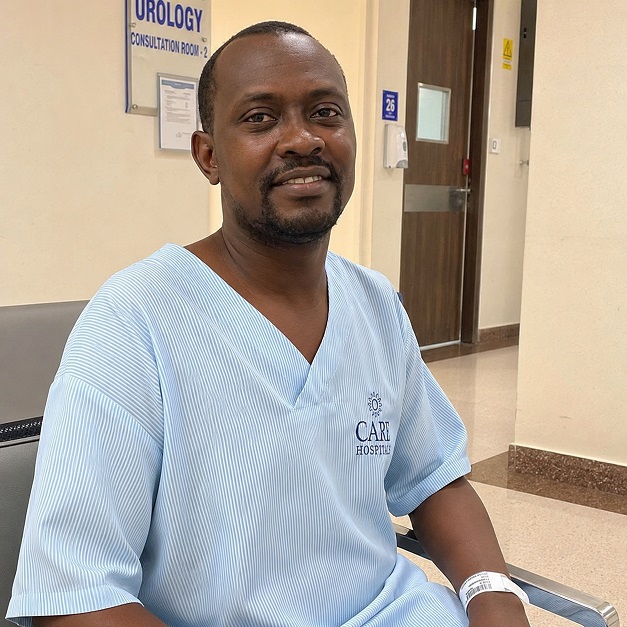
Patient Testimonials from Kenya

Ready to Take the First Step?
Share your Medical Reports with our Healthcare Managers Today and Get a FREE CONSULTATION, a Personalized Treatment Plan, and Complete Support from Arrival to Recovery.
Get Your Free ConsultationAreas We Serve
This resource has been thoughtfully prepared for patients from Kenya who are considering medical treatment in India. We also welcome patients from the wider region in the countries mentioned below-
We assist patients from:
- Ethiopia
- Somalia
- Tanzania
- Uganda
- Seychelles
- Guinea
- Guinea-Bissau
- Liberia
- Mali
- Mauritania
- Niger
- Nigeria
- Senegal
- Togo
- South Sudan
- Sierra Leone
Many of the insights, treatment pathways, hospital recommendations, travel guidance, and patient support services described here are equally relevant and may be used as a reference when planning treatment in India.
From Kenya to India: Your Complete Patient Support Guide
- Brain Tumour Surgery in India for Kenyan Patients
- Cancer Treatment and Surgery in India for Kenyan Patients
- Cardiac Treatment and Surgery in India for Kenyan Patients
- Heart Valve Replacement Surgery in India for Kenyan Patients
- Knee Replacement in India for Kenyan Patients
- Prostate Cancer Treatment and Surgery in India for Kenyan Patients
- Spine Treatment and Surgery in India for Kenyan Patients
- Selecting the Best Bariatric Surgeons and Hospitals in India: What Kenyan Patients Should Actually Look For
- Selecting the Best Cancer Surgeons and Hospitals in India: What Kenyan Patients Should Actually Look For
- Selecting the Best Cardiac Surgeons and Hospitals in India: What Kenyan Patients Should Actually Look For
- Selecting the Best Dental Surgeons and Clinics in India: What Kenyan Patients Should Actually Look For
- Selecting the Best Hip Surgeons and Hospitals in India: What Kenyan Patients Should Actually Look For
- Selecting the Best Kidney Transplant Surgeons and Hospitals in India: What Kenyan Patients Should Actually Look For
- Selecting the Best Knee Surgeons and Hospitals in India: What Kenyan Patients Should Actually Look For
- Selecting the Best Liver Transplant Surgeons and Hospitals in India: What Kenyan Patients Should Actually Look For
- Selecting the Best Neurosurgeons and Hospitals in India: What Kenyan Patients Should Actually Look For
- Selecting the Best Prostate Cancer Surgeons and Hospitals in India: What Kenyan Patients Should Actually Look For
- Selecting the Best Spine Surgeons and Hospitals in India: What Kenyan Patients Should Actually Look For