

Leukemia, Lymphoma, and Blood Cancer Treatment in India for Kenyan Patients
Diagnosis delay costs the most in blood cancers: what a Kenyan patient should know about leukemia and lymphoma treatment in India, from testing to cost.
A study in Bungoma County, western Kenya, compared the number of children actually referred for cancer treatment against the number epidemiologists would expect to develop cancer in that population each year. The result: just 13 children were referred annually, against an expected 140, meaning roughly 91% of children who likely developed cancer in that region never made it into the treatment system at all. Among those who were referred, the median delay before diagnosis was 97 days, and event-free survival was just 21%. Across 24 years of guiding Kenyan patients through treatment in India, few statistics in this series capture the stakes of blood cancer treatment as starkly as this one, but there's a genuinely hopeful counterpoint worth knowing too: sustained partnership programmes in western Kenya have since dramatically cut diagnosis time at some centres, from multiple weeks down to just a few days. This article explains what leukemia, lymphoma, and blood cancer treatment involve, why referral and diagnosis delay matter so enormously for outcomes, what treatment costs in India compared with Kenya and Western countries, and the practical factors to weigh before deciding where to be treated.
Healing Journeys of Kenyan Patients


Key Takeaways
- The guide highlights a significant diagnosis and referral gap in western Kenya. One Bungoma County study found that only 13 children were referred for cancer treatment compared with an expected 140, meaning roughly 91% did not reach the treatment system. Among referred children, the median delay before diagnosis was 97 days, demonstrating why timely referral and treatment are particularly important for blood cancers.
- Blood cancers include leukemia, lymphoma and multiple myeloma, with different subtypes requiring different treatment approaches. The guide stresses that accurate genetic and molecular subtyping is essential because treatment protocols can vary substantially between leukemia and lymphoma subtypes. Treatment may involve chemotherapy, targeted therapy, radiation and, when necessary, bone marrow or stem-cell transplantation.
- India has developed dedicated haemato-oncology programmes with specialists experienced in subtype-specific blood cancer treatment and comprehensive transplant services. Leading centres combine this specialist expertise with JCI or NABH accreditation, while multidisciplinary care and advanced laboratory capabilities support diagnosis and treatment planning.
- The guide particularly emphasises speed for acute leukemia, which can progress significantly within weeks. Kenyan families should therefore avoid unnecessary delays when arranging specialist review, diagnostic testing and travel. The guide also notes that partnership programmes in western Kenya have reduced diagnosis times for conditions such as Burkitt lymphoma and acute lymphoblastic leukemia from weeks to only a few days at some centres.
- The guide gives approximate treatment costs of US$6,000–30,000 in India, compared with US$10,000–35,000 in Kenya, US$40,000–80,000 in the UK and US$60,000–150,000 in the US. The overall cost depends heavily on whether treatment involves chemotherapy alone or a bone marrow transplant. Kenyan patients should request a written estimate covering chemotherapy, transplant if required and isolation care.
- Before booking, Kenyan families should verify JCI or NABH accreditation, the haemato-oncologist's experience with the exact cancer subtype and whether complete molecular and genetic testing is included. A written long-term haematology follow-up plan should also be arranged with a doctor in Kenya before leaving India, particularly when treatment continues after discharge.
Quick Facts
- Author
- Dr. Dheeraj Bojwani
- Experience
- 24+ Years
- Treatment
- Leukemia, Lymphoma & Blood Cancer Treatment
- Patients
- Kenyan Patients
- First Assessment
- Blood counts, diagnosis and complete subtype evaluation
- Key Specialist
- Haemato-Oncologist
- Diagnostic Check
- Genetic and molecular subtyping
- Treatment Options
- Chemotherapy, targeted therapy, radiation and transplantation when required
- Case Experience
- Exact cancer subtype
- Transplant Pathway
- Bone marrow / stem-cell transplant when clinically indicated
- Hospital Check
- JCI / NABH accreditation
- India Cost
- US$6,000–30,000
- Kenya Cost
- US$10,000–35,000 private
- Medical Records
- Blood and bone-marrow reports
- Visa
- Indian medical e-visa with hospital invitation
- Travel
- Nairobi–India connecting or direct flight options
- Stay
- Approximately 3–6 weeks depending on treatment
- Communication
- Clear treatment and travel coordination
- Follow-Up
- Long-term haematology monitoring in Kenya
- Key Warning
- Delayed diagnosis or incomplete subtype testing
- Decision Principle
- Prioritise diagnostic accuracy, treatment speed and dedicated haemato-oncology expertise.
In Brief
For Kenyan patients seeking leukemia, lymphoma or other blood cancer treatment in India, the key priorities are rapid and accurate diagnosis, subtype-specific haemato-oncology expertise and access to appropriate treatment or transplantation when required. Patients should verify complete molecular testing, specialist experience, hospital accreditation, full treatment costs and a written follow-up plan before travelling.
What leukemia, lymphoma, and blood cancer treatment actually involve
Blood cancers, primarily leukemia, lymphoma, and multiple myeloma, affect the blood, bone marrow, or lymphatic system rather than forming a solid tumour in one location, which shapes how they're treated. Leukemia, cancer of the blood-forming cells in bone marrow, comes in acute forms that progress rapidly and require immediate, intensive treatment, and chronic forms that progress more slowly. Lymphoma, cancer of the lymphatic system, is divided into Hodgkin and non-Hodgkin subtypes, each with distinct treatment approaches.
Treatment typically combines chemotherapy, and increasingly targeted therapy that attacks specific molecular features of the cancer cells, with radiation therapy used in specific circumstances. For patients whose cancer doesn't respond adequately to these initial treatments, or who relapse afterward, a bone marrow or stem cell transplant, replacing the diseased bone marrow with healthy stem cells from the patient's own body or a matched donor, offers the best chance at long-term remission. This is a demanding treatment; it typically requires an extended hospital stay in a carefully controlled, infection-protected environment while the new marrow establishes itself, and full immune system recovery can take six to twelve months.
Accurate diagnosis for blood cancers depends heavily on more than a basic blood count; genetic and molecular subtyping of the specific cancer cells genuinely determines which treatment protocol will work best, since different subtypes of leukemia and lymphoma respond very differently to the same chemotherapy regimen. This is part of why a proper haemato-oncology evaluation, not simply a general oncology assessment, matters so much from the very first consultation; getting the subtype identification right shapes everything that follows.
Why referral and diagnosis delay matter so enormously for outcomes
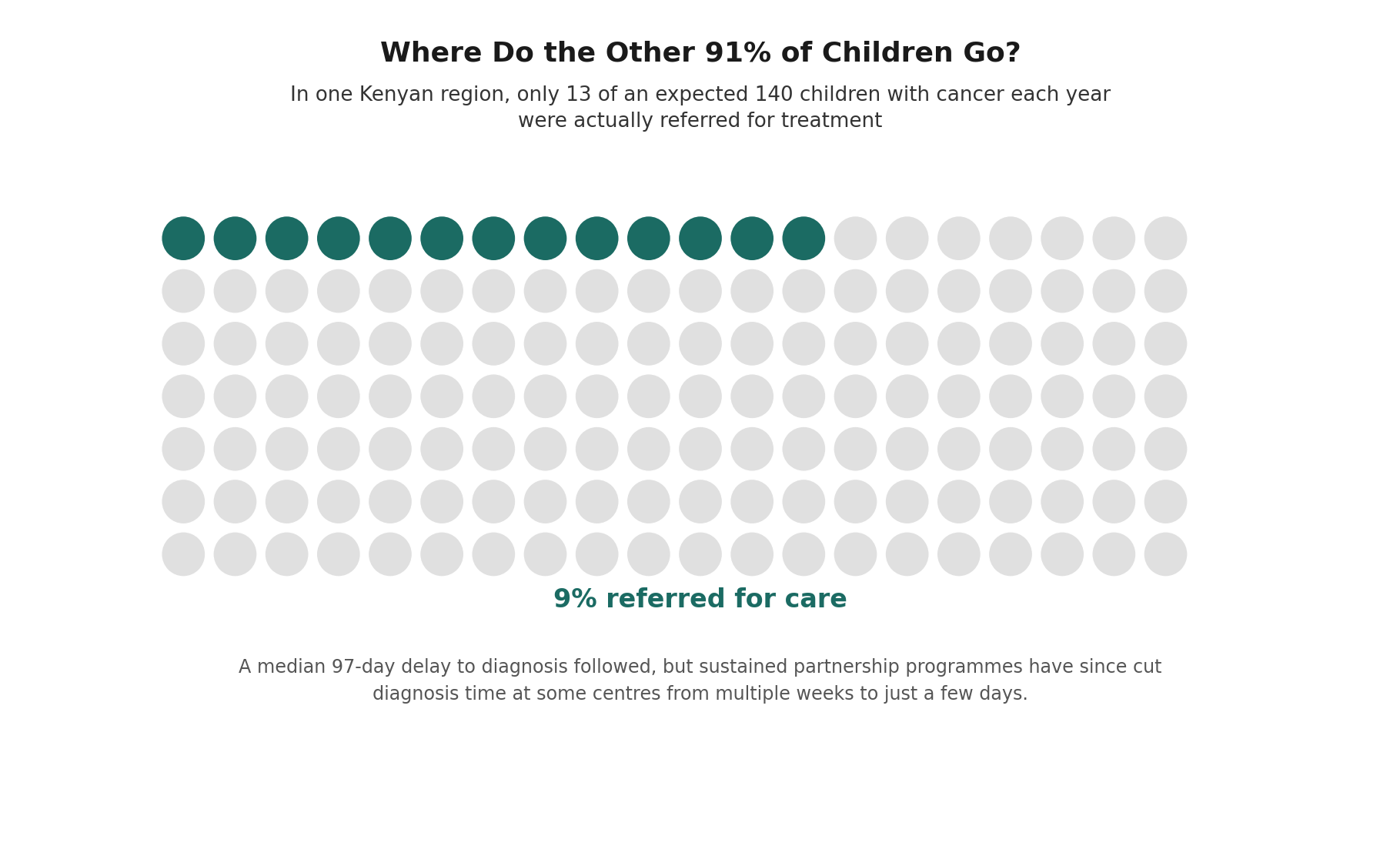
This is the pattern every Kenyan family facing a possible blood cancer diagnosis needs to understand clearly, because timing genuinely determines outcomes for these specific cancers more than almost any other factor. The Bungoma County study's finding, that roughly 91% of children expected to develop cancer in that region never appeared in the referral system, points to a genuine, severe gap between disease incidence and actual diagnosis, not because families don't seek care, but because of documented barriers including distance, cost, and delayed recognition of symptoms that can initially resemble common childhood illnesses.
The median 97-day diagnosis delay documented in that same study matters enormously for blood cancers specifically, since acute leukemias in particular can progress rapidly, and delayed treatment initiation genuinely worsens prognosis. But this isn't a story without progress: research from Moi Teaching and Referral Hospital, serving a catchment population of roughly 25 million people in western Kenya, has documented meaningful reductions in early deaths and treatment abandonment over time, and the AMPATH partnership programme has dramatically cut diagnosis time at its centres from multiple weeks down to just a few days for cancers like Burkitt lymphoma and acute lymphoblastic leukemia. Health insurance access has also been shown to significantly affect survival, underscoring how much financial barriers, not just clinical ones, shape outcomes.
Why India has become a genuine hub for leukemia, lymphoma, and blood cancer treatment
India has developed extensive, dedicated haemato-oncology capacity, with specialists who treat blood cancers at a volume and frequency that builds genuine, subtype-specific clinical judgement, alongside comprehensive bone marrow transplant programmes for patients who need this more intensive treatment. This matters because blood cancer treatment depends heavily on accurate molecular and genetic subtyping to select the right treatment protocol, a diagnostic depth that requires sustained laboratory and specialist investment.
India's leading centres combine this expertise with JCI and NABH accredited safety standards and reported treatment costs 70 to 80% below Western benchmarks, without compromising on treatment protocol quality. In 24 years of guiding patients through this decision, the clearest advice I offer is direct: given how much diagnosis speed and treatment initiation timing genuinely matter for blood cancer outcomes, moving quickly toward a centre with genuine haemato-oncology depth, rather than accepting delay at any stage of the process, is one of the single most important decisions a family can make.
This urgency applies specifically to acute leukemias, where the disease can progress meaningfully within weeks, making the interval between suspected diagnosis and actual treatment initiation genuinely consequential in a way it isn't for many other cancer types. For a Kenyan family navigating a possible blood cancer diagnosis, this means treating speed as a genuine priority throughout the process, from initial symptom recognition through to arranging travel and beginning treatment, rather than allowing delay to compound at each individual step.
What it costs: India versus Kenya, the UK, and the US
In India, blood cancer treatment, ranging from chemotherapy-only protocols to full bone marrow transplant,
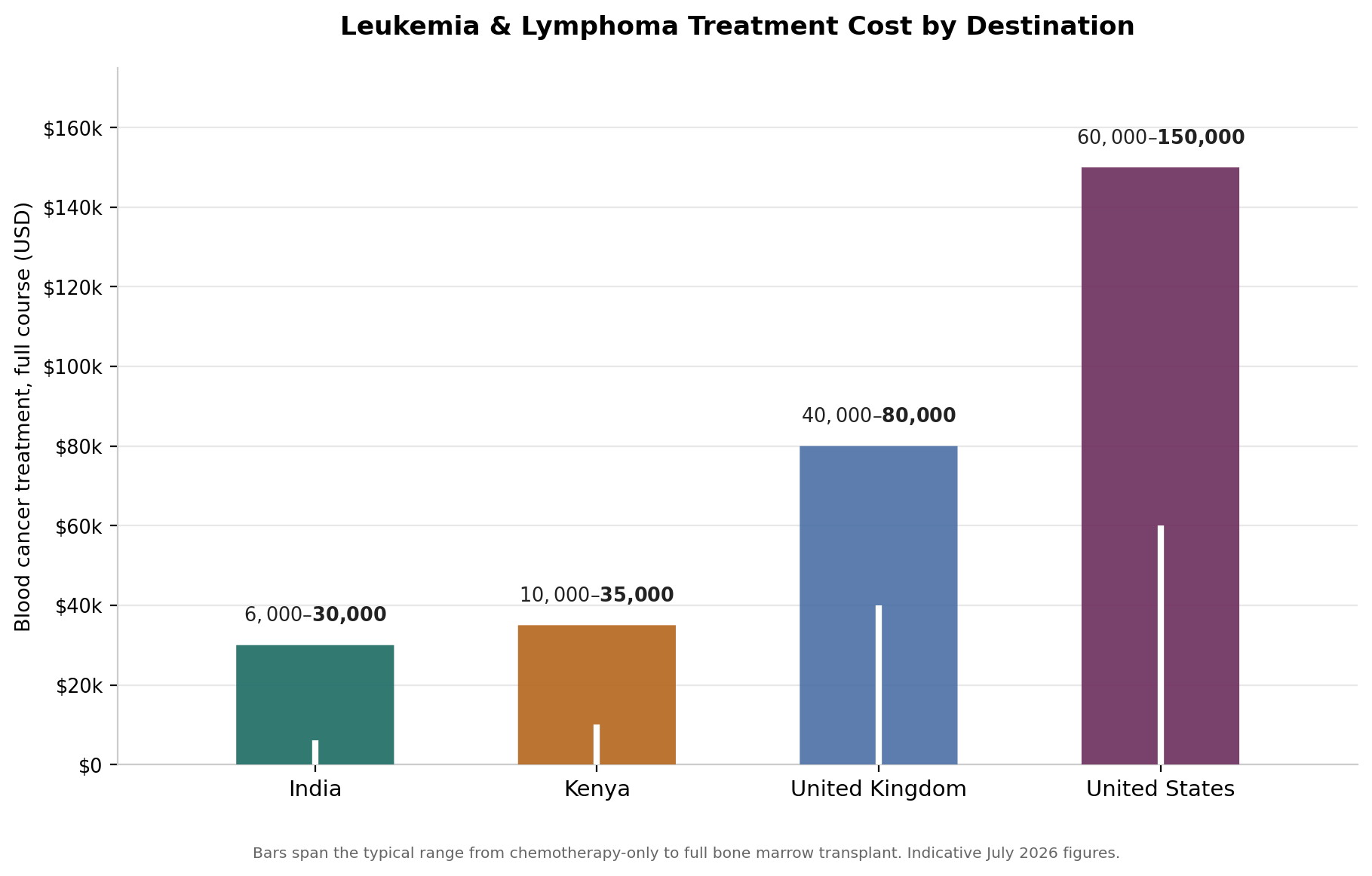
typically costs between 6,000 and 30,000 US dollars. In Kenya, private treatment costs run roughly 10,000 to 35,000 dollars. In the UK, comparable treatment typically costs 40,000 to 80,000 dollars, and in the US, 60,000 to 150,000 dollars.
Beyond the treatment itself, budget for an extended stay. Direct flights between Nairobi and Delhi or Mumbai run roughly 550 to 850 dollars return, and blood cancer treatment typically requires three to six weeks in India, with bone marrow transplant cases requiring the longer end of this range given the extended isolation and recovery period involved.
What a Kenyan family should actually check before booking
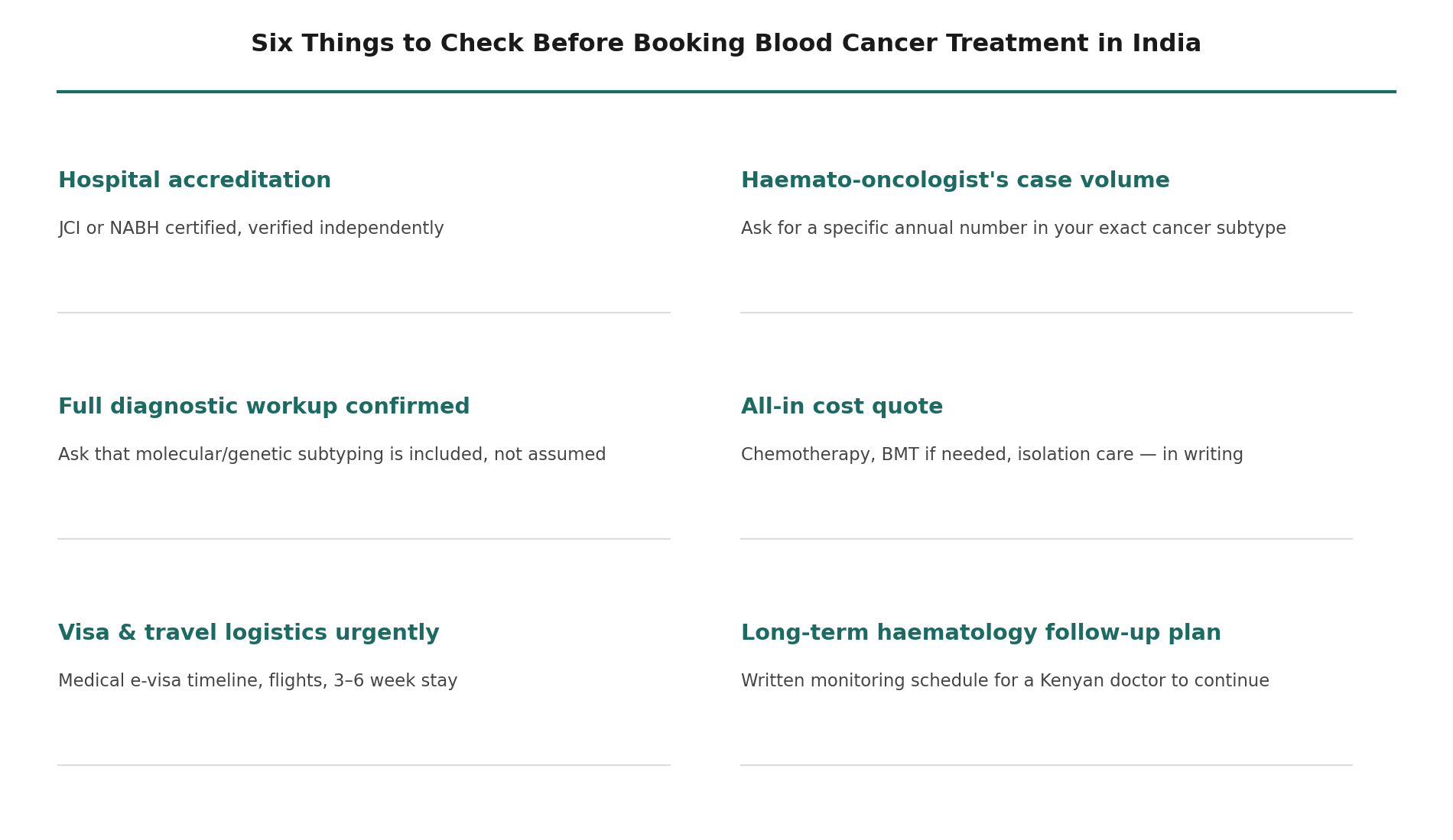
Given how much diagnostic accuracy and treatment timing matter here, work through these questions directly.
Confirm genuine accreditation. Ask whether the hospital holds JCI or NABH certification, and verify it independently.
Ask about the haemato-oncologist's case volume. A specific number, how many cases matching your exact cancer subtype the specialist personally treats each year, tells you more than general oncology reputation.
Confirm a full diagnostic workup is included. Ask that molecular and genetic subtyping is genuinely part of the initial evaluation, not assumed unnecessary.
Get the full cost breakdown in writing. Confirm what's included, chemotherapy, bone marrow transplant if needed, and isolation care.
Plan your visa and travel logistics urgently. The Indian medical e-visa is typically issued within three to five working days once you have a formal hospital invitation letter.
Arrange your long-term haematology follow-up plan before you leave. Agree on a written monitoring schedule and identify a doctor in Kenya who can continue that care.
Straight Answers for Kenyan Patients about Leukemia, Lymphoma, and Blood Cancer Treatment in India
How severe is the gap between expected and actual pediatric cancer referrals in Kenya?
A study in one Kenyan region found only 13 of an expected 140 children with cancer each year were actually referred for treatment, roughly 9%, with a median 97-day delay before diagnosis among those who were.
How much does blood cancer treatment cost in India compared to the US?
India typically costs 6,000 to 30,000 US dollars, against 60,000 to 150,000 dollars in the US.
Has diagnosis speed improved for blood cancers in Kenya?
Yes, at some centres. The AMPATH partnership programme has dramatically cut diagnosis time for cancers like Burkitt lymphoma and acute lymphoblastic leukemia from multiple weeks down to just a few days.
What's the difference between leukemia and lymphoma?
Leukemia affects blood-forming cells in the bone marrow, while lymphoma affects the lymphatic system; both are blood cancers but require somewhat different diagnostic and treatment approaches.
When is a bone marrow transplant necessary?
When blood cancer doesn't respond adequately to initial chemotherapy or targeted therapy, or when a patient relapses afterward, a transplant replacing diseased marrow with healthy stem cells offers the best chance at long- term remission.
How do I get a medical visa to India from Kenya?
The Indian medical e-visa is typically issued within three to five working days once you have a formal invitation letter from the treating hospital.
A Closing Word
The gap between 140 expected cases and just 13 actually referred in one Kenyan region is a genuinely sobering statistic, but it sits alongside real, documented progress: diagnosis times cut from weeks to days at centres with sustained partnership support, and improving survival where treatment abandonment has been reduced. India's combination of deep haemato-oncology expertise, accredited safety standards, and accessible cost offers Kenyan families facing this diagnosis a genuine path toward the speed and specialist depth that blood cancer treatment specifically demands.
Sources
- 🌐 Delays in accessing childhood cancer care in western Kenya: A single-center, retrospective study
- 🌐 Childhood Acute Lymphoblastic Leukemia Survival in Western Kenya: Reduction in Early Deaths and Treatment Abandonment
- 🌐 Cancer. AMPATH Kenya – ampathkenya.org/cancer
- 🌐 National Medical Commission of India — specialist registration verification
- 🌐 National Accreditation Board for Hospitals & Healthcare Providers (NABH) — accredited hospital directory
Frequently Asked Questions by Kenyans about Leukemia, Lymphoma, and Blood Cancer Treatment in India
Why is rapid diagnosis important for blood cancer?
The guide highlights that acute leukemias can progress quickly and that the 97-day median diagnostic delay documented in one western Kenyan study demonstrates the importance of timely diagnosis.
What blood cancers are covered?
The guide covers leukemia, lymphoma and multiple myeloma, with emphasis on the different diagnostic and treatment requirements of individual subtypes.
Why is molecular testing important?
Different blood cancer subtypes can respond differently to treatment. Genetic and molecular subtyping helps determine the appropriate treatment protocol.
Which specialist should Kenyan patients choose?
Patients should seek a dedicated haemato-oncologist with experience treating their specific blood cancer subtype, rather than relying only on general oncology experience.
When may a bone marrow transplant be required?
The guide explains that transplantation may be considered when blood cancer does not respond adequately to initial treatment or returns after treatment.
How much does blood cancer treatment cost in India?
The guide gives an approximate range of US$6,000–30,000, depending on the treatment pathway, from chemotherapy-based treatment through bone marrow transplantation.
How does India compare with Kenya?
The guide estimates private treatment in Kenya at approximately US$10,000–35,000, compared with US$6,000–30,000 in India.
What should Kenyan families check before booking?
The guide recommends verifying JCI or NABH accreditation, exact-subtype specialist experience, complete molecular/genetic testing, full costing and long-term follow-up.
How long might treatment in India take?
The guide states that blood cancer treatment typically requires three to six weeks in India, with transplant cases generally requiring the longer end because of isolation and recovery.
How can Kenyan patients arrange a medical visa?
The guide states that the Indian medical e-visa is typically issued within three to five working days once the patient has a formal hospital invitation letter.
Page Summary
This five-page guide focuses on timely diagnosis and specialist blood cancer treatment for Kenyan patients. Pages 1–2 explain the referral and diagnosis delays documented in western Kenya and describe leukemia, lymphoma and their treatment pathways. Page 3 compares blood cancer treatment costs in India, Kenya, the UK and US, while the page 4 “Six Things to Check” graphic highlights hospital accreditation, exact-subtype case volume, complete molecular/genetic testing, all-inclusive costing, urgent visa and travel planning, and long-term haematology follow-up.
Citation Block
| Topic | Information |
|---|---|
| Topic | Leukemia, Lymphoma & Blood Cancer Treatment in India for Kenyan Patients |
| Treatment | Leukemia, Lymphoma & Blood Cancer Treatment |
| Patients | Kenyan Patients |
| First Assessment | Blood counts, diagnosis and complete subtype evaluation |
| Key Specialist | Haemato-Oncologist |
| Diagnostic Testing | Genetic and molecular subtyping |
| Treatment Options | Chemotherapy, targeted therapy, radiation and transplantation |
| Case Experience | Exact cancer subtype |
| Transplant Pathway | Bone marrow / stem-cell transplant when required |
| Hospital Check | JCI / NABH accreditation |
| Cost Check | Written estimate covering treatment and isolation care |
| India Cost | US$6,000–30,000 |
| Kenya Cost | US$10,000–35,000 private |
| Medical Records | Blood and bone-marrow reports |
| Visa Planning | Indian medical e-visa with hospital invitation |
| Travel | Nairobi–India flights |
| Stay | Approximately 3–6 weeks depending on treatment |
| Follow-Up | Long-term haematology monitoring in Kenya |
| Specialist Question | How many patients with my exact cancer subtype do you treat each year? |
| Testing Question | Is complete molecular and genetic subtyping included? |
| Treatment Question | What treatment protocol is recommended for my exact subtype? |
| Cost Question | Does the estimate include chemotherapy, transplant if needed and isolation care? |
| Follow-Up Question | Which doctor in Kenya will continue my monitoring? |
| Warning Signs | Incomplete diagnostic workup or unexplained treatment delay |
| Payment Warning | Cost not provided as a complete written breakdown |
| Key Decision | Verify diagnostic accuracy, subtype-specific expertise and treatment capability |


Our Mission Statement
Our mission is to place patients at the centre of every healthcare decision by providing trustworthy, evidence-based, and unbiased medical information. We believe that informed patients make better decisions. Backed by personalised guidance from our experienced advisory team, we help patients understand their treatment options, compare them objectively, and confidently choose the path that best suits their medical needs and personal circumstances.
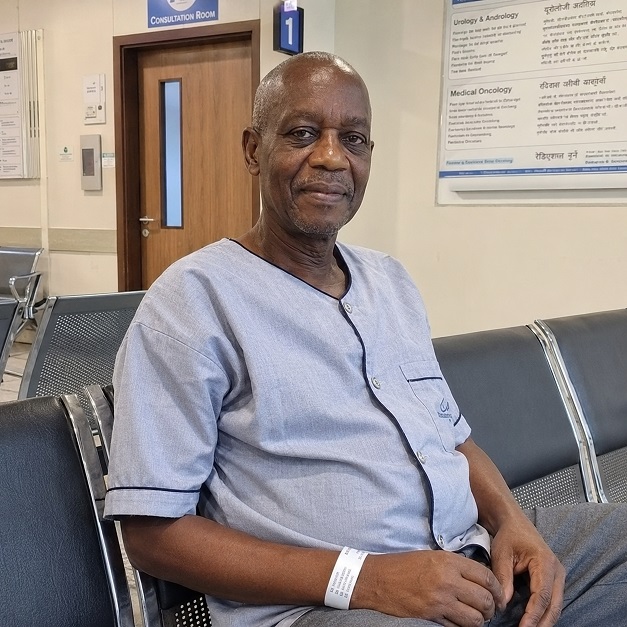
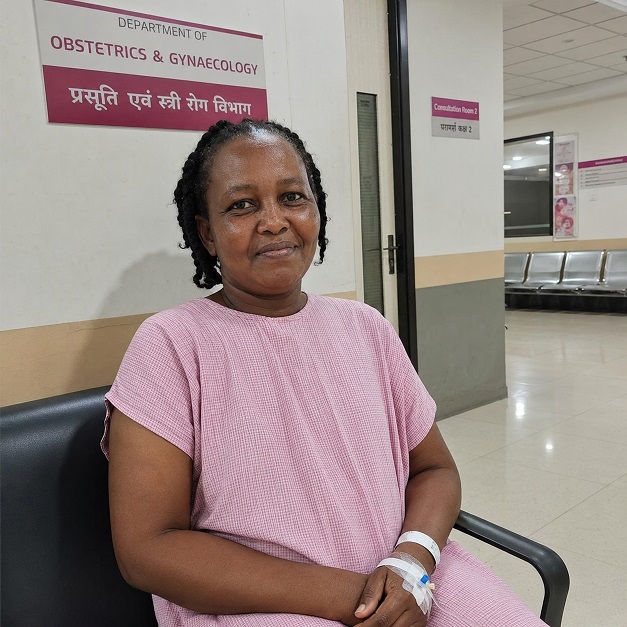
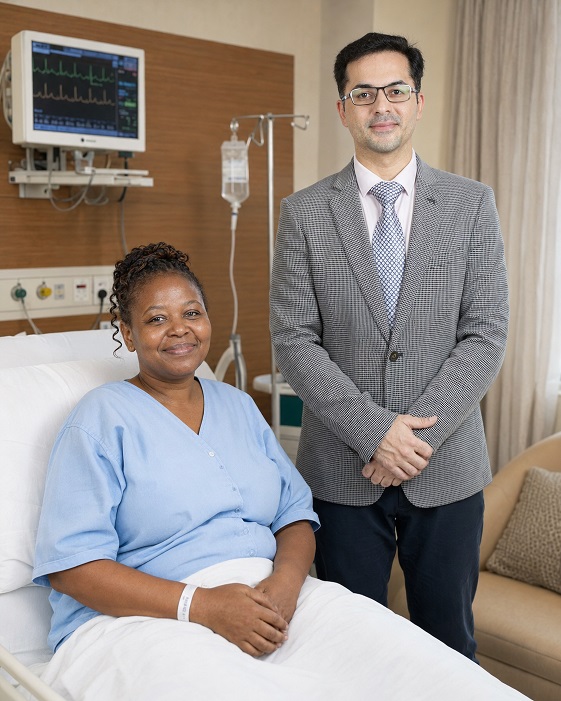
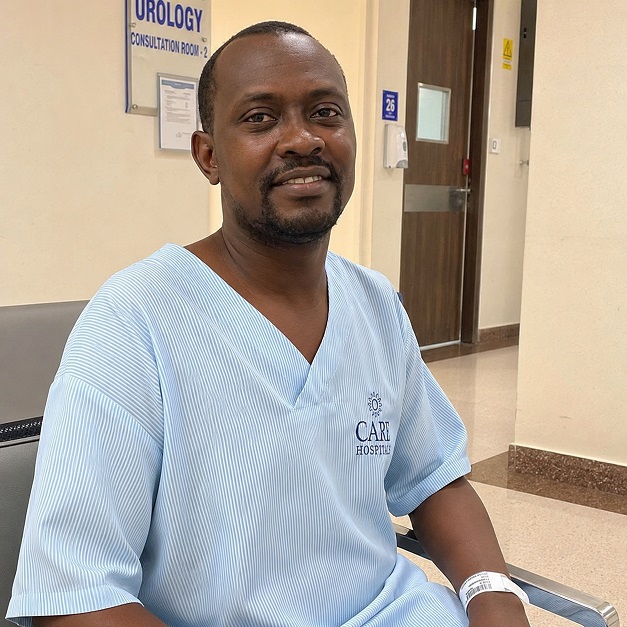
Patient Testimonials from Kenya
Ready to Take the First Step?
Share your Medical Reports with our Healthcare Managers Today and Get a FREE CONSULTATION, a Personalized Treatment Plan, and Complete Support from Arrival to Recovery.
Get Your Free ConsultationAreas We Serve
This resource has been thoughtfully prepared for patients from Kenya who are considering medical treatment in India. We also welcome patients from the wider region in the countries mentioned below-
We assist patients from:
- Ethiopia
- Somalia
- Tanzania
- Uganda
- Seychelles
- Guinea
- Guinea-Bissau
- Liberia
- Mali
- Mauritania
- Niger
- Nigeria
- Senegal
- Togo
- South Sudan
- Sierra Leone
Many of the insights, treatment pathways, hospital recommendations, travel guidance, and patient support services described here are equally relevant and may be used as a reference when planning treatment in India.
From Kenya to India: Your Complete Patient Support Guide
- Brain Tumour Surgery in India for Kenyan Patients
- Cancer Treatment and Surgery in India for Kenyan Patients
- Cardiac Treatment and Surgery in India for Kenyan Patients
- Heart Valve Replacement Surgery in India for Kenyan Patients
- Knee Replacement in India for Kenyan Patients
- Prostate Cancer Treatment and Surgery in India for Kenyan Patients
- Spine Treatment and Surgery in India for Kenyan Patients
- Selecting the Best Bariatric Surgeons and Hospitals in India: What Kenyan Patients Should Actually Look For
- Selecting the Best Cancer Surgeons and Hospitals in India: What Kenyan Patients Should Actually Look For
- Selecting the Best Cardiac Surgeons and Hospitals in India: What Kenyan Patients Should Actually Look For
- Selecting the Best Dental Surgeons and Clinics in India: What Kenyan Patients Should Actually Look For
- Selecting the Best Hip Surgeons and Hospitals in India: What Kenyan Patients Should Actually Look For
- Selecting the Best Kidney Transplant Surgeons and Hospitals in India: What Kenyan Patients Should Actually Look For
- Selecting the Best Knee Surgeons and Hospitals in India: What Kenyan Patients Should Actually Look For
- Selecting the Best Liver Transplant Surgeons and Hospitals in India: What Kenyan Patients Should Actually Look For
- Selecting the Best Neurosurgeons and Hospitals in India: What Kenyan Patients Should Actually Look For
- Selecting the Best Prostate Cancer Surgeons and Hospitals in India: What Kenyan Patients Should Actually Look For
- Selecting the Best Spine Surgeons and Hospitals in India: What Kenyan Patients Should Actually Look For