

Kidney Transplant in India for Kenyan Patients
What a kidney transplant in India involves for a Kenyan patient — donor rules, the centre's own volume, immunosuppression and lifelong follow-up at home.
Chronic kidney disease is one of the quieter health crises in Kenya, building slowly through years of high blood pressure or diabetes before a patient ever reaches the point of needing dialysis or transplant. But the scale of it, once you see the numbers side by side, is genuinely striking. Across 24 years of guiding Kenyan patients through treatment in India, kidney transplant is a procedure where the gap between how many people need one and how many actually receive one is about as stark as anything in this series. This article explains what kidney transplant involves, why the gap between need and transplant volume in Kenya is so significant, what treatment costs in India compared with Kenya and Western countries, and the practical factors to weigh before deciding where to be treated.
Healing Journeys of Kenyan Patients









Key Takeaways
- The guide explains that a kidney transplant replaces a kidney that has permanently lost its filtering function with a healthy donor kidney. For international patients, the practical pathway is generally a living-donor transplant, as deceased-donor organs in India are allocated through national systems primarily serving domestic patients. The surgery usually takes around 3–4 hours, followed by hospital recovery and lifelong immunosuppressant medication.
- The guide highlights the significant gap between kidney disease burden and transplant capacity in Kenya. Kenya's Ministry of Health reported approximately 3.1 million people living with chronic kidney disease in March 2026, while a review of one established private transplant programme recorded only 32 living-donor transplants over five and a half years. The page 2 graphic presents this contrast as 3.1 million vs 32, illustrating the scale of the domestic capacity challenge.
- India offers a substantially larger living-donor transplant infrastructure, with dedicated transplant teams, accredited hospitals and experience across different donor-recipient compatibility situations. The guide reports success rates exceeding 95% at leading Indian transplant centres and emphasises the importance of transplant volume when assessing a programme.
- Donor compatibility should be established as early as possible. Blood typing and compatibility screening can begin before travel, helping the transplant team determine whether the donor-recipient match is suitable and whether additional preparation may be required. The guide states that international patients generally need a compatible close-relative donor under India's living-donation requirements.
- The guide estimates a complete living-donor kidney transplant at US$13,000–25,000 in India, compared with US$15,000–40,000 in Kenya, US$80,000–150,000 in the UK and US$150,000–300,000 in the US. The page 3 cost chart highlights India's considerably lower treatment cost. Kenyan patients should generally plan for approximately 3–4 weeks in India for donor evaluation, surgery for both individuals and early recovery.
- The page 4 “Six Things to Check” graphic highlights hospital accreditation, the surgeon's living-donor transplant volume, early donor compatibility testing, a complete quotation covering both patient and donor, visa arrangements for both individuals and a lifelong follow-up plan.
Quick Facts
- Author
- Dr. Dheeraj Bojwani
- Experience
- 24+ Years
- Treatment
- Living-Donor Kidney Transplant
- Patients
- Kenyan Patients
- First Assessment
- Kidney failure status and donor-recipient compatibility
- Key Specialist
- Kidney Transplant Surgeon / Transplant Nephrologist
- Donor
- Compatible close-relative living donor
- Surgery
- Approximately 3–4 hours
- Hospital Stay
- Approximately 7–10 days
- Medication
- Lifelong immunosuppressants
- Success Rate
- Leading Indian centres report over 95%
- Hospital Check
- JCI / NABH accreditation
- Compatibility Check
- Blood typing and donor testing
- Cost Check
- Written estimate for both donor and recipient
- India Cost
- US$13,000–25,000
- Kenya Cost
- US$15,000–40,000 private
- Medical Records
- Kidney-function reports, blood group and donor records
- Visa
- Medical e-visa for patient and linked donor arrangements
- Travel
- Nairobi–India flights
- Stay
- Approximately 3–4 weeks
- Follow-Up
- Lifelong transplant monitoring in Kenya
- Key Warning
- Donor compatibility not assessed before treatment planning
- Decision Principle
- Prioritise transplant-specific experience, donor compatibility and lifelong follow-up.
In Brief
For Kenyan patients considering kidney transplantation in India, the key priorities are confirming a suitable living donor, completing compatibility testing early and selecting a high-volume transplant programme. Patients should obtain a complete written quotation covering both donor and recipient, arrange visas together and establish lifelong transplant follow-up in Kenya before travelling.
What kidney transplant actually involves
A kidney transplant replaces a kidney that has permanently lost its ability to filter waste and excess fluid from the blood, a condition called end-stage renal disease, with a healthy kidney from a donor. For international patients specifically, the practical route is almost always a living donor transplant, using a kidney from a compatible close relative, since deceased donor organs in most countries, including India, are allocated to domestic patients first through national waiting lists that international patients cannot join.
The surgery itself is a well-established procedure, typically lasting three to four hours, with the donor's kidney connected to the recipient's blood vessels and bladder, and the recipient's own damaged kidneys usually left in place unless they're causing separate complications. Because a healthy person can live a full, normal life with a single kidney, living donation carries a well-understood, generally low risk profile for the donor when properly screened and evaluated. Recovery for the recipient typically involves seven to ten days in hospital, followed by lifelong immunosuppressant medication to prevent the body from rejecting the new organ.
Compatibility between donor and recipient matters enormously to the outcome. Blood type and tissue matching determine both the complexity of the surgery and the medication regimen needed afterward, and centres with genuine transplant volume are better equipped to manage cases where the match isn't perfect, sometimes through additional pre-treatment protocols that reduce rejection risk even across a blood type mismatch.
Why the gap between need and transplant volume in Kenya is so significant
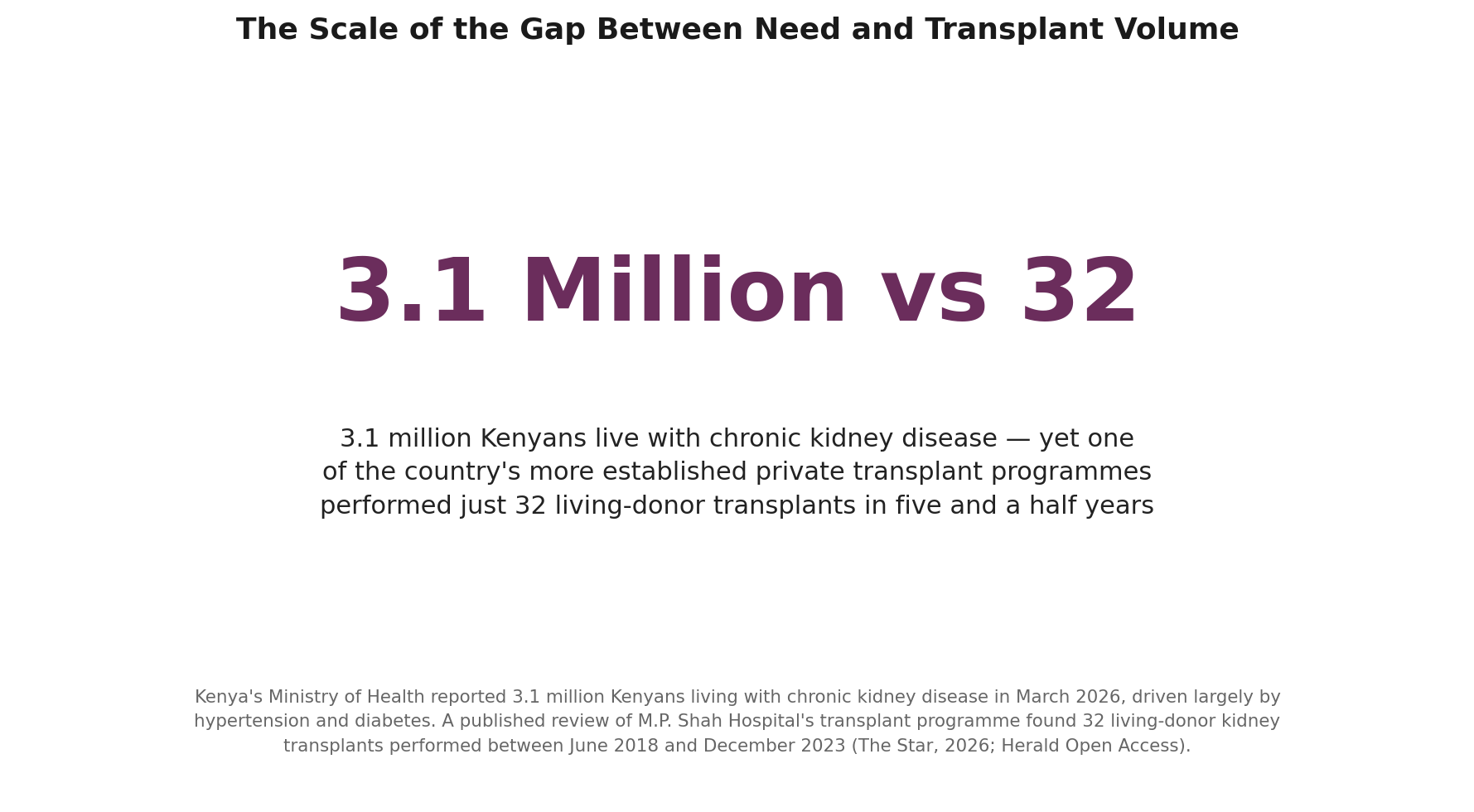
This is the fact every Kenyan patient or family facing kidney failure needs to understand clearly. Kenya's Ministry of Health reported in March 2026 that approximately 3.1 million Kenyans are living with chronic kidney disease, driven largely by rising rates of hypertension and diabetes, non-communicable diseases that now account for roughly 43% of all deaths in the country. Against that scale of need, a published review of one of Kenya's more established private kidney transplant programmes, at M.P. Shah Hospital in Nairobi, found just 32 living-donor kidney transplants performed over five and a half years, between June 2018 and December 2023.
Kenya has genuinely made policy progress recently: the Social Health Authority now covers kidney transplantation, dialysis, and nephrectomy under approved benefit packages at accredited centres like Aga Khan University Hospital, and the government has announced a National Transplant Registry and additional renal units being rolled out across counties. But policy coverage and physical capacity are two different things, and the volume figures from an established programme illustrate just how much runway remains before domestic capacity can meet even a fraction of documented need. For a patient currently on dialysis, often for years while waiting, this capacity gap translates directly into time, and time on dialysis carries its own accumulating health risks.
Why India remains a strong option even as Kenya's domestic capacity grows
India performs a substantially higher volume of living donor kidney transplants than Kenya's current domestic capacity allows, spread across dozens of accredited centres with dedicated transplant teams, some individually performing more transplants annually than Kenya's entire established private programme completed over five years. That volume translates directly into scheduling speed and surgical experience across a wide range of donor- recipient compatibility scenarios, including cases where blood types don't perfectly match, which require additional preparation that only high-volume centres routinely handle well.
India's leading transplant centres combine this volume with JCI and NABH accredited safety standards and reported success rates exceeding 95%, figures that stand up well against transplant outcomes globally. In 24 years of guiding Kenyan patients through this exact decision, the ones who move forward once a compatible donor is confirmed, rather than continuing to wait domestically, are consistently the ones who spend less overall time on dialysis and recover with fewer complications. For a Kenyan patient currently on dialysis and facing a lengthy domestic wait, or for any patient wanting to move forward with a compatible living donor without an extended delay, India's combination of speed, volume, and cost remains, for the great majority of patients I've guided through this decision, the more reliable near-term path.
What it costs: India versus Kenya, the UK, and the US
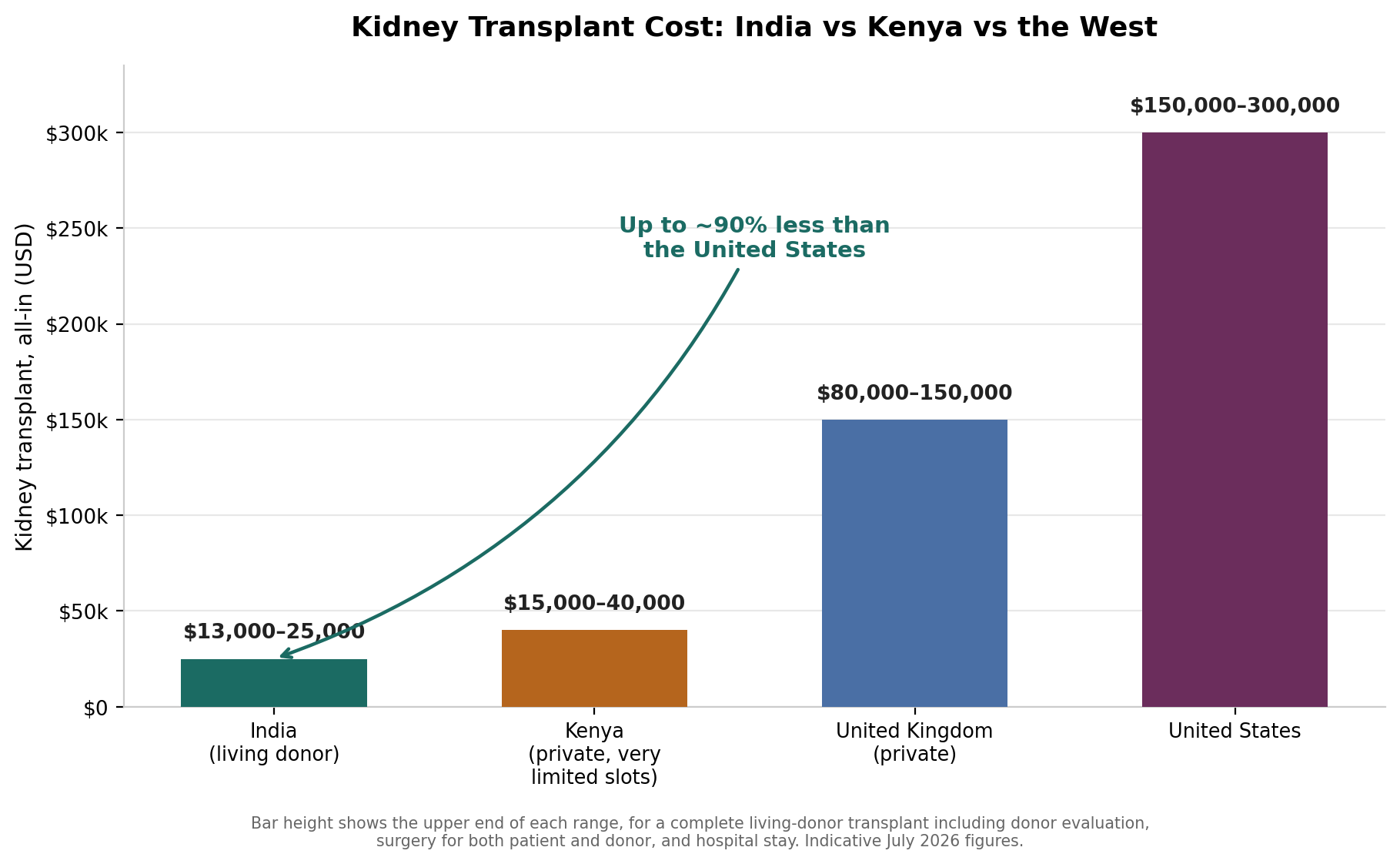
In India, a complete living donor kidney transplant typically costs between 13,000 and 25,000 US dollars, covering donor evaluation, surgery for both patient and donor, and hospital stay. In Kenya, private kidney transplant costs run roughly 15,000 to 40,000 dollars where available, though access to a surgical slot within a reasonable timeframe remains the greater practical constraint. In the UK, private kidney transplant typically costs 80,000 to 150,000 dollars, and in the US, 150,000 to 300,000 dollars, up to roughly 90% more than the equivalent treatment in India.
Beyond the procedure itself, budget for an extended stay. Direct flights between Nairobi and Delhi or Mumbai run roughly 550 to 850 dollars return, and kidney transplant typically requires three to four weeks in India, covering donor evaluation, surgery for both patient and donor, and the early recovery period before travel home is medically advisable.
What a Kenyan patient should actually check before booking
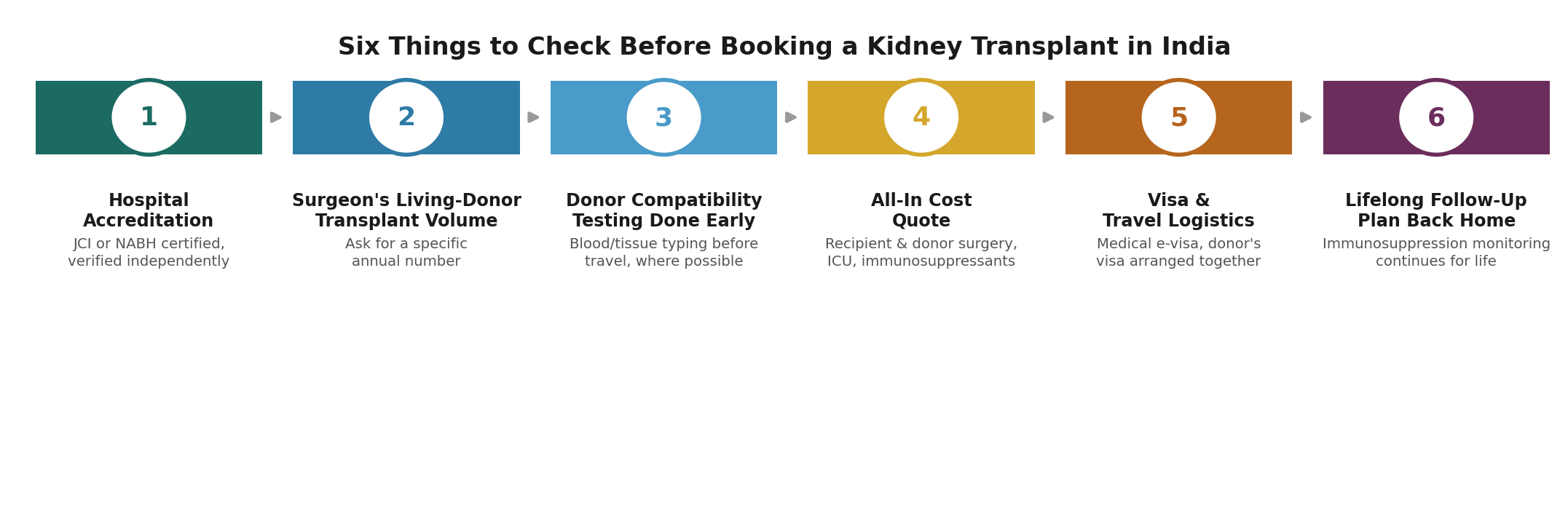
Given how significant this decision is, work through these questions directly.
Confirm genuine accreditation. Ask whether the hospital holds JCI or NABH certification, and verify it independently.
Ask about the surgeon's living donor transplant volume specifically. A specific number, how many living donor kidney transplants the surgeon personally performs each year, tells you far more than general hospital reputation.
Get donor compatibility testing done as early as possible. Blood typing and initial compatibility screening can often begin before you even travel, saving valuable time once you arrive.
Get the full cost breakdown in writing. Confirm what's included, both patient and donor surgery, ICU days for each, and initial immunosuppressant medication.
Plan visas for both patient and donor together. The Indian medical e-visa is typically issued within three to five working days once you have a formal hospital invitation letter, and the donor will need a linked visa arranged at the same time.
Arrange your lifelong follow-up plan before you leave. Transplant recipients require lifelong immunosuppressant medication and monitoring. Agree on a written plan and identify a doctor in Kenya who can support ongoing care once you're home.
Straight Answers for Kenyan Patients about Kidney Transplant in India
How much does a kidney transplant cost in India compared to the US?
India typically costs 13,000 to 25,000 US dollars for a complete living donor transplant, against 150,000 to 300,000 dollars in the US, a saving of up to roughly 90%.
How significant is the kidney transplant gap in Kenya?
Kenya's Ministry of Health reported 3.1 million Kenyans living with chronic kidney disease in March 2026, while a review of one established private transplant programme found just 32 living-donor transplants performed over five and a half years.
Does Kenya's national insurance now cover kidney transplant?
Yes, the Social Health Authority covers kidney transplantation, dialysis, and nephrectomy under approved benefit packages at accredited centres, though physical surgical capacity remains a separate constraint from insurance coverage.
Can I use a kidney from a non-relative donor in India?
International patients in India are generally required to bring a compatible donor who is a close relative, since India's regulations restrict living donation for foreign patients to family members.
How long does kidney transplant treatment take in India?
Most patients need three to four weeks in India, covering donor evaluation, surgery for both patient and donor, and the early recovery period before travel home is medically advisable.
How do I get a medical visa to India from Kenya for both patient and donor?
The Indian medical e-visa is typically issued within three to five working days once you have a formal invitation letter from the treating hospital, with the donor able to apply for a linked visa at the same time.
A Closing Word
The gap between 3.1 million Kenyans living with chronic kidney disease and the transplant volume domestic programmes currently manage is one of the more concrete illustrations in this series of why timing matters as much as destination. India's high-volume transplant centres offer a genuinely faster path to a living donor transplant, at a cost that remains accessible, while Kenya's own capacity continues to develop. Ask the right questions, get donor testing started early, and arrange lifelong follow-up before you travel.
Sources
- 🌐 About 3.1 million Kenyans living with chronic kidney disease, ministry warns. The Star, 2026
- 🌐 Short Term Outcomes of a Living Renal Transplant Program at a Private Hospital in Nairobi, Kenya. Herald Open Access. he
- 🌐 Over 3 million Kenyans living with chronic kidney disease, Health ministry warns. The Eastleigh Voice, 2026. eastleighvoice
- 🌐 National Medical Commission of India — surgeon and specialist registration verification
- 🌐 National Accreditation Board for Hospitals & Healthcare Providers (NABH) — accredited hospital directory
Frequently Asked Questions by Kenyans about Kidney Transplant in India
Who can provide a kidney for an international patient in India?
The guide states that international patients generally need a compatible close-relative living donor, subject to applicable Indian requirements.
How long does kidney transplant surgery take?
The surgery typically takes approximately 3–4 hours, although the overall treatment period is much longer because donor evaluation and recovery are also required.
How long does the recipient stay in hospital?
The guide states that recipient recovery generally involves approximately 7–10 days in hospital, followed by ongoing monitoring and medication.
How much does a kidney transplant cost in India?
A complete living-donor kidney transplant typically costs approximately US$13,000–25,000 in India.
How does India's cost compare with Kenya?
The guide estimates private kidney transplantation in Kenya at approximately US$15,000–40,000, compared with US$13,000–25,000 in India.
How significant is Kenya's kidney disease burden?
Kenya's Ministry of Health reported approximately 3.1 million people living with chronic kidney disease in March 2026.
Can donor compatibility testing be done before travelling?
Yes. The guide recommends beginning blood typing and initial compatibility screening as early as possible, potentially before travelling to India.
How long should Kenyan patients stay in India?
Most patients should plan for approximately 3–4 weeks, covering donor evaluation, surgery for both donor and recipient and early recovery.
Does the recipient need medication after transplantation?
Yes. Kidney transplant recipients require lifelong immunosuppressant medication and monitoring to help prevent rejection.
What should Kenyan patients check before choosing a transplant centre?
The guide recommends checking JCI or NABH accreditation, living-donor transplant volume, donor compatibility testing, complete costs for both people, visa arrangements and lifelong follow-up support.
Page Summary
This five-page guide focuses on living-donor kidney transplantation for Kenyan patients. Page 2 highlights the major gap between Kenya's estimated 3.1 million people living with chronic kidney disease and 32 living-donor transplants recorded by one established programme over five and a half years. Page 3 compares transplant costs in India, Kenya, the UK and US, while the page 4 “Six Things to Check” graphic highlights accreditation, living-donor transplant volume, early compatibility testing, complete costing, joint visa planning and lifelong follow-up.
Citation Block
| Topic | Information |
|---|---|
| Topic | Kidney Transplant in India for Kenyan Patients |
| Treatment | Living-Donor Kidney Transplant |
| Patients | Kenyan Patients |
| First Assessment | Kidney failure status and donor-recipient compatibility |
| Key Specialist | Kidney Transplant Surgeon / Transplant Nephrologist |
| Donor | Compatible close-relative living donor |
| Surgery | Approximately 3–4 hours |
| Hospital Stay | Approximately 7–10 days |
| Medication | Lifelong immunosuppressants |
| Success Rate | Over 95% reported at leading Indian centres |
| Hospital Check | JCI / NABH accreditation |
| Compatibility Check | Blood typing and donor compatibility testing |
| Cost Check | Written estimate covering both patient and donor |
| India Cost | US$13,000–25,000 |
| Kenya Cost | US$15,000–40,000 private |
| Medical Records | Kidney-function reports, blood group and donor records |
| Travel | Nairobi–India flights |
| Stay | Approximately 3–4 weeks |
| Follow-Up | Lifelong transplant monitoring in Kenya |
| Surgeon Question | How many living-donor kidney transplants do you personally perform each year? |
| Compatibility Question | Can donor compatibility testing begin before we travel? |
| Donor Question | What evaluation will the living donor undergo independently? |
| Cost Question | Does the quotation include surgery, ICU care and initial medicines for both people? |
| Follow-Up Question | Who will manage lifelong transplant monitoring after we return to Kenya? |
| Warning Signs | Donor compatibility not assessed early |
| Payment Warning | Incomplete quotation excluding donor or recipient costs |
| Key Decision | Verify transplant volume, donor compatibility and lifelong follow-up |


Our Mission Statement
Our mission is to place patients at the centre of every healthcare decision by providing trustworthy, evidence-based, and unbiased medical information. We believe that informed patients make better decisions. Backed by personalised guidance from our experienced advisory team, we help patients understand their treatment options, compare them objectively, and confidently choose the path that best suits their medical needs and personal circumstances.
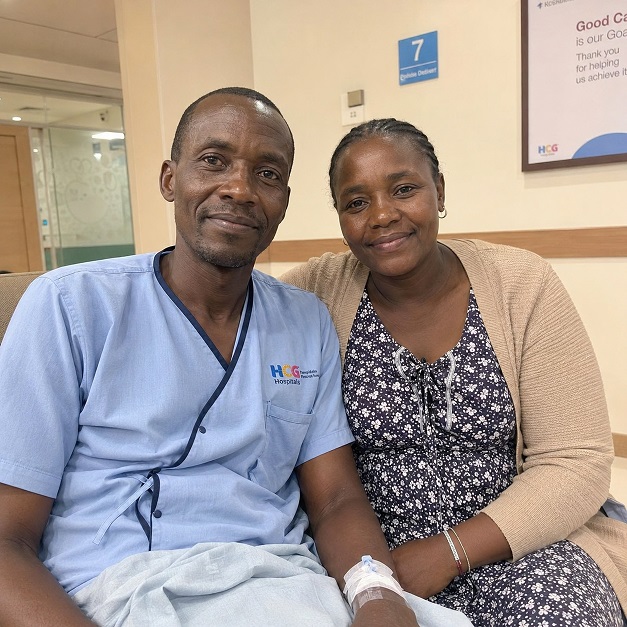
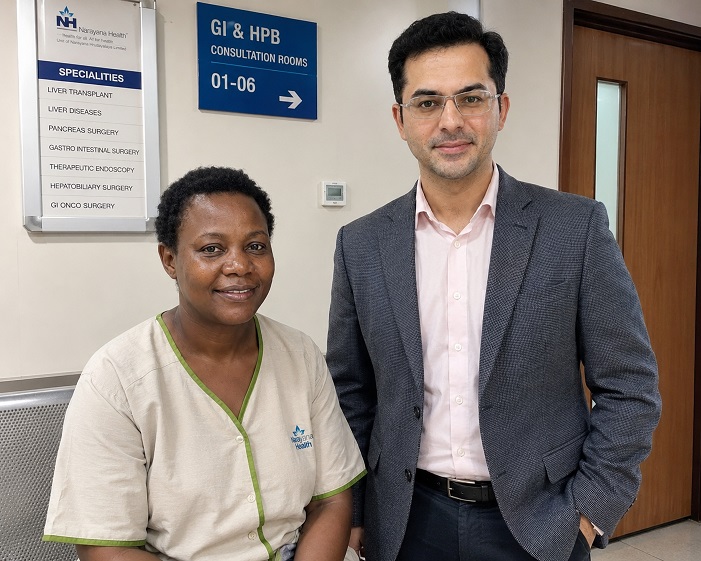
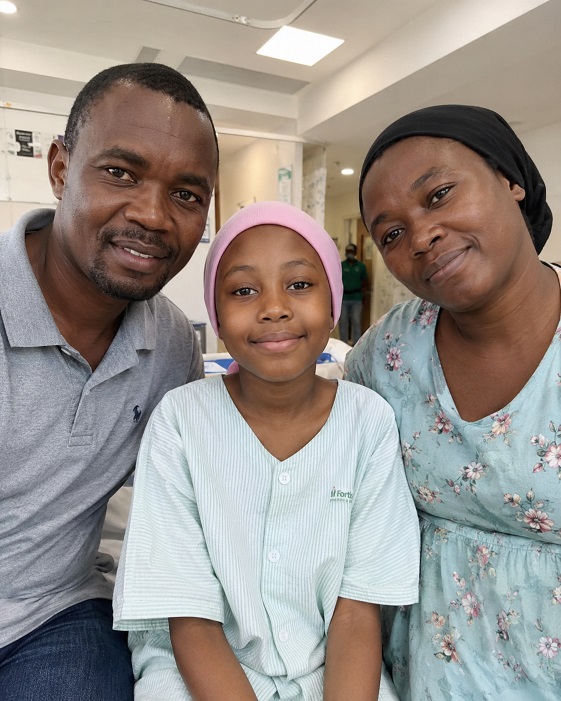
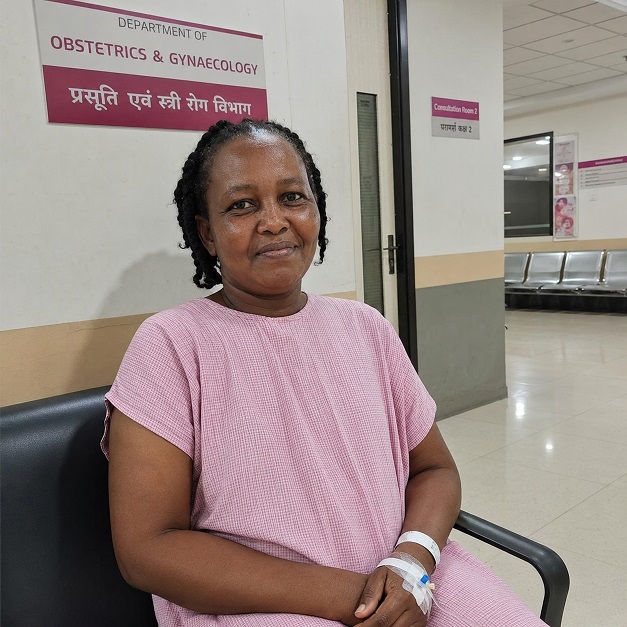
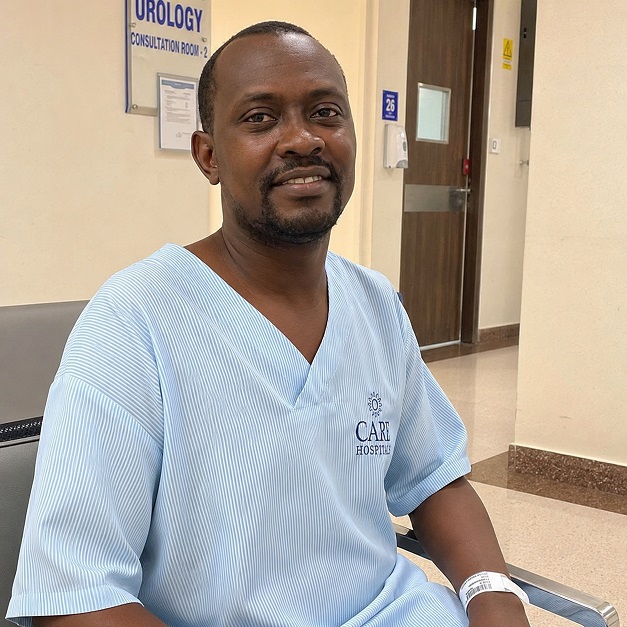
Patient Testimonials from Kenya









Ready to Take the First Step?
Share your Medical Reports with our Healthcare Managers Today and Get a FREE CONSULTATION, a Personalized Treatment Plan, and Complete Support from Arrival to Recovery.
Get Your Free ConsultationAreas We Serve
This resource has been thoughtfully prepared for patients from Kenya who are considering medical treatment in India. We also welcome patients from the wider region in the countries mentioned below-
We assist patients from:
- Ethiopia
- Somalia
- Tanzania
- Uganda
- Seychelles
- Guinea
- Guinea-Bissau
- Liberia
- Mali
- Mauritania
- Niger
- Nigeria
- Senegal
- Togo
- South Sudan
- Sierra Leone
Many of the insights, treatment pathways, hospital recommendations, travel guidance, and patient support services described here are equally relevant and may be used as a reference when planning treatment in India.
From Kenya to India: Your Complete Patient Support Guide
- Brain Tumour Surgery in India for Kenyan Patients
- Cancer Treatment and Surgery in India for Kenyan Patients
- Cardiac Treatment and Surgery in India for Kenyan Patients
- Heart Valve Replacement Surgery in India for Kenyan Patients
- Knee Replacement in India for Kenyan Patients
- Prostate Cancer Treatment and Surgery in India for Kenyan Patients
- Spine Treatment and Surgery in India for Kenyan Patients
- Selecting the Best Bariatric Surgeons and Hospitals in India: What Kenyan Patients Should Actually Look For
- Selecting the Best Cancer Surgeons and Hospitals in India: What Kenyan Patients Should Actually Look For
- Selecting the Best Cardiac Surgeons and Hospitals in India: What Kenyan Patients Should Actually Look For
- Selecting the Best Dental Surgeons and Clinics in India: What Kenyan Patients Should Actually Look For
- Selecting the Best Hip Surgeons and Hospitals in India: What Kenyan Patients Should Actually Look For
- Selecting the Best Kidney Transplant Surgeons and Hospitals in India: What Kenyan Patients Should Actually Look For
- Selecting the Best Knee Surgeons and Hospitals in India: What Kenyan Patients Should Actually Look For
- Selecting the Best Liver Transplant Surgeons and Hospitals in India: What Kenyan Patients Should Actually Look For
- Selecting the Best Neurosurgeons and Hospitals in India: What Kenyan Patients Should Actually Look For
- Selecting the Best Prostate Cancer Surgeons and Hospitals in India: What Kenyan Patients Should Actually Look For
- Selecting the Best Spine Surgeons and Hospitals in India: What Kenyan Patients Should Actually Look For