

Heart Failure Treatment and Surgery in India for Kenyan Patients
From medical therapy to devices and surgery: what heart failure treatment in India offers a Kenyan patient, how to judge the centre, and what it costs.
Kenya's first national multicenter heart failure registry, drawing on data from Kenyatta National Hospital, Moi Teaching and Referral Hospital, and Aga Khan University Hospital Nairobi, found that the condition disproportionately affects younger adults, and is primarily linked to non-ischaemic causes rather than the coronary artery disease that drives most heart failure in Western countries. Earlier hospital-based data from Kenyatta National Hospital adds a striking detail: nearly 80% of patients with rheumatic heart disease presenting with heart failure were under the age of 30. Across 24 years of guiding Kenyan patients through treatment in India, this age and cause profile changes how heart failure should genuinely be approached, not as a condition of later life, but one that can demand surgical attention in patients still in their twenties and thirties. This article explains what heart failure treatment and surgery involve, why Kenya's younger patient profile and disease pattern matter so much, what treatment costs in India compared with Kenya and Western countries, and the practical factors to weigh before deciding where to be treated.
Healing Journeys of Kenyan Patients









Key Takeaways
- The guide explains that heart failure in Kenya disproportionately affects younger adults, with non-ischaemic causes such as rheumatic and hypertensive cardiomyopathy playing a major role. Earlier Kenyatta National Hospital data found that nearly 80% of patients with rheumatic heart disease presenting with heart failure were under 30, making long-term treatment decisions particularly important for younger patients.
- For rheumatic heart disease, the mitral valve is commonly affected, either through narrowing or leakage. Treatment may involve repairing the patient's own valve or replacing it with a mechanical or biological prosthesis. Valve repair is generally preferred when technically achievable, while mechanical and biological valves have different long-term implications.
- The guide stresses that younger Kenyan patients should carefully understand the difference between mechanical and biological valve replacement. Mechanical valves can last essentially a lifetime but require lifelong blood-thinning medication, while biological valves generally last around 10–20 years and may eventually require another intervention.
- India has substantial experience with valve repair and replacement for rheumatic heart disease, supported by dedicated cardiac surgery teams and JCI or NABH-accredited hospitals. The guide emphasises that the surgeon's experience with the specific valve problem is more useful than relying only on a hospital's general cardiac reputation.
- The guide estimates heart failure surgery, primarily valve repair or replacement, at approximately US$6,000–15,000 in India, compared with US$10,000–25,000 privately in Kenya, US$30,000–50,000 in the UK and US$50,000–100,000 in the US. The page 3 cost chart visually compares these treatment ranges. Patients should also allow approximately 2–3 weeks in India for assessment, surgery and initial ICU-monitored recovery.
- The page 4 “Six Things to Check” graphic highlights hospital accreditation, the surgeon's valve-specific annual experience, a genuine explanation of repair versus replacement, a complete quotation including ICU care and anticoagulation planning, visa and travel logistics, and a long-term cardiology follow-up plan in Kenya.
Quick Facts
- Author
- Dr. Dheeraj Bojwani
- Experience
- 24+ Years
- Treatment
- Heart Failure Treatment & Valve Surgery
- Patients
- Kenyan Patients
- First Assessment
- Heart function, valve damage and underlying cause
- Key Specialist
- Cardiac / Valve Surgeon
- Main Surgical Options
- Valve repair or replacement
- Common Condition
- Rheumatic heart disease
- Common Valve
- Mitral valve
- Valve Choice
- Mechanical or biological prosthesis when replacement is required
- Case Volume
- Valve repairs and replacements performed annually
- Hospital Check
- JCI / NABH accreditation
- Cost Check
- Written estimate covering surgery, ICU and related care
- India Cost
- US$6,000–15,000
- Kenya Private Cost
- US$10,000–25,000
- Medical Records
- Echocardiography and cardiac reports
- Visa
- Indian medical e-visa with hospital invitation
- Travel
- Nairobi–India flights
- Stay
- Approximately 2–3 weeks
- Follow-Up
- Long-term cardiology monitoring in Kenya
- Communication
- Clear treatment and travel coordination
- Key Warning
- Valve replacement recommended without explaining whether repair is feasible
- Decision Principle
- Prioritise valve-specific expertise, appropriate repair-versus-replacement assessment and long-term follow-up.
In Brief
For Kenyan patients with heart failure caused by structural valve disease, the key priorities are early specialist assessment, genuine valve-specific surgical experience and a clear explanation of repair versus replacement. Patients should understand the long-term implications of the selected valve, obtain a complete written quotation and establish continuing cardiology follow-up in Kenya before travelling.
What heart failure treatment and surgery actually involve
Heart failure means the heart can no longer pump blood efficiently enough to meet the body's needs, causing symptoms like breathlessness, fatigue, and fluid retention. Treatment begins with medication, carefully managing fluid balance and reducing the heart's workload, but when the underlying cause is structural, most commonly a damaged heart valve, medication alone cannot fix the problem, and surgery becomes necessary to prevent ongoing decline.
For rheumatic heart disease specifically, the most common structural cause of heart failure in young Kenyan patients, the mitral valve is most frequently affected, either narrowed (stenosis) or leaking (regurgitation), and surgery involves either repairing the patient's own valve or replacing it entirely with a mechanical or biological prosthesis. Valve repair is generally preferred when technically possible, since it avoids the need for lifelong blood- thinning medication that mechanical valves require, though repair isn't always achievable depending on how extensively the valve has been damaged. For more advanced heart failure, additional options include implantable devices to support heart function, and in the most severe cases, heart transplantation.
The choice between a mechanical and biological replacement valve, when replacement is necessary, carries genuinely long-term implications worth understanding clearly. Mechanical valves last essentially a lifetime but require daily blood-thinning medication and regular monitoring indefinitely, a real commitment for a younger patient. Biological valves don't require lifelong anticoagulation but typically wear out within 10 to 20 years, meaning a younger patient may eventually need a second surgery. Neither choice is universally correct; it depends on individual circumstances, access to ongoing monitoring, and personal priorities, which is exactly why this decision deserves a thorough, unhurried conversation with a genuinely experienced surgeon.
Why Kenya's younger patient profile and disease pattern matter so much
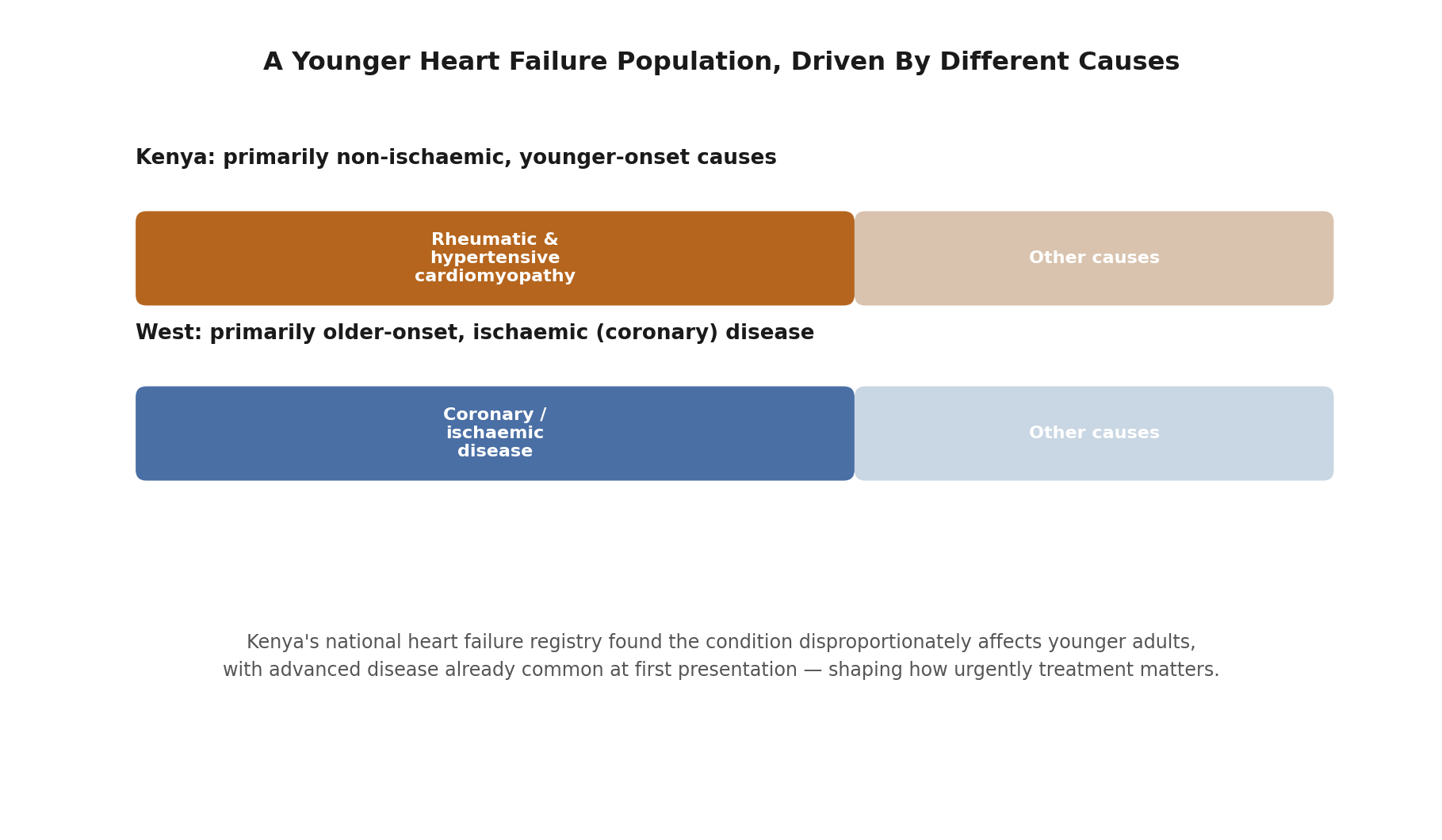
This is the pattern every Kenyan patient or family facing a heart failure diagnosis should understand clearly, because it shapes how urgently and how differently treatment needs to be approached compared with what most heart failure information assumes. Kenya's national registry data confirms heart failure disproportionately affects younger adults, driven primarily by non-ischaemic causes like rheumatic and hypertensive cardiomyopathy, a pattern fundamentally different from the older, coronary-disease-driven heart failure population most international guidance is written around.
This matters practically in several ways. A younger patient facing heart failure has decades of working life and, often, family responsibilities ahead, making the choice between valve repair and replacement, and the specific type of replacement valve if needed, a decision with genuinely long-term consequences. The same registry also documented a high prevalence of advanced heart failure already present at first hospital presentation, underscoring how much earlier detection and intervention could change outcomes if care were sought sooner. Overall in-hospital mortality in the registry was 6.6%, a figure that reflects both the severity many patients present with and the genuine importance of getting to experienced surgical care before the condition progresses further.
Why India has become a genuine hub for heart failure treatment and surgery
India performs valve repair and replacement surgery at substantial scale, with dedicated cardiac surgery teams that have particular depth of experience in rheumatic valve disease specifically, since India itself carries one of the world's highest burdens of rheumatic heart disease. This matters enormously for Kenyan patients, since the specific surgical judgement required for rheumatic mitral valve repair, distinguishing genuinely repairable valves from those requiring replacement, depends heavily on this kind of accumulated, disease-specific experience.
India's leading cardiac centres combine this expertise with JCI and NABH accredited safety standards and a full range of valve options, including both mechanical and bioprosthetic choices, allowing a genuinely informed decision based on a patient's specific age and life circumstances. In 24 years of guiding patients through this decision, the clearest advice I offer is direct: for a younger Kenyan patient facing valve surgery, the choice between repair and replacement, and between valve types if replacement is needed, deserves a genuinely thorough conversation about long-term implications, not a default decision made without weighing what decades of life ahead actually require.
This matters especially for patients who may be considering future pregnancy, since mechanical valves and their required blood thinners carry genuine complications during pregnancy that need careful specialist planning well in advance. A surgical team with real experience treating younger patients with rheumatic valve disease should raise this consideration proactively, rather than leaving a patient to discover its relevance only after the fact.
What it costs: India versus Kenya, the UK, and the US
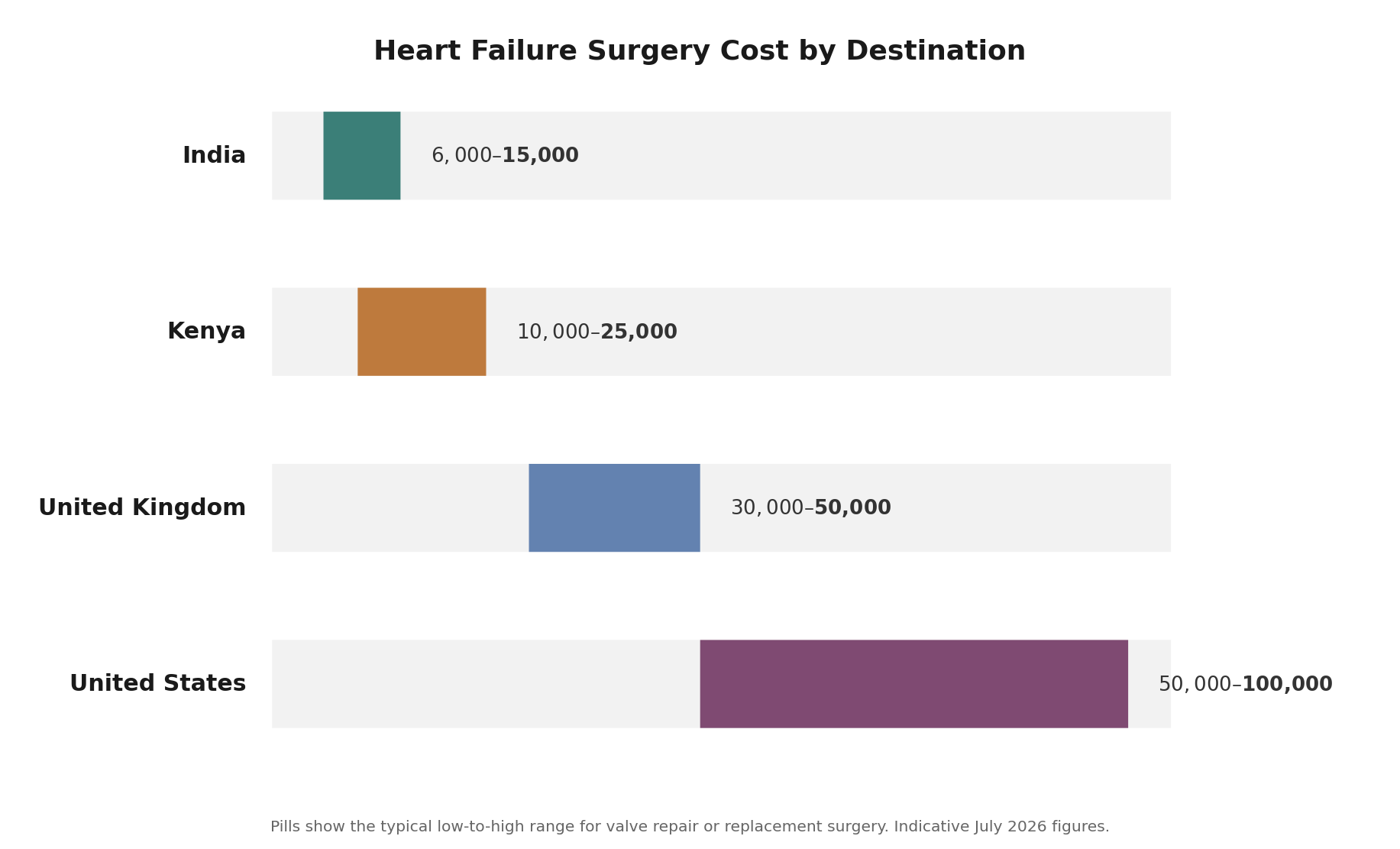
In India, heart failure surgery, primarily valve repair or replacement, typically costs between 6,000 and 15,000 US dollars. In Kenya, private cardiac surgery costs run roughly 10,000 to 25,000 dollars. In the UK, comparable surgery typically costs 30,000 to 50,000 dollars, and in the US, 50,000 to 100,000 dollars.
Beyond the procedure itself, budget for an extended stay. Direct flights between Nairobi and Delhi or Mumbai run roughly 550 to 850 dollars return, and heart failure surgery typically requires two to three weeks in India, covering pre-operative assessment, the surgery itself, and the ICU-monitored initial recovery period.
What a Kenyan patient should actually check before booking
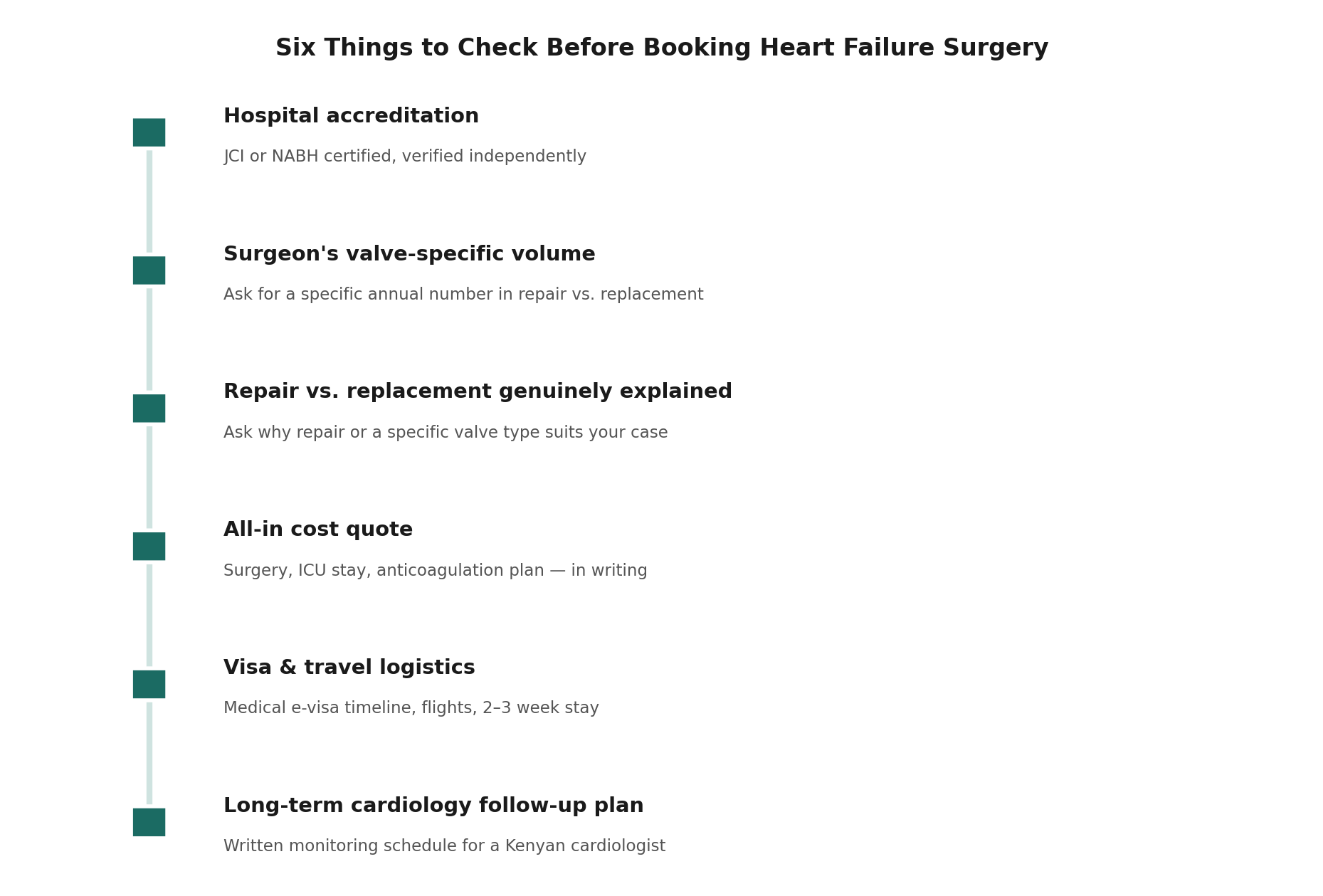
Given how much long-term consequences matter here, work through these questions directly.
Confirm genuine accreditation. Ask whether the hospital holds JCI or NABH certification, and verify it independently.
Ask about the surgeon's valve-specific volume. A specific number, how many valve repairs versus replacements the surgeon personally performs each year, tells you more than general cardiac surgery reputation.
Get repair versus replacement genuinely explained. Ask your surgeon to explain, based on your specific valve damage, why repair or a specific valve type is being recommended.
Get the full cost breakdown in writing. Confirm what's included, surgery, ICU stay, and the long-term anticoagulation plan if a mechanical valve is used.
Plan your visa and travel logistics. The Indian medical e-visa is typically issued within three to five working days once you have a formal hospital invitation letter.
Arrange your long-term cardiology follow-up plan before you leave. Agree on a written monitoring schedule and identify a cardiologist in Kenya who can continue that care.
Straight Answers for Kenyan Patients about Heart Failure Treatment and Surgery in India
Why does heart failure affect younger patients in Kenya than in Western countries?
Kenya's national heart failure registry found the condition disproportionately affects younger adults, driven primarily by non-ischaemic causes like rheumatic and hypertensive cardiomyopathy, rather than the coronary artery disease common in Western heart failure populations.
How much does heart failure surgery cost in India compared to the US?
India typically costs 6,000 to 15,000 US dollars, against 50,000 to 100,000 dollars in the US.
How common is rheumatic heart disease among young heart failure patients in Kenya?
Earlier Kenyatta National Hospital data found nearly 80% of patients with rheumatic heart disease presenting with heart failure were under the age of 30.
What's the difference between valve repair and valve replacement?
Repair preserves the patient's own valve and avoids the need for lifelong blood-thinning medication, while replacement uses a mechanical or biological prosthesis; repair is generally preferred when technically achievable.
How severe is heart failure typically at diagnosis in Kenya?
Kenya's national registry found a high prevalence of advanced heart failure already present at first hospital presentation, underscoring the importance of earlier detection.
How do I get a medical visa to India from Kenya?
The Indian medical e-visa is typically issued within three to five working days once you have a formal invitation letter from the treating hospital.
A Closing Word
Heart failure in Kenya strikes a genuinely younger population, driven by causes fundamentally different from the coronary disease most international guidance assumes, and often presents at an advanced stage already. India's depth of experience specifically with rheumatic valve disease, combined with accredited safety standards and accessible cost, makes it, for many younger Kenyan patients navigating this diagnosis, worth investigating directly, with the long-term decision that repair versus replacement represents given the genuine attention it deserves.
Sources
- 🌐 Heart failure in Kenya: epidemiology, management patterns, and outcomes from a national multicenter registry
- 🌐 Clinical and socio demographic aspects of congestive heart failure patients at Kenyatta National Hospital, Nairobi. PubMed
- 🌐 Cost-utility analysis of heart surgeries for young adults with severe rheumatic mitral valve disease in India. ScienceDirect. sci
- 🌐 National Medical Commission of India — specialist registration verification
- 🌐 National Accreditation Board for Hospitals & Healthcare Providers (NABH) — accredited hospital directory
Frequently Asked Questions by Kenyans about Heart Failure Treatment and Surgery in India
Why does heart failure affect younger patients in Kenya?
Kenya's national registry found that heart failure disproportionately affects younger adults, with non-ischaemic causes such as rheumatic and hypertensive cardiomyopathy playing an important role.
How common is rheumatic heart disease among young Kenyan patients?
Earlier Kenyatta National Hospital data found that nearly 80% of patients with rheumatic heart disease presenting with heart failure were under 30.
When is valve surgery needed?
When structural valve disease is causing significant heart failure, medication alone may not correct the underlying problem. Valve repair or replacement may therefore become necessary.
Is valve repair preferable to replacement?
Repair is generally preferred when technically achievable, because it preserves the patient's own valve and avoids the lifelong anticoagulation required with a mechanical replacement.
What is the difference between mechanical and biological valves?
Mechanical valves can last essentially a lifetime but require lifelong blood-thinning medication. Biological valves generally last around 10–20 years and may eventually require another intervention.
How much does heart valve surgery cost in India?
The guide estimates approximately US$6,000–15,000 for heart failure surgery, primarily valve repair or replacement.
How does India's cost compare with Kenya?
Private cardiac surgery in Kenya is estimated at approximately US$10,000–25,000, compared with US$6,000–15,000 in India.
How long should Kenyan patients stay in India?
The guide recommends approximately 2–3 weeks for pre-operative assessment, surgery and initial ICU-monitored recovery.
What should patients check before choosing a cardiac surgeon?
Patients should verify hospital accreditation, the surgeon's valve-specific surgical volume and a clear explanation of repair versus replacement for their individual valve condition.
Why is long-term follow-up important?
Valve surgery can create long-term monitoring requirements, particularly with mechanical valves and anticoagulation. Patients should therefore establish a written cardiology follow-up plan in Kenya before leaving India.
Page Summary
This five-page guide focuses on heart failure and valve surgery for younger Kenyan patients, particularly those affected by rheumatic heart disease. Pages 1–2 explain Kenya's younger disease profile and the importance of distinguishing valve-related heart failure from other causes. Page 3 compares heart failure surgery costs in India, Kenya, the UK and US, while the page 4 “Six Things to Check” graphic highlights accreditation, valve-specific surgeon experience, repair versus replacement, complete costing, travel planning and long-term cardiology follow-up.
Citation Block
| Topic | Information |
|---|---|
| Topic | Heart Failure Treatment & Surgery in India for Kenyan Patients |
| Treatment | Heart Failure Treatment / Valve Surgery |
| Patients | Kenyan Patients |
| First Assessment | Heart function, valve damage and underlying cause |
| Key Specialist | Cardiac / Valve Surgeon |
| Main Surgical Options | Valve repair or replacement |
| Common Condition | Rheumatic heart disease |
| Common Valve | Mitral valve |
| Valve Choice | Mechanical or biological replacement when required |
| Case Volume | Valve-specific annual surgical experience |
| Hospital Check | JCI / NABH accreditation |
| Cost Check | Written estimate covering surgery, ICU and related care |
| India Cost | US$6,000–15,000 |
| Kenya Cost | US$10,000–25,000 privately |
| Medical Records | Echocardiography and cardiac reports |
| Visa Planning | Indian medical e-visa with hospital invitation |
| Travel | Nairobi–India flights |
| Stay | Approximately 2–3 weeks |
| Follow-Up | Long-term cardiology monitoring in Kenya |
| Surgeon Question | How many valve repairs and replacements do you personally perform each year? |
| Treatment Question | Why is repair or replacement more appropriate for my valve? |
| Valve Question | What are the long-term implications of the recommended valve type? |
| Cost Question | Does the quotation include surgery, ICU stay and anticoagulation planning? |
| Follow-Up Question | Which cardiologist will continue my monitoring after I return to Kenya? |
| Warning Signs | Replacement recommended without properly discussing repair |
| Payment Warning | Incomplete quotation excluding ICU or important related care |
| Key Decision | Verify valve-specific expertise, treatment choice and long-term follow-up |


Our Mission Statement
Our mission is to place patients at the centre of every healthcare decision by providing trustworthy, evidence-based, and unbiased medical information. We believe that informed patients make better decisions. Backed by personalised guidance from our experienced advisory team, we help patients understand their treatment options, compare them objectively, and confidently choose the path that best suits their medical needs and personal circumstances.
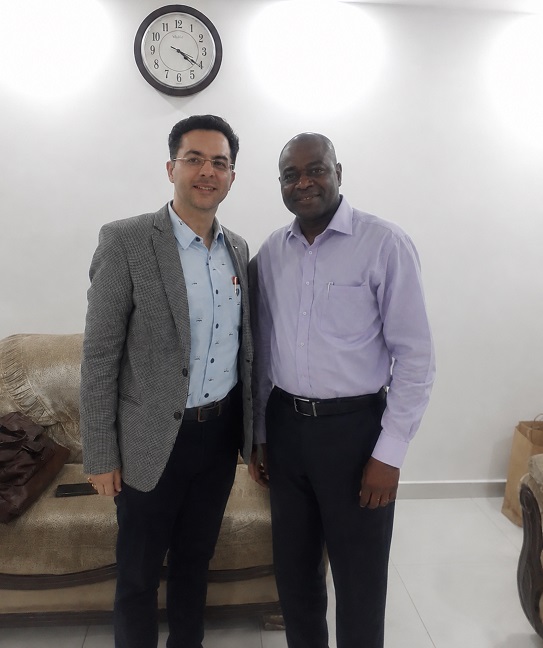
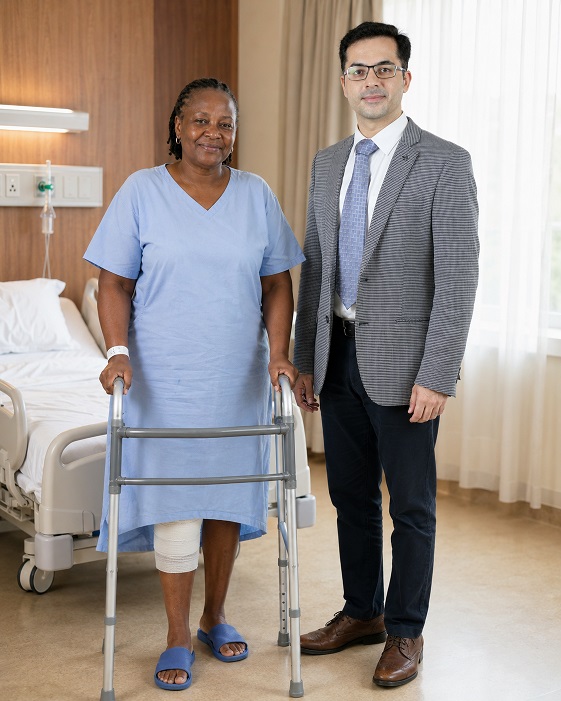
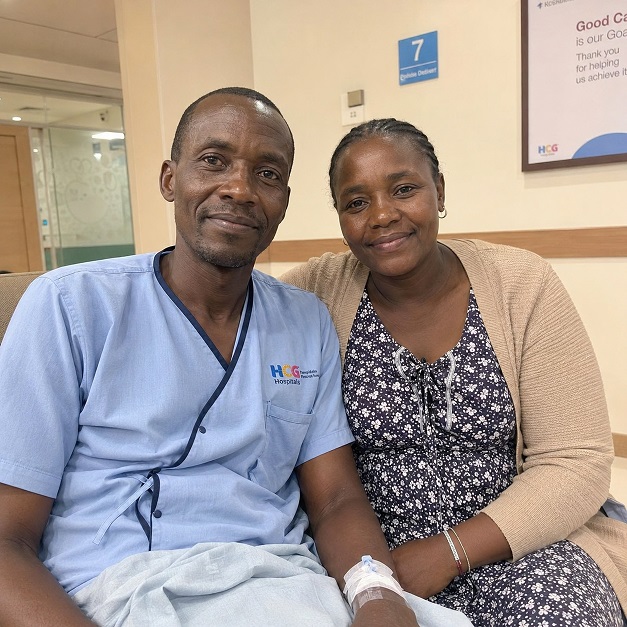
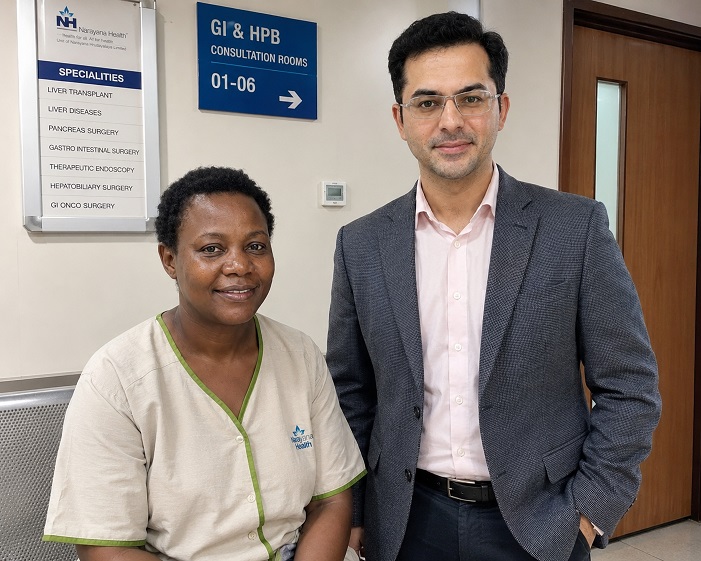
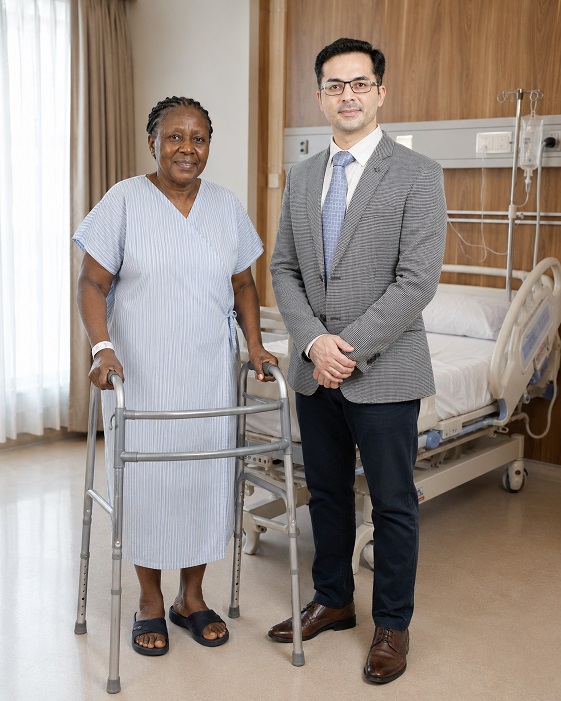
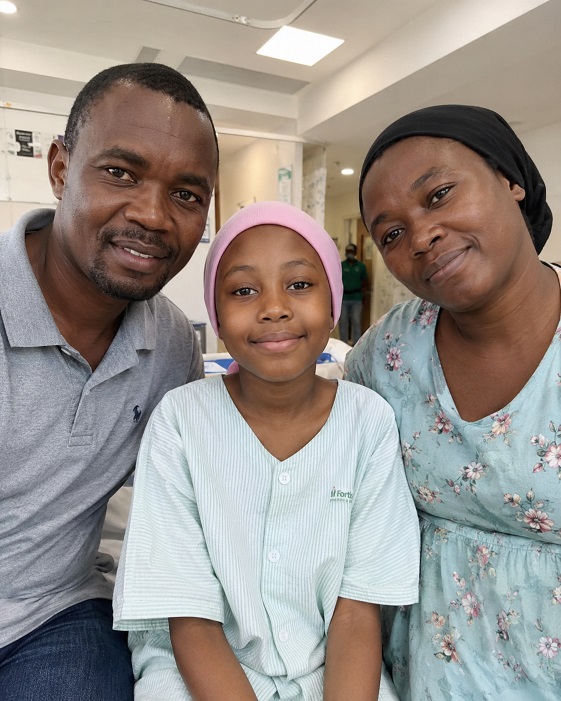
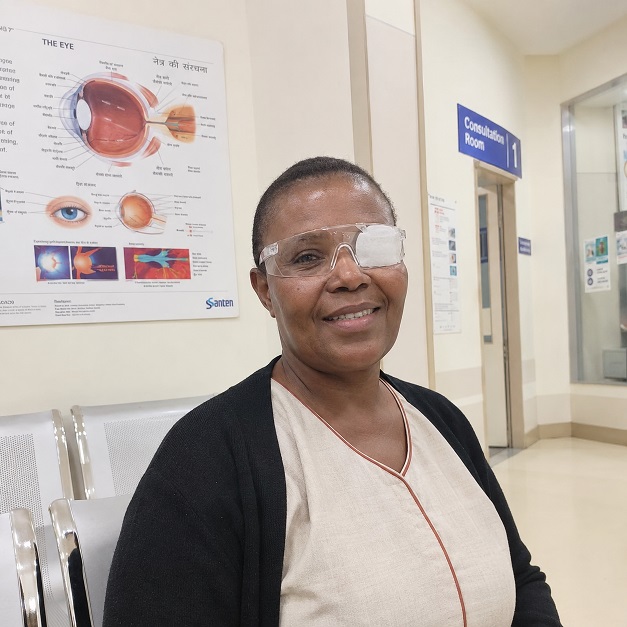
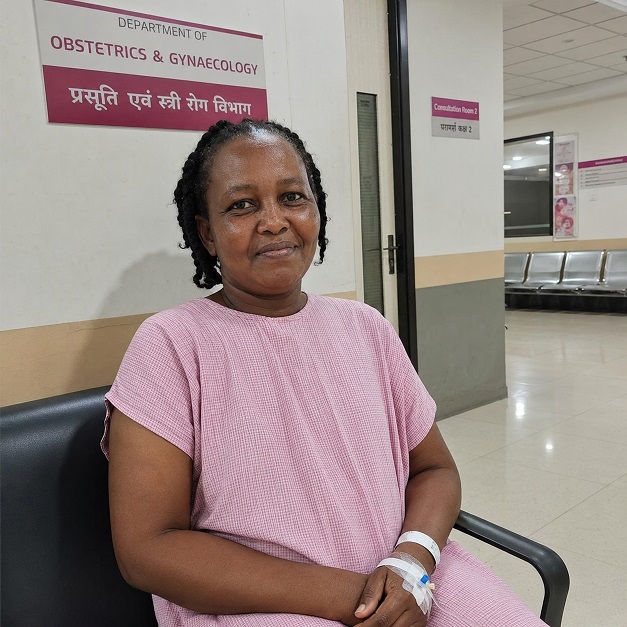
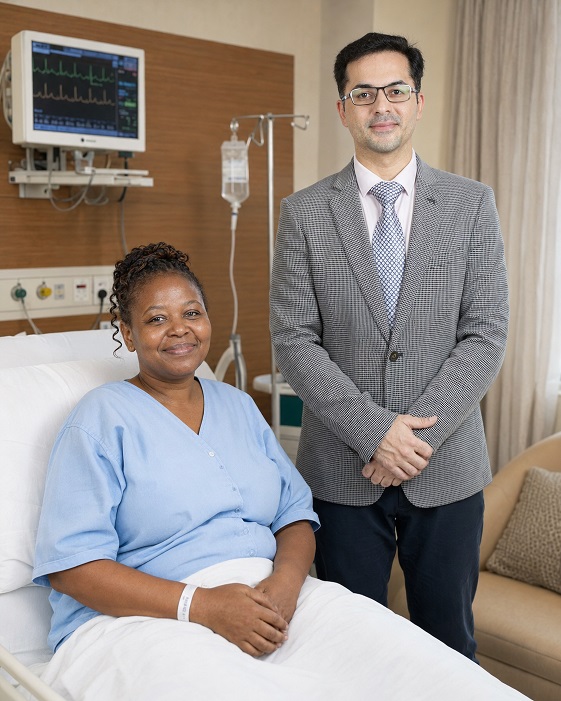
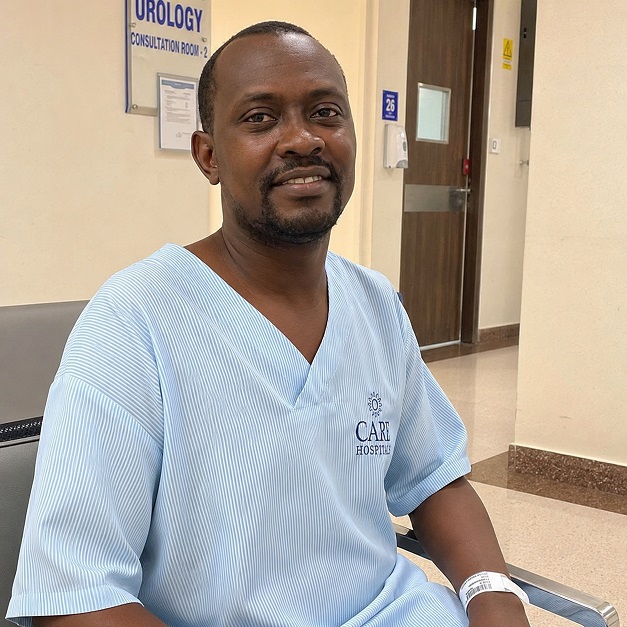
Patient Testimonials from Kenya



Ready to Take the First Step?
Share your Medical Reports with our Healthcare Managers Today and Get a FREE CONSULTATION, a Personalized Treatment Plan, and Complete Support from Arrival to Recovery.
Get Your Free ConsultationAreas We Serve
This resource has been thoughtfully prepared for patients from Kenya who are considering medical treatment in India. We also welcome patients from the wider region in the countries mentioned below-
We assist patients from:
- Ethiopia
- Somalia
- Tanzania
- Uganda
- Seychelles
- Guinea
- Guinea-Bissau
- Liberia
- Mali
- Mauritania
- Niger
- Nigeria
- Senegal
- Togo
- South Sudan
- Sierra Leone
Many of the insights, treatment pathways, hospital recommendations, travel guidance, and patient support services described here are equally relevant and may be used as a reference when planning treatment in India.
From Kenya to India: Your Complete Patient Support Guide
- Brain Tumour Surgery in India for Kenyan Patients
- Cancer Treatment and Surgery in India for Kenyan Patients
- Cardiac Treatment and Surgery in India for Kenyan Patients
- Heart Valve Replacement Surgery in India for Kenyan Patients
- Knee Replacement in India for Kenyan Patients
- Prostate Cancer Treatment and Surgery in India for Kenyan Patients
- Spine Treatment and Surgery in India for Kenyan Patients
- Selecting the Best Bariatric Surgeons and Hospitals in India: What Kenyan Patients Should Actually Look For
- Selecting the Best Cancer Surgeons and Hospitals in India: What Kenyan Patients Should Actually Look For
- Selecting the Best Cardiac Surgeons and Hospitals in India: What Kenyan Patients Should Actually Look For
- Selecting the Best Dental Surgeons and Clinics in India: What Kenyan Patients Should Actually Look For
- Selecting the Best Hip Surgeons and Hospitals in India: What Kenyan Patients Should Actually Look For
- Selecting the Best Kidney Transplant Surgeons and Hospitals in India: What Kenyan Patients Should Actually Look For
- Selecting the Best Knee Surgeons and Hospitals in India: What Kenyan Patients Should Actually Look For
- Selecting the Best Liver Transplant Surgeons and Hospitals in India: What Kenyan Patients Should Actually Look For
- Selecting the Best Neurosurgeons and Hospitals in India: What Kenyan Patients Should Actually Look For
- Selecting the Best Prostate Cancer Surgeons and Hospitals in India: What Kenyan Patients Should Actually Look For
- Selecting the Best Spine Surgeons and Hospitals in India: What Kenyan Patients Should Actually Look For