

Complex Orthopaedic and Joint Revision Surgery in India for Kenyan Patients
When a hip or knee replacement fails, revision surgery needs a depth of experience that is hard to find — what a Kenyan patient should look for in India, and what it costs.
Kenya produces roughly 600 doctors of all specialities each year, across every field of medicine combined. Within that already limited pool, the number of surgeons with genuine, deep experience specifically in joint revision surgery, the complex procedure required when a hip or knee replacement fails, loosens, or becomes infected, is smaller still. This isn't a criticism of Kenya's orthopaedic surgeons, who work skillfully within real constraints; it's a structural reality that shapes where a patient facing failed joint replacement should look for the specific depth of experience this particular surgery demands. Across 24 years of guiding Kenyan patients through treatment in India, joint revision surgery is a category where the gap between primary and revision expertise matters enormously, and deserves to be understood clearly before a second surgery is scheduled. This article explains what complex orthopaedic and joint revision surgery involves, why this procedure specifically requires a depth of surgical experience that's genuinely scarce in Kenya, what treatment costs in India compared with Kenya and Western countries, and the practical factors to weigh before deciding where to be treated.
Healing Journeys of Kenyan Patients



Key Takeaways
- The guide explains that joint revision surgery is considerably more complex than primary hip or knee replacement. The surgeon may need to remove a failed implant, manage bone loss and use specialised, larger or custom implants. Common reasons for failure include aseptic loosening, mechanical wear, instability and infection around the prosthesis.
- When infection is responsible, treatment often requires a staged approach. The infected implant is removed, the joint is cleaned, a temporary antibiotic spacer is inserted and targeted antibiotics are given before a new permanent implant is placed weeks or months later. Recovery is therefore usually longer than after a first-time joint replacement.
- The guide highlights that Kenya produces only around 600 doctors of all specialities each year, leaving a relatively small pool of surgeons with deep, revision-specific joint experience. Revision surgery requires repeated experience in managing bone loss, specialised implant selection and periprosthetic infection rather than simply experience with primary joint replacement.
- India has developed substantial revision arthroplasty capacity, with dedicated orthopaedic surgeons and access to specialised revision implants, JCI and NABH-accredited facilities and infectious-disease support for infected joint replacements. The guide stresses that patients should ask specifically about the surgeon's revision case volume, rather than relying on general orthopaedic reputation.
- The guide estimates joint revision surgery at approximately US$7,000–16,000 in India, compared with US$12,000–30,000 in Kenya, US$35,000–60,000 in the UK and US$50,000–100,000 in the US. Patients should plan for approximately 3–4 weeks in India, while infection-related staged procedures may require a longer stay or a planned return visit for final implantation.
- The page 4 “Six Things to Check” graphic highlights hospital accreditation, revision-specific surgeon volume, confirmation that infection has been ruled out or addressed, a complete cost quotation, visa and travel planning, and a long-term orthopaedic follow-up plan.
- Kenyan patients should send their imaging and previous joint-replacement records before travelling and clarify whether the problem involves loosening, instability, bone loss or infection. A written follow-up and imaging plan should also be arranged with an orthopaedic surgeon in Kenya before returning home.
Quick Facts
- Author
- Dr. Dheeraj Bojwani
- Experience
- 24+ Years
- Treatment
- Complex Joint Revision Surgery
- Patients
- Kenyan Patients
- First Assessment
- Cause of implant failure and bone condition
- Key Specialist
- Revision Arthroplasty Surgeon
- Main Procedures
- Hip and knee revision surgery
- Common Causes
- Loosening, wear, instability and infection
- Infection Treatment
- Staged revision with antibiotic spacer when required
- Case Volume
- Revision-specific annual experience
- Hospital Check
- JCI / NABH accreditation
- Implant Check
- Specialised revision implant availability
- Cost Check
- Written estimate covering surgery, implants and extended hospital care
- India Cost
- US$7,000–16,000
- Kenya Cost
- US$12,000–30,000 private
- Medical Records
- Imaging and previous replacement records
- Visa
- Indian medical e-visa with hospital invitation
- Travel
- Nairobi–India flights
- Stay
- Approximately 3–4 weeks
- Follow-Up
- Long-term orthopaedic monitoring in Kenya
- Key Warning
- Primary joint replacement experience presented as revision expertise
- Decision Principle
- Prioritise revision-specific experience, infection assessment and specialised implant planning.
In Brief
For Kenyan patients with a failed hip or knee replacement, the key priorities are revision-specific surgical experience, accurate identification of the cause of failure and appropriate management of infection or bone loss. Patients should verify the surgeon's revision case volume, obtain a complete quotation and establish long-term orthopaedic follow-up before travelling to India.
What complex orthopaedic and joint revision surgery actually involves
Joint revision surgery replaces a previously implanted hip or knee prosthesis that has failed, whether through aseptic loosening, where the implant separates from the bone without infection, mechanical wear of the implant components, instability, or periprosthetic infection, where bacteria colonise the area around the implant. Revision surgery is considerably more technically demanding than the original replacement, since the surgeon must remove the failed implant, address any bone loss that has occurred, and often use specialised, larger, or custom implants to achieve a stable, functional result.
When infection is the cause of failure, treatment typically requires a staged approach: removing the infected implant entirely, thoroughly cleaning the joint, placing a temporary antibiotic-releasing spacer, and completing a course of targeted antibiotic treatment before a new, permanent implant can be placed weeks or months later. This two-stage process reflects how difficult periprosthetic infection genuinely is to treat; bacteria form a protective film around implant surfaces that makes them significantly harder for both antibiotics and the body's immune system to reach compared with infections in normal tissue.
Recovery from revision surgery is generally longer and more demanding than after a primary joint replacement. Where a first-time hip or knee replacement might see a patient walking with support within days and largely recovered within three months, revision surgery, particularly staged procedures for infection, can involve a total recovery timeline stretching across many months, with a more gradual return to full mobility. This isn't a reflection of anything going wrong; it simply reflects the greater complexity of what the surgery is repairing.
Why this procedure specifically requires a depth of surgical experience that's genuinely scarce in Kenya
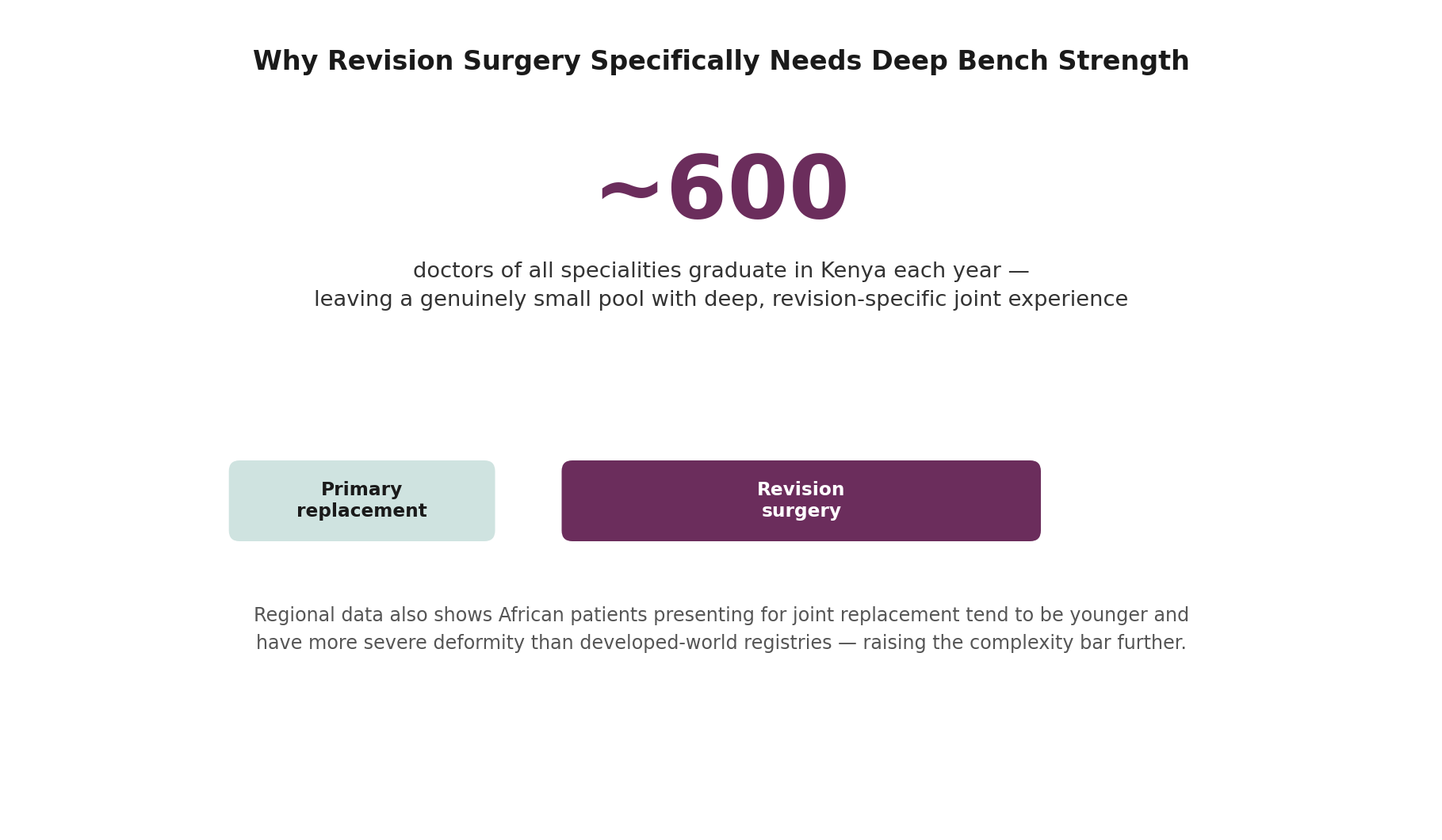
This is the fact every Kenyan patient facing a failed joint replacement needs to understand clearly, because it directly shapes where genuinely appropriate surgical expertise can realistically be found. With only around 600 doctors of all specialities graduating in Kenya annually, the country's overall surgical workforce remains genuinely limited, and revision joint surgery specifically requires surgeons who have performed this exact, technically demanding procedure repeatedly, not simply general orthopaedic surgeons with primary replacement experience.
This matters because revision surgery outcomes depend heavily on accumulated, procedure-specific judgement: recognising and managing significant bone loss, selecting the right specialised implant for a compromised joint, and correctly diagnosing and treating infection when it's present, all skills that develop specifically through high case volume. Regional data from comparable African settings has also found that patients presenting for joint replacement tend to be younger and have more severe deformity than what's typically seen in developed-world registries, meaning the underlying cases requiring eventual revision may already be more complex from the outset. For a Kenyan patient facing a failed joint replacement, this combination, genuine surgical scarcity and often more complex baseline cases, makes seeking out demonstrably high-volume, revision-specific expertise a meaningfully important decision.
Why India has become a genuine hub for complex orthopaedic and joint revision surgery
India performs joint revision surgery at substantial scale, with dedicated orthopaedic surgeons who specifically subspecialise in revision arthroplasty, some having personally performed thousands of joint replacement procedures across their careers, building exactly the kind of accumulated, case-specific judgement this complex surgery requires. This matters enormously given how directly revision outcomes correlate with the surgeon's specific experience managing bone loss, implant selection, and infection.
India's leading centres combine this depth of experience with JCI and NABH accredited safety standards, access to specialised revision implant systems, and coordinated infectious disease support for cases involving periprosthetic infection. In 24 years of guiding patients through this decision, the clearest advice I offer is direct: for revision surgery specifically, ask pointedly about the surgeon's revision-specific case volume, not just their general joint replacement experience, since this distinction genuinely determines whether a complex, compromised joint gets the specialised attention it requires.
This distinction is worth insisting on even when a hospital's general reputation for joint replacement is strong. A centre performing hundreds of straightforward primary hip and knee replacements each year isn't automatically equipped for the specific technical demands of revision surgery, managing significant bone loss, selecting among specialised implant options, and correctly staging treatment for infection are genuinely distinct skills that develop through focused, repeated revision-specific experience, not simply high overall surgical volume.
What it costs: India versus Kenya, the UK, and the US
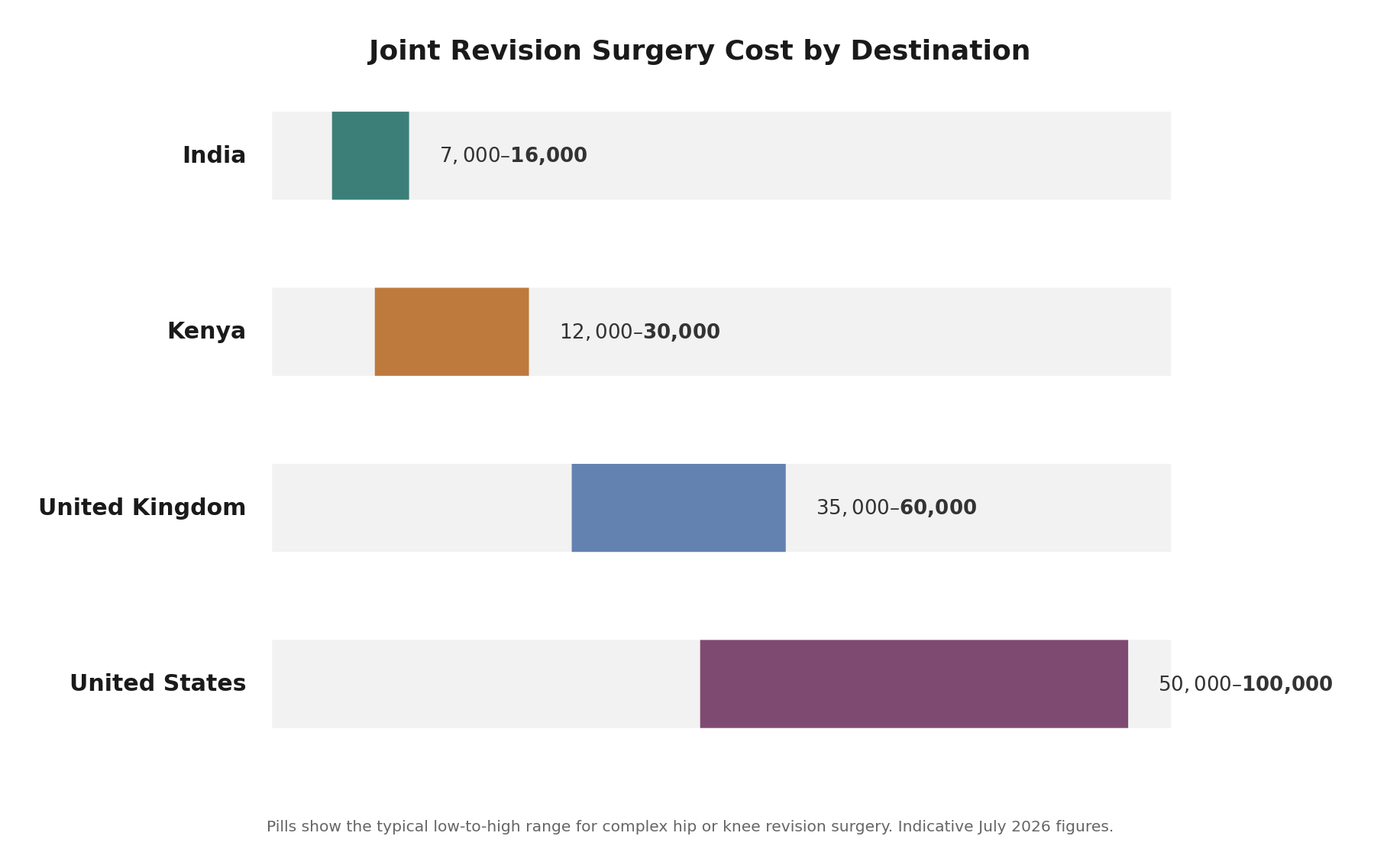
In India, joint revision surgery typically costs between 7,000 and 16,000 US dollars. In Kenya, private revision surgery costs run roughly 12,000 to 30,000 dollars. In the UK, comparable surgery typically costs 35,000 to 60,000 dollars, and in the US, 50,000 to 100,000 dollars.
Beyond the procedure itself, budget for an extended stay, particularly if infection is involved. Direct flights between Nairobi and Delhi or Mumbai run roughly 550 to 850 dollars return, and joint revision surgery typically requires three to four weeks in India, though infection-related cases requiring staged surgery may need a longer initial stay or a planned return visit for the final implant.
What a Kenyan patient should actually check before booking
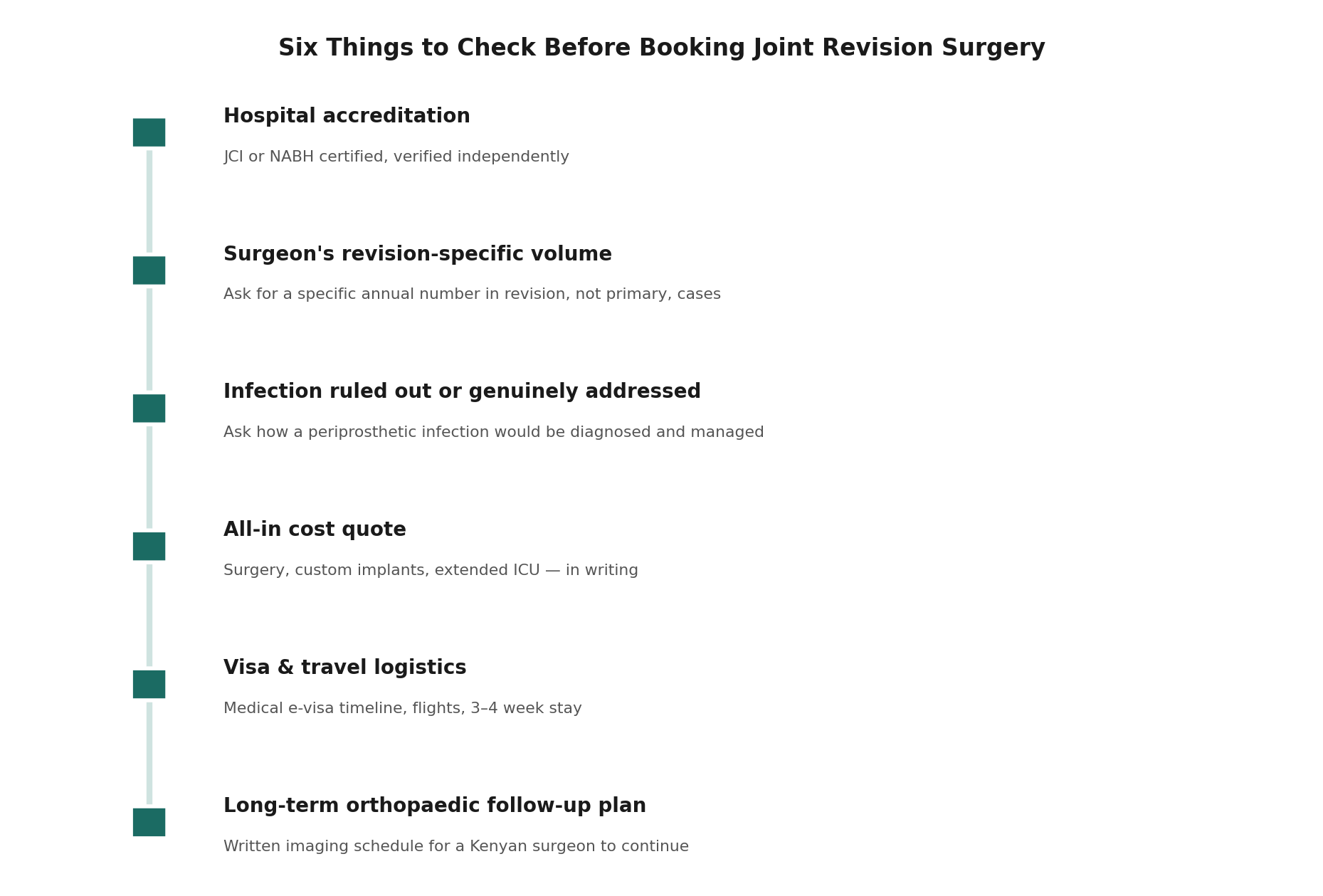
Given how much genuine, procedure-specific experience matters here, work through these questions directly.
Confirm genuine accreditation. Ask whether the hospital holds JCI or NABH certification, and verify it independently.
Ask about the surgeon's revision-specific volume. A specific number, how many revision procedures, not primary replacements, the surgeon personally performs each year, tells you far more than general joint replacement reputation.
Confirm infection has been ruled out or genuinely addressed. Ask how a periprosthetic infection would be diagnosed and managed if present, since this changes the entire treatment approach.
Get the full cost breakdown in writing. Confirm what's included, surgery, any custom implants required, and extended hospital or ICU stay.
Plan your visa and travel logistics. The Indian medical e-visa is typically issued within three to five working days once you have a formal hospital invitation letter.
Arrange your long-term orthopaedic follow-up plan before you leave. Agree on a written imaging and monitoring schedule and identify a surgeon in Kenya who can continue that care.
Straight Answers for Kenyan Patients about Complex Orthopaedic and Joint Revision Surgery in India
Why does Kenya have limited access to joint revision surgery specifically?
Kenya produces only about 600 doctors of all specialities annually, meaning the pool of surgeons with genuine, deep experience specifically in revision arthroplasty remains particularly small.
How much does joint revision surgery cost in India compared to the US?
India typically costs 7,000 to 16,000 US dollars, against 50,000 to 100,000 dollars in the US.
What causes a joint replacement to fail?
Aseptic loosening where the implant separates from bone without infection, mechanical wear, instability, and periprosthetic infection where bacteria colonise the implant area.
Why is revision surgery more complex than the original joint replacement?
The surgeon must remove the failed implant, address any bone loss that has occurred, and often use specialised, larger, or custom implants, all requiring greater technical skill than the original procedure.
How is an infected joint replacement typically treated?
Often through a staged approach: removing the infected implant, cleaning the joint, placing a temporary antibiotic spacer, completing targeted antibiotic treatment, and placing a new permanent implant weeks or months later.
How do I get a medical visa to India from Kenya?
The Indian medical e-visa is typically issued within three to five working days once you have a formal invitation letter from the treating hospital.
A Closing Word
Kenya's genuinely limited surgical workforce, roughly 600 doctors of all specialities graduating annually, means the pool of surgeons with deep, revision-specific joint experience remains small, even as the underlying cases requiring revision are often more complex than in developed-world settings. India's combination of high-volume, revision-specific surgical expertise, accredited safety standards, and accessible cost makes it, for many Kenyan patients facing a failed joint replacement, worth investigating directly, with the specific question of surgeon experience given the genuine weight it deserves.
Sources
- 🌐 Surgeons in Kenya. Orthopaedic Surgeons in Kenya, Dr. Ezekiel Oburu
- 🌐 Joint replacement surgery in Ghana (West Africa)—an observational study. PMC
- 🌐 Periprosthetic Joint Infection. StatPearls, NCBI Bookshelf
- 🌐 National Medical Commission of India — specialist registration verification
- 🌐 National Accreditation Board for Hospitals & Healthcare Providers (NABH) — accredited hospital directory
Frequently Asked Questions by Kenyans about Complex Orthopaedic and Joint Revision Surgery in India
Why is revision surgery more complex than primary replacement?
The surgeon must remove the failed implant, address bone loss and compromised tissues, and often use specialised or custom implants.
What can cause a hip or knee replacement to fail?
The guide identifies aseptic loosening, mechanical wear, instability and periprosthetic infection as important causes.
How is an infected joint replacement treated?
Treatment often involves removing the infected implant, cleaning the joint, placing an antibiotic spacer, giving targeted antibiotics and later inserting a permanent replacement.
Why should Kenyan patients look for revision-specific experience?
Revision surgery requires specialised judgement in bone loss, implant selection and infection management, which differs from routine primary replacement surgery.
How much does joint revision surgery cost in India?
The guide estimates approximately US$7,000–16,000 in India.
How does India's cost compare with Kenya?
Private revision surgery in Kenya is estimated at approximately US$12,000–30,000, compared with US$7,000–16,000 in India.
How long should Kenyan patients stay in India?
The guide recommends approximately 3–4 weeks, although infection-related staged treatment may require a longer stay or a later return visit.
What should patients send before travelling?
Patients should send imaging and previous joint-replacement records so the surgeon can understand the failure and plan the revision before arrival.
What should patients check before choosing a revision surgeon?
The guide recommends verifying revision-specific case volume, hospital accreditation, infection-management capability, specialised implants and complete costing.
Why is long-term follow-up important?
Revision surgery can require extended monitoring, particularly after infection or complex reconstruction. Patients should arrange a written imaging and follow-up plan in Kenya before leaving India.
Page Summary
This five-page guide focuses on complex hip and knee revision surgery for Kenyan patients with failed joint replacements. Page 2 highlights Kenya's limited overall specialist workforce and explains why revision surgery requires deeper, procedure-specific experience. Page 3 compares revision-surgery costs in India, Kenya, the UK and US, while the page 4 “Six Things to Check” graphic highlights accreditation, revision-specific surgeon volume, infection assessment, complete costing, travel logistics and long-term follow-up.
Citation Block
| Topic | Information |
|---|---|
| Topic | Complex Joint Revision Surgery in India for Kenyan Patients |
| Treatment | Hip / Knee Revision Surgery |
| Patients | Kenyan Patients |
| First Assessment | Cause of implant failure and bone condition |
| Key Specialist | Revision Arthroplasty Surgeon |
| Common Causes | Loosening, wear, instability and infection |
| Infection Treatment | Staged revision with antibiotic spacer when required |
| Case Volume | Revision-specific surgical experience |
| Hospital Check | JCI / NABH accreditation |
| Implant Check | Specialised revision implant availability |
| Cost Check | Written estimate including surgery, implants and extended stay |
| India Cost | US$7,000–16,000 |
| Kenya Cost | US$12,000–30,000 private |
| Medical Records | Imaging and previous joint-replacement records |
| Travel | Nairobi–India flights |
| Stay | Approximately 3–4 weeks |
| Follow-Up | Long-term orthopaedic monitoring in Kenya |
| Surgeon Question | How many revision procedures do you personally perform each year? |
| Infection Question | How will you determine whether my failed joint is infected? |
| Implant Question | Which revision implant will be appropriate for my bone condition? |
| Cost Question | Does the quotation include specialised implants and extended hospital care? |
| Follow-Up Question | Who will continue my orthopaedic follow-up after I return to Kenya? |
| Warning Signs | Primary replacement experience presented as revision expertise |
| Payment Warning | Incomplete quotation excluding implants or extended hospital care |
| Key Decision | Verify revision-specific expertise, infection assessment and implant planning |


Our Mission Statement
Our mission is to place patients at the centre of every healthcare decision by providing trustworthy, evidence-based, and unbiased medical information. We believe that informed patients make better decisions. Backed by personalised guidance from our experienced advisory team, we help patients understand their treatment options, compare them objectively, and confidently choose the path that best suits their medical needs and personal circumstances.
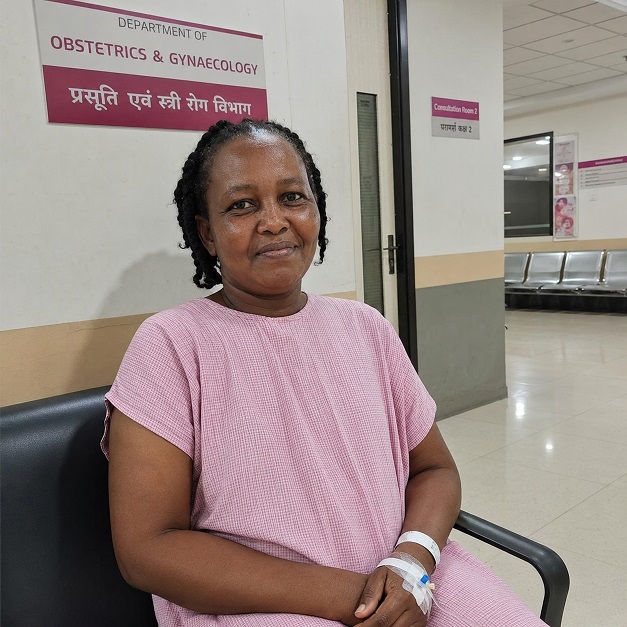
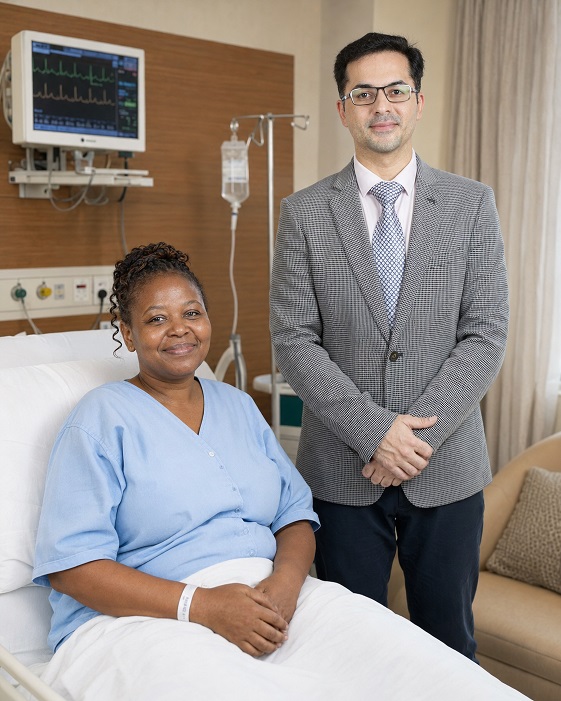
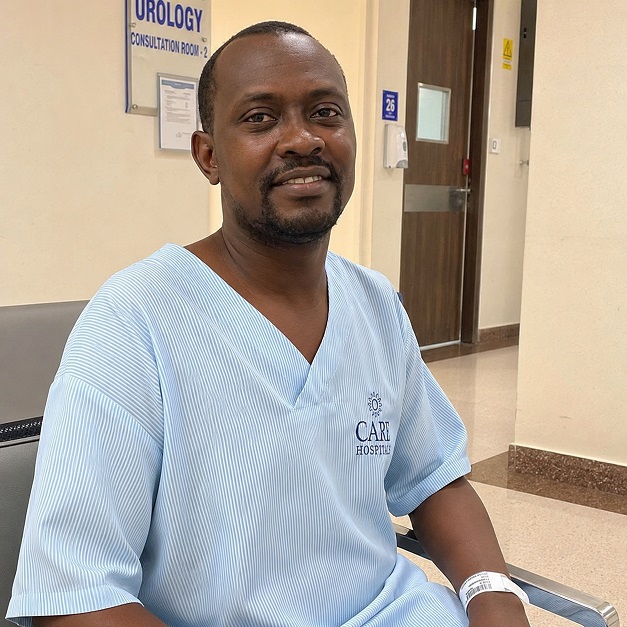
Patient Testimonials from Kenya
Ready to Take the First Step?
Share your Medical Reports with our Healthcare Managers Today and Get a FREE CONSULTATION, a Personalized Treatment Plan, and Complete Support from Arrival to Recovery.
Get Your Free ConsultationAreas We Serve
This resource has been thoughtfully prepared for patients from Kenya who are considering medical treatment in India. We also welcome patients from the wider region in the countries mentioned below-
We assist patients from:
- Ethiopia
- Somalia
- Tanzania
- Uganda
- Seychelles
- Guinea
- Guinea-Bissau
- Liberia
- Mali
- Mauritania
- Niger
- Nigeria
- Senegal
- Togo
- South Sudan
- Sierra Leone
Many of the insights, treatment pathways, hospital recommendations, travel guidance, and patient support services described here are equally relevant and may be used as a reference when planning treatment in India.
From Kenya to India: Your Complete Patient Support Guide
- Brain Tumour Surgery in India for Kenyan Patients
- Cancer Treatment and Surgery in India for Kenyan Patients
- Cardiac Treatment and Surgery in India for Kenyan Patients
- Heart Valve Replacement Surgery in India for Kenyan Patients
- Knee Replacement in India for Kenyan Patients
- Prostate Cancer Treatment and Surgery in India for Kenyan Patients
- Spine Treatment and Surgery in India for Kenyan Patients
- Selecting the Best Bariatric Surgeons and Hospitals in India: What Kenyan Patients Should Actually Look For
- Selecting the Best Cancer Surgeons and Hospitals in India: What Kenyan Patients Should Actually Look For
- Selecting the Best Cardiac Surgeons and Hospitals in India: What Kenyan Patients Should Actually Look For
- Selecting the Best Dental Surgeons and Clinics in India: What Kenyan Patients Should Actually Look For
- Selecting the Best Hip Surgeons and Hospitals in India: What Kenyan Patients Should Actually Look For
- Selecting the Best Kidney Transplant Surgeons and Hospitals in India: What Kenyan Patients Should Actually Look For
- Selecting the Best Knee Surgeons and Hospitals in India: What Kenyan Patients Should Actually Look For
- Selecting the Best Liver Transplant Surgeons and Hospitals in India: What Kenyan Patients Should Actually Look For
- Selecting the Best Neurosurgeons and Hospitals in India: What Kenyan Patients Should Actually Look For
- Selecting the Best Prostate Cancer Surgeons and Hospitals in India: What Kenyan Patients Should Actually Look For
- Selecting the Best Spine Surgeons and Hospitals in India: What Kenyan Patients Should Actually Look For