

Bone Marrow Transplant Treatment in India for Kenyan Patients
What a Kenyan family needs to weigh before a bone marrow transplant in India: donor matching, the centre's own transplant volume, and what the full cost and recovery really look like.
If you or a family member has been told that a bone marrow transplant is the recommended treatment, you're facing one of the most demanding procedures in modern medicine, but also one of the most quietly remarkable: for several conditions, including sickle cell disease, it remains the only established cure. Across 24 years of guiding Kenyan patients through treatment in India, bone marrow transplant is a procedure where the gap between what's medically possible and what's currently accessible in Kenya is unusually wide, and understanding that gap clearly matters enormously for the decision ahead of you. This article explains what bone marrow transplant involves, why domestic access in Kenya remains genuinely limited, what treatment costs in India compared with Western countries, and the practical factors to weigh before booking care abroad.
Healing Journeys of Kenyan Patients


Key Takeaways
- The guide explains that a bone marrow transplant replaces damaged or diseased bone marrow with healthy stem cells. It distinguishes autologous transplantation, using the patient's own stem cells, from allogeneic transplantation, which uses a donor. Allogeneic transplant may be used for conditions including sickle cell disease, thalassemia, aplastic anaemia, leukemia and lymphoma.
- Donor matching is an important part of treatment planning. A fully matched sibling is ideal but available in only about one-third of cases. The guide highlights haploidentical transplantation, using a half-matched family donor such as a parent or child, as an established option that can expand access when a full match is unavailable.
- Kenya's domestic BMT capability remains relatively new. The country performed its first-ever bone marrow transplant in October 2023, after which Kenyan doctors were sent to India for specialised training. The guide also highlights sickle cell disease, estimating around 14,000 children born with the condition each year, while citing a 2026 study reporting a 95.5% five-year overall survival probability following BMT for sickle cell disease, including half-matched donors.
- India has developed extensive BMT capacity across autologous, allogeneic and haploidentical transplantation. Leading centres may offer JCI or NABH accreditation, HEPA-filtered isolation units, dedicated paediatric transplant programmes and access to national or international donor registries.
- The guide gives an approximate BMT cost of US$15,000–40,000 in India, compared with US$80,000–150,000 in the UK and US$100,000–200,000 in the US. Kenyan domestic treatment remains largely limited and case-by-case as the country's programme develops. Patients should obtain a written estimate covering donor workup, transplantation, hospitalisation and possible extended stays.
- Before booking, Kenyan families should verify hospital accreditation, annual transplant volume, haploidentical capability, complete costing and long-term follow-up arrangements. The page 4 graphic summarises these six checks, including donor-match capability, isolation care, visa and travel logistics, and a follow-up plan extending to at least 12 months.
- The guide recommends planning for approximately four to six weeks in India for transplantation and early recovery, with close monitoring continuing for up to a year. Patients should arrange an Indian medical e-visa with a hospital invitation and ensure that an attendant can obtain the appropriate linked medical attendant visa.
Quick Facts
- Author
- Dr. Dheeraj Bojwani
- Experience
- 24+ Years
- Treatment
- Bone Marrow / Stem Cell Transplantation
- Patients
- Kenyan Patients
- First Assessment
- Diagnosis, transplant type and donor availability
- Key Specialist
- Haematology / Bone Marrow Transplant Specialist
- Transplant Types
- Autologous, allogeneic and haploidentical
- Donor Check
- HLA matching and donor suitability
- Haploidentical Option
- Half-matched family donor
- Case Volume
- Condition- and transplant-specific annual volume
- Hospital Check
- JCI / NABH accreditation
- Isolation
- HEPA-filtered transplant unit
- Paediatric Care
- Dedicated paediatric transplant programme where required
- India Cost
- US$15,000–40,000
- Medical Records
- Diagnosis, treatment and donor-related reports
- Visa
- Indian medical e-visa with hospital invitation
- Travel
- Nairobi–India flights
- Stay
- Approximately 4–6 weeks
- Follow-Up
- Monitoring for up to one year
- Communication
- Clear treatment and travel coordination
- Key Warning
- No clear haploidentical capability when a full match is unavailable
- Decision Principle
- Prioritise transplant-specific expertise, donor options and long-term follow-up.
In Brief
For Kenyan patients considering bone marrow transplantation in India, the key priorities are donor compatibility, transplant-specific centre experience and access to haploidentical transplantation when a fully matched sibling is unavailable. Patients should verify accreditation, annual transplant volume, complete costs, extended-stay requirements and a written follow-up plan before travelling.
What bone marrow transplant actually involves
A bone marrow transplant, also called a stem cell transplant, replaces damaged or diseased bone marrow with healthy stem cells capable of producing normal blood cells. There are two main types. Autologous transplants use the patient's own stem cells, collected before high-dose chemotherapy or radiation and reinfused afterward, typically used for certain blood cancers. Allogeneic transplants use stem cells from a donor, a sibling, parent, or unrelated matched donor, and are used for conditions including sickle cell disease, thalassemia, aplastic anaemia, and various leukaemias and lymphomas.
For allogeneic transplants specifically, donor matching matters enormously. A fully matched sibling donor is ideal but available in only about a third of cases. When no full match exists, haploidentical transplant, using a half- matched donor such as a parent or child, has become an increasingly viable and well-established option, meaningfully expanding who can access a cure without needing to wait for a rare, fully matched unrelated donor.
Recovery follows a fairly consistent arc regardless of the underlying condition. After the transplant itself, a relatively quick infusion similar to a blood transfusion, the patient spends two to four weeks in an isolated hospital unit while the new stem cells engraft and begin producing blood cells, a period of significant infection risk that requires intensive monitoring. Once discharged, close follow-up continues for months, watching for complications like graft-versus-host disease, where the donor's immune cells react against the patient's body, before the immune system is considered fully re-established, typically around the one-year mark.
Why domestic access remains genuinely limited in Kenya
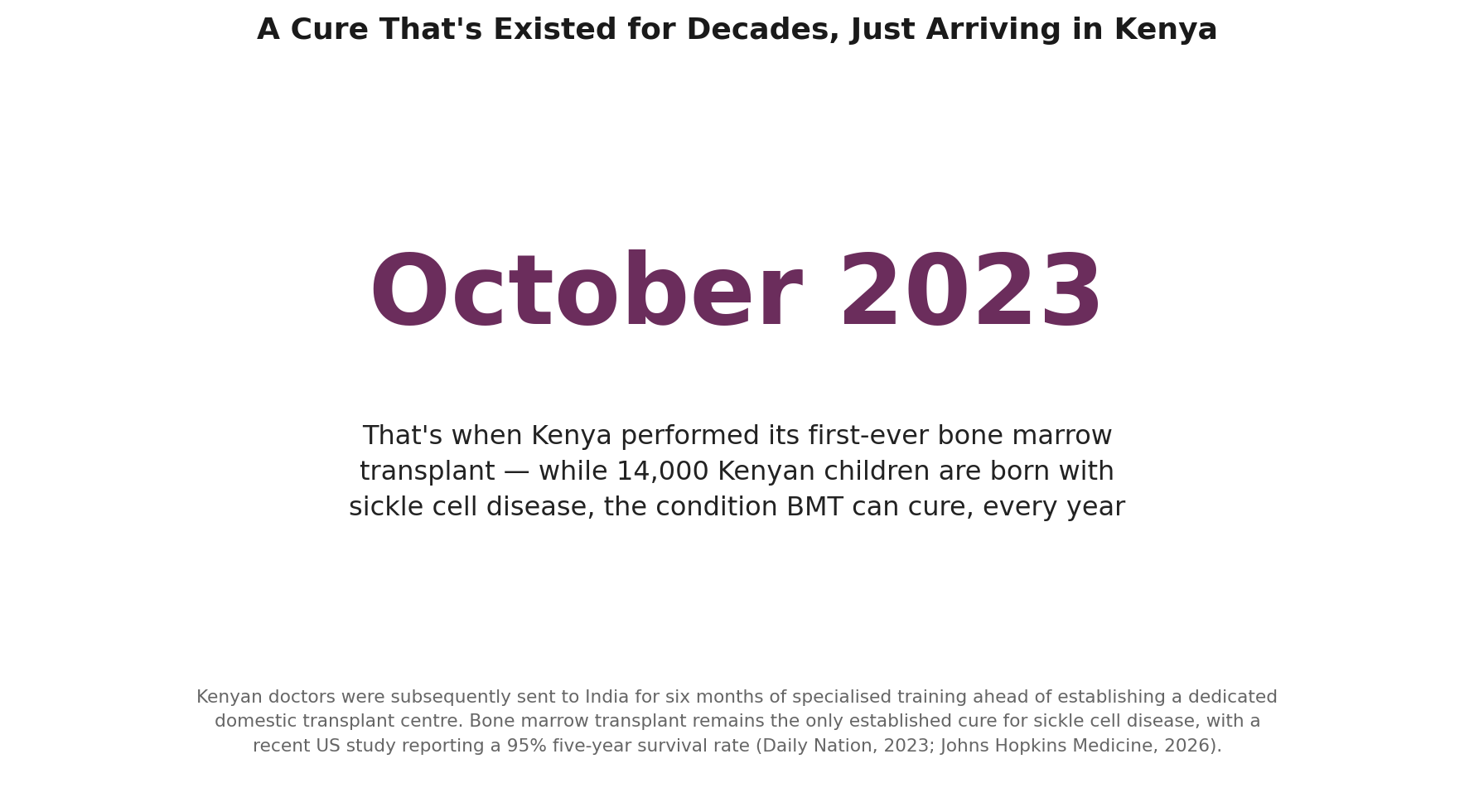
This is the fact every Kenyan family considering this treatment needs to understand clearly. Kenya performed its first-ever bone marrow transplant only in October 2023. Following that milestone, doctors were sent to India for six months of specialised training ahead of establishing a dedicated domestic transplant centre, a clear signal both of genuine progress and of how nascent this capability still is domestically.
This matters enormously because Kenya has an estimated 14,000 children born with sickle cell disease every year, concentrated in western Kenya and coastal regions, and bone marrow transplant remains the only established cure for this condition. A large 2026 study from Johns Hopkins found a five-year overall survival probability of 95.5% following bone marrow transplant for sickle cell disease, even using half-matched donors, a remarkable outcome for a condition that otherwise causes lifelong pain crises, organ damage, and significantly shortened life expectancy. For a Kenyan family whose child has sickle cell disease, understanding that a genuine cure exists, and that domestic access to it remains extremely limited even as the country takes its first steps, is essential information for making a timely, informed decision.
Why India has become the destination of choice for bone marrow transplant
India has built one of the most comprehensive bone marrow transplant systems among middle-income countries, treating thousands of patients annually across autologous, allogeneic, and haploidentical transplant types. This is precisely the depth of experience, and specifically the haploidentical expertise that expands donor options beyond a full sibling match, that a nascent domestic programme cannot yet offer. It's also, notably, where Kenyan doctors themselves have gone for specialised training in this exact procedure.
India's leading transplant centres combine this experience with JCI and NABH accredited safety standards, HEPA- filtered isolation units essential for the vulnerable period after transplant, dedicated paediatric transplant programmes, and access to national and international donor registries. This combination of comprehensive transplant type coverage, accreditation, and infrastructure specifically built for this demanding procedure, at a fraction of what the same treatment costs in the West, makes India the clearest starting point for the great majority of Kenyan patients and families I've guided through this decision.
What it costs: India versus Kenya, the UK, and the US
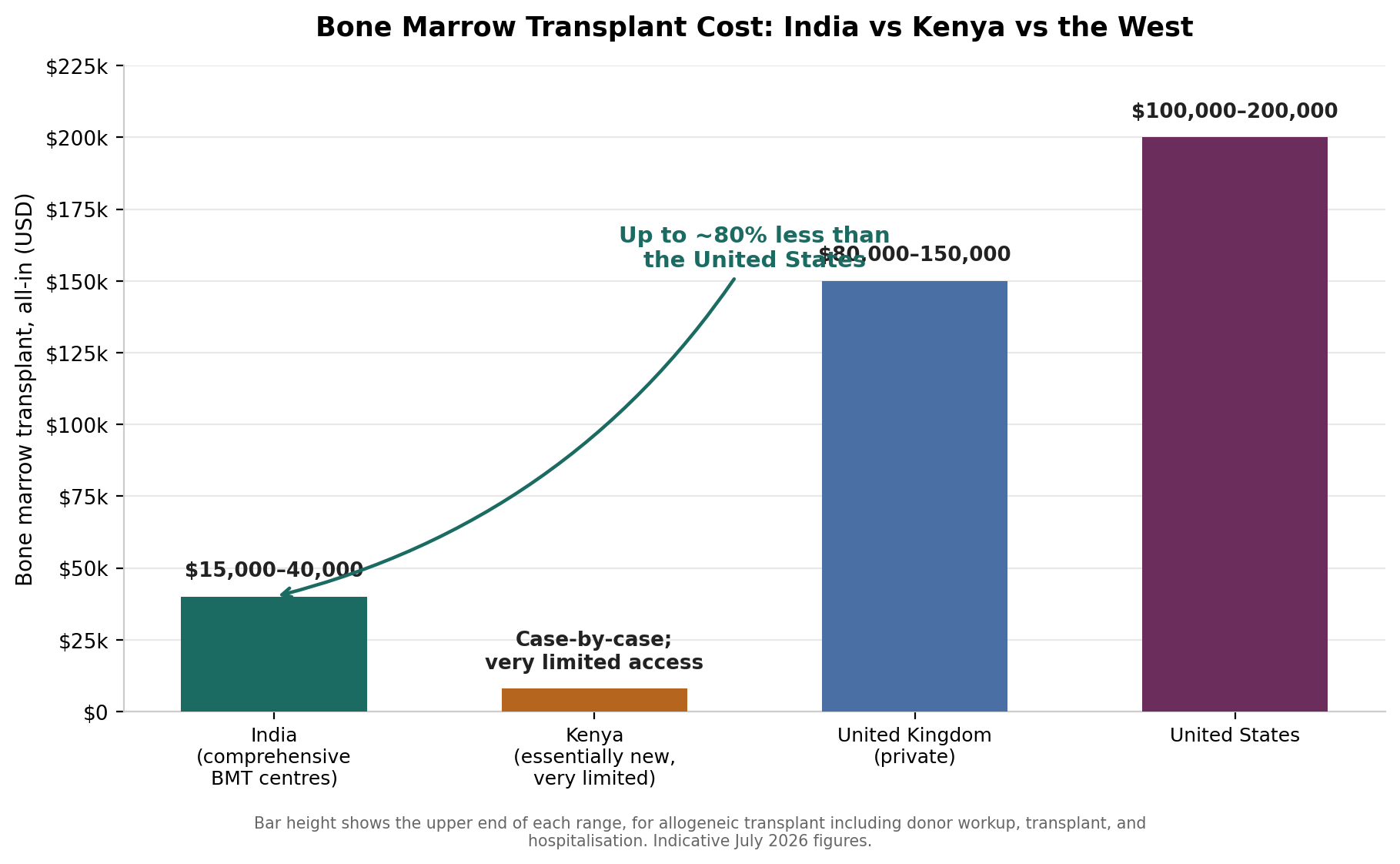
In India, bone marrow transplant typically costs between 15,000 and 40,000 US dollars, depending on transplant type, autologous transplants sit at the lower end, haploidentical transplants at the higher end, covering donor workup, the transplant itself, and hospitalisation. In Kenya, this treatment remains largely unavailable domestically at meaningful scale, with cases handled case-by-case as the country's first programme develops. In the UK, bone marrow transplant typically costs 80,000 to 150,000 dollars, and in the US, 100,000 to 200,000 dollars, up to roughly 80% more than the equivalent treatment in India.
Beyond the procedure itself, budget for an extended stay. Direct flights between Nairobi and Delhi or Mumbai run roughly 550 to 850 dollars return, and bone marrow transplant typically requires four to six weeks in India for the transplant and the critical early recovery period, with close monitoring continuing for up to a year afterward.
What a Kenyan family should actually check before booking
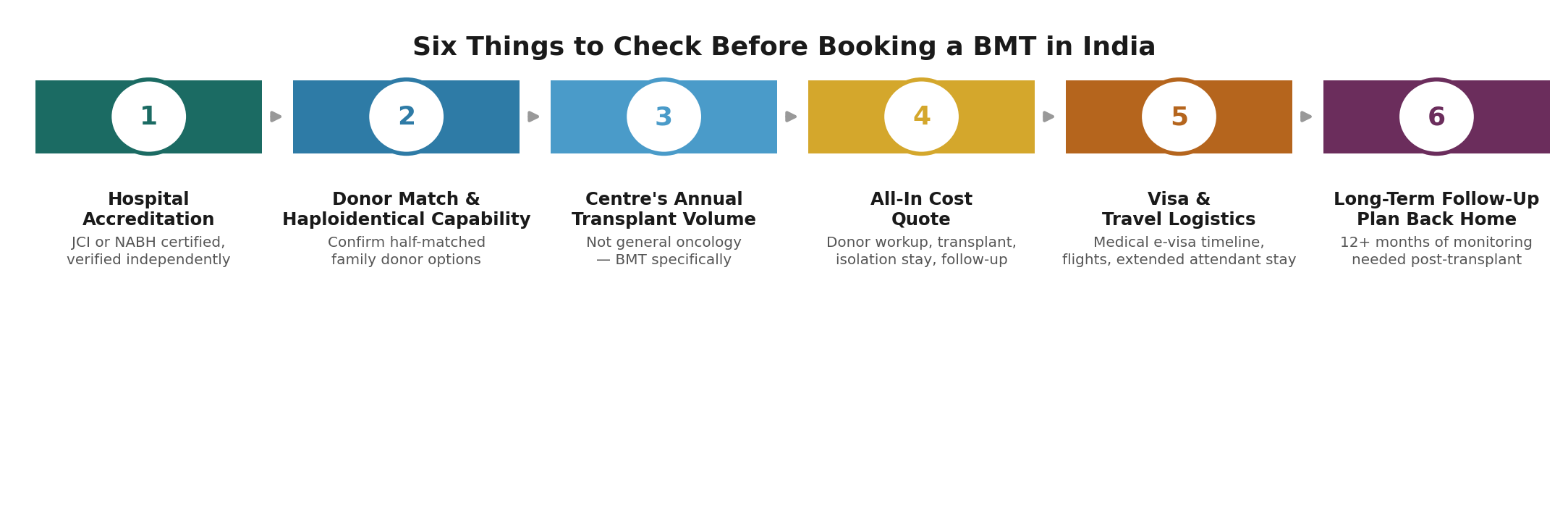
Given how demanding and specialised this procedure is, these questions matter more than usual.
Confirm genuine accreditation. Ask whether the hospital holds JCI or NABH certification, and verify it independently.
Ask about the centre's annual transplant volume, not general oncology volume. A specific number, how many transplants matching your specific condition and transplant type the centre performs each year, tells you far more than general hospital reputation. In 24 years of watching families navigate this decision, the ones who ask this specific question consistently arrive better prepared.
Confirm haploidentical capability if you lack a full match. Ask specifically whether the centre has genuine experience with half-matched donor transplants, since this determines whether a parent or partial-match relative can serve as your donor.
Get the full cost breakdown in writing. Confirm what's included, donor testing, the transplant, isolation unit stay, and what would happen, and cost, if complications extend your stay.
Plan your visa and extended travel logistics. The Indian medical e-visa is typically issued within three to five working days once you have a formal hospital invitation letter, and an attendant can travel on a linked medical attendant visa, essential given how long this treatment requires.
Arrange your long-term follow-up plan before you leave. Recovery monitoring continues for up to a year after transplant. Agree on a written follow-up schedule and identify a doctor in Kenya who can support ongoing monitoring once the most intensive phase is complete.
Straight Answers for Kenyan Patients about Bone Marrow Transplant Treatment in India
How much cheaper is bone marrow transplant in India compared to the US?
India typically costs 15,000 to 40,000 US dollars, against 100,000 to 200,000 dollars in the US, a saving of up to roughly 80%, at hospitals holding the same JCI and NABH accreditation standards.
Is bone marrow transplant available in Kenya?
Kenya performed its first-ever bone marrow transplant only in October 2023, and domestic capability remains very limited as the country's first dedicated programme develops, with Kenyan doctors sent to India for specialised training in the meantime.
Can bone marrow transplant cure sickle cell disease?
Yes, it remains the only established cure. A 2026 study found a five-year survival probability of 95.5% following transplant for sickle cell disease, even using half-matched family donors, a genuinely strong outcome for a condition that otherwise causes lifelong complications.
What if I don't have a fully matched sibling donor?
Haploidentical transplant, using a half-matched donor such as a parent or child, has become an established and effective option, meaningfully expanding access to a cure beyond patients with a rare, fully matched donor.
How long does bone marrow transplant treatment take?
Most patients need four to six weeks in India for the transplant and initial recovery, with close monitoring continuing for up to a year afterward, some of which can be coordinated with a doctor back in Kenya.
How do I get a medical visa to India from Kenya?
The Indian medical e-visa is typically issued within three to five working days once you have a formal invitation letter from the treating hospital, and an accompanying attendant can usually apply for a linked medical attendant visa.
A Closing Word
Bone marrow transplant offers something rare in medicine: an actual cure, not just management, for conditions including sickle cell disease that affect so many Kenyan families. Given how recently and narrowly domestic capability has begun, India offers the comprehensive transplant experience, haploidentical expertise, and accredited infrastructure that makes it, for the great majority of Kenyan patients I've guided through this decision, the clearest option to investigate today. Ask the right questions, get everything in writing, and plan for the genuinely extended journey this treatment requires.
Sources
- 🌐 New cure for sickle cell disease moves closer to reality
- 🌐 Johns Hopkins Physicians Achieve 95% Cure Rate for Sickle Cell Disease with Bone Marrow Transplant. Johns Hopkins Medicine, 2026
- 🌐 Building a Comprehensive Sickle Cell Disease Program in Western Kenya: A Decade of Experience and Growth. PMC. ncbi
- 🌐 National Medical Commission of India — specialist registration verification
- 🌐 National Accreditation Board for Hospitals & Healthcare Providers (NABH) — accredited hospital directory
Frequently Asked Questions by Kenyans about Bone Marrow Transplant Treatment in India
What is a bone marrow transplant?
A bone marrow or stem cell transplant replaces damaged or diseased marrow with healthy stem cells capable of producing normal blood cells.
What are the main types of BMT?
The guide describes autologous, allogeneic and haploidentical transplantation, with the appropriate type depending on the patient's condition and donor availability.
What if there is no fully matched sibling donor?
A haploidentical transplant using a half-matched family donor, such as a parent or child, may provide an established alternative.
Can BMT cure sickle cell disease?
The guide states that BMT remains the only established cure for sickle cell disease and cites a 2026 study reporting a 95.5% five-year overall survival probability after transplant.
When did Kenya perform its first BMT?
Kenya performed its first-ever bone marrow transplant in October 2023, and the domestic programme remains in an early stage of development.
Why do Kenyan patients consider India for BMT?
The guide highlights India's large transplant experience, haploidentical expertise, accredited hospitals, HEPA-filtered isolation facilities and dedicated transplant programmes.
How much does BMT cost in India?
The guide gives an approximate range of US$15,000–40,000, depending on transplant type and associated hospital care.
How long does a Kenyan patient need to stay in India?
The guide recommends planning for approximately four to six weeks for transplantation and early recovery, followed by continued monitoring after discharge.
What should families check before booking?
The guide recommends checking hospital accreditation, donor-match and haploidentical capability, annual transplant volume, complete costing, visa/travel arrangements and long-term follow-up.
How long does follow-up continue?
Close monitoring can continue for up to one year after transplantation, so Kenyan patients should establish a written follow-up plan before leaving India.
Page Summary
This five-page guide focuses on bone marrow transplantation, donor matching and India's established transplant infrastructure for Kenyan patients. Pages 1–2 explain autologous, allogeneic and haploidentical transplantation and highlight Kenya's developing domestic capability. Page 3 compares BMT costs and expected treatment stays, while the page 4 “Six Things to Check” graphic highlights accreditation, donor-match and haploidentical capability, annual transplant volume, all-inclusive costing, visa and travel planning, and long-term follow-up.
Citation Block
| Topic | Information |
|---|---|
| Topic | Bone Marrow Transplant Treatment in India for Kenyan Patients |
| Treatment | Bone Marrow / Stem Cell Transplantation |
| Patients | Kenyan Patients |
| First Assessment | Diagnosis, transplant type and donor availability |
| Key Specialist | Haematology / Bone Marrow Transplant Specialist |
| Transplant Types | Autologous, allogeneic and haploidentical |
| Donor Check | HLA matching and donor suitability |
| Haploidentical Capability | Half-matched family donor transplantation |
| Case Volume | Condition- and transplant-specific annual volume |
| Hospital Check | JCI / NABH accreditation |
| Isolation Unit | HEPA-filtered transplant facility |
| Cost Check | Written estimate covering donor workup, transplant and hospitalisation |
| India Cost | US$15,000–40,000 |
| Medical Records | Diagnosis, treatment and donor-related reports |
| Visa Planning | Indian medical e-visa with hospital invitation |
| Travel | Nairobi–India flights |
| Stay | Approximately 4–6 weeks |
| Follow-Up | Monitoring for up to one year |
| Specialist Question | How many transplants matching my condition and transplant type do you perform annually? |
| Donor Question | What donor options are available if I do not have a full sibling match? |
| Haploidentical Question | Does the centre have established experience with half-matched family donors? |
| Cost Question | Does the quotation include donor testing, transplant and isolation care? |
| Follow-Up Question | Who will continue my monitoring after I return to Kenya? |
| Warning Signs | No clear transplant-specific volume or haploidentical capability |
| Payment Warning | Incomplete written estimate or unclear additional costs |
| Key Decision | Verify transplant expertise, donor options, programme infrastructure and follow-up |


Our Mission Statement
Our mission is to place patients at the centre of every healthcare decision by providing trustworthy, evidence-based, and unbiased medical information. We believe that informed patients make better decisions. Backed by personalised guidance from our experienced advisory team, we help patients understand their treatment options, compare them objectively, and confidently choose the path that best suits their medical needs and personal circumstances.
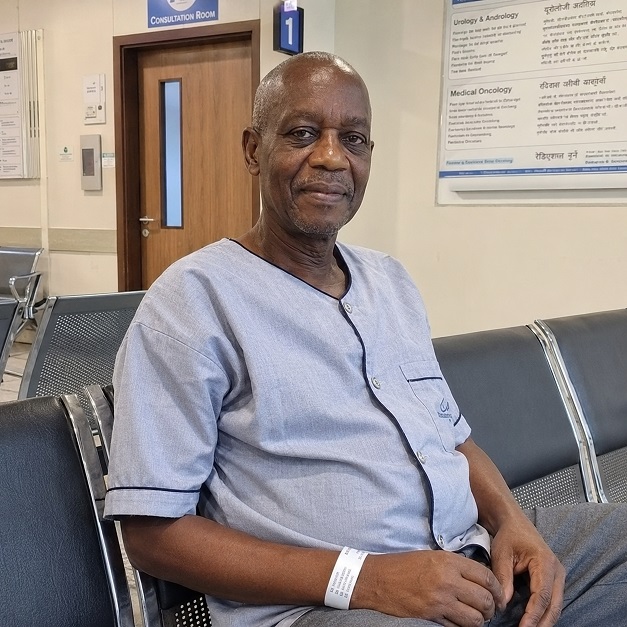
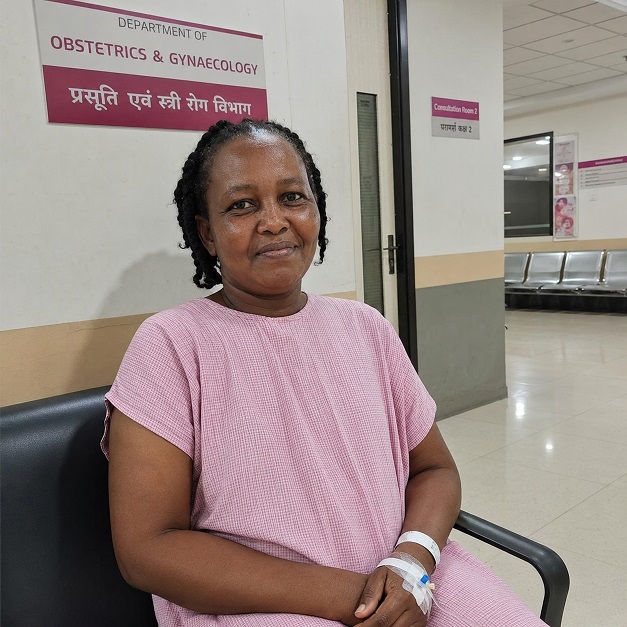
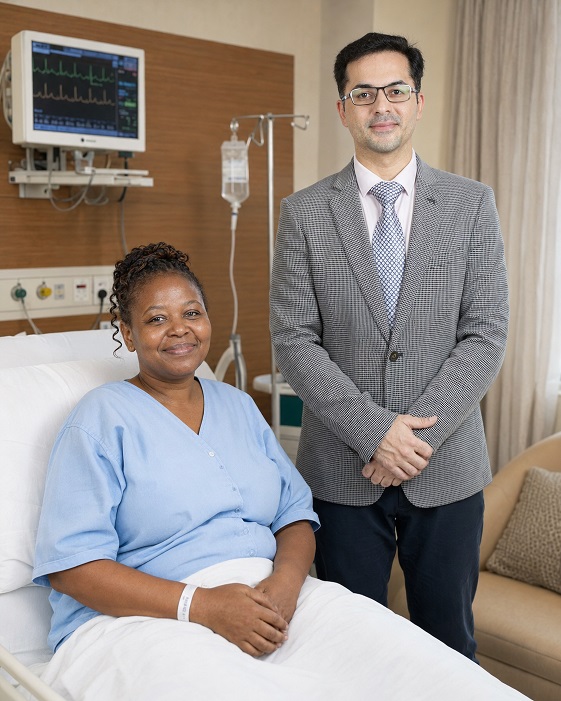
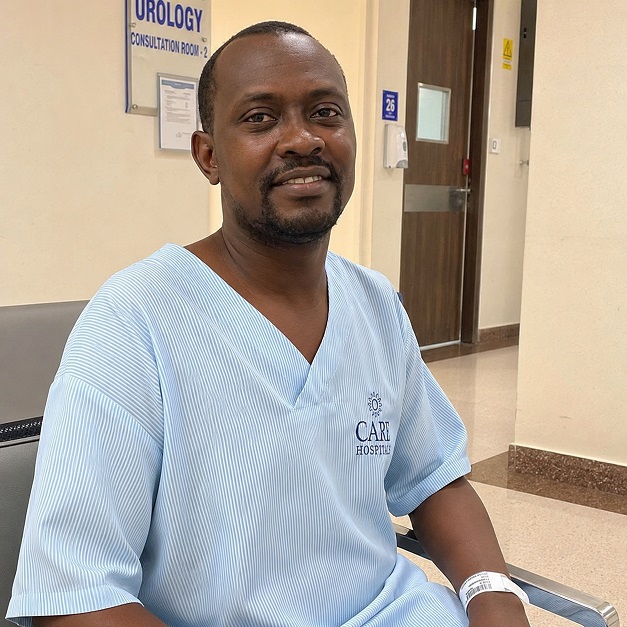
Patient Testimonials from Kenya
Ready to Take the First Step?
Share your Medical Reports with our Healthcare Managers Today and Get a FREE CONSULTATION, a Personalized Treatment Plan, and Complete Support from Arrival to Recovery.
Get Your Free ConsultationAreas We Serve
This resource has been thoughtfully prepared for patients from Kenya who are considering medical treatment in India. We also welcome patients from the wider region in the countries mentioned below-
We assist patients from:
- Ethiopia
- Somalia
- Tanzania
- Uganda
- Seychelles
- Guinea
- Guinea-Bissau
- Liberia
- Mali
- Mauritania
- Niger
- Nigeria
- Senegal
- Togo
- South Sudan
- Sierra Leone
Many of the insights, treatment pathways, hospital recommendations, travel guidance, and patient support services described here are equally relevant and may be used as a reference when planning treatment in India.
From Kenya to India: Your Complete Patient Support Guide
- Brain Tumour Surgery in India for Kenyan Patients
- Cancer Treatment and Surgery in India for Kenyan Patients
- Cardiac Treatment and Surgery in India for Kenyan Patients
- Heart Valve Replacement Surgery in India for Kenyan Patients
- Knee Replacement in India for Kenyan Patients
- Prostate Cancer Treatment and Surgery in India for Kenyan Patients
- Spine Treatment and Surgery in India for Kenyan Patients
- Selecting the Best Bariatric Surgeons and Hospitals in India: What Kenyan Patients Should Actually Look For
- Selecting the Best Cancer Surgeons and Hospitals in India: What Kenyan Patients Should Actually Look For
- Selecting the Best Cardiac Surgeons and Hospitals in India: What Kenyan Patients Should Actually Look For
- Selecting the Best Dental Surgeons and Clinics in India: What Kenyan Patients Should Actually Look For
- Selecting the Best Hip Surgeons and Hospitals in India: What Kenyan Patients Should Actually Look For
- Selecting the Best Kidney Transplant Surgeons and Hospitals in India: What Kenyan Patients Should Actually Look For
- Selecting the Best Knee Surgeons and Hospitals in India: What Kenyan Patients Should Actually Look For
- Selecting the Best Liver Transplant Surgeons and Hospitals in India: What Kenyan Patients Should Actually Look For
- Selecting the Best Neurosurgeons and Hospitals in India: What Kenyan Patients Should Actually Look For
- Selecting the Best Prostate Cancer Surgeons and Hospitals in India: What Kenyan Patients Should Actually Look For
- Selecting the Best Spine Surgeons and Hospitals in India: What Kenyan Patients Should Actually Look For