

Selecting the Best Plastic and Reconstructive Surgeons in India: What Kenyan Patients Should Actually Look For
A serious burn's surgery begins when the wound finally closes — scar tissue contracts as it heals, pulling joints out of position long after the emergency has passed.
Burn injuries have a way of disappearing from public attention once the acute crisis passes, even though the surgical journey for a serious burn is only beginning when the wound finally closes. Scar tissue contracts as it heals, pulling joints out of position, restricting movement, and sometimes distorting a child's growing hand or face for years afterward. Across 24 years of guiding international patients through Indian hospitals, reconstructive surgery is where I see this most clearly: the injury happened once, but the surgery to live well with it often happens in stages, over years. This is the framework I use when a Kenyan patient is weighing plastic and reconstructive surgery in India, most commonly for burn scarring, trauma, or congenital reconstruction. It follows the surgeon-then-hospital structure of this series, and opens with a burden that research suggests is far larger than commonly assumed.
Healing Journeys of Kenyan Patients


Key Takeaways
- The guide explains that burn reconstruction is often a staged process rather than a single operation. Scar tissue can contract over joints or across the face, restricting movement and affecting function, particularly in children as they grow.
- A KEMRI/CDC-funded study of approximately 28,500 residents in Kibera recorded 3,072 burn injuries, with an incidence of 27.9 per 1,000 person-years. The guide notes that many injuries occur at home and disproportionately affect children.
- For straightforward single-stage scar revision, treatment in Kenya may be a reasonable option. India becomes more relevant for complex multi-stage reconstruction, severe joint or facial contractures, paediatric reconstruction and trauma cases requiring specialised flap techniques.
- The page 3 weighting chart assigns 52% to surgeon factors and 48% to hospital factors. Personal annual volume in the patient's specific reconstruction type receives the highest weighting at 18%, followed by a genuine staged treatment plan at 16%.
- Hospital selection should include a dedicated burns or trauma reconstruction programme, physiotherapy and scar-management services, and a structured follow-up plan that can continue from Kenya. Accreditation such as JCI/NABH is presented as a safety filter rather than proof of reconstructive subspecialty expertise.
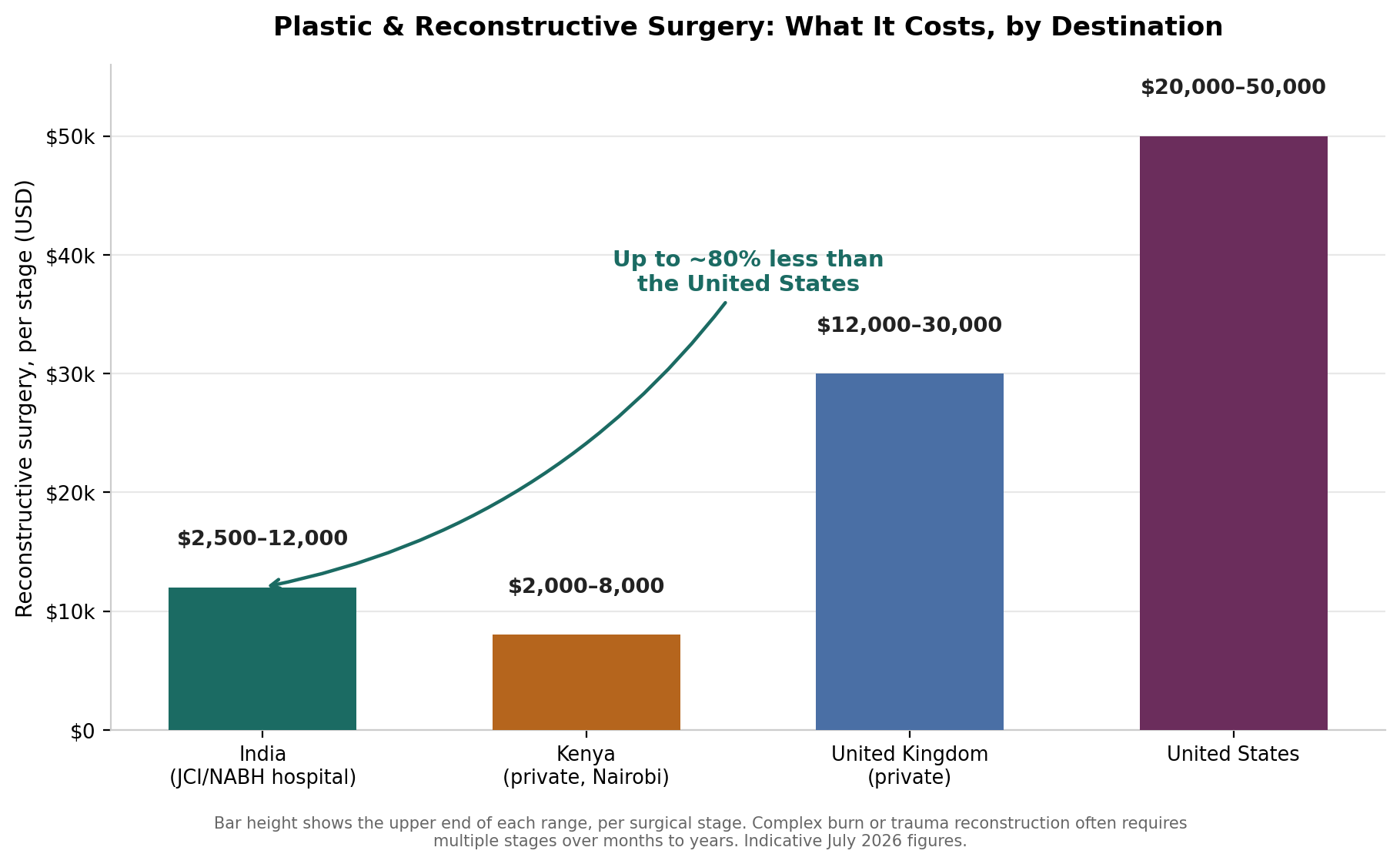
- The page 4 cost chart gives an indicative range of US$2,500–12,000 per surgical stage in India, compared with US$2,000–8,000 per stage in Kenya, US$12,000–30,000 in the UK and US$20,000–50,000 in the US. The guide stresses that complex reconstruction may require several stages over months or years.
Quick Facts
- Author
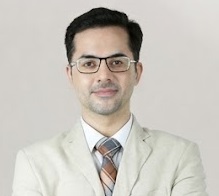
- Dr. Dheeraj Bojwani
- Experience
- 24+ Years of Experience
- Treatment
- Plastic & Reconstructive Surgery
- Patients
- Kenyan Patients with Burns, Trauma or Congenital Reconstruction Needs
- Key Specialist
- Plastic & Reconstructive Surgeon
- Main Assessment
- Injury type, scar severity, contracture and functional limitation
- Key Priority
- Restore function while improving appearance
- Treatment Approach
- Often staged reconstruction
- Key Selection Factor
- Personal annual volume in the specific reconstruction type
- Hospital Requirement
- Dedicated burns/trauma reconstruction programme
- Rehabilitation
- Physiotherapy and scar management after each stage
- India Cost
- Approximately US$2,500–12,000 per stage
- Kenya Cost
- Approximately US$2,000–8,000 per stage
- UK Cost
- Approximately US$12,000–30,000 per stage
- US Cost
- Approximately US$20,000–50,000 per stage
- Pre-Travel Records
- Current photographs and complete injury history
- Follow-Up
- Written staged plan and Kenya-based rehabilitation support
- Key Warning Signs
- No complete staged plan or unclear total cost
- Decision Principle
- Choose specific reconstructive expertise with rehabilitation built into the treatment plan
In Brief
For Kenyan patients considering reconstructive surgery in India, the guide recommends choosing a surgeon with specific experience in the patient's reconstruction type and obtaining the complete staged treatment plan before travelling. A suitable hospital should provide dedicated reconstruction services, physiotherapy, scar management and follow-up support between stages. The guide gives an indicative cost of US$2,500–12,000 per surgical stage in India.
Before the surgeon: a burden hiding in plain sight
A study funded by KEMRI and the CDC, tracking roughly 28,500 residents of Kibera, one of Nairobi's largest informal settlements, recorded 3,072 burn injuries over the study period, an incidence of 27.9 per 1,000 person- years. The researchers concluded that the burden of burns in the developing world has been substantially
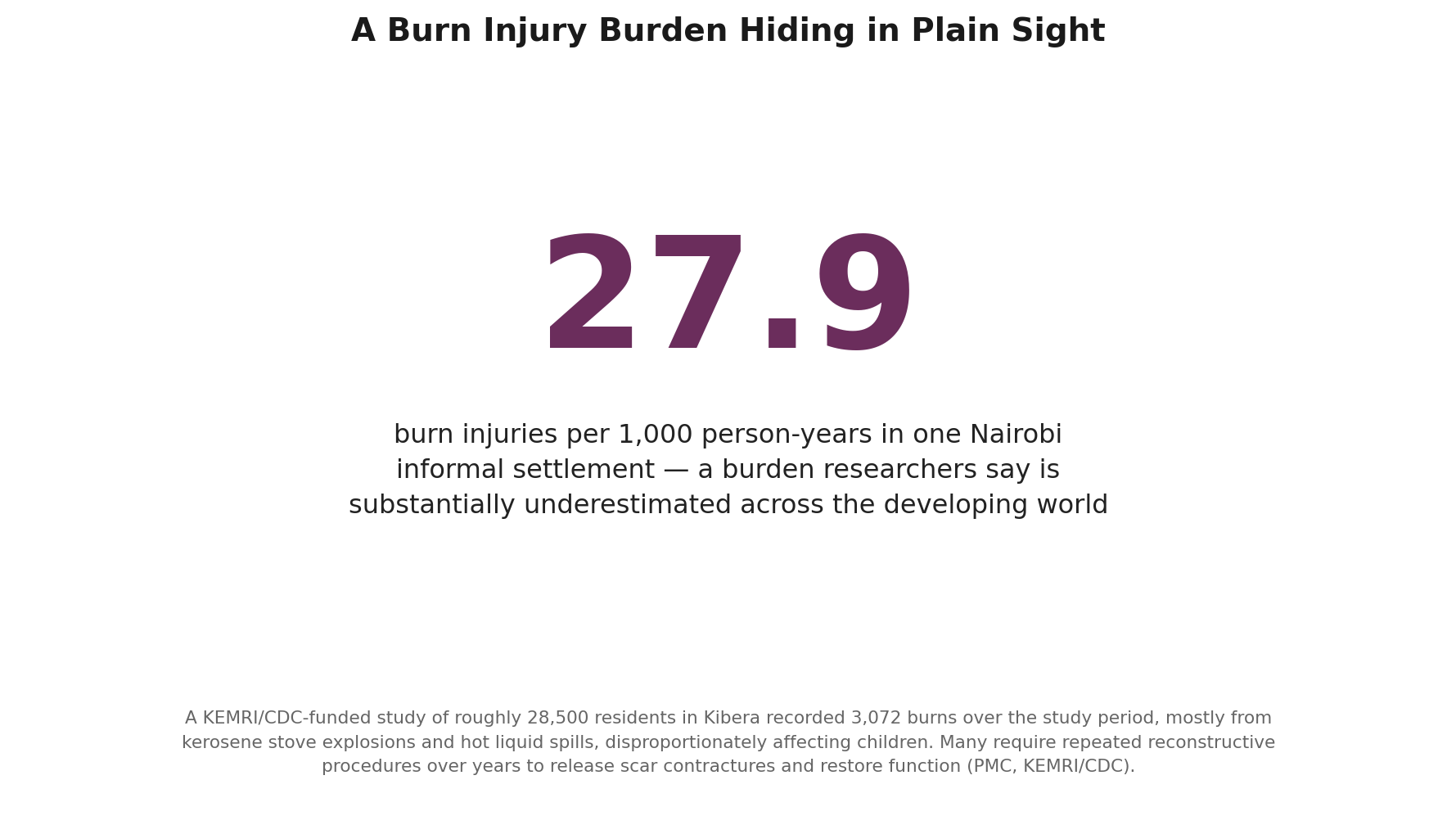
underestimated, and that this represents a major public health concern demanding urgent attention.
Most of these injuries happen at home, kerosene stove or lamp explosions, hot liquid spills, clothing catching fire, and children are disproportionately affected, often from scalds during cooking or accidental contact with open flames in crowded, poorly ventilated housing. What makes this matter for reconstructive surgery specifically is what happens after the burn heals: scar tissue that forms over a joint or across the face doesn't simply fade, it contracts, and without proper release surgery, that contraction can permanently limit a child's hand function, neck mobility, or facial expression as they grow.
The practical takeaway is that burn reconstruction is rarely a single procedure. It's a staged process, sometimes over years, particularly for children whose growing bodies can cause old scars to tighten again even after successful surgery. Ask early about the full staged plan, not just the next procedure, so you understand what the coming years genuinely look like.
Should you travel at all?
Kenya's major hospitals, including Kenyatta National Hospital, manage acute burn care and perform reconstructive procedures, and for straightforward, single-stage scar revision, treatment in Kenya is a reasonable option worth exploring first.
For complex, multi-stage reconstruction, extensive contractures affecting joints or the face, paediatric cases where growth complicates the surgical plan, or trauma reconstruction requiring specialised flap techniques, India is where I steer patients, confidently. India's leading reconstructive surgery centres treat burn and trauma reconstruction as a dedicated subspecialty, with surgeons who plan multi-stage cases from the outset and physiotherapy programmes built specifically around restoring function, not just appearance, at a fraction of UK or US cost.
Part one: judging the surgeon
1. Personal annual volume in your specific reconstruction type
I weight this above every other factor, and the chart below reflects that. Ask how many cases matching your specific reconstruction, hand contracture, facial burns, complex trauma, the surgeon personally treats each year.
2. A genuine staged treatment plan, not a single-visit promise
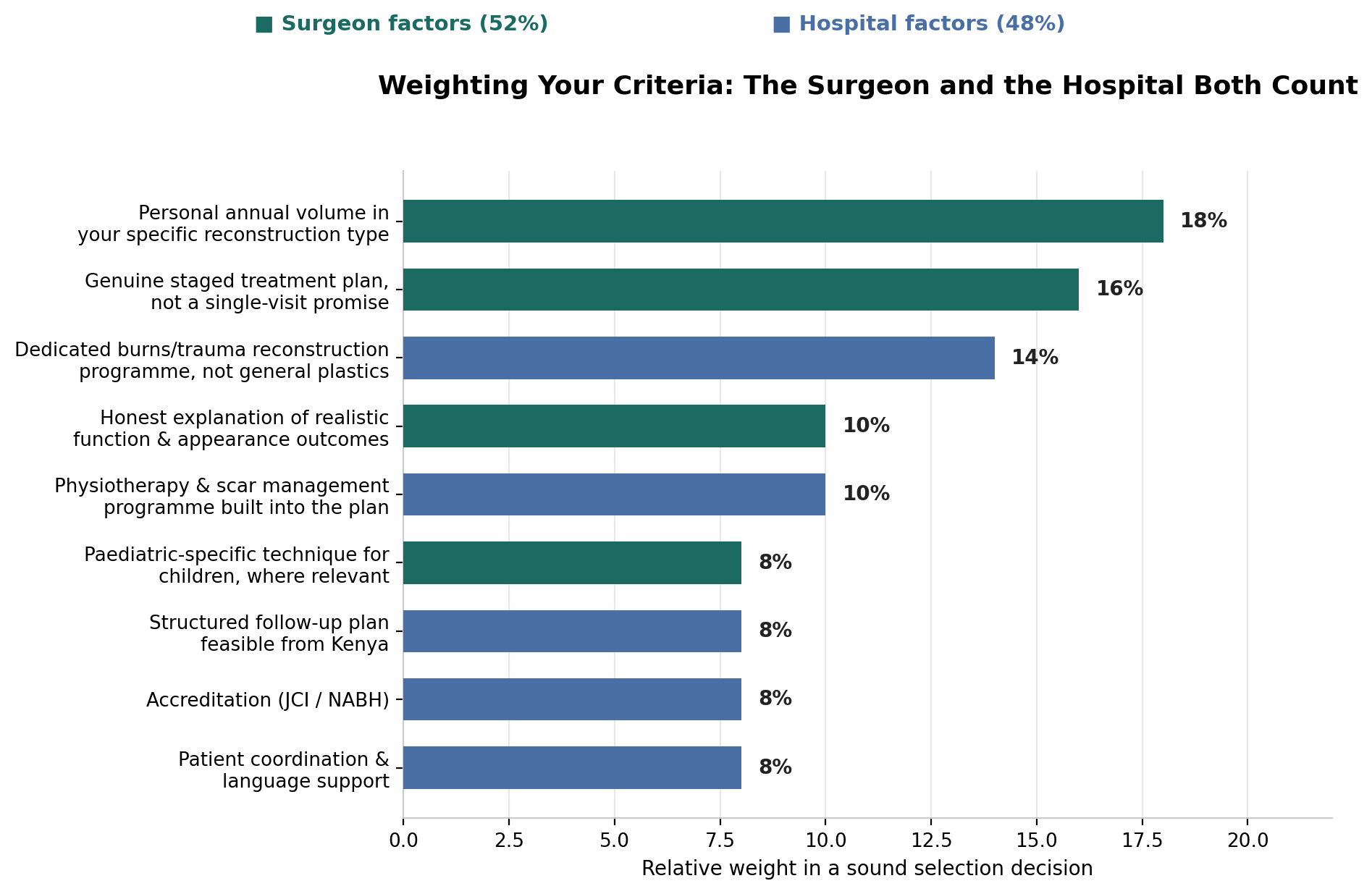
Ask for the complete staged plan upfront: how many procedures, roughly how far apart, and what each stage aims to achieve, rather than being told what the next single procedure will involve.
3. An honest explanation of realistic function and appearance outcomes
Ask what realistic function and appearance you can expect, specifically for your injury, rather than general reassurance that reconstruction will help.
4. Paediatric-specific technique for children, where relevant
For a child, ask whether the surgeon has specific experience planning reconstruction around a growing body, since techniques and timing differ meaningfully from adult reconstruction.
Part two: judging the hospital
For reconstructive surgery, physiotherapy and scar management infrastructure carry as much weight as the surgeon, reflected in the balance above, because function is restored as much through rehabilitation as through the surgery itself.
5. A dedicated burns or trauma reconstruction programme
Ask whether the hospital has a specific reconstructive programme for burns or trauma, rather than reconstruction being one occasional service among many performed by a general plastic surgery department.
6. A physiotherapy and scar management programme built into the plan
Ask what physiotherapy looks like after each surgical stage, since consistent hand therapy or scar massage in the weeks following surgery often determines whether function is genuinely restored.
7. A structured follow-up plan feasible from Kenya
Ask how follow-up between stages will work, and what happens if a problem develops once you're home between procedures.
8. Accreditation, read properly
JCI and NABH accreditation are meaningful filters on safety and infection control, but say nothing about
reconstructive sub-specialisation specifically. Use accreditation to exclude weak candidates, not to choose between the strong ones.
9. The cost you will actually pay
Let me be emphatic about this, because 24 years of handling these cases has taught me nothing more consistently: disputes almost never concern the quoted price. They concern what the quote silently omitted. For reconstructive surgery specifically, insist the estimate states the cost per stage, and what a multi-stage plan is likely to total, rather than a single-procedure quote that leaves later stages unclear.
Budget beyond the surgery. Direct Nairobi–Delhi and Nairobi–Mumbai flights run roughly 550 to 850 dollars return, and multi-stage plans may require several separate trips over months or years, so factor this into your planning from the start.
Four signals that should make you pause
Certain patterns reliably precede a difficult outcome. A surgeon who quotes one procedure without explaining the full staged plan. No clear personal volume figure in your specific reconstruction type. No structured physiotherapy or scar management programme. And a quote that doesn't clarify the total likely cost across all stages.
None alone proves a bad hospital. Together they warrant a second opinion before you commit to surgery.
The Kenya-specific practicalities
Send current photos of the scarring or injury, and a clear history of when and how it happened, not just a general
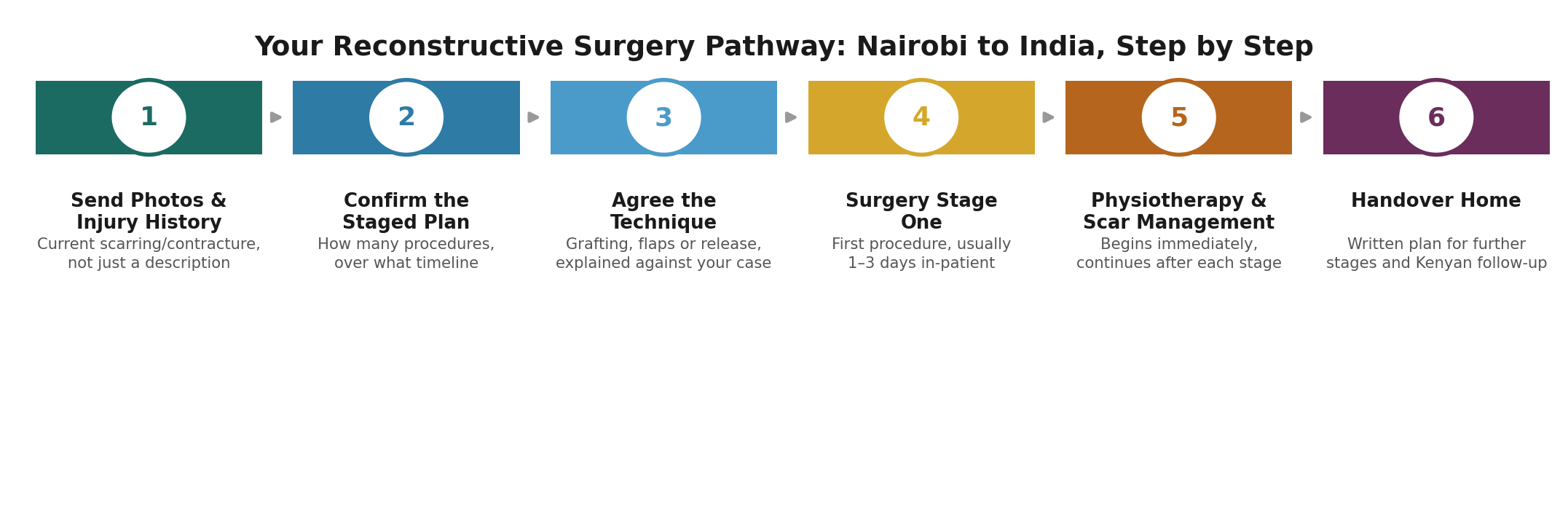
description, so the surgical team can properly plan your case before you arrive.
Direct Nairobi–Delhi and Nairobi–Mumbai flights make this roughly a six-hour journey. The Indian medical e-visa is issued within three to five working days against a hospital letter, and an attendant can travel with you, particularly important for a child.
Agree in advance on a written staged plan and follow-up schedule, and identify a doctor or physiotherapist in Kenya who can support recovery between trips if multiple stages are needed.
The questions I would ask before paying a deposit
Of the surgeon:
- How many cases matching my specific reconstruction do you personally treat each year?
- What is the complete staged plan, and how many procedures will I likely need?
- What is realistic for my function and appearance, specifically?
- If this is for my child, what is your specific paediatric reconstruction experience?
Of the hospital:
- Do you have a dedicated burns or trauma reconstruction programme?
- What does physiotherapy and scar management look like after each stage?
- How would follow-up work between stages, from Kenya?
- What is the total likely cost across all stages, not just this one?
- May I speak to a previous East African patient treated for a similar injury?
A team that answers all nine without irritation is very likely the right team. One that turns vague at the first or second has told you what you needed to know at no cost at all.
Straight Answers for Kenyan Patients about Plastic and Reconstructive Surgeons in India
How do I choose the best surgeon in India for reconstructive surgery as a Kenyan patient?
Ask his annual volume in cases matching your specific reconstruction type, and ask for the complete staged treatment plan upfront, not just the next single procedure.
How much does reconstructive surgery cost in India for a Kenyan patient?
Typically 2,500 to 12,000 US dollars per surgical stage, depending on complexity. The same care runs roughly 2,000 to 8,000 dollars per stage in Kenya, 12,000 to 30,000 in the UK, and 20,000 to 50,000 in the US.
Why are burn injuries such a significant issue in Kenya specifically?
A KEMRI/CDC-funded study of a Nairobi informal settlement found a burn incidence of 27.9 per 1,000 person- years, concluding that the burden of burns in the developing world has been substantially underestimated. Most injuries happen at home, from kerosene stove explosions and hot liquid spills, and disproportionately affect children.
Why does burn reconstruction need multiple surgeries?
Scar tissue contracts as it heals, and without release surgery, that contraction can permanently limit movement at joints or distort features like the hand or face. For children especially, growth can cause even successfully treated scars to tighten again, requiring further procedures over years.
What's the difference between scar revision and contracture release?
Scar revision generally improves the appearance of a scar. Contracture release is a functional procedure that frees tight scar tissue restricting movement at a joint, often using skin grafts or flaps to give the area room to move naturally again.
How important is physiotherapy after reconstructive surgery?
Very. Consistent hand therapy, stretching, or scar massage in the weeks after each surgical stage is often what determines whether function is genuinely restored, not just the surgery itself. Ask what this looks like before committing to a hospital.
A closing word
For a Kenyan patient living with the long aftermath of a burn or traumatic injury, India offers dedicated reconstructive expertise built around staged, multi-year planning, not a single procedure, with the physiotherapy infrastructure to make that surgery actually restore function, at a fraction of UK or US cost. The best surgeon is the one who lays out the complete staged plan honestly from the start. The best hospital pairs him with genuine rehabilitation support built into every stage. If you would like me to look at your photos and history and talk through honestly what your reconstruction plan should look like, send them across.
Sources
- 🌐 Sustained high incidence of injuries from burns in a densely populated urban slum in Kenya: An emerging public health priority
- 🌐 Injuries from burns in Kenya affect mostly children and happen in homes
- 🌐 Demographic Factors Associated with Increasing Incidences of Burns Among Adults (Kenyatta National Hospital). AJPO Journals
- 🌐 National Medical Commission of India — surgeon and specialist registration verification
- 🌐 National Accreditation Board for Hospitals & Healthcare Providers (NABH) — accredited hospital directory
Frequently Asked Questions by Kenyans about Plastic and Reconstructive Surgeons in India
Is reconstructive surgery usually completed in one operation?
Not always. Burn and complex trauma reconstruction can require multiple stages, particularly when scar contractures affect joints, the face or a growing child's body.
Why are burn contractures important?
Contracted scar tissue can restrict movement around joints or affect facial function. Contracture-release surgery aims to restore functional movement rather than simply improve the appearance of a scar.
Should every Kenyan patient travel to India?
No. The guide states that straightforward, single-stage scar revision can reasonably be explored in Kenya. India may be more relevant for complex or multi-stage reconstruction.
How should I choose a reconstructive surgeon in India?
Ask how many cases matching your specific reconstruction type the surgeon personally treats each year and request the complete staged treatment plan.
Why is a staged treatment plan important?
It explains how many procedures may be required, the approximate intervals between them and the objective of each stage, helping patients understand the full treatment journey.
Is paediatric reconstruction different?
Yes. For children, reconstruction must account for growth and changing anatomy. The guide recommends checking the surgeon's specific paediatric reconstruction experience.
How important is physiotherapy after reconstruction?
Very important. Hand therapy, stretching and scar massage after surgery can influence whether function is actually restored. Rehabilitation should therefore be built into the treatment plan.
How much does reconstructive surgery cost in India?
The guide gives an indicative range of US$2,500–12,000 per surgical stage. Complex cases may require several stages, so patients should ask about the likely total cost.
What should Kenyan patients send before travelling?
Send current photographs of the scar or injury and a clear history of when and how the injury occurred, allowing the surgical team to assess the case before arrival.
What are warning signs when selecting a surgeon or hospital?
The guide identifies four concerns: a surgeon who offers only one procedure without explaining the full staged plan, unclear personal case volume, no structured physiotherapy/scar-management programme, and a quotation that does not explain the likely total cost.
Page Summary
This seven-page Kenya patient guide explains how patients can evaluate plastic and reconstructive surgeons and hospitals in India, particularly for burn scars, contractures, trauma and congenital reconstruction. It highlights the need for staged treatment, surgeon-specific reconstruction experience, realistic expectations, paediatric expertise where relevant, dedicated burns/trauma programmes, physiotherapy, scar management and follow-up from Kenya. The page 3 chart assigns 52% to surgeon factors and 48% to hospital factors, while the page 4 cost chart compares indicative costs across India, Kenya, the UK and US. The page 5 pathway shows photos and injury history → staged plan → technique selection → surgery → physiotherapy/scar management → handover home.
Citation Block
| Topic | Information |
|---|---|
| Topic | Plastic & Reconstructive Surgery in India for Kenyan Patients |
| Treatment | Reconstructive Surgery |
| Patients | Kenyan Patients |
| Specialist | Plastic & Reconstructive Surgeon |
| Main Assessment | Injury, scar, contracture and functional limitation |
| Key Priority | Functional restoration and appearance |
| Treatment Approach | Staged reconstruction |
| Surgeon Check | Annual volume in specific reconstruction type |
| Plan Check | Complete staged treatment plan |
| Paediatric Check | Specific experience with growing children |
| Hospital Check | Dedicated burns/trauma reconstruction programme |
| Rehabilitation | Physiotherapy and scar management |
| India Cost | Approximately US$2,500–12,000 per stage |
| Kenya Cost | Approximately US$2,000–8,000 per stage |
| UK Cost | Approximately US$12,000–30,000 per stage |
| US Cost | Approximately US$20,000–50,000 per stage |
| Quote Check | Cost per stage and likely total treatment cost |
| Pre-Travel Records | Current photos and injury history |
| Follow-Up | Kenya-based doctor/physiotherapist support |
| Quality Check | JCI/NABH accreditation |
| Warning Signs | Single-procedure promise or unclear total cost |
| Selection Weighting | 52% surgeon factors and 48% hospital factors |
| Top Criterion | Specific reconstruction volume – 18% |
| Kenya Burn Data | 27.9 burns per 1,000 person-years in the cited Kibera study |
| Patient Pathway | Photos/history → staged plan → technique → surgery → rehabilitation → Kenya follow-up |
| Decision Principle | Match specific reconstructive expertise with staged planning and rehabilitation |

Our Mission Statement
Our mission is to place patients at the centre of every healthcare decision by providing trustworthy, evidence-based, and unbiased medical information. We believe that informed patients make better decisions. Backed by personalised guidance from our experienced advisory team, we help patients understand their treatment options, compare them objectively, and confidently choose the path that best suits their medical needs and personal circumstances.
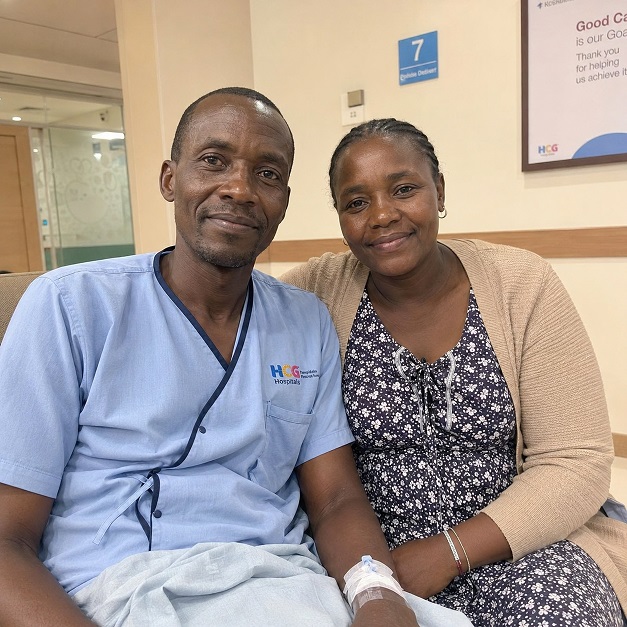
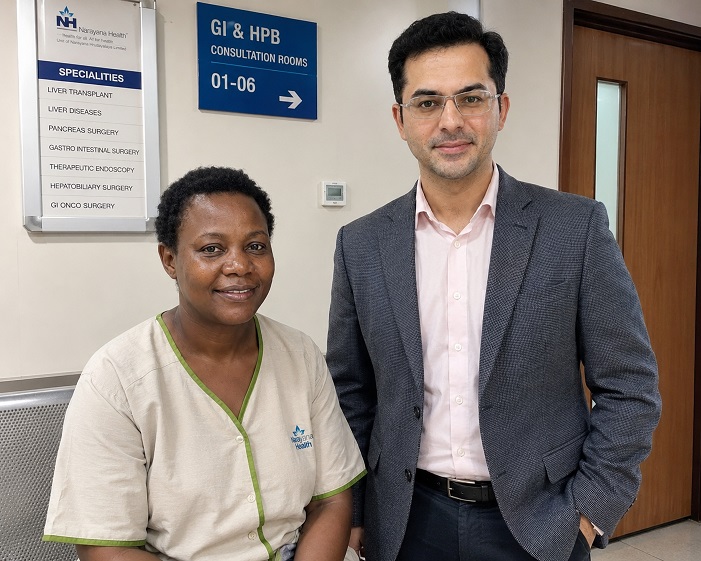
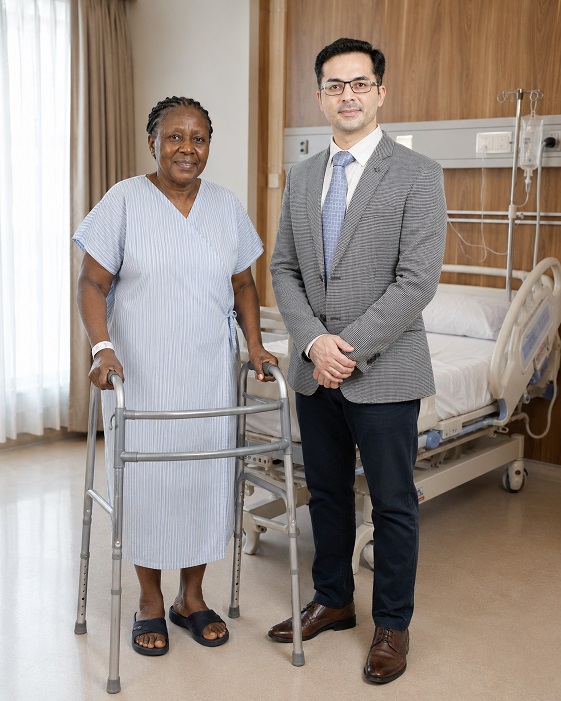
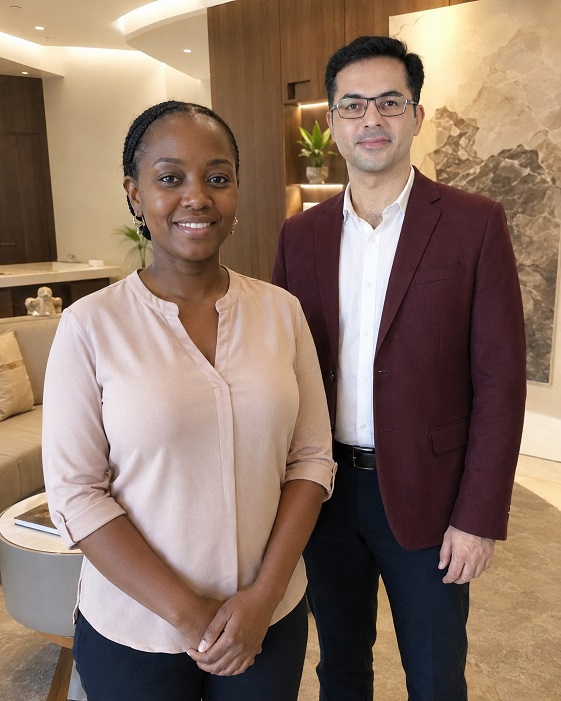
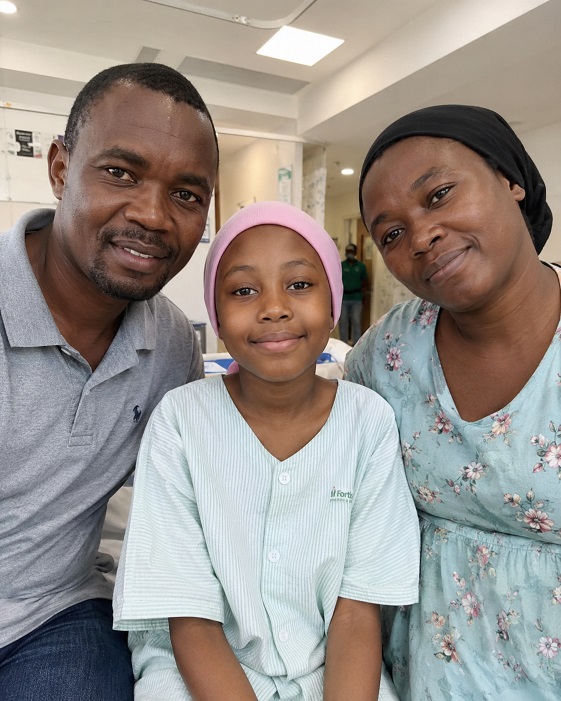
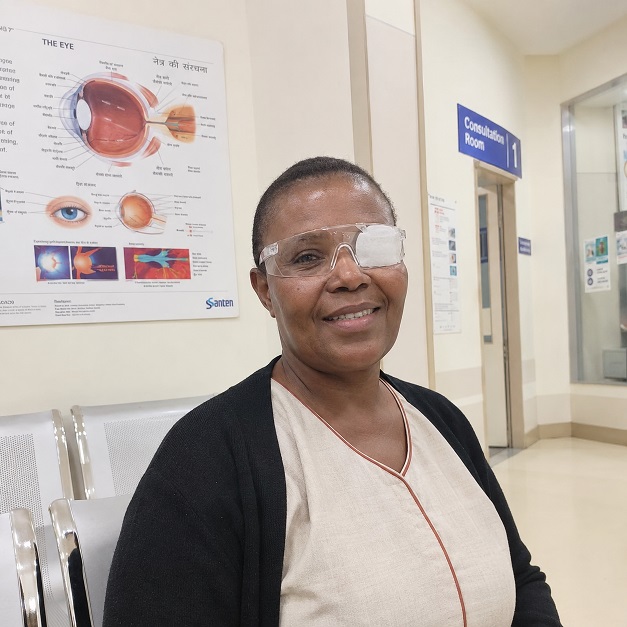
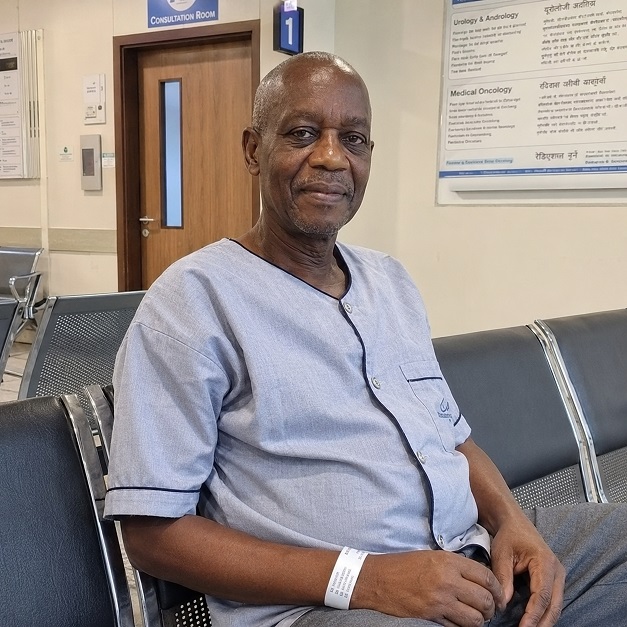
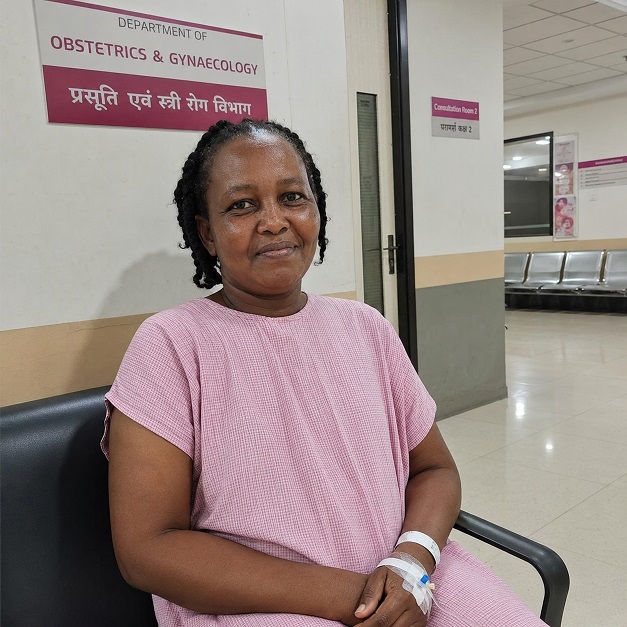
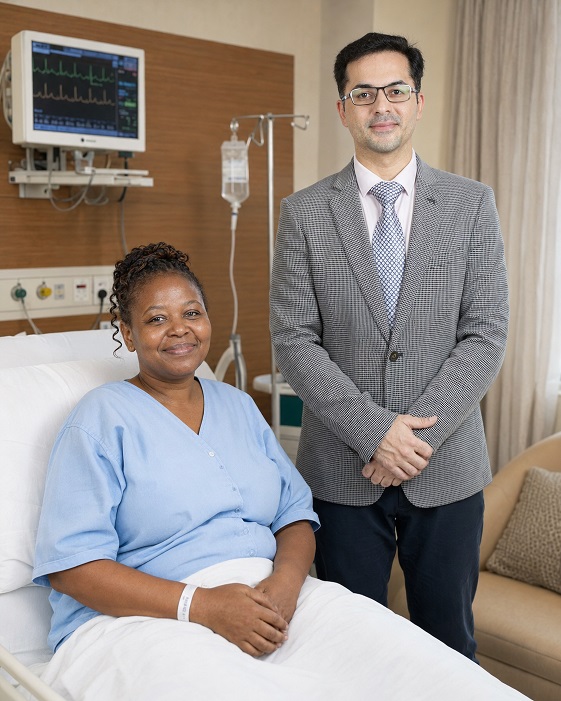
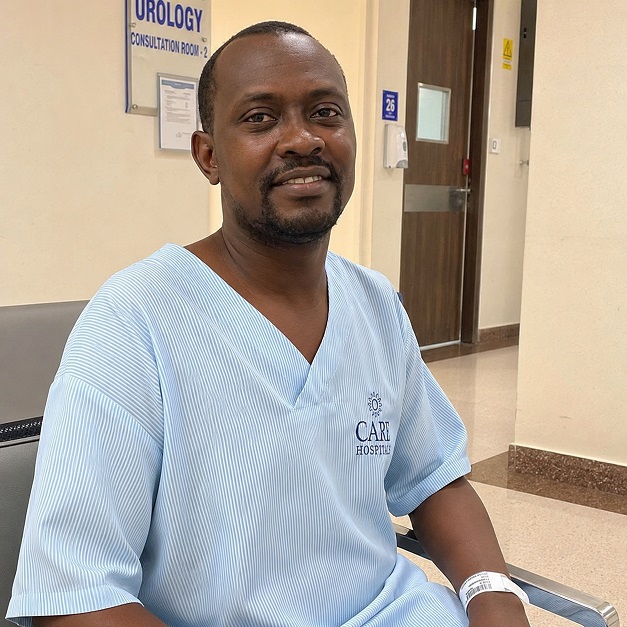
Patient Testimonials from Kenya
Ready to Take the First Step?
Share your Medical Reports with our Healthcare Managers Today and Get a FREE CONSULTATION, a Personalized Treatment Plan, and Complete Support from Arrival to Recovery.
Get Your Free ConsultationAreas We Serve
This resource has been thoughtfully prepared for patients from Kenya who are considering medical treatment in India. We also welcome patients from the wider region in the countries mentioned below-
We assist patients from:
- Ethiopia
- Somalia
- Tanzania
- Uganda
- Seychelles
- Guinea
- Guinea-Bissau
- Liberia
- Mali
- Mauritania
- Niger
- Nigeria
- Senegal
- Togo
- South Sudan
- Sierra Leone
Many of the insights, treatment pathways, hospital recommendations, travel guidance, and patient support services described here are equally relevant and may be used as a reference when planning treatment in India.
From Kenya to India: Your Complete Patient Support Guide
- Brain Tumour Surgery in India for Kenyan Patients
- Cancer Treatment and Surgery in India for Kenyan Patients
- Cardiac Treatment and Surgery in India for Kenyan Patients
- Heart Valve Replacement Surgery in India for Kenyan Patients
- Knee Replacement in India for Kenyan Patients
- Prostate Cancer Treatment and Surgery in India for Kenyan Patients
- Spine Treatment and Surgery in India for Kenyan Patients
- Selecting the Best Bariatric Surgeons and Hospitals in India: What Kenyan Patients Should Actually Look For
- Selecting the Best Cancer Surgeons and Hospitals in India: What Kenyan Patients Should Actually Look For
- Selecting the Best Cardiac Surgeons and Hospitals in India: What Kenyan Patients Should Actually Look For
- Selecting the Best Dental Surgeons and Clinics in India: What Kenyan Patients Should Actually Look For
- Selecting the Best Hip Surgeons and Hospitals in India: What Kenyan Patients Should Actually Look For
- Selecting the Best Kidney Transplant Surgeons and Hospitals in India: What Kenyan Patients Should Actually Look For
- Selecting the Best Knee Surgeons and Hospitals in India: What Kenyan Patients Should Actually Look For
- Selecting the Best Liver Transplant Surgeons and Hospitals in India: What Kenyan Patients Should Actually Look For
- Selecting the Best Neurosurgeons and Hospitals in India: What Kenyan Patients Should Actually Look For
- Selecting the Best Prostate Cancer Surgeons and Hospitals in India: What Kenyan Patients Should Actually Look For
- Selecting the Best Spine Surgeons and Hospitals in India: What Kenyan Patients Should Actually Look For