

Selecting the Best Paediatric Neurosurgeons and Hospitals in India: What Kenyan Families Should Actually Look For
Kenya treats hydrocephalus genuinely well and most other paediatric brain conditions barely at all — which of the two your child needs decides whether you travel.
A baby's head growing faster than it should is one of the more visible signs in paediatric medicine, and one of the most treatable, if it's caught and managed properly. Hydrocephalus and spina bifida are, by volume, the two conditions that dominate paediatric neurosurgery across East Africa, and Kenya has built something genuinely worth acknowledging in response: a dedicated paediatric neurosurgery programme at Kijabe Hospital that has become a regional reference point, using techniques specifically developed for African patients. Across 24 years of guiding international patients through Indian hospitals, this is a report where I want to start with what Kenya does well before explaining where the gap still bites. This is the framework I use when a Kenyan family is weighing paediatric neurosurgery in India, for hydrocephalus, spina bifida, brain tumours, or other conditions affecting a child's brain or spine. It follows the surgeon-then- hospital structure of this series, and opens with an honest picture of where Kenya's real capacity sits.
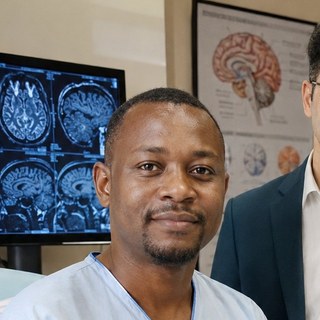
Healing Journeys of Kenyan Patients

Key Takeaways
- The guide highlights hydrocephalus and spina bifida as two major conditions in paediatric neurosurgery across East Africa. Kenya's Ministry of Health estimates roughly 1,000 children are born with hydrocephalus each year, while the country has an estimated 25 paediatric neurosurgeons concentrated across four main centres.
- Kenya has a genuine area of strength through the BethanyKids programme at Kijabe Hospital, particularly for hydrocephalus and spina bifida. The programme uses endoscopic third ventriculostomy with choroid plexus cauterisation in suitable children, potentially avoiding a permanent shunt and its lifelong risks of blockage, infection and revision surgery.
- The guide recommends considering India when the condition falls outside Kenya's deeper paediatric neurosurgical expertise, including brain tumours, complex craniofacial conditions, epilepsy surgery and vascular malformations. India's leading centres may offer dedicated paediatric neuro-ICUs, child-specific neuro-anaesthesia and greater subspecialty case volume.
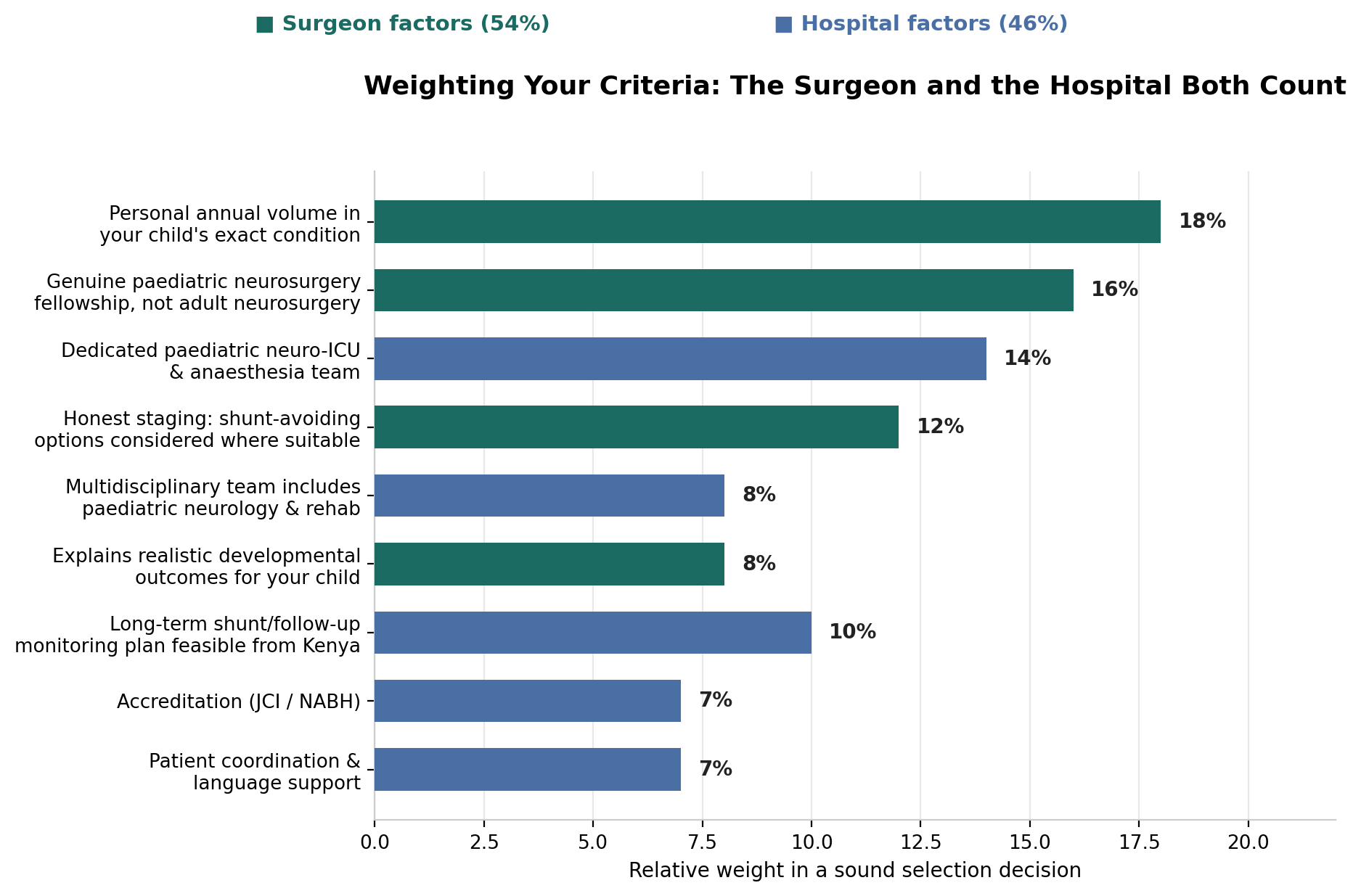
- Surgeon selection should focus on the doctor's personal annual volume in the child's exact condition, rather than general neurosurgical experience. The page 3 weighting chart gives 54% to surgeon factors and 46% to hospital factors, with exact-condition annual volume receiving the highest individual weighting at 18%, followed by genuine paediatric neurosurgery fellowship training at 16%.
- Hospital selection should include a dedicated paediatric neuro-ICU and paediatric neuro-anaesthesia team, multidisciplinary review involving paediatric neurology and rehabilitation, and a long-term monitoring plan that can realistically continue in Kenya. For children receiving a shunt, the guide stresses that follow-up planning should be part of the treatment decision itself because complications can develop suddenly.
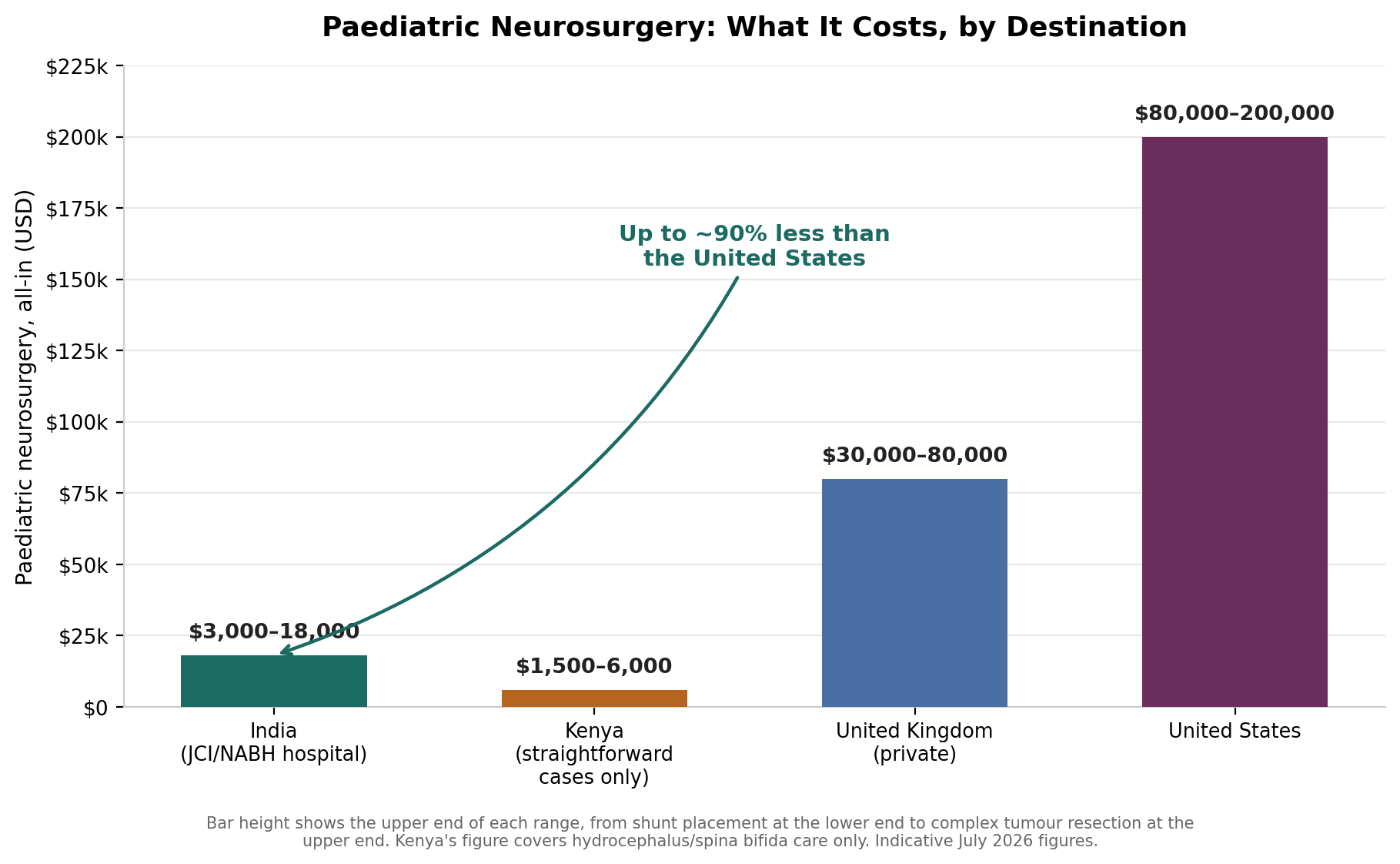
- The page 4 cost chart gives an indicative range of US$3,000–18,000 in India, compared with US$1,500–6,000 in Kenya for straightforward hydrocephalus and spina bifida cases, US$30,000–80,000 in the UK and US$80,000–200,000 in the US. Families should confirm ICU days, future shunt-revision costs and what is excluded from the initial quotation.
Quick Facts
- Author
- Dr. Dheeraj Bojwani
- Experience
- 24+ Years of Experience
- Treatment
- Paediatric Neurosurgery
- Patients
- Kenyan Children Requiring Neurosurgical Care
- Key Specialist
- Paediatric Neurosurgeon
- Main Assessment
- Exact condition, severity and treatment requirements
- Key Priority
- Condition-specific paediatric neurosurgical expertise
- Major Conditions
- Hydrocephalus, spina bifida, brain tumours and complex congenital conditions
- Kenya Strength
- Hydrocephalus and spina bifida treatment at Kijabe/BethanyKids
- Key Selection Factor
- Personal annual volume in the child's exact condition
- Treatment Option
- Shunt-avoiding techniques where clinically suitable
- Hospital Requirement
- Dedicated paediatric neuro-ICU and neuro-anaesthesia team
- India Cost
- Approximately US$3,000–18,000
- Kenya Cost
- Approximately US$1,500–6,000 for straightforward hydrocephalus/spina bifida
- UK Cost
- Approximately US$30,000–80,000
- US Cost
- Approximately US$80,000–200,000
- Pre-Travel Records
- MRI/CT imaging, head circumference charts and birth history
- Follow-Up
- Written shunt/follow-up plan with a Kenyan paediatric specialist
- Key Warning Signs
- No exact-condition experience, no discussion of shunt-avoiding options or inadequate paediatric neuro-ICU support
- Decision Principle
- Match the child's exact condition with the right paediatric neurosurgical subspecialty
In Brief
For Kenyan families considering paediatric neurosurgery in India, the guide recommends first identifying whether the child's condition falls within Kenya's established strengths in hydrocephalus and spina bifida or requires deeper subspecialty expertise. Surgeon-specific experience, paediatric neurosurgery training, dedicated neuro-ICU care and a practical long-term follow-up plan are key selection factors. The guide gives an indicative cost of US$3,000–18,000 in India, depending on complexity.
Before the surgeon: real strength in one area, a genuine gap everywhere else
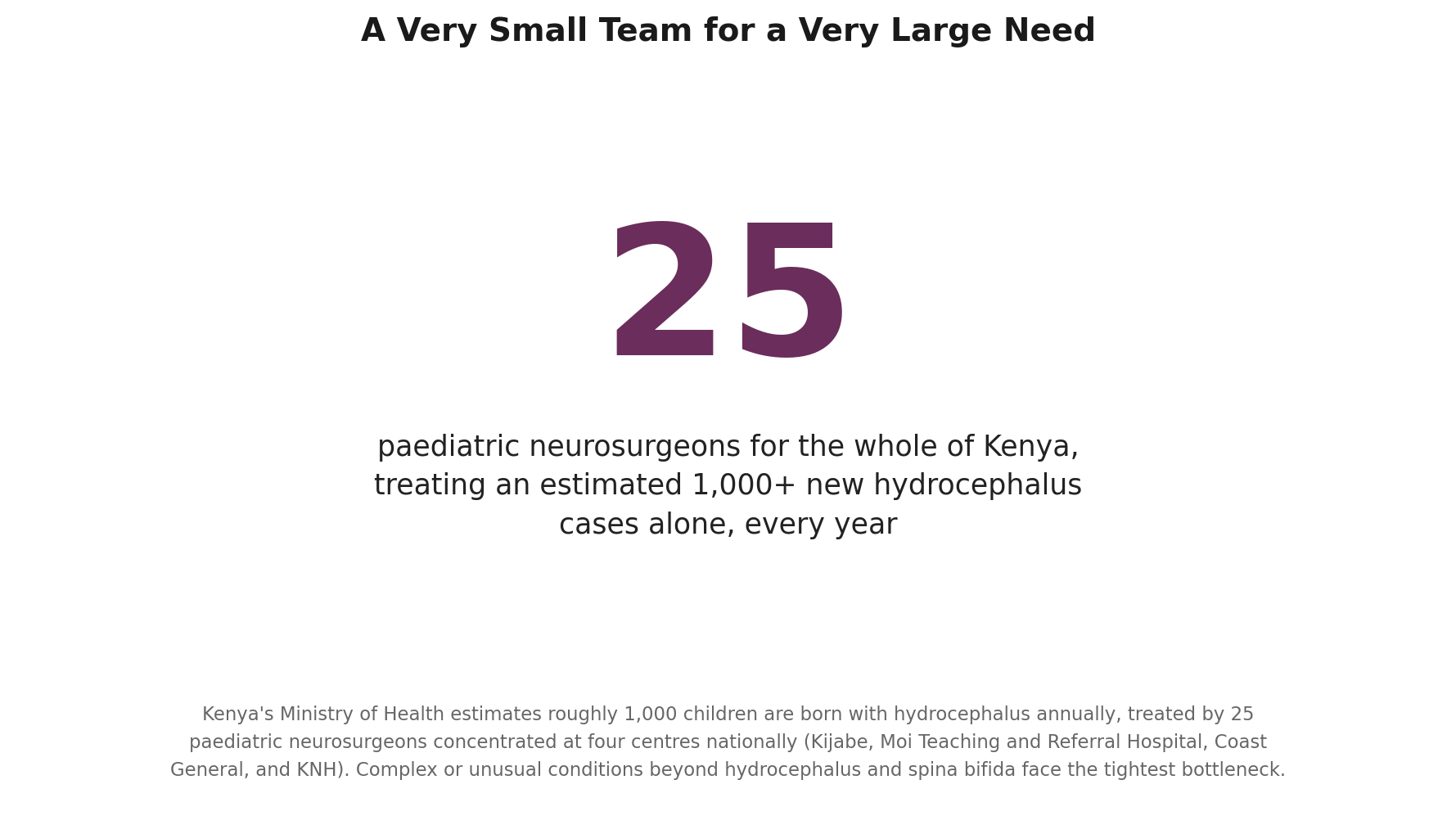
Kenya's Ministry of Health estimates roughly 1,000 children are born with hydrocephalus every year in a country of over 55 million people. Treating them, along with children with spina bifida and a wide range of other conditions, falls to an estimated 25 paediatric neurosurgeons nationally, concentrated at four centres: Kijabe Hospital, Moi Teaching and Referral Hospital in Eldoret, Coast General Hospital, and Kenyatta National Hospital.
Kijabe's programme, through BethanyKids, has genuinely distinguished itself, using endoscopic third ventriculostomy combined with choroid plexus cauterisation, a technique developed specifically to treat hydrocephalus in African children without a permanent shunt, avoiding the lifelong risk of shunt blockage, infection, and repeated revision surgery that shunt-dependent children face. For straightforward hydrocephalus and spina bifida, this is a real, locally-built strength, not an aspiration.
The gap opens for everything else. Brain tumours, complex craniofacial conditions, epilepsy surgery, vascular malformations, and any case requiring a paediatric neurosurgical sub-specialty beyond hydrocephalus and spina bifida face a genuinely tight bottleneck, 25 surgeons cannot deliver deep sub-specialisation across the full range of paediatric neurosurgical conditions a country this size will produce. The practical takeaway is to ask, specifically, whether your child's condition falls within Kenya's genuine area of strength or outside it, since the honest answer to that question should shape where you seek care.
Should you travel at all?
For hydrocephalus and spina bifida specifically, Kijabe Hospital's BethanyKids programme has real, internationally recognised expertise, and for these conditions, a first opinion in Kenya is genuinely worth pursuing, not simply the more convenient option.
For brain tumours, complex congenital malformations, epilepsy surgery, vascular conditions, or any case where Kenya's 25 paediatric neurosurgeons don't concentrate deep sub-specialty experience, India is where I steer families, confidently. India's leading paediatric neurosurgery centres combine dedicated paediatric neuro-ICUs, neuro-anaesthesia teams built specifically around children, and sub-specialists whose case volume in a single condition often exceeds what Kenya's entire national paediatric neurosurgery workforce sees in a year, at a fraction of UK or US cost.
Part one: judging the surgeon
1. Personal annual volume in your child's exact condition
I weight this above every other factor, and the chart below reflects that. Ask how many cases matching your child's specific diagnosis, not paediatric neurosurgery in general, the surgeon personally treats each year.
2. A genuine paediatric neurosurgery fellowship
Ask whether the surgeon trained specifically in paediatric neurosurgery, not adult neurosurgery with occasional child patients. A developing brain and skull behave very differently under surgery than an adult's.
3. Honest staging: shunt-avoiding options considered where suitable
For hydrocephalus specifically, ask whether a shunt-avoiding technique was genuinely considered for your child's case, and if not, why a shunt is the better option here.
4. Explains realistic developmental outcomes for your child
Ask what your child's realistic developmental trajectory looks like after treatment, specifically, not a general statement about surgical success.
Part two: judging the hospital
For paediatric neurosurgery, the hospital's infrastructure carries as much weight as the surgeon, reflected in the balance above, because a child's margin for error during and after brain or spine surgery is thinner than an adult's.
5. A dedicated paediatric neuro-ICU and anaesthesia team
Ask whether anaesthesia and post-operative care are handled by specialists in paediatric neuro-critical care, not general paediatric or adult neurosurgical staff.
6. A multidisciplinary team including paediatric neurology and rehabilitation
Ask whether your child's case is reviewed by a team including paediatric neurology and rehabilitation specialists, not decided by the surgeon alone.
7. A long-term shunt or follow-up monitoring plan feasible from Kenya
If a shunt is placed, ask how monitoring will work once you're home, since shunt problems can develop suddenly and require rapid recognition. This should shape the technique choice itself, not just the aftercare plan.
8. Accreditation, read properly
JCI and NABH accreditation are meaningful filters on safety and infection control, but say nothing about paediatric neurosurgery sub-specialisation specifically. Use accreditation to exclude weak candidates, not to choose between
the strong ones.
9. The cost you will actually pay
Let me be emphatic about this, because 24 years of handling these cases has taught me nothing more consistently: disputes almost never concern the quoted price. They concern what the quote silently omitted. For paediatric neurosurgery specifically, insist the estimate states how many ICU days are included, and what a shunt revision, if ever needed, would cost later.
Budget beyond the surgery. Direct Nairobi–Delhi and Nairobi–Mumbai flights run roughly 550 to 850 dollars return, and three to four weeks of accommodation for a parent adds a genuine sum, more for complex cases needing longer recovery.
Four signals that should make you pause
Certain patterns reliably precede a difficult outcome. A surgeon who cannot state personal volume in cases matching your child's specific condition. No mention of shunt-avoiding options for hydrocephalus without a specific reason why. A vague answer about long-term shunt monitoring once home. And a hospital without dedicated paediatric neuro-anaesthesia.
None alone proves a bad hospital. Together they warrant a second opinion before you commit to your child's surgery.
The Kenya-specific practicalities
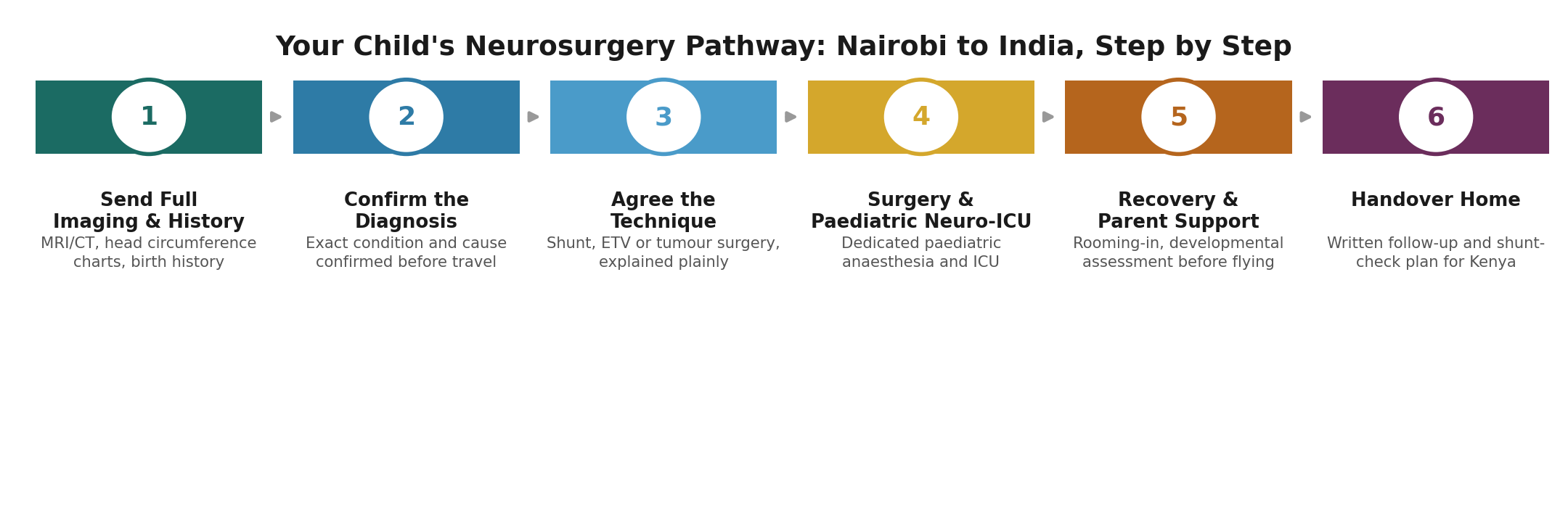
Send the full imaging, MRI or CT, along with head circumference growth charts and birth history, not just a summary letter, so the team can plan precisely before you arrive.
Direct Nairobi–Delhi and Nairobi–Mumbai flights make this roughly a six-hour journey. The Indian medical e-visa is issued within three to five working days against a hospital letter, and up to two attendants can travel on a medical attendant visa.
If a shunt is placed, agree in advance on a written monitoring plan and identify a Kenyan paediatric neurosurgeon or paediatrician by name who can recognise and respond to shunt complications quickly.
The questions I would ask before paying a deposit
Of the surgeon:
- How many cases matching my child's specific diagnosis do you personally treat each year?
- Did you train specifically in paediatric neurosurgery?
- Was a shunt-avoiding technique considered, and if not, why not?
- What is my child's realistic developmental outlook after treatment?
Of the hospital:
- Do you have dedicated paediatric neuro-anaesthesia and ICU?
- Is my child's case reviewed by a full multidisciplinary team?
- What does long-term shunt or follow-up monitoring look like from Kenya?
- What exactly is excluded from the quoted price?
- May I speak to a previous East African family treated for a similar condition?
A team that answers all nine without irritation is very likely the right team. One that turns vague at the first or third has told you what you needed to know at no cost at all.
Straight Answers for Kenyan Patients about Paediatric Neurosurgeons and Hospitals in India
Should I try Kenya first for my child's neurosurgical condition?
For hydrocephalus or spina bifida, yes; Kijabe Hospital's BethanyKids programme has genuine, internationally recognised expertise, including shunt-avoiding techniques. For brain tumours, epilepsy surgery, or complex congenital conditions, Kenya's very limited paediatric neurosurgical workforce makes India the more confident choice.
How much does paediatric neurosurgery cost in India for a Kenyan family?
Typically 3,000 to 18,000 US dollars all in, depending on complexity. The same care runs roughly 1,500 to 6,000 dollars in Kenya for hydrocephalus and spina bifida specifically, 30,000 to 80,000 in the UK, and 80,000 to 200,000 in the US.
How many paediatric neurosurgeons does Kenya actually have?
An estimated 25 nationally, concentrated at Kijabe, Moi Teaching and Referral Hospital, Coast General, and Kenyatta National Hospital, treating an estimated 1,000 new hydrocephalus cases a year alone, before accounting for spina bifida, tumours, and other conditions.
What is a shunt-avoiding technique, and why does it matter?
Endoscopic third ventriculostomy with choroid plexus cauterisation treats hydrocephalus without implanting a permanent shunt, avoiding the lifelong risk of shunt blockage, infection, and repeat surgery. It was developed specifically for African children and is a genuine area of strength in Kenyan paediatric neurosurgery, though not every case qualifies.
Why does paediatric neurosurgery need a different surgeon than adult neurosurgery?
A child's skull, brain, and nervous system are still developing, and respond differently to surgery, anaesthesia, and recovery than an adult's. Paediatric neurosurgery is a distinct fellowship-trained subspecialty, and volume in children's cases specifically predicts outcomes more reliably than general neurosurgical experience.
What does long-term follow-up look like after a shunt is placed?
Shunts need monitoring for life, since blockage or infection can develop suddenly and require urgent treatment. Agree on a written monitoring plan before leaving India, and identify a specific doctor in Kenya who can recognise and respond to shunt complications quickly.
A closing word
For hydrocephalus and spina bifida, Kenya has built something genuinely worth trying first. For nearly everything else in paediatric neurosurgery, India offers depth of sub-specialty experience that Kenya's 25 paediatric neurosurgeons, however skilled, cannot yet match at scale, at a fraction of UK or US cost. The best surgeon is the one whose case volume and honest technique explanation show he treats your child's exact condition as its own subspecialty. The best hospital pairs him with paediatric-specific neuro-ICU and anaesthesia care built around a growing brain. If you would like me to look at your child's scans and history and talk through honestly what the right plan looks like, send them across.
Sources
- 🌐 Saving Baby Joshua: Mother's search for brain swelling cure (Ministry of Health hydrocephalus incidence estimate
- 🌐 Kenya | NeuroKids (BethanyKids at Kijabe Hospital programme overview)
- 🌐 Quality of life of children with spina bifida in Kenya is not related to the degree of the spinal defects
- 🌐 National Medical Commission of India — surgeon and specialist registration verification
- 🌐 National Accreditation Board for Hospitals & Healthcare Providers (NABH) — accredited hospital directory
- 🌐 Kenya Social Health Authority (SHA) — benefits packages and overseas treatment guidance
Frequently Asked Questions by Kenyans about Paediatric Neurosurgeons and Hospitals in India
Should Kenyan families try treatment in Kenya first?
For hydrocephalus and spina bifida, the guide recommends considering Kijabe Hospital's BethanyKids programme because of its recognised expertise. For brain tumours, epilepsy surgery and complex congenital conditions, India may offer greater subspecialty depth.
How many paediatric neurosurgeons are there in Kenya?
The guide estimates approximately 25 paediatric neurosurgeons nationally, concentrated at Kijabe Hospital, Moi Teaching and Referral Hospital, Coast General Hospital and Kenyatta National Hospital.
What is the shunt-avoiding technique mentioned in the guide?
Endoscopic third ventriculostomy combined with choroid plexus cauterisation can treat selected cases of hydrocephalus without placing a permanent shunt. Not every child is suitable for this approach.
Why is paediatric neurosurgery different from adult neurosurgery?
A child's brain, skull and nervous system are still developing and respond differently to surgery and anaesthesia. The guide therefore recommends a surgeon with specific paediatric neurosurgery training.
How should parents choose a paediatric neurosurgeon in India?
Ask how many cases matching the child's specific diagnosis the surgeon personally treats each year and whether they have formal paediatric neurosurgery training.
What should a suitable hospital provide?
Look for a dedicated paediatric neuro-ICU and neuro-anaesthesia team, along with multidisciplinary paediatric neurology and rehabilitation support.
Why is long-term follow-up important after shunt surgery?
A shunt can develop blockage or infection even after the child returns home. Families should have a written monitoring plan and identify a Kenyan doctor who can respond quickly to possible complications.
How much does paediatric neurosurgery cost in India?
The guide gives an indicative range of US$3,000–18,000, depending on the complexity of treatment. Families should also clarify ICU and potential future shunt-revision costs.
What records should Kenyan families send before travelling?
Send MRI or CT imaging, head circumference growth charts and birth history, rather than only a summary letter, so the Indian team can properly assess the child before arrival.
What is the typical treatment pathway?
The guide's page 5 pathway shows: full imaging and history → confirm diagnosis → agree on technique → surgery and paediatric neuro-ICU → recovery and parent support → handover with a written follow-up/shunt plan in Kenya.
Page Summary
This seven-page Kenya patient guide explains how families can evaluate paediatric neurosurgeons and hospitals in India, while first recognising Kenya's established expertise in hydrocephalus and spina bifida through the Kijabe/BethanyKids programme. It focuses on condition-specific surgeon volume, paediatric neurosurgery fellowship training, shunt-avoiding options, developmental-outcome discussions, dedicated paediatric neuro-ICU care and long-term follow-up. The page 3 chart assigns 54% to surgeon factors and 46% to hospital factors, while the page 4 cost chart compares indicative costs across India, Kenya, the UK and US. The page 5 pathway shows the journey from full imaging and history through diagnosis, technique selection, surgery and paediatric neuro-ICU care to recovery and handover to a Kenyan specialist.
Citation Block
| Topic | Information |
|---|---|
| Topic | Paediatric Neurosurgery in India for Kenyan Patients |
| Treatment | Paediatric Neurosurgery |
| Patients | Kenyan Children |
| Specialist | Paediatric Neurosurgeon |
| Main Assessment | Exact condition, severity and treatment requirements |
| Key Conditions | Hydrocephalus, spina bifida, brain tumours and complex congenital conditions |
| Kenya Strength | Hydrocephalus and spina bifida |
| Key Selection Factor | Annual volume in the child's exact condition |
| Training Check | Genuine paediatric neurosurgery fellowship |
| Technique Check | Shunt-avoiding options where suitable |
| Hospital Requirement | Dedicated paediatric neuro-ICU and neuro-anaesthesia |
| Multidisciplinary Care | Paediatric neurology and rehabilitation |
| India Cost | Approximately US$3,000–18,000 |
| Kenya Cost | Approximately US$1,500–6,000 for straightforward cases |
| UK Cost | Approximately US$30,000–80,000 |
| US Cost | Approximately US$80,000–200,000 |
| Quote Check | ICU days and future shunt-revision costs |
| Pre-Travel Records | MRI/CT, head circumference charts and birth history |
| Follow-Up | Long-term shunt/follow-up monitoring from Kenya |
| Quality Check | JCI/NABH accreditation |
| Warning Signs | No exact-condition experience or inadequate paediatric neuro-ICU support |
| Selection Weighting | 54% surgeon factors and 46% hospital factors |
| Top Criterion | Exact-condition annual volume – 18% |
| Kenya Workforce | Approximately 25 paediatric neurosurgeons |
| Patient Pathway | Imaging/history → diagnosis → technique → surgery/neuro-ICU → recovery → Kenya follow-up |
| Decision Principle | Match condition-specific expertise with paediatric infrastructure and long-term follow-up |

Our Mission Statement
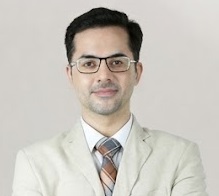
Our mission is to place patients at the centre of every healthcare decision by providing trustworthy, evidence-based, and unbiased medical information. We believe that informed patients make better decisions. Backed by personalised guidance from our experienced advisory team, we help patients understand their treatment options, compare them objectively, and confidently choose the path that best suits their medical needs and personal circumstances.
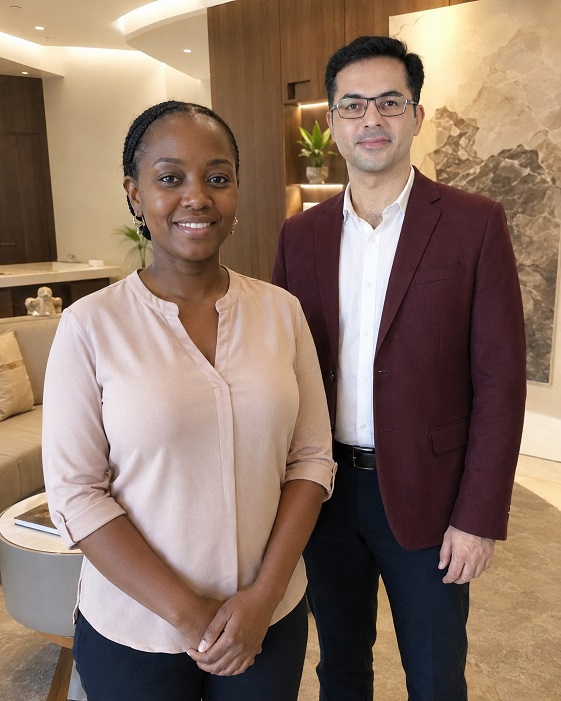
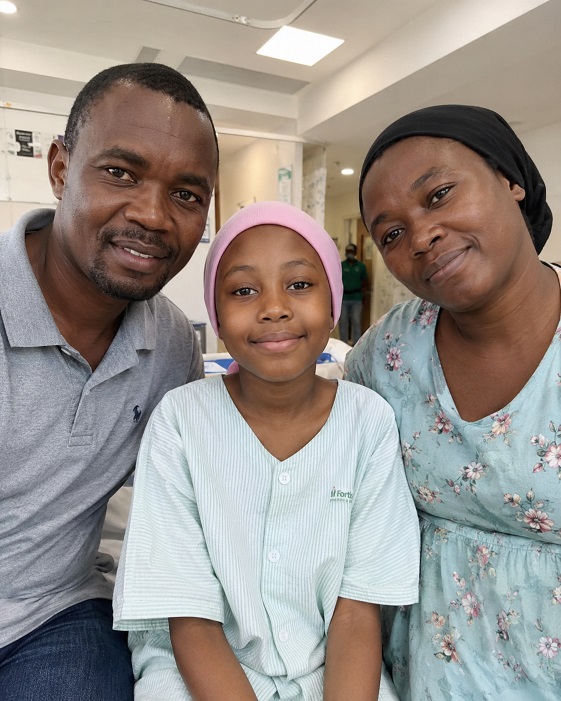
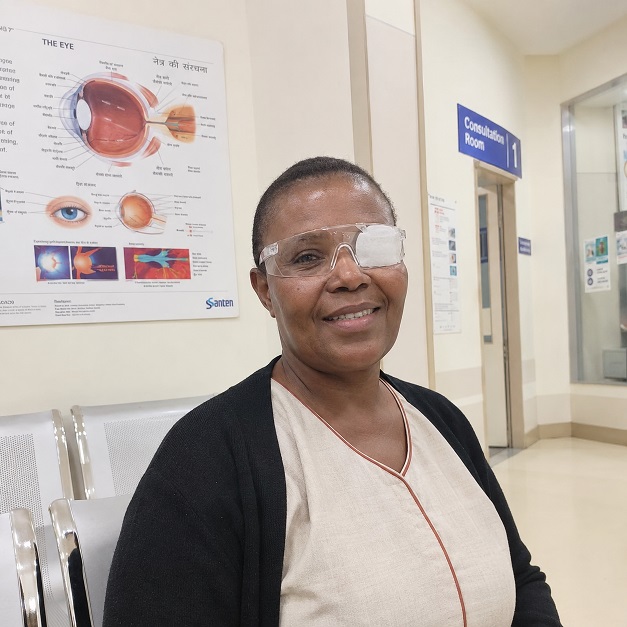
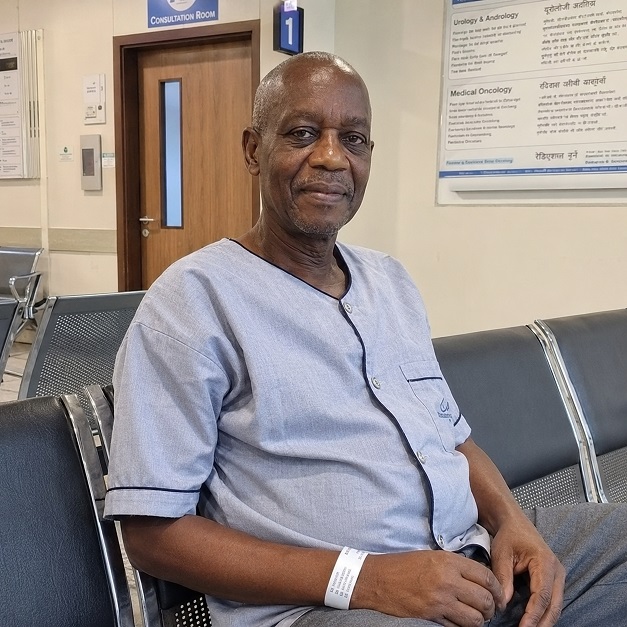
Patient Testimonials from Kenya
Ready to Take the First Step?
Share your Medical Reports with our Healthcare Managers Today and Get a FREE CONSULTATION, a Personalized Treatment Plan, and Complete Support from Arrival to Recovery.
Get Your Free ConsultationAreas We Serve
This resource has been thoughtfully prepared for patients from Kenya who are considering medical treatment in India. We also welcome patients from the wider region in the countries mentioned below-
We assist patients from:
- Ethiopia
- Somalia
- Tanzania
- Uganda
- Seychelles
- Guinea
- Guinea-Bissau
- Liberia
- Mali
- Mauritania
- Niger
- Nigeria
- Senegal
- Togo
- South Sudan
- Sierra Leone
Many of the insights, treatment pathways, hospital recommendations, travel guidance, and patient support services described here are equally relevant and may be used as a reference when planning treatment in India.
From Kenya to India: Your Complete Patient Support Guide
- Brain Tumour Surgery in India for Kenyan Patients
- Cancer Treatment and Surgery in India for Kenyan Patients
- Cardiac Treatment and Surgery in India for Kenyan Patients
- Heart Valve Replacement Surgery in India for Kenyan Patients
- Knee Replacement in India for Kenyan Patients
- Prostate Cancer Treatment and Surgery in India for Kenyan Patients
- Spine Treatment and Surgery in India for Kenyan Patients
- Selecting the Best Bariatric Surgeons and Hospitals in India: What Kenyan Patients Should Actually Look For
- Selecting the Best Cancer Surgeons and Hospitals in India: What Kenyan Patients Should Actually Look For
- Selecting the Best Cardiac Surgeons and Hospitals in India: What Kenyan Patients Should Actually Look For
- Selecting the Best Dental Surgeons and Clinics in India: What Kenyan Patients Should Actually Look For
- Selecting the Best Hip Surgeons and Hospitals in India: What Kenyan Patients Should Actually Look For
- Selecting the Best Kidney Transplant Surgeons and Hospitals in India: What Kenyan Patients Should Actually Look For
- Selecting the Best Knee Surgeons and Hospitals in India: What Kenyan Patients Should Actually Look For
- Selecting the Best Liver Transplant Surgeons and Hospitals in India: What Kenyan Patients Should Actually Look For
- Selecting the Best Neurosurgeons and Hospitals in India: What Kenyan Patients Should Actually Look For
- Selecting the Best Prostate Cancer Surgeons and Hospitals in India: What Kenyan Patients Should Actually Look For
- Selecting the Best Spine Surgeons and Hospitals in India: What Kenyan Patients Should Actually Look For