

Selecting the Best Oral and Maxillofacial Surgeons in India: What Kenyan Patients Should Actually Look For
Ameloblastoma is rare across the world and common in Nairobi's jaw-tumour records — a jaw swelling here is a specialist problem from the first appointment.
Ameloblastoma is a tumour most dentists outside Africa will encounter rarely, if ever, in an entire career. It's a slow-growing but locally destructive tumour of the jaw, benign in the sense that it doesn't spread to distant organs, but capable of hollowing out and expanding the jawbone until it causes serious facial disfigurement if left untreated. Across 24 years of guiding international patients through Indian hospitals, this is a condition where Kenya's own research has quietly documented something the rest of the world's dental literature doesn't reflect: this tumour is dramatically more common here than almost anywhere else. This is the framework I use when a Kenyan patient is weighing oral and maxillofacial surgery in India, most often for jaw tumours like ameloblastoma. It follows the surgeon-then-hospital structure of this series, and opens with a statistic that reframes how this specific tumour should be understood in a Kenyan context.
Healing Journeys of Kenyan Patients

Key Takeaways
- The guide highlights ameloblastoma as an unusually important jaw tumour in Kenya. A 20-year retrospective study across two major Nairobi referral hospitals found 853 cases among 1,889 odontogenic cysts and tumours, with ameloblastoma accounting for 84.1% of odontogenic tumours. The cases were concentrated particularly among patients aged 21–30.
- Delayed diagnosis can allow ameloblastoma to become large and locally destructive, sometimes requiring removal of a significant segment of the jaw. The guide recommends that persistent, painless and slow-growing jaw swelling should receive appropriate imaging and, when indicated, biopsy rather than being dismissed.
- For straightforward or earlier cases, treatment by an experienced maxillofacial surgeon in Kenya can be a reasonable option. India becomes particularly relevant for large or complex tumours, extensive jaw reconstruction or cases where part of the jaw has already been lost, because specialised Indian centres may combine high-volume tumour resection with microvascular and staged reconstruction techniques.
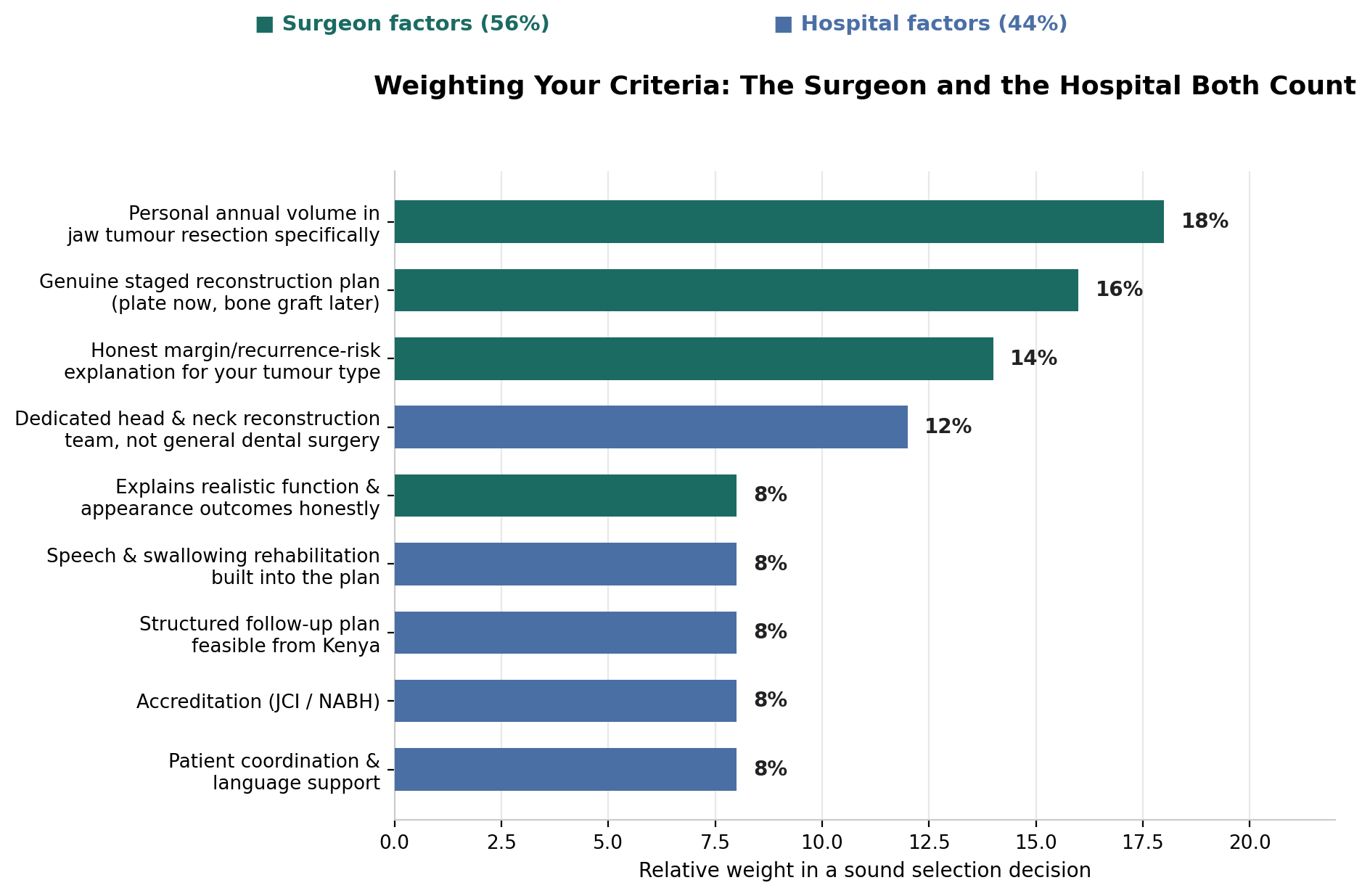
- Surgeon selection is given greater weight than hospital selection. The page 3 chart assigns 56% to surgeon factors and 44% to hospital factors, with personal annual volume in jaw tumour resection receiving the highest individual weighting at 18%. The guide also stresses a genuine staged reconstruction plan and a tumour-specific explanation of surgical margins and recurrence risk.
- Hospital selection should include a dedicated head and neck reconstruction team, speech and swallowing rehabilitation, and a structured follow-up plan that can work between India and Kenya. JCI/NABH accreditation is useful as a safety and infection-control filter, but the guide cautions that accreditation alone does not establish specialist expertise in complex jaw reconstruction.
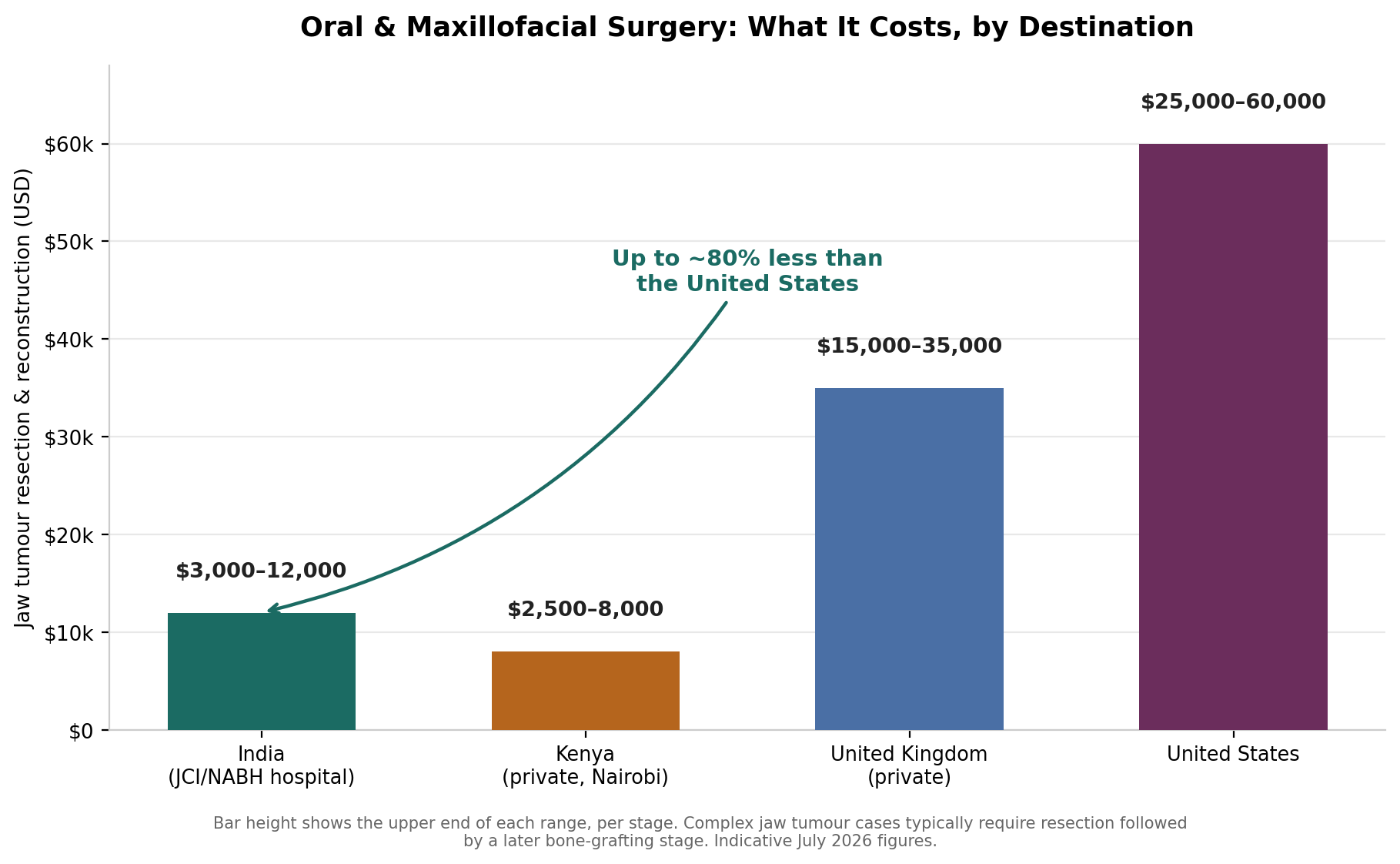
- The page 4 cost chart gives an indicative range of US$3,000–12,000 per stage in India, compared with US$2,500–8,000 per stage in Kenya, US$15,000–35,000 in the UK and US$25,000–60,000 in the US. Patients should confirm whether the reconstruction plate and later bone-grafting stage are included or priced as separate procedures.
Quick Facts
- Author
- Dr. Dheeraj Bojwani
- Experience
- 24+ Years of Experience
- Treatment
- Oral & Maxillofacial Surgery
- Patients
- Kenyan Jaw Tumour Patients
- Key Specialist
- Oral & Maxillofacial / Head & Neck Reconstruction Surgeon
- Main Assessment
- Tumour type, size, location and extent of jaw involvement
- Key Priority
- Complete tumour removal with appropriate reconstruction
- Important Tumour
- Ameloblastoma
- Kenya Statistic
- 84.1% of odontogenic tumours in the cited Nairobi study were ameloblastoma
- Surgical Approach
- Resection with immediate or staged reconstruction
- Key Selection Factor
- Personal annual volume in jaw tumour resection
- Reconstruction
- Temporary plate and later bone grafting where appropriate
- Hospital Requirement
- Dedicated head and neck reconstruction team
- Rehabilitation
- Speech and swallowing support
- India Cost
- Approximately US$3,000–12,000 per stage
- Kenya Cost
- Approximately US$2,500–8,000 per stage
- UK Cost
- Approximately US$15,000–35,000
- US Cost
- Approximately US$25,000–60,000
- Quality Check
- JCI/NABH accreditation
- Pre-Travel Records
- Full imaging and biopsy pathology
- Follow-Up
- Written staged plan with Kenyan doctor
- Key Warning Signs
- No clear reconstruction plan or tumour-specific recurrence discussion
- Decision Principle
- Choose tumour-specific expertise and a complete staged reconstruction plan
In Brief
For Kenyan patients with ameloblastoma or another complex jaw tumour, the guide recommends choosing a surgeon based on specific jaw tumour resection experience and a clear reconstruction plan, rather than general dental surgery experience. Large tumours may require staged treatment involving resection, temporary reconstruction and later bone grafting, with speech and swallowing rehabilitation built into recovery. The guide gives an indicative cost of US$3,000–12,000 per stage in India.
Before the surgeon: a tumour far more common here than the global data suggests
Globally, ameloblastoma has an estimated incidence of under one case per million people per year, genuinely rare by any standard. But a 20-year retrospective study spanning two major referral hospitals in Nairobi, examining 1,889 cases of odontogenic cysts and tumours between 2001 and 2020, found ameloblastoma accounted for 84.1% of all odontogenic tumours treated, 853 cases over the study period, making it by far the most prevalent jaw tumour in Kenya. The tumours were concentrated in patients aged 21 to 30, a notably young population for a tumour type.
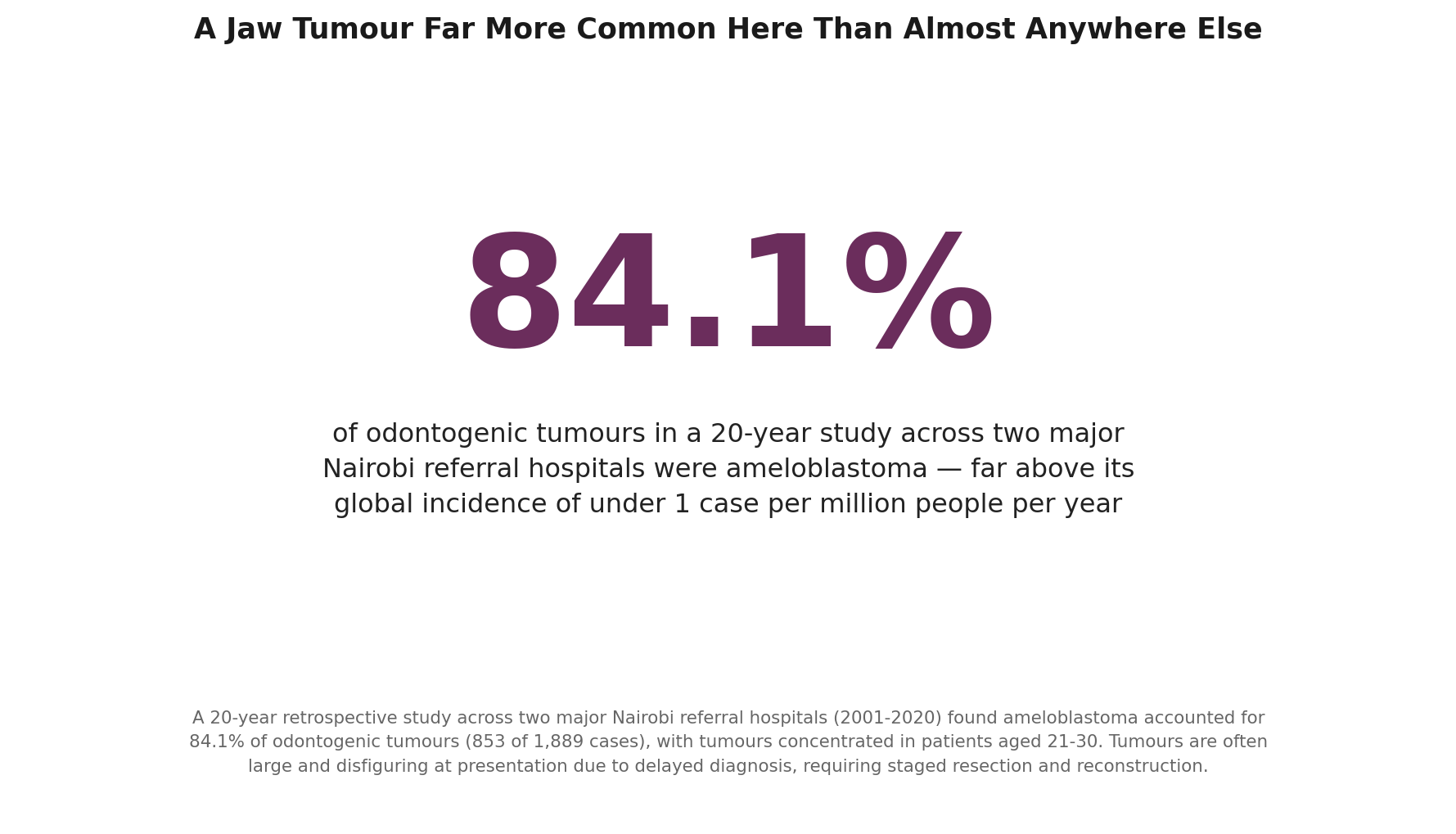
This matters practically because of how ameloblastoma tends to present in Kenya specifically. Limited awareness and delayed diagnosis mean many patients arrive with tumours that have already grown large, sometimes visibly expanding the jaw or face, by the time they're properly diagnosed. A tumour caught early might be treatable with a more conservative resection; a large, long-standing tumour often requires removing a significant segment of the jawbone, followed by reconstruction to restore both function and appearance.
The practical takeaway is twofold. First, any persistent jaw swelling, especially one that's painless and slow- growing, deserves imaging and biopsy promptly rather than being dismissed, given how common this specific tumour is here. Second, if ameloblastoma is diagnosed, understand from the outset that treatment is very often a staged process: resection first, sometimes with a temporary reconstruction plate, followed by a delayed bone- grafting procedure once healing is complete.
Should you travel at all?
Kenya's dental and maxillofacial teaching hospitals, including those affiliated with the University of Nairobi, have genuine, well-documented experience specifically with ameloblastoma, reflected in the very research that reveals how common this tumour is here. For straightforward cases caught reasonably early, treatment in Kenya with an experienced maxillofacial surgeon is a reasonable starting point.
For large or complex tumours, cases requiring extensive jaw reconstruction, or situations where a segment of the jaw has already been lost to tumour growth, India is where I steer patients, confidently. India's leading head and neck reconstruction centres combine high-volume tumour resection experience with the microvascular and staged bone-grafting techniques that complex jaw reconstruction genuinely requires, at a fraction of UK or US cost.
Part one: judging the surgeon
1. Personal annual volume in jaw tumour resection specifically
I weight this above every other factor, and the chart below reflects that. Ask how many jaw tumour resections matching your tumour's size and location the surgeon personally performs each year.
2. A genuine staged reconstruction plan
Ask for the complete plan upfront: whether reconstruction happens immediately or is staged with a temporary plate followed by bone grafting later, and why that specific approach fits your case.
3. An honest margin and recurrence-risk explanation for your tumour type
Ask what the recurrence risk is for your specific tumour type and size, and how the surgical margins planned address that risk, since ameloblastoma's local recurrence risk depends heavily on how completely it's removed.
4. Explains realistic function and appearance outcomes honestly
Ask what realistic chewing function, speech, and appearance you can expect after the complete staged plan, not just after the first surgery.
Part two: judging the hospital
For jaw tumour surgery, dedicated head and neck reconstruction capability carries real weight alongside the surgeon, reflected in the balance above, because complex jaw reconstruction requires a coordinated team, not one surgeon working alone.
5. A dedicated head and neck reconstruction team
Ask whether the hospital has a specific head and neck reconstruction team, rather than jaw tumour surgery being handled by general dental surgery without dedicated reconstructive support.
6. Speech and swallowing rehabilitation built into the plan
Ask what rehabilitation support looks like after surgery, since jaw reconstruction can affect speech and swallowing, and structured therapy meaningfully improves recovery.
7. A structured follow-up plan feasible from Kenya
Ask how follow-up between the resection and later bone-grafting stage will work, and what monitoring for recurrence looks like once you're home.
8. Accreditation, read properly
JCI and NABH accreditation are meaningful filters on safety and infection control, but say nothing about head and neck reconstruction sub-specialisation specifically. Use accreditation to exclude weak candidates, not to choose
between the strong ones.
9. The cost you will actually pay
Let me be emphatic about this, because 24 years of handling these cases has taught me nothing more consistently: disputes almost never concern the quoted price. They concern what the quote silently omitted. For jaw tumour surgery specifically, insist the estimate states whether the reconstruction plate and any later bone-grafting stage are included, or priced separately as a second procedure.
Budget beyond the surgery. Direct Nairobi–Delhi and Nairobi–Mumbai flights run roughly 550 to 850 dollars return, and staged reconstruction plans typically require two separate trips months apart, so plan accordingly.
Four signals that should make you pause
Certain patterns reliably precede a difficult outcome. A surgeon who cannot state personal volume in jaw tumour resection specifically. No clear staged reconstruction plan explained upfront. No discussion of recurrence risk specific to your tumour. And a hospital unable to describe speech and swallowing rehabilitation support.
None alone proves a bad hospital. Together they warrant a second opinion before you commit to surgery.
The Kenya-specific practicalities
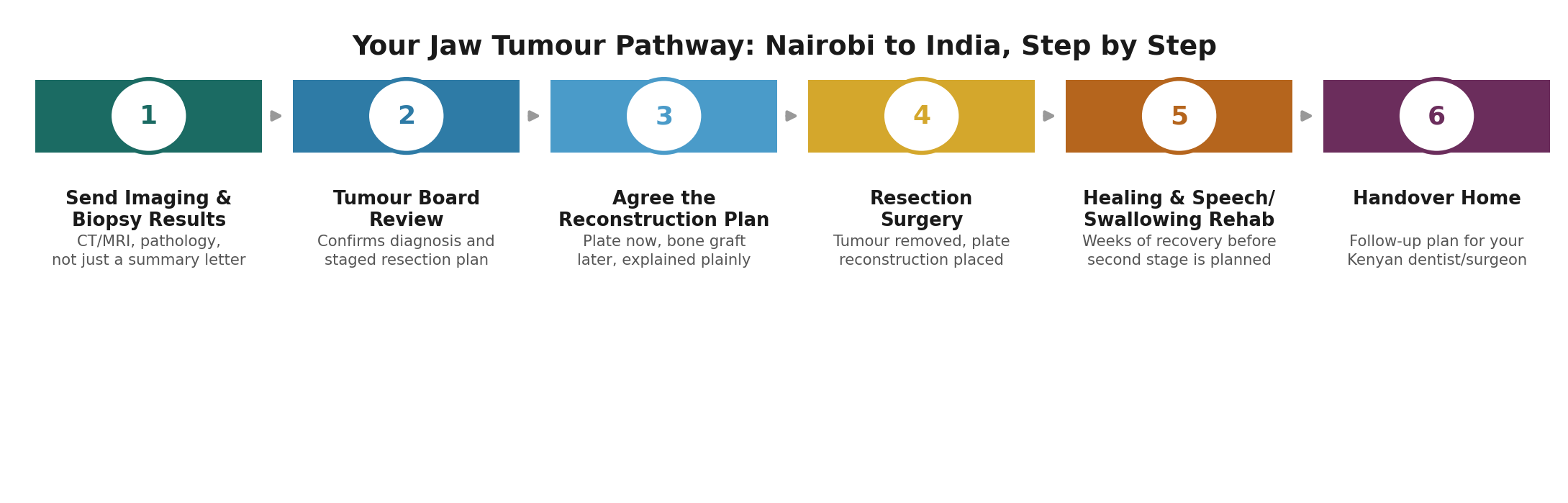
Send the full imaging and biopsy pathology, not just a summary letter, so the surgical team can properly assess
tumour extent and plan your case before you arrive.
Direct Nairobi–Delhi and Nairobi–Mumbai flights make this roughly a six-hour journey. The Indian medical e-visa is issued within three to five working days against a hospital letter, and an attendant can travel with you.
Agree in advance on a written staged plan and follow-up schedule, and identify a doctor in Kenya who can monitor healing and recurrence between your trips if a second stage is needed.
The questions I would ask before paying a deposit
Of the surgeon:
- How many jaw tumour resections matching my case do you personally perform each year?
- What is the complete staged reconstruction plan, and why does it fit my case?
- What is my recurrence risk, and how do the planned surgical margins address it?
- What realistic function and appearance can I expect after the full plan?
Of the hospital:
- Do you have a dedicated head and neck reconstruction team?
- What does speech and swallowing rehabilitation involve?
- How would follow-up work between stages, from Kenya?
- What is the total likely cost across all stages?
- May I speak to a previous East African patient treated for a similar tumour?
A team that answers all nine without irritation is very likely the right team. One that turns vague at the first or second has told you what you needed to know at no cost at all.
Straight Answers for Kenyan Patients about Oral and Maxillofacial Surgeons in India
Why is ameloblastoma such a significant issue in Kenya specifically?
A 20-year study across two major Nairobi referral hospitals found ameloblastoma accounted for 84.1% of odontogenic tumours treated, 853 of 1,889 cases, far above its global incidence of under one case per million people per year, with tumours concentrated in patients aged 21 to 30.
How much does jaw tumour surgery cost in India for a Kenyan patient?
Typically 3,000 to 12,000 US dollars per stage, depending on complexity. The same care runs roughly 2,500 to 8,000 dollars per stage in Kenya, 15,000 to 35,000 in the UK, and 25,000 to 60,000 in the US.
Is ameloblastoma cancerous?
It's classified as a benign tumour, meaning it doesn't spread to distant organs, but it is locally aggressive and can significantly damage and expand the jawbone if left untreated, which is why timely diagnosis and complete surgical removal matter.
Why does jaw tumour surgery often require two separate procedures?
Large tumours often require removing a segment of jawbone, and immediate permanent reconstruction isn't always advisable while healing and margin status are still being confirmed. A temporary plate stabilises the jaw first, with definitive bone grafting following once healing is complete.
What symptoms suggest I should get a jaw swelling checked?
Any persistent jaw swelling, particularly one that's painless and slow-growing, should be evaluated with imaging and, if needed, biopsy promptly, especially given how common ameloblastoma is documented to be in Kenya specifically.
Will I lose function or have visible changes after jaw tumour surgery?
It depends on tumour size and location, but modern staged reconstruction aims to restore both chewing function and facial appearance as closely as possible. Ask your surgeon for a realistic, case-specific explanation of what to expect after the complete treatment plan, not just the first surgery.
A closing word
For a Kenyan patient facing ameloblastoma or another jaw tumour, a condition that is genuinely far more common here than global data would suggest, India offers the staged resection and reconstruction expertise that complex cases require, at a fraction of UK or US cost. The best surgeon is the one whose tumour-specific volume and honest recurrence-risk explanation show he treats your exact tumour as its own subspecialty. The best hospital pairs him with a genuine head and neck reconstruction team and real rehabilitation support. If you would like me to look at your imaging and pathology and talk through honestly what your treatment plan should look like, send them across.
Sources
- 🌐 Changing Trends of Odontogenic Cysts and Tumors in Kenya: A 20-Year Retrospective Analysis. Cureus, 2024. cureus.com/ articles/291413
- 🌐 Odontogenic tumours in Nigeria: A multicentre study of 582 cases and review of the literature (regional African prevalence comparison). PMC
- 🌐 National Medical Commission of India — surgeon and specialist registration verification
- 🌐 National Accreditation Board for Hospitals & Healthcare Providers (NABH) — accredited hospital directory
Frequently Asked Questions by Kenyans about Oral and Maxillofacial Surgeons in India
Why is ameloblastoma particularly important for Kenyan patients?
The guide cites a 20-year study from two major Nairobi referral hospitals in which ameloblastoma represented 84.1% of odontogenic tumours, making it an especially important jaw tumour in the Kenyan context.
Is ameloblastoma cancerous?
Ameloblastoma is classified as a benign tumour, meaning it does not usually spread to distant organs, but it can be locally aggressive and cause substantial destruction and expansion of the jawbone if untreated.
When should persistent jaw swelling be investigated?
The guide recommends prompt evaluation of any persistent jaw swelling, particularly when it is painless and slow-growing, with imaging and biopsy when clinically indicated.
Should Kenyan patients always travel to India for jaw tumour surgery?
No. Straightforward, earlier cases can reasonably be treated in Kenya by an experienced maxillofacial surgeon. India may be more relevant for large, complex tumours requiring extensive reconstruction.
How should I choose an oral and maxillofacial surgeon in India?
Ask how many jaw tumour resections matching your tumour's size and location the surgeon personally performs each year.
Why can treatment require two separate procedures?
Large jaw tumours may require removal of a jaw segment first. A temporary reconstruction plate can stabilise the area while healing and tumour margins are assessed, followed later by definitive bone grafting.
How should reconstruction be planned?
The surgeon should explain whether reconstruction will be immediate or staged, why that approach is appropriate and what chewing, speech and facial appearance can realistically be expected after the complete treatment plan.
How much does jaw tumour surgery cost in India?
The guide gives an indicative cost of US$3,000–12,000 per stage in India. Patients should clarify whether later reconstruction and bone grafting are included separately.
What should Kenyan patients send before travelling?
Send the complete imaging and biopsy pathology, rather than only a summary letter, so the Indian team can assess the tumour extent and develop the reconstruction plan before arrival.
How should follow-up work if reconstruction requires a second trip?
Patients should agree on a written staged treatment and follow-up schedule before leaving India and identify a Kenyan doctor who can monitor healing and recurrence between procedures.
Page Summary
This seven-page Kenya patient guide explains how patients can evaluate oral and maxillofacial surgeons and hospitals in India, particularly for ameloblastoma and complex jaw tumours. It highlights the unusually high proportion of ameloblastoma reported in the cited Nairobi study, compares surgeon and hospital selection factors, and stresses tumour-specific surgical volume, staged reconstruction, recurrence-risk assessment, head and neck reconstruction, rehabilitation and long-term follow-up. The page 4 cost chart compares treatment costs across India, Kenya, the UK and US, while the page 5 pathway shows imaging and biopsy review → tumour-board assessment → reconstruction planning → resection → healing and rehabilitation → handover to a Kenyan doctor.
Citation Block
| Topic | Information |
|---|---|
| Topic | Oral & Maxillofacial Surgery in India for Kenyan Patients |
| Treatment | Jaw Tumour Resection & Reconstruction |
| Patients | Kenyan Jaw Tumour Patients |
| Specialist | Oral & Maxillofacial / Head & Neck Reconstruction Surgeon |
| Main Assessment | Tumour type, size, location and jaw involvement |
| Key Tumour | Ameloblastoma |
| Kenya Statistic | 84.1% of odontogenic tumours in the cited Nairobi study |
| Key Priority | Complete tumour removal with appropriate reconstruction |
| Surgeon Check | Annual volume in jaw tumour resection |
| Reconstruction | Immediate or staged reconstruction |
| Recurrence Check | Tumour-specific margins and recurrence-risk explanation |
| Hospital Check | Dedicated head and neck reconstruction team |
| Rehabilitation | Speech and swallowing support |
| India Cost | Approximately US$3,000–12,000 per stage |
| Kenya Cost | Approximately US$2,500–8,000 per stage |
| UK Cost | Approximately US$15,000–35,000 |
| US Cost | Approximately US$25,000–60,000 |
| Quote Check | Reconstruction plate and later bone-grafting costs |
| Pre-Travel Records | Full imaging and biopsy pathology |
| Follow-Up | Written staged plan with Kenyan doctor |
| Quality Check | JCI/NABH accreditation |
| Warning Signs | No staged reconstruction plan or tumour-specific recurrence discussion |
| Selection Weighting | 56% surgeon factors and 44% hospital factors |
| Top Criterion | Personal jaw tumour resection volume – 18% |
| Patient Pathway | Imaging/biopsy → tumour board → reconstruction plan → resection → healing/rehabilitation → Kenya follow-up |
| Decision Principle | Match tumour-specific expertise with a complete reconstruction and follow-up plan |

Our Mission Statement
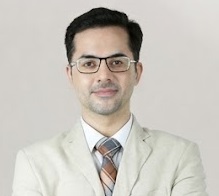
Our mission is to place patients at the centre of every healthcare decision by providing trustworthy, evidence-based, and unbiased medical information. We believe that informed patients make better decisions. Backed by personalised guidance from our experienced advisory team, we help patients understand their treatment options, compare them objectively, and confidently choose the path that best suits their medical needs and personal circumstances.
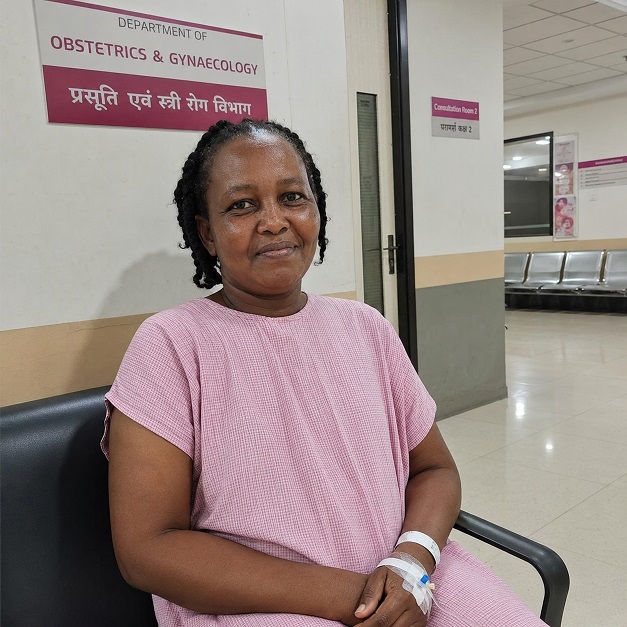
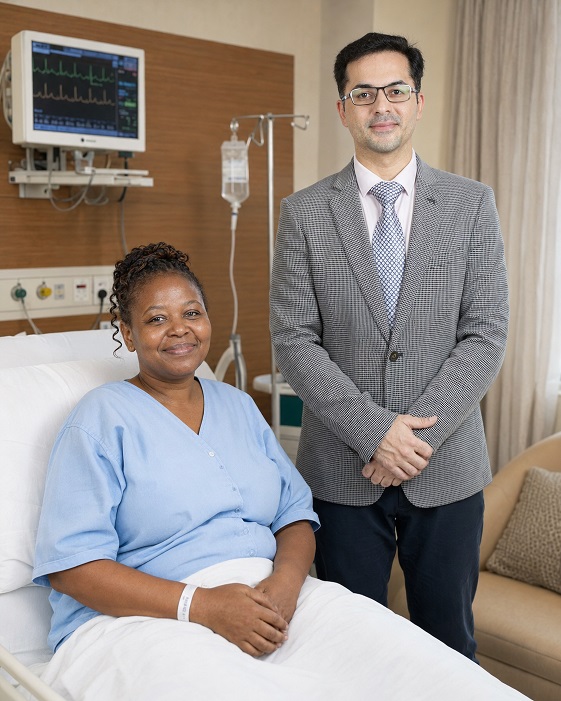
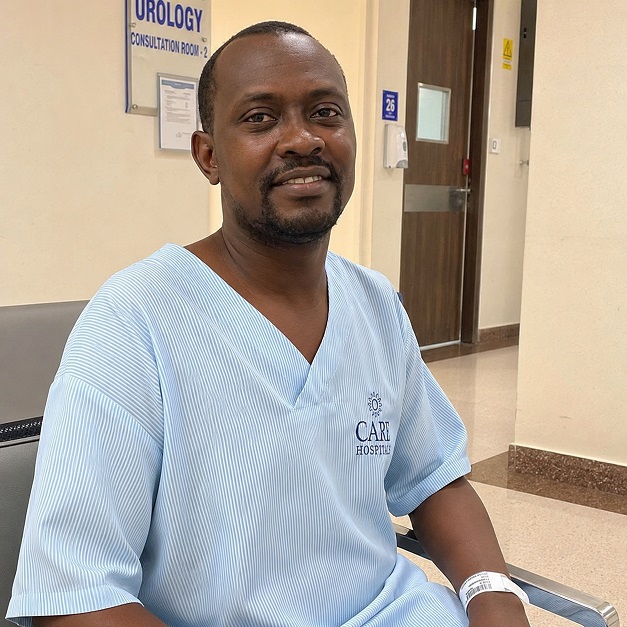
Patient Testimonials from Kenya
Ready to Take the First Step?
Share your Medical Reports with our Healthcare Managers Today and Get a FREE CONSULTATION, a Personalized Treatment Plan, and Complete Support from Arrival to Recovery.
Get Your Free ConsultationAreas We Serve
This resource has been thoughtfully prepared for patients from Kenya who are considering medical treatment in India. We also welcome patients from the wider region in the countries mentioned below-
We assist patients from:
- Ethiopia
- Somalia
- Tanzania
- Uganda
- Seychelles
- Guinea
- Guinea-Bissau
- Liberia
- Mali
- Mauritania
- Niger
- Nigeria
- Senegal
- Togo
- South Sudan
- Sierra Leone
Many of the insights, treatment pathways, hospital recommendations, travel guidance, and patient support services described here are equally relevant and may be used as a reference when planning treatment in India.
From Kenya to India: Your Complete Patient Support Guide
- Brain Tumour Surgery in India for Kenyan Patients
- Cancer Treatment and Surgery in India for Kenyan Patients
- Cardiac Treatment and Surgery in India for Kenyan Patients
- Heart Valve Replacement Surgery in India for Kenyan Patients
- Knee Replacement in India for Kenyan Patients
- Prostate Cancer Treatment and Surgery in India for Kenyan Patients
- Spine Treatment and Surgery in India for Kenyan Patients
- Selecting the Best Bariatric Surgeons and Hospitals in India: What Kenyan Patients Should Actually Look For
- Selecting the Best Cancer Surgeons and Hospitals in India: What Kenyan Patients Should Actually Look For
- Selecting the Best Cardiac Surgeons and Hospitals in India: What Kenyan Patients Should Actually Look For
- Selecting the Best Dental Surgeons and Clinics in India: What Kenyan Patients Should Actually Look For
- Selecting the Best Hip Surgeons and Hospitals in India: What Kenyan Patients Should Actually Look For
- Selecting the Best Kidney Transplant Surgeons and Hospitals in India: What Kenyan Patients Should Actually Look For
- Selecting the Best Knee Surgeons and Hospitals in India: What Kenyan Patients Should Actually Look For
- Selecting the Best Liver Transplant Surgeons and Hospitals in India: What Kenyan Patients Should Actually Look For
- Selecting the Best Neurosurgeons and Hospitals in India: What Kenyan Patients Should Actually Look For
- Selecting the Best Prostate Cancer Surgeons and Hospitals in India: What Kenyan Patients Should Actually Look For
- Selecting the Best Spine Surgeons and Hospitals in India: What Kenyan Patients Should Actually Look For