

Selecting the Best Neuronavigation Brain Surgery Centres in India: What Kenyan Patients Should Actually Look For
How much of a brain tumour comes out decides how long you live — and “inoperable” often describes the equipment in the room rather than the tumour.
Brain tumour surgery has a single, well-established rule that governs survival more than almost anything else the surgeon does: the more of the tumour that's safely removed, the better the outcome, especially for gliomas. That word "safely" carries enormous weight, because a surgeon operating near speech, movement, or memory centres of the brain has very little room for error. Neuronavigation, a system that fuses pre-operative imaging with real-time tracking of surgical instruments, exists specifically to give surgeons that room, letting them push resection to its safe limit with a precision the naked eye and surgical experience alone cannot match. Across 24 years of guiding international patients through Indian hospitals, this is a technology gap I've watched shape outcomes more directly than almost any other in this series. This is the framework I use when a Kenyan patient with a brain tumour is weighing surgery in India. It follows the surgeon-then-hospital structure of this series, and opens with a technology gap that research across the region has documented plainly.
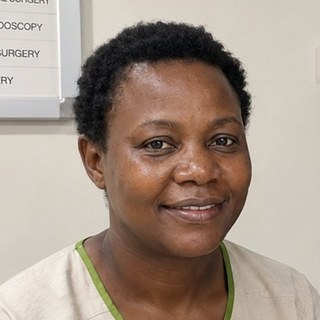
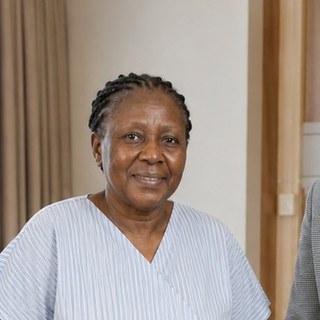
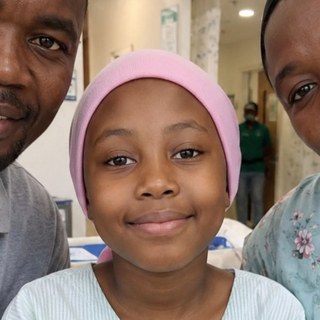
Healing Journeys of Kenyan Patients


Key Takeaways
- The guide explains that maximal safe tumour removal is particularly important in brain tumour surgery, especially for gliomas, but safety is critical when tumours lie near speech, movement or memory areas. Neuronavigation combines pre-operative imaging with real-time instrument tracking to help surgeons plan and perform more precise tumour resection.
- Neuronavigation availability remains limited across Sub-Saharan Africa, according to the sources cited in the guide. A Malawi case series from 2022–2025 demonstrated that the technology can be introduced successfully in a resource-constrained setting, while also illustrating how uncommon image-guided neurosurgical technology remains in the region.
- For Kenyan patients, the guide recommends considering a second opinion when a tumour has been labelled “inoperable” or only partially resectable, particularly if the assessment did not consider neuronavigation-guided planning. Tumours near eloquent brain areas may require additional techniques such as awake craniotomy, where speech or motor function can be monitored during surgery.
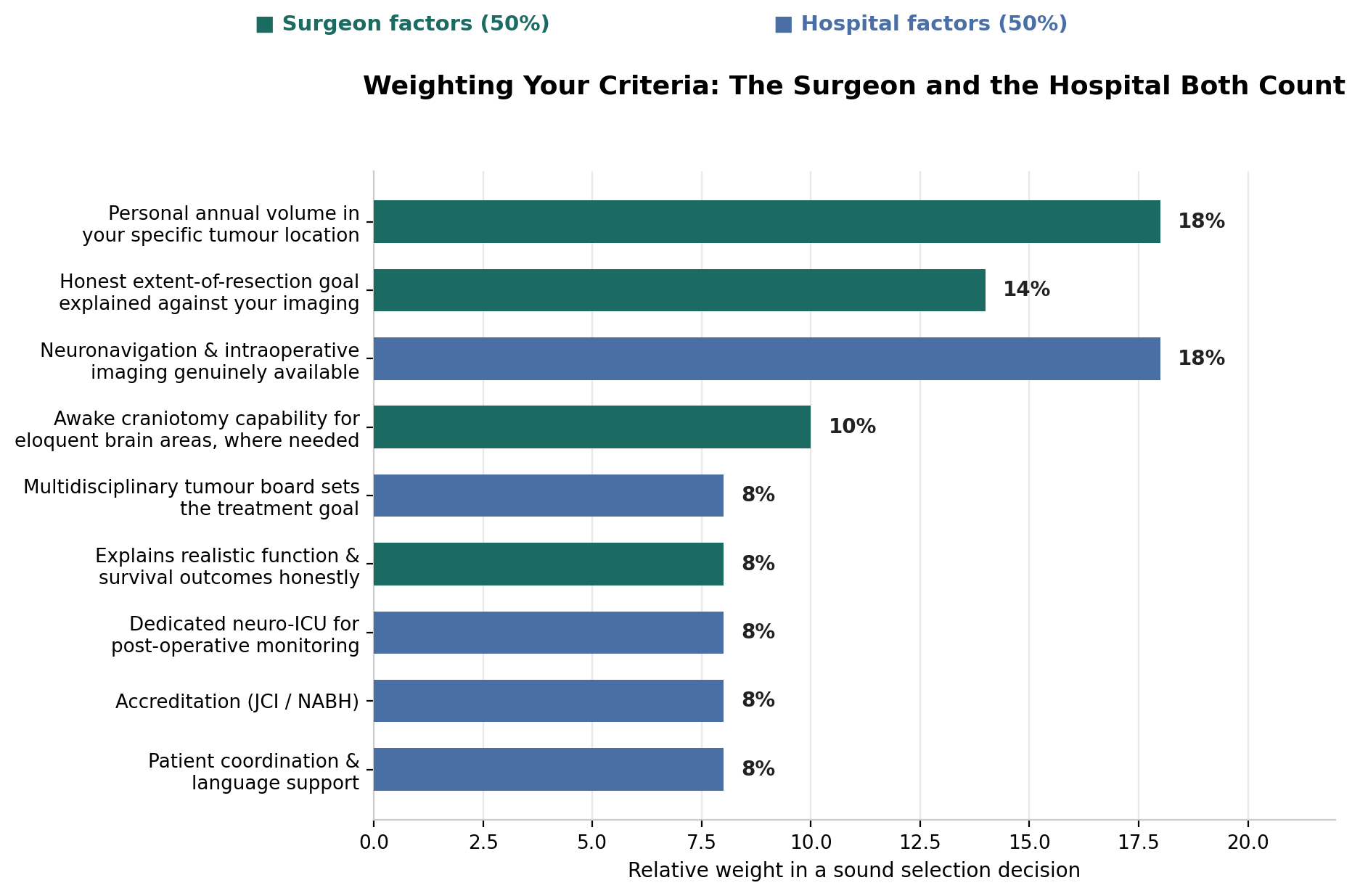
- Surgeon selection focuses primarily on personal experience with the patient's specific tumour location and type. The page 3 weighting chart gives 50% to surgeon factors and 50% to hospital factors, with tumour-specific annual surgical volume and genuine neuronavigation/intraoperative imaging each receiving the highest individual weighting of 18%.
- Hospital selection should include confirmed use of neuronavigation for the actual surgery, intraoperative imaging, multidisciplinary tumour-board review and a dedicated neuro-ICU capable of monitoring the patient during the first 24–48 hours after surgery. JCI/NABH accreditation is presented as a safety and infection-control filter rather than proof of neurosurgical subspecialisation.
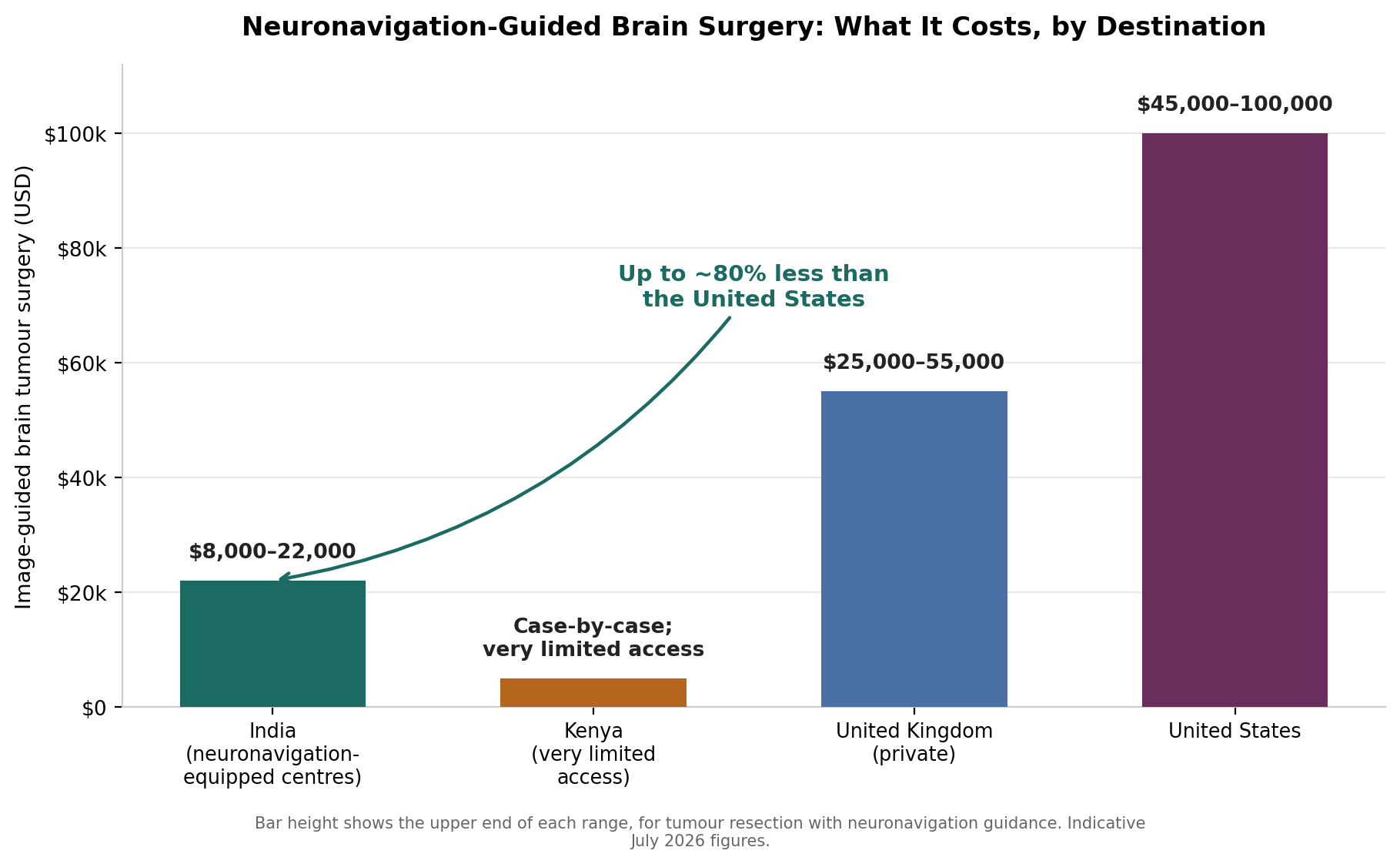
- The page 4 cost chart gives an indicative range of US$8,000–22,000 in India, compared with very limited, case-by-case access in Kenya, US$25,000–55,000 in the UK and US$45,000–100,000 in the US. Patients should confirm that neuronavigation is included in the quotation and clarify how many ICU days are covered.
Quick Facts
- Author
- Dr. Dheeraj Bojwani
- Experience
- 24+ Years of Experience
- Treatment
- Neuronavigation-Guided Brain Tumour Surgery
- Patients
- Kenyan Brain Tumour Patients
- Key Specialist
- Neurosurgeon / Neuro-Oncology Surgeon
- Main Assessment
- Tumour location, type and relationship to critical brain structures
- Key Priority
- Maximal safe tumour resection
- Technology
- Neuronavigation and intraoperative imaging
- Advanced Option
- Awake craniotomy for selected eloquent-area tumours
- Key Selection Factor
- Personal annual volume for the specific tumour location and type
- Hospital Requirement
- Dedicated neuro-ICU and image-guided surgery capability
- India Treatment Cost
- Approximately US$8,000–22,000
- UK Treatment Cost
- Approximately US$25,000–55,000
- US Treatment Cost
- Approximately US$45,000–100,000
- Quality Check
- JCI/NABH accreditation
- Pre-Travel Records
- Full MRI/CT imaging and symptom history
- Follow-Up
- Written imaging schedule for Kenyan neurologist
- Recovery
- Approximately 10–14 days in India before returning home, depending on recovery
- Key Warning Signs
- “Inoperable” diagnosis without technology-specific explanation or no confirmation that neuronavigation will actually be used
- Decision Principle
- Assess what can be safely achieved with appropriate image-guided technology before accepting a limited surgical plan
In Brief
For Kenyan patients considering brain tumour surgery in India, the guide recommends assessing whether neuronavigation can increase the extent of safe tumour removal, particularly when the tumour is near speech or motor areas. Patients should choose a surgeon with experience in their specific tumour location and a hospital that actually uses neuronavigation, provides multidisciplinary planning and has dedicated neuro-ICU monitoring. The guide gives an indicative Indian cost of US$8,000–22,000.
Before the surgeon: the technology gap behind many "inoperable" brain tumours
Extent of resection is one of the strongest predictors of survival in brain tumour surgery, particularly for gliomas, where maximal safe removal genuinely extends both progression-free and overall survival. Neuronavigation is the primary tool that makes maximal safe resection achievable, by letting a surgeon see, in real time, exactly where their instruments sit relative to the tumour and the critical brain structures around it.
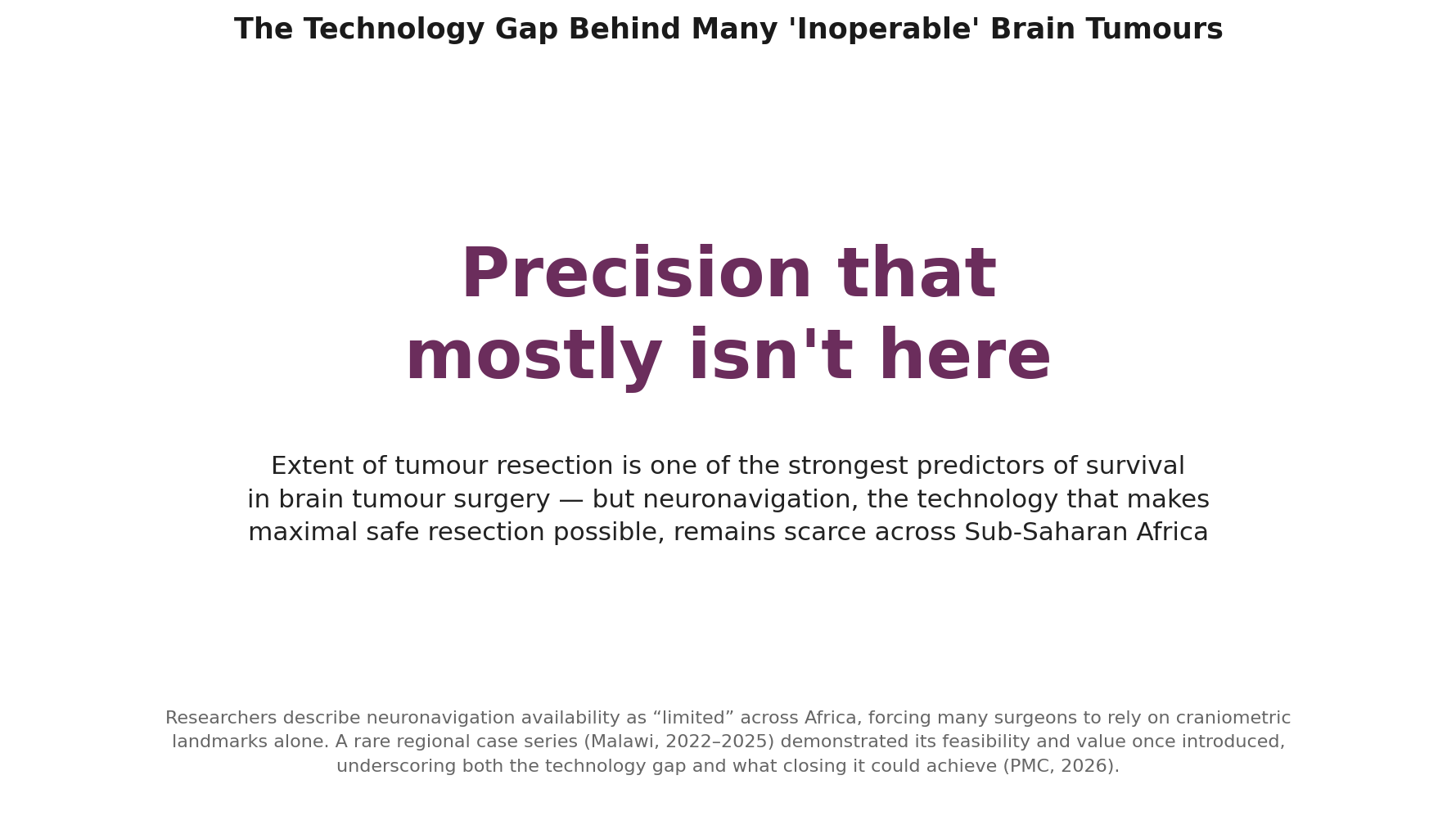
Researchers studying neurosurgical capacity across Sub-Saharan Africa describe neuronavigation availability as limited, forcing many surgeons to rely on anatomical landmarks and experience alone rather than image-guided precision. A rare case series from a hospital in Malawi that successfully introduced neuronavigation between 2022 and 2025 demonstrated both its feasibility in a resource-constrained setting and encouraging early outcomes, evidence of what closing this gap can achieve, and also evidence of just how uncommon the technology remains regionally.
This matters directly for how a tumour gets labelled. A tumour sitting near speech or motor areas of the brain might be called inoperable, or only partially resectable, specifically because the surgical team lacks the image guidance to safely push resection further, not because the tumour itself is untouchable with the right technology. The practical takeaway is to ask, specifically, whether neuronavigation was used, or would be used, in assessing and planning your surgery, since this single piece of technology can change what's actually possible.
Should you travel at all?
Kenya's neurosurgical centres manage a range of brain conditions competently, and for straightforward tumours in accessible locations, away from critical speech or motor areas, treatment in Kenya with an experienced neurosurgeon remains a reasonable option.
For tumours near eloquent brain areas, cases where maximal safe resection genuinely changes the prognosis, or any case where you've been told surgery isn't possible without a clear, imaging-based explanation why, India is where I steer patients, confidently. India's leading neurosurgical centres operate neuronavigation and intraoperative imaging as standard equipment, alongside awake craniotomy capability for tumours near speech and movement centres, giving surgeons the precision to achieve resection that wouldn't be attempted without this technology, at a fraction of UK or US cost.
Part one: judging the surgeon
1. Personal annual volume in your specific tumour location
I weight this above every other factor, and the chart below reflects that. Ask how many cases matching your tumour's specific location and type the surgeon personally treats each year.
2. An honest extent-of-resection goal explained against your imaging
Ask the surgeon to explain, specifically referencing your own imaging, what extent of resection is realistically achievable and safe, rather than a general statement about the surgery.
3. Awake craniotomy capability for eloquent brain areas, where needed
If your tumour is near speech or motor areas, ask whether awake craniotomy, where you remain conscious so surgeons can monitor function in real time during resection, is available and appropriate for your case.
Part two: judging the hospital
For brain tumour surgery, genuine neuronavigation and intraoperative imaging capability carries as much weight as the surgeon, reflected in the balance above, because the technology itself determines how much of the tumour can be safely removed.
4. Neuronavigation and intraoperative imaging genuinely available
Confirm, specifically, that neuronavigation will be used for your surgery, not simply that the hospital owns a system that may or may not be applied to your case.
5. A multidisciplinary tumour board sets the treatment goal
Ask whether your case is reviewed by a team including neurosurgery, neuro-oncology, and radiology, confirming the resection goal and overall treatment plan before surgery.
6. A dedicated neuro-ICU for post-operative monitoring
Ask about neuro-ICU capacity and monitoring protocols for the first 24 to 48 hours after surgery, when complications are most likely to develop and be caught early.
7. Accreditation, read properly
JCI and NABH accreditation are meaningful filters on safety and infection control, but say nothing about neurosurgical sub-specialisation or neuronavigation capability specifically. Use accreditation to exclude weak
candidates, not to choose between the strong ones.
8. The cost you will actually pay
Let me be emphatic about this, because 24 years of handling these cases has taught me nothing more consistently: disputes almost never concern the quoted price. They concern what the quote silently omitted. For brain tumour surgery specifically, insist the estimate confirms neuronavigation is included as standard, not an optional add-on, and states how many ICU days are covered.
Budget beyond the surgery. Direct Nairobi–Delhi and Nairobi–Mumbai flights run roughly 550 to 850 dollars return, and recovery typically requires ten to fourteen days in India before you're fit to travel home.
Four signals that should make you pause
Certain patterns reliably precede a difficult outcome. A tumour labelled inoperable without a clear, technology- specific explanation of why. No confirmation that neuronavigation will actually be used for your surgery. No discussion of awake craniotomy for tumours near eloquent brain areas. And a hospital unable to describe its neuro- ICU monitoring protocol.
None alone proves a bad hospital. Together they warrant a second opinion before you accept a limited surgical plan as final.
The Kenya-specific practicalities
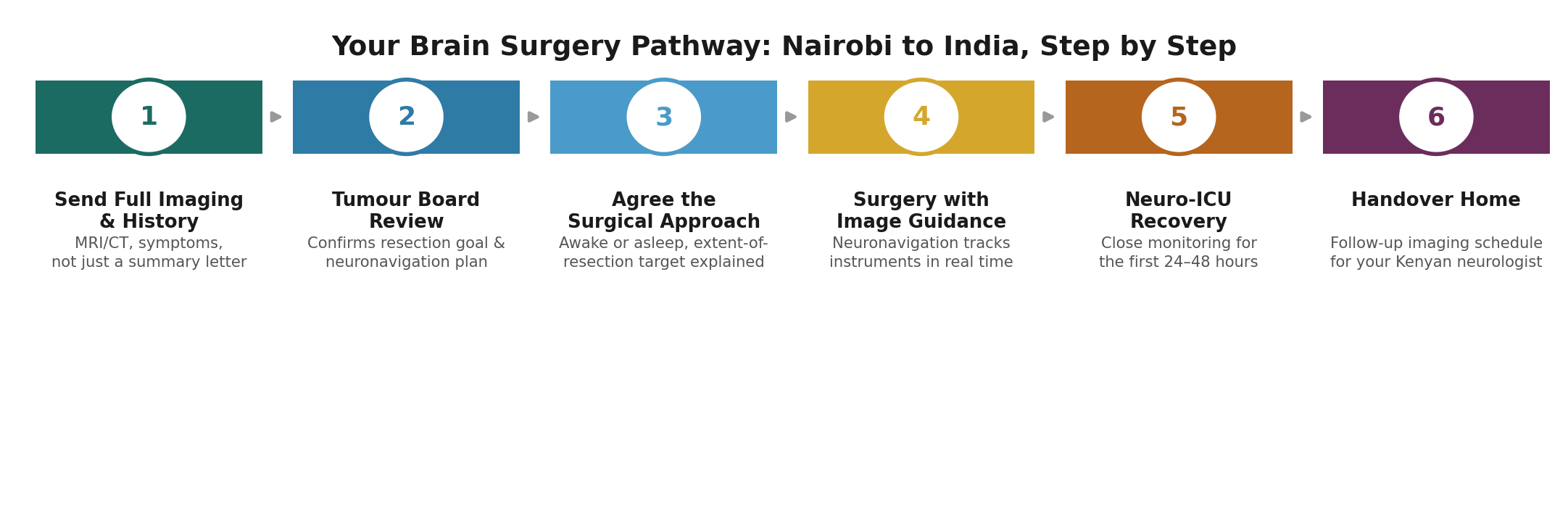
Send the full MRI or CT imaging and your symptom history, not just a summary letter, so the surgical team can properly assess resectability with image guidance in mind before you arrive.
Direct Nairobi–Delhi and Nairobi–Mumbai flights make this roughly a six-hour journey. The Indian medical e-visa is issued within three to five working days against a hospital letter, and an attendant can travel with you.
Agree in advance on a written follow-up imaging schedule your Kenyan neurologist can act on, since ongoing surveillance after brain tumour surgery continues for years.
The questions I would ask before committing
Of the surgeon:
- How many cases matching my tumour's location and type do you personally treat each year?
- What extent of resection is realistically achievable and safe for my specific tumour?
- Is awake craniotomy appropriate and available for my case?
Of the hospital:
- Will neuronavigation actually be used for my specific surgery?
- Is my case reviewed by a full multidisciplinary tumour board?
- What is your neuro-ICU monitoring protocol after surgery?
- What exactly is excluded from the quoted price?
- May I speak to a previous East African patient treated for a similar tumour?
A team that answers all eight without irritation is very likely the right team. One that turns vague at the first or second has told you what you needed to know at no cost at all.
Straight Answers for Kenyan Patients about Neuronavigation Brain Surgery Centres in India
What is neuronavigation, and why does it matter for brain surgery?
It's a technology that fuses pre-operative imaging with real-time tracking of surgical instruments, letting surgeons see exactly where they are relative to the tumour and critical brain structures. It's one of the main tools that makes maximal safe tumour resection, a key predictor of survival, achievable.
Is neuronavigation available in Kenya?
Access remains very limited across Sub-Saharan Africa, including Kenya, based on published research describing the technology as scarce regionally, which is part of why some tumours are labelled inoperable in settings without this equipment.
How much does neuronavigation-guided brain surgery cost in India for a Kenyan patient?
Typically 8,000 to 22,000 US dollars, depending on tumour complexity. The same surgery runs 25,000 to 55,000 dollars in the UK and 45,000 to 100,000 in the US, while domestic access in Kenya remains very limited and case- by-case.
I was told my brain tumour is inoperable. Should I get a second opinion?
Yes, particularly if the opinion wasn't based on neuronavigation-guided planning. Ask specifically whether the assessment considered what would be achievable with image-guided surgery, since this can change what's genuinely possible.
What is awake craniotomy, and when is it used?
It's brain surgery performed while the patient remains conscious, allowing surgeons to test speech and movement function in real time as they operate near critical brain areas. It's typically used for tumours close to regions controlling language or motor function.
How long is recovery after brain tumour surgery?
Hospital stays are typically seven to fourteen days, including dedicated neuro-ICU monitoring in the first 24 to 48 hours. Full recovery and rehabilitation, particularly if the tumour was near a functional brain area, can continue for weeks to months afterward.
A closing word
For a Kenyan patient facing a brain tumour, especially one near critical speech or movement centres, the gap between what gets called inoperable and what's genuinely achievable often comes down to whether the surgical team has neuronavigation, not the tumour itself. India offers that technology as standard practice, paired with surgeons experienced in pushing resection to its safe limit, at a fraction of UK or US cost. The best surgeon is the one whose tumour-specific volume and honest, imaging-based resection goal show he's assessing your actual case, not applying a general label. The best hospital pairs him with genuine image-guidance technology and a dedicated neuro-ICU. If you would like me to look at your imaging and talk through honestly what your options are, send them across.
Sources
- 🌐 Neuronavigation-guided brain surgery – A retrospective case series from Malawi (2022–2025). PMC, 2026. pmc.ncbi.nlm.ni
- 🌐 Situating Sub-Saharan Africa Within Intra-Operative Innovations in Neurooncology. PMC
- 🌐 A staged adoption pathway for intraoperative imaging in brain tumor surgery
- 🌐 National Medical Commission of India — surgeon and specialist registration verification
- 🌐 National Accreditation Board for Hospitals & Healthcare Providers (NABH) — accredited hospital directory
Frequently Asked Questions by Kenyans about Neuronavigation Brain Surgery Centres in India
What is neuronavigation in brain surgery?
Neuronavigation combines pre-operative imaging with real-time tracking of surgical instruments, helping the surgeon understand the position of the tumour and critical brain structures during surgery.
Why is neuronavigation important for brain tumour surgery?
It can help surgeons plan and perform maximal safe resection, particularly when a tumour is close to areas controlling speech, movement or other important functions.
Is neuronavigation widely available in Kenya?
The guide states that access remains very limited across Sub-Saharan Africa, including Kenya, based on published research cited in the document.
Should I seek a second opinion if my tumour was called inoperable?
The guide recommends considering a second opinion, particularly when the original assessment did not consider what might be achievable using neuronavigation-guided planning.
How should I choose a neurosurgeon in India?
Ask how many cases involving your specific tumour type and location the surgeon personally treats each year and what extent of safe resection they realistically expect.
When is awake craniotomy considered?
Awake craniotomy may be considered when a tumour lies close to areas controlling speech or movement, allowing surgeons to monitor function during resection.
What should a suitable hospital provide?
The guide recommends confirmed neuronavigation and intraoperative imaging, multidisciplinary tumour-board review and a dedicated neuro-ICU for post-operative monitoring.
How much does neuronavigation-guided brain surgery cost in India?
The guide gives an indicative range of US$8,000–22,000, depending on tumour complexity and treatment requirements.
What should Kenyan patients send before travelling?
Send the complete MRI or CT imaging and symptom history, rather than only a written summary, so the surgical team can assess resectability before arrival.
How long is recovery after brain tumour surgery?
The guide states that hospital recovery typically involves 7–14 days, with neuro-ICU monitoring during the first 24–48 hours. Further rehabilitation may continue for weeks or months depending on the tumour location and surgery.
Page Summary
This seven-page Kenya patient guide explains how patients can evaluate neuronavigation-guided brain surgery centres and neurosurgeons in India, focusing on tumour-specific surgical experience, maximal safe resection, neuronavigation, intraoperative imaging, awake craniotomy, multidisciplinary planning and neuro-ICU care. The page 3 chart assigns 50% to surgeon factors and 50% to hospital factors, while the page 4 cost chart compares indicative treatment costs across India, Kenya, the UK and US. The page 5 pathway shows the journey from sending full imaging and history through tumour-board review, surgical planning, image-guided surgery, neuro-ICU recovery and long-term follow-up in Kenya.
Citation Block
| Topic | Information |
|---|---|
| Topic | Neuronavigation Brain Surgery in India for Kenyan Patients |
| Treatment | Image-Guided Brain Tumour Surgery |
| Patients | Kenyan Brain Tumour Patients |
| Specialist | Neurosurgeon / Neuro-Oncology Surgeon |
| Main Assessment | Tumour location, type and critical brain structures |
| Key Priority | Maximal safe tumour resection |
| Technology | Neuronavigation and intraoperative imaging |
| Advanced Option | Awake craniotomy for selected eloquent-area tumours |
| Surgeon Check | Annual volume for specific tumour location and type |
| Hospital Check | Confirm neuronavigation will actually be used |
| Tumour Board | Neurosurgery, neuro-oncology and radiology review |
| Neuro-ICU | Dedicated monitoring for first 24–48 hours |
| India Cost | Approximately US$8,000–22,000 |
| UK Cost | Approximately US$25,000–55,000 |
| US Cost | Approximately US$45,000–100,000 |
| Quote Check | Neuronavigation inclusion and ICU days |
| Pre-Travel Records | Full MRI/CT imaging and symptom history |
| Follow-Up | Written imaging schedule with Kenyan neurologist |
| Quality Check | JCI/NABH accreditation |
| Warning Signs | Inoperable label without technology-specific explanation |
| Selection Weighting | 50% surgeon factors and 50% hospital factors |
| Key Criteria Weight | 18% tumour-specific volume and 18% neuronavigation availability |
| Patient Pathway | Imaging → tumour board → surgical approach → image-guided surgery → neuro-ICU → Kenya follow-up |
| Decision Principle | Assess safe resection potential with appropriate image guidance |


Our Mission Statement
Our mission is to place patients at the centre of every healthcare decision by providing trustworthy, evidence-based, and unbiased medical information. We believe that informed patients make better decisions. Backed by personalised guidance from our experienced advisory team, we help patients understand their treatment options, compare them objectively, and confidently choose the path that best suits their medical needs and personal circumstances.
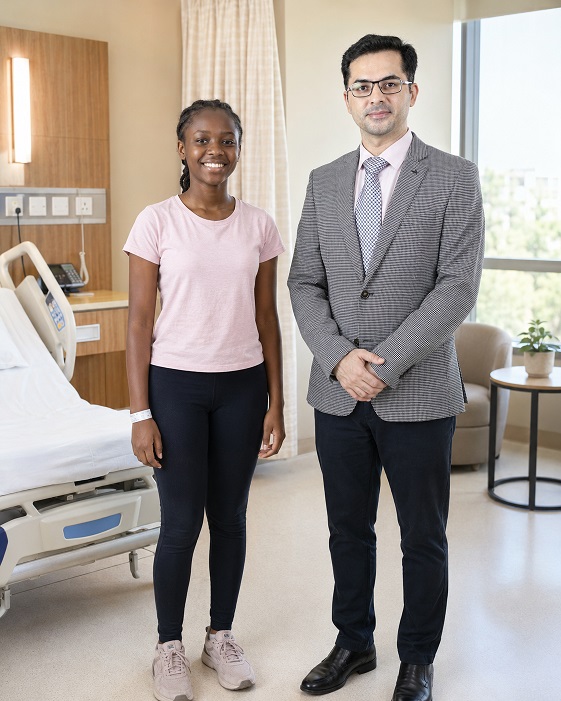
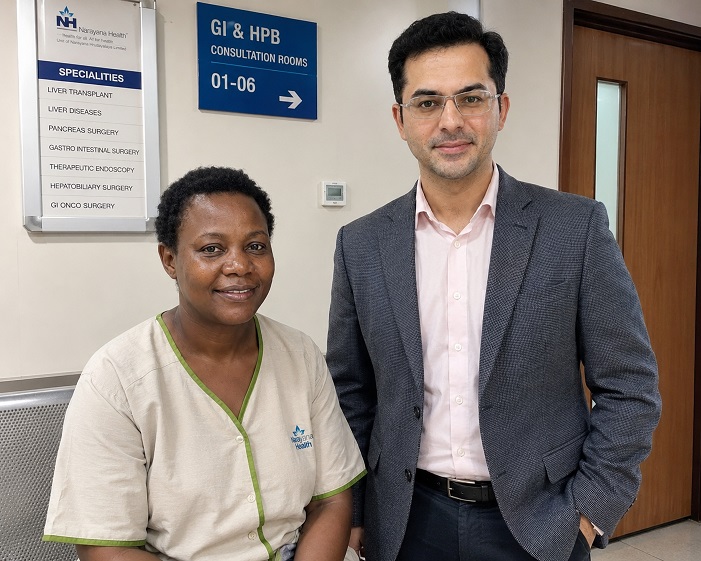
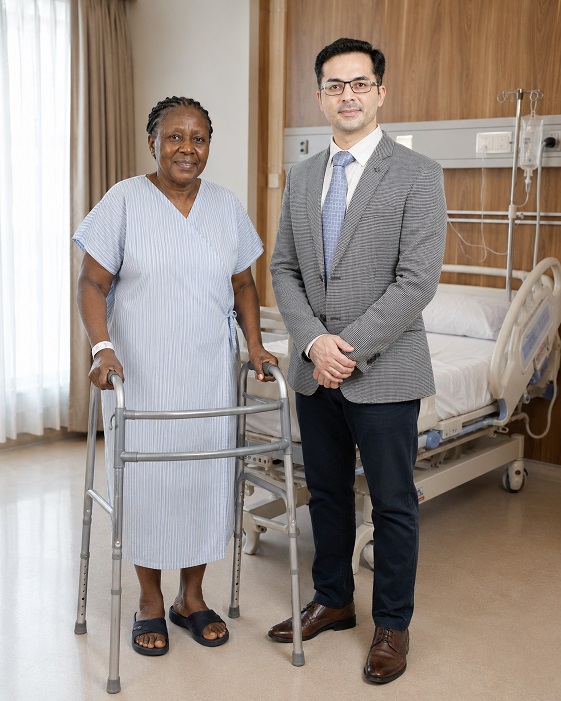
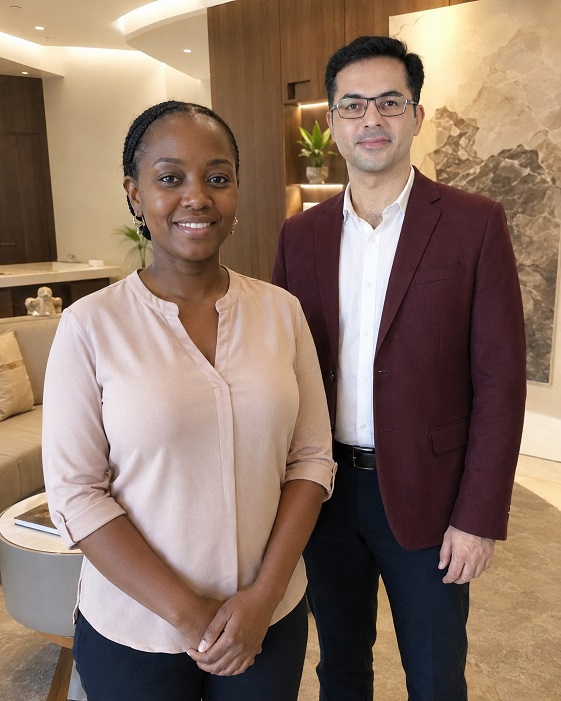
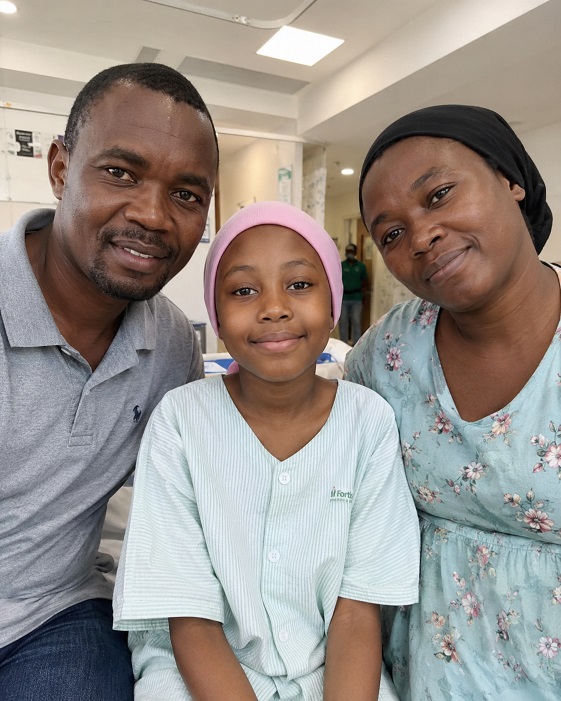
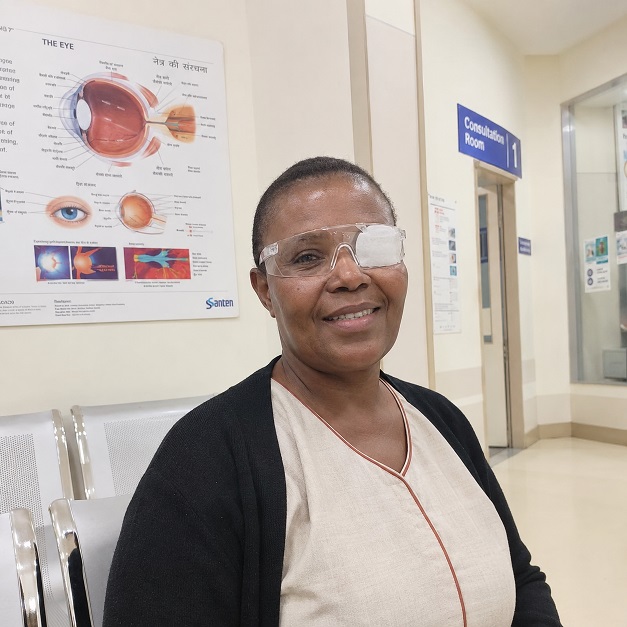
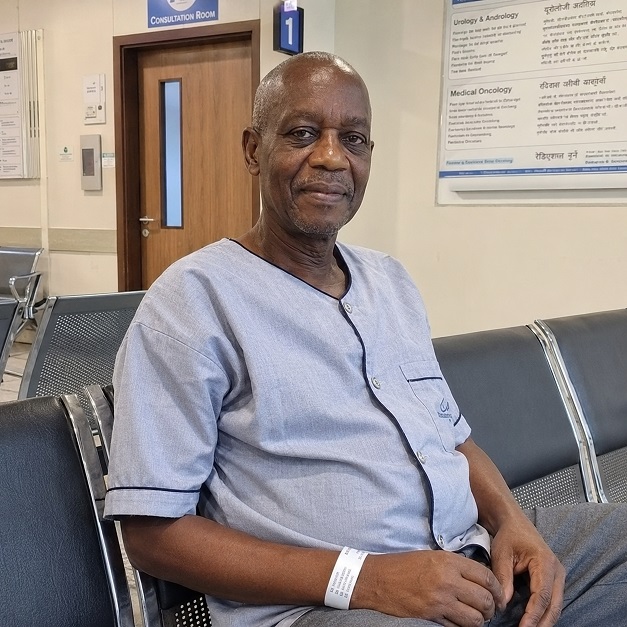
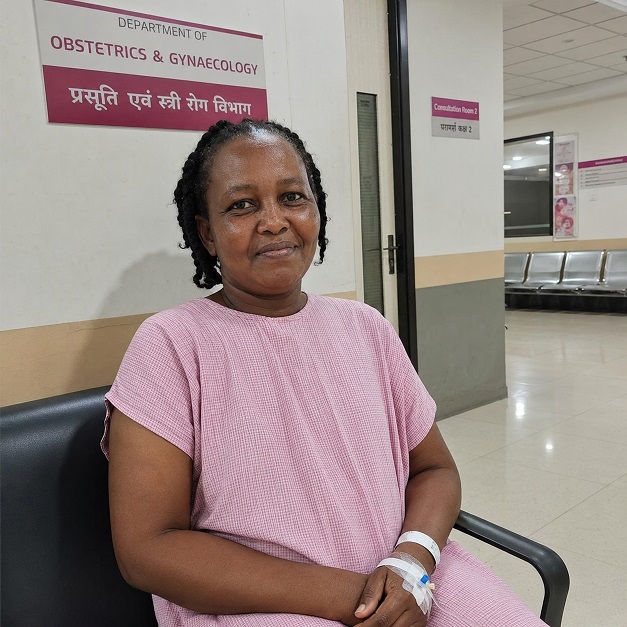
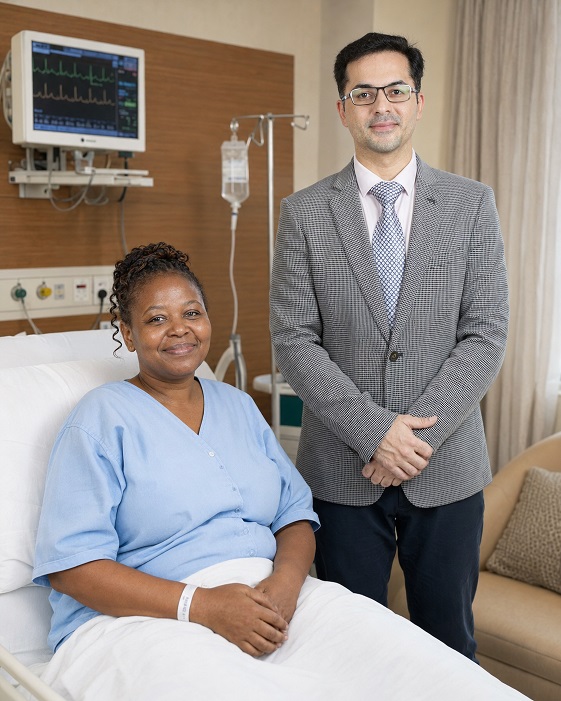
Patient Testimonials from Kenya
Ready to Take the First Step?
Share your Medical Reports with our Healthcare Managers Today and Get a FREE CONSULTATION, a Personalized Treatment Plan, and Complete Support from Arrival to Recovery.
Get Your Free ConsultationAreas We Serve
This resource has been thoughtfully prepared for patients from Kenya who are considering medical treatment in India. We also welcome patients from the wider region in the countries mentioned below-
We assist patients from:
- Ethiopia
- Somalia
- Tanzania
- Uganda
- Seychelles
- Guinea
- Guinea-Bissau
- Liberia
- Mali
- Mauritania
- Niger
- Nigeria
- Senegal
- Togo
- South Sudan
- Sierra Leone
Many of the insights, treatment pathways, hospital recommendations, travel guidance, and patient support services described here are equally relevant and may be used as a reference when planning treatment in India.
From Kenya to India: Your Complete Patient Support Guide
- Brain Tumour Surgery in India for Kenyan Patients
- Cancer Treatment and Surgery in India for Kenyan Patients
- Cardiac Treatment and Surgery in India for Kenyan Patients
- Heart Valve Replacement Surgery in India for Kenyan Patients
- Knee Replacement in India for Kenyan Patients
- Prostate Cancer Treatment and Surgery in India for Kenyan Patients
- Spine Treatment and Surgery in India for Kenyan Patients
- Selecting the Best Bariatric Surgeons and Hospitals in India: What Kenyan Patients Should Actually Look For
- Selecting the Best Cancer Surgeons and Hospitals in India: What Kenyan Patients Should Actually Look For
- Selecting the Best Cardiac Surgeons and Hospitals in India: What Kenyan Patients Should Actually Look For
- Selecting the Best Dental Surgeons and Clinics in India: What Kenyan Patients Should Actually Look For
- Selecting the Best Hip Surgeons and Hospitals in India: What Kenyan Patients Should Actually Look For
- Selecting the Best Kidney Transplant Surgeons and Hospitals in India: What Kenyan Patients Should Actually Look For
- Selecting the Best Knee Surgeons and Hospitals in India: What Kenyan Patients Should Actually Look For
- Selecting the Best Liver Transplant Surgeons and Hospitals in India: What Kenyan Patients Should Actually Look For
- Selecting the Best Neurosurgeons and Hospitals in India: What Kenyan Patients Should Actually Look For
- Selecting the Best Prostate Cancer Surgeons and Hospitals in India: What Kenyan Patients Should Actually Look For
- Selecting the Best Spine Surgeons and Hospitals in India: What Kenyan Patients Should Actually Look For