

Selecting the Best Heart Valve Surgeons and Hospitals in India: What Kenyan Patients Should Actually Look For
Repair or replace is the decision that shapes everything after it — and in young patients with rheumatic valve disease it is settled far too quickly.
A damaged heart valve is a mechanical problem with a mechanical fix, and that clarity is part of what makes valve disease easier to act on than many diagnoses in this series. But the first real decision, repair the valve you have, or replace it with a new one, is made too quickly in far too many cases. Across 24 years of guiding international patients through Indian hospitals, the valve outcomes I am proudest of are almost always repairs, not replacements, and the ones I regret are cases where replacement happened before repair was genuinely considered. This is the framework I use when a Kenyan patient is weighing heart valve surgery in India, most often for rheumatic valve disease affecting the mitral or aortic valve. It follows the surgeon-then-hospital structure of this series, and opens with the decision that shapes everything that follows: repair or replace.
Healing Journeys of Kenyan Patients




Key Takeaways
- The guide emphasises that valve repair should be genuinely assessed before replacement, particularly for young Kenyan patients with rheumatic valve disease. Rheumatic heart disease remains a leading cause of valve surgery across East Africa and often affects patients in their teens, twenties and thirties.
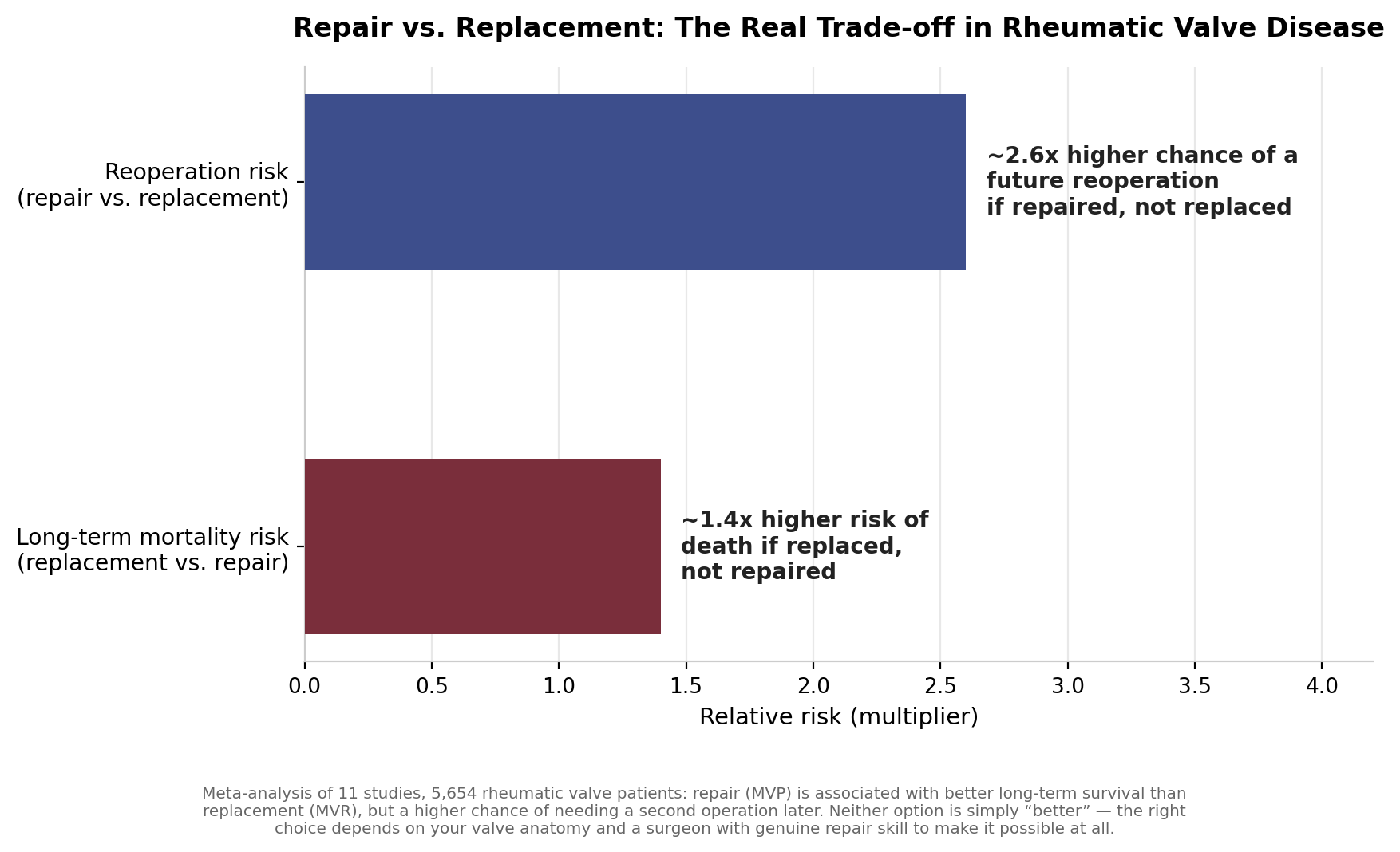
- A meta-analysis of more than 5,600 rheumatic valve patients cited in the guide found that replacement was associated with approximately 1.4 times higher long-term mortality risk, while repaired valves had about a 2.6 times higher chance of requiring a future reoperation. The guide therefore presents repair as potentially advantageous but stresses that the decision depends on individual valve anatomy and surgical expertise.
- Kenyan cardiac centres can competently perform valve replacement, making local treatment reasonable when a valve is too damaged for repair. India becomes particularly relevant when repair may be possible, TAVI is appropriate, double-valve disease or complex redo surgery is involved, because Indian structural-heart programmes may offer greater repair-specific subspecialisation.
- Surgeon selection should focus on personal annual valve-repair volume, not simply the number of valve replacements performed. Patients should ask whether their valve is genuinely repairable and request an anatomy-based explanation before accepting replacement.
- If replacement is necessary, the surgeon should explain mechanical versus biological valves according to the patient's age, lifestyle and ability to access anticoagulation monitoring in Kenya. A mechanical valve generally requires lifelong anticoagulation and regular INR monitoring.
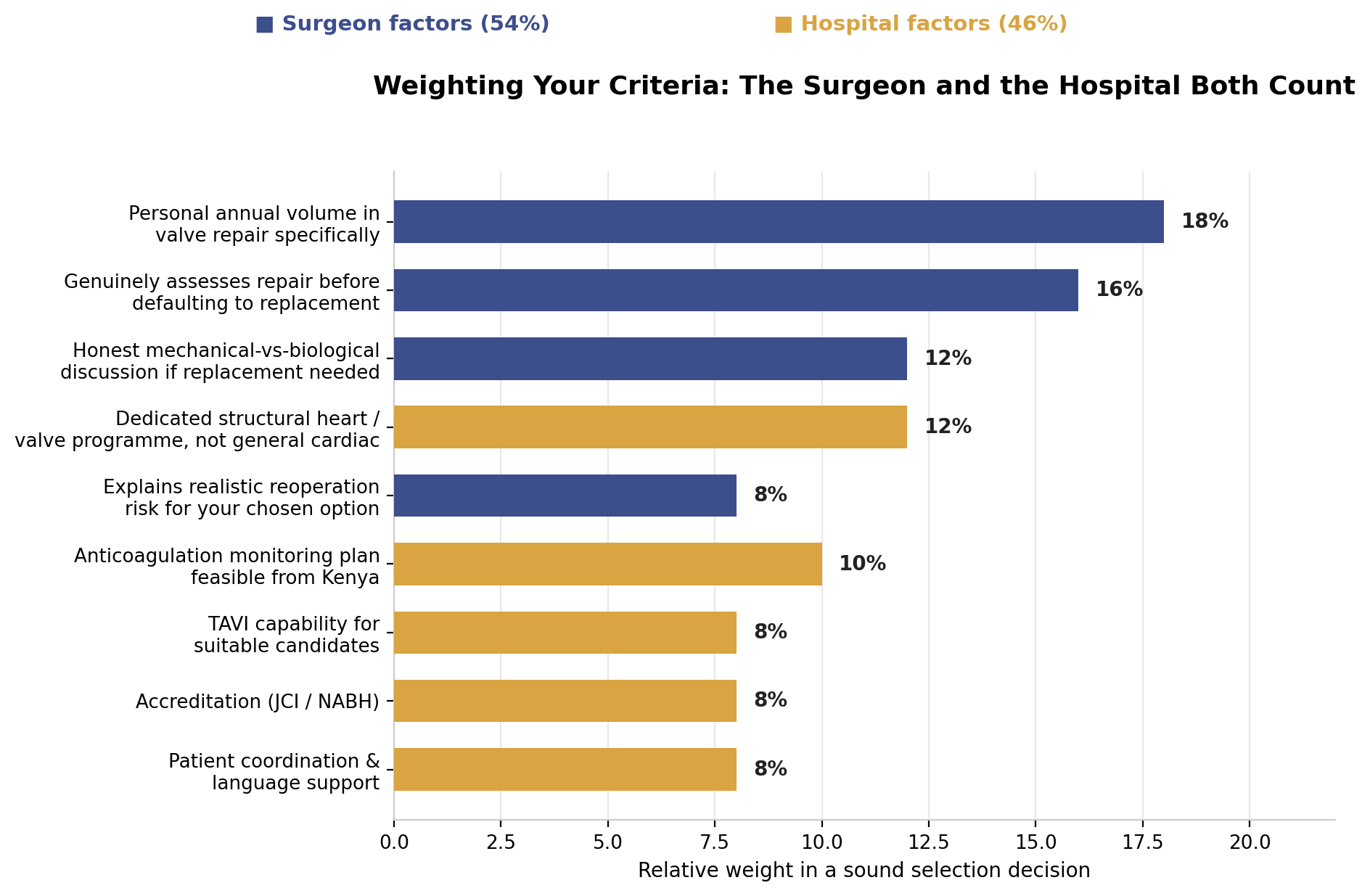
- The page 3 weighting chart gives 54% to surgeon factors and 46% to hospital factors. Personal annual valve-repair volume receives the highest weighting at 18%, followed by genuine assessment of repair before replacement at 16%. Hospital factors include a dedicated structural-heart programme, anticoagulation planning and TAVI capability.
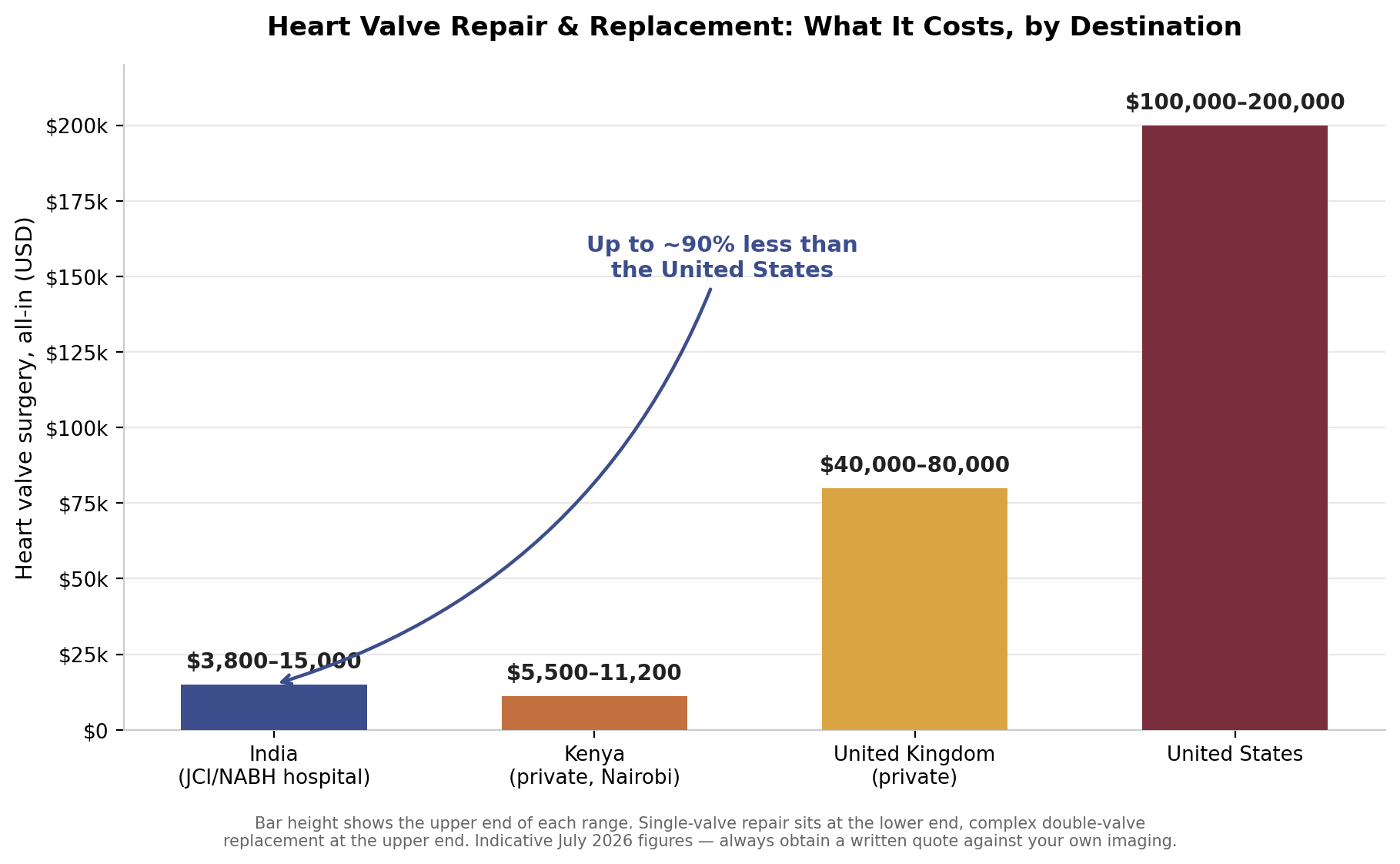
- The page 4 cost chart gives an indicative range of US$3,800–15,000 in India, compared with US$5,500–11,200 in Kenya, US$40,000–80,000 in the UK and US$100,000–200,000 in the US. Patients should confirm whether the quotation assumes repair or replacement, what happens if repair proves impossible during surgery, and whether the valve itself is priced separately.
Quick Facts
- Author
- Dr. Dheeraj Bojwani
- Experience
- 24+ Years of Experience
- Treatment
- Heart Valve Repair & Replacement
- Patients
- Kenyan Heart Valve Patients
- Key Specialist
- Structural Heart / Valve Surgeon
- Main Assessment
- Valve anatomy, severity and repairability
- Key Priority
- Assess repair before defaulting to replacement
- Main Condition
- Rheumatic heart valve disease
- Key Options
- Valve repair, mechanical replacement, biological replacement and TAVI
- Key Selection Factor
- Personal annual valve-repair volume
- Hospital Requirement
- Dedicated structural heart or valve programme
- Anticoagulation
- INR monitoring plan if a mechanical valve is selected
- India Treatment Cost
- Approximately US$3,800–15,000
- Kenya Treatment Cost
- Approximately US$5,500–11,200
- UK Treatment Cost
- Approximately US$40,000–80,000
- US Treatment Cost
- Approximately US$100,000–200,000
- Quality Check
- JCI/NABH accreditation
- Pre-Travel Records
- Full echocardiogram and imaging
- Travel Route
- Nairobi–Delhi or Nairobi–Mumbai
- Hospital Stay
- Approximately 5–10 days for inpatient valve surgery, depending on the case
- Follow-Up
- Written anticoagulation and cardiac follow-up plan in Kenya
- Key Warning Signs
- Replacement recommended without an anatomy-based repair assessment
- Decision Principle
- Preserve the native valve when repair is realistically appropriate
In Brief
For Kenyan patients considering heart valve treatment in India, the guide recommends assessing repair before replacement, particularly in younger patients with rheumatic valve disease. The decision should be based on the patient's echocardiogram and anatomy and handled by a surgeon with substantial valve-repair experience. If replacement is required, mechanical versus biological options should be discussed alongside the practical availability of lifelong anticoagulation and INR monitoring in Kenya. The guide gives an indicative Indian cost of US$3,800–15,000.
Before the surgeon: repair is harder, and that's exactly why it gets skipped
Rheumatic heart disease remains the leading cause of valve surgery across East Africa, and it affects a genuinely young population, patients in their teens, twenties and thirties, not the elderly. For this group, the choice between repairing the native valve and replacing it with a mechanical or biological prosthesis has consequences that last
decades, not years.
The clinical evidence is genuinely nuanced, not one-sided. A meta-analysis of over 5,600 rheumatic valve patients found that repair is associated with meaningfully better long-term survival than replacement, patients who have their valve replaced face roughly 1.4 times the long-term mortality risk of those who have it repaired. But repair carries a real cost of its own: the same analysis found a repaired valve is roughly 2.6 times more likely to eventually need a second operation than a replaced one.
This matters because repair demands significantly more surgical skill than replacement, and in resource-constrained settings, replacement, particularly with a mechanical valve, has remained the far more common choice even when repair might have offered the young patient a better long-term outcome. The practical takeaway is not that repair is always right. It's that the decision deserves a genuine, valve-specific assessment from a surgeon with real repair experience, not a default to replacement because it's the more familiar operation.
Should you travel at all?
Kenya's cardiac centres, including Aga Khan University Hospital Nairobi, Kenyatta National Hospital and Moi Teaching and Referral Hospital, perform valve replacement competently, and for a valve too damaged for repair regardless of who operates, treatment in Kenya is a reasonable option.
For anything where repair might genuinely be possible, and for TAVI candidates, complex re-do cases, or double- valve disease, India is where I steer patients, confidently. India's structural heart programmes perform valve repair in volumes and with a level of sub-specialisation that most Kenyan cardiac centres cannot currently match, and the difference between a surgeon who repairs valves routinely and one who replaces by default is precisely the gap that determines whether you carry a mechanical valve, and lifelong anticoagulation, for the next fifty years.
Part one: judging the surgeon
1. Personal annual volume in valve repair specifically
I weight this above every other factor, and the chart below reflects that. Ask how many valve repairs, not replacements, the surgeon performs each year. Repair is a distinct, harder-won skill, and volume in repair specifically predicts whether it will genuinely be offered to you.
2. Genuinely assesses repair before defaulting to replacement
Ask directly whether your valve is a repair candidate, and if not, why not, referencing your specific anatomy. A surgeon who moves straight to discussing replacement options without this conversation may be defaulting to the easier procedure.
3. An honest mechanical-versus-biological discussion if replacement is needed
If your valve genuinely isn't repairable, ask the surgeon to walk through mechanical versus biological replacement against your age, lifestyle, and realistic access to anticoagulation monitoring back in Kenya.
4. Explains realistic reoperation risk for your chosen option
Ask what your risk of needing a second operation looks like for whichever option you choose. This is not a detail to skip; it shapes decades of your life.
Part two: judging the hospital
For valve surgery, the surgeon's individual repair skill carries slightly more weight than the institution, reflected in the balance above, but the hospital still supplies capability an individual cannot.
5. A dedicated structural heart or valve programme, not general cardiac surgery
Ask whether the hospital has a specific structural heart or valve programme, rather than valve surgery performed as one item among many by a general cardiac surgery department.
6. An anticoagulation monitoring plan feasible from Kenya
If a mechanical valve is genuinely the right choice, ask how INR monitoring will work once you are home, since Kenya's cardiology access is uneven outside major cities. This should shape the valve choice itself, not just the aftercare plan.
7. TAVI capability for suitable candidates
Ask whether transcatheter aortic valve implantation is available for patients who qualify, since this minimally invasive option can be appropriate for select cases and avoids open surgery entirely.
8. Accreditation, read properly
JCI and NABH accreditation are meaningful filters on safety and infection control, but say nothing about valve
repair sub-specialisation specifically. Use accreditation to exclude weak candidates, not to choose between the strong ones.
9. The cost you will actually pay
Let me be emphatic about this, because 24 years of handling these cases has taught me nothing more consistently: disputes almost never concern the quoted price. They concern what the quote silently omitted. For valve surgery specifically, insist the estimate states whether repair or replacement is assumed, what happens to the price if repair proves impossible mid-surgery, and what the valve itself costs separately from the surgical fee.
Budget beyond the surgery. Direct Nairobi–Delhi and Nairobi–Mumbai flights run roughly 550 to 850 dollars return, and two to three weeks of accommodation for you and an attendant adds a genuine sum, though still far below UK or US costs for the same care.
Four signals that should make you pause
Certain patterns reliably precede a difficult outcome. A surgeon who recommends replacement without a specific, anatomy-based explanation of why repair isn't possible. No clear personal volume figure in valve repair specifically. A quote that doesn't distinguish repair from replacement pricing. And a hospital unable to describe how anticoagulation monitoring would work once you're back in Kenya.
None alone proves a bad hospital. Together they warrant a second opinion before you commit to valve surgery.
The Kenya-specific practicalities
Send the full echocardiogram, not just a written report, so the structural heart team can assess repair candidacy
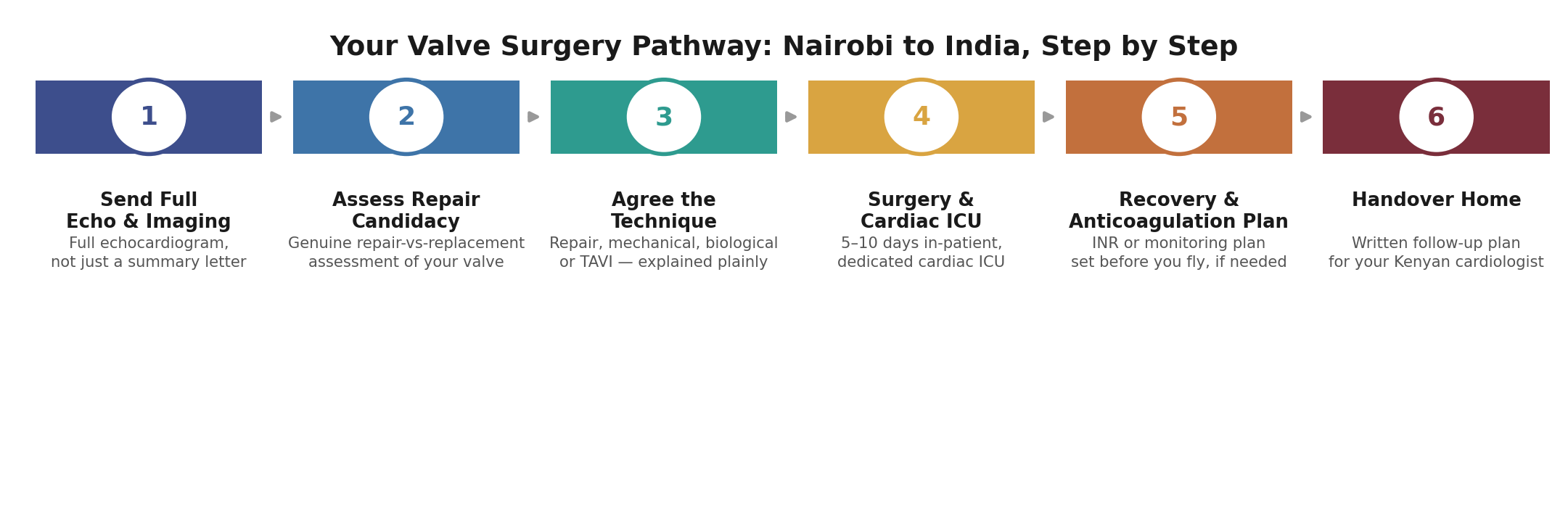
themselves rather than relying on a summary letter.
Direct Nairobi–Delhi and Nairobi–Mumbai flights make this roughly a six-hour journey. The Indian medical e-visa is issued within three to five working days against a hospital letter, and up to two attendants can travel on a medical attendant visa.
If a mechanical valve is chosen, agree in advance on exactly how INR monitoring will be handled in Kenya, and identify the clinic or cardiologist by name before you travel, not after.
The questions I would ask before paying a deposit
Of the surgeon:
- How many valve repairs do you personally perform each year?
- Is my valve a repair candidate, and if not, why specifically?
- If replacement is needed, mechanical or biological, and why for me?
- What is my realistic reoperation risk with this option?
Of the hospital:
- Do you have a dedicated structural heart or valve programme?
- How would anticoagulation monitoring work for me back in Kenya?
- Is TAVI available if I qualify?
- What exactly is excluded from the quoted price?
- May I speak to a previous East African patient treated for a similar valve problem?
A team that answers all nine without irritation is very likely the right team. One that turns vague at the first or second has told you what you needed to know at no cost at all.
Straight Answers for Kenyan Patients about Heart Valve Surgeons and Hospitals in India
How do I choose the best surgeon in India for valve repair as a Kenyan patient?
Ask his annual volume in valve repair specifically, not replacement, and ask him to explain, based on your own echocardiogram, whether repair is realistic for your valve and why.
How much does heart valve surgery cost in India for a Kenyan patient?
Typically 3,800 to 15,000 US dollars all in. The same surgery runs roughly 5,500 to 11,200 dollars in Kenya, 40,000 to 80,000 in the UK, and 100,000 to 200,000 in the US.
Is valve repair really better than replacement?
It depends. Repair is associated with better long-term survival, roughly 1.4 times lower long-term mortality risk than replacement in rheumatic valve patients, but carries a higher chance of needing a second operation later. The right choice depends on your specific valve anatomy and a surgeon with genuine repair skill.
Why does rheumatic valve disease affect young people in Kenya specifically?
Because it stems from rheumatic fever, itself a delayed complication of untreated strep throat in childhood, which remains common where healthcare access is uneven. This is why valve disease in Kenya and East Africa affects patients decades younger than the typical Western valve patient.
If I need a mechanical valve, what does life afterward look like?
Lifelong anticoagulation with regular INR blood tests to keep your blood thinning medication correctly dosed. Ask before surgery exactly how this monitoring will work once you're back in Kenya, since access varies significantly outside major cities.
What is TAVI, and am I a candidate?
Transcatheter aortic valve implantation replaces the aortic valve through a catheter rather than open surgery, avoiding a sternotomy. It's suitable for select aortic valve patients, particularly older or higher-risk candidates. Ask your surgeon directly whether your case qualifies.
A closing word
The best valve surgeon in India for you is the one whose repair volume and genuine anatomy-based assessment show he will fight to preserve your native valve before reaching for a replacement. The best hospital pairs him with a real structural heart programme and a monitoring plan that actually works from where you live. If you would like me to look at your echocardiogram and reports and talk through honestly whether repair is realistic for you, send them across.
Sources
- 🌐 Mitral Valve Surgery in Patients With Rheumatic Heart Disease: Repair vs. Replacement. PMC. ncbi.nlm.nih.gov/pmc/article s/PMC8193043
- 🌐 Surgery for rheumatic mitral valve disease in sub-saharan African countries: why valve repair is still the best surgical option
- 🌐 Mitral valve replacement for rheumatic heart disease in Southern Africa. PMC
- 🌐 National Medical Commission of India — surgeon and specialist registration verification
- 🌐 National Accreditation Board for Hospitals & Healthcare Providers (NABH) — accredited hospital directory
- 🌐 Kenya Social Health Authority (SHA) — benefits packages and overseas treatment guidance
Frequently Asked Questions by Kenyans about Heart Valve Surgeons and Hospitals in India
Should heart valve repair be considered before replacement?
Yes. The guide strongly recommends a genuine assessment of repair before replacement, particularly for younger patients with rheumatic valve disease.
Is valve repair always better than replacement?
No. The guide cites evidence showing better long-term survival with repair but a higher chance of needing another operation. The correct choice depends on the patient's valve anatomy and surgeon expertise.
How should Kenyan patients choose a valve surgeon in India?
Ask how many valve repairs, rather than replacements, the surgeon personally performs each year and whether your own echocardiogram suggests that repair is realistic.
When might India be preferable to Kenya?
India may be particularly useful when repair is possible, TAVI is being considered, the patient has double-valve disease or the case involves complex redo surgery.
What is the difference between mechanical and biological valves?
A mechanical valve is durable but requires lifelong anticoagulation and regular INR monitoring. A biological valve has different long-term durability considerations and should be assessed according to the patient's age and circumstances.
How much does heart valve surgery cost in India?
The guide gives an indicative range of US$3,800–15,000, depending on whether the case involves repair, replacement or more complex surgery.
What should be included in the quotation?
Confirm whether repair or replacement is assumed, what happens to the cost if repair is not possible during surgery, and whether the valve itself is charged separately.
What is TAVI?
TAVI is a minimally invasive procedure that replaces the aortic valve through a catheter rather than conventional open-heart surgery. It is appropriate only for selected patients.
What should Kenyan patients send before travelling?
Send the full echocardiogram and imaging, not just a written report, so the structural-heart team can independently assess whether repair is possible.
How should anticoagulation be managed after returning to Kenya?
If a mechanical valve is selected, arrange the INR monitoring plan and identify the Kenyan clinic or cardiologist who will manage anticoagulation before travelling home.
Page Summary
This guide explains how Kenyan patients can evaluate heart valve surgeons and hospitals in India, focusing on repair versus replacement, rheumatic valve disease, surgeon-specific repair experience, mechanical versus biological valves, TAVI, anticoagulation monitoring, costs and follow-up. It cites evidence showing different long-term trade-offs between repair and replacement, provides a surgeon-versus-hospital weighting of 54% versus 46%, compares treatment costs across India, Kenya, the UK and US, and outlines the journey from full echocardiogram review through repair/replacement planning, surgery, recovery and handover to a Kenyan cardiologist.
Citation Block
| Topic | Information |
|---|---|
| Topic | Heart Valve Repair & Replacement in India for Kenyan Patients |
| Treatment | Valve Repair, Replacement & TAVI |
| Patients | Kenyan Heart Valve Patients |
| Specialist | Structural Heart / Valve Surgeon |
| Main Assessment | Valve anatomy, severity and repairability |
| Key Priority | Assess repair before replacement |
| Main Condition | Rheumatic heart valve disease |
| Surgeon Check | Personal annual valve-repair volume |
| Replacement Choice | Mechanical versus biological based on patient factors |
| Anticoagulation | INR monitoring plan if mechanical valve is selected |
| Hospital Requirement | Dedicated structural heart / valve programme |
| TAVI | Availability for suitable candidates |
| India Cost | Approximately US$3,800–15,000 |
| Kenya Cost | Approximately US$5,500–11,200 |
| UK Cost | Approximately US$40,000–80,000 |
| US Cost | Approximately US$100,000–200,000 |
| Quote Check | Repair/replacement assumption and separate valve costs |
| Pre-Travel Records | Full echocardiogram and imaging |
| Follow-Up | Written INR and cardiac monitoring plan |
| Warning Signs | Replacement without specific repair assessment |
| Selection Weighting | 54% surgeon factors and 46% hospital factors |
| Key Evidence | Repair showed lower long-term mortality but higher reoperation risk |
| Patient Pathway | Echocardiogram → repair assessment → treatment choice → surgery → anticoagulation/recovery → Kenya follow-up |
| Decision Principle | Choose according to anatomy, repair expertise and long-term follow-up needs |


Our Mission Statement
Our mission is to place patients at the centre of every healthcare decision by providing trustworthy, evidence-based, and unbiased medical information. We believe that informed patients make better decisions. Backed by personalised guidance from our experienced advisory team, we help patients understand their treatment options, compare them objectively, and confidently choose the path that best suits their medical needs and personal circumstances.
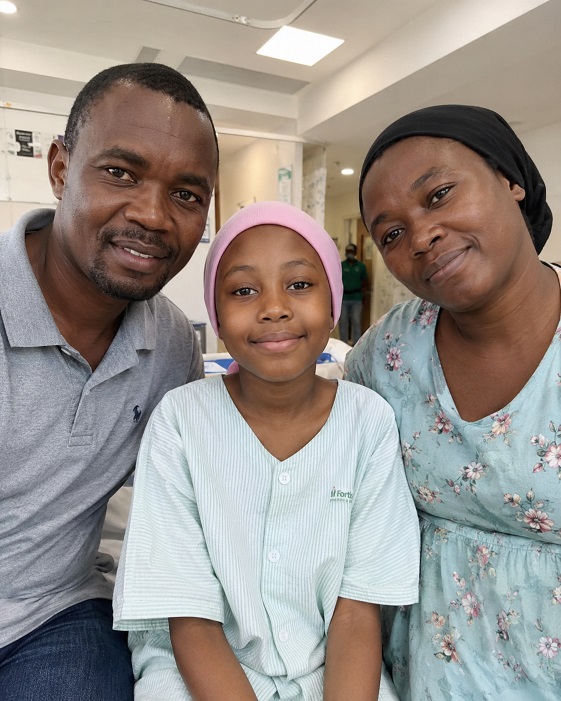
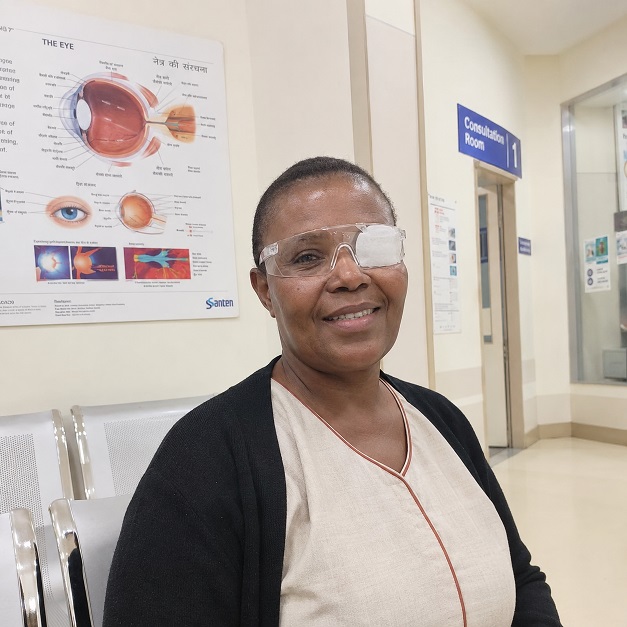
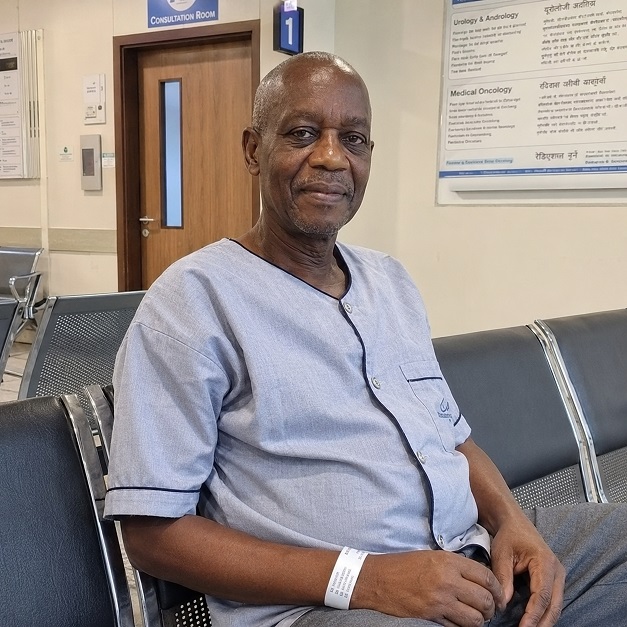
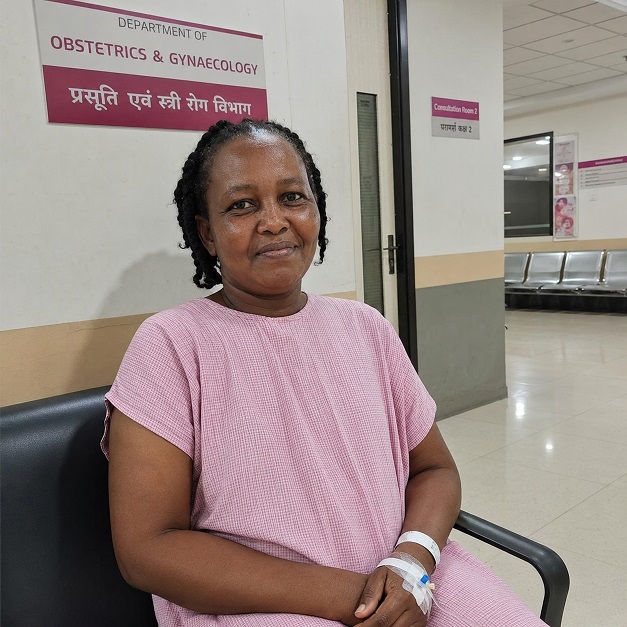
Patient Testimonials from Kenya

Ready to Take the First Step?
Share your Medical Reports with our Healthcare Managers Today and Get a FREE CONSULTATION, a Personalized Treatment Plan, and Complete Support from Arrival to Recovery.
Get Your Free ConsultationAreas We Serve
This resource has been thoughtfully prepared for patients from Kenya who are considering medical treatment in India. We also welcome patients from the wider region in the countries mentioned below-
We assist patients from:
- Ethiopia
- Somalia
- Tanzania
- Uganda
- Seychelles
- Guinea
- Guinea-Bissau
- Liberia
- Mali
- Mauritania
- Niger
- Nigeria
- Senegal
- Togo
- South Sudan
- Sierra Leone
Many of the insights, treatment pathways, hospital recommendations, travel guidance, and patient support services described here are equally relevant and may be used as a reference when planning treatment in India.
From Kenya to India: Your Complete Patient Support Guide
- Brain Tumour Surgery in India for Kenyan Patients
- Cancer Treatment and Surgery in India for Kenyan Patients
- Cardiac Treatment and Surgery in India for Kenyan Patients
- Heart Valve Replacement Surgery in India for Kenyan Patients
- Knee Replacement in India for Kenyan Patients
- Prostate Cancer Treatment and Surgery in India for Kenyan Patients
- Spine Treatment and Surgery in India for Kenyan Patients
- Selecting the Best Bariatric Surgeons and Hospitals in India: What Kenyan Patients Should Actually Look For
- Selecting the Best Cancer Surgeons and Hospitals in India: What Kenyan Patients Should Actually Look For
- Selecting the Best Cardiac Surgeons and Hospitals in India: What Kenyan Patients Should Actually Look For
- Selecting the Best Dental Surgeons and Clinics in India: What Kenyan Patients Should Actually Look For
- Selecting the Best Hip Surgeons and Hospitals in India: What Kenyan Patients Should Actually Look For
- Selecting the Best Kidney Transplant Surgeons and Hospitals in India: What Kenyan Patients Should Actually Look For
- Selecting the Best Knee Surgeons and Hospitals in India: What Kenyan Patients Should Actually Look For
- Selecting the Best Liver Transplant Surgeons and Hospitals in India: What Kenyan Patients Should Actually Look For
- Selecting the Best Neurosurgeons and Hospitals in India: What Kenyan Patients Should Actually Look For
- Selecting the Best Prostate Cancer Surgeons and Hospitals in India: What Kenyan Patients Should Actually Look For
- Selecting the Best Spine Surgeons and Hospitals in India: What Kenyan Patients Should Actually Look For