

Selecting the Best Colorectal Cancer Surgeons and Hospitals in India: What Kenyan Patients Should Actually Look For
Bowel cancer arrives here roughly fifteen years earlier than the screening guidelines assume — a persistent symptom at forty deserves investigation, not reassurance.
Colorectal cancer carries an assumption in most public health messaging that it's a disease of later life, something to start screening for at fifty or sixty. Across Africa, that assumption is quietly wrong, and it matters for how urgently a bowel symptom should be investigated. Across 24 years of guiding international patients through Indian hospitals, the colorectal cancer cases I remember most are the younger patients, in their thirties and forties, whose symptoms were initially dismissed as something else because colorectal cancer didn't fit the expected age profile. This is the framework I use when a Kenyan patient is weighing colorectal cancer treatment in India. It follows the surgeon-then-hospital structure of this series, and opens with the age pattern that should change how seriously a persistent bowel symptom is taken.
Healing Journeys of Kenyan Patients




Key Takeaways
- The guide highlights that colorectal cancer can affect younger African patients, with a pooled mean age of 53.5 years across Africa compared with 66–70 years in high-income countries. It notes that 38% of African cases are diagnosed before age 50 and 21% before age 40.
- For younger patients with persistent bowel changes, rectal bleeding or unexplained weight loss, the guide stresses timely investigation. For rectal cancer, it also recommends specifically discussing whether sphincter-preserving surgery is possible before accepting a permanent colostomy.
- India may be particularly relevant for rectal cancer, younger patients and cases requiring molecular testing. The guide highlights total mesorectal excision, laparoscopic and robotic approaches, along with genomic testing that can help identify targeted treatment options.
- When choosing a surgeon, patients should assess experience with their specific tumour location, ask about sphincter preservation and understand the surgeon's approach to total mesorectal excision. Realistic continence and stoma-reversal prospects should also be explained.
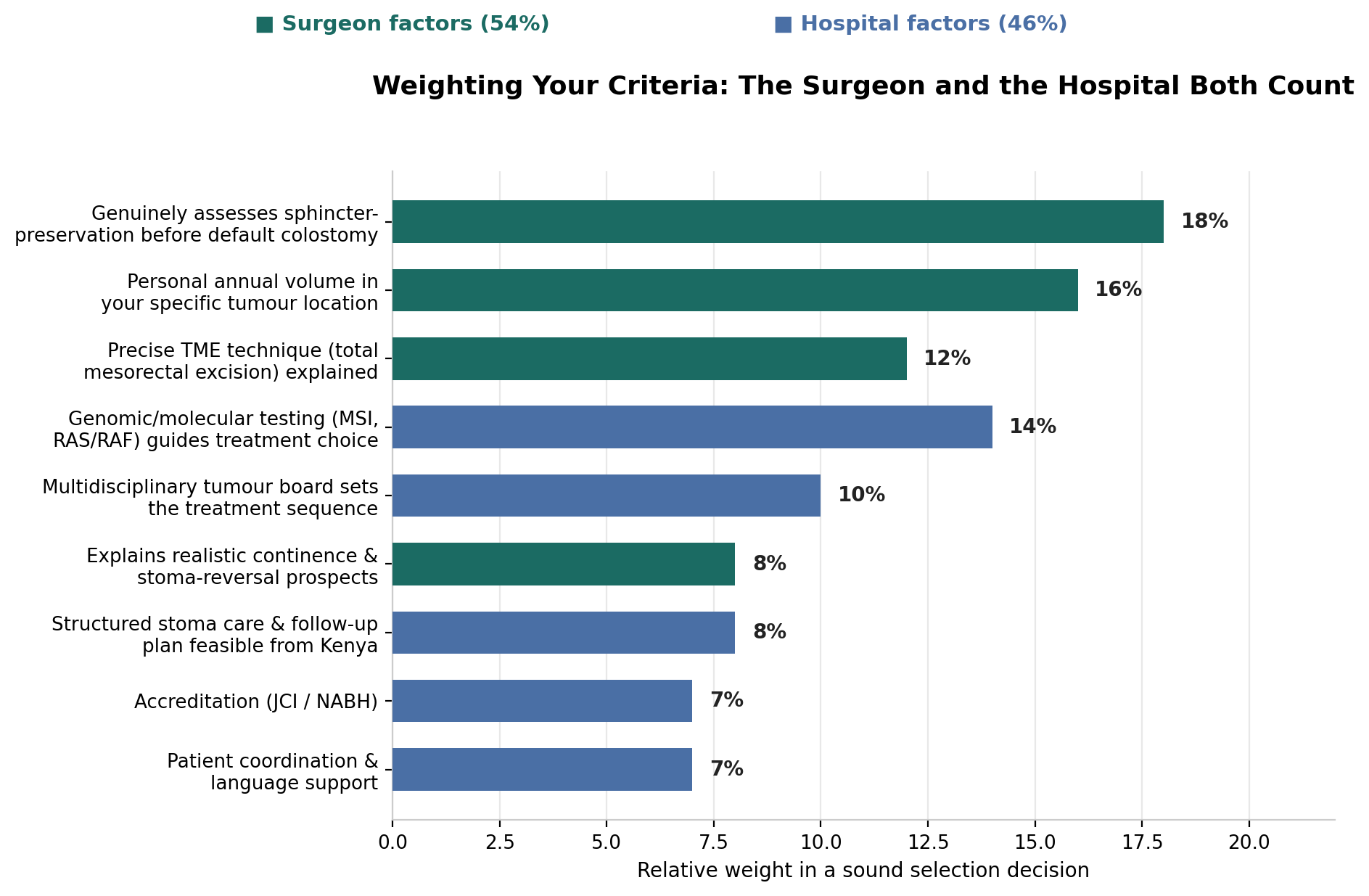
- Hospital selection should focus on molecular testing, multidisciplinary tumour-board review, structured stoma care and follow-up from Kenya. The page 3 chart gives 54% weighting to surgeon factors and 46% to hospital factors.
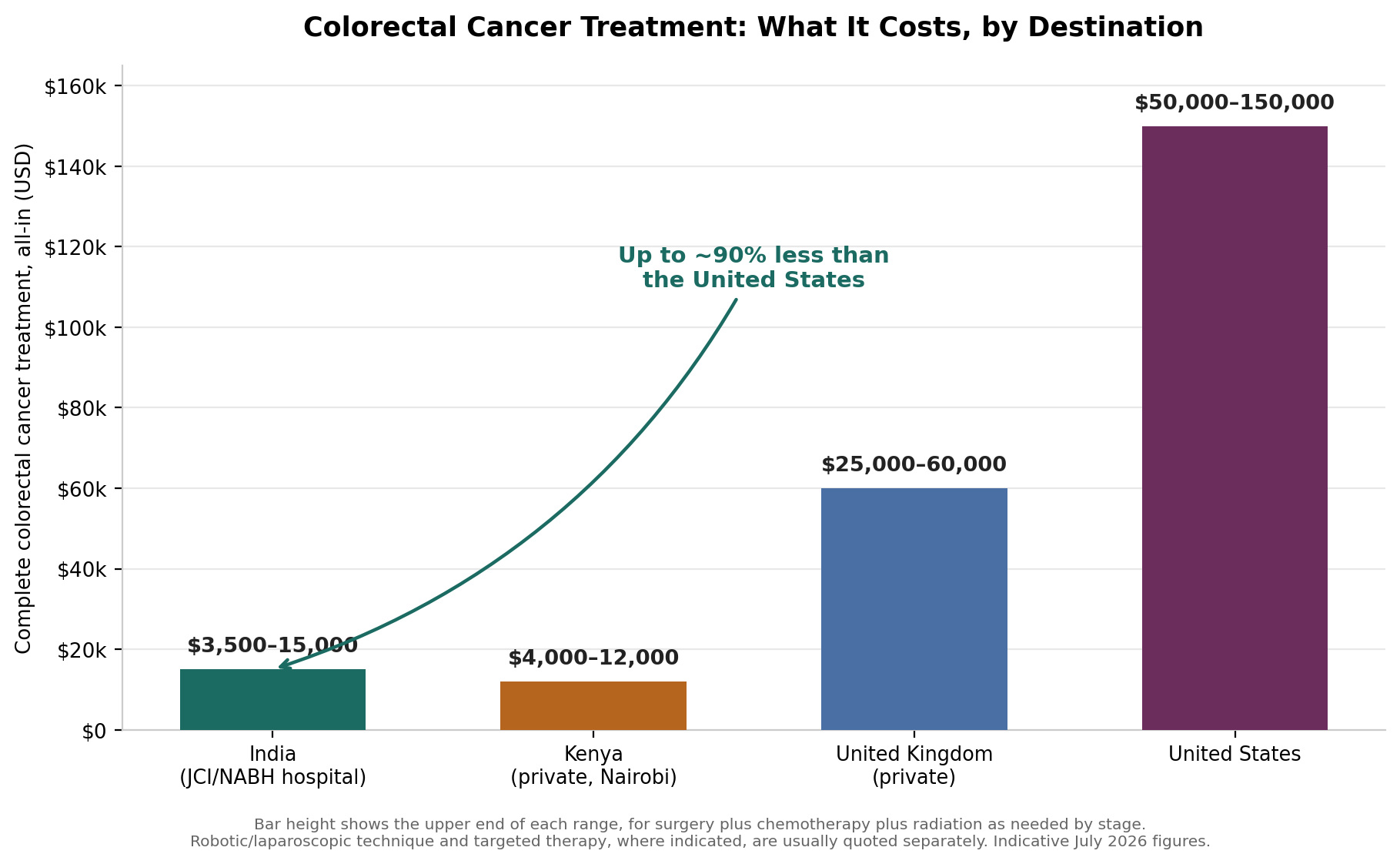
- The cost chart on page 4 gives an indicative range of US$3,500–15,000 in India, compared with US$4,000–12,000 in Kenya, US$25,000–60,000 in the UK and US$50,000–150,000 in the US. Patients should confirm whether laparoscopic or robotic surgery, molecular testing and targeted drugs are included.
- Before travelling, Kenyan patients should provide complete imaging, colonoscopy reports and biopsy pathology, arrange molecular testing and treatment planning, and establish a written surveillance plan with their Kenyan oncologist. The pathway shown on page 5 runs from imaging and pathology through molecular testing, tumour-board planning, surgery, systemic treatment and follow-up in Kenya.
Quick Facts
- Author
- Dr. Dheeraj Bojwani
- Experience
- 24+ Years of Experience
- Treatment
- Colorectal Cancer Treatment and Surgery
- Patients
- Kenyan Colorectal Cancer Patients
- Key Specialist
- Colorectal Surgical Oncologist
- Main Assessment
- Tumour location, stage and molecular profile
- Key Surgical Question
- Whether sphincter-preserving surgery is possible
- Rectal Cancer Technique
- Total Mesorectal Excision
- Molecular Testing
- MSI and RAS/RAF testing
- Surgical Options
- Open, laparoscopic or robotic surgery where appropriate
- India Treatment Cost
- Approximately US$3,500–15,000
- Kenya Treatment Cost
- Approximately US$4,000–12,000
- UK Treatment Cost
- Approximately US$25,000–60,000
- US Treatment Cost
- Approximately US$50,000–150,000
- Hospital Requirement
- Multidisciplinary tumour-board review
- Stoma Care
- Structured care and follow-up plan
- Quality Check
- JCI/NABH accreditation
- Pre-Travel Records
- Imaging, colonoscopy report and biopsy pathology
- Follow-Up
- Kenyan oncology team
- Travel Route
- Nairobi–Delhi or Nairobi–Mumbai
- Key Warning Sign
- Permanent stoma recommended without a tumour-specific explanation
- Decision Principle
- Confirm sphincter-preservation options and molecular profile before finalising treatment
In Brief
For Kenyan patients considering colorectal cancer treatment in India, the guide places particular emphasis on sphincter preservation, tumour-specific surgical experience and molecular testing. It recommends assessing total mesorectal excision expertise for rectal cancer, multidisciplinary treatment planning and structured stoma follow-up. The indicative cost is US$3,500–15,000 in India, with the final amount depending on stage, complexity and included treatments.
Before the surgeon: this disease arrives roughly fifteen years earlier here
A systematic review and meta-analysis of colorectal cancer age at diagnosis across Africa found a pooled mean age of 53.5 years, compared with 66 to 70 years across high-income countries including the UK, Australia, and Canada. More strikingly, 38% of African colorectal cancer cases were diagnosed before age 50, and 21% before 40. A cohort study at a major Nairobi hospital found a closely matching pattern, with 18.3% of patients under 40 at diagnosis.
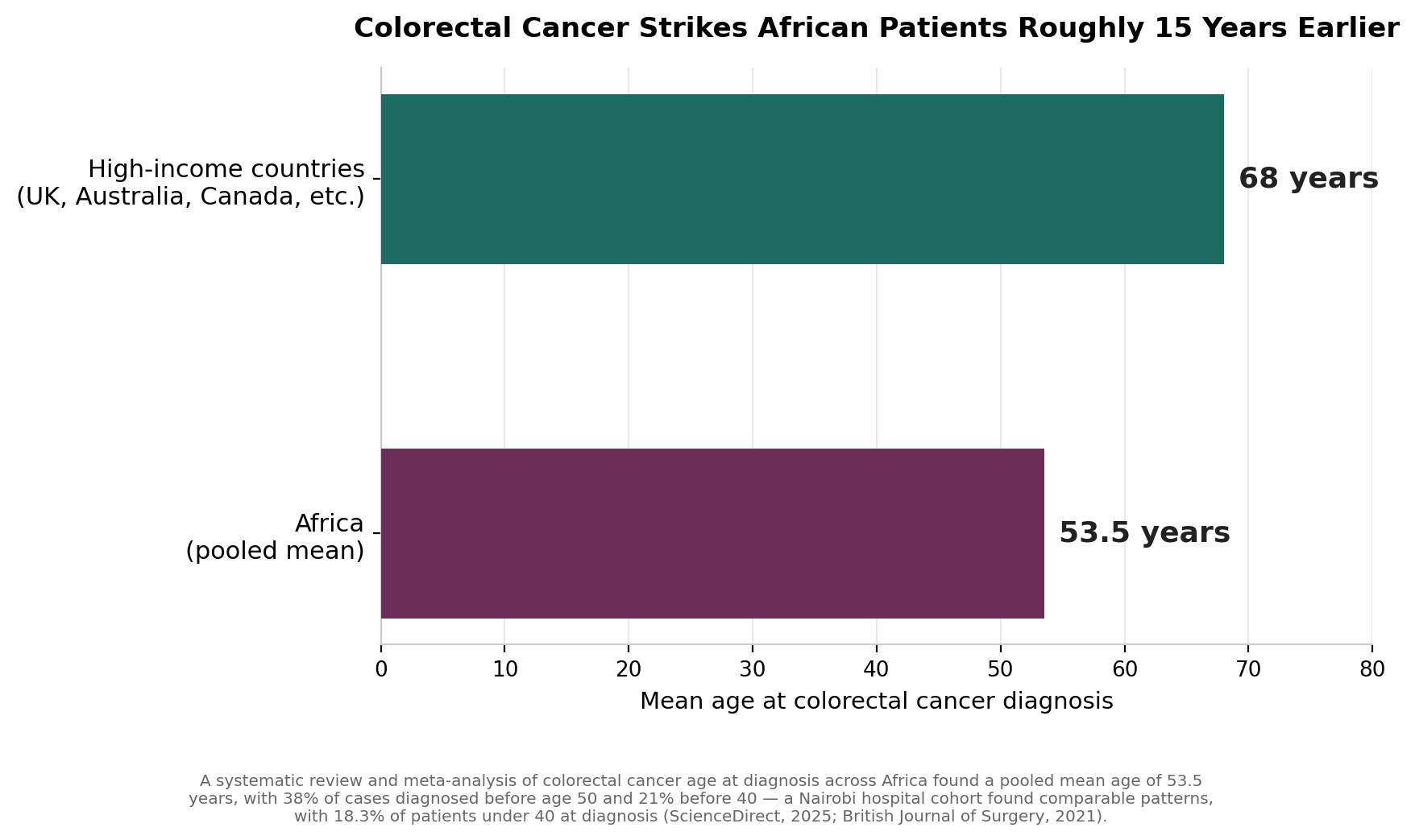
This matters for two distinct reasons. First, younger patients are statistically more likely to present with advanced- stage disease, since colorectal cancer isn't on the list of things a bowel symptom in your thirties usually gets investigated for, and by the time it's found, more time has often passed. Second, and just as important, a younger patient has decades of remaining life during which surgical decisions made now will matter, which makes the choice between sphincter-preserving surgery and a permanent colostomy a genuinely different decision for a 38- year-old than for a 68-year-old.
The practical takeaway is twofold. If you're under 50 with persistent changes in bowel habit, rectal bleeding, or unexplained weight loss, insist on investigation rather than accepting a default explanation like haemorrhoids or irritable bowel. And if rectal cancer surgery is being planned, ask explicitly whether sphincter-preserving surgery is a genuine option for you, given how many years you're likely to live with the outcome of that decision.
Should you travel at all?
Kenya's cancer centres, including Kenyatta National Hospital and Aga Khan University Hospital Nairobi, perform colorectal cancer surgery competently, and for straightforward colon cancer with a clear surgical plan, treatment in Kenya is a reasonable starting point.
For rectal cancer specifically, where precise surgical technique determines whether sphincter preservation is possible, for younger patients where that decision carries decades of consequence, and for cases needing molecular testing to guide treatment, India is where I steer patients, confidently. India's leading colorectal surgical oncology centres perform precise total mesorectal excision technique routinely, with laparoscopic and robotic options that improve the odds of preserving natural bowel function, alongside genomic testing that identifies which patients benefit from targeted therapy, at a fraction of UK or US cost.
Part one: judging the surgeon
1. Genuinely assesses sphincter preservation before default colostomy
I weight this above every other factor, and the chart below reflects that. Ask directly whether sphincter-preserving surgery is possible for your specific tumour, and if not, why not, referencing your tumour's exact location and stage.
2. Personal annual volume in your specific tumour location
Ask how many cases matching your specific tumour location, colon versus rectal cancer are genuinely different surgical challenges, the surgeon personally treats each year.
3. Precise total mesorectal excision technique explained
For rectal cancer specifically, ask the surgeon to explain their approach to total mesorectal excision, the precise surgical technique that most directly affects both cure rates and the odds of preserving continence.
4. An honest explanation of continence and stoma-reversal prospects
If a temporary stoma is part of your plan, ask specifically about realistic timelines and success rates for reversal, and what continence looks like afterward.
Part two: judging the hospital
For colorectal cancer, molecular testing capability carries real weight alongside the surgeon, reflected in the balance above, because modern treatment increasingly depends on knowing your tumour's specific genetic profile.
5. Genomic and molecular testing guides the treatment choice
Ask whether microsatellite instability and RAS/RAF mutation testing are performed as standard, since these results can determine whether immunotherapy or specific targeted drugs apply to your case.
6. A multidisciplinary tumour board sets the treatment sequence
Ask whether your case is reviewed by a team including surgical, medical, and radiation oncology, not decided by a single surgeon working alone.
7. A structured stoma care and follow-up plan feasible from Kenya
If a stoma, temporary or permanent, is part of your care, ask what support looks like, and how follow-up imaging and surveillance will be coordinated with a doctor in Kenya afterward.
8. Accreditation, read properly
JCI and NABH accreditation are meaningful filters on safety and infection control, but say nothing about colorectal
surgical sub-specialisation specifically. Use accreditation to exclude weak candidates, not to choose between the strong ones.
9. The cost you will actually pay
Let me be emphatic about this, because 24 years of handling these cases has taught me nothing more consistently: disputes almost never concern the quoted price. They concern what the quote silently omitted. For colorectal cancer treatment specifically, insist the estimate states whether laparoscopic or robotic technique is included at the quoted price, and whether genomic testing and targeted drugs, if indicated, are part of the package.
Budget beyond the treatment. Direct Nairobi–Delhi and Nairobi–Mumbai flights run roughly 550 to 850 dollars return, and a complete surgery-plus-chemotherapy course often runs several weeks to months, so plan accommodation and potential return visits accordingly.
Four signals that should make you pause
Certain patterns reliably precede a difficult outcome. A surgeon who recommends a permanent stoma without a specific, tumour-based explanation of why sphincter preservation isn't possible. No clear personal volume figure in your specific tumour location. No mention of molecular testing to guide treatment choice. And a hospital unable to describe its stoma care and follow-up support.
None alone proves a bad hospital. Together they warrant a second opinion before you commit to surgery.
The Kenya-specific practicalities
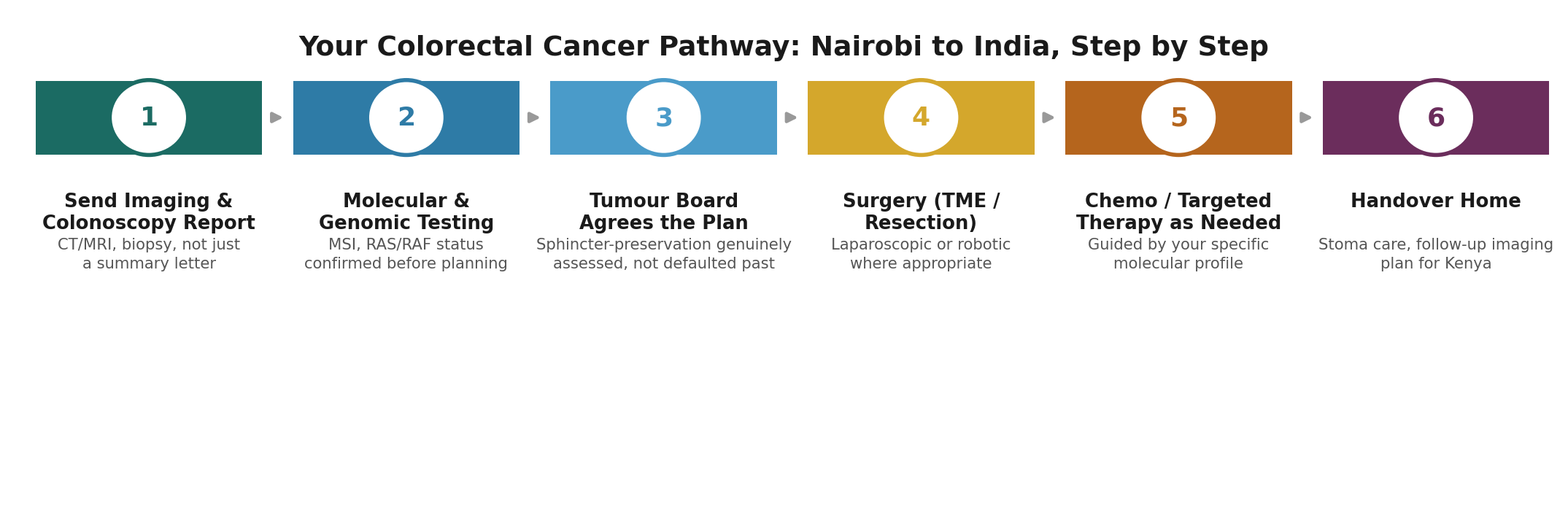
Send the full imaging, colonoscopy report, and biopsy pathology, not just a summary letter, so the tumour board can properly assess sphincter-preservation candidacy and molecular profile before you arrive.
Direct Nairobi–Delhi and Nairobi–Mumbai flights make this roughly a six-hour journey. The Indian medical e-visa is issued within three to five working days against a hospital letter, and an attendant can travel with you on a medical attendant visa.
Agree in advance on a written follow-up imaging and surveillance schedule your Kenyan oncologist can act on, since colorectal cancer surveillance continues for years.
The questions I would ask before committing
Of the surgeon:
- Is sphincter-preserving surgery possible for my specific tumour, and if not, why not?
- How many cases matching my specific tumour location do you personally treat each year?
- What is your approach to total mesorectal excision, if my case is rectal cancer?
- What are realistic continence and stoma-reversal prospects for me specifically?
Of the hospital:
- Do you perform microsatellite instability and RAS/RAF testing as standard?
- Is my case reviewed by a full multidisciplinary tumour board?
- What does stoma care and follow-up support look like?
- What exactly is excluded from the quoted price?
- May I speak to a previous East African patient treated for a similar diagnosis?
A team that answers all nine without irritation is very likely the right team. One that turns vague at the first or third has told you what you needed to know at no cost at all.
Straight Answers for Kenyan Patients about Colorectal Cancer Surgeons and Hospitals in India
How do I choose the best surgeon in India for colorectal cancer as a Kenyan patient?
Ask his annual volume in cases matching your specific tumour location, and ask him to explain, referencing your own imaging, whether sphincter-preserving surgery is genuinely possible before a permanent stoma is discussed.
How much does colorectal cancer treatment cost in India for a Kenyan patient?
Typically 3,500 to 15,000 US dollars for a complete surgery-and-chemotherapy course, depending on stage and complexity. The same treatment runs roughly 4,000 to 12,000 dollars in Kenya, 25,000 to 60,000 in the UK, and 50,000 to 150,000 in the US.
Why does colorectal cancer affect younger people in Kenya and Africa more than in the West?
A meta-analysis found a pooled mean age at diagnosis of 53.5 years across Africa, against 66 to 70 in high-income countries, with 38% of African cases diagnosed before age 50. The reasons are not fully understood, but limited awareness that colorectal cancer can affect younger adults contributes to delayed investigation of symptoms.
Will I need a permanent colostomy?
Not necessarily. Whether sphincter-preserving surgery is possible depends on your tumour's exact location and stage. Ask your surgeon to explain specifically why a permanent stoma is or isn't necessary for your case, referencing your own imaging.
What is total mesorectal excision, and why does it matter?
It's the precise surgical technique for removing rectal cancer along with its surrounding tissue envelope, and it's the single factor most associated with both cure rates and the ability to preserve continence. Ask your surgeon specifically about their experience and approach to this technique.
Why does molecular testing matter for colorectal cancer treatment?
Testing for microsatellite instability and RAS/RAF gene mutations determines whether immunotherapy or specific targeted drugs apply to your tumour. Without this testing, treatment defaults to standard chemotherapy alone, potentially missing options that could improve your outcome.
A closing word
For a Kenyan patient facing colorectal cancer, often younger than expected and with decades ahead, India offers precise surgical technique that genuinely widens the odds of preserving natural bowel function, alongside the molecular testing that identifies every real treatment option, at a fraction of UK or US cost. The best surgeon is the one who assesses sphincter preservation honestly before ever defaulting to a permanent stoma. The best hospital pairs him with genomic testing and a multidisciplinary team built around your specific tumour. If you would like me to look at your imaging and pathology and talk through honestly what your treatment plan should look like, send them across.
Sources
- 🌐 The descriptive epidemiology of age at colorectal cancer diagnosis in Africa: a systematic review and meta-analysis. ScienceDirect, 2025
- 🌐 Clinicopathological profile of colorectal cancer at a tertiary hospital in Kenya
- 🌐 Rising Incidence and Mortality of Colorectal Cancer in Young African Adults: Need for a Better Care Plan. PMC, 2025. ncbi.n
- 🌐 Survival outcomes among colorectal cancer patients at Kenyatta National Hospital: A retrospective cohort study. PMC, 2023
- 🌐 National Medical Commission of India — surgeon and specialist registration verification
- 🌐 National Accreditation Board for Hospitals & Healthcare Providers (NABH) — accredited hospital directory
Frequently Asked Questions by Kenyans about Colorectal Cancer Surgeons and Hospitals in India
How should Kenyan patients choose a colorectal cancer surgeon in India?
Ask about the surgeon's annual experience with your specific tumour location and whether sphincter-preserving surgery is genuinely possible before a permanent stoma is recommended.
Does every Kenyan colorectal cancer patient need treatment in India?
No. Straightforward colon cancer can be treated in Kenya. India may be particularly relevant for rectal cancer, complex surgery, younger patients or cases requiring molecular-guided treatment.
Why is colorectal cancer diagnosis at a younger age important?
The guide notes that colorectal cancer occurs at a younger average age in Africa, with 38% of cases diagnosed before age 50. Persistent bowel symptoms in younger adults therefore warrant proper investigation.
Will I necessarily need a permanent colostomy?
Not necessarily. The possibility of sphincter-preserving surgery depends on the tumour's exact location and stage. The surgeon should explain the decision using your own imaging.
What is total mesorectal excision?
It is a precise surgical technique used for rectal cancer that removes the tumour along with its surrounding tissue envelope. The guide links it to both cancer-control outcomes and the possibility of preserving continence.
Why is molecular testing important?
MSI and RAS/RAF testing can help determine whether immunotherapy or specific targeted drugs may apply to the tumour. The guide recommends confirming these results before finalising treatment.
How much does colorectal cancer treatment cost in India?
The guide gives an indicative range of US$3,500–15,000, depending on stage and complexity. The quotation should clarify what surgery, testing and treatment are included.
What should be included in the treatment quotation?
Patients should confirm whether laparoscopic or robotic surgery is included and whether molecular testing and targeted drugs, when indicated, are separately charged.
What records should Kenyan patients send before travelling?
Patients should send complete imaging, colonoscopy reports and biopsy pathology, rather than only a summary letter, so the treatment team can assess the tumour properly before arrival.
How should follow-up be managed after surgery in India?
A written imaging, surveillance and stoma-care plan should be agreed before returning to Kenya so the patient's Kenyan oncology team can continue long-term follow-up.
Page Summary
This guide explains how Kenyan patients can choose colorectal cancer surgeons and hospitals in India, focusing on sphincter preservation, tumour-specific surgical experience, total mesorectal excision, molecular testing, multidisciplinary care, stoma support and treatment costs. It highlights the younger age pattern of colorectal cancer across Africa, compares indicative costs between India, Kenya, the UK and US, and outlines the patient journey from pre-travel imaging and pathology through molecular testing, surgery, systemic treatment and long-term follow-up in Kenya.
Citation Block
| Topic | Information |
|---|---|
| Topic | Colorectal Cancer Treatment in India for Kenyan Patients |
| Patients | Kenyan Colorectal Cancer Patients |
| Specialist | Colorectal Surgical Oncologist |
| Treatment | Colorectal Cancer Surgery and Treatment |
| Main Assessment | Tumour location, stage and molecular profile |
| Key Surgical Question | Sphincter-preserving surgery before permanent colostomy |
| Surgeon Check | Annual volume for the specific tumour location |
| Rectal Cancer Technique | Total Mesorectal Excision |
| Continence Planning | Realistic continence and stoma-reversal prospects |
| Molecular Testing | MSI and RAS/RAF mutation testing |
| Systemic Treatment | Immunotherapy or targeted drugs where indicated |
| Hospital Care | Multidisciplinary tumour-board review |
| Stoma Care | Structured care and follow-up feasible from Kenya |
| Surgical Options | Laparoscopic or robotic techniques where appropriate |
| Accreditation | JCI/NABH |
| India Cost | Approximately US$3,500–15,000 |
| Kenya Cost | Approximately US$4,000–12,000 |
| UK Cost | Approximately US$25,000–60,000 |
| US Cost | Approximately US$50,000–150,000 |
| Quote Check | Confirm surgery technique, molecular testing and targeted drugs |
| Pre-Travel Records | Imaging, colonoscopy report and biopsy pathology |
| Travel Route | Nairobi–Delhi or Nairobi–Mumbai |
| Follow-Up | Written surveillance plan with Kenyan oncologist |
| Warning Signs | Unexplained permanent stoma recommendation, unclear tumour-specific experience or no molecular testing |
| Key Statistic | 53.5 years pooled mean age at diagnosis across Africa |
| Younger Cases | 38% diagnosed before age 50 |
| Selection Weighting | 54% surgeon factors and 46% hospital factors |
| Patient Pathway | Imaging/pathology → molecular testing → tumour board → surgery → systemic therapy → Kenya follow-up |
| Decision Principle | Assess sphincter preservation and molecular profile before finalising treatment |


Our Mission Statement
Our mission is to place patients at the centre of every healthcare decision by providing trustworthy, evidence-based, and unbiased medical information. We believe that informed patients make better decisions. Backed by personalised guidance from our experienced advisory team, we help patients understand their treatment options, compare them objectively, and confidently choose the path that best suits their medical needs and personal circumstances.
Patient Testimonials from Kenya
Ready to Take the First Step?
Share your Medical Reports with our Healthcare Managers Today and Get a FREE CONSULTATION, a Personalized Treatment Plan, and Complete Support from Arrival to Recovery.
Get Your Free ConsultationAreas We Serve
This resource has been thoughtfully prepared for patients from Kenya who are considering medical treatment in India. We also welcome patients from the wider region in the countries mentioned below-
We assist patients from:
- Ethiopia
- Somalia
- Tanzania
- Uganda
- Seychelles
- Guinea
- Guinea-Bissau
- Liberia
- Mali
- Mauritania
- Niger
- Nigeria
- Senegal
- Togo
- South Sudan
- Sierra Leone
Many of the insights, treatment pathways, hospital recommendations, travel guidance, and patient support services described here are equally relevant and may be used as a reference when planning treatment in India.
From Kenya to India: Your Complete Patient Support Guide
- Brain Tumour Surgery in India for Kenyan Patients
- Cancer Treatment and Surgery in India for Kenyan Patients
- Cardiac Treatment and Surgery in India for Kenyan Patients
- Heart Valve Replacement Surgery in India for Kenyan Patients
- Knee Replacement in India for Kenyan Patients
- Prostate Cancer Treatment and Surgery in India for Kenyan Patients
- Spine Treatment and Surgery in India for Kenyan Patients
- Selecting the Best Bariatric Surgeons and Hospitals in India: What Kenyan Patients Should Actually Look For
- Selecting the Best Cancer Surgeons and Hospitals in India: What Kenyan Patients Should Actually Look For
- Selecting the Best Cardiac Surgeons and Hospitals in India: What Kenyan Patients Should Actually Look For
- Selecting the Best Dental Surgeons and Clinics in India: What Kenyan Patients Should Actually Look For
- Selecting the Best Hip Surgeons and Hospitals in India: What Kenyan Patients Should Actually Look For
- Selecting the Best Kidney Transplant Surgeons and Hospitals in India: What Kenyan Patients Should Actually Look For
- Selecting the Best Knee Surgeons and Hospitals in India: What Kenyan Patients Should Actually Look For
- Selecting the Best Liver Transplant Surgeons and Hospitals in India: What Kenyan Patients Should Actually Look For
- Selecting the Best Neurosurgeons and Hospitals in India: What Kenyan Patients Should Actually Look For
- Selecting the Best Prostate Cancer Surgeons and Hospitals in India: What Kenyan Patients Should Actually Look For
- Selecting the Best Spine Surgeons and Hospitals in India: What Kenyan Patients Should Actually Look For