

Selecting the Best Breast Cancer Surgeons and Hospitals in India: What Kenyan Patients Should Actually Look For
Breast cancer is not one disease — until ER, PR and HER2 testing says which one you have, no surgeon can plan your treatment.
Breast cancer is treated, in most public conversation, as a single disease with a single playbook. It isn't. The molecular profile of the specific tumour, whether it responds to hormones, whether it overexpresses a protein called HER2, or whether it is negative for all three, changes the entire treatment plan, which drugs work, which don't, and what the realistic prognosis actually is. Across 24 years of guiding international patients through Indian hospitals, the breast cancer cases that go worst are the ones treated as generic breast cancer, without the specific testing that tells you which disease you're actually fighting. This is the framework I use when a Kenyan patient is weighing breast cancer treatment in India. It follows the surgeon-then-hospital structure of this series, and opens with a statistic stark enough that it deserves to be stated before anything else.
Healing Journeys of Kenyan Patients


Key Takeaways
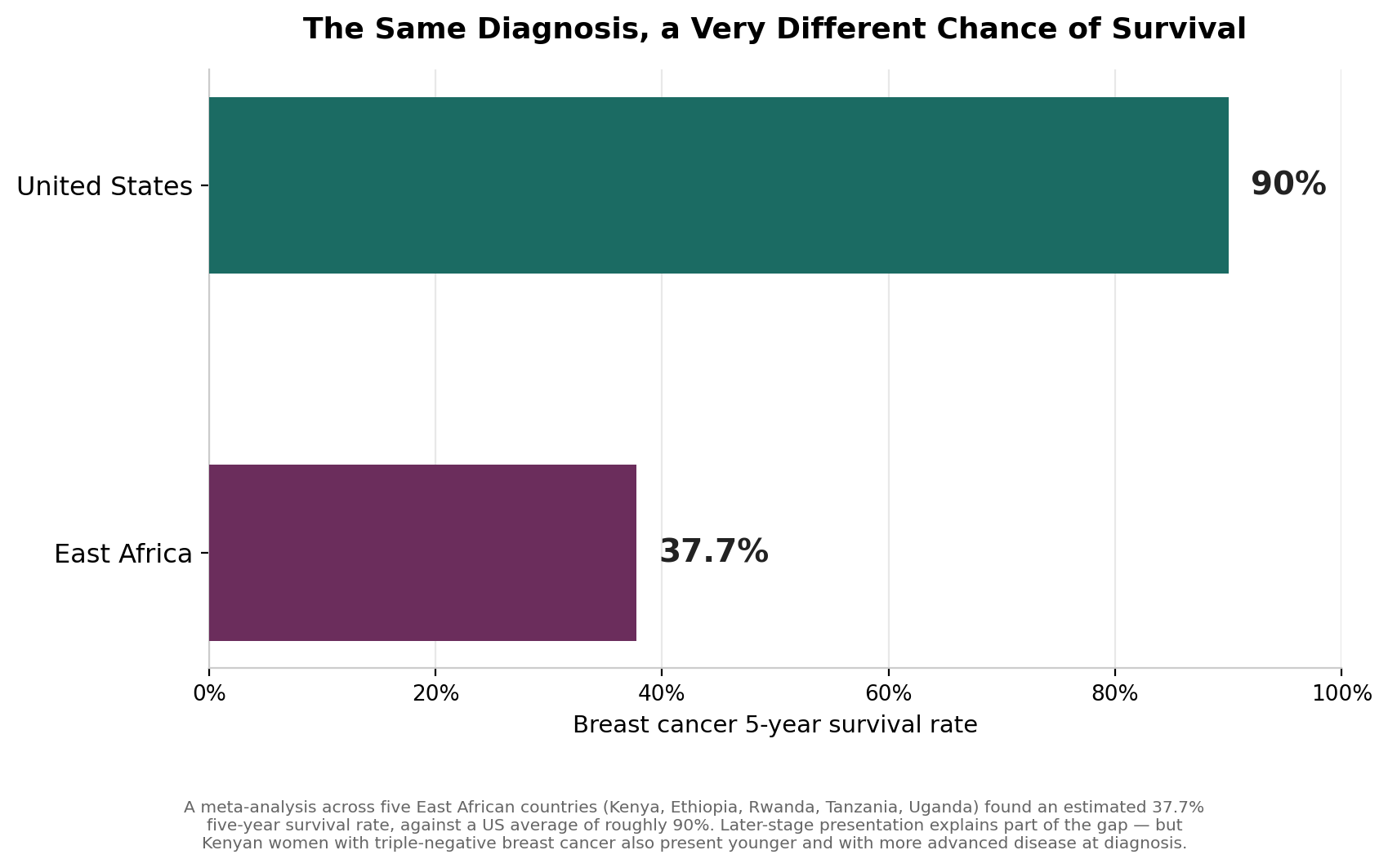
- The guide explains that breast cancer treatment depends on the tumour's specific subtype, particularly ER, PR and HER2 status, rather than treating every breast cancer in the same way. It highlights an estimated 37.7% five-year survival rate across five East African countries, compared with roughly 90% in the United States.
- Kenyan women are highlighted as having a disproportionately high burden of triple-negative breast cancer (TNBC). The guide recommends complete receptor testing and genomic assessment where relevant, including BRCA and PD-L1 testing, before finalising treatment.
- The guide notes that many breast cancer cases can be treated in Kenya, but India may be particularly valuable for TNBC, genomic-guided treatment, breast-conserving surgery and reconstruction. Indian centres may also provide access to immunotherapy and targeted treatment when clinically appropriate.
- For surgeon selection, patients should focus on experience with their specific breast cancer subtype, not simply overall breast surgery volume. The guide also recommends asking whether breast-conserving surgery has been genuinely assessed and whether realistic survival and recurrence information has been explained.
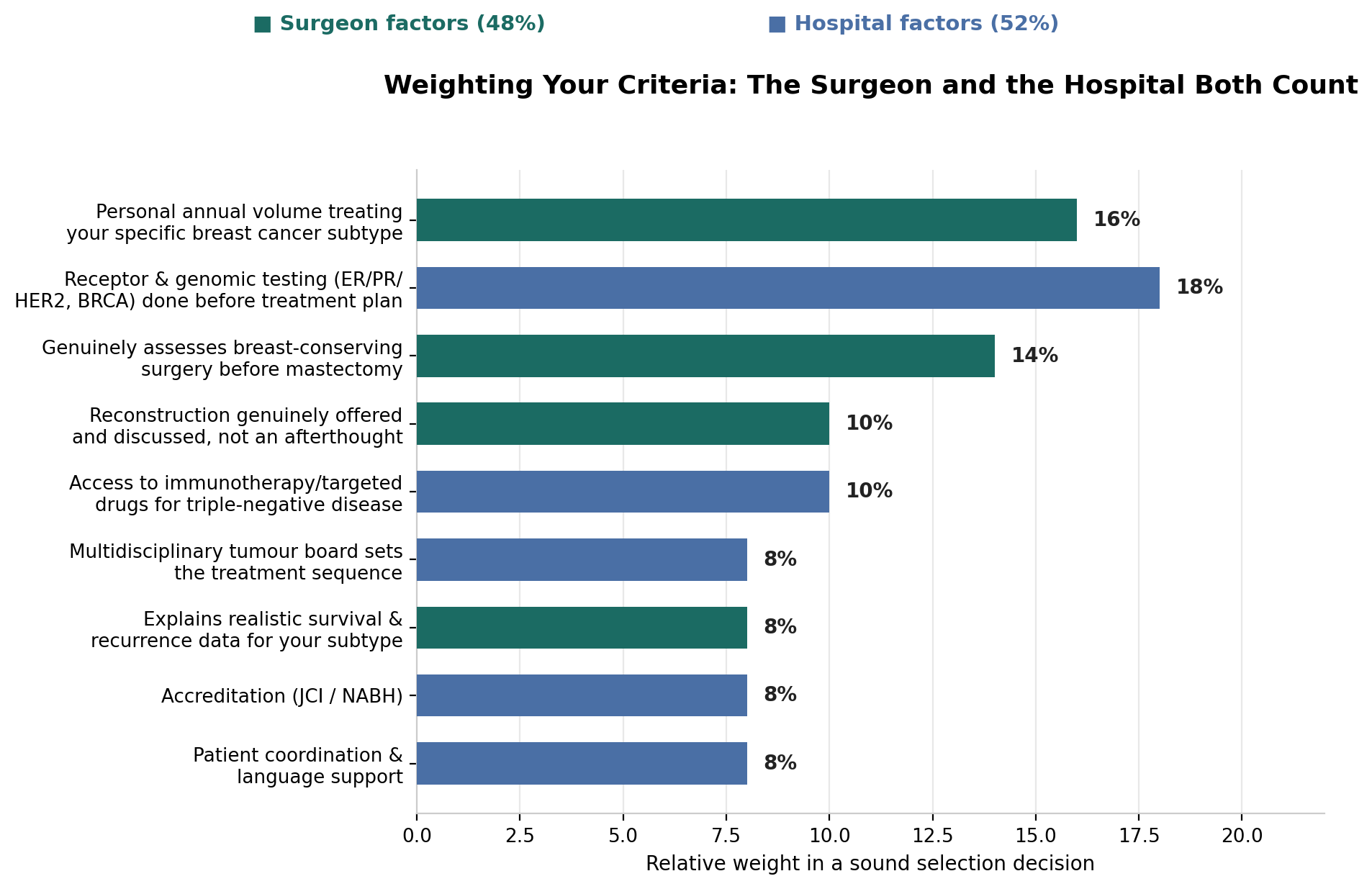
- Hospital selection is equally important. The PDF's criteria weighting gives 48% to surgeon factors and 52% to hospital factors, with emphasis on testing capability, reconstruction, targeted therapies, multidisciplinary tumour-board review and JCI/NABH accreditation.
- The indicative cost chart shows approximately US$2,400–11,000 in India, compared with US$3,000–9,000 in Kenya, US$20,000–50,000 in the UK and US$45,000–150,000 in the US. Patients should obtain an itemised quote and confirm whether genomic testing, targeted drugs and reconstruction are included.
- Before travelling, Kenyan patients should send complete imaging and biopsy pathology, arrange the treatment plan in advance and establish a written follow-up schedule with their Kenyan oncology team. The guide presents the pathway as testing → tumour-board planning → surgery/reconstruction → systemic treatment → follow-up in Kenya.
Quick Facts
- Author
- Dr. Dheeraj Bojwani
- Experience
- 24+ Years of Experience
- Treatment
- Breast Cancer Treatment and Surgery
- Patients
- Kenyan Breast Cancer Patients
- Key Specialist
- Breast Cancer Surgeon / Surgical Oncologist with relevant subtype experience
- Key Testing
- ER, PR, HER2 and genomic testing where clinically relevant
- Important Subtype
- Triple-negative breast cancer
- East African 5-Year Survival
- Estimated 37.7%
- US 5-Year Survival
- Approximately 90%
- India Treatment Cost
- Approximately US$2,400–11,000
- Kenya Treatment Cost
- Approximately US$3,000–9,000
- UK Treatment Cost
- Approximately US$20,000–50,000
- US Treatment Cost
- Approximately US$45,000–150,000
- Key Surgical Question
- Whether breast-conserving surgery is genuinely suitable before mastectomy
- Hospital Requirement
- Access to appropriate testing, treatment and multidisciplinary oncology care
- Reconstruction
- Should be discussed as a genuine option during initial surgical planning
- TNBC Treatment
- May involve chemotherapy, immunotherapy and/or targeted approaches depending on tumour findings
- Quality Check
- JCI/NABH accreditation plus demonstrated breast cancer subspecialisation
- Travel Route
- Nairobi to Delhi or Mumbai
- Follow-Up
- Written surveillance plan coordinated with the Kenyan oncology team
In Brief
For Kenyan patients considering breast cancer treatment in India, the most important decision is to identify the exact tumour subtype before choosing a treatment pathway. The guide prioritises complete ER, PR and HER2 testing, genomic assessment where relevant, specialist experience with the patient's specific subtype, access to targeted therapies, genuine reconstruction options and multidisciplinary tumour-board planning. It gives an illustrative treatment cost of US$2,400–11,000 in India, compared with US$3,000–9,000 in Kenya and substantially higher costs in the UK and US, while emphasising that families should obtain a detailed quotation showing what is included and excluded.
Before the surgeon: the same diagnosis, a very different chance of survival
A meta-analysis spanning five East African countries, including Kenya, found an estimated five-year breast cancer survival rate of 37.7%, compared with roughly 90% in the United States. Some of this gap reflects later-stage presentation, a pattern covered elsewhere in this series. But research specifically on Kenyan patients points to something more than delay alone.
Kenyan women, along with other women of African ancestry, are disproportionately affected by triple-negative breast cancer, a subtype that tests negative for oestrogen receptors, progesterone receptors, and HER2, meaning it cannot be treated with the hormone therapies or HER2-targeted drugs that work for other breast cancers. Research comparing triple-negative tumours from Kenyan, African-American, and Caucasian women found that young Kenyan patients presented with higher-stage tumours than either comparison group, a pattern consistent with more aggressive underlying disease, not simply later diagnosis.
This matters practically because triple-negative breast cancer's treatment options depend heavily on genomic testing, BRCA status, PD-L1 expression, and emerging genomic markers, to determine whether immunotherapy or newer targeted approaches apply to your specific tumour. Without that testing, treatment defaults to standard chemotherapy alone, missing options that could genuinely change the outcome. The practical takeaway is to insist on full receptor testing, ER, PR, and HER2, and genomic testing where relevant, before any treatment plan is finalised, and to ask specifically what that testing showed and how it shapes your recommended treatment.
Should you travel at all?
Kenya's cancer centres, including Kenyatta National Hospital and Aga Khan University Hospital Nairobi, perform breast cancer surgery and standard chemotherapy competently, and for hormone-receptor-positive or HER2-positive cancers with a clear, established treatment pathway, treatment in Kenya is a reasonable starting point.
For triple-negative disease, cases needing genomic testing to guide treatment, or situations where breast-conserving surgery and reconstruction deserve a genuinely specialist assessment, India is where I steer patients, confidently. India's leading breast cancer centres combine full receptor and genomic testing, access to immunotherapy and targeted drugs for triple-negative disease, and dedicated reconstructive surgeons who treat reconstruction as a genuine option to discuss, not an afterthought, at a fraction of UK or US cost.
Part one: judging the surgeon
1. Receptor and genomic testing done before the treatment plan
I weight this above every other factor, and the chart below reflects that. Confirm that ER, PR, and HER2 testing, and genomic testing where relevant to your case, are completed and specifically explained to you before any treatment plan is finalised.
2. Personal annual volume treating your specific subtype
Ask how many cases matching your specific breast cancer subtype, not breast cancer in general, the surgeon or oncologist personally treats each year.
3. Genuinely assesses breast-conserving surgery before mastectomy
Ask whether breast-conserving surgery is a genuine option for your case, and if not, why not, referencing your specific tumour size and location.
4. Explains realistic survival and recurrence data for your subtype
Ask what your realistic prognosis looks like specifically for your cancer's subtype and stage, with real numbers, not a generic statement about breast cancer survival overall.
Part two: judging the hospital
For breast cancer treatment, testing capability and treatment breadth carry as much weight as the individual surgeon, reflected in the balance above, because the right treatment depends entirely on knowing precisely what disease you're treating.
5. Reconstruction genuinely offered and discussed
Ask whether reconstruction is presented as a genuine option at the time of your initial surgical planning, with a dedicated reconstructive surgeon involved, not raised only if you specifically ask.
6. Access to immunotherapy and targeted drugs for triple-negative disease
If your cancer is triple-negative, ask specifically whether the hospital has access to immunotherapy and other targeted approaches, and whether your genomic profile has been used to determine if you're a candidate.
7. A multidisciplinary tumour board sets the treatment sequence
Ask whether your case is reviewed by a team including surgical, medical, and radiation oncology, not decided by a single specialist working alone.
8. Accreditation, read properly
JCI and NABH accreditation are meaningful filters on safety and infection control, but say nothing about breast cancer sub-specialisation specifically. Use accreditation to exclude weak candidates, not to choose between the strong ones.
9. The cost you will actually pay
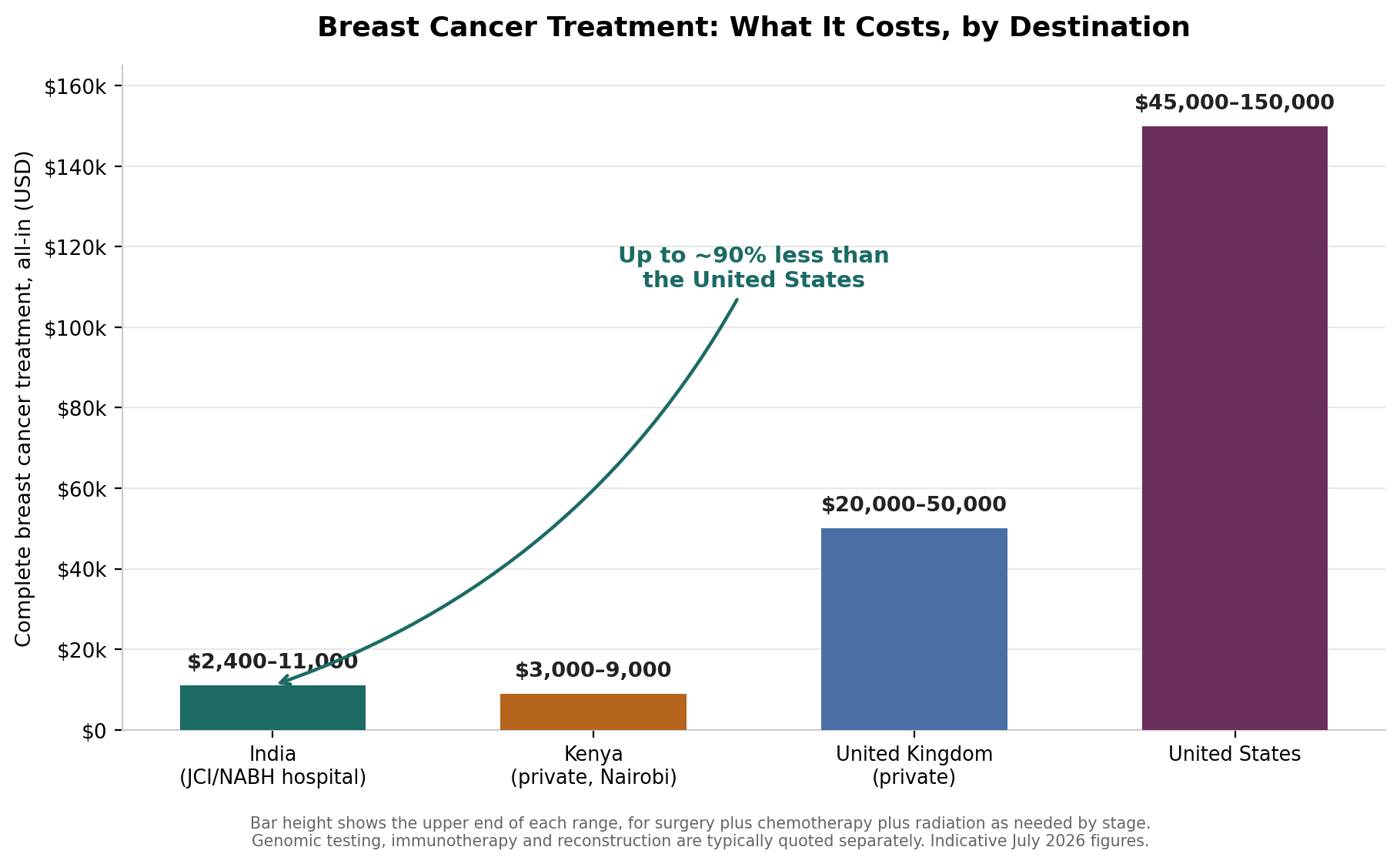
Let me be emphatic about this, because 24 years of handling these cases has taught me nothing more consistently: disputes almost never concern the quoted price. They concern what the quote silently omitted. For breast cancer treatment specifically, insist the estimate states whether reconstruction is included or separately priced, and whether genomic testing and targeted drugs, if indicated, are part of the package.
Budget beyond the treatment. Direct Nairobi–Delhi and Nairobi–Mumbai flights run roughly 550 to 850 dollars return, and a complete surgery-plus-chemotherapy course often runs several weeks to months, so plan accommodation and potential return trips accordingly.
Four signals that should make you pause
Certain patterns reliably precede a difficult outcome. A treatment plan finalised without complete receptor testing. No mention of genomic testing for triple-negative disease. Reconstruction mentioned only if you raise it yourself. And a hospital unable to describe access to immunotherapy or targeted drugs when your subtype would benefit.
None alone proves a bad hospital. Together they warrant a second opinion before you commit to treatment.
The Kenya-specific practicalities
Send the full imaging and biopsy pathology, not just a summary letter, so the tumour board can confirm receptor status and plan genuine treatment options before you arrive.
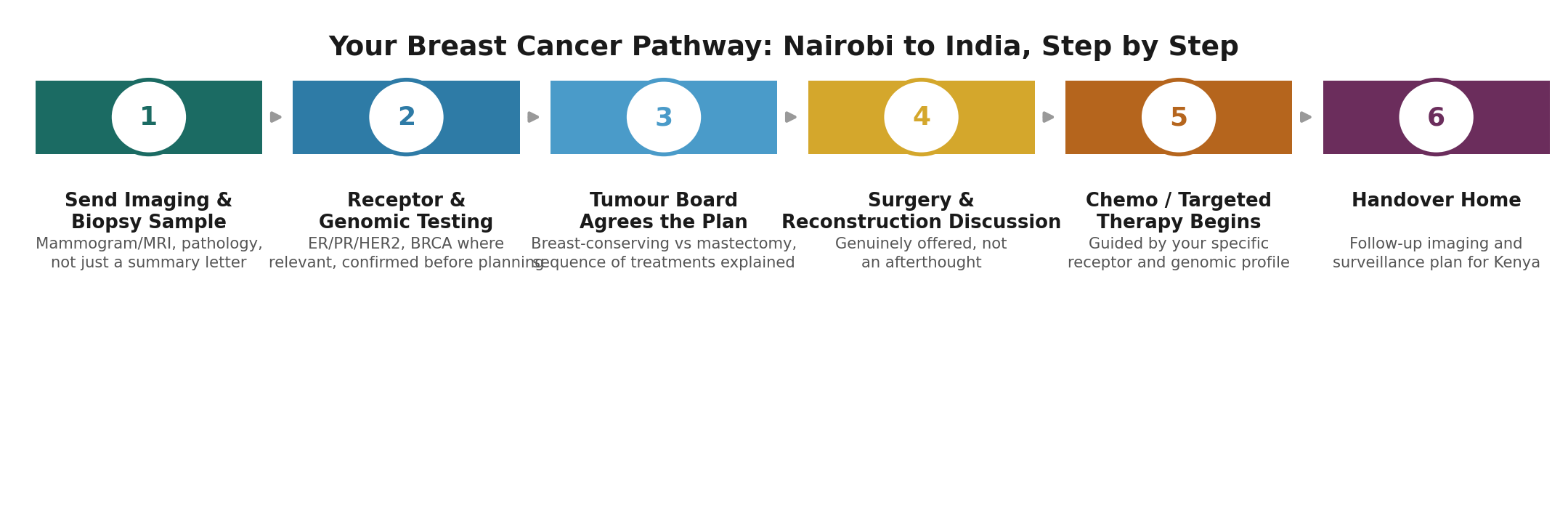
Direct Nairobi–Delhi and Nairobi–Mumbai flights make this roughly a six-hour journey. The Indian medical e-visa is issued within three to five working days against a hospital letter, and an attendant can travel with you on a medical attendant visa.
Agree in advance on a written follow-up imaging and surveillance schedule your Kenyan oncologist can act on, since breast cancer follow-up continues for years.
The questions I would ask before committing
Of the surgeon:
- Has full ER, PR, and HER2 testing been completed, and what did it show?
- How many cases matching my specific subtype do you personally treat each year?
- Is breast-conserving surgery a genuine option for me, and if not, why not?
- What is my realistic prognosis, specifically, for my subtype and stage?
Of the hospital:
- Is reconstruction genuinely offered as part of initial surgical planning?
- Do you have access to immunotherapy or targeted drugs if my cancer is triple-negative?
- Is my case reviewed by a full multidisciplinary tumour board?
- What exactly is excluded from the quoted price?
- May I speak to a previous East African patient treated for a similar diagnosis?
A team that answers all nine without irritation is very likely the right team. One that turns vague at the first or second has told you what you needed to know at no cost at all.
Straight Answers for Kenyan Patients about Breast Cancer Surgeons and Hospitals in India
How do I choose the best surgeon in India for breast cancer as a Kenyan patient?
Confirm complete ER, PR, and HER2 testing has been done, ask his annual volume in cases matching your specific subtype, and ask whether breast-conserving surgery is genuinely an option for you before mastectomy is discussed.
How much does breast cancer treatment cost in India for a Kenyan patient?
Typically 2,400 to 11,000 US dollars for a complete surgery-and-chemotherapy course, depending on stage. The same treatment runs roughly 3,000 to 9,000 dollars in Kenya, 20,000 to 50,000 in the UK, and 45,000 to 150,000 in the US.
Why is breast cancer survival so much lower in East Africa?
A meta-analysis found an estimated 37.7% five-year survival rate across five East African countries, against roughly 90% in the US. Later-stage presentation explains part of this, but Kenyan women also face a disproportionately high rate of triple-negative breast cancer, an aggressive subtype with fewer treatment options and typically diagnosed at a younger age.
What is triple-negative breast cancer, and why does it matter?
It's breast cancer that tests negative for oestrogen receptors, progesterone receptors, and HER2, meaning it cannot be treated with hormone therapy or HER2-targeted drugs. It requires chemotherapy and, increasingly, genomic- guided immunotherapy, making full testing essential to identify all available options.
Will I be offered breast reconstruction if I need a mastectomy?
You should be, as a genuine option discussed at the time of surgical planning, not an afterthought. Ask specifically whether a dedicated reconstructive surgeon is part of your care team from the start.
How long does breast cancer treatment take?
It varies by stage and subtype, but a complete course, surgery followed by chemotherapy and sometimes radiation, typically spans several months. Triple-negative and genomic-guided treatments may extend this timeline, and ongoing surveillance continues for years afterward.
A closing word
For a Kenyan woman facing breast cancer, especially the aggressive triple-negative subtype that disproportionately affects women of African ancestry, India offers full testing, real treatment options, and specialists who treat reconstruction as a genuine choice, at a fraction of UK or US cost. The best surgeon is the one who insists on complete receptor and genomic testing before finalising any plan. The best hospital pairs him with access to the targeted therapies your specific tumour might actually respond to. If you would like me to look at your imaging and pathology and talk through honestly what your treatment plan should look like, send them across.
Sources
- 🌐 Triple-negative breast cancer prevalence in Africa: a systematic review and meta-analysis (East African 5-year survival estimate)
- 🌐 Comparative analysis of triple-negative breast cancer transcriptomics of Kenyan, African American and Caucasian Women. PMC, 2021
- 🌐 Epidemiology, biology, and treatment of triple-negative breast cancer in women of African ancestry. The Lancet Oncology / PMC
- 🌐 National Medical Commission of India — surgeon and specialist registration verification
- 🌐 National Accreditation Board for Hospitals & Healthcare Providers (NABH) — accredited hospital directory
- 🌐 Kenya Social Health Authority (SHA) — benefits packages and overseas treatment guidance
Frequently Asked Questions by Kenyans about Breast Cancer Surgeons and Hospitals in India
How should Kenyan patients choose the best breast cancer surgeon in India?
Patients should confirm complete ER, PR and HER2 testing, ask about the surgeon's annual volume for their specific subtype, and determine whether breast-conserving surgery is genuinely appropriate before mastectomy is recommended.
Does every Kenyan breast cancer patient need treatment in India?
No. The guide states that established Kenyan centres can manage many breast cancer cases. India may be particularly useful when genomic testing, specialist reconstruction, breast-conserving assessment or more complex treatment options are required.
Why are ER, PR and HER2 tests important?
These tests identify important characteristics of the tumour and help determine which treatments may work. The guide recommends confirming the results before finalising the treatment plan.
Why is triple-negative breast cancer important for Kenyan patients?
Triple-negative breast cancer lacks ER, PR and HER2 expression and therefore cannot be treated with hormone therapy or HER2-targeted drugs. The guide emphasises genomic assessment and consideration of immunotherapy or newer targeted approaches where appropriate.
What should I ask about a breast cancer surgeon's experience?
Ask how many patients with your specific breast cancer subtype the surgeon personally treats each year rather than relying only on their overall breast or cancer surgery experience.
Should breast-conserving surgery be considered before mastectomy?
The guide recommends asking whether breast-conserving surgery is a genuine option and, if it is not, asking the surgeon to explain why based on the tumour's size and location.
Is breast reconstruction available in India?
The guide recommends choosing a centre where reconstruction is discussed as a genuine option during initial surgical planning, with a dedicated reconstructive surgeon involved where appropriate.
How much does breast cancer treatment cost in India for Kenyan patients?
The guide gives an indicative range of US$2,400–11,000 for treatment in a JCI/NABH hospital, depending on the case. Genomic testing, targeted drugs and reconstruction may be separately priced.
What should Kenyan patients send to an Indian cancer centre before travelling?
Patients should send their complete imaging and biopsy pathology, rather than only a summary letter. This allows the Indian team to review receptor status and assess treatment options before the patient arrives.
How should follow-up be managed after returning to Kenya?
The guide recommends agreeing on a written imaging and surveillance schedule before travelling so that the Kenyan oncology team can continue monitoring and long-term follow-up after treatment in India.
Page Summary
This guide explains how Kenyan patients can choose suitable breast cancer surgeons and hospitals in India by focusing on complete tumour testing, subtype-specific specialist experience, breast-conserving surgery, reconstruction and access to targeted treatments. It also compares surgeon and hospital selection factors, highlights the importance of multidisciplinary tumour-board review and accreditation, provides indicative treatment costs across India, Kenya, the UK and the US, and outlines the patient journey from sharing pathology and imaging before travel through treatment in India and long-term follow-up with the Kenyan oncology team.
Citation Block
| Topic | Information |
|---|---|
| Topic | Breast Cancer Treatment in India for Kenyan Patients |
| Patients | Kenyan Breast Cancer Patients |
| Key Testing | ER, PR, HER2 and relevant genomic testing |
| Important Subtype | Triple-Negative Breast Cancer |
| Specialist | Breast Cancer Surgeon / Surgical Oncologist |
| Surgeon Check | Experience with the patient's specific subtype |
| Surgical Option | Breast-conserving surgery should be assessed before mastectomy |
| Reconstruction | Should be discussed during initial surgical planning |
| Targeted Treatment | Immunotherapy and targeted drugs where clinically indicated |
| Hospital Care | Multidisciplinary tumour-board review |
| Accreditation | JCI/NABH accreditation |
| India Cost | Approximately US$2,400–11,000 |
| Kenya Cost | Approximately US$3,000–9,000 |
| UK Cost | Approximately US$20,000–50,000 |
| US Cost | Approximately US$45,000–150,000 |
| Quote Check | Confirm inclusions and exclusions |
| Cost Items to Check | Genomic testing, targeted drugs and reconstruction |
| Pre-Travel Records | Complete imaging and biopsy pathology |
| Travel Route | Nairobi–Delhi or Nairobi–Mumbai |
| Follow-Up | Written surveillance plan with Kenyan oncology team |
| Warning Signs | Incomplete receptor testing or unclear treatment options |
| Decision Principle | Confirm the exact tumour subtype before finalising treatment |
| Treatment Pathway | Testing → tumour board → surgery/treatment → follow-up |
| Key Statistic | 37.7% estimated five-year survival across five East African countries |


Our Mission Statement
Our mission is to place patients at the centre of every healthcare decision by providing trustworthy, evidence-based, and unbiased medical information. We believe that informed patients make better decisions. Backed by personalised guidance from our experienced advisory team, we help patients understand their treatment options, compare them objectively, and confidently choose the path that best suits their medical needs and personal circumstances.
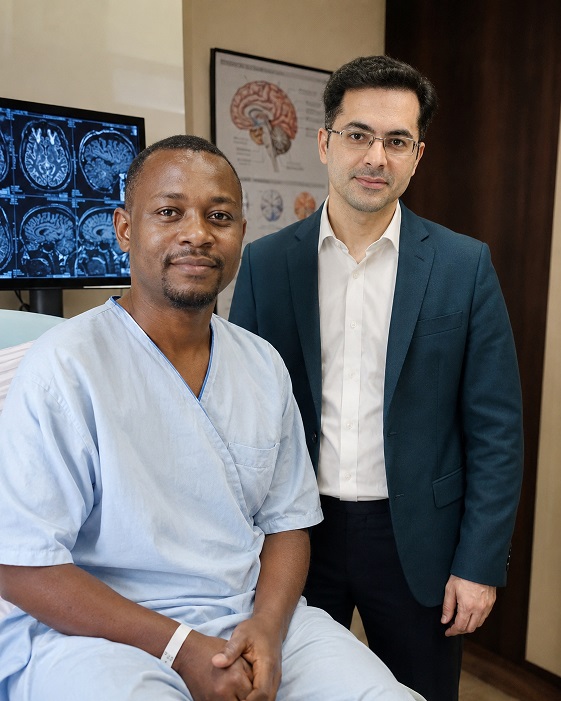
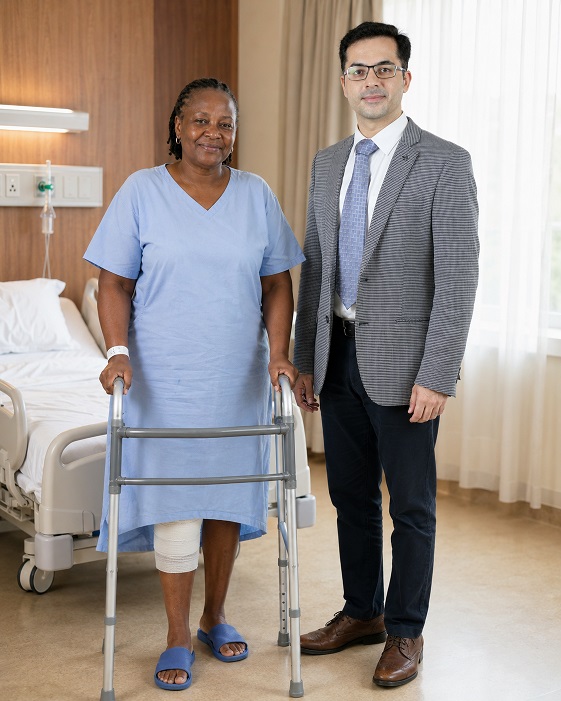
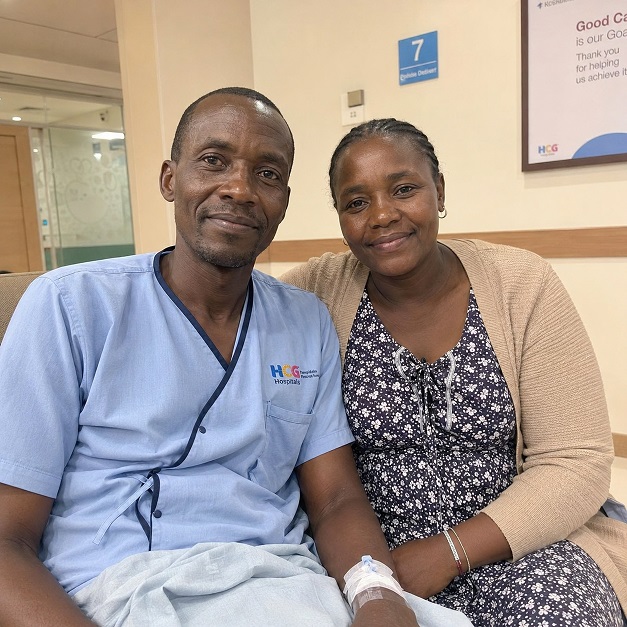
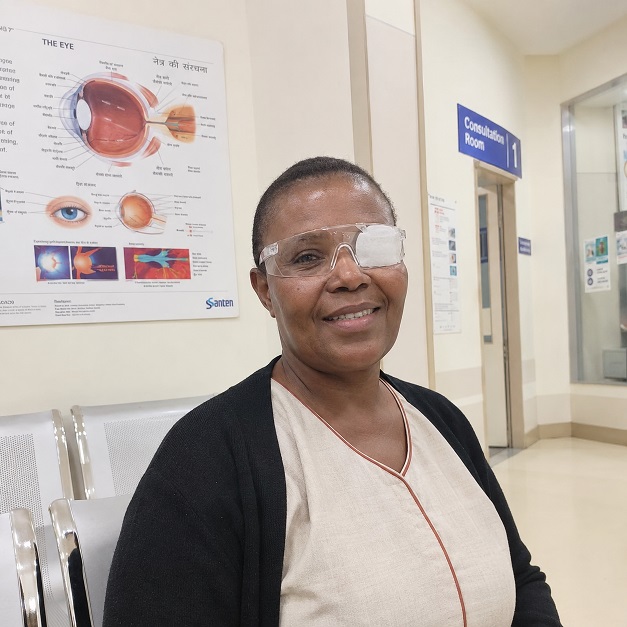
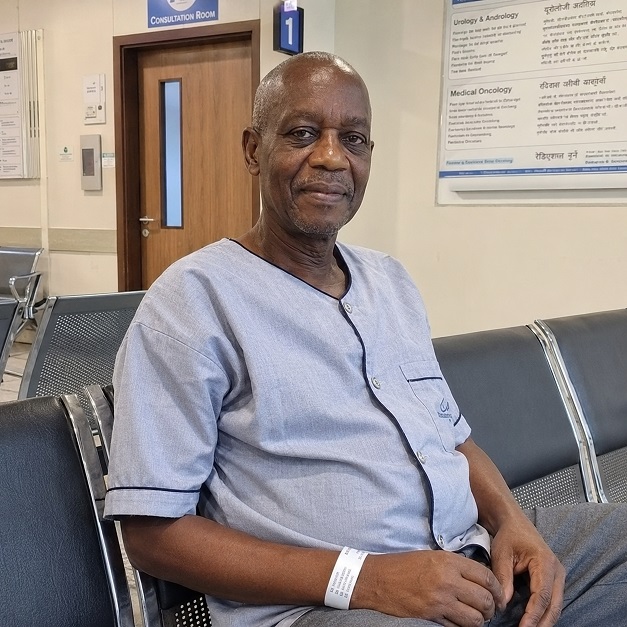
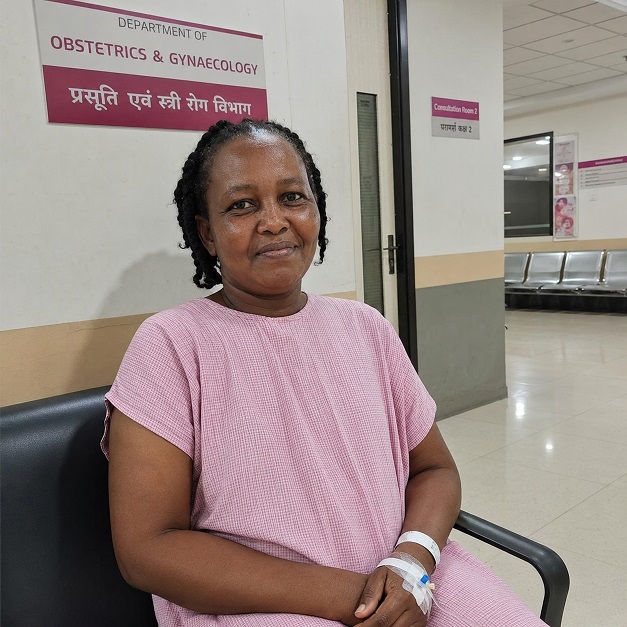
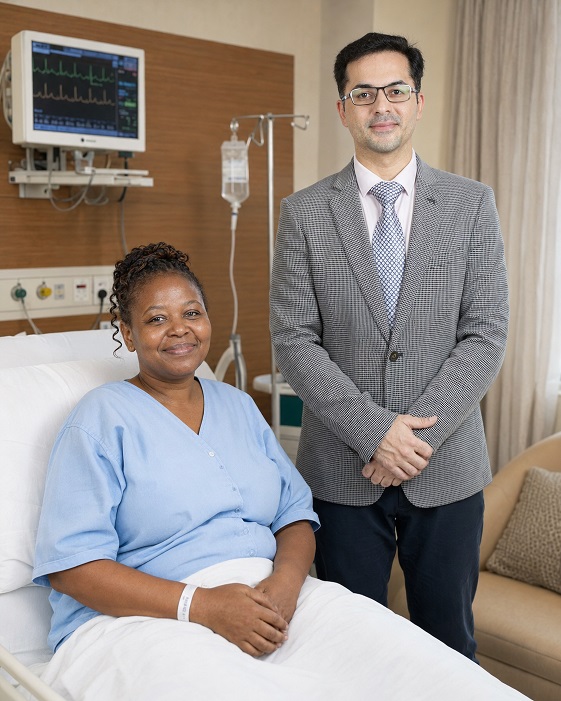
Patient Testimonials from Kenya
Ready to Take the First Step?
Share your Medical Reports with our Healthcare Managers Today and Get a FREE CONSULTATION, a Personalized Treatment Plan, and Complete Support from Arrival to Recovery.
Get Your Free ConsultationAreas We Serve
This resource has been thoughtfully prepared for patients from Kenya who are considering medical treatment in India. We also welcome patients from the wider region in the countries mentioned below-
We assist patients from:
- Ethiopia
- Somalia
- Tanzania
- Uganda
- Seychelles
- Guinea
- Guinea-Bissau
- Liberia
- Mali
- Mauritania
- Niger
- Nigeria
- Senegal
- Togo
- South Sudan
- Sierra Leone
Many of the insights, treatment pathways, hospital recommendations, travel guidance, and patient support services described here are equally relevant and may be used as a reference when planning treatment in India.
From Kenya to India: Your Complete Patient Support Guide
- Brain Tumour Surgery in India for Kenyan Patients
- Cancer Treatment and Surgery in India for Kenyan Patients
- Cardiac Treatment and Surgery in India for Kenyan Patients
- Heart Valve Replacement Surgery in India for Kenyan Patients
- Knee Replacement in India for Kenyan Patients
- Prostate Cancer Treatment and Surgery in India for Kenyan Patients
- Spine Treatment and Surgery in India for Kenyan Patients
- Selecting the Best Bariatric Surgeons and Hospitals in India: What Kenyan Patients Should Actually Look For
- Selecting the Best Cancer Surgeons and Hospitals in India: What Kenyan Patients Should Actually Look For
- Selecting the Best Cardiac Surgeons and Hospitals in India: What Kenyan Patients Should Actually Look For
- Selecting the Best Dental Surgeons and Clinics in India: What Kenyan Patients Should Actually Look For
- Selecting the Best Hip Surgeons and Hospitals in India: What Kenyan Patients Should Actually Look For
- Selecting the Best Kidney Transplant Surgeons and Hospitals in India: What Kenyan Patients Should Actually Look For
- Selecting the Best Knee Surgeons and Hospitals in India: What Kenyan Patients Should Actually Look For
- Selecting the Best Liver Transplant Surgeons and Hospitals in India: What Kenyan Patients Should Actually Look For
- Selecting the Best Neurosurgeons and Hospitals in India: What Kenyan Patients Should Actually Look For
- Selecting the Best Prostate Cancer Surgeons and Hospitals in India: What Kenyan Patients Should Actually Look For
- Selecting the Best Spine Surgeons and Hospitals in India: What Kenyan Patients Should Actually Look For