Apollo Hospital
 Fortis Hospital
 Artemis Hospital
 Max Hospital
 Columbia Asia Hospital
 Medanta Hospital


 Jaslok Hospital
 Lilavati Hospital


 Global Hospitals

 :
: Sterilization Surgery in India
Key Takeaways
- Tubal sterilization (bilateral tubal ligation) permanently blocks the fallopian tubes to prevent pregnancy.
- Approximately 700,000 tubal sterilization procedures are performed each year in the United States, with half done immediately after childbirth and the remainder as elective one‑day outpatient surgeries.
- Laparoscopic methods (such as bipolar laparoscopy, Falope ring, and Filshie clip) are the most popular technique for non‑pregnant women, while periumbilical minilaparotomy is commonly used right after delivery.
- The FDA‑approved Essure system places a small metallic implant into each fallopian tube via hysteroscopy without incision or general anesthesia, and requires a confirmatory hysterosalpingogram x‑ray at three months.
- About 1 in 200 women become pregnant after tubal sterilization, and any pregnancy that occurs carries an increased risk of ectopic implantation.
What is Sterilization Surgery?
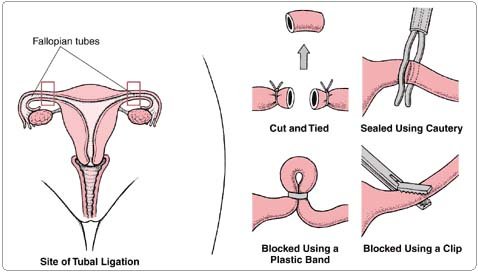
Tubal sterilization is surgery to block a woman’s fallopian tubes. Tubal sterilization is a permanent form of birth control. After this procedure, eggs cannot move from the ovary through the tubes (a woman has two fallopian tubes), and eventually to the uterus. Also, sperm cannot reach the egg in the fallopian tube after it is released by the ovary. Thus, pregnancy is prevented.
This procedure is also called tubal ligation or you are said to have your "tubes tied." More formally, it is known as bilateral tubal ligation (BTL).
Currently, about 700,000 of these procedures are performed each year in the United States. Half are performed right after a woman gives birth. The rest are elective procedures performed as a one-day operation in an outpatient clinic. Eleven million US women aged 15-44 years rely on sterilization as a means of birth control to prevent pregnancy. More than 190 million couples worldwide use surgical sterilization as a safe and reliable method of permanent birth control.
Prior to the 1960s, female sterilization in the United States was generally performed only for medical problems or when a woman was considered “too old” to have children or at risk. The changing cultural climate in the 1960s resulted in safe, minimally invasive female sterilization procedures.
To get free no obligation Quote For Sterilization Surgery in India :
Click HerePhone Numbers Reach Us-
India & International : +91-9860755000 / +91-9371136499
UK : +44-2081332571
Canada & USA : +1-4155992537
The Operation
While you are under anesthesia, one or two small incisions (cuts) are made in the abdomen (usually near the navel), and a device similar to a small telescope on a flexible tube (called a laparoscope) is inserted.
Using instruments that are inserted through the laparoscope, the tubes (fallopian tubes) are coagulated (burned), sealed shut with cautery, or a small clip is placed on the tube. The skin incision is then closed with a few stitches. You are usually feeling well enough to go home from the outpatient surgery center in a few hours. Your health care provider may prescribe pain medications to help you manage the pain, if any.
Most women return to normal activities, including work, in a few days, although you may be advised not to exercise for several days. You may resume sexual intercourse when you feel ready. Tubal ligation can also be performed immediately after childbirth through a small incision near the navel or during a Cesarean delivery.
Currently, laparoscopy (bipolar laparoscopy, Falope ring, Filshie clip) is the most popular method of female sterilization in nonpregnant women. Periumbilical minilaparotomy (Pomeroy, Parkland) is the most common procedure right after childbirth. A new device acts much like tubal sterilization by blocking the fallopian tubes. The Food and Drug Administration has approved a small metallic implant (called the Essure System) that is placed into the fallopian tubes of women who wish to be permanently sterilized. Unlike other currently available tubal sterilization procedures for women, placement of the device does not require an incision or general anesthesia.
During the Essure procedure, your health care provider inserts an obstructive device into each of the 2 fallopian tubes at the time of hysteroscopy. This is done with a special catheter that is inserted through the vagina into the uterus and then into the fallopian tube. The device works by inducing scar tissue to form over the implant, blocking the fallopian tube and preventing fertilization of the egg by the sperm.
Patient from USA – Ms. Ann Finley shares her experience of Sterilization Surgery in India

Mr. James Finley and his wife Ms. Ann Finley from USA
After the birth of two kids, we decided that we do not want to have more kids ever. So, instead of relying on the oral contraceptives which are not entirely safe, we decided to undergo the permanent sterilization process. We connected with the doctors at Dheeraj Bojwani Group on the recommendation of a cousin who had got the same surgery done from them. I must say that they made us feel so comfortable during the consultation that all our doubts regarding whether this would be the right way to go about thing evaporated. It’s been a year since the surgery and we are leading a very healthy and stress free life.
★★★★★ Published
Alternatives
If you feel you want a permanent solution to birth control, discuss your options with your health care provider. Many younger women who choose this procedure regret their decisions later. The younger the woman, the more likely she will regret choosing this permanent form of birth control.
Your doctor will discuss your current number of children, your plans for your future and family, and will want to talk with your spouse. This is an important decision. Women with certain medical conditions may not be suited for this procedure.
Tubal sterilization is surgery. Many couples, in looking at their birth control options, especially when they are ready to stop having children, weigh the benefits and risks of whether the woman would undergo tubal sterilization or the man a vasectomy.
Tubal ligation is not temporary. Do not think of it as a procedure to be reversed. When reversal is attempted, the operation becomes major surgery and is only successful about 50-80% of the time (meaning the woman is able to become pregnant after reversal).
Risks
As with any surgery, there is always a risk when you are given general anesthesia. You may have a bad reaction to the medication used. Surgery itself may present problems with bleeding or infection.
There is still a chance you may become pregnant after tubal sterilization. About 1 in 200 women become pregnant who have their tubes tied. This may be caused by an incomplete closure of the tubes. If pregnancy occurs after the procedure, you are at increased risk for an ectopic pregnancy in which the pregnancy develops in the fallopian tubes. This is a dangerous situation.
Because the procedure is performed by tiny instruments inserted into your abdomen, you may have injury to other organs in your body.
Results
Most women recover from the laparoscopic procedure with no problems. There are no tests required to confirm that you are now sterile (that is, unable to become pregnant) after a laparoscopic procedure.
During the first 3 months after the Essure procedure, you must use another form of birth control. At the 3-month point, you must undergo a final x-ray procedure in which dye is placed in your uterus and an x-ray is taken to confirm that the device is in place. This procedure cannot be reversed.
To get free no obligation Quote For Sterilization Surgery in India :
Click HerePhone Numbers Reach Us-
India & International : +91-9860755000 / +91-9371136499
UK : +44-2081332571
Canada & USA : +1-4155992537
Some of the common countries from which patients travel to India for surgery are:
| USA | UK | Canada |
| Australia | New Zealand | Nigeria |
| Kenya | Ethiopia | Uganda |
| Tanzania | Zambia | Congo |
| Sri Lanka | Bangladesh | Pakistan |
| Afghanistan | Nepal | Uzbekistan |
Below are the downloadable links that will help you to plan your medical trip to India in a more organized and better way. Attached word and pdf files gives information that will help you to know India more and make your trip to India easy and memorable one.
| Click icon to Download Document | ||||||
| About India |  |  | Destinations in India | | | |
| Indian Embassy List | | | Medical Tourism FAQ | | | |
| Visa For India | | | ||||
Frequently Asked Questions
Related Articles:
- Hysterectomy - Vaginal Surgery in India
- Laparoscopy Surgery in India
- Posterior Repair - Prolapse Operation Surgery in India
- Salpingo-Oophorectomy - Ectopic Pregnancy Surgery in India
- Hysterectomy - Abdominal Surgery in India
Our objective is to empower patients with accurate, evidence-based, and patient-centric information, enabling them to make informed healthcare decisions with confidence. We combine reliable medical knowledge with personalized guidance and compassionate support, helping every patient choose the treatment that best serves their health and long-term well-being.
Quick Facts
Tubal sterilization is a permanent surgical birth control procedure that blocks or seals the fallopian tubes to prevent pregnancy.
Pregnancy risk remains low, with approximately 1 in 200 women becoming pregnant after the procedure.
Ectopic pregnancy risk increases if pregnancy occurs following sterilization.
Essure confirmation requires a hysterosalpingogram x-ray at three months to verify device placement.
Last updated: May 2026