

Spine Surgery in India for Patients from Somalia
Before anyone touches your spine, one question must be answered honestly: what is actually wrong with it? Get that answer right, and the path forward is clear, affordable, and proven. Get it wrong, and no surgeon, however skilled, can fix a mistake made before the operation ever began.
Few conditions frighten a family more than a spine that will not cooperate — the fear of paralysis, of never walking unaided again, of becoming a burden rather than a provider. That fear is exactly why the first diagnosis matters more here than in almost any other part of the body. Somalia carries the highest tuberculosis burden of any country in Eastern Africa, and the spine is the single most common site in the entire skeleton for TB to attack. A great many "back problems" referred to me from Somalia are not degenerative wear at all — they are infection, treated with medicine, not first with a scalpel. For 24 years I have insisted on this distinction before a patient boards a flight, and I write here as an independent adviser with no hospital's interest attached to my advice.
India is where that honest diagnosis, and the treatment that follows it, is genuinely available at scale, at a fraction of what the same evaluation would cost in the West or the Gulf. That is not a sales pitch. It is the arithmetic deciding whether a family can afford to have this looked at properly at all.
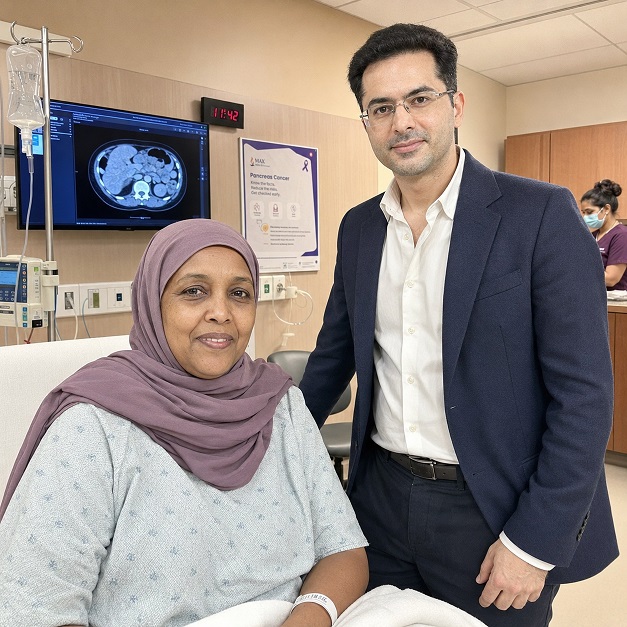
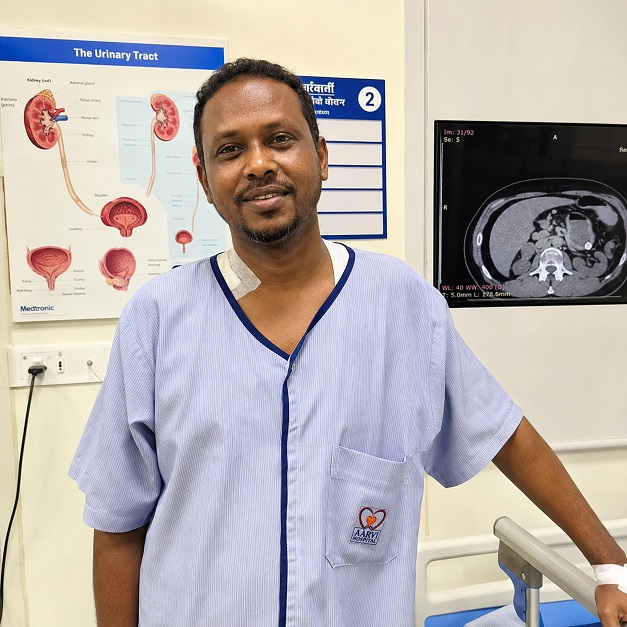
Healing Journeys of Somali Patients
Key Takeaways
- The guide emphasises that the correct diagnosis should come before any decision about spine surgery. For Somali patients in particular, spinal tuberculosis (Pott's disease) needs to be considered and ruled out before ordinary back pain is assumed to be degenerative disease.
- The chart on page 2 provides an illustrative breakdown of conditions behind spine referrals from Somalia: 42% mechanical or degenerative conditions, 27% spinal tuberculosis, 21% traumatic fractures and 10% deformity or other conditions.
- The document highlights spinal tuberculosis because Somalia carries a high TB burden and the spine is an important site of skeletal tuberculosis. Spinal TB can initially appear as persistent ordinary back pain before progressing to vertebral collapse or spinal cord compression.
- Treatment for spinal TB is not primarily surgical. The guide describes a sustained course of anti-tuberculosis medication, often lasting six months or longer, with surgery reserved for neurological compromise, instability or a large abscess.
- An MRI and appropriate bloodwork should therefore be completed before surgery is discussed when spinal TB is a possibility.
- The guide stresses that most back pain does not automatically require an operation. Surgery is described as more reliable for leg pain caused by nerve compression than for pain confined entirely to the back.
- The page 3 chart illustrates this distinction: 91% good relief is shown for leg pain caused by a pinched nerve, compared with 66% for pure back pain without leg symptoms.
- Symptoms such as pain running down the leg, foot numbness or weakness may indicate nerve compression and can make surgery more appropriate depending on imaging and specialist assessment.
- For pain confined to the back without leg symptoms, the guide recommends giving physiotherapy, weight management and time a genuine trial before proceeding to surgery.
Quick Facts
- Treatment
- Spine Surgery & Back/Neck Treatment
- Country
- India
- Intended Audience
- Somali Patients
- Primary Conditions
- Degenerative Spine Disease, Spinal Tuberculosis, Traumatic Fractures and Spinal Deformity
- Mechanical/Degenerative Referrals
- 42%
- Spinal Tuberculosis Referrals
- 27%
- Traumatic Fracture Referrals
- 21%
- Deformity or Other Referrals
- 10%
- Important Somali-Specific Condition
- Spinal Tuberculosis (Pott's Disease)
- Primary Pre-Surgery Assessment
- MRI and Appropriate Bloodwork
- Spinal TB Treatment
- Anti-Tuberculosis Medication, Often 6 Months or Longer
- Spinal TB Surgery
- Reserved for Neurological Compromise, Instability or Large Abscess
- Good Relief – Nerve-Related Leg Pain
- 91%
- Good Relief – Pure Back Pain
- 66%
In Brief
Spine surgery in India for Somali patients should begin with an accurate diagnosis, particularly because spinal tuberculosis can resemble ordinary back pain. The guide's illustrative referral data shows 27% of Somali spine referrals as spinal TB, while the page 3 chart shows 91% good relief for nerve-related leg pain compared with 66% for pure back pain. A typical single- or two-level spine procedure in India is estimated at approximately US$5,500–US$12,000 all-in, with surgical patients generally planning three to four weeks in India.
First, know what is actually wrong with the spine
This single question decides everything that follows, and it is where a serious spine centre earns its trust. Back and neck pain are symptoms, not diagnoses — and for patients from the Horn of Africa, the underlying cause is frequently something a Western clinic would rarely consider first.
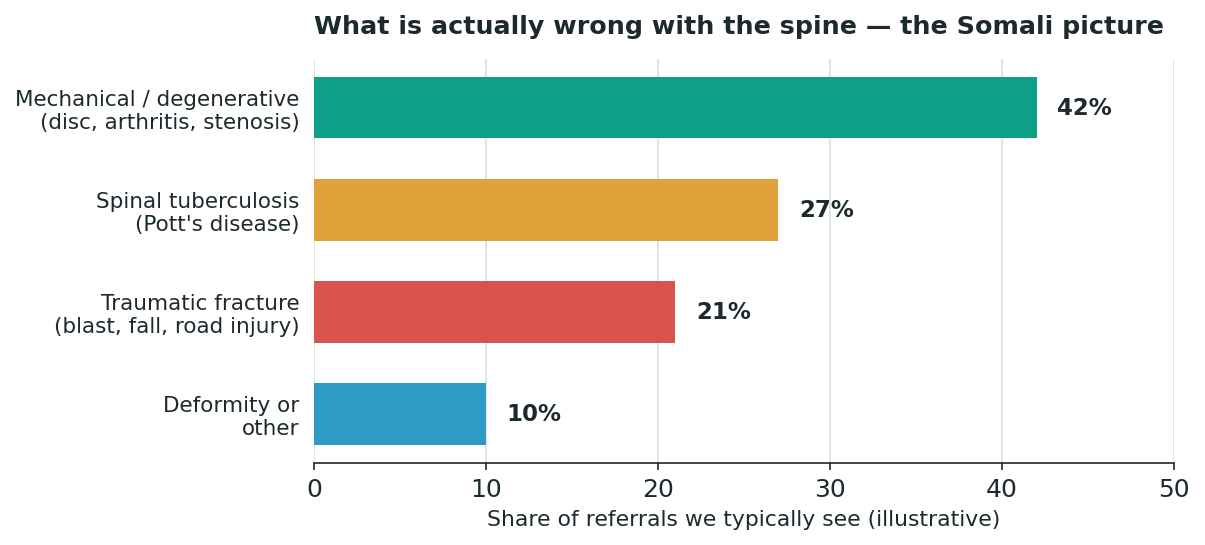
Illustrative breakdown of what typically lies behind a spine referral from Somalia.
The Somali difference: rule out infection before anyone mentions surgery
Spinal tuberculosis, known as Pott's disease, is the single most common site of skeletal TB worldwide, and Somalia's TB burden is the highest in Eastern Africa. It presents as ordinary- looking back pain for months before anyone suspects infection — and if missed, it can collapse a vertebra and compress the spinal cord, causing the very paralysis every patient fears. Treatment is not primarily surgical. It is a sustained course of anti-tuberculosis medicine, often six months or longer, with surgery reserved for neurological compromise, instability or a large abscess.
This is why an MRI and proper bloodwork must come before any conversation about an operation. A clinic that quotes you for spine surgery without first excluding TB has skipped the single most important step in your care.
Most back pain does not need an operation at all
Spine surgery is one of the most over-recommended operations in the world, and an honest surgeon says so before anything else. The evidence is consistent: surgery is excellent at relieving leg pain caused by a pinched nerve, but far less reliable for pain confined to the back alone. If your pain runs down the leg, numbs the foot, or comes with weakness, surgery has a strong track record. If the pain stays in the back with no leg symptoms, physiotherapy, weight management and time deserve a genuine trial first — and a surgeon who skips straight to an operation for this picture is a surgeon to question.
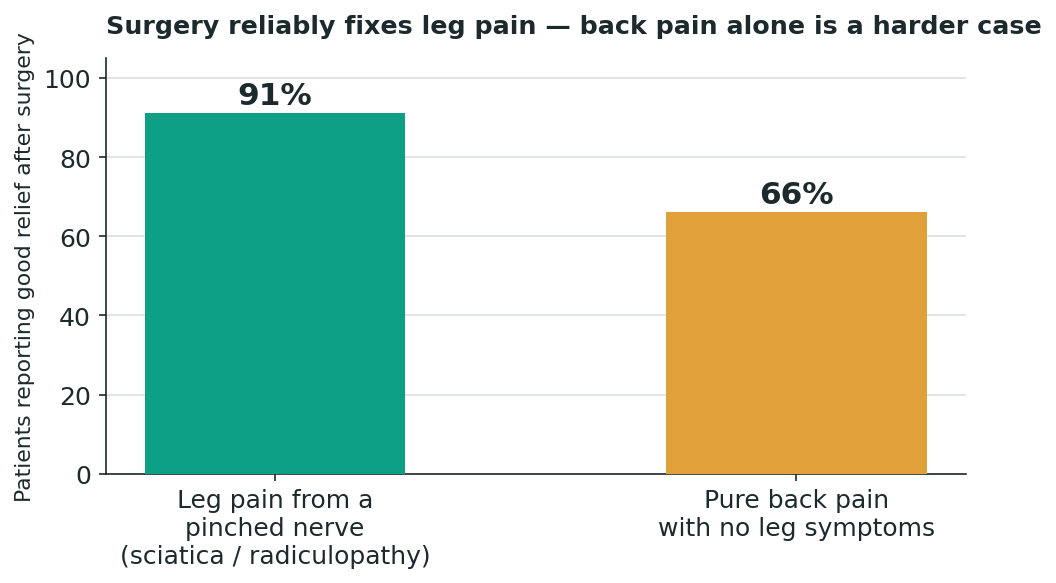
Surgery reliably resolves nerve-related leg pain; pure back pain is a genuinely harder problem to fix with an operation.
Second opinions are not an insult — they are the standard of care
Given how often spine surgery is recommended when it should not be, an independent second opinion is the rule here, not a courtesy. A surgeon confident in his own judgement welcomes another set of eyes on your scans; one who resists this is telling you something important. Before agreeing to anything, ask a second, unconnected specialist to review the same imaging.
What the operation actually involves, when it is the right call
When surgery is genuinely indicated — a herniated disc pressing on a nerve, spinal stenosis, an unstable fracture, or TB that has already caused instability — the goal is precise: relieve pressure on the nerves and stabilise the spine, using the smallest intervention that achieves this. Many procedures today use small incisions with faster recovery than older open techniques. Patients are typically mobilised within a day or two, with a hospital stay of three to seven days and a recovery of several weeks.
Choosing the surgeon and hospital is the real decision
The hospital's name matters far less than two facts behind it: how many spine procedures the surgeon performs each year in the exact category yours falls into, and whether the team includes genuine infectious-disease support for cases that turn out to be TB. Ask for the surgeon's name, qualifications and annual numbers. Confirm NABH accreditation in India or, better, international JCI accreditation. Because spine surgery carries real risk when done for the wrong reason, treat these questions as non- negotiable.
What it costs — a number you can actually plan around
Somalia has run on the US dollar for a generation, the shilling itself never meaningfully reissued since 1991, so it fits that Indian hospitals quote spine care the same way — in dollars, not a currency that shifts by the week. A typical single or two-level spine procedure in a reputable private Indian hospital runs US$5,500 to US$12,000 all-in, covering diagnosis, surgery where needed, hospital stay and initial rehabilitation. Set that beside the alternatives and the case makes itself.
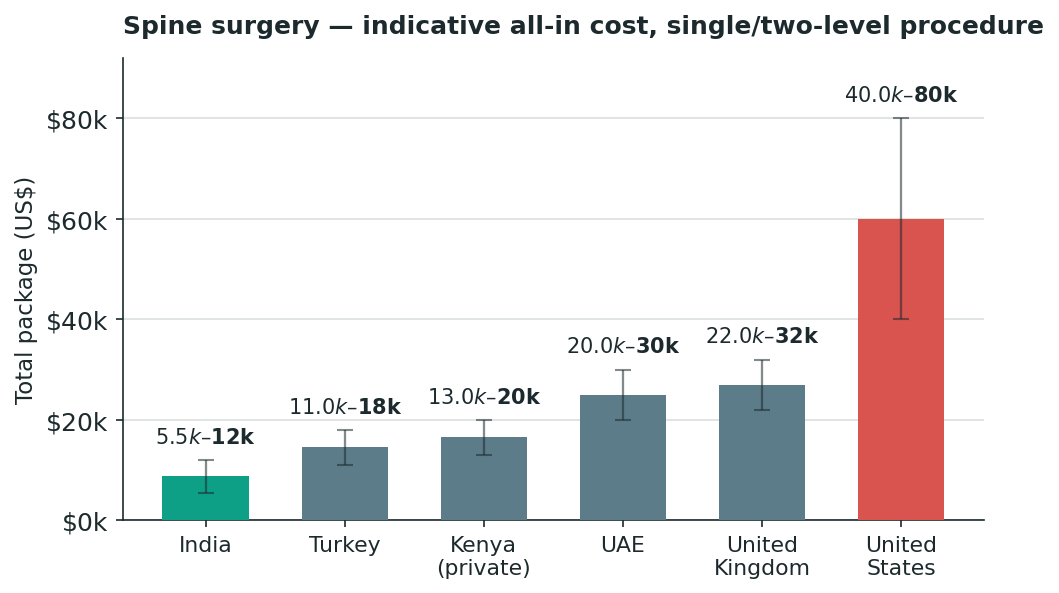
Indicative all-in cost for a single or two-level spine procedure. India sits far below every common alternative.
One rule protects every Somali family who makes this journey: get the estimate in writing before a single flight is booked, and insist it names the actual diagnosis, not just "spine surgery." Diaspora relatives contribute against a real number, not a guess. In more than 24 years arranging this kind of care, the disputes I have seen were almost never about the price itself — they were about a cost, or a diagnosis, nobody had bothered to write down.
Four signals that should make you stop and walk away
- TB was never mentioned — If nobody discusses ruling out spinal tuberculosis before quoting surgery, the workup was incomplete.
- Surgery for back pain alone — No leg symptoms, no weakness, yet surgery is pushed as the first option. Ask why.
- No second opinion welcomed — A surgeon who resists another specialist reviewing your scans is a surgeon to question.
- The price keeps moving — A verbal estimate that shifts each time you ask is not an estimate. Demand a fixed figure in writing.
Straight answers
How do I know if my back pain is actually tuberculosis?
You cannot know from symptoms alone — that is exactly the danger. Persistent back pain lasting weeks, especially with fever, night sweats or weight loss, needs an MRI and blood tests before anyone discusses surgery.
Will I need surgery at all?
Not necessarily. If your pain is confined to the back with no leg symptoms, or if imaging confirms TB without instability, medicine and rehabilitation come first. Surgery is reserved for nerve compression, instability or failed medical treatment.
How long will I need to stay in India?
For surgical cases, plan on three to four weeks: three to seven days in hospital, the rest for early rehabilitation and a final review. TB treatment without surgery may be started in India and safely continued at home under remote supervision.
What happens once I am home in Somalia?
You leave with a complete discharge summary, imaging and a clear medication or rehabilitation schedule. A properly run hospital reviews your progress remotely by phone or video — essential when specialist follow-up inside Somalia remains scarce.
The practical journey from Somalia — plan it before you fly
The medicine is the easy part; the logistics are what genuinely trip families up. There is no direct flight between Somalia and India; patients route through Nairobi, Addis Ababa, Dubai or Djibouti. Because there is no full Indian mission inside Somalia, the medical visa is issued through the Embassy of India in Addis Ababa or the High Commission in Nairobi, against a written invitation letter from the treating hospital. Somali patients may bring up to two medical attendants on attendant visas. Since your route crosses yellow-fever territory, carry a valid yellow-fever vaccination certificate. Above every other instruction: send your actual MRI or CT images, not a written summary, so the surgeon can rule TB in or out and plan the real treatment before you ever leave home.
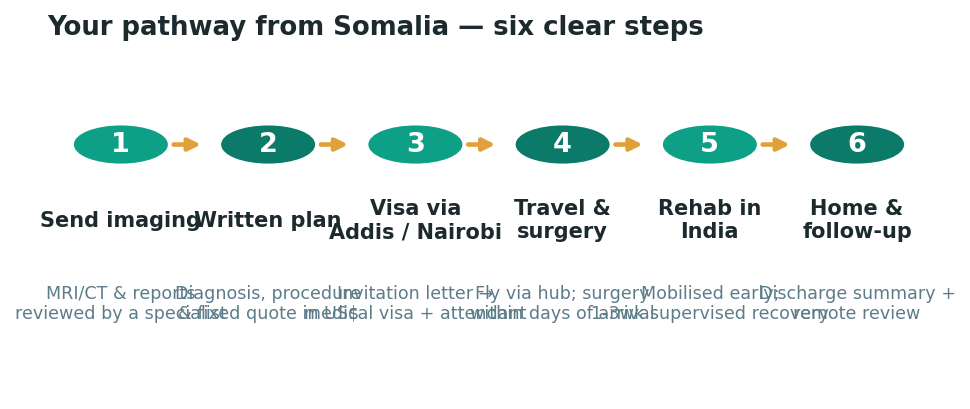
The complete route, start to finish — most of it arranged before you ever leave Somalia.
A working spine is not a luxury — it is a right you can still claim
Fear of the spine keeps too many Somali patients silent for too long. The truth is more hopeful than the fear: most spine problems, correctly diagnosed, are treatable — with medicine, with a precise operation, or often with neither. An honest diagnosis and a proven path forward should not be reserved for the fortunate few.
Sources & Useful Links
- 🌐 Indian medical visa (Somali nationals): indianvisaonline.gov.in
- 🌐 Embassy of India, Addis Ababa: eoiaddisababa.gov.in
- 🌐 High Commission of India, Nairobi: hcinairobi.gov.in
- 🌐 Yellow-fever requirements: who.int/health-topics/yellow-fever
- 🌐 Hospital accreditation (India): nabh.co · jointcommissioninternational.org
- 🌐 Verify a surgeon's registration: nmc.org.in
Do not decide alone, and do not decide blind
If you want your scans reviewed properly and an honest written plan — including whether TB needs to be ruled out first, and whether you need surgery at all — that is precisely the independent guidance I provide, without a single hospital's interest attached to my advice.
Dr. Dheeraj Bojwani · Independent medical travel advisor
Frequently Asked Questions by Somali Patients about Spine Surgery in India
Why should Somali patients rule out spinal tuberculosis before spine surgery in India?
Spinal TB can resemble ordinary back pain and may require prolonged anti-tuberculosis medication rather than immediate surgery. The guide therefore recommends MRI and appropriate bloodwork before an operation is considered.
How much does spine surgery in India cost for Somali patients?
A typical single- or two-level spine procedure is estimated at approximately US$5,500–US$12,000 all-in, covering diagnosis, surgery where needed, hospital stay and initial rehabilitation.
Does spinal tuberculosis always require surgery?
No. The guide states that treatment is primarily anti-tuberculosis medication, often for six months or longer. Surgery is generally reserved for neurological compromise, instability or a large abscess.
Does every Somali patient with back pain need spine surgery?
No. Pain confined to the back without leg symptoms may be treated first with physiotherapy, weight management and time. Surgery is more strongly supported when there is clear nerve compression or instability.
When is spine surgery more likely to help?
The guide shows better results when symptoms involve nerve-related leg pain. The page 3 chart reports 91% good relief for leg pain caused by a pinched nerve, compared with 66% for pure back pain.
What spine conditions may require surgery in India?
Possible indications discussed in the guide include a herniated disc pressing on a nerve, spinal stenosis, unstable fracture and spinal TB causing instability.
How long do Somali patients stay in hospital after spine surgery in India?
The document gives a typical hospital stay of approximately three to seven days, with mobilisation often beginning within one to two days.
How long should Somali patients plan to stay in India for spine surgery?
For surgical cases, the guide recommends approximately three to four weeks, including hospital treatment, early rehabilitation and a final review before travelling home.
What should Somali patients send before travelling to India for spine treatment?
Patients should send their actual MRI or CT images, not only written reports. This allows the specialist to assess the diagnosis and determine whether conditions such as spinal TB need to be considered.
What are the red flags when choosing spine surgery in India?
The guide highlights four warning signs: spinal TB is never discussed, surgery is pushed for back pain alone, the surgeon does not welcome a second opinion, and the treatment price keeps changing.
Page Summary
This guide explains spine surgery and treatment in India for Somali patients, with a strong emphasis on obtaining the correct diagnosis before deciding on an operation. Spinal tuberculosis is particularly important because it may initially resemble ordinary back pain and can require medical rather than surgical treatment. The page 2 chart gives an illustrative breakdown of Somali spine referrals: 42% mechanical or degenerative disease, 27% spinal tuberculosis, 21% traumatic fractures and 10% deformity or other conditions. The guide therefore recommends MRI and appropriate bloodwork before surgery when infection is a possibility.
Citation Block
| Topic | Information |
|---|---|
| Topic Information | Details |
| Procedure | Spine Surgery & Back/Neck Treatment |
| Country | India |
| Intended Audience | Somali Patients |
| Conditions Covered | Degenerative Spine Disease, Spinal Tuberculosis, Herniated Disc, Spinal Stenosis, Traumatic Fracture and Spinal Deformity |
| Procedures / Management | Nerve Decompression, Spinal Stabilisation, Minimally Invasive Surgery, Anti-TB Treatment and Rehabilitation |
| Primary Assessment | MRI/CT Imaging and Appropriate Bloodwork |
| Important Somali-Specific Consideration | Rule Out Spinal Tuberculosis Before Surgery |
| Spinal TB Treatment | Anti-Tuberculosis Medication, Often 6 Months or Longer |
| Surgery for Spinal TB | Neurological Compromise, Instability or Large Abscess |
| Hospital Stay | Approximately 3–7 Days for Surgical Cases |
| Mobilisation | Typically Within 1–2 Days |
| Typical Stay in India | Approximately 3–4 Weeks for Surgical Cases |
| Recovery | Several Weeks, Depending on Diagnosis and Procedure |

Our Mission Statement
Our mission is to place patients at the centre of every healthcare decision by providing trustworthy, evidence-based, and unbiased medical information. We believe that informed patients make better decisions. Backed by personalised guidance from our experienced advisory team, we help patients understand their treatment options, compare them objectively, and confidently choose the path that best suits their medical needs and personal circumstances.
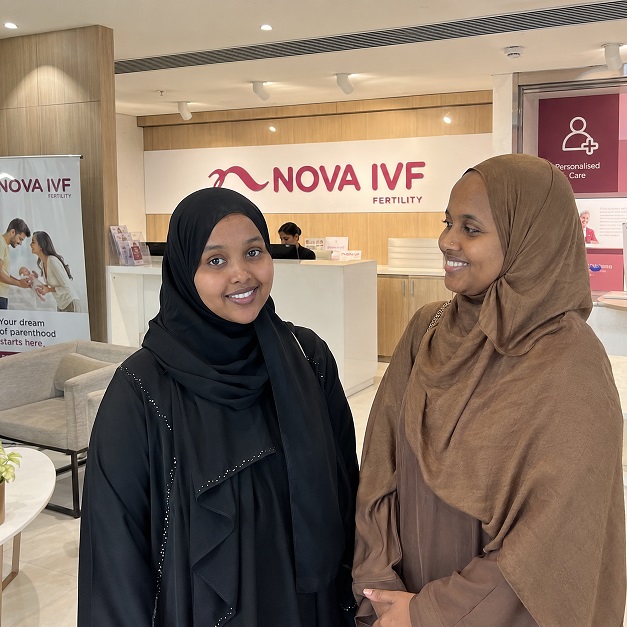
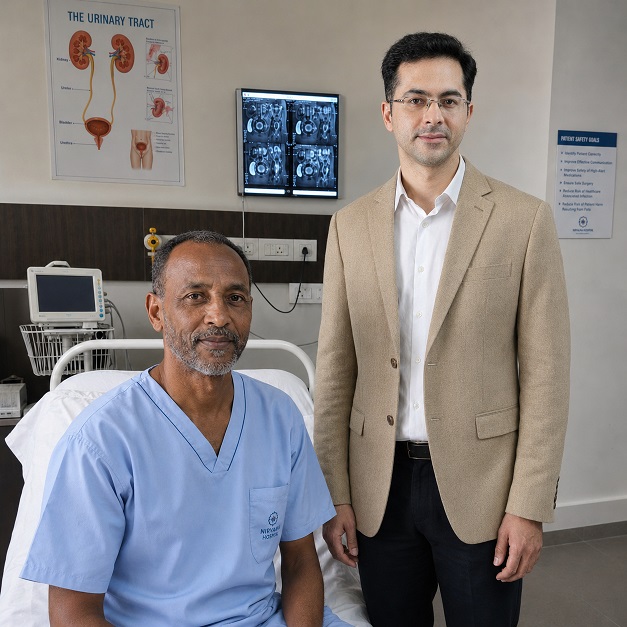
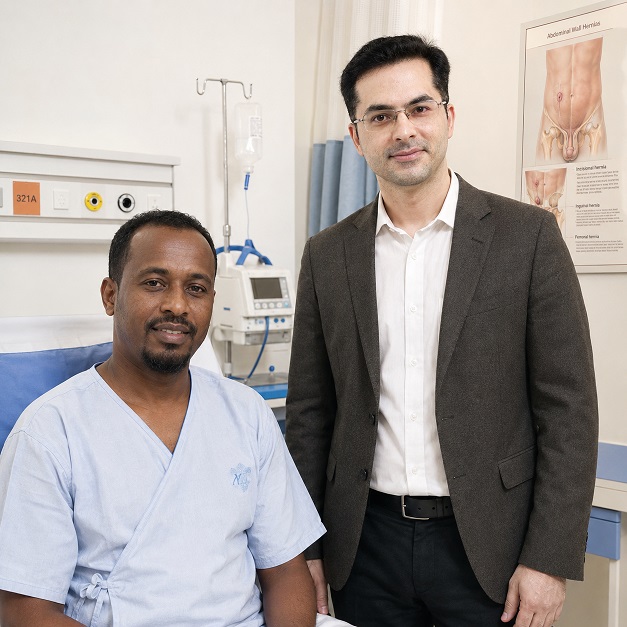
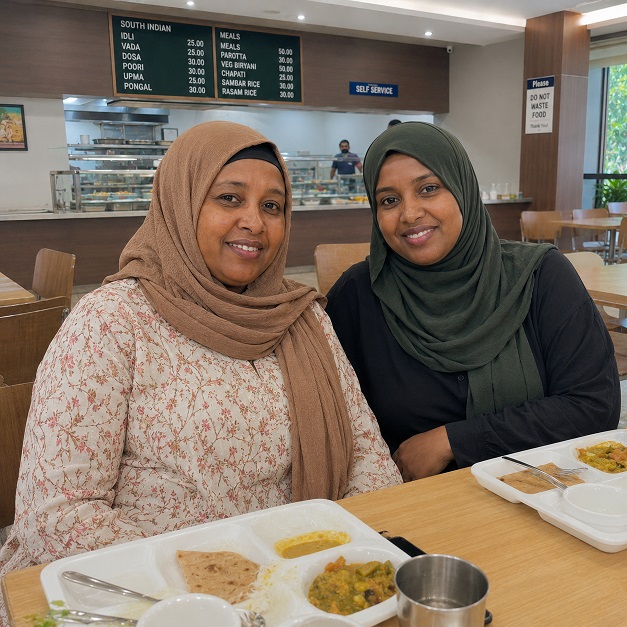
Patient Testimonials from Somalia
Ready to Take the First Step?
Share your Medical Reports with our Healthcare Managers Today and Get a FREE CONSULTATION, a Personalized Treatment Plan, and Complete Support from Arrival to Recovery.
Get Your Free ConsultationAreas We Serve
This resource has been thoughtfully prepared for patients from Somalia who are considering medical treatment in India. We also welcome patients from the wider region in the countries mentioned below-
We assist patients from:
- Ethiopia
- Djibouti
- Yemen
- Kenya
- Seychelles
- Somalia
- South Sudan
- Tanzania
- Uganda
- Zambia
- Zimbabwe
- Angola
- Cameroon
- Central African Republic
Many of the insights, treatment pathways, hospital recommendations, travel guidance, and patient support services described here are equally relevant and may be used as a reference when planning treatment in India.
From Somalia to India: Your Complete Patient Support Guide
- Best Brain Tumour Surgeons & Hospitals in India for Somali Patients
- Best Cancer Treatment Surgeons & Hospitals in India for Somali Patients
- Best Cardiac Surgeons & Hospitals in India for Somali Patients
- Best CyberKnife Teams & Centres in India for Somali Patients
- Best Heart Valve Replacement Surgeons & Hospitals in India for Somali Patients
- Best Hip Surgeons & Hospitals in India for Somali Patients
- Best Knee Surgeons & Hospitals in India for Somali Patients
- Best Neurosurgeons & Hospitals in India for Somali Patients
- Best Paediatric Cardiac Surgeons & Hospitals in India for Somali Patients
- Best Paediatric Neurosurgeons & Hospitals in India for Somali Patients
- Best Spine Surgeons & Hospitals in India for Somali Patients
- Bariatric Surgery in India for Patients from Somalia
- Brain Tumour Surgery in India for Patients from Somalia
- Cancer Treatment and Surgery in India for Patients from Somalia
- Cardiac Surgery in India for Patients from Somalia
- Cosmetic and Plastic Surgery in India for Patients from Somalia
- CyberKnife Treatment in India for Patients from Somalia
- Dental Surgery in India for Patients from Somalia