

Cancer Treatment and Surgery in India for Patients from Somalia
Somalia does not own a single radiotherapy machine. Not one, anywhere in the country. Every patient who needs that treatment must travel — and India has already quietly become where most of them go. This guide makes that path deliberate instead of desperate.
Ask most people what Somalia's most common cancer is, and they will guess breast or prostate, because that is the pattern the rest of the world is used to. They would be wrong. Hospital data from Mogadishu shows oesophageal cancer — cancer of the swallowing tube — is the single most frequent cancer diagnosed in the country, part of a recognised high- incidence belt stretching across East Africa. Meanwhile, an international radiotherapy registry confirms what patients already sense: there is no radiotherapy machine anywhere in Somalia. Every patient who needs that treatment is already being referred abroad, and India is already the most common destination. For 24 years I have guided exactly these referrals, and I write here as an independent adviser with no hospital's interest attached to my advice.
India performs cancer surgery, chemotherapy and radiotherapy at a scale genuinely built for the volume of need across this entire region — full multidisciplinary teams, modern radiotherapy equipment, and surgeons who operate on hundreds of similar cases a year, at a fraction of what the same care costs in the West or the Gulf. For a Somali patient facing a cancer diagnosis, that combination is not a convenience. It is very often the only complete path to treatment that exists.
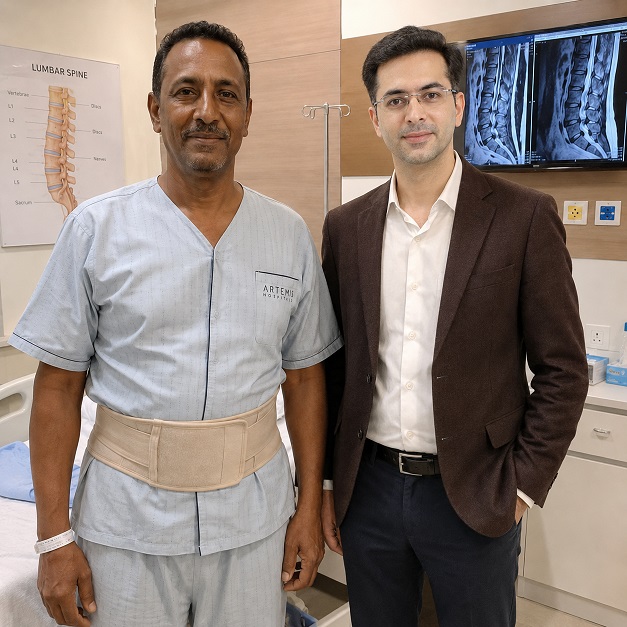
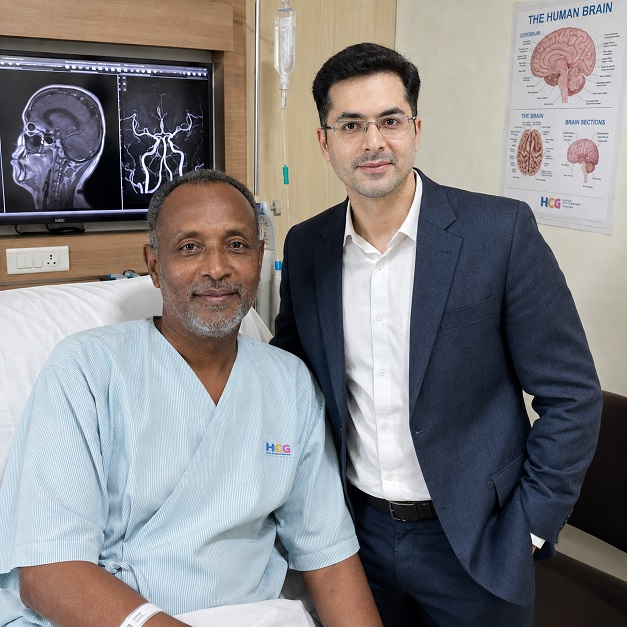
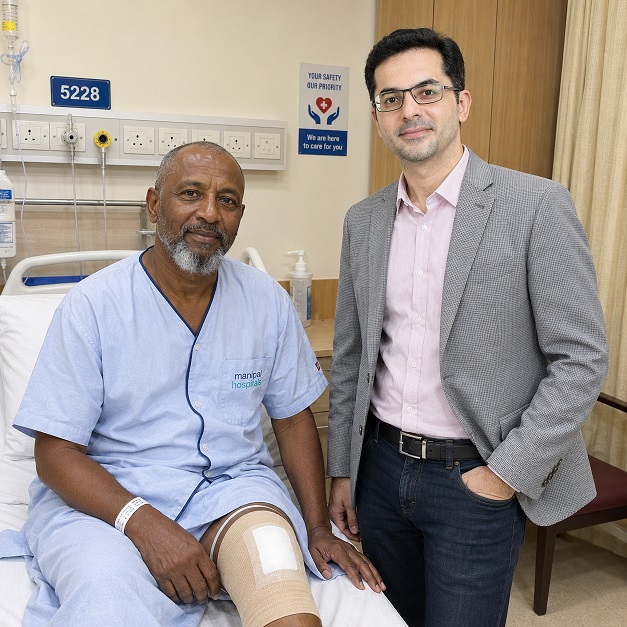
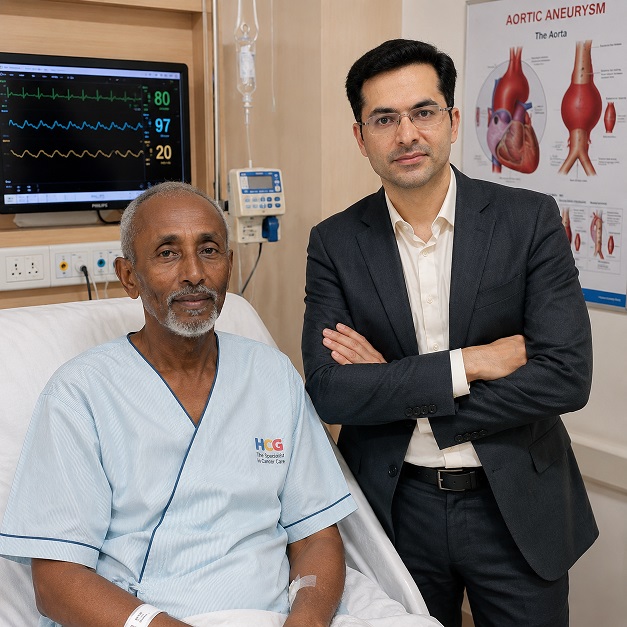
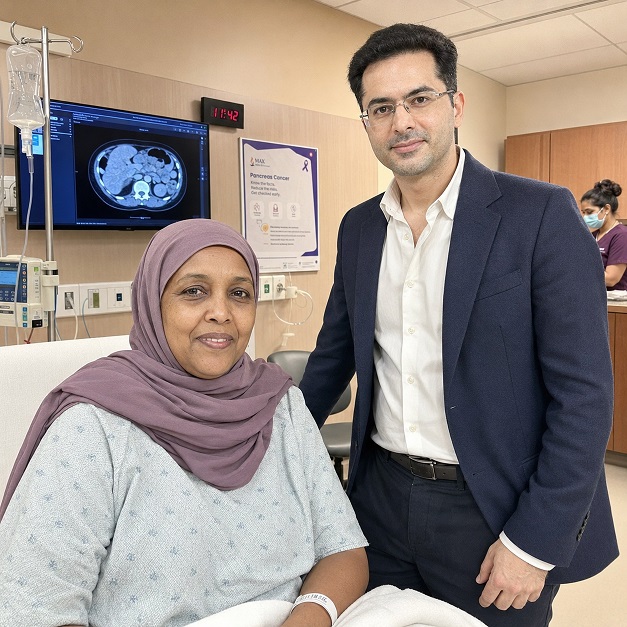
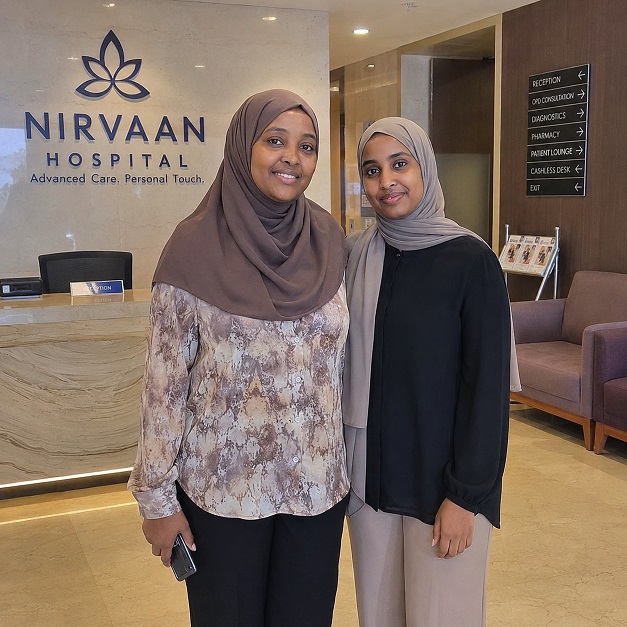
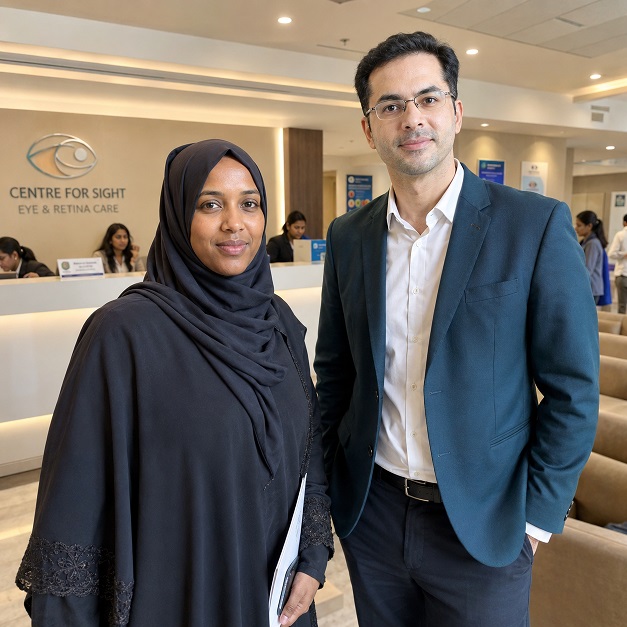
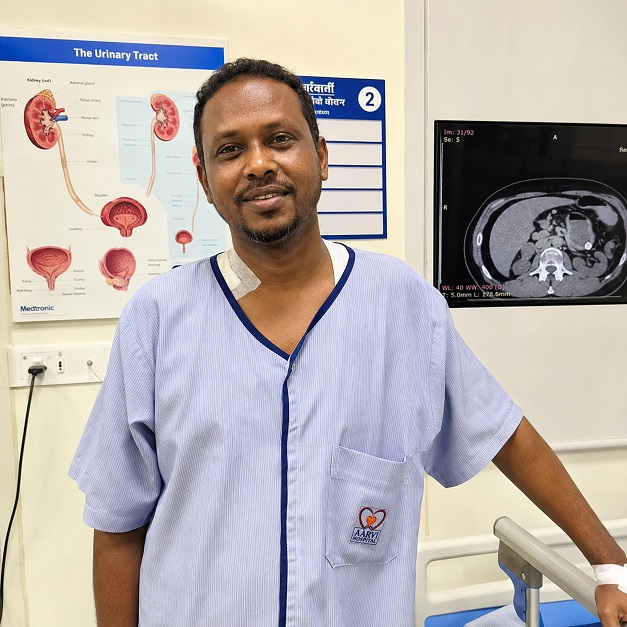
Healing Journeys of Somali Patients
Key Takeaways
- For Somali patients seeking cancer treatment in India, the guide highlights a major structural problem: Somalia has no radiotherapy machine, meaning patients who require radiotherapy must travel abroad for this part of their treatment.
- The guide identifies esophageal cancer as the most frequently diagnosed cancer in the Mogadishu hospital data it cites. The chart on page 2 shows esophageal cancer at 21.7%, cervical cancer at 13.3%, breast cancer at 13.1%, liver cancer at 7.6%, and all other cancers combined at 44.3%.
- Persistent difficulty swallowing, food feeling stuck, or unexplained weight loss should therefore receive prompt investigation rather than being ignored.
- The guide also discusses very hot beverages as a Somalia-specific consideration. In the Mogadishu esophageal cancer study referenced in the document, regular consumption of very hot beverages was present in nearly two in five cases studied.
- Late diagnosis is presented as one of the biggest challenges. According to the page 3 chart, 40.3% of the esophageal cancer cohort was diagnosed at Stage 4, while 20.2% was Stage 3, 17.8% Stage 2, 0.8% Stage 1, and 21% had no recorded stage.
- The guide therefore emphasises that formal cancer staging should be completed before treatment begins. Treatment without confirmed staging is identified as a major warning sign.
- Cancer treatment planning should involve a multidisciplinary tumour board, with an oncologist, surgeon, radiologist and pathologist reviewing the same case rather than treatment being determined by one specialist alone.
- When selecting an Indian hospital, patients should confirm that surgical oncology, medical oncology and radiotherapy are available on site and work as one coordinated team. This helps reduce fragmented or interrupted treatment.
Quick Facts
- Specialty
- Oncology / Cancer Surgery
- Country
- India
- Intended Audience
- Somali Patients
- Major Somalia-Specific Issue
- No radiotherapy machines in Somalia
- Most Frequent Cancer in Cited Mogadishu Data
- Esophageal Cancer
- Esophageal Cancer
- 21.7%
- Cervical Cancer
- 13.3%
- Breast Cancer
- 13.1%
- Liver Cancer
- 7.6%
- All Other Cancers Combined
- 44.3%
- Stage 1 at Diagnosis
- 0.8%
- Stage 2
- 17.8%
- Stage 3
- 20.2%
- Stage 4
- 40.3%
In Brief
Cancer treatment in India for Somali patients should begin with confirmed diagnosis, formal staging and multidisciplinary tumour-board review. The guide highlights esophageal cancer as the most frequent cancer in the Mogadishu hospital data cited and notes that Somalia has no radiotherapy machine. Indian hospitals can provide coordinated surgical oncology, medical oncology and radiotherapy, with a typical surgical cancer-treatment package estimated at approximately US$4,000–US$12,000 all-in, while chemotherapy and radiotherapy costs vary according to the treatment course.
Somalia's most common cancer is not the one most patients expect
This matters because awareness campaigns, symptom checklists, and even some clinicians default to what is common globally — breast, prostate, cervical — when the picture on the ground is different.
Persistent difficulty swallowing, food feeling like it sticks, or unexplained weight loss deserve urgent investigation in Somalia specifically, not reassurance.
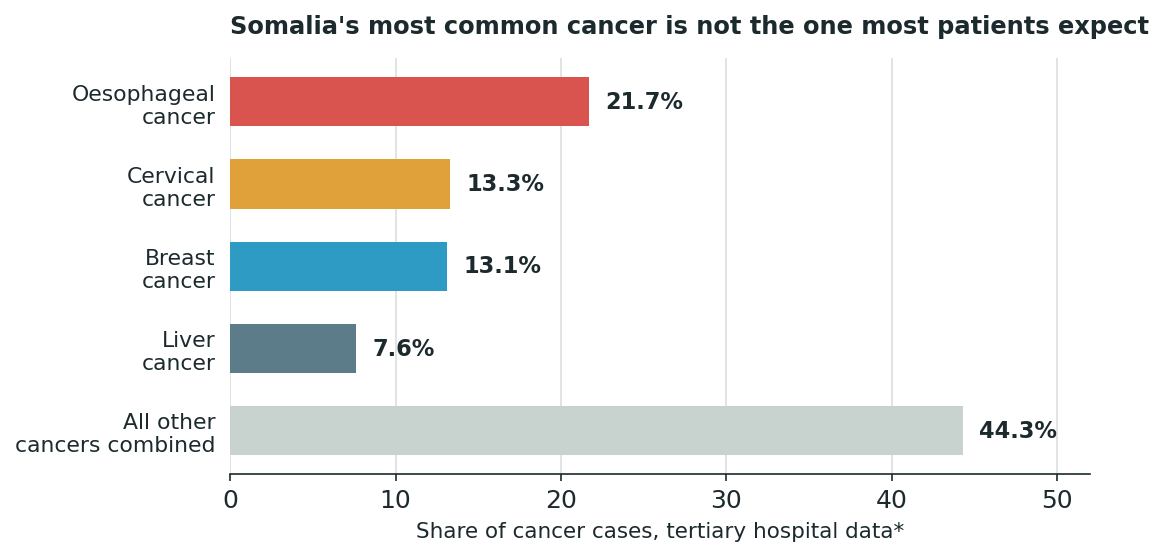
Cancer type distribution from a Mogadishu tertiary hospital study of 1,306 cases.
The Somali difference: an everyday habit turns out to matter
In a detailed study of oesophageal cancer patients in Mogadishu, the single most common risk factor identified was not tobacco or alcohol — it was the regular drinking of very hot beverages, present in nearly two in five cases studied. This mirrors a pattern seen in other high-incidence regions worldwide, where repeated thermal injury to the lining of the swallowing tube over years is believed to contribute to cancer risk. This is not about blame; it is about knowing what to ask a doctor to check if swallowing becomes difficult.
The second reality is structural: with genuinely zero radiotherapy capacity in the country, and chemotherapy available in only a small number of centres, most Somali cancer patients face a stark choice between travelling for complete treatment or accepting an incomplete one. That choice deserves to be made early and deliberately, not in a crisis.
Why the first diagnosis matters more than almost anything else
Hospital data tells an uncomfortable but important story: in one detailed study, four in ten patients were already at the most advanced stage by the time cancer was diagnosed, and a further one in five had no formal staging recorded at all. Early-stage cancer is, across nearly every cancer type, dramatically more treatable and more survivable than late-stage disease. The single most protective action available to any patient is not a particular treatment — it is getting persistent symptoms investigated promptly, rather than waiting.
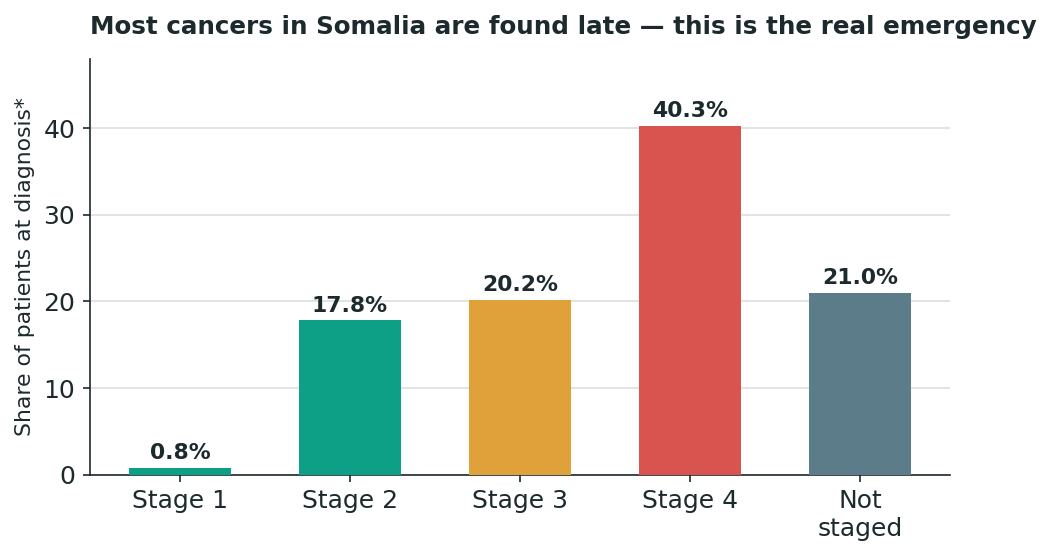
Stage at diagnosis, oesophageal cancer cohort, Mogadishu. The pattern reflects the wider challenge across cancer types.
A tumour board, not one opinion
A documented challenge in Somalia's own emerging cancer clinics is the absence of a genuine multidisciplinary tumour board — oncologist, surgeon, radiologist and pathologist reviewing the same case together. This is not a formality; it is what catches the cases where the first plan was incomplete, or where a second look at the pathology slides changes the picture entirely. Before agreeing to treatment, ask specifically whether your case was discussed by a genuine multidisciplinary team, not decided by one specialist working alone.
Choosing the hospital and team is the real decision
Ask how many cases of your specific cancer type the team treats each year, not cancer treatment in general. Confirm the hospital has surgical oncology, medical oncology and radiotherapy genuinely on site, working as one team, rather than referring you elsewhere mid-treatment. Confirm NABH accreditation in India or, better, international JCI accreditation. A complete team in one place is what prevents the fragmented, interrupted care that is unfortunately common when treatment is split across locations.
What it costs — a number you can actually plan around
Somalia has run on the US dollar for a generation, the shilling itself never meaningfully reissued since 1991, so it fits that Indian hospitals quote cancer care the same way — in dollars, not a currency that shifts by the week. A typical cancer treatment package in a reputable private Indian hospital runs US$4,000 to US$12,000 all-in for surgery and associated care; combined chemotherapy and radiotherapy courses vary by duration and add to this. Set that beside the alternatives and the case makes itself.
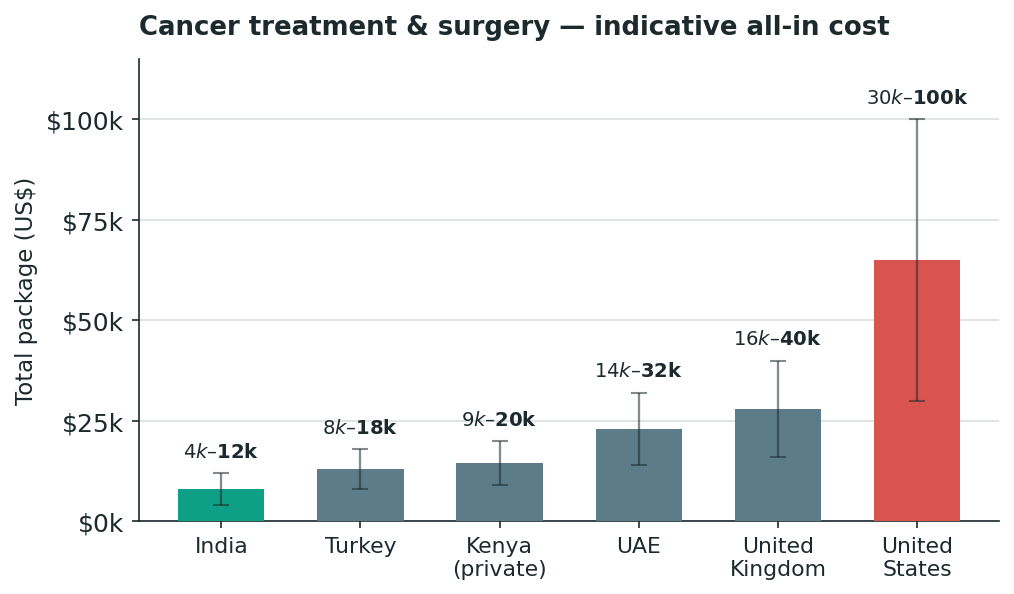
Indicative all-in cost for a typical cancer treatment case. India sits far below every common alternative.
One rule protects every Somali family who makes this journey: get the estimate in writing before a single flight is booked, and insist it names the actual treatment plan, not just "cancer treatment." In more than 24 years arranging this kind of care, the disputes I have seen were almost never about the price itself — they were about a plan, or a stage, nobody had bothered to confirm.
Four signals that should make you stop and walk away
- No tumour board mentioned — If the plan comes from one specialist's opinion alone, ask who else reviewed it.
- No formal staging done — Treatment planned without confirmed staging is treatment planned on a guess.
- Care split across locations — Surgery here, chemotherapy there, radiotherapy somewhere else invites gaps. One coordinated team is safer.
- The price keeps moving — A verbal estimate that shifts each time you ask is not an estimate. Demand a fixed figure in writing.
Straight answers
I have difficulty swallowing — should I be worried?
Persistent difficulty swallowing, especially if it is getting worse or accompanied by weight loss, deserves prompt investigation in Somalia specifically, given how common oesophageal cancer is here. Do not wait for it to resolve on its own.
Can I get a second opinion on a diagnosis I already have?
Yes, and it is often worthwhile. Sending your original pathology slides for review, not just the written report, can catch cases where the initial reading was incomplete or uncertain.
How long will I need to stay in India?
This varies enormously by cancer type and treatment plan. Surgery alone may need two to three weeks; combined chemotherapy and radiotherapy courses can take several weeks to a few months, sometimes with planned breaks.
What happens once I am home in Somalia?
You leave with a complete treatment record and a follow-up plan. A properly run hospital reviews your progress remotely by phone or video — essential when specialist oncology follow-up inside Somalia remains extremely limited.
The practical journey from Somalia — plan it before you fly
The medicine is the easy part; the logistics are what genuinely trip families up. There is no direct flight between Somalia and India; patients route through Nairobi, Addis Ababa, Dubai or Djibouti. Because there is no full Indian mission inside Somalia, the medical visa is issued through the Embassy of India in Addis Ababa or the High Commission in Nairobi, against a written invitation letter from the treating hospital. Somali patients may bring up to two medical attendants on attendant visas. Since your route crosses yellow-fever territory, carry a valid yellow-fever vaccination certificate. Above every other instruction: send your actual biopsy slides and scans, not a written summary, so the team can confirm the diagnosis and stage before you ever leave home.
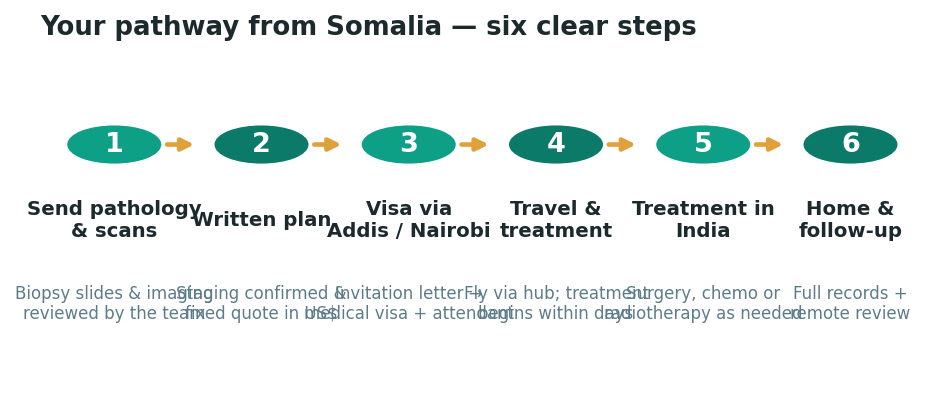
The complete route, start to finish — most of it arranged before you ever leave Somalia.
A missing machine should never be the reason treatment does not happen
Somalia's cancer patients are not short of courage or resolve; they are short of the equipment and specialists a proper diagnosis and full treatment require. That gap can be closed by travelling deliberately, with a real plan, to a place built to treat the exact cancer you have — not by waiting and hoping the gap closes first.
Sources & Useful Links
- 🌐 Indian medical visa (Somali nationals): indianvisaonline.gov.in
- 🌐 Embassy of India, Addis Ababa: eoiaddisababa.gov.in
- 🌐 High Commission of India, Nairobi: hcinairobi.gov.in
- 🌐 Yellow-fever requirements: who.int/health-topics/yellow-fever
- 🌐 Hospital accreditation (India): nabh.co · jointcommissioninternational.org
- 🌐 Verify a surgeon's registration: nmc.org.in
Do not decide alone, and do not decide blind
If you want your pathology and scans reviewed properly and an honest written plan — confirmed by a genuine multidisciplinary team, not one opinion — that is precisely the independent guidance I provide, without a single hospital's interest attached to my advice.
Dr. Dheeraj Bojwani · Independent medical travel advisor
Frequently Asked Questions by Somali Patients about Cancer Treatment and Surgery in India
Why do Somali cancer patients travel to India for treatment?
The guide states that Somalia has no radiotherapy machine, while access to chemotherapy is also limited. India can provide surgery, chemotherapy and radiotherapy within coordinated oncology programmes.
What is the most common cancer reported in the Somali data cited?
The Mogadishu hospital data cited in the guide shows oesophageal cancer as the most frequent cancer, accounting for 21.7% of cases.
What symptoms of oesophageal cancer should Somali patients watch for?
Persistent difficulty swallowing, food feeling stuck and unexplained weight loss deserve prompt investigation. Patients should not simply wait for these symptoms to disappear.
Why is cancer staging important before treatment?
Cancer staging helps determine how advanced the disease is and which treatment is appropriate. The guide warns against starting treatment without confirmed formal staging.
How much does cancer treatment in India cost for Somali patients?
The guide estimates approximately US$4,000–US$12,000 all-in for surgery and associated care. Chemotherapy and radiotherapy may add to this depending on the treatment duration.
What is a multidisciplinary tumour board?
It brings together an oncologist, surgeon, radiologist and pathologist to review the same case. The guide recommends this approach instead of relying on one specialist's opinion.
What should Somali patients send before travelling to India?
Patients should send their actual biopsy slides and scans, not only written reports. This allows the Indian team to confirm the diagnosis and stage before travel.
How long may Somali cancer patients need to stay in India?
The guide states that surgery alone may require about 2–3 weeks. Combined chemotherapy and radiotherapy can require several weeks to a few months.
What should patients check when choosing a cancer hospital in India?
Confirm that surgical oncology, medical oncology and radiotherapy are available on site and work as one coordinated team. NABH or JCI accreditation should also be checked.
What are the warning signs when choosing a cancer treatment provider?
The guide highlights four red flags: no tumour board, no formal staging, care split across different locations and a price that keeps changing.
Page Summary
This guide explains cancer treatment and surgery in India for Somali patients, focusing on the challenges created by limited comprehensive oncology infrastructure in Somalia, particularly the absence of radiotherapy equipment.
Citation Block
| Topic | Information |
|---|---|
| Topic Information | Details |
| Procedure | Cancer Treatment and Surgery |
| Country | India |
| Intended Audience | Somali Patients |
| Conditions Covered | Oesophageal Cancer, Cervical Cancer, Breast Cancer, Liver Cancer and Other Cancers |
| Procedures | Cancer Surgery, Chemotherapy, Radiotherapy, Diagnostic Imaging, Pathology Review and Formal Cancer Staging |
| Typical Stay | Approximately 2–3 Weeks for Surgery Alone; Several Weeks to a Few Months for Combined Chemotherapy and Radiotherapy |
| Hospital Stay | Not Specifically Stated in the Guide |
| Recovery | Depends on Cancer Type, Stage, Surgery and Additional Chemotherapy or Radiotherapy Requirements |
| Average Treatment Cost | US$4,000–US$12,000 All-In for Surgery and Associated Care; Chemotherapy and Radiotherapy May Add to the Cost |
| Key Diagnostic Requirement | Confirm Diagnosis and Formal Cancer Stage Before Treatment |
| Multidisciplinary Review | Oncologist, Surgeon, Radiologist and Pathologist |
| Hospital Requirements | Surgical Oncology, Medical Oncology and Radiotherapy On Site; NABH/JCI Accreditation |
| Pre-Travel Requirement | Actual Biopsy Slides and Scans |

Our Mission Statement
Our mission is to place patients at the centre of every healthcare decision by providing trustworthy, evidence-based, and unbiased medical information. We believe that informed patients make better decisions. Backed by personalised guidance from our experienced advisory team, we help patients understand their treatment options, compare them objectively, and confidently choose the path that best suits their medical needs and personal circumstances.
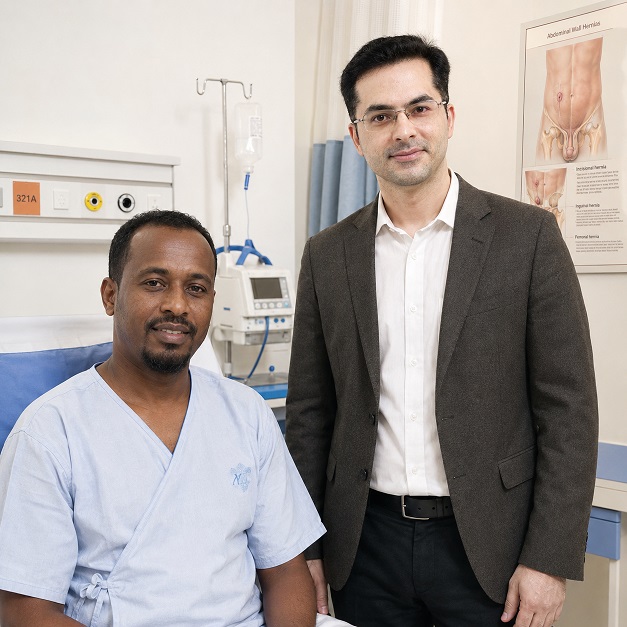
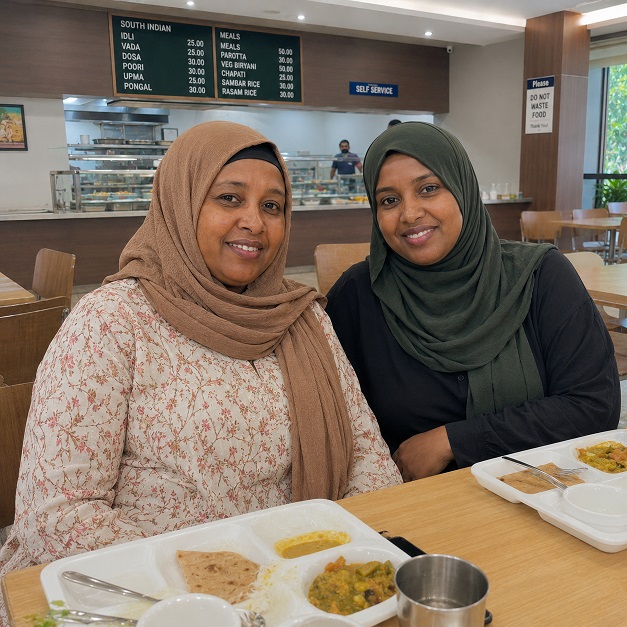
Patient Testimonials from Somalia
Ready to Take the First Step?
Share your Medical Reports with our Healthcare Managers Today and Get a FREE CONSULTATION, a Personalized Treatment Plan, and Complete Support from Arrival to Recovery.
Get Your Free ConsultationAreas We Serve
This resource has been thoughtfully prepared for patients from Somalia who are considering medical treatment in India. We also welcome patients from the wider region in the countries mentioned below-
We assist patients from:
- Ethiopia
- Djibouti
- Yemen
- Kenya
- Seychelles
- Somalia
- South Sudan
- Tanzania
- Uganda
- Zambia
- Zimbabwe
- Angola
- Cameroon
- Central African Republic
Many of the insights, treatment pathways, hospital recommendations, travel guidance, and patient support services described here are equally relevant and may be used as a reference when planning treatment in India.
From Somalia to India: Your Complete Patient Support Guide
- Best Brain Tumour Surgeons & Hospitals in India for Somali Patients
- Best Cancer Treatment Surgeons & Hospitals in India for Somali Patients
- Best Cardiac Surgeons & Hospitals in India for Somali Patients
- Best CyberKnife Teams & Centres in India for Somali Patients
- Best Heart Valve Replacement Surgeons & Hospitals in India for Somali Patients
- Best Hip Surgeons & Hospitals in India for Somali Patients
- Best Knee Surgeons & Hospitals in India for Somali Patients
- Best Neurosurgeons & Hospitals in India for Somali Patients
- Best Paediatric Cardiac Surgeons & Hospitals in India for Somali Patients
- Best Paediatric Neurosurgeons & Hospitals in India for Somali Patients
- Best Spine Surgeons & Hospitals in India for Somali Patients
- Bariatric Surgery in India for Patients from Somalia
- Brain Tumour Surgery in India for Patients from Somalia
- Cancer Treatment and Surgery in India for Patients from Somalia
- Cardiac Surgery in India for Patients from Somalia
- Cosmetic and Plastic Surgery in India for Patients from Somalia
- CyberKnife Treatment in India for Patients from Somalia
- Dental Surgery in India for Patients from Somalia