

Selecting the Best CyberKnife Teams & Centres in India — A Somali Patient's Guide
CyberKnife is not chosen the way a surgeon is chosen. There is no single pair of hands to evaluate. What you are actually choosing is a team of two: the doctor who decides you are a genuine candidate, and the physicist who makes sure every dose lands exactly where it should.
Every year, more Somali patients hear about CyberKnife and decide India is where they will find it — and nearly all of them stop thinking too soon after making that decision. They compare countries, glance at a price, and book with the first centre that answers quickly. That is backwards, and for a technology this precise it matters more than usual, because a centre with the machine but a thin physics team is not the same as a centre built to use it properly. The country matters far less than the two specific choices inside it: which team confirms you are a genuine candidate, and which centre actually delivers the treatment. For 24 years I have watched good outcomes and poor ones come from patients who made this second decision carelessly. I write here as an independent adviser with no hospital's interest attached to my advice.
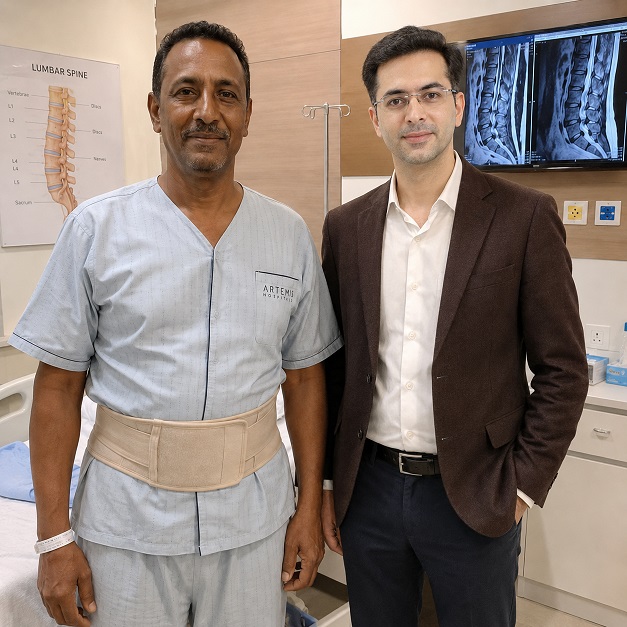
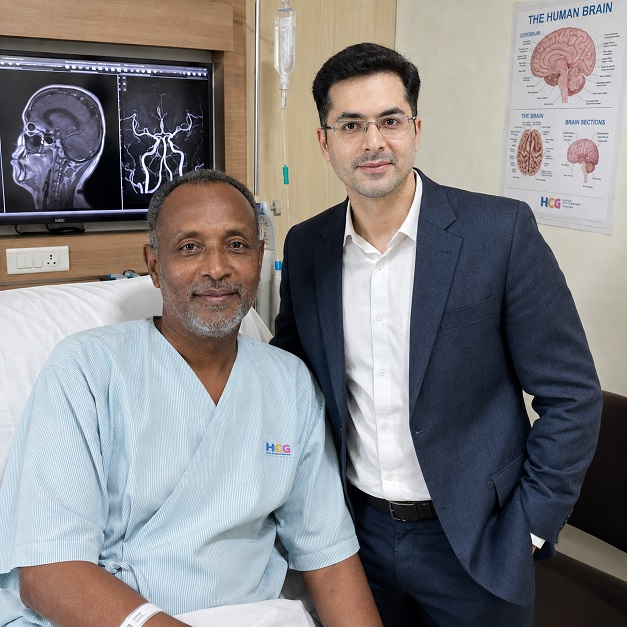
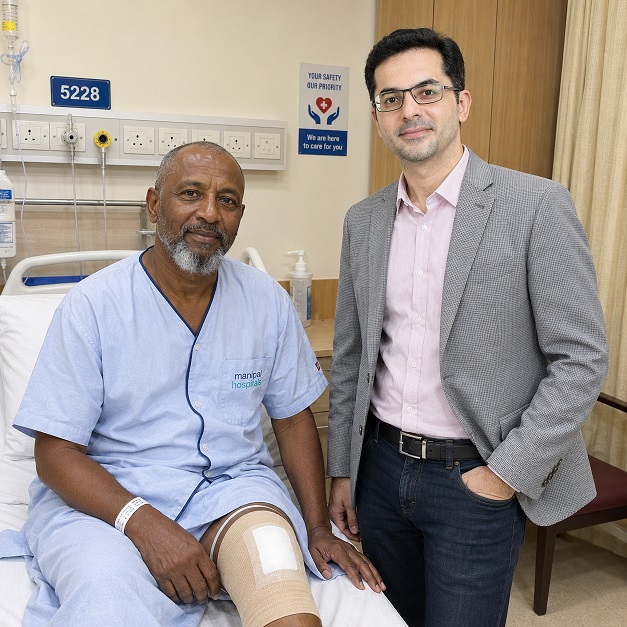
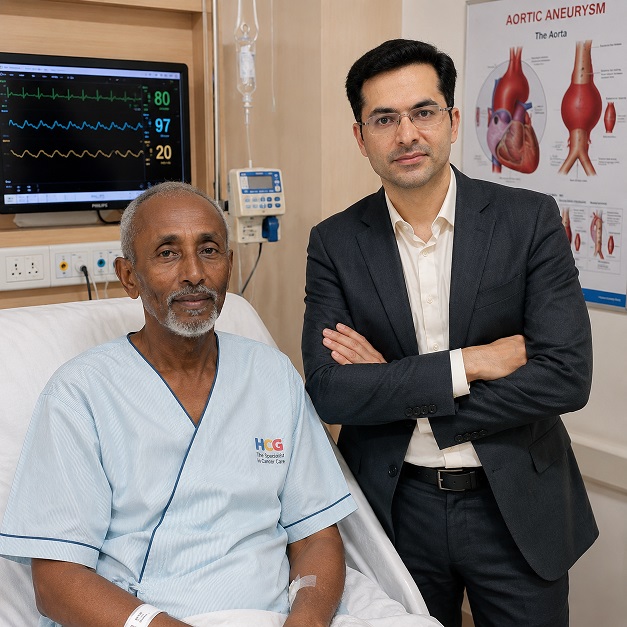
Healing Journeys of Somali Patients
Key Takeaways
- For Somali patients considering CyberKnife treatment in India, the guide makes one distinction especially important: you are not simply choosing a doctor or a machine—you are choosing a treatment team and a CyberKnife centre together. The doctor determines whether CyberKnife is genuinely appropriate, while the medical physicist helps ensure the radiation plan is calculated and delivered precisely.
- The page 3 chart gives the treatment team and centre equal importance: 50% team and 50% centre. Neither side should be treated as secondary when making the decision.
- A dedicated medical physics team is ranked as the most important criterion. Before treatment, the physicist maps the tumour in three dimensions, calculates the radiation dose and verifies the plan against the machine's performance. The guide recommends asking whether a physicist individually reviews and verifies every patient's treatment plan.
- Not every tumour is suitable for CyberKnife. Tumour size, location and type influence candidacy, and the decision should come from a radiation oncologist working with the wider treatment team. A centre that appears willing to treat every tumour without individual assessment is presented as a warning sign.
- The treatment team should have specific experience with the patient's exact tumour type and location, explain alternatives when CyberKnife is not appropriate, provide genuine annual CyberKnife case volume, disclose local-control and outcome rates, and be comfortable with a second opinion.
- The page 4 chart illustrates better outcomes with increasing annual volume using this exact technology: 80% for fewer than 20 cases/year, 88% for 20–70, 93% for 70–150 and 96% for 150+ cases/year. The guide stresses that CyberKnife-specific volume matters more than general radiotherapy volume.
Quick Facts
- Treatment
- CyberKnife
- Specialty
- Radiation Oncology / Stereotactic Radiosurgery
- Country
- India
- Intended Audience
- Somali Patients
- Core Principle
- Choose the treatment team and CyberKnife centre together.
- Team/Centre Weighting
- 50% / 50%
- Key Clinical Decision
- Confirm genuine CyberKnife candidacy.
- Candidacy Factors
- Tumour size, location and type
- Most Important Team Member Beyond Doctor
- Medical Physicist
- Top Selection Criterion
- Dedicated medical physics team — 10/10
- Candidacy Assessment
- 9/10
- Exact Tumour-Type Experience
- 9/10
- Centre Experience with Exact System
- 8/10
- NABH/JCI Accreditation
- 8/10
In Brief
Somali patients choosing CyberKnife treatment in India should evaluate the treatment team and centre equally—50% each. A radiation oncologist should first confirm genuine candidacy based on tumour type, size and location, while an experienced medical physics team should individually plan and verify radiation delivery. Centre-specific CyberKnife experience, annual volume, tracking technology, quality assurance, accreditation and remote follow-up are equally important. The guide estimates a complete course at approximately US$3,500–US$8,000 all-in.
First, should you travel at all?
In 2023, Kenya installed East and Central Africa's first CyberKnife system, only the second on the entire continent. The manufacturer's own team said plainly, at launch, that they expected patients from Somalia, Ethiopia, Sudan, Tanzania and Nigeria, because nowhere closer offered this technology at all. That single fact tells you the scale of the gap: one machine, expected to serve an entire region. India has offered this technology for considerably longer, across multiple established centres, not one shared installation. Reaching India deliberately is more reliable than competing for a slot built for several countries at once.
The one fact that should shape your whole search
CyberKnife depends on meticulous planning by medical physicists as much as it depends on the treating doctor, verifying that every dose calculation and every image-guided adjustment is exactly right before treatment begins. A centre can own the machine and still deliver mediocre care if the physics team behind it is thin or inexperienced. This changes what you should look for.
You are not choosing a surgeon. You are choosing a team of two disciplines working together, and a centre built to support both properly.
Why the physics team matters as much as the doctor
This is worth understanding on its own, because it is the part of this decision most patients never think to ask about. Before your first treatment session, a medical physicist maps your tumour in three dimensions, calculates the precise dose needed, and verifies the plan against the machine's actual performance that day. This is not a background administrative step; it is the difference between the sub- millimetre accuracy CyberKnife promises and a treatment that misses that promise without you ever knowing. A thin or inexperienced physics team can quietly undermine the entire reason you chose this technology, even while the doctor's own credentials look impeccable on paper. Ask directly how experienced the centre's physics team is, and how long they have worked with this exact system, not just how many doctors are on staff.
Not every tumour is a genuine candidate
This deserves to be said plainly, because it is sometimes glossed over in the excitement of a new technology. Tumour size, location and type all determine whether CyberKnife is genuinely appropriate, and this decision should come from a radiation oncologist working with the wider team that reviewed your case, not from marketing material describing the machine's capabilities in general terms. If a centre appears willing to treat any tumour presented to them without a genuine, individualised assessment, treat that as a warning sign rather than reassurance.
Two decisions, weighed equally here
Unlike most of the decisions in this series, CyberKnife genuinely splits down the middle. The doctor's judgement about whether you are a real candidate matters enormously; so does the centre's accumulated experience running this specific machine, its tracking technology, and its quality assurance discipline. Weigh both sides with equal seriousness — favouring either one over the other is a mistake here.
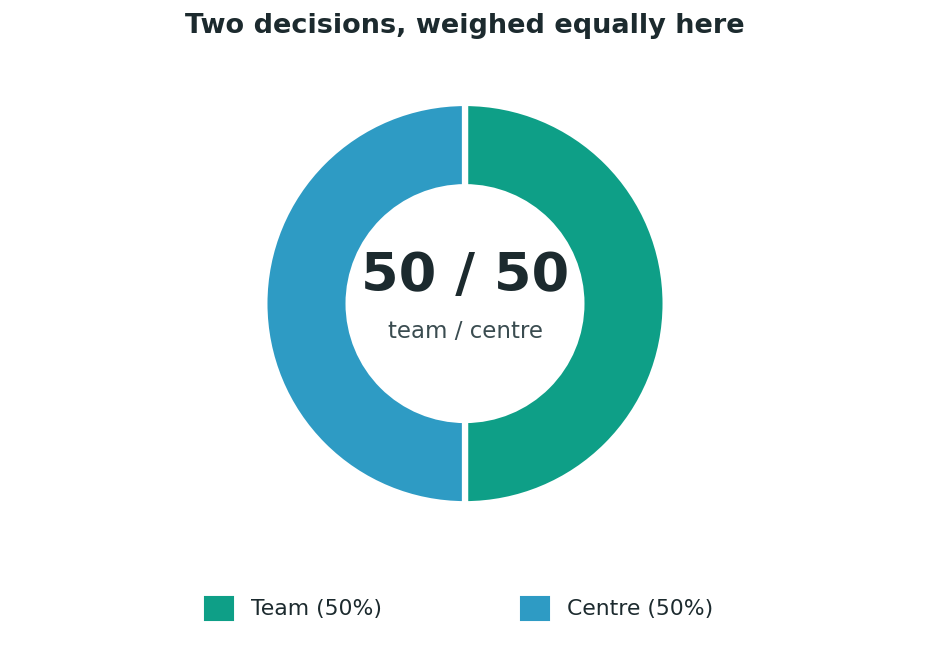
CyberKnife is a genuine team-and-technology decision. Neither side should be treated as secondary.
Part One: Choosing the Treatment Team
1. A dedicated medical physics team for every case. Ask specifically whether a physicist reviews and verifies your individual treatment plan, not a generic protocol applied to everyone who walks in.
2. An oncologist who confirms genuine candidacy. Not every tumour is a CyberKnife candidate; a team that says so honestly, rather than agreeing to treat anyone who asks, is one worth trusting. 3. Named experience with your exact tumour type and location. Ask how many cases like yours, treated with this specific technology, this team has genuinely handled.
4. Explains alternatives honestly if CyberKnife is not the right fit. Surgery or conventional radiotherapy may be genuinely better for your particular case; a team that says so is being straightforward with you.
5. Genuine annual volume with this exact technology. Ask about the team's total CyberKnife caseload specifically, not their general radiotherapy experience. 6. Transparent local-control and outcome rates. Every team has real numbers. One who shares them is more trustworthy than one who avoids the question.
7. Comfort with a second opinion. A confident team welcomes another specialist reviewing your scans. Reluctance here is itself useful information.
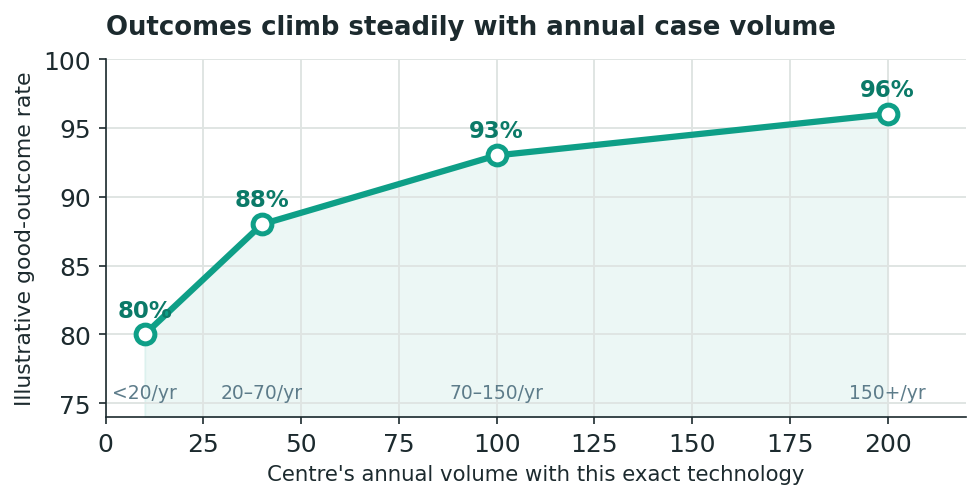
Volume with this exact technology, not radiotherapy broadly, is what predicts a precise result.
Part Two: Choosing the Centre
8. Years operating this exact CyberKnife system. A centre that installed its system recently has had less time to refine its process than one running it for years. 9. NABH accreditation in India, or international JCI accreditation. These are independently verified standards of safety and process, not formalities.
10. Real-time tracking technology for moving targets. If your tumour is in the lung, liver or another organ that moves with breathing, ask specifically what tracking system compensates for this. 11. On-site follow-up imaging. Results from CyberKnife take weeks to months to become visible on scans, unlike surgery, so imaging must be arranged and interpreted correctly afterward.
12. Genuine international patient support. A centre used to patients from Somalia will have interpreters and realistic guidance on visa and logistics.
13. Quality assurance protocols genuinely followed. Ask how often equipment calibration and plan verification actually happen, not just whether a protocol exists on paper somewhere. 14. Remote follow-up after you fly home. Confirm, in writing, how your follow-up scans will be reviewed once you are back in Somalia.
| Role | Qualification | What it confirms |
|---|---|---|
| Doctor | MBBS → MD / DM Radiation Oncology → Stereotactic radiosurgery training | Specialist training in deciding candidacy and prescribing treatment. |
| Physicist | MSc / PhD Medical Physics → Radiotherapy physics certification → System-specific training | Specialist training in the precise dose planning CyberKnife depends on. |
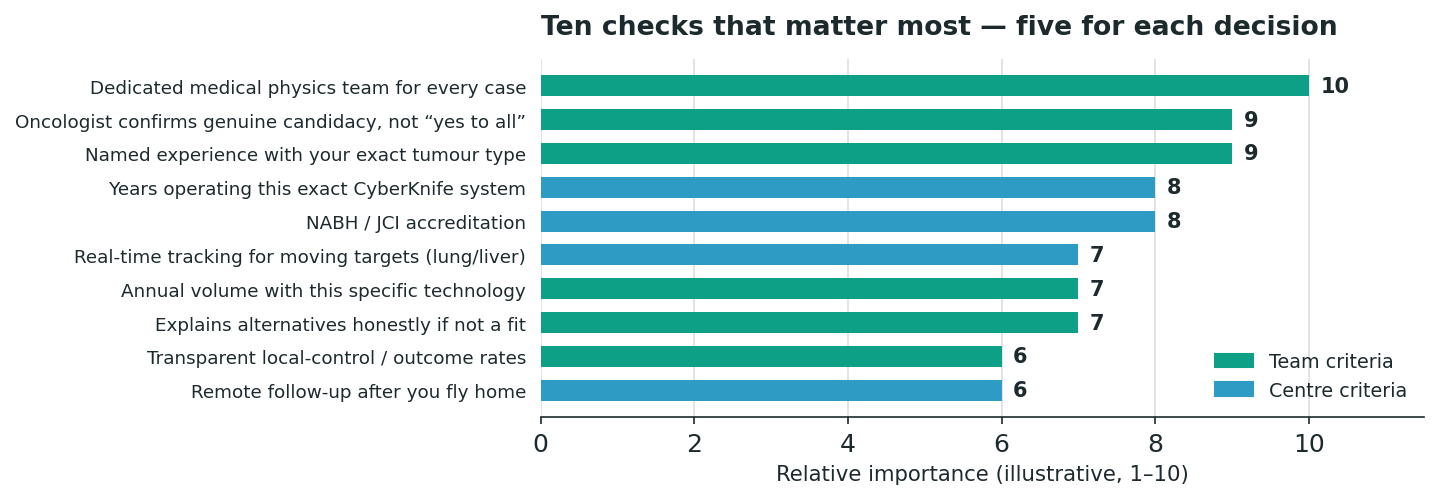
The ten criteria that matter most, ranked by how much weight each should carry in your decision.
Cost and value are not the same conversation
Somalia has run on the US dollar for a generation, the shilling itself never meaningfully reissued since 1991, so Indian centres quoting in dollars is a genuine convenience, not a complication. A well-chosen team and centre combination for a complete CyberKnife course typically costs US$3,500 to US$8,000 all-in, covering planning, all sessions and follow-up imaging. The cheapest quote is rarely the best value; the criteria above, not the invoice, protect the precision this technology promises. In more than 24 years arranging this kind of care, the patients who chose on price alone were the ones most likely to call me again, later, with a problem.
What a Somali patient should weigh in particular
Beyond the criteria above, ask directly whether your specific tumour is genuinely a good candidate, since CyberKnife is not the right tool for every case despite how it is sometimes marketed to patients researching options from abroad. Confirm the number of sessions in writing before you travel, since this drives both the total cost and how long you will need to stay away from home and work. Because funds are often gathered from relatives abroad, get every cost element in writing before travel, so contributions are made against a real number rather than an estimate that shifts later. And send your actual scans and pathology material, not written summaries, so candidacy can be genuinely confirmed before you ever leave home.
The practical journey from Somalia
There is no direct flight between Somalia and India; patients route through Nairobi, Addis Ababa, Dubai or Djibouti. Because there is no full Indian mission inside Somalia, the medical visa is issued through the Embassy of India in Addis Ababa or the High Commission in Nairobi, against a written invitation letter from your chosen centre. Somali patients may bring up to two medical attendants on attendant visas. Since your route crosses yellow-fever territory, carry a valid yellow-fever vaccination certificate.
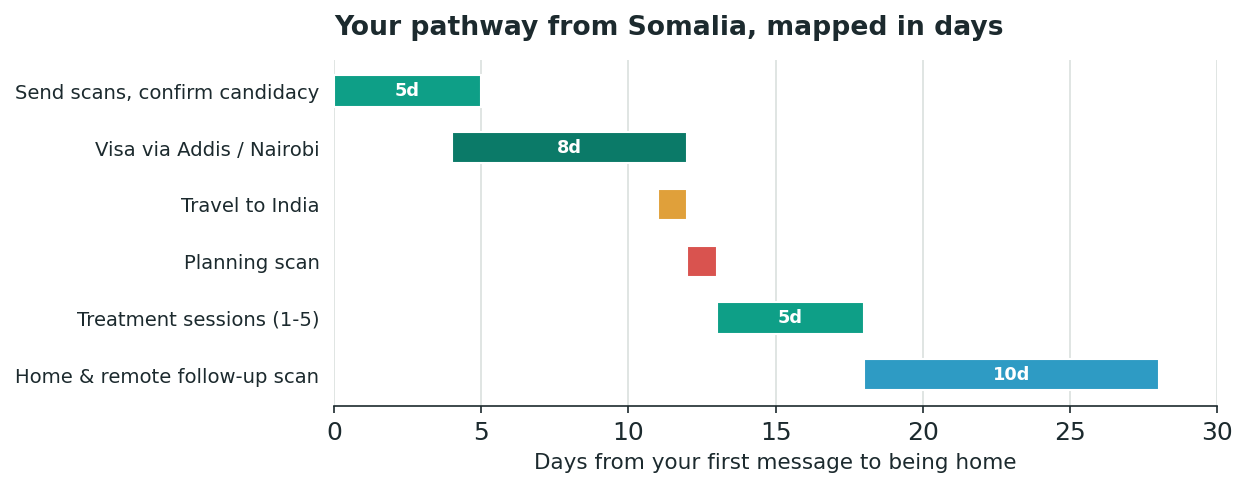
Mapped in days, not just steps — genuinely shorter than most treatments in this series, thanks to the low session count.
Four signals that should make you pause
- No physics team mentioned — If nobody can describe the planning and verification process, ask more questions.
- Candidacy never questioned — A centre that says yes to every tumour, without genuine assessment, is not being honest with you.
- Vague session count — A serious centre tells you the planned number of sessions before you travel, not after.
- Pressure to decide immediately — A reputable team gives you time to compare. Urgency is a sales tactic, not a medical one.
The right choice, made once, protects the precision you are paying for
This technology's entire value lies in precision, and precision depends on the team behind it, not the machine alone. Take the time these ten questions require. The country got you this far; the team and the centre decide the rest.
Sources & Useful Links
- 🌐 Indian medical visa (Somali nationals): indianvisaonline.gov.in
- 🌐 Embassy of India, Addis Ababa: eoiaddisababa.gov.in
- 🌐 High Commission of India, Nairobi: hcinairobi.gov.in
- 🌐 Yellow-fever requirements: who.int/health-topics/yellow-fever
- 🌐 Hospital/centre accreditation (India): nabh.co · jointcommissioninternational.org
- 🌐 Verify a doctor's registration: nmc.org.in
Do not choose alone, and do not choose blind
If you want help verifying a team's genuine candidacy assessment, checking a centre's physics and quality assurance credentials, and getting a written, itemised quote before you travel, that is precisely the independent guidance I provide, without a single hospital's interest attached to my advice.
Dr. Dheeraj Bojwani · Independent medical travel advisor
Frequently Asked Questions by Somalis about CyberKnife Teams & Centres in India
How should Somali patients choose the best CyberKnife centre in India?
Choose a centre with an experienced CyberKnife-specific team, dedicated medical physicists and strong quality-assurance protocols. The guide recommends giving the treatment team and centre equal weight—50% each.
Why is the medical physics team important in CyberKnife treatment?
Medical physicists help map the tumour, calculate the radiation dose and verify the treatment plan. The guide ranks a dedicated medical physics team as the most important criterion at 10/10.
Is every tumour suitable for CyberKnife treatment?
No. Tumour size, location and type determine whether CyberKnife is appropriate. A radiation oncologist should assess genuine candidacy before treatment is confirmed.
How much does CyberKnife treatment in India cost for Somali patients?
The guide estimates approximately US$3,500–US$8,000 all-in for a complete CyberKnife course. This typically covers planning, treatment sessions and follow-up imaging.
How many CyberKnife sessions are usually required?
The guide shows approximately 1–5 treatment sessions, depending on the individual case. Somali patients should confirm the exact number of sessions in writing before travelling.
Does a CyberKnife centre's treatment volume matter?
Yes. Patients should ask about annual CyberKnife-specific case volume, not general radiotherapy experience. The page 4 chart illustrates improving outcomes as centre volume increases.
What should Somali patients send before travelling to India?
Patients should send their actual scans and pathology material, rather than only written summaries. This allows the treatment team to assess CyberKnife candidacy before travel.
What should patients check when treating lung or liver tumours?
For tumours that move with breathing, patients should ask whether the centre provides real-time tracking technology for moving targets. This is an important centre-selection criterion in the guide.
Is follow-up required after CyberKnife treatment?
Yes. CyberKnife results may take weeks to months to become visible on scans. Patients should confirm both follow-up imaging and remote scan review after returning to Somalia.
What are the warning signs when choosing a CyberKnife centre?
The guide identifies four red flags: no physics team mentioned, candidacy never questioned, vague session count and pressure to decide immediately. These are reasons to reconsider the centre.
Page Summary
This guide explains how Somali patients should select a CyberKnife team and treatment centre in India. Its central message is that CyberKnife is a team-and-technology decision, rather than simply a choice of doctor or machine. Medical physics is fundamental to CyberKnife treatment — the physicist contributes to three-dimensional tumour mapping, dose calculation and treatment-plan verification. Not every tumour is a genuine CyberKnife candidate; tumour size, location and type must be assessed individually. Team-selection criteria include dedicated medical physics support, genuine candidacy assessment, exact tumour experience, honest discussion of alternatives, CyberKnife-specific annual volume, transparent outcomes and willingness to accept a second opinion.
Citation Block
| Topic | Information |
|---|---|
| Topic Information | Details |
| Procedure | CyberKnife Treatment |
| Country | India |
| Intended Audience | Somali Patients |
| Conditions Covered | Tumours Suitable for CyberKnife Based on Size, Location and Type, Including Moving Targets Such as Selected Lung and Liver Tumours |
| Procedures | CyberKnife Treatment, Stereotactic Radiosurgery, Treatment Planning, Image-Guided Tracking and Follow-Up Imaging |
| Typical Treatment Sessions | 1–5 Sessions |
| Typical Treatment Journey | Approximately 5 Days for Candidacy Review, 8 Days for Visa Stage and About 5 Days for Treatment Sessions as Shown in the Pathway |
| Recovery / Follow-Up | Follow-Up Imaging May Take Weeks to Months to Show Treatment Response |
| Average Treatment Cost | US$3,500–US$8,000 All-In |
| Key Team Requirement | Dedicated Medical Physics Team and Radiation Oncologist |
| Team/Centre Weighting | 50% Team / 50% Centre |
| Key Centre Requirements | CyberKnife-Specific Experience, NABH/JCI Accreditation, Tracking Technology and Quality Assurance |
| Pre-Travel Requirement | Actual Scans and Pathology Material for Candidacy Assessment |


Our Mission Statement
Our mission is to place patients at the centre of every healthcare decision by providing trustworthy, evidence-based, and unbiased medical information. We believe that informed patients make better decisions. Backed by personalised guidance from our experienced advisory team, we help patients understand their treatment options, compare them objectively, and confidently choose the path that best suits their medical needs and personal circumstances.
Patient Testimonials from Somalia

Ready to Take the First Step?
Share your Medical Reports with our Healthcare Managers Today and Get a FREE CONSULTATION, a Personalized Treatment Plan, and Complete Support from Arrival to Recovery.
Get Your Free ConsultationAreas We Serve
This resource has been thoughtfully prepared for patients from Somalia who are considering medical treatment in India. We also welcome patients from the wider region in the countries mentioned below-
We assist patients from:
- Ethiopia
- Djibouti
- Yemen
- Kenya
- Seychelles
- Somalia
- South Sudan
- Tanzania
- Uganda
- Zambia
- Zimbabwe
- Angola
- Cameroon
- Central African Republic
Many of the insights, treatment pathways, hospital recommendations, travel guidance, and patient support services described here are equally relevant and may be used as a reference when planning treatment in India.
From Somalia to India: Your Complete Patient Support Guide
- Best Brain Tumour Surgeons & Hospitals in India for Somali Patients
- Best Cancer Treatment Surgeons & Hospitals in India for Somali Patients
- Best Cardiac Surgeons & Hospitals in India for Somali Patients
- Best CyberKnife Teams & Centres in India for Somali Patients
- Best Heart Valve Replacement Surgeons & Hospitals in India for Somali Patients
- Best Hip Surgeons & Hospitals in India for Somali Patients
- Best Knee Surgeons & Hospitals in India for Somali Patients
- Best Neurosurgeons & Hospitals in India for Somali Patients
- Best Paediatric Cardiac Surgeons & Hospitals in India for Somali Patients
- Best Paediatric Neurosurgeons & Hospitals in India for Somali Patients
- Best Spine Surgeons & Hospitals in India for Somali Patients
- Bariatric Surgery in India for Patients from Somalia
- Brain Tumour Surgery in India for Patients from Somalia
- Cancer Treatment and Surgery in India for Patients from Somalia
- Cardiac Surgery in India for Patients from Somalia
- Cosmetic and Plastic Surgery in India for Patients from Somalia
- CyberKnife Treatment in India for Patients from Somalia
- Dental Surgery in India for Patients from Somalia