

Bariatric Surgery in India for Patients from Somalia
A country still known to the world for hunger is quietly living through a second, very different health story — one of rising weight, rising diabetes, and a silence around both that keeps too many people from seeking help. This guide is for anyone ready to break that silence.
It is an uncomfortable truth that sits alongside a familiar one. Somalia's name is still, for much of the world, synonymous with famine and food insecurity — a real and ongoing crisis in parts of the country. But in Mogadishu, Hargeisa and other urban centres, a second and very different pattern has been quietly taking hold: rising body weight, rising type 2 diabetes, and a level of stigma around both that researchers studying Somali patients have documented directly. Both realities are true at once, and neither cancels out the other. For 24 years I have worked with patients navigating exactly this kind of dual burden, and I write here as an independent adviser with no hospital's interest attached to my advice.
India performs bariatric and metabolic surgery, including the procedures that can put type 2 diabetes into remission, at genuine scale — dedicated surgical teams working with dietitians and physicians, not a surgeon operating in isolation, at a fraction of what the same care costs in the West or the Gulf. For a Somali patient carrying both the physical and the social weight of this condition, that combination of expertise and discretion matters.
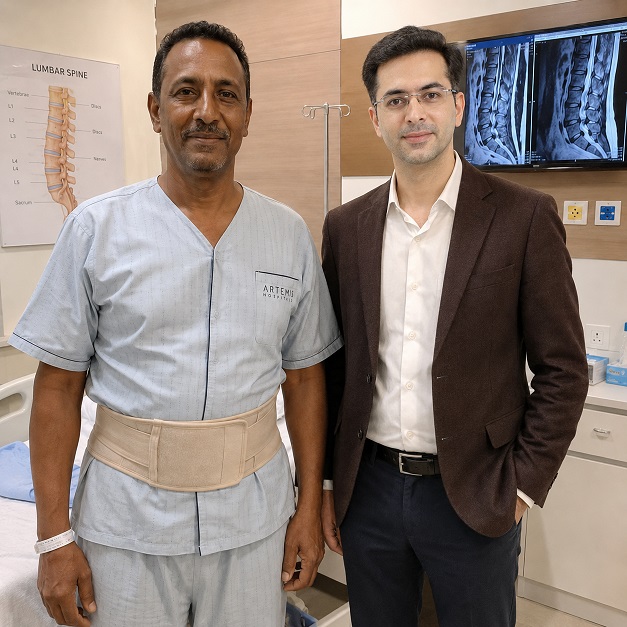
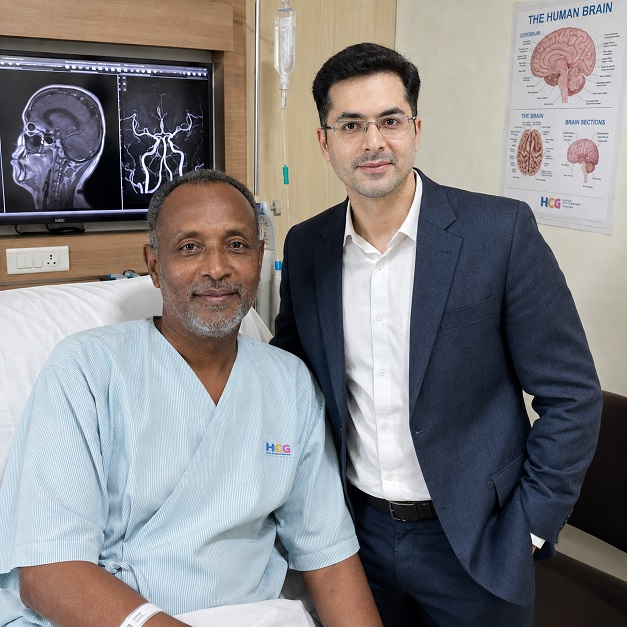
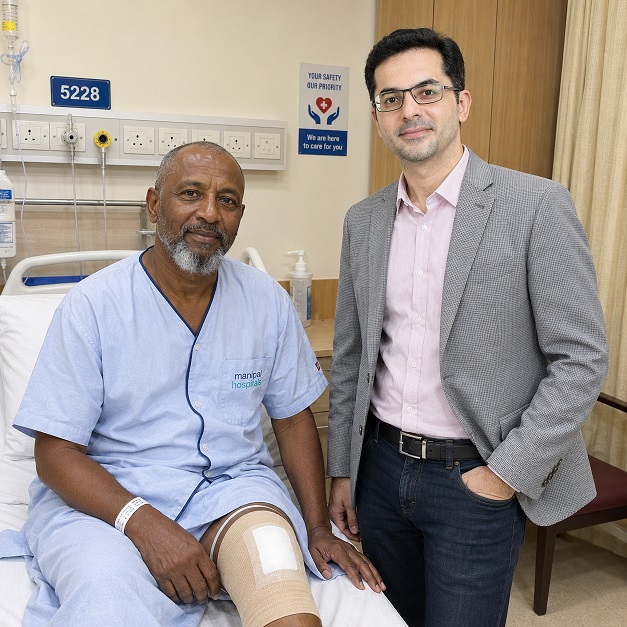
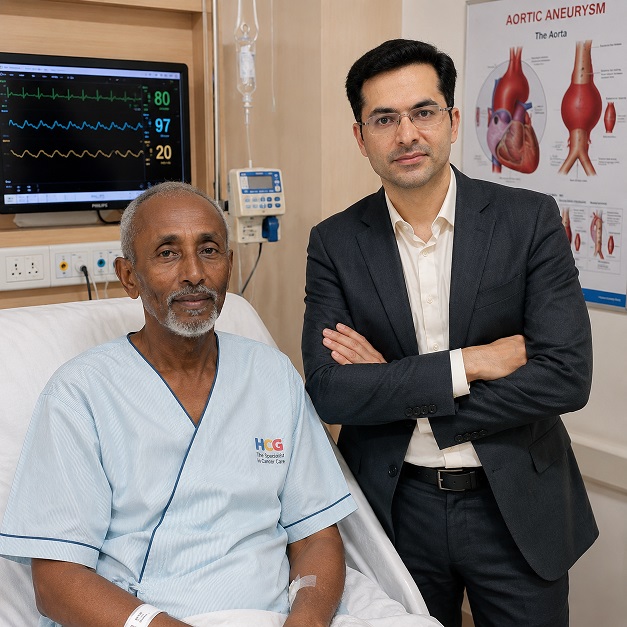
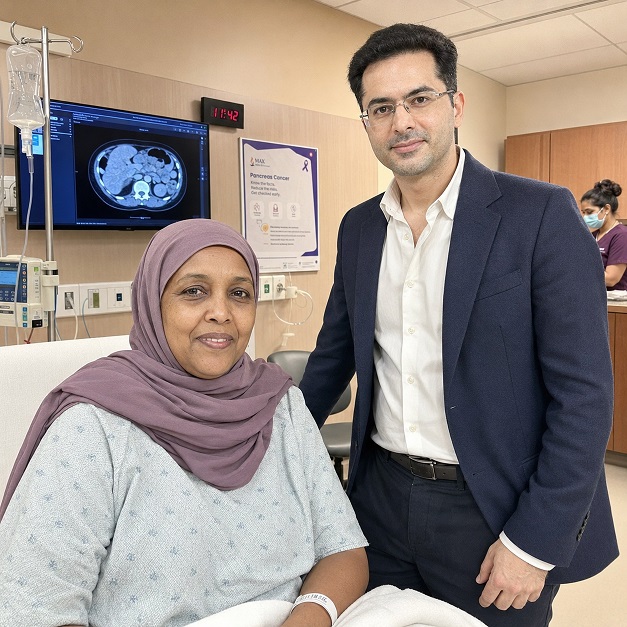
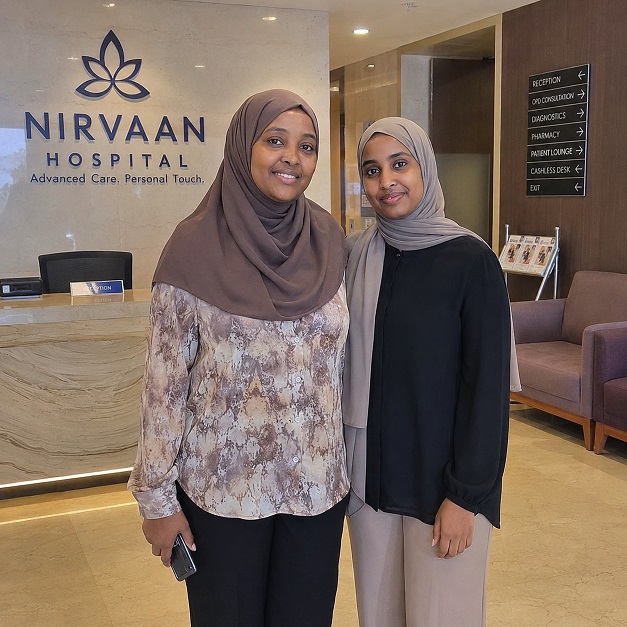
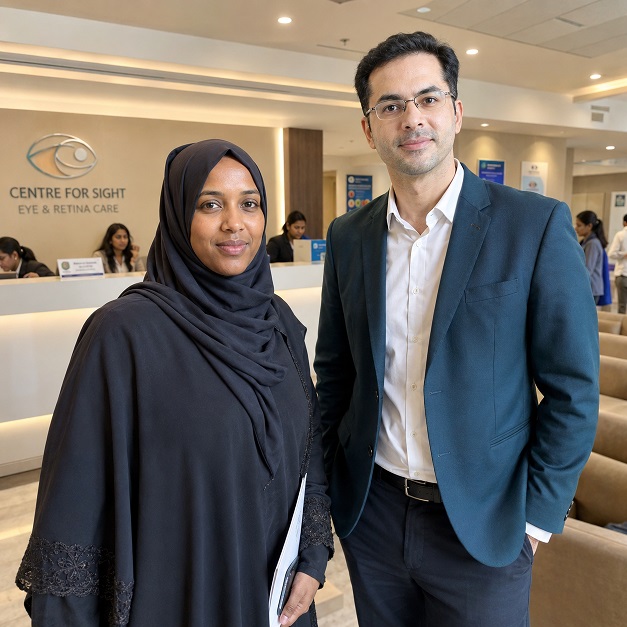
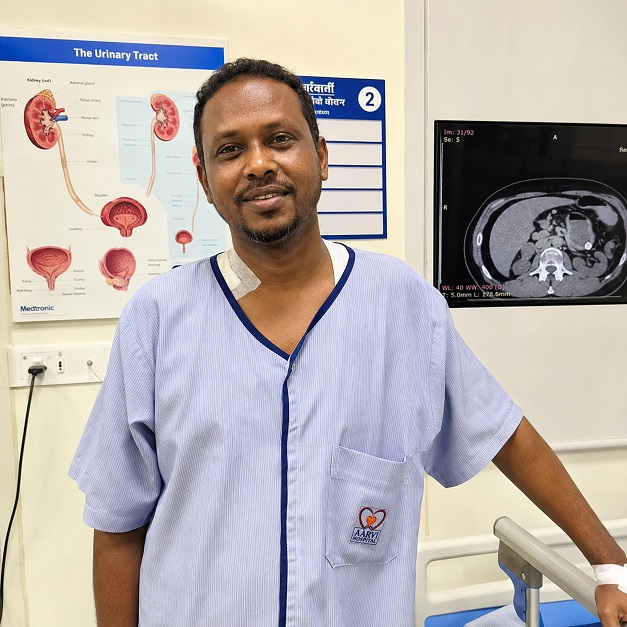
Healing Journeys of Somali Patients
*From a Hargeisa non-communicable disease risk-factor study.
Key Takeaways
- Bariatric surgery for Somali patients should be approached as medical treatment for severe obesity and related metabolic disease, not simply as a cosmetic weight-loss procedure. The guide particularly connects obesity with type 2 diabetes, high blood pressure and joint strain.
- The guide highlights a changing health pattern in urban Somalia. A Hargeisa study cited in the document found overweight and obesity reaching 51–73% among adults aged 50–69, with diabetes affecting up to 22% in the same age group.
- A major Somalia-specific issue is stigma around diabetes and obesity. The guide notes that social misconceptions, fatalistic beliefs and reluctance to discuss these conditions may contribute to delayed diagnosis and treatment.
- Bariatric surgery is generally considered in the guide for patients with a BMI of 40 or above, or BMI 35 or above with a condition such as diabetes or high blood pressure. A responsible team should assess eligibility rather than operating simply because a patient requests surgery.
- The two main procedures discussed are sleeve gastrectomy and gastric bypass. Sleeve gastrectomy reduces stomach size and is technically simpler, while gastric bypass reroutes part of the digestive tract and generally provides stronger weight loss and diabetes-remission effects according to the guide.
- The chart on page 3 gives illustrative outcomes of 62% excess weight loss and 60% type 2 diabetes remission for sleeve gastrectomy, compared with 70% excess weight loss and 80% diabetes remission for gastric bypass. These are explicitly presented as illustrative ranges.
Quick Facts
- Specialty
- Bariatric & Metabolic Surgery
- Country
- India
- Intended Audience
- Somali Patients
- Primary Conditions
- Severe Obesity and Obesity-Related Metabolic Disease
- Related Conditions Mentioned
- Type 2 Diabetes, High Blood Pressure and Joint Strain
- BMI Criterion Mentioned
- BMI 40+, or 35+ with conditions such as diabetes or high blood pressure
- Main Procedures
- Sleeve Gastrectomy and Gastric Bypass
- Sleeve Gastrectomy – Illustrative Excess Weight Loss
- 62%
- Gastric Bypass – Illustrative Excess Weight Loss
- 70%
- Sleeve – Illustrative Diabetes Remission
- 60%
- Gastric Bypass – Illustrative Diabetes Remission
- 80%
- Sleeve Advantage Mentioned
- Technically simpler with somewhat lower long-term nutrient-deficiency risk
- Gastric Bypass Advantage Mentioned
- Stronger weight loss and higher diabetes-remission rates
- Key Long-Term Requirement
- Lifelong nutritional monitoring
In Brief
Bariatric surgery in India for Somali patients is presented as a medical and metabolic treatment for appropriately selected patients with severe obesity and related conditions such as type 2 diabetes. The guide discusses sleeve gastrectomy and gastric bypass, with the latter showing stronger illustrative weight-loss and diabetes-remission outcomes but requiring closer lifelong nutritional monitoring. A genuine bariatric programme should include dietitian support, long-term vitamin monitoring and structured follow-up. The estimated all-in cost in India is approximately US$5,000–US$9,500, with around two weeks planned in India and 2–3 days in hospital.
A pattern that grows with age, and with the city
A study of non-communicable disease risk factors in Hargeisa found something striking: among adults aged fifty to sixty-nine, overweight and obesity reached as high as seventy-three percent, and diabetes affected as many as one in five. This is not the Somalia most outsiders picture, and that gap between perception and reality is precisely why the condition goes under-treated — families and even some clinicians simply are not looking for it.
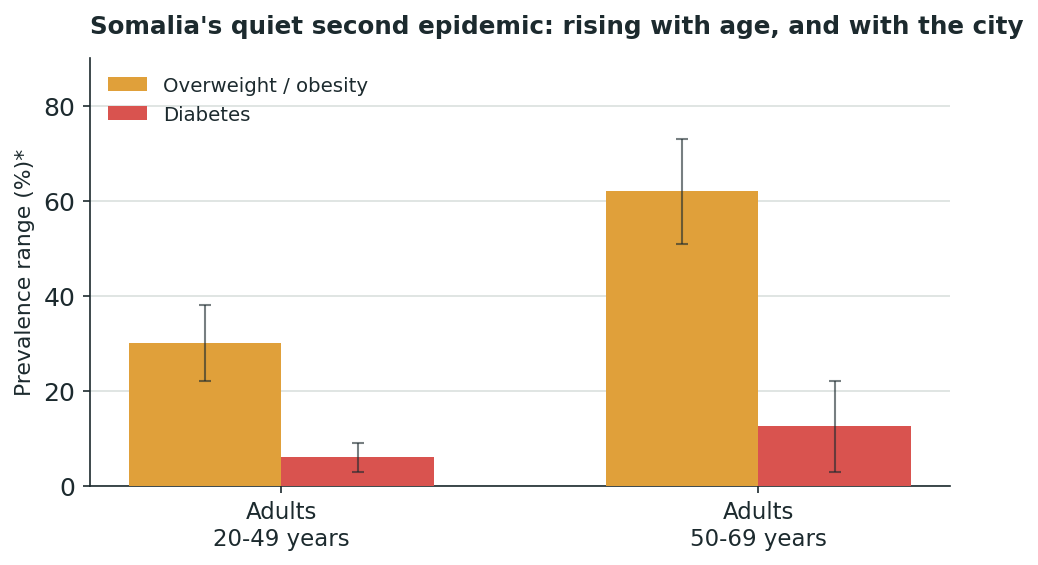
Illustrative ranges drawn from a Hargeisa non-communicable disease risk-factor study.
The Somali difference: this is treated as a private shame, not a medical condition
Research with Somali patients and families has documented real stigma around diabetes specifically — fatalistic beliefs, social misconceptions, and reluctance to discuss the condition openly, even within families. That silence has a cost: people delay seeking care, diabetes goes undiagnosed for years, and by the time it is finally addressed, complications have often already begun.
Bariatric and metabolic surgery is not a cosmetic decision. For the right patient, it is one of the most effective medical treatments available for severe obesity and the type 2 diabetes that frequently accompanies it — and it deserves to be discussed with the same directness as any other serious medical treatment.
Is surgery actually the right step?
Surgery is generally considered for a body mass index of 40 or above, or 35 and above alongside a condition such as diabetes or high blood pressure. It is not a shortcut for people who simply want to lose a little weight, and a responsible surgical team will assess this honestly rather than operating on request. What surgery offers that diet and exercise alone often cannot, for patients who genuinely qualify, is a durable change to how the body manages hunger and blood sugar — which is precisely why it belongs in the same conversation as diabetes treatment, not a separate one about appearance.
Two operations, two different balances
The two most common procedures work differently. A sleeve gastrectomy reduces the stomach's size, is technically simpler, and carries a somewhat lower long-term risk of nutrient deficiency. A gastric bypass reroutes part of the digestive tract, and generally produces stronger weight loss and higher rates of diabetes remission, at the cost of a more complex operation and closer lifelong nutritional monitoring.
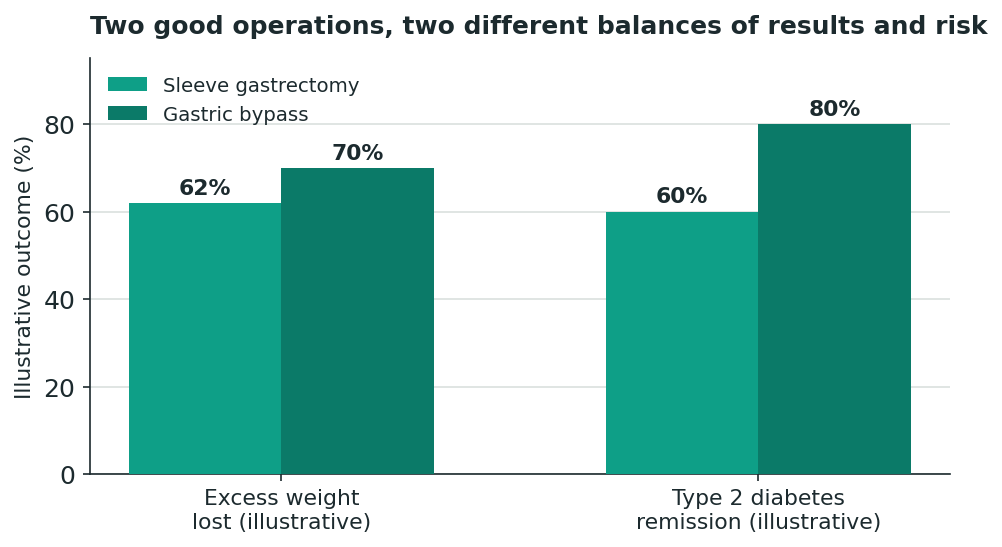
Illustrative outcome ranges. The right choice depends on your specific health picture, not on which sounds more dramatic.
A programme, not a single operation
The surgery itself is a few hours; the lifelong vitamin and mineral monitoring that follows is not optional. Both procedures reduce how much B12, iron, folate and vitamin D the body absorbs, for life, and skipping this follow-up is the single most common cause of long-term complications after bariatric surgery. A genuine programme includes a dietitian and, ideally, a psychologist as real members of the team — not a box-ticking exercise, but active partners in a decision that reshapes daily life.
Choosing the surgeon and hospital is the real decision
Ask specifically whether the hospital runs a genuine bariatric programme with dietitian and psychological support built in, or simply performs the operation. Ask about the surgeon's annual volume in this exact procedure and their approach to long-term follow-up, not just the operation day. Confirm NABH accreditation in India or, better, international JCI or IFSO Centre of Excellence accreditation. A programme that cannot describe its follow-up plan in detail is not ready to be trusted with yours.
What it costs — a number you can actually plan around
Somalia has run on the US dollar for a generation, the shilling itself never meaningfully reissued since 1991, so it fits that Indian hospitals quote this care the same way — in dollars, not a currency that shifts by the week. Bariatric surgery in a reputable private Indian hospital typically runs US$5,000 to US$9,500 all-in, covering assessment, surgery, hospital stay and initial dietitian support. Set that beside the alternatives and the case makes itself.
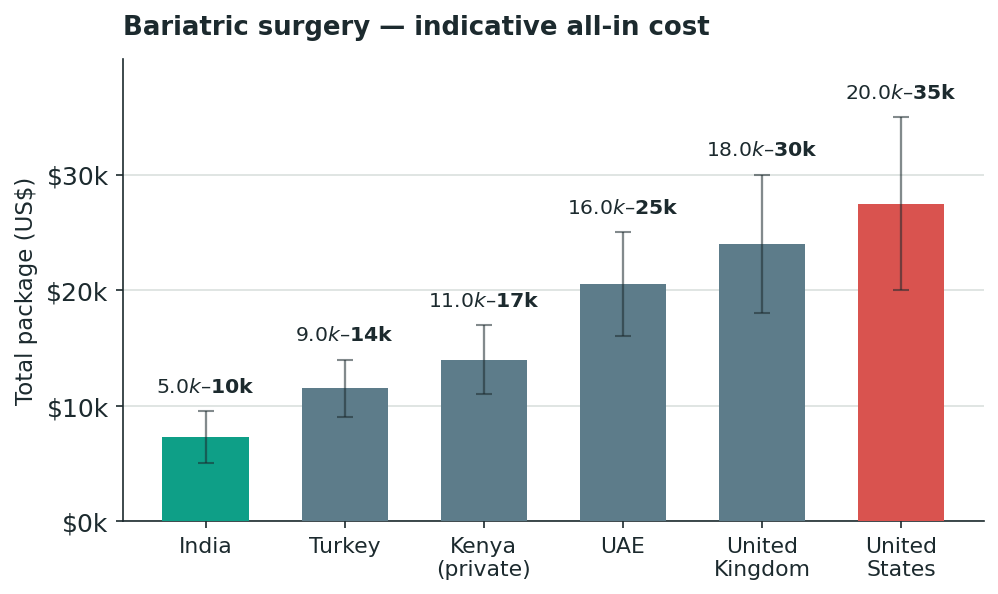
Indicative all-in cost for bariatric surgery. India sits far below every common alternative.
One rule protects every Somali family who makes this journey: get the estimate in writing before a single flight is booked, and confirm it includes dietitian support, not just the operation itself. In more than 24 years arranging this kind of care, the disputes I have seen were almost never about the price itself — they were about follow-up care nobody had written down.
Four signals that should make you stop and walk away
- No BMI or health assessment — surgery offered without a genuine eligibility review is surgery offered too easily.
- No dietitian in the plan — lifelong nutritional monitoring is not optional. If it is not discussed, the plan is incomplete.
- No mention of diabetes — if you have diabetes and it is not central to the conversation, the team has missed the point.
- The price keeps moving — a verbal estimate that shifts each time you ask is not an estimate. Demand a fixed figure in writing.
The practical journey from Somalia — plan it before you fly
The medicine is the easy part; the logistics are what genuinely trip families up. There is no direct flight between Somalia and India; patients route through Nairobi, Addis Ababa, Dubai or Djibouti. Because there is no full Indian mission inside Somalia, the medical visa is issued through the Embassy of India in Addis Ababa or the High Commission in Nairobi, against a written invitation letter from the treating hospital. Somali patients may bring up to two medical attendants on attendant visas. Since your route crosses yellow-fever territory, carry a valid yellow-fever vaccination certificate. Above every other instruction: send your actual bloodwork and BMI history, not a written summary, so the team can confirm eligibility before you ever leave home.
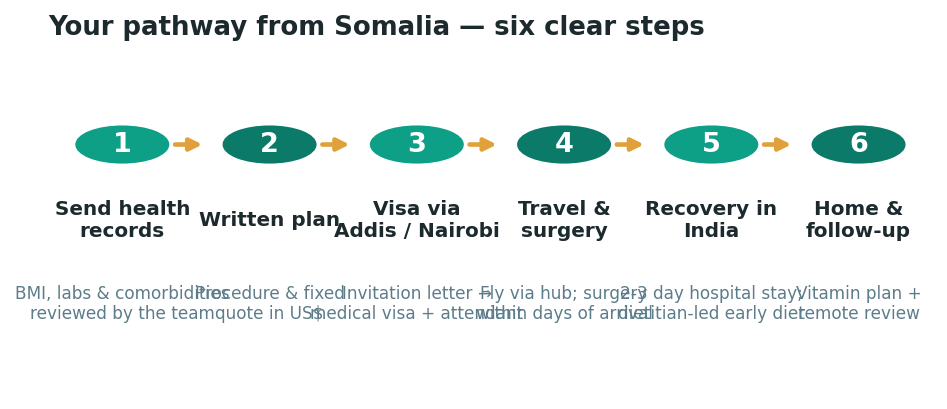
The complete route, start to finish — most of it arranged before you ever leave Somalia.
Straight answers
Is this really a medical decision, or is it about appearance?
For patients who meet the criteria, it is a medical decision, most often driven by diabetes, blood pressure or joint strain. Appearance may change as a result, but it is not the reason a qualified team recommends surgery.
Will I need to take supplements forever?
Yes, for life, regardless of which procedure you choose. This is a genuine commitment, not a formality, and any programme that does not stress this clearly is not preparing you properly.
How long will I need to stay in India?
Plan on about two weeks: two to three days in hospital, and the remainder for early recovery and dietitian guidance before you are cleared to fly home.
What happens once I am home in Somalia?
You leave with a complete discharge summary, a supplement plan and dietary guidance. A properly run hospital reviews your progress remotely by phone or video — essential when specialist follow-up inside Somalia remains scarce.
Neither hunger nor its opposite should be carried in silence
Somalia's families have shown extraordinary resilience against scarcity. The newer struggle, against weight and diabetes in a changing city life, deserves the same seriousness and none of the shame. Treatment exists, it works, and asking for it is not a private failure — it is exactly what a medical condition calls for.
Sources
- 🌐 Indian medical visa (Somali nationals): indianvisaonline.gov.in
- 🌐 Embassy of India, Addis Ababa: eoiaddisababa.gov.in
- 🌐 High Commission of India, Nairobi: hcinairobi.gov.in
- 🌐 Yellow-fever requirements: who.int/health-topics/yellow-fever
- 🌐 Hospital accreditation (India): nabh.co · jointcommissioninternational.org
- 🌐 Verify a surgeon's registration: nmc.org.in
Do not decide alone, and do not decide blind
If you want your health records reviewed properly and an honest written plan — including whether you genuinely meet the criteria — that is precisely the independent guidance I provide, without a single hospital's interest attached to my advice. Dr. Dheeraj Bojwani
Frequently Asked Questions by Somali Patients about Bariatric Surgery in India
Is bariatric surgery a cosmetic procedure for Somali patients?
No. The guide presents bariatric surgery as a medical treatment for severe obesity and related conditions such as type 2 diabetes, high blood pressure and joint strain.
Who may qualify for bariatric surgery in India?
The guide states that surgery is generally considered for a BMI of 40 or above, or 35 and above with conditions such as diabetes or high blood pressure. Eligibility requires proper medical assessment.
Which is better: sleeve gastrectomy or gastric bypass?
Neither procedure is automatically better. Sleeve gastrectomy is technically simpler, while gastric bypass generally provides stronger weight loss and diabetes-remission outcomes but needs closer nutritional monitoring.
How much does bariatric surgery in India cost for Somali patients?
The guide estimates approximately US$5,000–US$9,500 all-in, covering assessment, surgery, hospital stay and initial dietitian support. Patients should obtain the complete estimate in writing.
How long do Somali patients need to stay in India?
Patients should plan for approximately two weeks in India. The guide indicates around 2–3 days in hospital, followed by early recovery and dietitian guidance.
Will patients need supplements after bariatric surgery?
Yes. The guide states that lifelong vitamin and mineral supplementation and monitoring are required, regardless of the procedure chosen.
Can bariatric surgery help with type 2 diabetes?
Yes, for appropriately selected patients. The page 3 chart shows illustrative diabetes-remission outcomes of 60% after sleeve gastrectomy and 80% after gastric bypass.
What should Somali patients send before travelling to India?
Patients should send their actual bloodwork and BMI history, rather than only a written summary. This allows the bariatric team to assess eligibility before travel.
What should patients look for in a bariatric programme?
Look for a programme with an experienced surgeon, dietitian support, long-term nutritional monitoring and ideally psychological support. The hospital should provide a clear follow-up plan.
What are the warning signs when choosing a bariatric surgery provider?
The guide highlights four red flags: no BMI or health assessment, no dietitian in the plan, diabetes not discussed and a price that keeps changing.
Page Summary
This guide explains bariatric and metabolic surgery in India for Somali patients, with particular attention to the growing burden of obesity and type 2 diabetes in urban Somalia. It also addresses the stigma that may prevent patients and families from discussing these conditions openly or seeking treatment early.
Citation Block
| Topic | Information |
|---|---|
| Topic Information | Details |
| Procedure | Bariatric & Metabolic Surgery |
| Country | India |
| Intended Audience | Somali Patients |
| Conditions Covered | Severe Obesity, Type 2 Diabetes, High Blood Pressure and Obesity-Related Joint Strain |
| Procedures | Sleeve Gastrectomy and Gastric Bypass |
| Typical Stay | Approximately 2 Weeks in India |
| Hospital Stay | Approximately 2–3 Days |
| Recovery | Early Recovery and Dietitian Guidance in India, Followed by Long-Term Dietary and Nutritional Management |
| Average Treatment Cost | US$5,000–US$9,500 All-In |
| Eligibility Mentioned | BMI 40+, or BMI 35+ with Diabetes, High Blood Pressure or Another Relevant Condition |
| Key Treatment Consideration | Procedure Choice Depends on the Individual Health Profile |
| Long-Term Requirement | Lifelong Vitamin, Mineral and Nutritional Monitoring |
| Nutrients Mentioned | Vitamin B12, Iron, Folate and Vitamin D |


Our Mission Statement
Our mission is to place patients at the centre of every healthcare decision by providing trustworthy, evidence-based, and unbiased medical information. We believe that informed patients make better decisions. Backed by personalised guidance from our experienced advisory team, we help patients understand their treatment options, compare them objectively, and confidently choose the path that best suits their medical needs and personal circumstances.
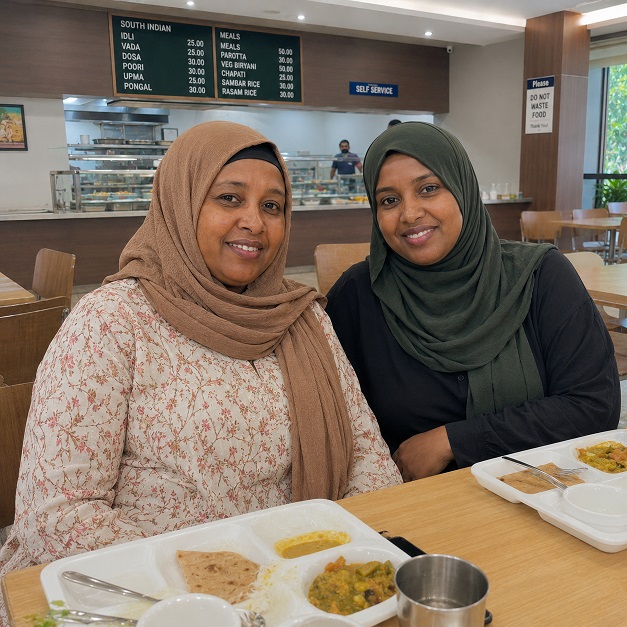
Patient Testimonials from Somalia
Ready to Take the First Step?
Share your Medical Reports with our Healthcare Managers Today and Get a FREE CONSULTATION, a Personalized Treatment Plan, and Complete Support from Arrival to Recovery.
Get Your Free ConsultationAreas We Serve
This resource has been thoughtfully prepared for patients from Somalia who are considering medical treatment in India. We also welcome patients from the wider region in the countries mentioned below-
We assist patients from:
- Ethiopia
- Djibouti
- Yemen
- Kenya
- Seychelles
- Somalia
- South Sudan
- Tanzania
- Uganda
- Zambia
- Zimbabwe
- Angola
- Cameroon
- Central African Republic
Many of the insights, treatment pathways, hospital recommendations, travel guidance, and patient support services described here are equally relevant and may be used as a reference when planning treatment in India.
From Somalia to India: Your Complete Patient Support Guide
- Best Brain Tumour Surgeons & Hospitals in India for Somali Patients
- Best Cancer Treatment Surgeons & Hospitals in India for Somali Patients
- Best Cardiac Surgeons & Hospitals in India for Somali Patients
- Best CyberKnife Teams & Centres in India for Somali Patients
- Best Heart Valve Replacement Surgeons & Hospitals in India for Somali Patients
- Best Hip Surgeons & Hospitals in India for Somali Patients
- Best Knee Surgeons & Hospitals in India for Somali Patients
- Best Neurosurgeons & Hospitals in India for Somali Patients
- Best Paediatric Cardiac Surgeons & Hospitals in India for Somali Patients
- Best Paediatric Neurosurgeons & Hospitals in India for Somali Patients
- Best Spine Surgeons & Hospitals in India for Somali Patients
- Bariatric Surgery in India for Patients from Somalia
- Brain Tumour Surgery in India for Patients from Somalia
- Cancer Treatment and Surgery in India for Patients from Somalia
- Cardiac Surgery in India for Patients from Somalia
- Cosmetic and Plastic Surgery in India for Patients from Somalia
- CyberKnife Treatment in India for Patients from Somalia
- Dental Surgery in India for Patients from Somalia