

Brain Tumour Surgery in India for Patients from Somalia
Before any surgeon opens the skull, one question must be answered with certainty: what is actually growing in there? A great many masses referred from Somalia turn out not to be cancer at all — and treating the wrong diagnosis is a mistake no skill in the operating theatre can undo.
A headache that will not lift, a seizure out of nowhere, a slow change in vision or speech — these symptoms terrify families precisely because "brain tumour" is the first thought that comes to mind. In Somalia, that fear carries extra weight for a reason most patients never hear spoken aloud: modern brain imaging is still new and scarce across the country, so by the time a scan is finally possible, the mass has often had months or years to grow, unseen and undiagnosed. For 24 years I have guided patients through exactly this uncertainty, and I write here as an independent adviser with no hospital's interest attached to my advice.
India matters here for a very specific reason: its leading neuro-oncology centres see this exact diagnostic uncertainty every week, with the imaging, pathology and genuinely multidisciplinary teams needed to tell a tumour apart from its many look-alikes — at a fraction of what the same evaluation costs in the West or the Gulf. That distinction, made correctly, decides whether a patient needs a scalpel or a course of medicine.
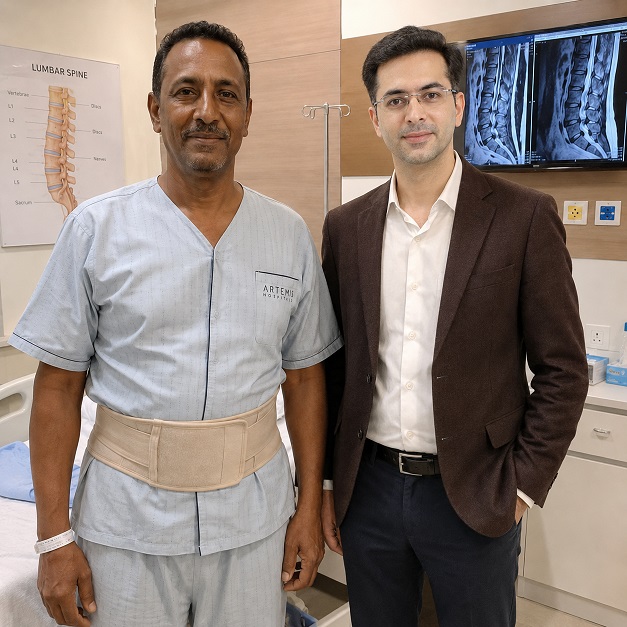
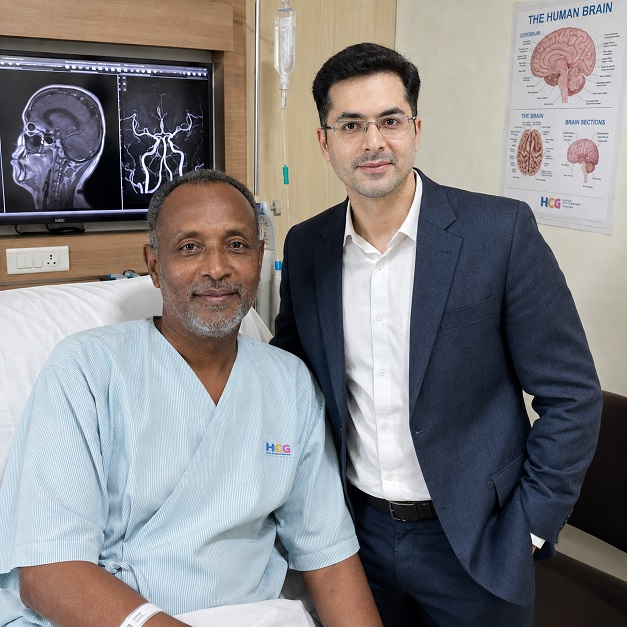
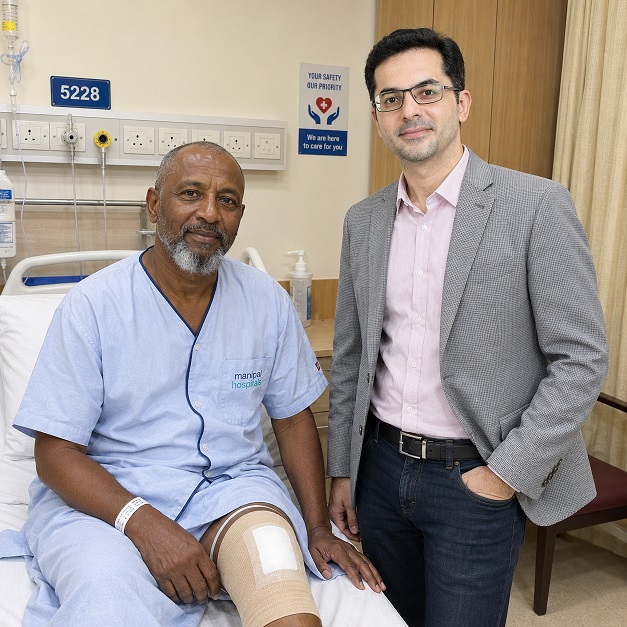
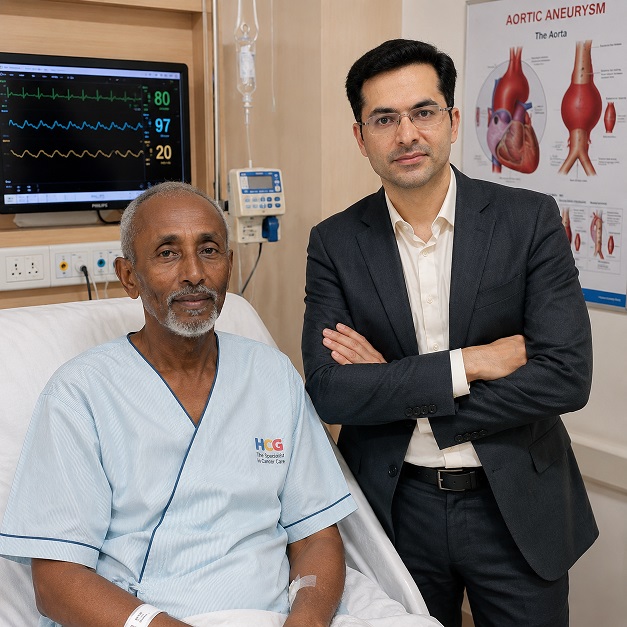
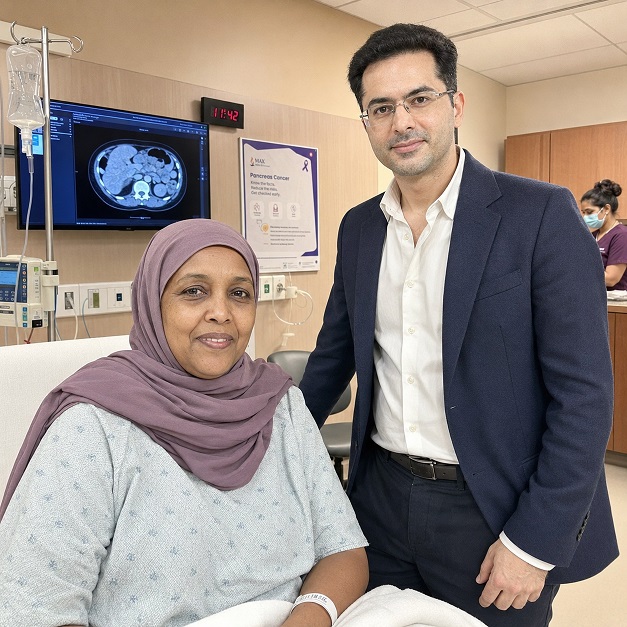
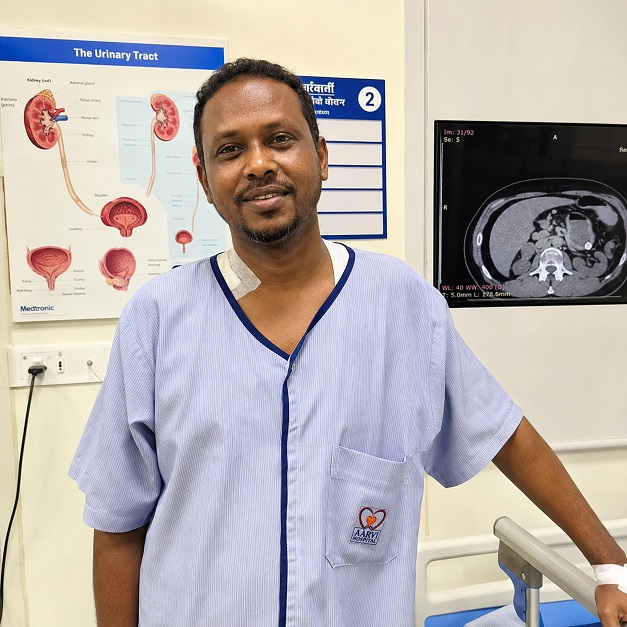
Healing Journeys of Somali Patients
Key Takeaways
- For Somali patients with a suspected brain tumour, the guide emphasises that the first priority is confirming what the brain mass actually is before discussing surgery. A mass seen on imaging is not automatically cancer and may sometimes represent an infection or another condition.
- A particularly important Somalia-specific consideration is cerebral tuberculosis (tuberculoma). The guide explains that tuberculoma can look very similar to a brain tumour on an initial scan but may respond to anti-tuberculosis medication rather than requiring tumour surgery.
- The chart on page 2 gives an illustrative breakdown of Somali brain-mass referrals: 44% primary brain tumour, 26% cerebral tuberculosis, 18% other infection or cyst, and 12% vascular causes such as bleeding or malformation. These figures are explicitly presented as illustrative.
- The same page highlights limited imaging access in Somalia. Its chart compares an illustrative 1–4 week interval from first symptoms to scanning where CT/MRI is routinely accessible with 8–30 weeks for a typical Somali patient.
- Warning signs that deserve imaging include morning-predominant headaches, new seizures, gradual weakness on one side, and progressive changes in vision, memory or personality. The guide advises against simply waiting for these symptoms to resolve.
- Diagnosis should involve more than one surgeon's opinion. The guide recommends a multidisciplinary tumour board involving a neurosurgeon, oncologist, radiologist and pathologist reviewing the imaging and tissue together.
- Where the diagnosis remains uncertain, a biopsy may be needed before deciding on full surgery, radiotherapy or monitoring. Not every brain tumour requires immediate surgery; some slow-growing benign tumours may be monitored with periodic scans.
Quick Facts
- Specialty
- Neuro-Oncology / Neurosurgery
- Country
- India
- Intended Audience
- Somali Patients
- Primary Concern
- Suspected Brain Mass / Brain Tumour
- Key Somalia-Specific Differential
- Cerebral Tuberculosis / Tuberculoma
- Core Principle
- Confirm the diagnosis before deciding on surgery.
- Primary Brain Tumour
- 44% illustrative share
- Cerebral Tuberculosis
- 26% illustrative share
- Other Infection or Cyst
- 18% illustrative share
- Vascular Cause
- 12% illustrative share
- Typical Scan Delay in Somalia
- 8–30 Weeks (Illustrative)
- Where CT/MRI Is Routinely Accessible
- 1–4 Weeks (Illustrative)
- Diagnostic Work-Up
- Imaging, Bloodwork and Biopsy Where Required
- Tumour Board
- Neurosurgeon, Oncologist, Radiologist and Pathologist
In Brief
Brain tumour treatment in India for Somali patients should begin with diagnostic certainty rather than an immediate decision for surgery. The guide particularly stresses ruling out cerebral tuberculosis because a tuberculoma can resemble a tumour on imaging but may require medical rather than surgical treatment. Proper evaluation can include imaging, bloodwork, biopsy and multidisciplinary tumour-board review. For confirmed surgical cases, the guide estimates an all-in cost of approximately US$7,500–US$15,000 in India.
First, know what a "mass" in the brain actually turns out to be
This is the single most consequential question in the entire journey. A shadow on a scan is not automatically a tumour, and treating it as one before confirming the diagnosis risks operating on something that medicine alone could have resolved.
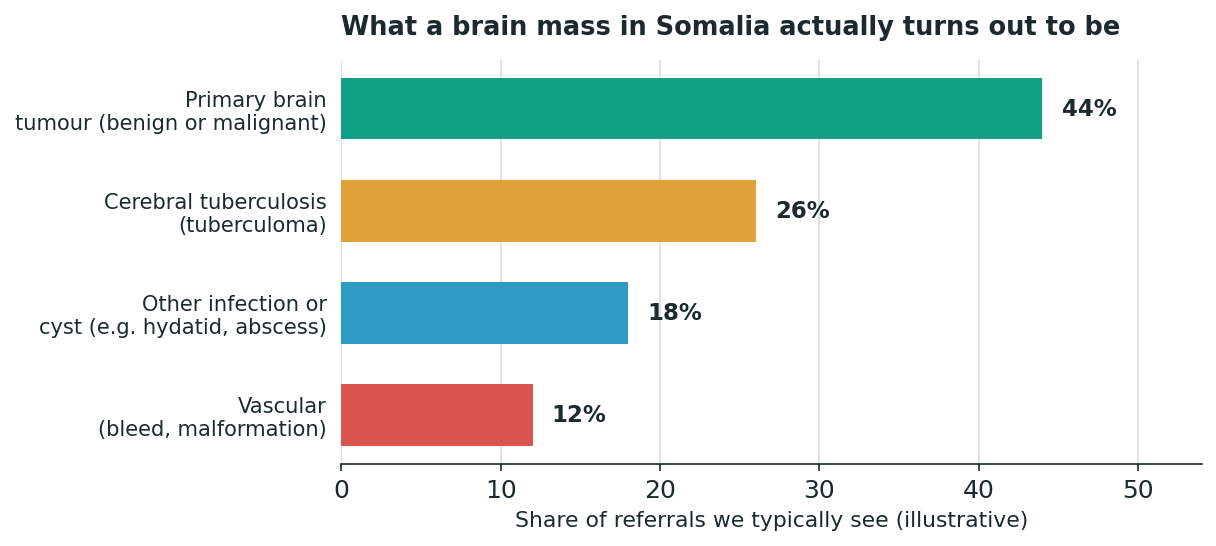
Illustrative breakdown of what a brain mass referred from Somalia actually turns out to be.
The Somali difference: rule out tuberculosis before assuming cancer
Somalia carries the highest tuberculosis burden of any country in Eastern Africa, and TB can form a mass inside the brain itself — a tuberculoma — that looks strikingly similar to a tumour on a first scan. The two are treated in completely different ways: a tuberculoma responds to anti- tuberculosis medicine over several months, while a true tumour may need surgery, radiotherapy or both. Operating on a tuberculoma exposes a patient to unnecessary brain surgery for a condition medicine could have solved.
This is why a proper work-up — bloodwork, sometimes a biopsy, and imaging read by someone who has seen this exact pattern before — must come before any conversation about surgery. A clinic that quotes an operation from a single scan alone has skipped the step that matters most.
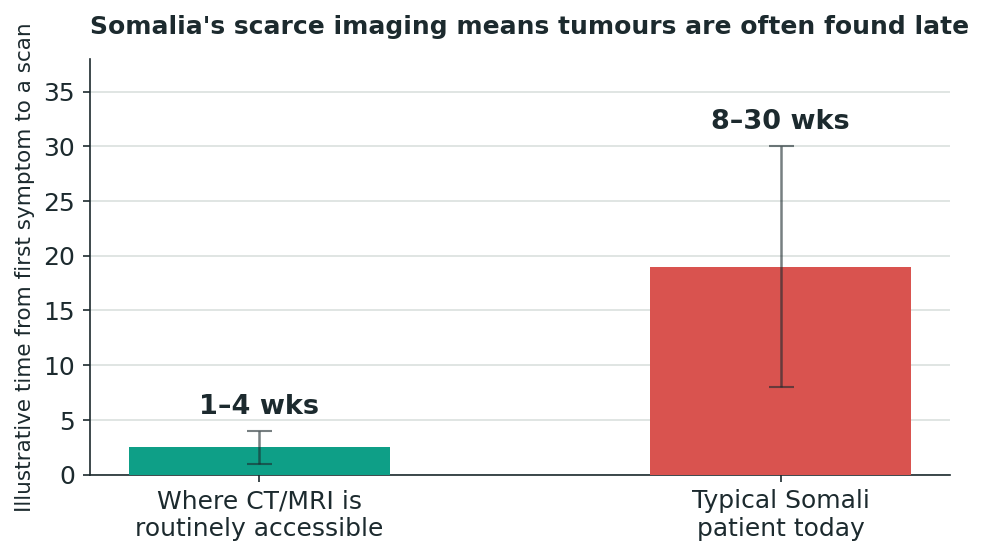
Scarce imaging access inside Somalia means many brain conditions are found later, and larger, than they need to be.
Know the warning signs, and do not wait them out
A headache that is worst in the morning, new seizures in someone who never had them before, gradual weakness on one side, or a slow change in vision, memory or personality are signs that deserve imaging, not patience. Because scans are still hard to reach in much of Somalia, families often wait far longer than they should before seeking one — and by then, a small, easily treated problem may have become a much larger one.
A biopsy and a tumour board, not one surgeon's opinion
The single most important safeguard in this entire process is a genuine multidisciplinary tumour board — neurosurgeon, oncologist, radiologist and pathologist reviewing the same images and the same tissue together, not one surgeon deciding alone. Where the diagnosis is uncertain, a biopsy to confirm exactly what the tissue is should come before any decision about full surgery, radiotherapy or watchful monitoring. Not every tumour needs to come out immediately: some slow-growing, benign masses are simply watched with periodic scans, especially where removing them would risk more than leaving them alone.
Choosing the surgeon and hospital is the real decision
Ask specifically how many brain tumour operations the surgical team performs each year, and whether pathology and a genuine tumour board are on site rather than outsourced. Confirm NABH accreditation in India or, better, international JCI accreditation, and ask about neuro-ICU capacity and 24-hour cover — the days immediately after surgery matter as much as the operation itself.
What it costs — a number you can actually plan around
Somalia has run on the US dollar for a generation, the shilling itself never meaningfully reissued since 1991, so it fits that Indian hospitals quote this care the same way — in dollars, not a currency that shifts by the week. A surgical brain tumour case in a reputable private Indian hospital typically runs US$7,500 to US$15,000 all-in, covering diagnosis, surgery, ICU stay and initial recovery; non-surgical TB or infection cases cost considerably less. Set that beside the alternatives and the case makes itself.
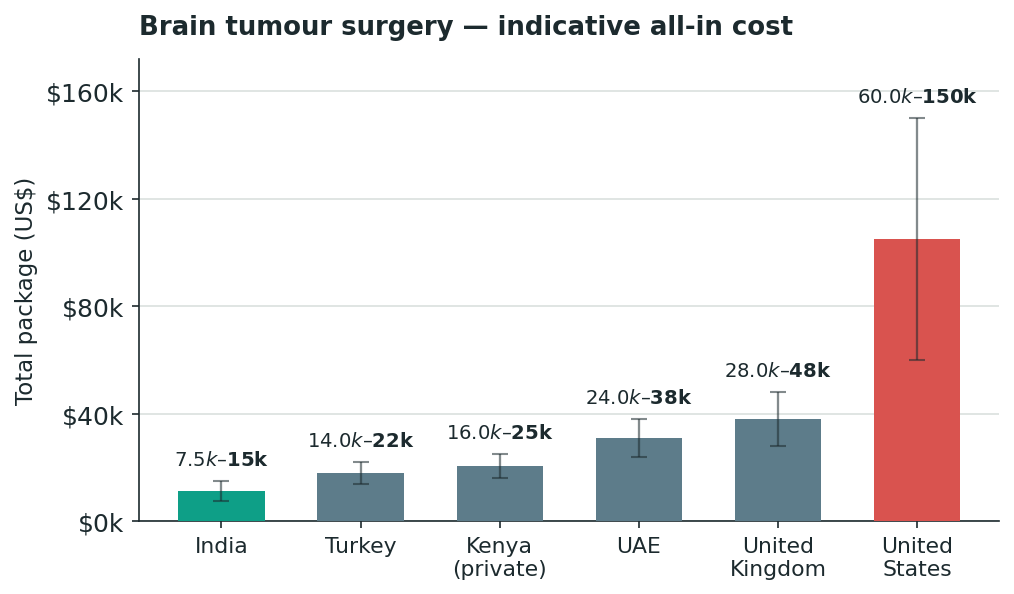
Indicative all-in cost for a surgical brain tumour case. India sits far below every common alternative.
One rule protects every Somali family who makes this journey: get the estimate in writing before a single flight is booked, and insist it names the actual plan, not just "brain surgery." In more than 24 years arranging this kind of care, the disputes I have seen were almost never about the price itself — they were about a diagnosis, or a cost, nobody had bothered to write down.
Four signals that should make you stop and walk away
- Surgery quoted from one scan alone — No bloodwork, no discussion of TB or infection, straight to a surgery date. Refuse it.
- No tumour board mentioned — If the plan comes from one surgeon's opinion alone, ask who else reviewed it.
- No biopsy discussed for an uncertain mass — Confirming what the tissue actually is should come before committing to full surgery.
- The price keeps moving — A verbal estimate that shifts each time you ask is not an estimate. Demand a fixed figure in writing.
Straight answers
If it turns out to be TB, was the scare pointless?
Not at all. Confirming that a mass is treatable with medicine rather than surgery is genuinely good news, and it is exactly the outcome a proper work-up is designed to find.
How is a diagnosis actually confirmed?
Through imaging, bloodwork, and where the picture is unclear, a biopsy to examine the tissue directly. Together these tell the team what they are truly dealing with before any major decision is made.
Will every brain tumour need surgery?
No. Some benign, slow-growing tumours are simply monitored with periodic scans, especially where surgery would carry more risk than the tumour itself.
What happens once I am home in Somalia?
You leave with a complete discharge summary, pathology results and a follow-up plan. A properly run hospital reviews your progress remotely by phone or video — essential when specialist neurological follow-up inside Somalia remains scarce.
The practical journey from Somalia — plan it before you fly
The medicine is the easy part; the logistics are what genuinely trip families up. There is no direct flight between Somalia and India; patients route through Nairobi, Addis Ababa, Dubai or Djibouti. Because there is no full Indian mission inside Somalia, the medical visa is issued through the Embassy of India in Addis Ababa or the High Commission in Nairobi, against a written invitation letter from the treating hospital. Somali patients may bring up to two medical attendants on attendant visas. Since your route crosses yellow-fever territory, carry a valid yellow-fever vaccination certificate. Above every other instruction: send your actual scan, not a written summary, so specialists can begin narrowing the diagnosis before you ever leave home.
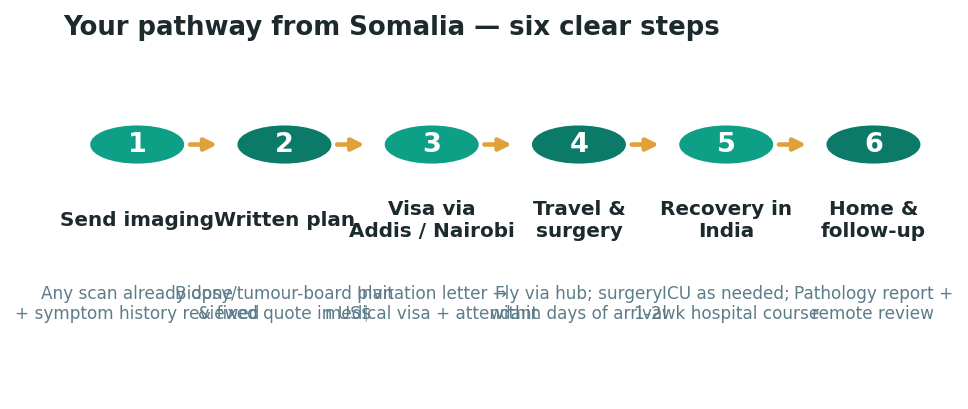
The complete route, start to finish — most of it arranged before you ever leave Somalia.
Certainty is not a luxury — it is where treatment should always begin
Fear turns a shadow on a scan into a death sentence long before any doctor has actually looked closely. The truth is usually more hopeful than the fear: many masses referred from Somalia are treatable with medicine alone, and even genuine tumours are, more often than not, operable with excellent outcomes when caught and diagnosed properly.
Sources & Useful Links
- 🌐 Indian medical visa (Somali nationals): indianvisaonline.gov.in
- 🌐 Embassy of India, Addis Ababa: eoiaddisababa.gov.in
- 🌐 High Commission of India, Nairobi: hcinairobi.gov.in
- 🌐 Yellow-fever requirements: who.int/health-topics/yellow-fever
- 🌐 Hospital accreditation (India): nabh.co · jointcommissioninternational.org
- 🌐 Verify a surgeon's registration: nmc.org.in
Do not decide alone, and do not decide blind
If you want your scan reviewed properly and an honest written plan — including whether this is even a tumour at all — that is precisely the independent guidance I provide, without a single hospital's interest attached to my advice.
Dr. Dheeraj Bojwani · Independent medical travel advisor
Frequently Asked Questions by Somali Patients about Brain Tumour Surgery in India
Why should Somali patients confirm the diagnosis before brain tumour surgery?
A brain mass is not automatically cancer. The guide stresses that cerebral tuberculosis, infections, cysts and vascular conditions can sometimes resemble a tumour on imaging.
Can brain tuberculosis look like a brain tumour?
Yes. Cerebral tuberculosis or tuberculoma can appear very similar to a tumour on an initial scan. This is why TB should be ruled out before surgery is planned.
How is a brain tumour diagnosis confirmed in India?
The guide recommends imaging, bloodwork and, when the diagnosis remains unclear, a biopsy. These findings should ideally be reviewed by a multidisciplinary tumour board.
Does every brain tumour require surgery?
No. Some slow-growing benign tumours can be monitored with periodic scans, particularly when surgery may carry greater risk than observation.
How much does brain tumour surgery in India cost for Somali patients?
The guide estimates approximately US$7,500–US$15,000 all-in for a surgical case, including diagnosis, surgery, ICU stay and initial recovery.
What is a multidisciplinary brain tumour board?
It brings together a neurosurgeon, oncologist, radiologist and pathologist to review the patient's imaging and tissue. This reduces reliance on one surgeon's opinion alone.
What should Somali patients send before travelling to India?
Patients should send their actual brain scans rather than only a written summary. Specialists can then begin narrowing the diagnosis before the patient leaves Somalia.
What symptoms may require brain imaging?
The guide mentions morning headaches, new seizures, gradual one-sided weakness, and changes in vision, memory or personality. These symptoms should not simply be waited out.
What should patients receive before returning to Somalia?
Patients should leave with a complete discharge summary, pathology results and a follow-up plan. Remote follow-up by phone or video should also be arranged where appropriate.
What are the warning signs when choosing a brain tumour surgery provider?
Four red flags are highlighted: surgery quoted from one scan alone, no tumour board, no biopsy discussion for an uncertain mass and a price that keeps changing.
Page Summary
This guide explains brain tumour diagnosis and surgery in India for Somali patients, with its central message focused on establishing the correct diagnosis before proceeding to surgery. A brain mass seen on a scan may represent a true tumour, cerebral tuberculosis, another infection or cyst, or a vascular condition.
Citation Block
| Topic | Information |
|---|---|
| Topic Information | Details |
| Procedure | Brain Tumour Diagnosis and Surgery |
| Country | India |
| Intended Audience | Somali Patients |
| Conditions Covered | Primary Brain Tumours, Cerebral Tuberculosis/Tuberculoma, Other Brain Infections or Cysts, and Vascular Brain Lesions |
| Procedures | Brain Imaging, Bloodwork, Biopsy, Brain Tumour Surgery, Radiotherapy Where Required and Periodic Scan Monitoring |
| Typical Stay | Not Specifically Stated in the Guide |
| Neuro-ICU Stay | Not Specifically Stated; Neuro-ICU Capacity and 24-Hour Cover Are Recommended |
| Recovery | Depends on the Final Diagnosis, Whether Surgery Is Required, Pathology and Individual Neurological Recovery |
| Average Surgery Cost | US$7,500–US$15,000 All-In for Surgical Cases |
| Key Diagnostic Consideration | Rule Out Cerebral Tuberculosis Before Assuming Cancer |
| Diagnostic Approach | Imaging, Bloodwork and Biopsy Where the Diagnosis Is Uncertain |
| Multidisciplinary Review | Neurosurgeon, Oncologist, Radiologist and Pathologist |
| Hospital Requirements | NABH/JCI Accreditation, On-Site Pathology, Tumour Board and Neuro-ICU with 24-Hour Cover |

Our Mission Statement
Our mission is to place patients at the centre of every healthcare decision by providing trustworthy, evidence-based, and unbiased medical information. We believe that informed patients make better decisions. Backed by personalised guidance from our experienced advisory team, we help patients understand their treatment options, compare them objectively, and confidently choose the path that best suits their medical needs and personal circumstances.
Patient Testimonials from Somalia
Ready to Take the First Step?
Share your Medical Reports with our Healthcare Managers Today and Get a FREE CONSULTATION, a Personalized Treatment Plan, and Complete Support from Arrival to Recovery.
Get Your Free ConsultationAreas We Serve
This resource has been thoughtfully prepared for patients from Somalia who are considering medical treatment in India. We also welcome patients from the wider region in the countries mentioned below-
We assist patients from:
- Ethiopia
- Djibouti
- Yemen
- Kenya
- Seychelles
- Somalia
- South Sudan
- Tanzania
- Uganda
- Zambia
- Zimbabwe
- Angola
- Cameroon
- Central African Republic
Many of the insights, treatment pathways, hospital recommendations, travel guidance, and patient support services described here are equally relevant and may be used as a reference when planning treatment in India.
From Somalia to India: Your Complete Patient Support Guide
- Best Brain Tumour Surgeons & Hospitals in India for Somali Patients
- Best Cancer Treatment Surgeons & Hospitals in India for Somali Patients
- Best Cardiac Surgeons & Hospitals in India for Somali Patients
- Best CyberKnife Teams & Centres in India for Somali Patients
- Best Heart Valve Replacement Surgeons & Hospitals in India for Somali Patients
- Best Hip Surgeons & Hospitals in India for Somali Patients
- Best Knee Surgeons & Hospitals in India for Somali Patients
- Best Neurosurgeons & Hospitals in India for Somali Patients
- Best Paediatric Cardiac Surgeons & Hospitals in India for Somali Patients
- Best Paediatric Neurosurgeons & Hospitals in India for Somali Patients
- Best Spine Surgeons & Hospitals in India for Somali Patients
- Bariatric Surgery in India for Patients from Somalia
- Brain Tumour Surgery in India for Patients from Somalia
- Cancer Treatment and Surgery in India for Patients from Somalia
- Cardiac Surgery in India for Patients from Somalia
- Cosmetic and Plastic Surgery in India for Patients from Somalia
- CyberKnife Treatment in India for Patients from Somalia
- Dental Surgery in India for Patients from Somalia