

Selecting the Best Paediatric Cardiac Surgeons & Hospitals in India — A Somali Patient's Guide
An adult cardiac surgeon operating on a child is not simply doing the same job on a smaller scale. A child's heart, vessels and physiology behave differently, and the team around your child needs to be built for exactly that, not adapted from adult practice on the day.
Every year, more Somali families decide that paediatric cardiac treatment in India is the right choice — and nearly all of them stop thinking too soon after making that decision. They compare countries, glance at a price, and book with the first clinic that answers quickly. That is backwards, and for a child's heart it is riskier than almost anywhere else, because congenital defects are rarely straightforward and a mismatched team, however well-intentioned, is a genuine danger. The country matters far less than the two specific choices inside it: which team holds the instruments, and which hospital stands behind them if anything goes wrong. For 24 years I have watched good outcomes and poor ones come from families who made this second decision carelessly, even after making the first one wisely. I write here as an independent adviser with no hospital's interest attached to my advice.
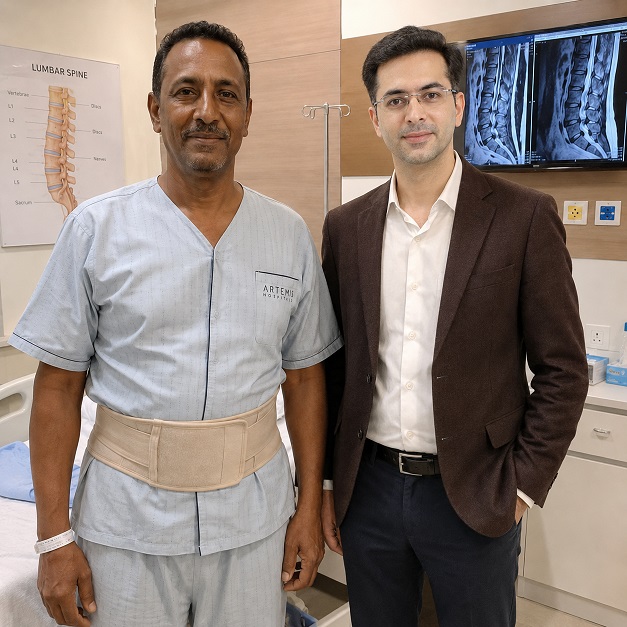
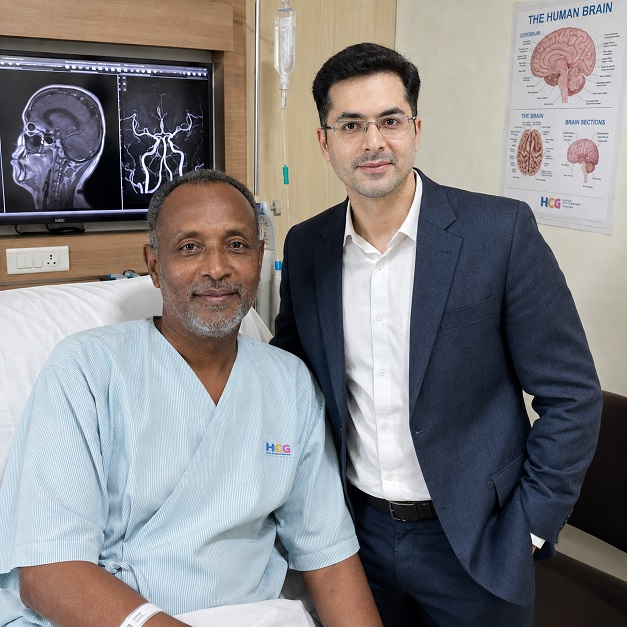
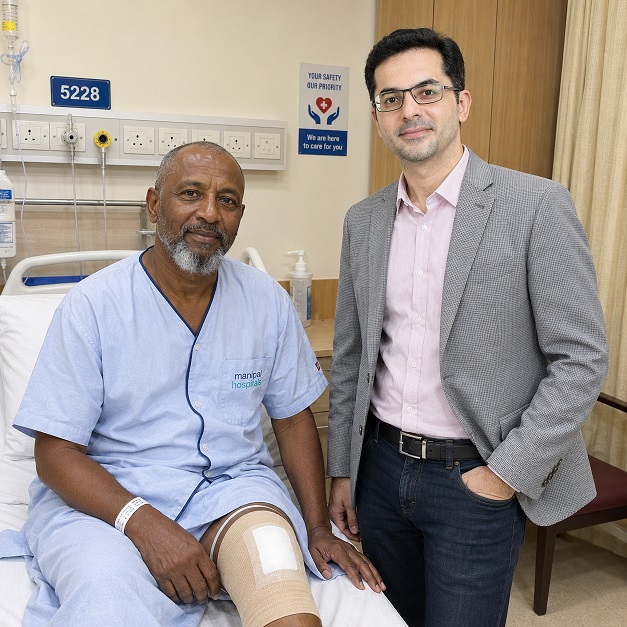
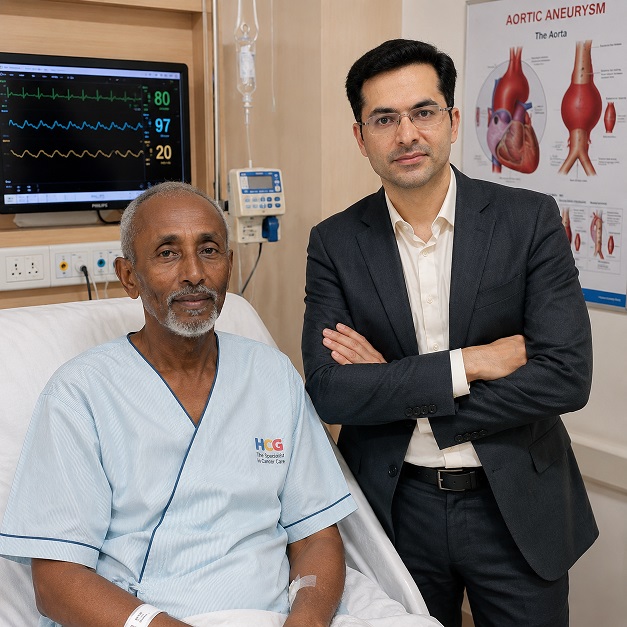
Healing Journeys of Somali Patients
Key Takeaways
- For Somali families considering paediatric cardiac surgery in India, the guide makes one principle especially important: a child should be treated by a genuinely paediatric cardiac team, not adult cardiac specialists adapting their practice for a child. The surgeon, anaesthetist and cardiac ICU team should all primarily work with children.
- Timing can be as important as surgical technique. Some congenital heart defects that are straightforward to repair in infancy or early childhood can become much more difficult—or even irreversible—if treatment is delayed. The guide specifically highlights the risk of Eisenmenger syndrome from prolonged abnormal blood flow through the lungs.
- The page 2 chart recommends weighing the paediatric cardiac team at 55% and the hospital at 45%. Hospital-wide paediatric systems matter because children require specialised anaesthesia, drug dosing, cardiac ICU care and postoperative monitoring.
- The team should clearly explain how much time the child's specific defect allows and why. If timing or the closing treatment window is never discussed, the guide considers the evaluation incomplete.
- Experience should also match the child's exact congenital heart defect. Families should ask how many cases of that specific defect the team manages annually, rather than relying only on general paediatric cardiac surgery numbers.
- The page 3 chart illustrates good-outcome rates increasing with paediatric cardiac surgery volume: 80% for fewer than 30 cases/year, 88% for 30–100, 93% for 100–200 and 97% for 200+ cases/year. These figures are presented as illustrative.
- For complex congenital defects, some children may require staged repairs involving more than one operation. A trustworthy team should explain this possibility clearly from the beginning rather than presenting every case as a single-operation treatment.
Quick Facts
- Specialty
- Paediatric Cardiac Surgery
- Country
- India
- Intended Audience
- Somali Children and Their Families
- Primary Clinical Area
- Congenital Heart Disease
- Core Principle
- Choose a genuinely paediatric cardiac team.
- Team/Hospital Weighting
- 55% / 45%
- Critical Clinical Factor
- Timing of congenital heart defect repair
- Delay-Related Risk Mentioned
- Eisenmenger syndrome
- Top Selection Criterion
- Genuinely paediatric team — 10/10
- Timing / Closing Window Discussion
- 9/10
- Exact Defect Experience
- 9/10
- Dedicated Paediatric Cardiac ICU
- 8/10
- NABH/JCI Accreditation
- 8/10
- Annual Paediatric Cardiac Surgery Volume
- 7/10
In Brief
Somali families choosing paediatric cardiac treatment in India should prioritise a genuinely paediatric heart team rather than adult cardiac specialists treating children. The guide recommends a 55% team / 45% hospital weighting, with particular attention to treatment timing, exact congenital-defect experience, paediatric cardiac surgery volume, dedicated paediatric cardiac ICU facilities and specialist fellowship training. A single paediatric cardiac procedure is estimated at approximately US$6,500–US$13,000 all-in.
First, should you travel at all?
Somalia's own capacity for this exact care is still being built. The country's first-ever paediatric open- heart operations were performed only recently, when a visiting Italian surgical team worked alongside local doctors in Mogadishu to treat two Somali children — a genuine milestone, and proof the skill and the will exist. But one visiting team cannot meet the need of an entire country. Across Africa, only a small fraction of children needing heart surgery ever receive it, and for the great majority of Somali children with congenital heart disease today, travel remains the only route to timely treatment.
The one clinical fact that should shape your whole search
Many congenital heart defects involve a hole or connection that lets blood flow the wrong way between the heart's chambers. Repaired in infancy or early childhood, the outcome is usually excellent. Left unrepaired for years, the extra blood flow can permanently damage the blood vessels in the lungs, a condition called Eisenmenger syndrome, which cannot be undone by any later operation. This changes what you should look for. You do not just need a skilled paediatric heart team. You need one that treats timing as seriously as technique, and tells you honestly how much time your child's specific defect allows.
Why timing matters as much as the surgeon
This is worth understanding in its own right, because it shapes every other decision in this guide. A defect that would have been a straightforward repair at eighteen months can become a fundamentally harder problem by the time a child is eight, not because the surgery got more difficult, but because the body itself has changed in ways surgery cannot reverse. A genuine paediatric cardiologist should be able to explain, specifically, how much time your child's defect allows and why — not simply schedule a date. If timing is never discussed as its own topic, treat that as a sign the evaluation was incomplete.
Two decisions, not one
Families consistently under-weigh the hospital and over-weigh the surgeon, or the reverse, when both deserve deliberate, separate attention. Paediatric cardiac outcomes depend heavily on hospital systems built specifically for children — paediatric anaesthesia, a paediatric cardiac ICU, staff experienced with a child's different drug dosing and physiology — alongside the surgeon's own skill. As a rough guide, weigh the team slightly more heavily — but never treat the hospital as an afterthought.
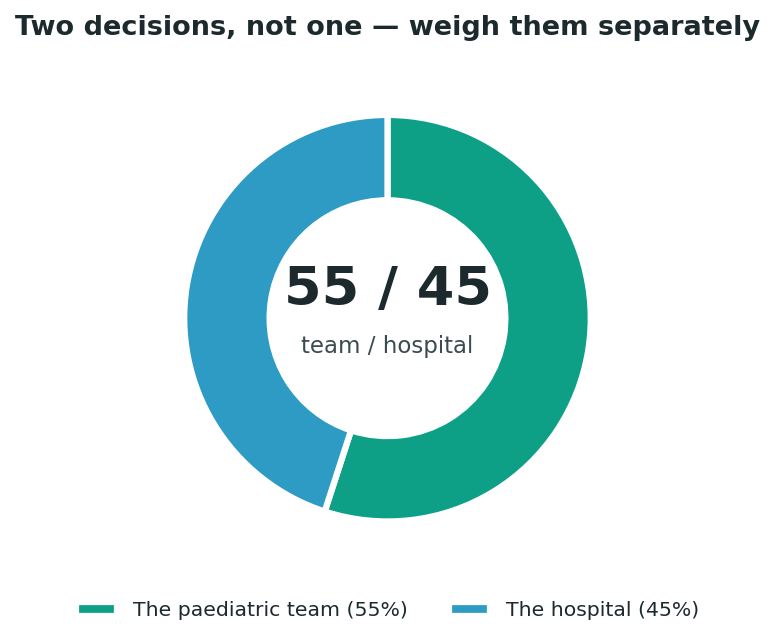
Paediatric cardiac care leans on hospital-wide paediatric systems more than most specialties.
Part One: Choosing the Surgeon (and the Team Behind Them)
1. A genuinely paediatric team, not adult specialists treating a child. Ask specifically whether the surgeon, anaesthetist and ICU team work on children as their primary practice. This is the single most protective sign of quality care.
2. Explicitly discusses timing. A team that explains how much time your child's exact defect allows, and why, is treating your case seriously rather than defaulting to a generic schedule. 3. Named experience with your child's exact defect. Congenital heart disease covers many different anatomical patterns; ask how many cases of this specific defect the team treats each year. 4. Genuine annual volume. Ask about the team's total paediatric cardiac surgery volume, not the hospital's general cardiac caseload.
5. Explains staged-repair plans honestly. Some complex defects need more than one operation over time; a team that lays this out clearly from the start is being straightforward with you. 6. Transparent complication and mortality rates. Every team has real numbers. One who shares them is more trustworthy than one who avoids the question.
7. Comfort with a second opinion. A confident team welcomes another specialist reviewing your child's echocardiogram. Reluctance here is itself useful information.
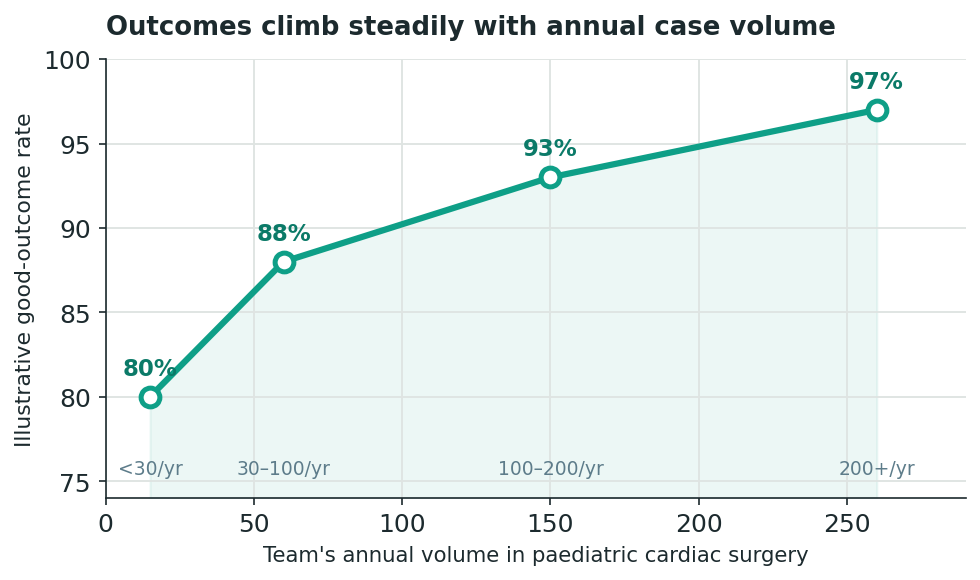
Volume in paediatric cardiac surgery specifically, not cardiac surgery broadly, is what predicts a safe result.
Part Two: Choosing the Hospital
8. A dedicated paediatric cardiac ICU. The hours and days immediately after surgery are where outcomes are truly won or lost, and a child's ICU needs differ genuinely from an adult's. 9. NABH accreditation in India, or international JCI accreditation. These are independently verified standards of safety and process, not formalities.
10. Named valve, patch or device brand, where relevant. Insist on knowing exactly what was used. This record matters for the rest of your child's life.
11. On-site paediatric rehabilitation and growth monitoring. Recovery for a child includes tracking development, not only healing from surgery.
12. Genuine international patient support. A hospital used to families from Somalia will have interpreters and realistic guidance on visa and logistics. 13. Infection control track record. Ask directly about surgical site infection rates. A confident hospital will share them.
14. Remote follow-up after you fly home. Confirm, in writing, how your child's recovery will be monitored once you are back in Somalia.
| Stage | Qualification | What it confirms |
|---|---|---|
| 1 | MBBS | Basic medical degree, the foundation for every doctor. |
| 2 | MS / MCh Cardiothoracic Surgery | Specialist postgraduate training in general cardiac surgery. |
| 3 | Fellowship in Paediatric Cardiac Surgery | Focused, advanced training specifically in congenital and childhood heart surgery. |
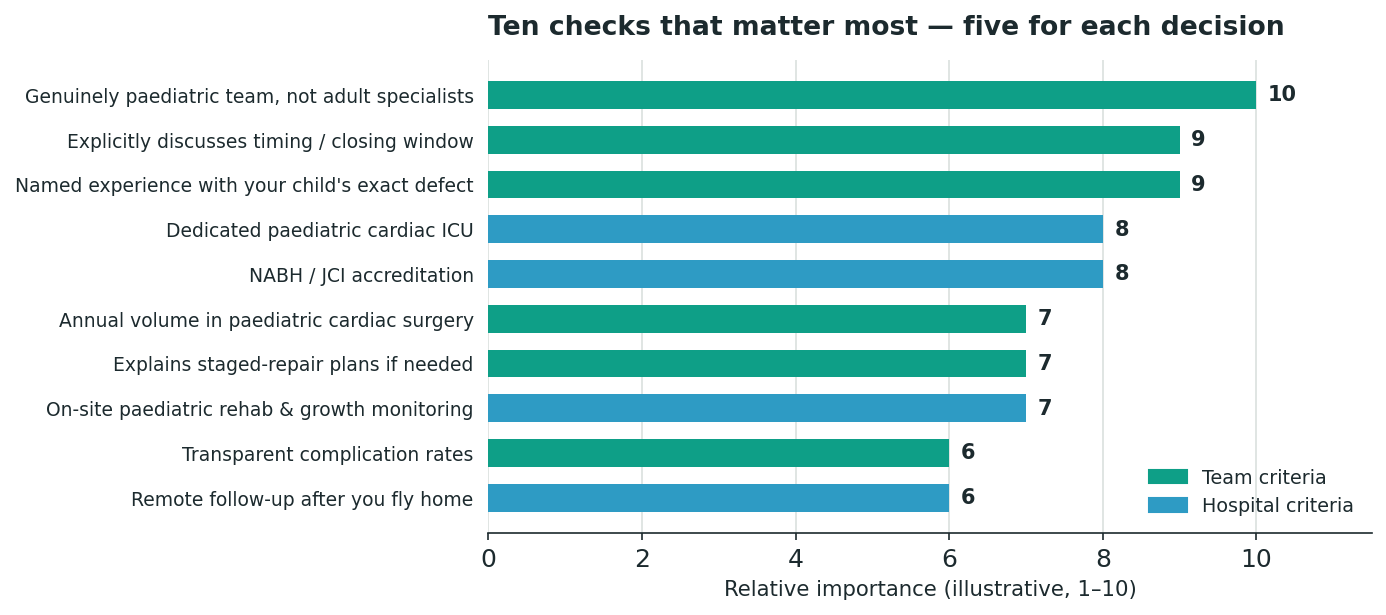
The ten criteria that matter most, ranked by how much weight each should carry in your decision.
Why a paediatric heart team is not simply a smaller adult team
This distinction is easy to underestimate and important to insist on. A child's heart is not a miniature version of an adult heart; the physiology, the vessel sizes, the way anaesthetic drugs are dosed and metabolised, and the way the body responds to the heart-lung machine during surgery all differ genuinely from adult practice. An excellent adult cardiac surgeon, without specific paediatric training and without a paediatric anaesthesia and ICU team around them, is not a safe substitute for a genuine paediatric cardiac programme. If a hospital cannot describe its paediatric-specific team in detail, that gap is worth taking seriously before you travel, not after.
Cost and value are not the same conversation
Somalia has run on the US dollar for a generation, the shilling itself never meaningfully reissued since 1991, so Indian hospitals quoting in dollars is a genuine convenience, not a complication. A well- chosen team and hospital combination for paediatric cardiac treatment typically costs US$6,500 to US$13,000 all-in for a single procedure. The cheapest quote is rarely the best value; the criteria above, not the invoice, are what actually protect your child. In more than 24 years arranging this kind of care, the families who chose on price alone were the ones most likely to call me again, later, with a problem.
What a Somali family should weigh in particular
Beyond the criteria above, a few things matter specifically for you. Ask directly how much time your child's defect allows, and treat any answer that avoids the question as incomplete. Watch for breathlessness, poor feeding, or slow growth in an infant, and seek an echocardiogram promptly rather than waiting to see if a murmur resolves on its own. Because funds are often gathered from relatives abroad, get every cost element in writing before travel. And send your child's actual echocardiogram, not a written description, so the team can assess timing and defect type before you ever leave home.
The practical journey from Somalia
There is no direct flight between Somalia and India; families route through Nairobi, Addis Ababa, Dubai or Djibouti. Because there is no full Indian mission inside Somalia, the medical visa is issued through the Embassy of India in Addis Ababa or the High Commission in Nairobi, against a written invitation letter from your chosen hospital. Somali patients may bring up to two medical attendants on attendant visas. Since your route crosses yellow-fever territory, carry a valid yellow-fever vaccination certificate.
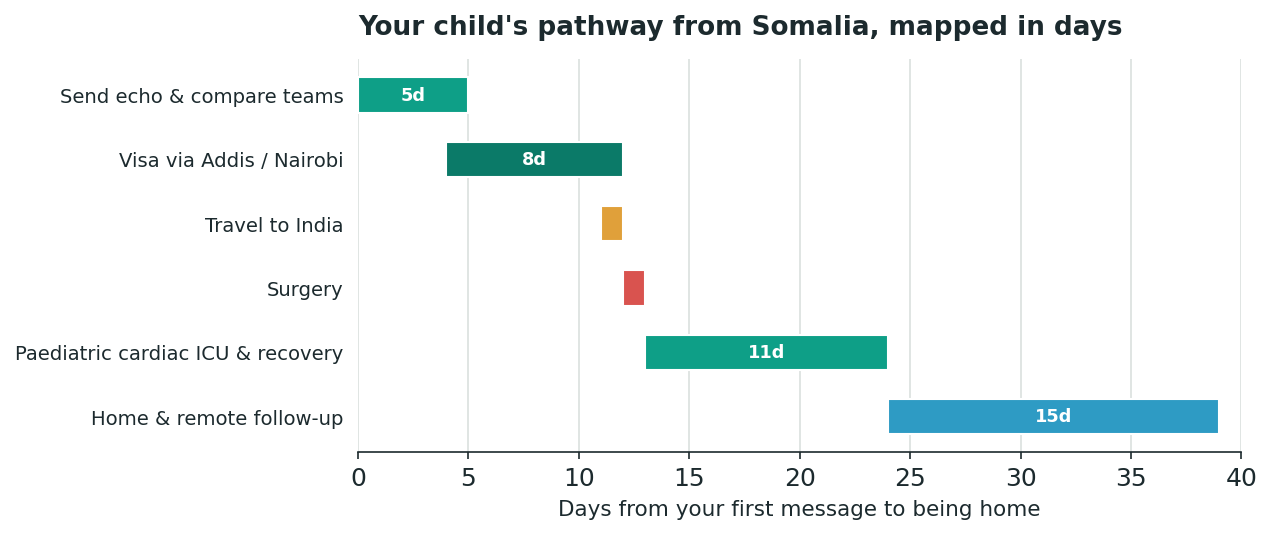
Mapped in days, not just steps — most of the early ones happen before you ever leave Somalia.
Four signals that should make you pause
- No paediatric-specific team named — If the surgeon, anaesthetist and ICU are not genuinely paediatric-focused, keep looking.
- Timing never discussed — A team that jumps straight to a surgery date without explaining urgency has skipped a critical step.
- No echocardiogram reviewed — A plan built without your child's actual imaging is a plan built on guesswork.
- Pressure to decide immediately — A reputable team gives you time to compare. Urgency is a sales tactic, not a medical one.
The right choice, made once, protects everything that follows
A child's heart deserves a team built for children, and a decision made with full information rather than under pressure. Take the time these ten questions require. The country got you this far; the team and the hospital decide the rest.
Sources & Useful Links
- 🌐 Indian medical visa (Somali nationals): indianvisaonline.gov.in
- 🌐 Embassy of India, Addis Ababa: eoiaddisababa.gov.in
- 🌐 High Commission of India, Nairobi: hcinairobi.gov.in
- 🌐 Yellow-fever requirements: who.int/health-topics/yellow-fever
- 🌐 Hospital accreditation (India): nabh.co · jointcommissioninternational.org
- 🌐 Verify a surgeon's registration: nmc.org.in
Do not choose alone, and do not choose blind
If you want help verifying a team's paediatric-specific qualifications, comparing hospital options, and getting a written, itemised quote before you travel, that is precisely the independent guidance I provide, without a single hospital's interest attached to my advice.
Dr. Dheeraj Bojwani · Independent medical travel advisor
Frequently Asked Questions by Somalis about Paediatric Cardiac Surgeons & Hospitals in India
How should Somali families choose a paediatric cardiac surgeon in India?
Choose a genuinely paediatric cardiac team, including a surgeon, anaesthetist and ICU team whose primary practice involves children. Adult cardiac specialists should not substitute for a dedicated paediatric programme.
Why is the timing of paediatric heart surgery important?
Some congenital heart defects become harder to treat when surgery is delayed. Families should ask the team how much time their child’s specific defect allows and why.
How much does paediatric cardiac surgery in India cost for Somali patients?
The guide estimates approximately US$6,500–US$13,000 all-in for a single procedure. Families should obtain every cost component in writing before travelling.
Does the team’s annual paediatric cardiac surgery volume matter?
Yes. Families should ask about paediatric cardiac surgery volume specifically, rather than the hospital’s general cardiac caseload. The guide considers procedure-specific experience an important selection factor.
What hospital facility is most important after paediatric heart surgery?
A dedicated paediatric cardiac ICU is essential because children require specialised postoperative monitoring, drug dosing and intensive care different from adults.
What should Somali families send before travelling to India?
Send the child’s actual echocardiogram, not only a written description. This allows the paediatric cardiac team to assess the defect and treatment timing before travel.
Can a child with a complex heart defect need more than one surgery?
Yes. Some complex congenital heart defects require staged repairs involving more than one operation. The team should explain the complete treatment plan clearly from the beginning.
What symptoms should Somali parents watch for in a child?
The guide specifically mentions breathlessness, poor feeding and slow growth in infants. These symptoms should prompt timely cardiac assessment and an echocardiogram.
How long is paediatric cardiac ICU and recovery in India?
The page 5 pathway shows approximately 11 days for paediatric cardiac ICU and recovery. The actual duration depends on the heart defect, surgery and the child’s recovery.
What are the warning signs when choosing a paediatric cardiac team?
The guide highlights four red flags: no paediatric-specific team, timing never discussed, no echocardiogram reviewed and pressure to decide immediately.
Page Summary
This guide explains how Somali families should select paediatric cardiac surgeons and hospitals in India. Its central message is that paediatric heart surgery requires a team specifically built around children, including the surgeon, anaesthetist and cardiac ICU staff. An adult cardiac programme is not presented as an adequate substitute. The guide places particular emphasis on timing. Congenital heart defects may become substantially harder to treat when intervention is delayed, and prolonged abnormal blood flow can eventually cause irreversible pulmonary vascular damage such as Eisenmenger syndrome.
Citation Block
| Topic | Information |
|---|---|
| Topic Information | Details |
| Procedure | Paediatric Cardiac Surgery |
| Country | India |
| Intended Audience | Somali Children and Their Families |
| Conditions Covered | Congenital Heart Defects and Childhood Heart Conditions Requiring Surgical Treatment |
| Procedures | Congenital Heart Surgery, Defect Repair, Staged Cardiac Repair and Valve/Patch/Device-Based Treatment Where Relevant |
| Typical Stay | Approximately 11 Days for Paediatric Cardiac ICU and Recovery as Shown in the Journey Chart |
| Paediatric Cardiac ICU | Dedicated Paediatric Cardiac ICU Recommended |
| Recovery | Depends on the Child's Defect, Timing of Treatment, Surgical Complexity and Postoperative Progress |
| Average Treatment Cost | US$6,500–US$13,000 All-In for a Single Procedure |
| Key Team Criterion | Genuinely Paediatric Surgeon, Anaesthetist and ICU Team |
| Key Clinical Consideration | Timing of Repair and Risk of Irreversible Changes if Treatment Is Delayed |
| Team/Hospital Weighting | 55% Team / 45% Hospital |
| Qualification | MBBS → MS/MCh Cardiothoracic Surgery → Fellowship in Paediatric Cardiac Surgery |


Our Mission Statement
Our mission is to place patients at the centre of every healthcare decision by providing trustworthy, evidence-based, and unbiased medical information. We believe that informed patients make better decisions. Backed by personalised guidance from our experienced advisory team, we help patients understand their treatment options, compare them objectively, and confidently choose the path that best suits their medical needs and personal circumstances.
Patient Testimonials from Somalia
Ready to Take the First Step?
Share your Medical Reports with our Healthcare Managers Today and Get a FREE CONSULTATION, a Personalized Treatment Plan, and Complete Support from Arrival to Recovery.
Get Your Free ConsultationAreas We Serve
This resource has been thoughtfully prepared for patients from Somalia who are considering medical treatment in India. We also welcome patients from the wider region in the countries mentioned below-
We assist patients from:
- Ethiopia
- Djibouti
- Yemen
- Kenya
- Seychelles
- Somalia
- South Sudan
- Tanzania
- Uganda
- Zambia
- Zimbabwe
- Angola
- Cameroon
- Central African Republic
Many of the insights, treatment pathways, hospital recommendations, travel guidance, and patient support services described here are equally relevant and may be used as a reference when planning treatment in India.
From Somalia to India: Your Complete Patient Support Guide
- Best Brain Tumour Surgeons & Hospitals in India for Somali Patients
- Best Cancer Treatment Surgeons & Hospitals in India for Somali Patients
- Best Cardiac Surgeons & Hospitals in India for Somali Patients
- Best CyberKnife Teams & Centres in India for Somali Patients
- Best Heart Valve Replacement Surgeons & Hospitals in India for Somali Patients
- Best Hip Surgeons & Hospitals in India for Somali Patients
- Best Knee Surgeons & Hospitals in India for Somali Patients
- Best Neurosurgeons & Hospitals in India for Somali Patients
- Best Paediatric Cardiac Surgeons & Hospitals in India for Somali Patients
- Best Paediatric Neurosurgeons & Hospitals in India for Somali Patients
- Best Spine Surgeons & Hospitals in India for Somali Patients
- Bariatric Surgery in India for Patients from Somalia
- Brain Tumour Surgery in India for Patients from Somalia
- Cancer Treatment and Surgery in India for Patients from Somalia
- Cardiac Surgery in India for Patients from Somalia
- Cosmetic and Plastic Surgery in India for Patients from Somalia
- CyberKnife Treatment in India for Patients from Somalia
- Dental Surgery in India for Patients from Somalia