

Selecting the Best Paediatric Neurosurgeons & Hospitals in India — A Somali Patient's Guide
A shunt that needs a second procedure is not a mistake to be feared. A surgeon who promises it will never happen again is the one to be wary of. This guide is about finding a genuinely paediatric team honest enough to tell you the truth from the start.
Every year, more Somali families decide that paediatric neurosurgical treatment in India is the right choice — and nearly all of them stop thinking too soon after making that decision. They compare countries, glance at a price, and book with the first clinic that answers quickly. That is backwards, and for a child's brain and spine it carries real weight, because an adult neurosurgeon occasionally treating children is not the same as a genuine paediatric neurosurgical team. The country matters far less than the two specific choices inside it: which team holds the instruments, and which hospital stands behind them if anything goes wrong. For 24 years I have watched good outcomes and poor ones come from families who made this second decision carelessly, even after making the first one wisely. I write here as an independent adviser with no hospital's interest attached to my advice.
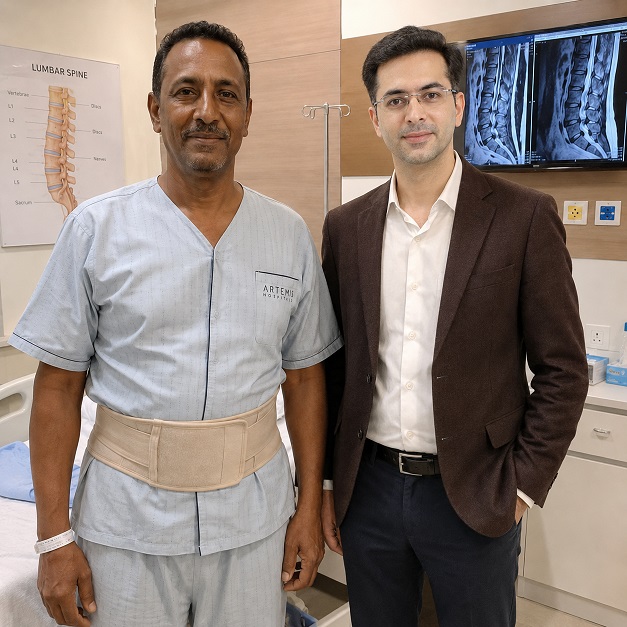
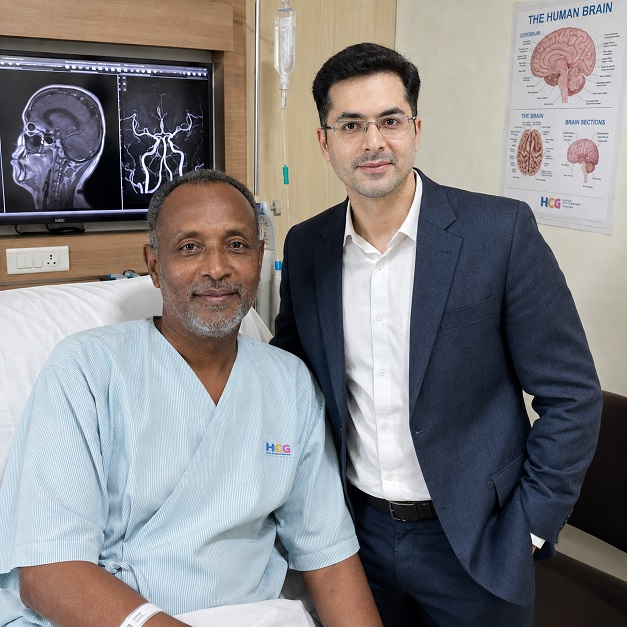
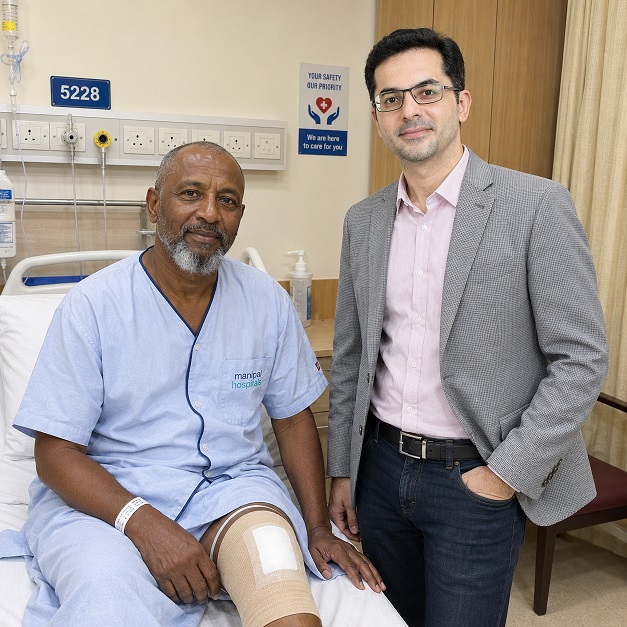
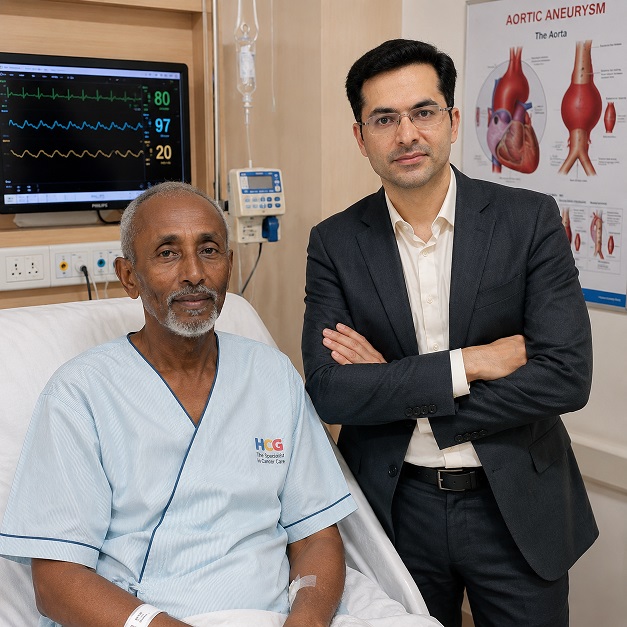
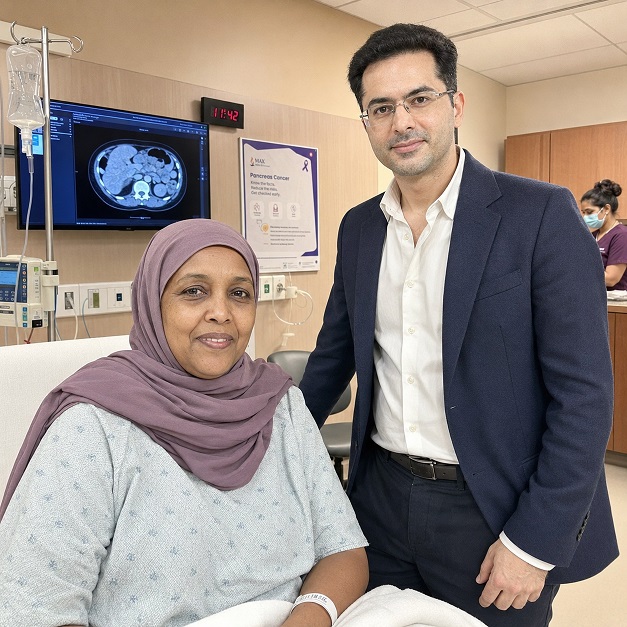
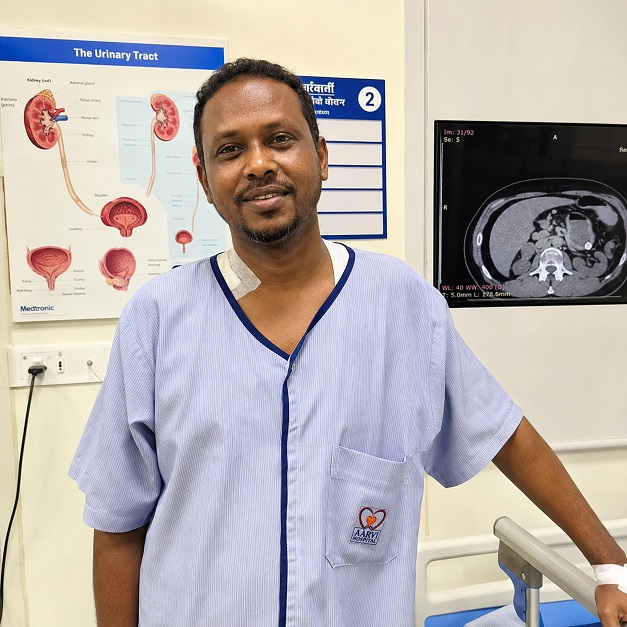
Healing Journeys of Somali Patients
Key Takeaways
- For Somali families choosing paediatric neurosurgical treatment in India, the guide stresses that the child should be treated by a genuinely paediatric neurosurgical team, not an adult neurosurgeon who occasionally treats children.
- The guide identifies hydrocephalus as the condition most often referred from Somalia. It explains that shunts commonly require revision and that roughly half of children with a shunt may need at least one revision within the first two years. This should not automatically be considered failure of the original surgery.
- Families should assess the paediatric team and hospital separately. The chart on page 2 recommends a 55% team / 45% hospital weighting, reflecting the importance of both surgical expertise and child-specific hospital systems.
- The team should have named experience with hydrocephalus and shunt surgery and should honestly explain both shunt treatment and endoscopic alternatives where appropriate.
- Annual volume should refer specifically to paediatric neurosurgery, rather than the hospital's overall neurosurgical caseload. The page 3 chart shows illustrative good-outcome rates of 81% at <30 cases/year, 89% at 30–100, 94% at 100–200 and 97% at 200+ cases/year.
- The guide also recommends checking transparent complication rates and whether the team welcomes a second opinion on the child's scans.
- Hospital selection should prioritise a dedicated paediatric neuro-ICU, because postoperative care for children differs significantly from adult neurological intensive care. NABH or JCI accreditation is also recommended.
- Families should obtain the exact shunt brand and system used during treatment. This information may become particularly important if the child requires a future shunt revision.
Quick Facts
- Specialty
- Paediatric Neurosurgery
- Country
- India
- Intended Audience
- Somali Children and Their Families
- Primary Condition Highlighted
- Hydrocephalus
- Other Conditions Mentioned
- Spina Bifida, Craniosynostosis, Paediatric Brain Tumours
- Core Principle
- Choose a genuinely paediatric neurosurgical team.
- Team/Hospital Weighting
- 55% / 45%
- Shunt Revision
- Common and not automatically evidence of surgical failure
- Shunt Revision Timeline
- Often within the first two years
- Top Selection Criterion
- Genuinely paediatric neurosurgeon — 10/10
- Honest Shunt Revision Discussion
- 9/10
- Hydrocephalus/Shunt Experience
- 9/10
- Dedicated Paediatric Neuro-ICU
- 8/10
- NABH/JCI Accreditation
- 8/10
In Brief
Somali families choosing paediatric neurosurgery in India should prioritise a genuinely paediatric neurosurgical team with specific experience in hydrocephalus, shunt surgery and childhood neurological conditions. The guide recommends a 55% team / 45% hospital weighting and stresses that shunt revision can be expected rather than automatically representing treatment failure. Dedicated paediatric neuro-ICU care, specialist fellowship training, shunt-system documentation and developmental follow-up are important selection factors. Treatment is estimated at approximately US$5,000–US$12,000 all-in for a single procedure.
First, should you travel at all?
Somalia's general hospitals can manage basic paediatric trauma stabilisation, but genuinely paediatric neurosurgical capacity, matched to a growing child's specific needs, is not yet available domestically at meaningful scale. Hydrocephalus, the condition I see referred from Somalia most often, is common across this entire region and highly treatable when reached by the right team. If your child's head is growing unusually fast, or shows other signs of a neurosurgical condition, travelling for a properly coordinated evaluation is not an extravagance. It is the only realistic route to full assessment and treatment.
The one clinical fact that should shape your whole search
Shunts, the small devices used to treat hydrocephalus, commonly need at least one revision, most often within the first two years. This is expected maintenance for a mechanical device, not evidence that the first operation failed. This changes what you should look for. You do not just need a team that can place a shunt well. You need one honest enough to explain this from the outset, rather than promising a result no shunt can actually guarantee.
Why a shunt revision is not a failure
This point causes more needless fear than almost anything else in paediatric neurosurgery, so it is worth understanding properly before you ever choose a team. A shunt is a mechanical device draining fluid from around the brain to elsewhere in the body, and like any mechanical device, it can block or disconnect over time, particularly as a growing child's body changes around it. Roughly half of children with a shunt need at least one revision within the first two years, and this is expected maintenance, not a sign the original surgery went wrong. A team that raises this honestly during your first conversation, rather than only after a problem arises, is showing you exactly the kind of transparency that should guide your choice.
Two decisions, not one
Families consistently under-weigh the hospital and over-weigh the surgeon, or the reverse, when both deserve deliberate, separate attention. Paediatric neurosurgical outcomes depend heavily on hospital systems built specifically for children — paediatric anaesthesia, a paediatric neuro-ICU, staff experienced with a growing child's different physiology — alongside the surgeon's own skill. As a rough guide, weigh the team slightly more heavily — but never treat the hospital as an afterthought.
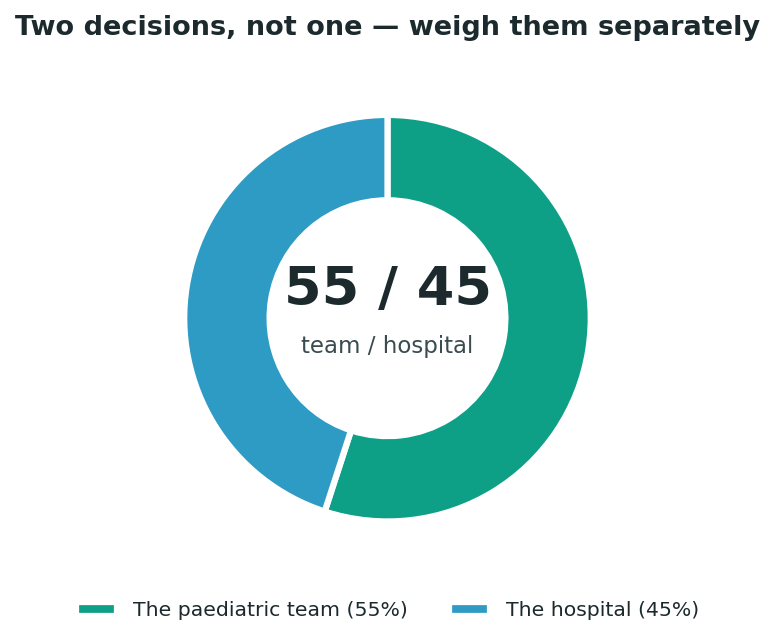
Paediatric neurosurgical care leans on hospital-wide paediatric systems more than most specialties.
Part One: Choosing the Surgeon (and the Team Behind Them)
1. A genuinely paediatric neurosurgeon. Ask specifically whether children are this surgeon's primary practice, not an adult neurosurgeon who occasionally treats a child.
2. Honest that shunt revision is normal, not a failure. A team that explains this plainly from the start is treating your family with the respect the truth deserves. 3. Named experience with hydrocephalus and shunt surgery. Given how common this is among Somali referrals, ask directly how many shunt or endoscopic procedures this team performs each year. 4. Explains shunt versus endoscopic alternatives honestly. More than one treatment approach often exists; a team that discusses both is thinking about your child's whole future.
5. Genuine annual volume. Ask about the team's total paediatric neurosurgery volume, not the hospital's general neurosurgical caseload. 6. Transparent complication rates. Every team has real numbers. One who shares them is more trustworthy than one who claims none.
7. Comfort with a second opinion. A confident team welcomes another specialist reviewing your child's scans. Reluctance here is itself useful information.
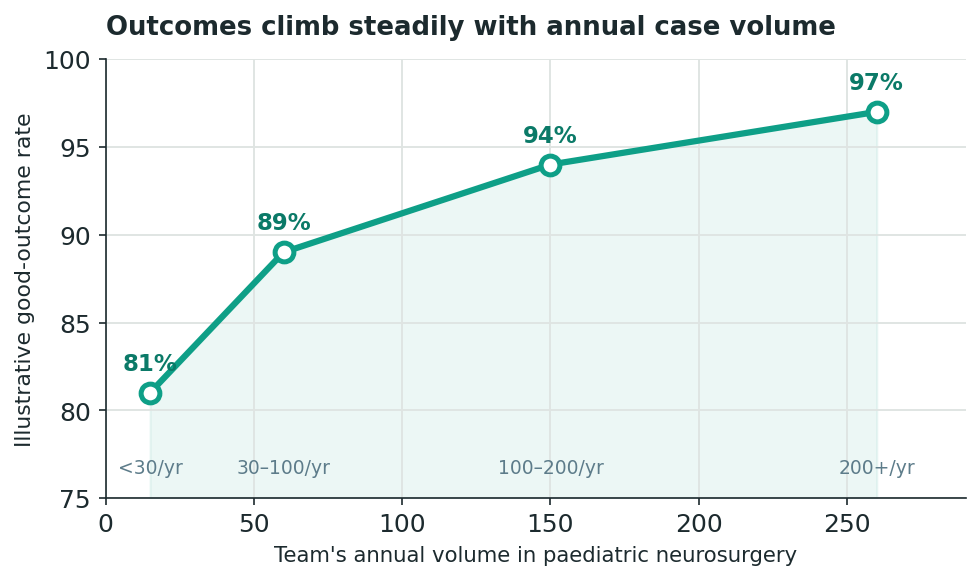
Volume in paediatric neurosurgery specifically, not neurosurgery broadly, is what predicts a safe result.
Part Two: Choosing the Hospital
8. A dedicated paediatric neuro-ICU. The days immediately after surgery are where outcomes are truly won or lost, and a child's needs differ genuinely from an adult's. 9. NABH accreditation in India, or international JCI accreditation. These are independently verified standards of safety and process, not formalities.
10. Named shunt brand and system. Insist on knowing exactly what device was used. This record matters if a revision is ever needed, wherever you are.
11. On-site paediatric rehabilitation and developmental follow-up. Recovery for a child includes tracking development, not only healing from surgery.
12. Genuine international patient support. A hospital used to families from Somalia will have interpreters and realistic guidance on visa and logistics. 13. Infection control track record. Ask directly about surgical site infection rates. A confident hospital will share them.
14. Remote follow-up after you fly home. Confirm, in writing, how your child's recovery will be monitored once you are back in Somalia.
| Stage | Qualification | What it confirms |
|---|---|---|
| 1 | MBBS | Basic medical degree, the foundation for every doctor. |
| 2 | MCh / DNB Neurosurgery | Specialist postgraduate training in general neurosurgery. |
| 3 | Fellowship in Paediatric Neurosurgery | Focused, advanced training specifically in childhood neurosurgical conditions. |
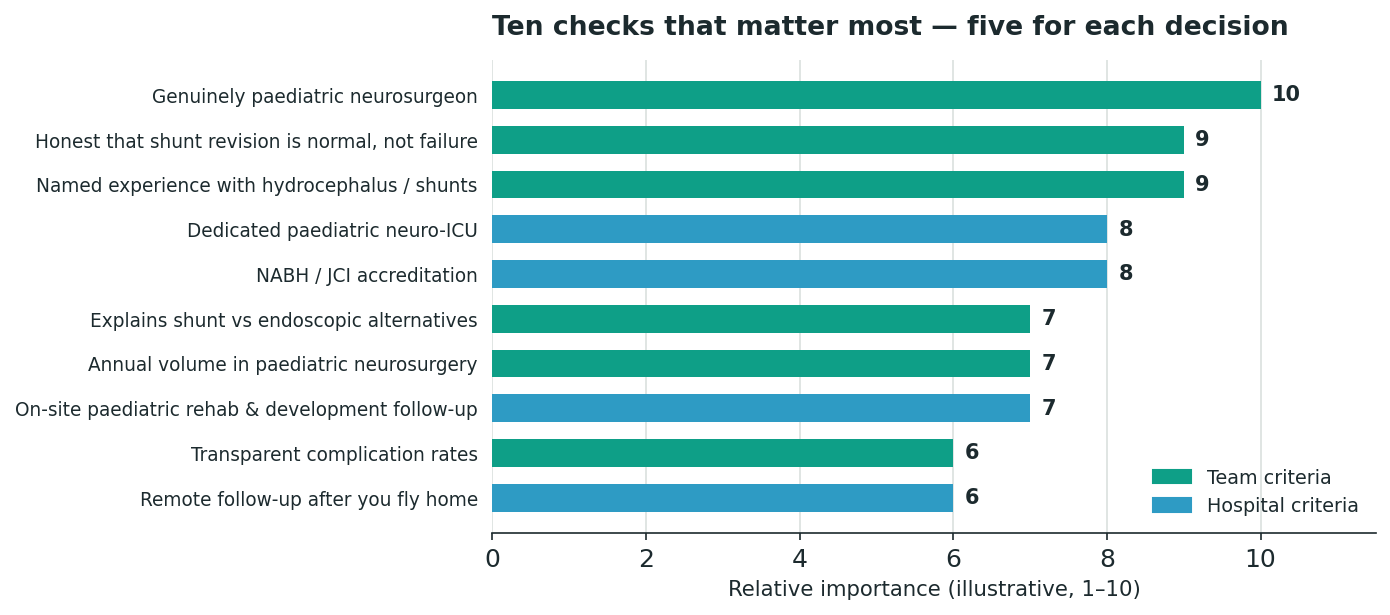
The ten criteria that matter most, ranked by how much weight each should carry in your decision.
Why hydrocephalus needs a genuinely paediatric team
This distinction is easy to underestimate. A growing child's skull, brain and fluid dynamics are not simply a smaller version of an adult's, and the anaesthesia, monitoring and surgical technique needed reflect that reality throughout treatment, not only during the operation itself. A team that treats mostly adult neurosurgical conditions, however skilled, may not have the specific experience a growing brain requires. Beyond hydrocephalus, the same team should be genuinely comfortable with the wider scope of childhood neurosurgery, including spina bifida, craniosynostosis and paediatric brain tumours, since these conditions often overlap in presentation and a narrow focus on one can mean a slower, less confident response when another turns out to be the real diagnosis.
Cost and value are not the same conversation
Somalia has run on the US dollar for a generation, the shilling itself never meaningfully reissued since 1991, so Indian hospitals quoting in dollars is a genuine convenience, not a complication. A well- chosen team and hospital combination for paediatric neurosurgical treatment typically costs US$5,000 to US$12,000 all-in for a single procedure. The cheapest quote is rarely the best value; the criteria above, not the invoice, are what actually protect your child. In more than 24 years arranging this kind of care, the families who chose on price alone were the ones most likely to call me again, later, with a problem.
What a Somali family should weigh in particular
Beyond the criteria above, a few things matter specifically for you. Ask plainly what a possible future revision would cost and how it would be handled, since honesty about that possibility is itself a sign of a trustworthy team. Watch for headache, vomiting, drowsiness or behaviour change after any shunt placement, and seek prompt review rather than waiting. Because funds are often gathered from relatives abroad, get every cost element in writing before travel. And send your child's actual scan and head-circumference records, not a written summary, so the team can plan properly before you ever leave home.
The practical journey from Somalia
There is no direct flight between Somalia and India; families route through Nairobi, Addis Ababa, Dubai or Djibouti. Because there is no full Indian mission inside Somalia, the medical visa is issued through the Embassy of India in Addis Ababa or the High Commission in Nairobi, against a written invitation letter from your chosen hospital. Somali patients may bring up to two medical attendants on attendant visas. Since your route crosses yellow-fever territory, carry a valid yellow-fever vaccination certificate.
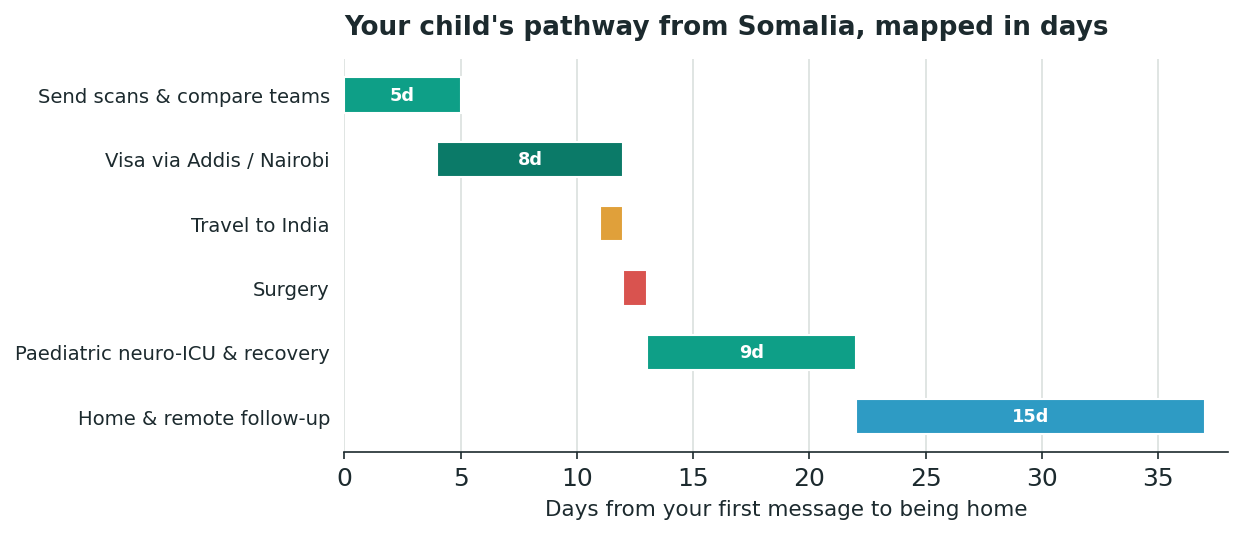
Mapped in days, not just steps — most of the early ones happen before you ever leave Somalia.
Four signals that should make you pause
- No paediatric-specific team named — If the surgeon, anaesthetist and ICU are not genuinely paediatric-focused, keep looking.
- Revision risk never mentioned — A team that promises a shunt will never need attention again is not being honest with you.
- No alternatives discussed — If shunt versus endoscopic treatment was never explained, the plan was rushed.
- Pressure to decide immediately — A reputable team gives you time to compare. Urgency is a sales tactic, not a medical one.
The right choice, made once, protects everything that follows
A child's brain and spine deserve a team built for children, and a decision made with full information rather than under pressure. Take the time these ten questions require. The country got you this far; the team and the hospital decide the rest.
Sources & Useful Links
- 🌐 Indian medical visa (Somali nationals): indianvisaonline.gov.in
- 🌐 Embassy of India, Addis Ababa: eoiaddisababa.gov.in
- 🌐 High Commission of India, Nairobi: hcinairobi.gov.in
- 🌐 Yellow-fever requirements: who.int/health-topics/yellow-fever
- 🌐 Hospital accreditation (India): nabh.co · jointcommissioninternational.org
- 🌐 Verify a surgeon's registration: nmc.org.in
Do not choose alone, and do not choose blind
If you want help verifying a team's paediatric-specific qualifications, comparing hospital options, and getting a written, itemised quote before you travel, that is precisely the independent guidance I provide, without a single hospital's interest attached to my advice.
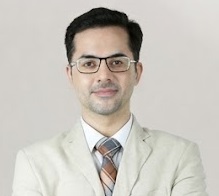
Dr. Dheeraj Bojwani · Independent medical travel advisor
Frequently Asked Questions by Somalis about Paediatric Neurosurgeons & Hospitals in India
How should Somali families choose a paediatric neurosurgeon in India?
Choose a genuinely paediatric neurosurgeon whose primary practice involves children. An adult neurosurgeon who occasionally treats children is not the same as a dedicated paediatric specialist.
Is shunt revision considered a failure of hydrocephalus surgery?
No. The guide explains that shunt revision is common and does not automatically mean the original surgery failed. Roughly half of children may require at least one revision within the first two years.
How much does paediatric neurosurgery in India cost for Somali patients?
The guide estimates approximately US$5,000–US$12,000 all-in for a single procedure. Families should also ask about the possible cost of a future shunt revision.
What should families ask about hydrocephalus treatment?
Ask about the team's experience with hydrocephalus, shunt surgery and endoscopic alternatives. The team should clearly explain why a particular approach is recommended for the child.
Does paediatric neurosurgery case volume matter?
Yes. Families should ask about the team's annual paediatric neurosurgery volume, not the hospital's overall neurosurgery caseload. The guide considers speciality-specific volume important.
What hospital facility is important after paediatric neurosurgery?
A dedicated paediatric neuro-ICU is particularly important. Children require specialised anaesthesia, monitoring and postoperative care that differ from adult neurosurgical care.
Should families know which shunt system is used?
Yes. The guide recommends recording the exact shunt brand and system. This information can be important if the child requires a revision later, including after returning to Somalia.
What should Somali families send before travelling to India?
Send the child's actual scans and head-circumference records, rather than only a written summary. This helps the paediatric neurosurgical team plan treatment before travel.
What symptoms after shunt surgery require prompt medical review?
The guide advises watching for headache, vomiting, drowsiness or behaviour changes after shunt placement. These symptoms should prompt medical review rather than waiting.
What are the warning signs when choosing a paediatric neurosurgery team?
Four red flags are highlighted: no paediatric-specific team, revision risk never mentioned, no treatment alternatives discussed and pressure to decide immediately.
Page Summary
This guide explains how Somali families should select paediatric neurosurgeons and hospitals in India. Its central message is that children require a genuinely paediatric neurosurgical team and hospital system, rather than adult neurosurgical services adapted for younger patients. Hydrocephalus receives particular attention because it is described as the condition most frequently referred from Somalia. The guide explains that shunt revision is common and should not automatically be interpreted as failure of the first operation.
Citation Block
| Topic | Information |
|---|---|
| Topic Information | Details |
| Procedure | Paediatric Neurosurgery |
| Country | India |
| Intended Audience | Somali Children and Their Families |
| Conditions Covered | Hydrocephalus, Spina Bifida, Craniosynostosis and Paediatric Brain Tumours |
| Procedures | Shunt Surgery, Shunt Revision and Endoscopic Treatment Where Appropriate |
| Typical Stay | Approximately 9 Days for Paediatric Neuro-ICU and Recovery as Shown in the Journey Chart |
| Paediatric Neuro-ICU | Dedicated Paediatric Neuro-ICU Recommended |
| Recovery | Depends on the Child's Condition, Procedure and Developmental Needs |
| Average Treatment Cost | US$5,000–US$12,000 All-In for a Single Procedure |
| Key Team Criterion | Genuinely Paediatric Neurosurgical Team |
| Key Clinical Consideration | Shunt Revision Can Be Expected and Does Not Automatically Mean the Initial Surgery Failed |
| Team/Hospital Weighting | 55% Team / 45% Hospital |
| Qualification | MBBS → MCh/DNB Neurosurgery → Fellowship in Paediatric Neurosurgery |

Our Mission Statement
Our mission is to place patients at the centre of every healthcare decision by providing trustworthy, evidence-based, and unbiased medical information. We believe that informed patients make better decisions. Backed by personalised guidance from our experienced advisory team, we help patients understand their treatment options, compare them objectively, and confidently choose the path that best suits their medical needs and personal circumstances.
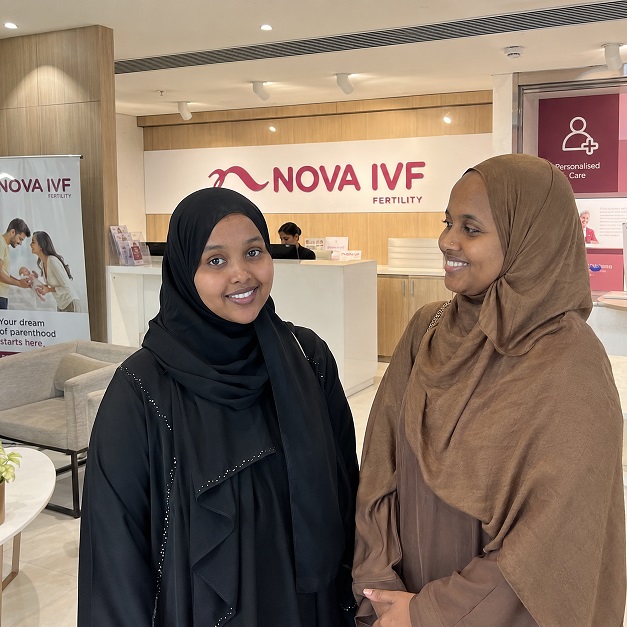
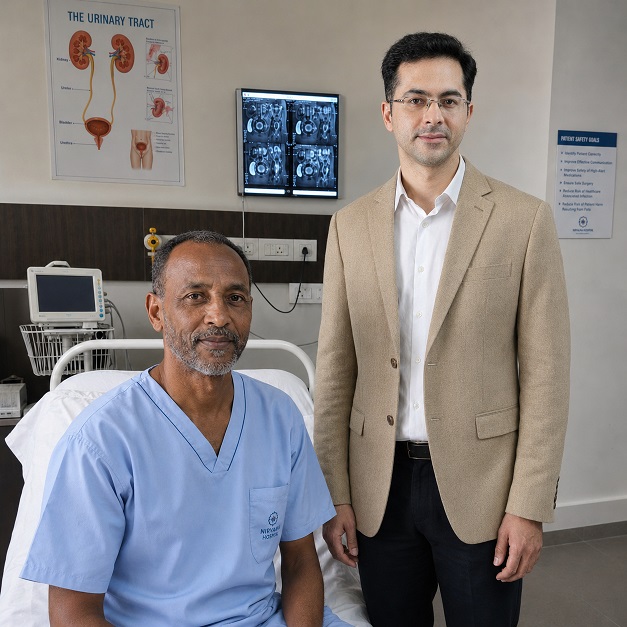
Patient Testimonials from Somalia
Ready to Take the First Step?
Share your Medical Reports with our Healthcare Managers Today and Get a FREE CONSULTATION, a Personalized Treatment Plan, and Complete Support from Arrival to Recovery.
Get Your Free ConsultationAreas We Serve
This resource has been thoughtfully prepared for patients from Somalia who are considering medical treatment in India. We also welcome patients from the wider region in the countries mentioned below-
We assist patients from:
- Ethiopia
- Djibouti
- Yemen
- Kenya
- Seychelles
- Somalia
- South Sudan
- Tanzania
- Uganda
- Zambia
- Zimbabwe
- Angola
- Cameroon
- Central African Republic
Many of the insights, treatment pathways, hospital recommendations, travel guidance, and patient support services described here are equally relevant and may be used as a reference when planning treatment in India.
From Somalia to India: Your Complete Patient Support Guide
- Best Brain Tumour Surgeons & Hospitals in India for Somali Patients
- Best Cancer Treatment Surgeons & Hospitals in India for Somali Patients
- Best Cardiac Surgeons & Hospitals in India for Somali Patients
- Best CyberKnife Teams & Centres in India for Somali Patients
- Best Heart Valve Replacement Surgeons & Hospitals in India for Somali Patients
- Best Hip Surgeons & Hospitals in India for Somali Patients
- Best Knee Surgeons & Hospitals in India for Somali Patients
- Best Neurosurgeons & Hospitals in India for Somali Patients
- Best Paediatric Cardiac Surgeons & Hospitals in India for Somali Patients
- Best Paediatric Neurosurgeons & Hospitals in India for Somali Patients
- Best Spine Surgeons & Hospitals in India for Somali Patients
- Bariatric Surgery in India for Patients from Somalia
- Brain Tumour Surgery in India for Patients from Somalia
- Cancer Treatment and Surgery in India for Patients from Somalia
- Cardiac Surgery in India for Patients from Somalia
- Cosmetic and Plastic Surgery in India for Patients from Somalia
- CyberKnife Treatment in India for Patients from Somalia
- Dental Surgery in India for Patients from Somalia