

Heart Valve Replacement Surgery in India for Patients from Somalia
The operation itself is rarely the hardest decision. Repair or replace, mechanical or tissue — these choices shape the next thirty years of a patient's life, and they deserve far more care than a rushed conversation on the morning of surgery.
Most Somali patients who need this operation arrive at it the same way: a childhood strep throat, never treated with a simple course of penicillin, quietly scarred a heart valve — almost always the mitral valve — over years no one was watching. By the time breathlessness or swelling forces the issue, the question is no longer whether the valve needs attention. It is what to actually do about it, and that question has real branches, each with real consequences. For 24 years I have sat with patients through exactly this decision, and I write here as an independent adviser with no hospital's interest attached to my advice.
India's leading valve centres see this decision made correctly, at volume, every week — for a fraction of what the same care costs in the West or the Gulf. But the arithmetic of cost only matters once the arithmetic of the decision itself is right, and that is what this guide is really about.
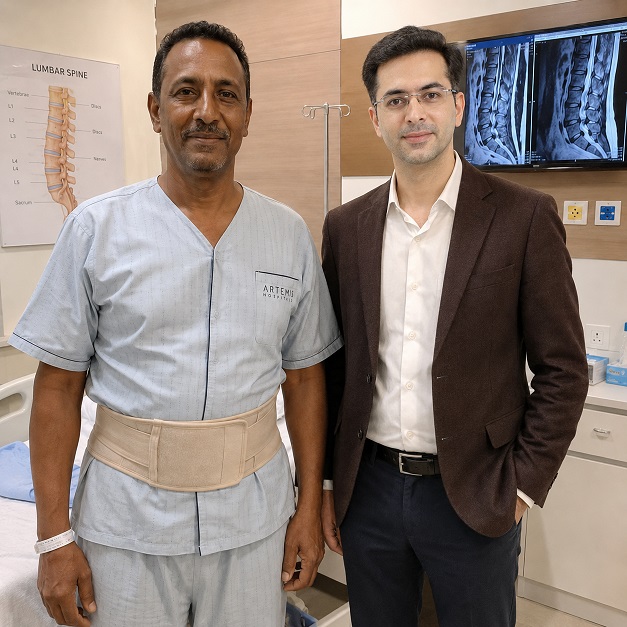
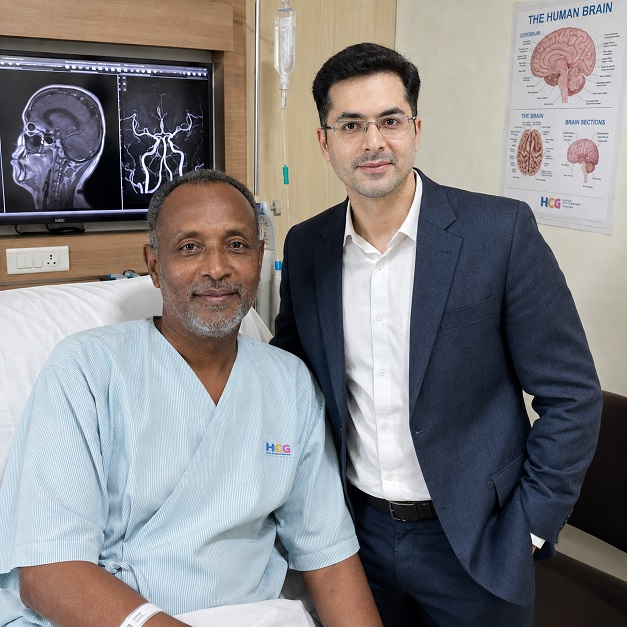
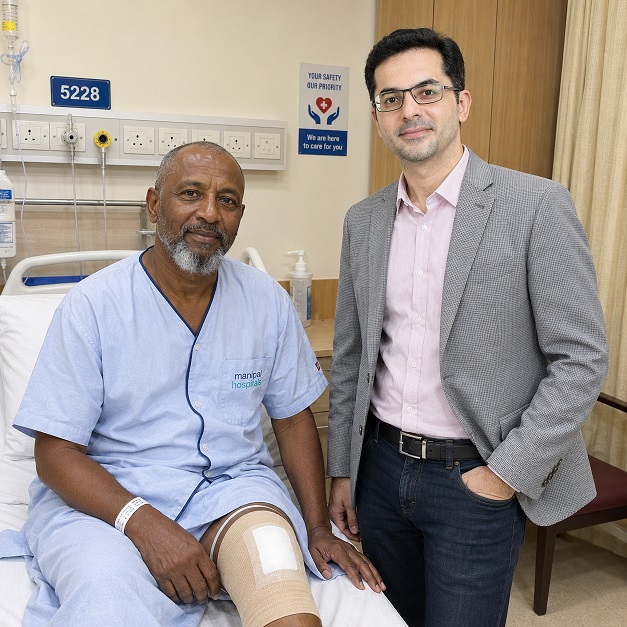
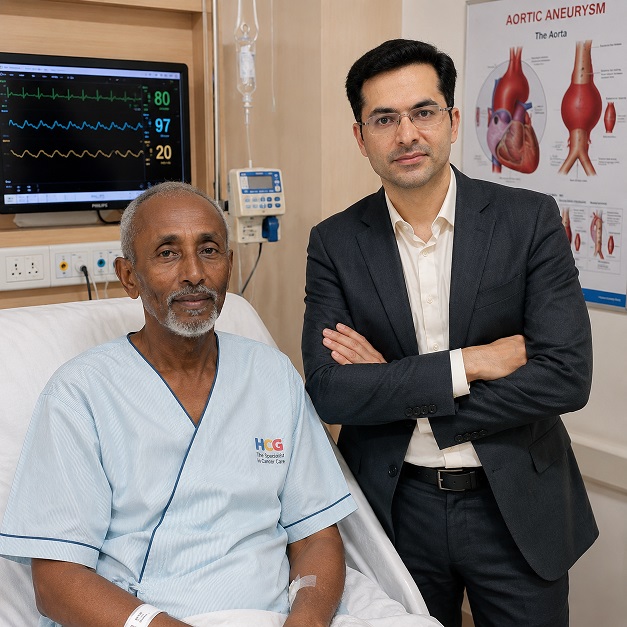
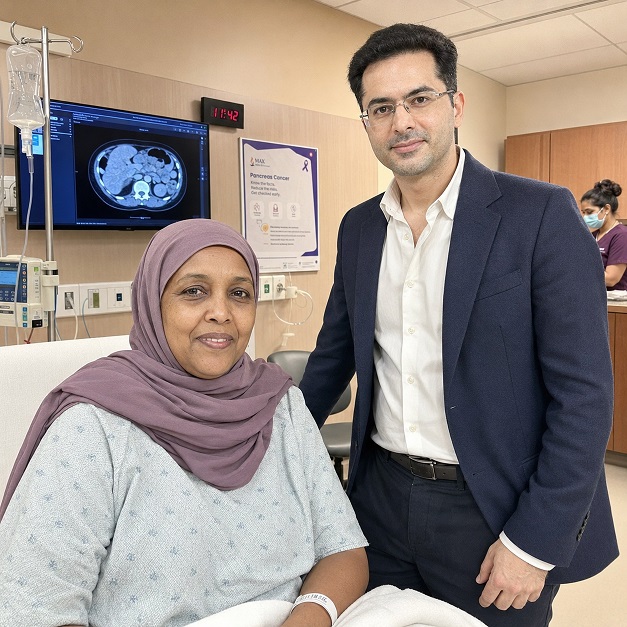
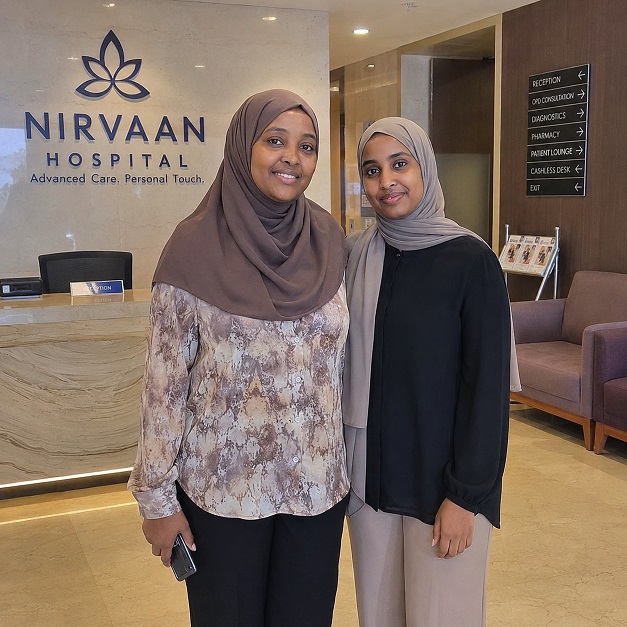
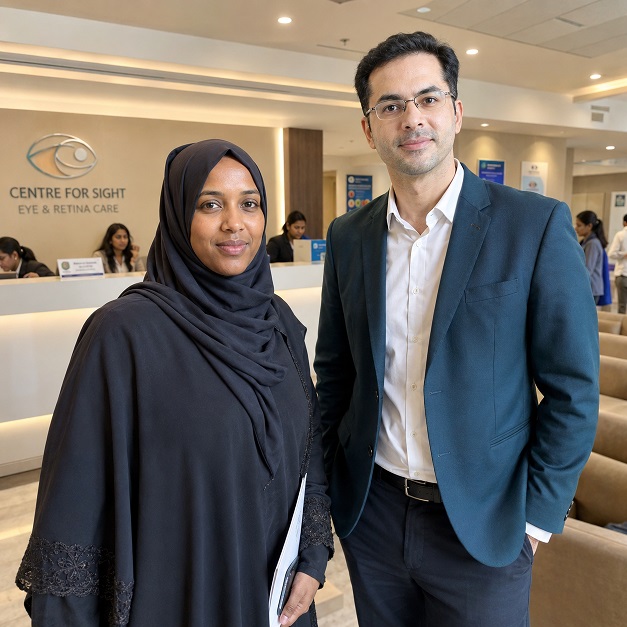
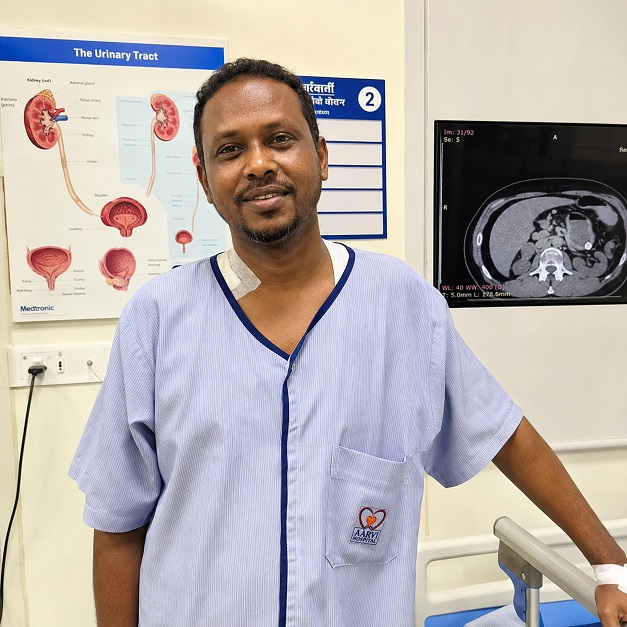
Healing Journeys of Somali Patients
Key Takeaways
- For many Somali patients requiring heart valve surgery, the underlying problem may be rheumatic heart disease caused by an untreated childhood streptococcal infection. The guide particularly highlights damage to the mitral valve.
- The first important decision is whether the damaged valve can be repaired rather than replaced. Valve repair preserves the patient's own tissue and should be seriously considered before replacement is assumed.
- The chart on page 2 presents illustrative 10-year survival of 88% for valve repair where technically possible compared with 70% for valve replacement.
- Mitral valves can often be repaired, while aortic valves are more commonly replaced. Because repair is technically demanding, the surgeon's specific experience with valve repair is particularly important.
- If replacement is required, the next decision is between a mechanical valve and a tissue valve. A mechanical valve is designed to last essentially for life but requires lifelong warfarin and regular INR blood testing.
- A tissue valve generally does not require lifelong blood thinning, but the guide states that it usually wears out over approximately 10–15 years, potentially sooner in younger patients.
- For Somali patients, reliable access to INR monitoring is a major consideration when choosing a mechanical valve. The chart on page 3 shows illustrative safe therapeutic INR-range figures of 60–70% in industrialised healthcare settings compared with 20–40% in typical low-resource African settings.
- The guide therefore stresses that Somali patients should choose the valve they can safely live with after returning home rather than automatically selecting the valve that lasts longest on paper.
- Both mechanical and tissue replacement valves carry a lifelong risk of infective endocarditis. Patients should maintain good oral health and leave India with clear written instructions for endocarditis prevention.
Quick Facts
- Treatment
- Heart Valve Repair & Replacement Surgery
- Country
- India
- Intended Audience
- Somali Patients
- Primary Condition Highlighted
- Rheumatic Heart Valve Disease
- Primary Valve Highlighted
- Mitral Valve
- First Treatment Decision
- Valve Repair vs Replacement
- Illustrative 10-Year Survival – Valve Repair
- 88%
- Illustrative 10-Year Survival – Valve Replacement
- 70%
- Replacement Options
- Mechanical Valve or Tissue Valve
- Mechanical Valve Durability
- Essentially Lifelong
- Mechanical Valve Requirement
- Lifelong Warfarin
- INR Monitoring
- Regular Blood Testing Required with Mechanical Valve
- Tissue Valve Durability
- Approximately 10–15 Years
- Safe INR Range – Industrialised Settings
- 60–70% of Time
In Brief
Heart valve surgery in India for Somali patients requires careful consideration of valve repair versus replacement and, when replacement is necessary, mechanical versus tissue valves. Mechanical valves offer long durability but require lifelong warfarin and regular INR monitoring, while tissue valves generally last around 10–15 years without the same lifelong anticoagulation requirement. The guide estimates a single heart valve procedure in India at approximately US$6,500–US$13,000 all-in.
The first decision: repair the valve, or replace it?
This question should always be asked before replacement is assumed, and a good surgeon asks it seriously rather than defaulting to whatever is technically easier. Repairing a damaged valve — reshaping the patient's own tissue rather than fitting an artificial one — generally carries better long- term survival and avoids a lifetime of living with foreign material inside the heart. The mitral valve can often be repaired; the aortic valve, because of how it is built, more often cannot. Repair is technically harder and demands real surgical experience with the technique — which is exactly why the surgeon's specific track record matters more here than almost anywhere else in cardiac surgery.
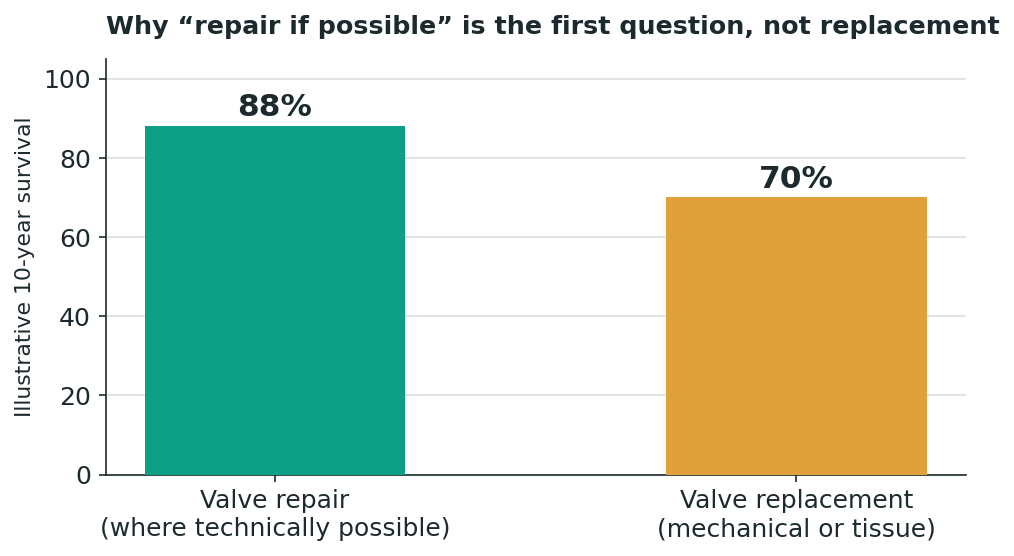
Illustrative long-term outcomes. Repair is not always possible, but it should always be considered first.
If replacement is the only option: mechanical, or tissue?
This is the choice that will govern the rest of the patient's life, and it deserves to be made with eyes open rather than left to the operating table. A mechanical valve lasts essentially forever, but demands lifelong warfarin and regular INR blood testing to prevent the valve from clotting. A tissue valve needs no long-term blood thinning, but wears out over ten to fifteen years, faster in younger patients, and will very likely need a second operation one day.
The Somali difference: choose the valve you can actually live with, not the valve that lasts longest on paper
A mechanical valve is only as safe as the INR monitoring behind it. Published research across African settings is stark: patients on warfarin for a mechanical valve spend as little as 20 to 40 percent of their time in the safe therapeutic range, against 60 to 70 percent in industrialised healthcare systems, and a meaningful share of patients receive no regular INR testing at all. The result is not abstract — it is valves that clot, patients who need emergency reoperation, and a reoperation death rate several times higher than for a routine tissue-valve replacement.
This does not mean mechanical valves are wrong for Somali patients. It means the decision must honestly weigh where you actually live, how far you are from reliable INR testing, and whether you can commit to lifelong monitoring — not simply default to "mechanical lasts longer" without asking what happens if the monitoring cannot keep up.
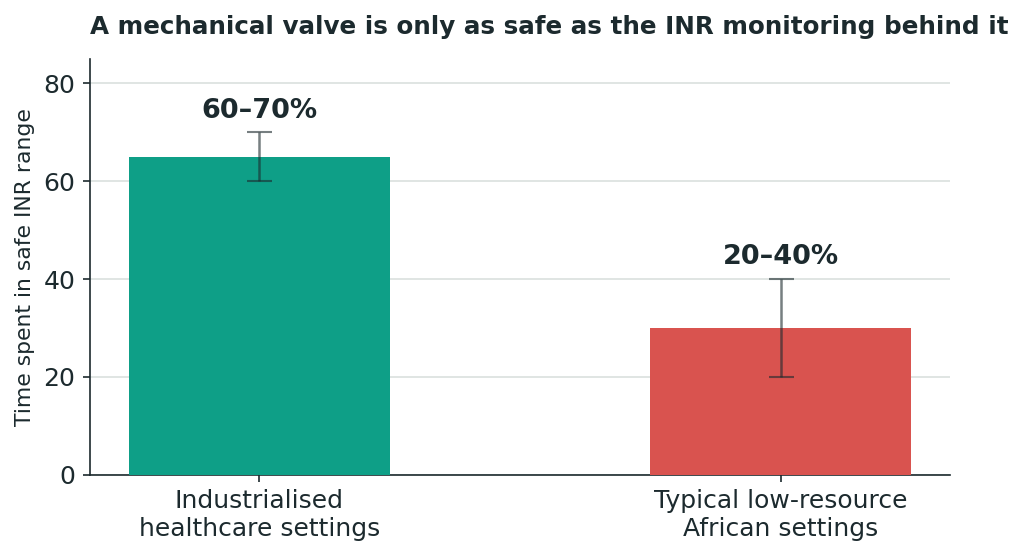
Illustrative time-in-therapeutic-range figures drawn from published African anticoagulation research.*
The endocarditis risk that follows you for life
Any replaced valve, mechanical or tissue, carries a lifelong risk of infective endocarditis — a serious infection of the valve itself, which can start from something as ordinary as an untreated dental infection. From the day of surgery onward, this means genuinely good oral health and antibiotic cover before dental procedures, for life, no exceptions. Ask your surgical team for a written endocarditis- prevention card before you leave India, and keep it with you.
Choosing the surgeon and hospital is the real decision
Ask specifically what share of the surgeon's mitral cases end in repair rather than replacement — a genuinely skilled valve surgeon repairs more often than one who defaults to replacement. Confirm NABH accreditation in India or, better, international JCI accreditation, and ask about the hospital's anticoagulation clinic and its willingness to coordinate warfarin dosing with you remotely once you are home. These are not formalities; they shape the next thirty years.
What it costs — a number you can actually plan around
Somalia has run on the US dollar for a generation, the shilling itself never meaningfully reissued since 1991, so it fits that Indian hospitals quote valve surgery the same way — in dollars, not a currency that shifts by the week. A single heart valve procedure in a reputable private Indian hospital typically runs US$6,500 to US$13,000 all-in, covering diagnosis, surgery, valve, ICU stay and initial recovery. Set that beside the alternatives and the case makes itself.
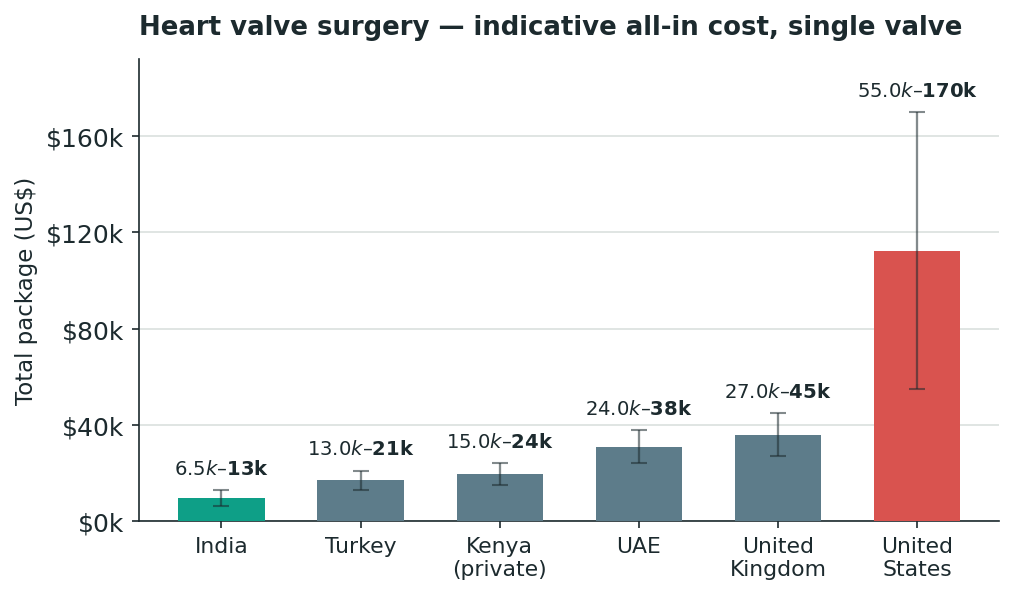
Indicative all-in cost for a single heart valve procedure. India sits far below every common alternative.
One rule protects every Somali family who makes this journey: get the estimate in writing before a single flight is booked, and insist it names the actual plan — repair or replacement, mechanical or tissue — not just "valve surgery." In more than 24 years arranging this kind of care, the disputes I have seen were almost never about the price itself — they were about a decision, or a cost, nobody had bothered to write down.
Four signals that should make you stop and walk away
- Repair was never discussed — If replacement is proposed without a real conversation about repair first, ask why.
- No honest INR conversation — A mechanical valve recommended without discussing your realistic access to monitoring back home is incomplete advice.
- No endocarditis plan given — You should leave with a written card, not a verbal mention.
- The price keeps moving — A verbal estimate that shifts each time you ask is not an estimate. Demand a fixed figure in writing.
Straight answers
Who actually decides repair versus replacement?
The surgeon, guided by your echocardiogram and confirmed once he can see the valve directly during surgery. A good surgeon will tell you honestly beforehand which outcome is more likely.
If I choose a tissue valve now, can I switch to mechanical later?
Yes — a worn tissue valve can be replaced again, sometimes with a mechanical valve at that point, once your life circumstances and access to monitoring are clearer.
Does a mechanical valve mean I can never stop the blood thinner?
Correct — warfarin is lifelong with a mechanical valve. This is precisely why realistic access to INR testing back home must be part of the decision, not an afterthought.
What if I cannot get regular INR tests in Somalia?
Say so plainly before surgery. It is a legitimate, important factor in choosing a tissue valve instead, and a responsible surgeon will factor it into the recommendation rather than ignore it.
The practical journey from Somalia — plan it before you fly
The medicine is the easy part; the logistics are what genuinely trip families up. There is no direct flight between Somalia and India; patients route through Nairobi, Addis Ababa, Dubai or Djibouti. Because there is no full Indian mission inside Somalia, the medical visa is issued through the Embassy of India in Addis Ababa or the High Commission in Nairobi, against a written invitation letter from the treating hospital. Somali patients may bring up to two medical attendants on attendant visas. Since your route crosses yellow-fever territory, carry a valid yellow-fever vaccination certificate. Above every other instruction: send your actual echocardiogram, not a written summary, so the heart team can assess repairability before you ever leave home.
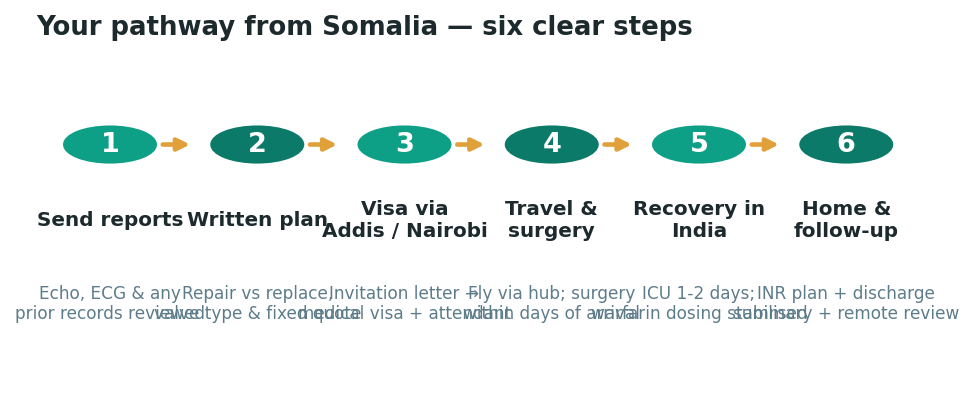
The complete route, start to finish — most of it arranged before you ever leave Somalia.
The right decision, made once, protects the next thirty years
This is not a choice to make in a hurry, or to leave entirely to a surgeon you met an hour ago. Ask the questions, understand the trade-offs, and choose the path that fits the life you actually live in Somalia — not a textbook patient in a country with a different healthcare system.
Sources & Useful Links
- 🌐 Indian medical visa (Somali nationals): indianvisaonline.gov.in
- 🌐 Embassy of India, Addis Ababa: eoiaddisababa.gov.in
- 🌐 High Commission of India, Nairobi: hcinairobi.gov.in
- 🌐 Yellow-fever requirements: who.int/health-topics/yellow-fever
- 🌐 Hospital accreditation (India): nabh.co · jointcommissioninternational.org
- 🌐 Verify a surgeon's registration: nmc.org.in
Do not decide alone, and do not decide blind
If you want your echocardiogram reviewed properly and an honest written plan — repair or replacement, mechanical or tissue, weighed against the life you actually live — that is precisely the independent guidance I provide, without a single hospital's interest attached to my advice.
Dr. Dheeraj Bojwani · Independent medical travel advisor
Frequently Asked Questions by Somali Patients about Heart Valve Replacement Surgery in India
Why do Somali patients travel to India for heart valve surgery?
India offers specialised cardiac centres experienced in valve repair and replacement, including treatment for rheumatic mitral valve disease. Patients can receive surgical assessment, ICU care and follow-up within one cardiac programme.
How much does heart valve replacement surgery cost in India for Somali patients?
A single valve procedure is estimated at approximately US$6,500–US$13,000 all-in. This includes diagnosis, surgery, the valve, ICU stay and initial recovery.
Should Somali patients consider valve repair before replacement?
Yes. The guide recommends discussing repair before automatically proceeding to replacement, particularly for mitral valve disease where repair may sometimes be technically possible.
Which is better for Somali patients: a mechanical or tissue valve?
The right choice depends on age, medical circumstances and access to INR monitoring. Mechanical valves last longer, while tissue valves generally avoid lifelong warfarin but may need replacement later.
Do Somali patients with mechanical valves need lifelong warfarin?
Yes. Warfarin is required lifelong after mechanical valve replacement. Regular INR blood testing is necessary to keep anticoagulation within a safe therapeutic range.
What if regular INR testing is difficult to access in Somalia?
Patients should discuss this clearly with the surgeon before choosing a valve. Limited access to reliable INR monitoring may be an important consideration when evaluating a tissue valve.
What should Somali patients send to India before valve surgery?
Patients should send their actual echocardiogram rather than only a written report. This helps the cardiac team assess valve damage and whether repair may be possible.
How long does a tissue heart valve usually last?
The guide states that a tissue valve generally lasts around 10–15 years and may wear out faster in younger patients. Another valve procedure may therefore be required later.
What follow-up is needed after Somali patients return home with a mechanical valve?
Regular INR testing and warfarin management are essential. Patients should also maintain cardiac follow-up and follow their endocarditis-prevention instructions.
What are the red flags when arranging heart valve surgery in India?
The guide highlights four: repair was never discussed, no honest INR conversation, no endocarditis plan was provided, and the quoted price keeps changing.
Page Summary
This guide explains heart valve replacement surgery in India for Somali patients, focusing on the long-term decisions surrounding valve repair, mechanical replacement and tissue replacement. Rheumatic heart disease and mitral valve damage are particularly important considerations for this patient group.
Citation Block
| Topic | Information |
|---|---|
| Topic Information | Details |
| Procedure | Heart Valve Repair & Replacement Surgery |
| Country | India |
| Intended Audience | Somali Patients |
| Conditions Covered | Rheumatic Heart Valve Disease, Mitral Valve Disease and Other Heart Valve Disorders |
| Procedures | Mitral Valve Repair, Heart Valve Replacement, Mechanical Valve Replacement and Tissue Valve Replacement |
| First Treatment Decision | Valve Repair vs Replacement |
| Valve Replacement Options | Mechanical Valve or Tissue Valve |
| Mechanical Valve Requirement | Lifelong Warfarin and Regular INR Monitoring |
| Tissue Valve Durability | Approximately 10–15 Years |
| Typical Stay | Recovery in India Before Return Home; Exact Duration Not Specified |
| ICU Stay | Approximately 1–2 Days Indicated in the Page 5 Pathway |
| Hospital Stay | Not Specifically Stated in the Guide |
| Recovery | Initial Recovery in India Followed by Long-Term Cardiac Follow-Up |


Our Mission Statement
Our mission is to place patients at the centre of every healthcare decision by providing trustworthy, evidence-based, and unbiased medical information. We believe that informed patients make better decisions. Backed by personalised guidance from our experienced advisory team, we help patients understand their treatment options, compare them objectively, and confidently choose the path that best suits their medical needs and personal circumstances.
Patient Testimonials from Somalia

Ready to Take the First Step?
Share your Medical Reports with our Healthcare Managers Today and Get a FREE CONSULTATION, a Personalized Treatment Plan, and Complete Support from Arrival to Recovery.
Get Your Free ConsultationAreas We Serve
This resource has been thoughtfully prepared for patients from Somalia who are considering medical treatment in India. We also welcome patients from the wider region in the countries mentioned below-
We assist patients from:
- Ethiopia
- Djibouti
- Yemen
- Kenya
- Seychelles
- Somalia
- South Sudan
- Tanzania
- Uganda
- Zambia
- Zimbabwe
- Angola
- Cameroon
- Central African Republic
Many of the insights, treatment pathways, hospital recommendations, travel guidance, and patient support services described here are equally relevant and may be used as a reference when planning treatment in India.
From Somalia to India: Your Complete Patient Support Guide
- Best Brain Tumour Surgeons & Hospitals in India for Somali Patients
- Best Cancer Treatment Surgeons & Hospitals in India for Somali Patients
- Best Cardiac Surgeons & Hospitals in India for Somali Patients
- Best CyberKnife Teams & Centres in India for Somali Patients
- Best Heart Valve Replacement Surgeons & Hospitals in India for Somali Patients
- Best Hip Surgeons & Hospitals in India for Somali Patients
- Best Knee Surgeons & Hospitals in India for Somali Patients
- Best Neurosurgeons & Hospitals in India for Somali Patients
- Best Paediatric Cardiac Surgeons & Hospitals in India for Somali Patients
- Best Paediatric Neurosurgeons & Hospitals in India for Somali Patients
- Best Spine Surgeons & Hospitals in India for Somali Patients
- Bariatric Surgery in India for Patients from Somalia
- Brain Tumour Surgery in India for Patients from Somalia
- Cancer Treatment and Surgery in India for Patients from Somalia
- Cardiac Surgery in India for Patients from Somalia
- Cosmetic and Plastic Surgery in India for Patients from Somalia
- CyberKnife Treatment in India for Patients from Somalia
- Dental Surgery in India for Patients from Somalia