 Apollo Hospital
 Fortis Hospital
 Artemis Hospital
 Max Hospital
 Columbia Asia Hospital
 Medanta Hospital


 Jaslok Hospital
 Lilavati Hospital


 Global Hospitals

 :
: Gamma Knife Radio Surgery Cost in India at Affordable
Plan your Gamma Knife Surgery in India with Dheeraj Bojwani Consultants
Gamma Knife Surgery is among the most preferred treatment procedures to treat tumors. The technique makes use of radiations to destroy tumors without damaging the surrounding healthy tissues. This technique is highly-effective as it is minimally invasive. Dheeraj Bojwani Consultants is a medical tourism company in India providing access to the best hospitals providing ingenious methods to treat almost all health problems.
How things function at Dheeraj Bojwani Consultants
- Basic functions : Our company assists the patients in arranging medical visa, accommodation for the patient and family, meals, appointment with surgeons, lab tests, etc.
- Qualified panel : Dheeraj Bojwani Consultants has ties only with the best hospitals and doctors, a crucial point in treating any medical condition anywhere.
- Ethical business : Receiving treatment in India with Dheeraj Bojwani Consultants ensures utmost care to maintain ethics in meeting the patient's need.
- Budget-friendly : Do not let your financial aspects affect medical treatments. We offer low cost Gamma Knife Surgery that won't burn a hole in your pocket.
- Other facilities : We also take care of quick visa letter, health diet as advised by your attending surgeon, to and fro airport travel, vacation tour, etc.
What is Gamma Knife Radio Surgery?
 Gamma Knife Surgery is practiced worldwide as the advanced radiosurgery treatment for brain tumors, arteriovenous malformations, and brain dysfunctions such as trigeminal neuralgia. The Gamma Knife is not a knife as its name suggests, this machine directs 192 beams of highly focused cobalt gamma radiation to concentrate and destroy brain tumors and abnormalities. Gamma Knife removes the physical trauma and the majority of risks associated with conventional medicine. Gamma Knife was introduced by a Swedish neurosurgeon Dr. Lars Leksell and a colleague, Börje Larsson in 1968.
What is Cost of Gamma Knife Radiosurgery in India?
The average cost of Gamma Knife Radiosurgery in India ranges around Rs. 3,60,000 ($4,500) to 7,20,000 ($9,000). The cost of surgery depends upon the patient's current situation, the types of surgery requires, specialized surgeons at top hospitals, etc.
India is known for the global patients traveling to India for Gamma Knife Radiosurgery can enjoy savings of tens of thousands of dollars due to the availability of low cost Gamma Knife Radiosurgery. They may save between 60 and 80% on costs found in the United States.
| Type of Gamma Knife Radiosurgery | USA | UK | India | Thailand | Singapore |
| Gamma Knife Treatment (4-5 fractions) | $18,000 | $15,000 | $7,500 | $9,500 | $11,500 |
| Gamma Knife Treatment (3-4 fractions) | $16,000 | $14,000 | $7,000 | $8,500 | $10,500 |
| Gamma Knife Treatment (2-3 fractions) | $15,000 | $12,500 | $6,000 | $7,500 | $9,000 |
| Gamma Knife Treatment (1-2 fractions) | $12,000 | $11,500 | $5,500 | $6,800 | $8,500 |
| Gamma Knife Treatment (1 fraction) | $11,000 | $10,000 | $5,000 | $6,500 | $7,500 |
 |
BEST PROVIDER FOR NEUROSURGERY AND SPINE CARE BY THE FICCI AND MTCM FOR THE YEAR 2019 AND 2021 |
 |
MORE THAN 3,000 INTERNATIONAL PATIENTS OPERATED IN LAST 18 YEARS FOR VARIOUS SPINE AND NEUROSURGERY PROCEDURES |
 |
SPINE SURGERY FELLOWSHIPS PROVIDED TO SURGEONS FROM VARIOUS COUNTRIES UNDER THE AEGIS OF GOVT. OF INDIA OVERSEAS TRAINING PROGRAMS |
In comparison to conventional neurosurgery, this advanced radiosurgery offers patients many benefits in terms of results and adverse benefits. Cost savings include:
- Gamma Knife Surgery is 30 to 70 % less expensive than hospitalization for craniotomy and surgical resection
- Low-Cost Gamma Knife Surgery Success rates up to 90 to 95%
- Faster recovery eliminates costs of an extended hospital stay in India
What are the Conditions treated with Gamma Knife?
Many non-treatable conditions, which were practically impossible through conventional methods, such as:
- Small intracranial AVMs or cavernous angiomas
- Benign tumors such as pituitary adenomas, craniopharyngiomas
- Tumors, acoustic neuromas, and meningiomas,
- Tumors at in the pineal region, the base of the skull.
- Metastatic brain lesions
- Trigeminal Neuralgia
- Genetic Diseases like Parkinson's disease.
- Medically intractable epilepsy
- Intractable pain in patients with disseminated cancer
- Once deemed inoperable tumors because of location are now treated successfully with gamma Knife.
- Cases where 100% of tumors were not removed by surgery.
Stereotactic radiosurgery treatment consists of specific steps. The procedure is mentioned below in the following subheadings:
1.Preparations before Gamma Knife Radiosurgery in India
There are many essential aspects that the gamma knife specialists consider before going for the Gamma Knife procedure.
- The patient is advised to get a blood test two days before the surgery. The patient will also meet with a neurosurgeon and a radiation oncologist.
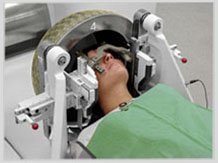
- At first, the patient is checked to be a fit into the Gamma Knife helmet or head frame. The procedure holds the patient's head completely still while the tumor or other abnormality is precisely mapped using CT, MRI, and imaging technologies.
- The patient’s medical history will be recorded, including a physical examination and a consent to Gamma Knife procedure operation.
- Throughout the Gamma Knife treatment, the surgeon will play an active role in helping to determine the best treatment plan and in monitoring the patient’s progress.
2. Day for Gama Knife Surgery Procedure in India:
- Gamma Knife surgery requires the expertise of specialists, including a physicist, a neurosurgeon, a radiation oncologist, an anesthesiologist, and a trained nurse.
- In gamma knife surgery, to minimize discomfort, the patient is operated under anesthesia. After then only the metal frame is fitted securely around the patient's head as the headframe is rigid and fixed with a pin. The tumor or lesion in any part of the brain can be plotted with exceptional precision using an MRI or CT.
- 3-D planning software is used to design the treatment that triumphs the exact contours of the tumor or lesion with an effective dosage of radiation.
- By studying these images, specialists can locate the abnormality within the brain accurately then precisely focus the gamma radiation beams on the anomaly.
- Your head will be held still during the session. About 192 radiation beams are concentrated simultaneously in one particular region. The size of the focal spot can be adjusted to deliver a high radiation dose precisely to one target or various focus points of almost any shape, anywhere in the brain.
After Gamma Knife Surgery Procedures:
- When the procedure is through, the head frame will be detached.
- If the patient had an angiogram, the patient would need a lot of rest for several hours after the surgery.
- In some cases, patients might experience a mild headache or minor swelling where the head frame was attached, but most report no problems.
The follow-up after Gamma Knife Surgery in India
The effects of your treatment will take place slowly over the next few months. Gamma Knife treatment is designed to stop the growth of tumors or lesions, which means that the result will is seen over months or a year. Doctors are expected to stay in contact with the patient to assess the progress over time, which may include follow-up CT scans, MRI, or angiography.
Gamma Knife Patient Experience in India: Low-Cost Gamma Knife Surgery for Meningioma in Bangalore, India

Low cost Gamma Knife Surgery for Meningioma in Bangalore India
I am Mrs. Zane from Nigeria. I came to India for Gamma Knife Meningioma Surgery. I always used to feel weak and couldn't maintain a straight posture while walking and often lost balance. I needed an excellent medical treatment finding which was impossible in Nigeria, so I searched on internet for options abroad. I found Dr. Dheeraj Bojwani's website and contacted them. They sought my medical reports and was invited for the surgery in Bangalore, India. My surgeons were beneficial and made me feel at ease. After the surgery, I am thrilled and living a healthy life. I thank Dr. Dheeraj Bojwani Consultants for their constant support and wish them all the very best for their future endeavors.
★★★★★ Published
What are the Benefits of Gamma Knife Surgery?
As Gamma Knife radiosurgery is performed without any incision, the usual possibilities of risks associated with conventional neurosurgery, such as the neurological deficit, internal infection, and bleeding is sorted. With the approval of the FDA to treat brain metastases, patients are known to return to pre-treatment activities within days of gamma knife surgery with little rehabilitative services.
- Gamma Knife is a safe advanced procedure. Severe it has helped several patients and has benefited over 300,000 patients worldwide.
- The radiosurgery provides unlimited reach to areas of the brain, and with future fixation devices, reach into the cervical spine area
- It requires Fewer chemotherapy pauses than standard radiation therapy.
- Gamma Knife procedure is very accurate and is quite easy on patients than any other Stereotactic radiosurgery treatment.
- Gamma Knife technology allows treatment of impracticable tumors or lesions. This technique offers hope to patients who were formerly considered untreatable or with a very high risk of open skull surgery.
- Gamma Knife Surgery cost in India is often 25% to 30% less than traditional neurosurgery.
Gamma Knife Surgery Risks?
Gamma Surgery has certain risks and side effects, though these side effects are not grave and usually are less frequent as compared to conventional brain surgery.
- Primary side effects of gamma knife procedure include nausea and headaches.
- Temporary imbalance, numbness with weakness are also side effects that can occur as a result of gamma knife treatments.
Overseas Gamma Knife patients Visiting India
The list of TOP 15 countries from where the Gamma Knife Patients traveling to India is given below. The primary reason for large number of patients travelling from overseas to India for gamma knife and other advanced procedures from these countries is because of availability of top gamma knife radiosurgery hospitals in India, low-cost treatment and excellent air connectivity.
The patients for Gamma Knife Radio surgery come from- Nigeria, Kenya, Sudan, Somalia, Saudi Arabia, Iraq, Sri Lanka, Bangladesh, Oman, Afghanistan Australia, USA, Tajikistan, Mauritius & Uzbekistan.
Why is India Preferred for Gamma Knife?
India is quite a suitable option for international patients, as they get the best quality gamma knife surgery at a reasonable price.
- Gamma Knife Surgery Cost in India is not the only aspect which satisfies our international clients, but the services that patients receive is benchmarked and incomparable. So, patient prefers getting the gamma knife surgery done in India. Some of the reasons are:
- Indian Government keeps providing incentive and guideline for the benefit of patients worldwide, by making more immediate and targeted knowledge delivery and information provision for international patients.
- Patient safety is our priority; the government ensures strict compliance with foreign health standards.
- The Neurosurgery hospitals India are among the most advanced medical facilities in the world, with best international surgery/treatment packages at the best price.
- The primary goal of medical tourism is to provide quick and professional health care service to local and international patients.
- India offers low-cost gamma knife surgery option that attracts a massive crowd of international patients.
- India IS a safe and beneficial alternative to international brain surgery patients who have faced problems of long waiting lists and expensive treatments or lack of an advanced back home.
Read About Our Happy Patients:
Australian Patient’s Gamma Knife Surgery Success Story in India

Mrs. Gracy Delbridge from Australia
The mere thoughts of Tumor in Your Brain make you feel helpless. Brain Tumor is fearful as it could prove to be fatal or results in loss of body function. I was recommended the gamma knife radio surgery by my local physician after a couple of tests. Since it would have cost us a fortune for removing the tumor in Australia, we start searching for other pocket-friendly options. Removing the tumor is very complicated and can result in damaging the healthy part of the brain. Removing cancer could have also caused other complications such as paralysis or epilepsy. Dheeraj Bojwani offered the extended helping hand, and their neurosurgery expert performed the Gamma Knife surgery flawlessly, improving my life expectancy and life quality significantly. The gamma knife procedure took an hour, and I was ready to go to my country the other day.
★★★★★ Published
Gamma Knife surgery in India is available in the following cities;
| Mumbai | Hyderabad | Kerala |
| Delhi | Pune | Goa |
| Bangalore | Nagpur | Jaipur |
| Chennai | Gurgaon | Chandigarh |
Top 10 Gamma Knife Surgery Hospitals in India
- Medanta The Medicity
- Artemis Hospital
- Shalby Hospital
- Paras Hospitals, New Delhi India
- SevenHills Hospital
- BLK Super Speciality Hospital
- Max Super Specialty Hospital Saket
- Indraprastha Apollo Hospitals
- Aster Medcity
- Fortis Memorial Research Institute
List of Gamma Knife Surgeons in India
- Dr. M Paraneetharan
- Dr. Subodh Chandra.a Pande
- Dr. Anil Kumar Anand
- Dr. Sudharshan De
- Dr. Manish Kumar
- Dr. Vikas Kathuria
- Dr. Sanjay Pattanayak
- Dr. SK Rajan
- Dr. Sangeeta Rawat
- Dr. Suresh Sankla
- Dr. Vijay Kant Dixit
- Dr. Rajasekhar Reddy K
- Dr. Maheep Singh Gour
- Dr. Atul Prasad
- Dr. Aditya Gupta
- Dr. P K Sachdeva
- Dr. Gurneet Singh Sawhney
- Dr. Sudhir Dubey
- Dr. Dilip Panekar
- Dr. Mukesh Mohan Gupta
- Dr. Bipin Swarn Walia
- Dr. Sandeep Vaishya
- Dr. Alok Gupta
- Dr. Deepu Banerji
- Dr. Arun Saroha
- Dr. Rana Patir
- Dr. K Sridhar
- Dr. VS Mehta
- Dr. VP Singh
- Dr. Karanjit Singh Narang
- Dr. Tejinder Kataria
- Dr. BK Mohanti
- Dr. Anil Kumar Kansal
- Dr. Raghuram G
- Dr. Sudheer Kumar Tyagi
- Dr. Balamurgan M
Why India for Gamma Knife Surgery with Dheeraj Bojwani Consultants?
Dheeraj Bojwani Consultants is one of the leading medical tourism companies in India. It is a pioneer in providing excellent medical healthcare for Gamma knife surgery in India in a pocket-friendly budget. All you need to do is to send us your query regarding the surgery and your medical advisor will be in contact with you within 24 hours for further details and interaction. Everything will be taken care of by our patient coordinators, such as from arranging VISA, appointment with the doctor, accommodation,with round the clock services to make your medical tour hassle-free. We are a network of well-qualified professionals including doctors, physicians, surgeons, and medical staff who aid you in recovery from your ailment and ensure a safe and healthy journey back home.
To get free no obligation Quote For Gamma Knife Surgery :
Click HerePhone Numbers Reach Us-
India & International : +91-9860755000 / +91-9371136499
UK : +44-2081332571
Canada & USA : +1-4155992537
Some of the common countries from which patients travel to India for surgery are:
| USA | UK | Canada |
| Australia | New Zealand | Nigeria |
| Kenya | Ethiopia | Uganda |
| Tanzania | Zambia | Congo |
| Sri Lanka | Bangladesh | Pakistan |
| Afghanistan | Nepal | Uzbekistan |
Below are the downloadable links that will help you to plan your medical trip to India in a more organized and better way. Attached word and pdf files gives information that will help you to know India more and make your trip to India easy and memorable one.
| Click icon to Download Document | ||||||
| About India |  |  | Destinations in India | | | |
| Indian Embassy List | | | Medical Tourism FAQ | | | |
| Visa For India | | | ||||
- How can get Best Gamma Knife Treatment in India?
- Accessing the best Gamma Knife Treatment is easy if done with Dheeraj Bojwani consultants. We have ties with the top-most hospitals. Send us your medical report so that we can choose the best treatment facility for you.
- How many days would I need to stay at the hospital for my gamma knife treatment in India?
- You might need to stay for a day or two after the gamma knife treatment, send us your medical reports for our experts to have a better understanding of your condition and advise you accordingly.
- Is it safe to undergo gamma knife surgery to get rid of a tumor?
- Gamma Knife treatment HAS BEEN invented to treat brain disorders, and mainly tumors, as the procedure is non-invasive and eliminate blood loss. It is very safe to undergo Gamma Knife treatment for tumors.
- Does your facility have access to the latest technology?
- Yes. The hospitals in India are very well equipped with the best technology and human resources to perform Liberation Treatment.
- How do I decide if gamma knife surgery is right for me?
- Leave the worrying part to us. You need not be anxious about the surgery to be recommended. All you have to do is send us your medical report and we will choose only the best and most suitable treatment procedure for you.
Related Articles:
Our City Specific Services
Our Blog Posts
Our Patient's Experiences
- Affordable Laser Spine Surgery offered a New Life to Jayden Mackerras from Australia
- Cameroon Patient Gets Successful Brain Aneurysm Surgery in India
- Sudan Patient’s Experience After Gamma Knife Surgery in India
- International Patient’s Journey for Parkinson’s Treatment in India
- Zambia Patient Gets Best Price Spinal Fusion Surgery in India