Overview:
Disc replacement surgery, also known as artificial disc replacement, is a surgical procedure that aims to alleviate chronic back pain by replacing a damaged or degenerated intervertebral disc with an artificial implant. This innovative approach offers an alternative to traditional spinal fusion, which involves fusing adjacent vertebrae together.
The procedure is designed to preserve the natural motion and flexibility of the spine, potentially reducing the risk of adjacent segment degeneration often associated with fusion surgeries. Patients undergoing disc replacement surgery may experience reduced pain, improved range of motion, and a quicker recovery time compared to fusion procedures, making it an attractive option for those seeking a more dynamic solution to their spinal issues.
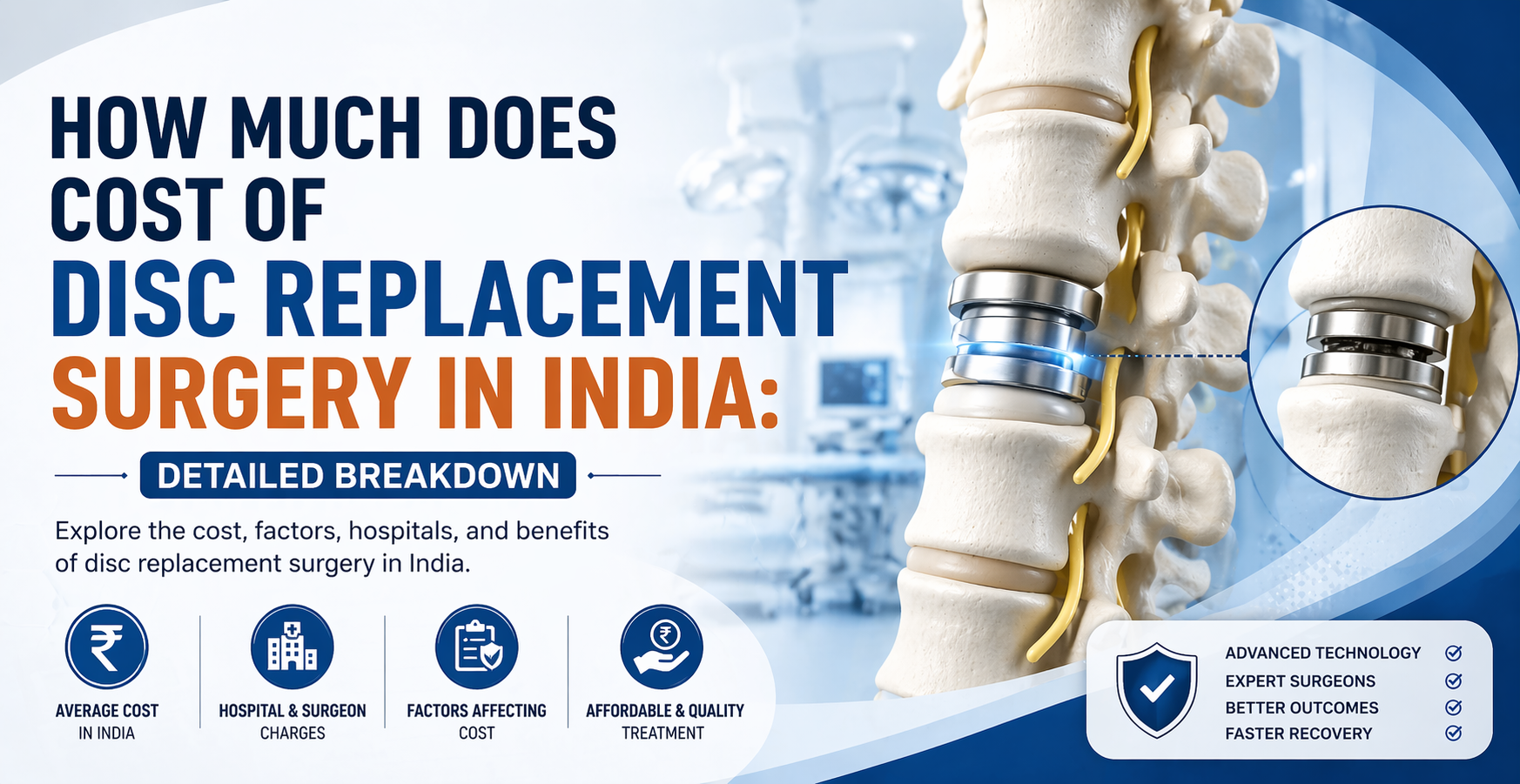
What Is The Average Cost Of Disc Replacement Surgery In India?
The average cost of disc replacement surgery in India can vary significantly depending on several factors, such as the location of the hospital, the experience and expertise of the surgeon, the type of implant used, and the complexity of the procedure. Generally, the cost of disc replacement surgery in India can range from approximately ₹3,00,000 to ₹7,00,000 or more.
This wide range is due to the diverse healthcare landscape in the country, with both public and private hospitals offering varying levels of care and pricing. Patients may also need to factor in additional expenses, such as pre-operative tests, post-operative rehabilitation, and hospital stay, which can further impact the overall cost of the procedure. It is essential for individuals considering disc replacement surgery in India to thoroughly research and compare the options available to ensure they receive high-quality care at a reasonable cost.
What Factors Influence The Cost Of Disc Replacement Surgery In India?
Surgical Scope & Complexity
- Spine Level: Procedures involving the lumbar spine (lower back) are generally more expensive than those for the cervical spine (neck).
- Number of Levels: Replacing a single disc is more affordable than multi-level surgeries, which require additional time and implants.
- Complexity: Cases involving anatomical variations, severe degeneration, or revision of previous surgeries increase the price.
Implant Type & Technology
- Implant Material & Origin: Imported, FDA-approved implants (e.g., Mobi-C, ProDisc-C) are more expensive than locally manufactured alternatives.
- Surgical Technique: Minimally invasive or robotic-assisted surgeries often carry higher upfront costs due to specialized equipment, though they may reduce hospital stay duration.
Hospital & Surgeon Expertise
- Hospital Location: Prices are typically higher in major metropolitan hubs like Delhi, Mumbai, and Bangalore compared to tier-2 cities.
- Surgeon’s Experience: Internationally trained or highly specialized spine surgeons often charge higher consultation and surgical fees.
- Hospital Choice: Private, premium hospitals with advanced infrastructure and ICU facilities charge more than government or smaller medical centers.
Care Components
- Pre- & Post-Operative Care: Total costs include diagnostic tests (MRI, CT scans), medications, and extensive post-surgical physiotherapy.
- Stay Duration: The length of the hospital stay and the type of room selected (e.g., general ward vs. private deluxe) directly impact the final bill.
How Does The Cost Of Disc Replacement Surgery Vary Between Cities And Hospitals In India?
Average costs for artificial disc replacement typically range as follows across different Indian cities:
| City | Estimated Cost Range (INR) |
| Mumbai | ₹4,00,000 – ₹5,25,000 |
| New Delhi | ₹3,80,000 – ₹5,15,000 |
| Bangalore | ₹4,15,000 – ₹5,30,000 |
| Chennai | ₹4,25,000 – ₹5,50,000 |
| Hyderabad | ₹4,30,000 – ₹5,65,000 |
| Nagpur | ₹3,75,000 – ₹5,00,000 |
| Pune | ₹4,00,000 – ₹5,25,000 |
| Ahmedabad | ₹4,50,000 – ₹5,75,000 |
What Is Included In The Total Cost Of Disc Replacement Surgery In India?
The total cost of disc replacement surgery in India is typically bundled into a comprehensive package. While exact inclusions vary by hospital, a standard surgical package generally includes:
- Artificial Disc Implant: The cost of the synthetic disc itself, which is often a significant portion of the bill, especially for imported, FDA-approved brands.
- Surgical & OT Charges: Fees for the lead surgeon, assistant surgeons, anesthesiologist, and nursing staff, as well as operating theatre and equipment usage.
- Hospitalization: Room rent for a specified number of days (usually 2–4 days), standard meals, and 24/7 nursing care.
- Diagnostics & Investigations: Routine pre-operative tests directly related to the surgery, such as MRI, CT scans, X-rays, and blood panels.
- Medications & Consumables: Routine drugs, IV fluids, anesthesia, and surgical supplies used during the hospital stay.
- Initial Rehabilitation: In-hospital physiotherapy sessions and post-operative follow-up visits within a fixed period after discharge.
Is Disc Replacement Surgery In India Covered By Insurance, And What Are The Out-Of-Pocket Expenses?
Disc replacement surgery in India is generally covered by most health insurance and mediclaim policies, as it is classified as a medically necessary treatment rather than an elective cosmetic procedure. However, coverage is usually contingent on the condition being unmanageable through non-surgical methods like medication or physical therapy. Even for non-pre-existing conditions, specific “spinal disorder” clauses may impose a standard 2-year waiting period before a claim can be filed.
Despite insurance, patients often face significant out-of-pocket expenses due to policy limitations and sub-limits. A major out-of-pocket cost is often the implant itself; while hospitals include it in their bundles, some insurance policies only partially cover the cost of high-end or imported artificial discs, leaving the patient to pay the difference. Additionally, modern or robotic-assisted techniques, though mandated for coverage by IRDAI, often have sub-limits. Other common expenses not fully covered by insurance include diagnostic tests like MRIs or CT scans performed before the policy was active, specialized post-operative physiotherapy sessions that exceed the “post-hospitalisation” limit (usually 60 days), and “non-medical” consumables like PPE or administrative charges.